
Tornado in Alberta? What are the chances?
Ibrahim Khan1
Green Dome Islamic School
Grade 7
Presentation
No video provided
Problem
I am trying to find out: 1. What is a tornado? 2. What conditions are ideal for a tornado to be formed? 3. What is the risk level to experience a tornado in Alberta? 4. How does climate change impact tornadoes? 5. What is the Peak Season For Tornadoes in Alberta? I choose this topic / questions because I have always wondered could tornadoes be formed in Alberta what is the risk level for it to happen, how is a tornado formed, does climate change impact tornadoes, and what is the peak season for tornadoes to form in Alberta.
Method
I am doing a research project on Tornadoes. Here are my questions: 1. What is a tornado? 2. What conditions are ideal for a tornado to be formed? 3. What is the risk level to experience a tornado in Alberta? 4. How does climate change impact tornadoes? 5. What is the Peak Season For Tornadoes in Alberta?
Research
Here is the information I found to answer my questions:
Question 1. A Tornado is a fast-spinning column of air, which touches the ground. It usually comes from a strong thunderstorm.
Question 2. A tornado starts from a strong Thunderstorm which is then formed when cold dry air is pushed over warm humid air. Then the warm air rises through the colder air, creating an updraft. When the warm air rises through the colder air it can cause an updraft or a change in wind direction. When the wind in the thunderstorm becomes high in speed or direction, the updraft will begin to rotate. Lastly as the rotating updraft draws more warm air from the Thunderstorm, the rotation speed begins to increase, then the funnel cloud begins to form. As the Tornado gains strength, the funnel becomes longer.
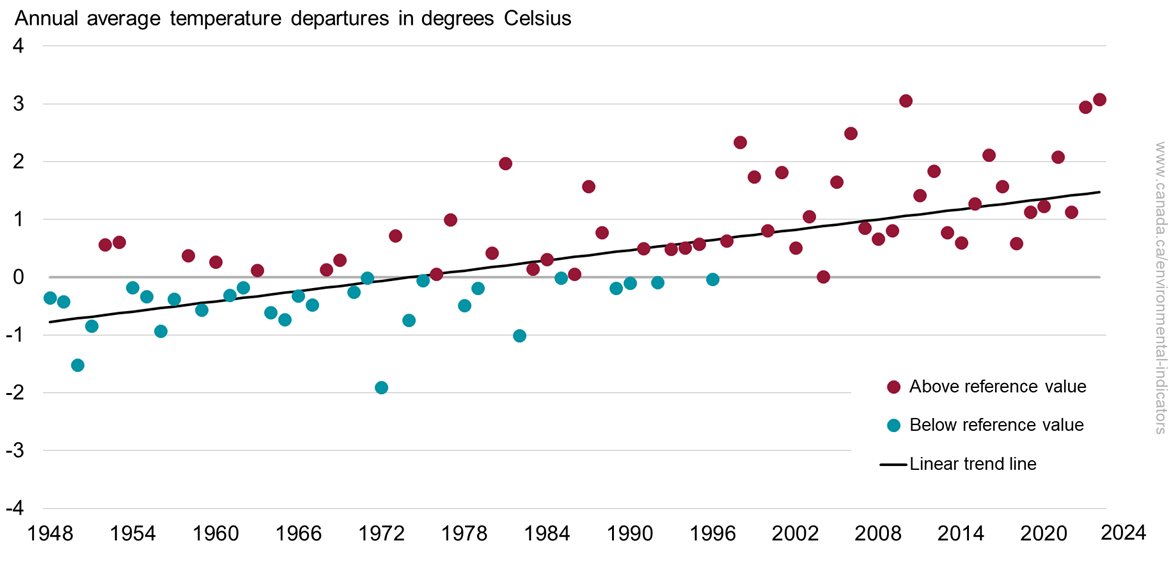
Question 3. According to the Government of Alberta, air temperature data shows that Alberta is experiencing warmer temperatures over the years. Canada's average temperature has increased by about 1.7°C since 1948. Since Alberta is a part of Canada, it has also experienced warming. What does that mean? Warmer air can hold more moisture. More moisture can help create stronger thunderstorms. And, Tornadoes are formed inside strong thunderstorms. Scientists are still studying if climate change is having an impact on the increase of tornadoes because tornado formation depends on many weather factors, not just temperature.
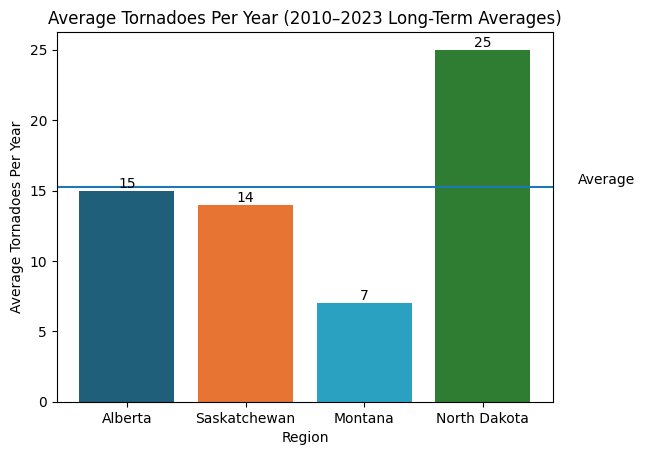
Question 4. I choose Montana, Saskatchewan and North Dakota to do a comparison analysis because these regions are closer to Alberta in their location and have a similar climate. I found that these regions have similar average of tornadoes in the last 13 years. 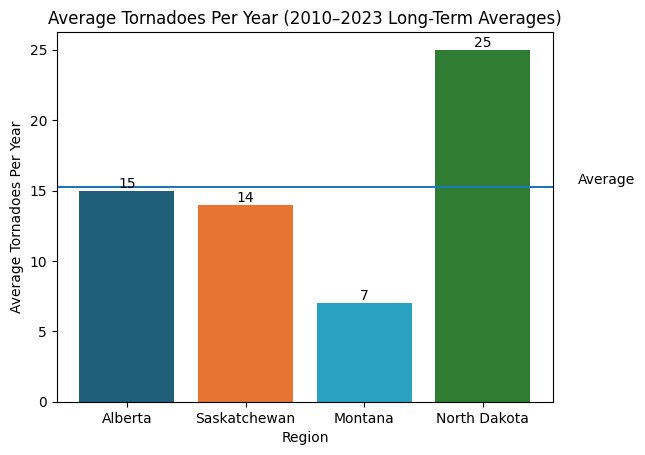 Average: 15.25
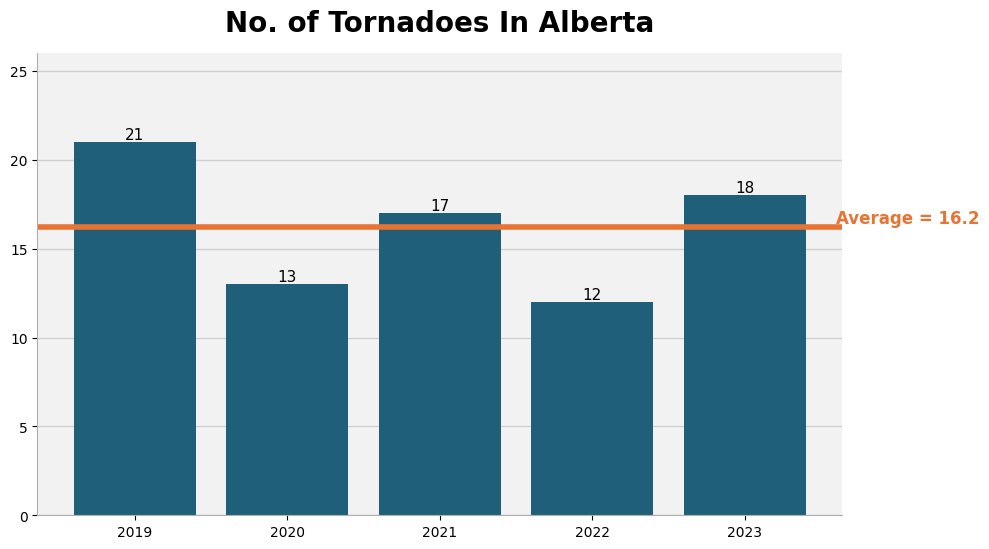
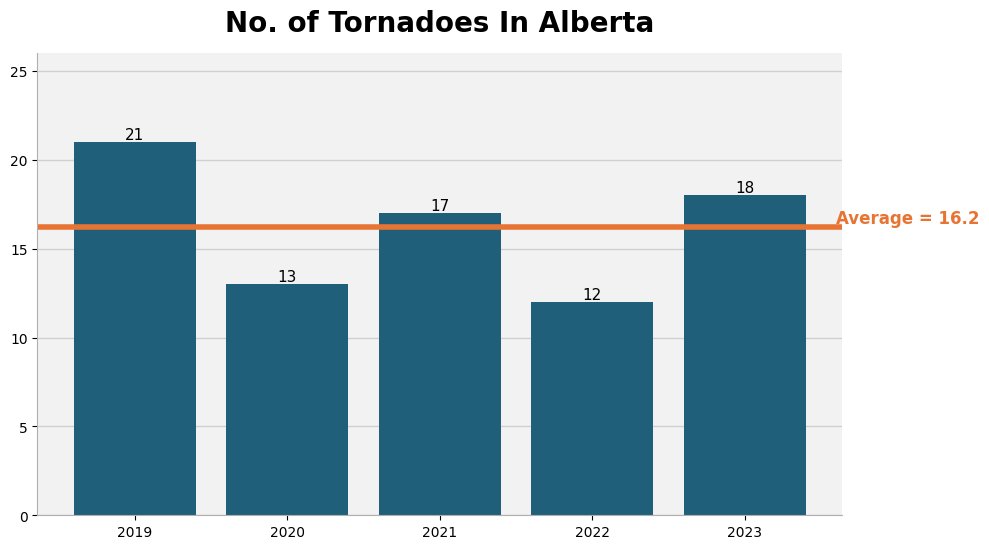
Now here is the number of tornadoes in Alberta in the last 5 years
Average: 15.25
Now here is the number of tornadoes in Alberta in the last 5 years
Question 5. June is the peak month for tornadoes in Alberta. According to the Northern Tornadoes Project and Environment and Climate Change Canada, most tornadoes in Alberta occur between May and August. And June is typically has the highest number. By June, the ground has warmed significantly from spring, creating warm air near the surface. At the same time, cooler air is often still present higher in the atmosphere. When warm, moist air rises into cooler air, it creates instability in the atmosphere. Tornadoes develop inside powerful thunderstorms, which is why June usually has the highest number of tornadoes in Alberta.
This is the annual average of the heat temperature and cold temperature.
Data
Here are the Charts that I have made / borrowed
The first chart you see, is the only one I borrowed. The website is called www.canada.ca/environmental-indicators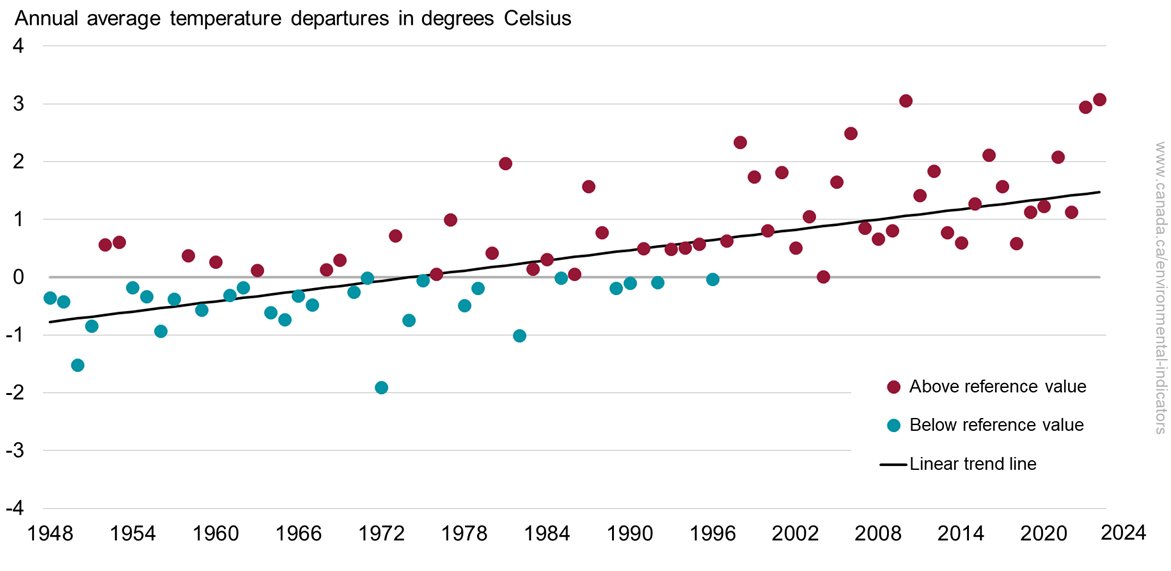
Conclusion
Based on my research, I found that my hypothesis was mostly correct. Alberta averages about 16 tornadoes per year. This shows that tornadoes do occur in Alberta, but they are not common. Tornadoes only form under specific weather conditions, including warm, moist air, strong thunderstorms. These conditions are most common in early summer. Which is why June is the peak month for tornadoes to happen in Alberta. Even though Canada’s temperature has increased by about 1.7°C since 1948, there is no clear evidence that tornado numbers in Alberta are increasing. Warmer air can hold more moisture and may influence storm intensity, but tornado formation depends on many atmospheric factors. Overall, tornadoes in Alberta are possible, but the risk remains moderate. Studying tornado patterns helps us better understand severe weather and prepare for the future.
Citations
These are the sources I have used:
https://www.nssl.noaa.gov/education/svrwx101/tornadoes
https://kids.nationalgeographic.com/science/article/tornado
https://climateinstitute.ca/news/fact-sheet-climate-change-and-storms
https://www.alberta.ca/climate-indicators-air-temperature
ntpopendata-westernu.opendata.arcgis.com
https://naturecanada.ca/?gad_source
https://www.canada.ca/en/environment-climate-change/services/environmental-indicators.html
Acknowledgement
I would like to thank my vice principal Mrs. Aly and my teacher Mrs. ElMoallem for encouraging me to do this. I would also like to thank my family for helping me fix my errors that I have might made, and supporting me while I make my project. I would also like to thank brother Collin who helped me think outside of the box, and who helped me to add more detail to my project.