

FluorideFlow: How different levels of fluoride in calgary's waters affect bacterial growth.
Selena Rodrigues
Our Lady of the Assumption School
Grade 6
Presentation
Hypothesis
Hypothesis:
If the petri dishes labeled RIVER WATER without additional fluoride is compared to the petri dishes labeled FILTERED WATER that has additional fluoride, Then the Petri dishes labeled RIVER WATER will have a more inhabited and thriving bacterial ecosystem than the petri dishes labeled FILTERED WATER. In which I believe there will be a decrease in bacterial activity Because fluoride prevents further bacterial growth and/or stunts bacterial growth.
Research
What are the pros and cons of fluoride?: The cons of fluoride are; Fluoride can be toxic in large amounts and can cause skeletal fluorosis, a condition that affects your bones and joints. It can have a negative impact on your overall health, resulting in osteoporosis, arthritis and chronic joint pain. It happens when you have chronic fluoride overexposure for many years.
The Pros of fluoride are; Fluoride can help strengthen the enamel and prevent tooth decay. It also helps you save trips to the dentist because of cavities! Hooray!!!!
What is the most common bacteria in the Bow river overall?: The most commonly monitored and discussed bacteria in the Bow river is fecal coliforms and Escherichia coli ( E. coli ). The other bacteria that is known for being in the Bow river are forms of salmonella and other fecal forms of bacteria.
What is fluoride?: Fluoride is a natural occurring mineral found most commonly in water, soil, air and many foods. Tea and seafood have the highest level of fluoride food wise. You probably recognize fluoride from toothpastes, and mouthwash.
What is Fluorosis? Dental and Skeletal.: Fluorosis can happen if you ingest too much fluoride over a long period of time. Dental fluorosis causes tooth discoloration. You can correct it with cosmetic treatment. Skeletal fluorosis affects your bones and joints. It can cause pain, stiffness and bone deformities. Treatment involves removing the source of fluoride and managing symptoms.
What is bacteria?: Bacteria are tiny, single-celled living organisms. There are millions of different types of bacteria. Many can be found in and on your body and are beneficial to you. These bacteria make up your microbiome, which keeps your body healthy. Other bacteria can make you sick. Healthcare providers can treat many bacterial infections with
Fluoride facts!
- An increase of 1 mg/L in water fluoride concentration was linked with a 6.1 times higher probability of ADHD diagnosis.
- Fluoride increases levels in your blood supply.
- Fluoride occurs naturally in water, though rarely at the optimal level to protect teeth.
- Children who swallow toothpaste are at increased risk of mild fluorosis.
Bacteria facts!: 1. Their name reflects what they look like Bacteria are given two names—their genus and species—which are often descriptive of where the bacteria are found or what they look like.
2. They can exist in extreme environments. Bacteria can be found living in the deepest oceans, the hottest deserts and have even survived a trip to outer space. 3. They have social awareness Bacteria change their behaviour based on the bacteria which surround them. If a bacterium finds itself in a minority, it will lay low until it is surrounded by more of its own species. Bacteria can also build themselves into huge communities called ‘biofilms’—colonies of millions of individuals that protect and cling to one another.
4. They have an impressive array of survival strategies. There’s all sorts going on in the tiny world of bacteria. One species, Bdellovibrio bacteriovorus is a cannibal—it eats other bacteria. Bacteria also build bridges to share bits of DNA with each other, or they can hijack tiny viruses to do this instead. 5. They have superpowers Bacteria with flagella, or spinning tails, can move up to a hundred times their body length in a second—a large fish can only move about ten times its body length in a second. The strongest known organism ever is the sexually transmitted bacteria Neisseria gonorhoeae—it can pull 100,000 times its body weight. That’s the same as a human pulling 10,000 tonnes. 6. They are everywhere Bacteria live all over our skin and can be spread easily by touch. This isn’t usually a problem, but in somewhere like a hospital where people are vulnerable to infections, this spread should be kept to a minimum. One simple and effective way to stop bacteria spreading is a good handwashing. You don’t even need antibacterial soap, as the rubbing motion with normal soap and water washes bacteria down the drain. 7. They thrive in space Scientists found that bacteria that spent time on the International Space Station were much harder to kill with standard antibiotics than the stuff here on Earth (because of the effect of microgravity on the functioning of the bacteria).
What is considered a healthy dose of fluoride?: The recommended safe level of fluoride in drinking water varies by country, but in the United States, the Environmental Protection Agency (EPA) sets the maximum allowable level at 4.0 mg/L (milligrams per liter) to prevent dental and skeletal fluorosis. However, the U.S. Public Health Service recommends an optimal level of fluoride in drinking water for dental health at 0.7 mg/L.
How much fluoride can you consume until it affects your health?: The tolerable level for daily fluoride intake according to the National Institutes of Health website is 10mg of fluoride per day for adults 18+. The daily tolerable intake of fluoride for children over 8 is 8-6mg to avoid skeletal fluorosis
Variables
Variables::
Pure River water: Control Variable
Tap Water: 4ml river Water and 1ml Tap Water. We chose to have this Variable because we needed something to act as a water source that has been directly effected by Calgary's water supply. But as one of Calgary's water treatment procedures they add chlorine to kill bacteria. Obviously this is a major problem and we can not have a clear explanation without a second source of water, which brings us to Filtered water.
Filtered Water: 4ml River Water and 1ml Filtered water. We chose to have this variable because we needed a local source of water with fluoride but without chlorine so we resorted to water from our fridge. Water from the fridge is filtered and does not have chlorine. We could not get access t9 pure fluoride so this is our best shot at isolating fluoride and also understand if the chlorine that Calgary adds to the water has a greater impact than fluoride.
Procedure
Collecting the water samples: To collect the water samples for our control agar plates we went out to a river called Kananaskis river . We chose this specific river because it has not been affected by Calgary's water supply and has a thriving ecosystem. While we were collecting water we saw ducks, elk, a coyote, and we collected the water at the mouth of a beaver den! We then collected the water from our tap for a local source of water that has been affected by Calgary's water supply. But this water does have traces of chlorine because the city Calgary uses chlorine to treat the water and maintain secondary protection as water travels to your home so we needed a third variable to test if it really is the fluoride killing the bacteria or if the chlorine is the one doing the killing. We used water from our fridge because it is filtered and doesn't have any chlorine so we know that if there is any decrease in bacterial growth it was the fluoride that caused it. Application: We decided to use three agar plates to test each variable to really test if the bacterial growth was valid/ for a clearer explanation of why that much bacterial growth was accruing So we added three drops of River water into the plates labeled " River Water ". We then made the concentrations of water for the plates labeled " River Water + Tap " and " River Water + Filter ". The concentrations we decided on were 4ml of River Water and 1ml of Tap or Filter water. After we measured out the concentrations we put the water into two graduated cylinders ( with lids ) and shook it to mix in the water. We then also place three drops of the concentrated water onto the agar plates and slightly tilt the plate to cover all of the agar inside of the plate the close it and apply tight saran wrap all around the plate to keep and other bacterial forms from having and effect on the overall out come. We will be taking photos of the plates every 24hrs and there will be a timelapse recording over the duration of the 72 hours that we're going to let the plates sit. Analysis: We will compare the plates " River Water ", " River Water + Tap ", and " River Water + Filter ". Specifically the plates that have the least bacterial growth, to see which concentration was the most effective in killing bacteria and we will then calculate the concentration into the bowness river and see what changes it could have on bacterial growth. We will be using bleach to kill of the bacteria and dispose of the plates properly.
Observations
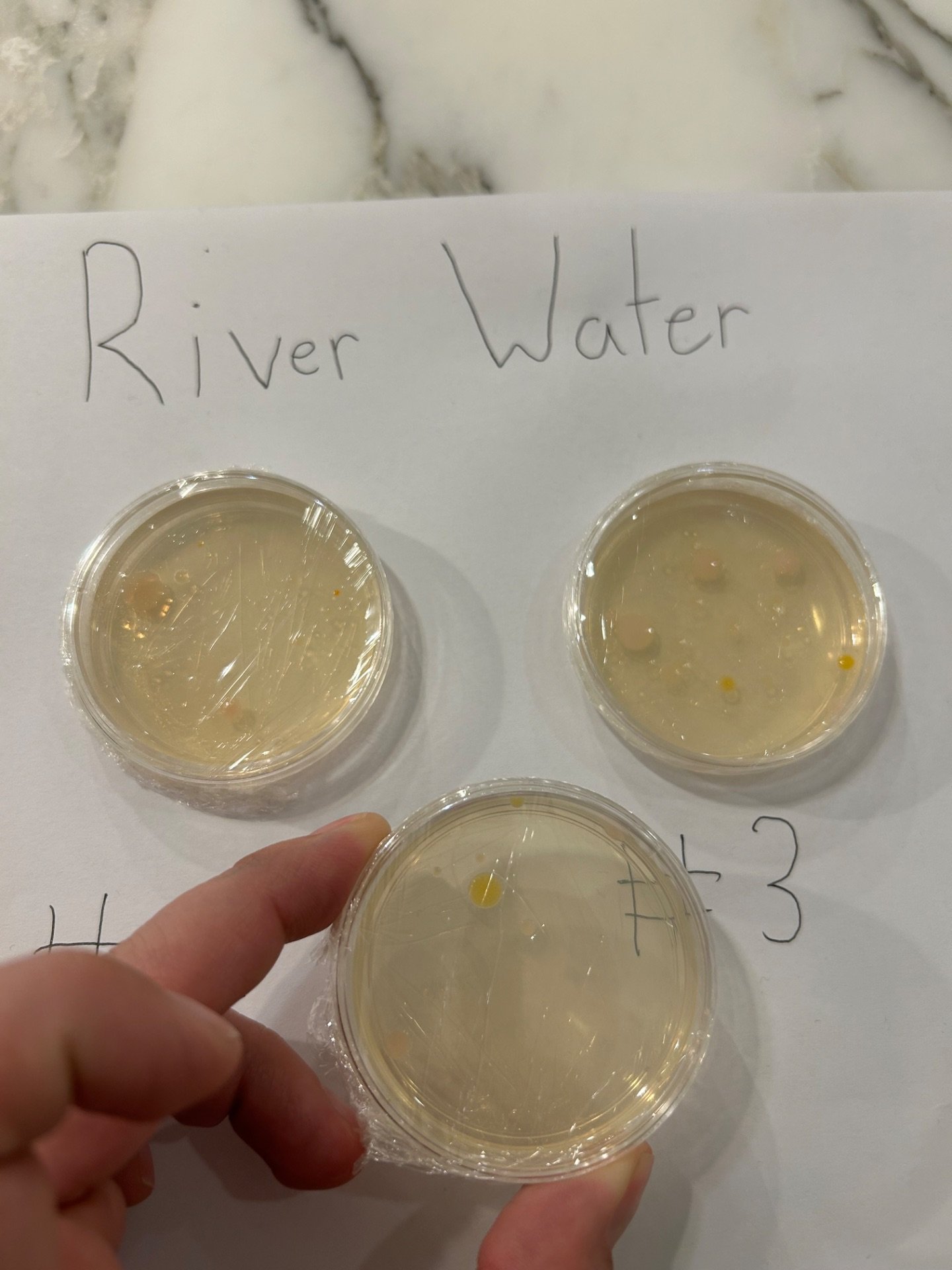
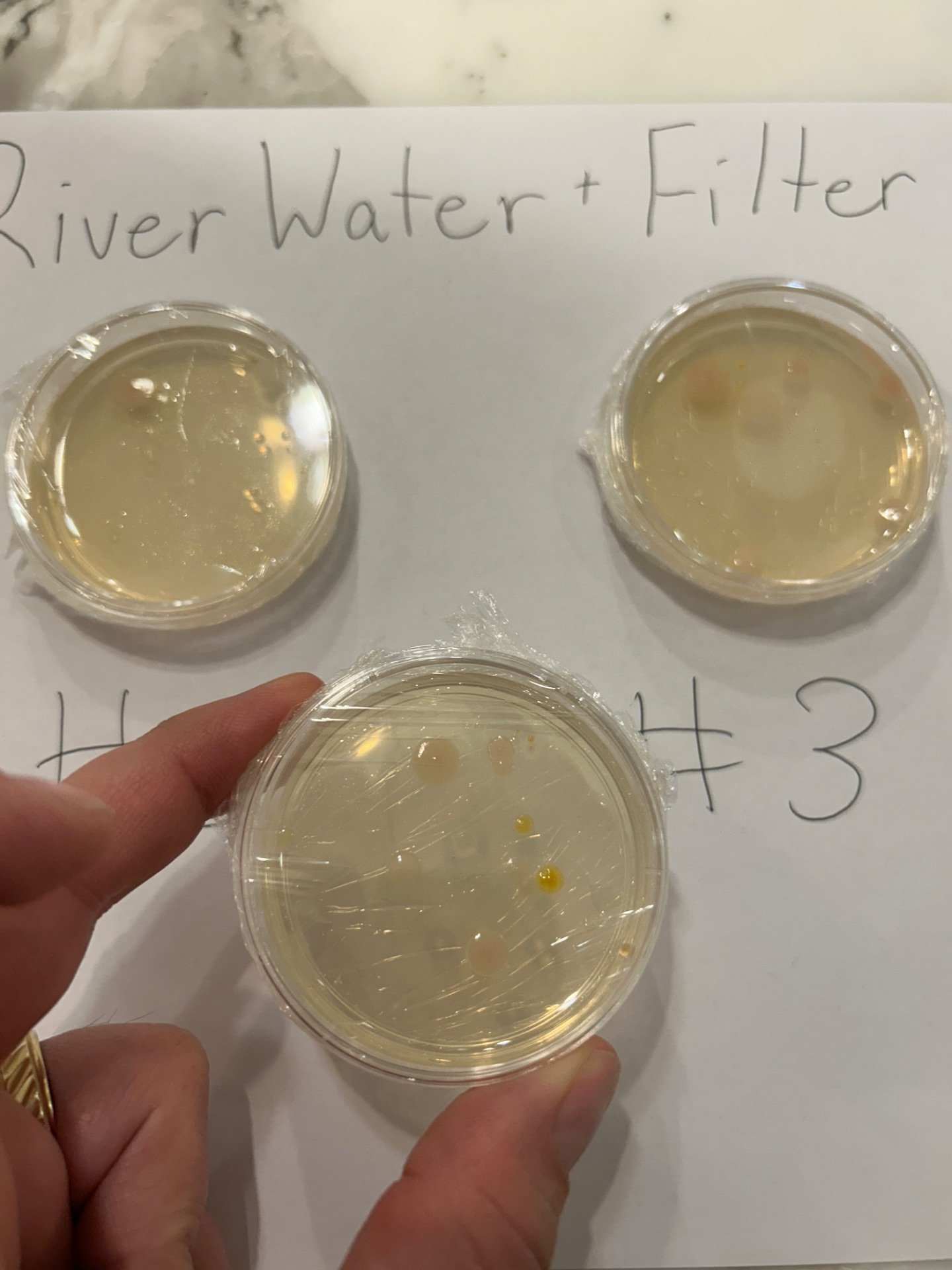
OBSERVATION: We ended up leaving the agar plates up for 5 days for more bacterial growth that will lead to a clever observation. We stopped the experiment on March first and chlorine has a way bigger effect on bacterial life than fluoride. The plate labeled FILTERED WATER #2 Had the most bacterial colonies in its group with a total of 23 colonies while the plates labeled TAP WATER #2 Had the most bacterial colonies in its group with a total of a whopping 1 colony! So it is clear that Chlorine has a greater effect on bacterial life than fluoride. The measurements that we used to conduct this experiment were 4ml river water and 1ml of either Tap Water or Filtered water. In the bowness river this would translate to 20 percent Tap or Filtered water and 80 percent river water.
Analysis
Day One: There was no. Bacterial. Growth in any of The plates. I took all of the pictures at 6:00 pm. All of the plates labeled #1 were being Monitored on a time lapse. The results are at the end.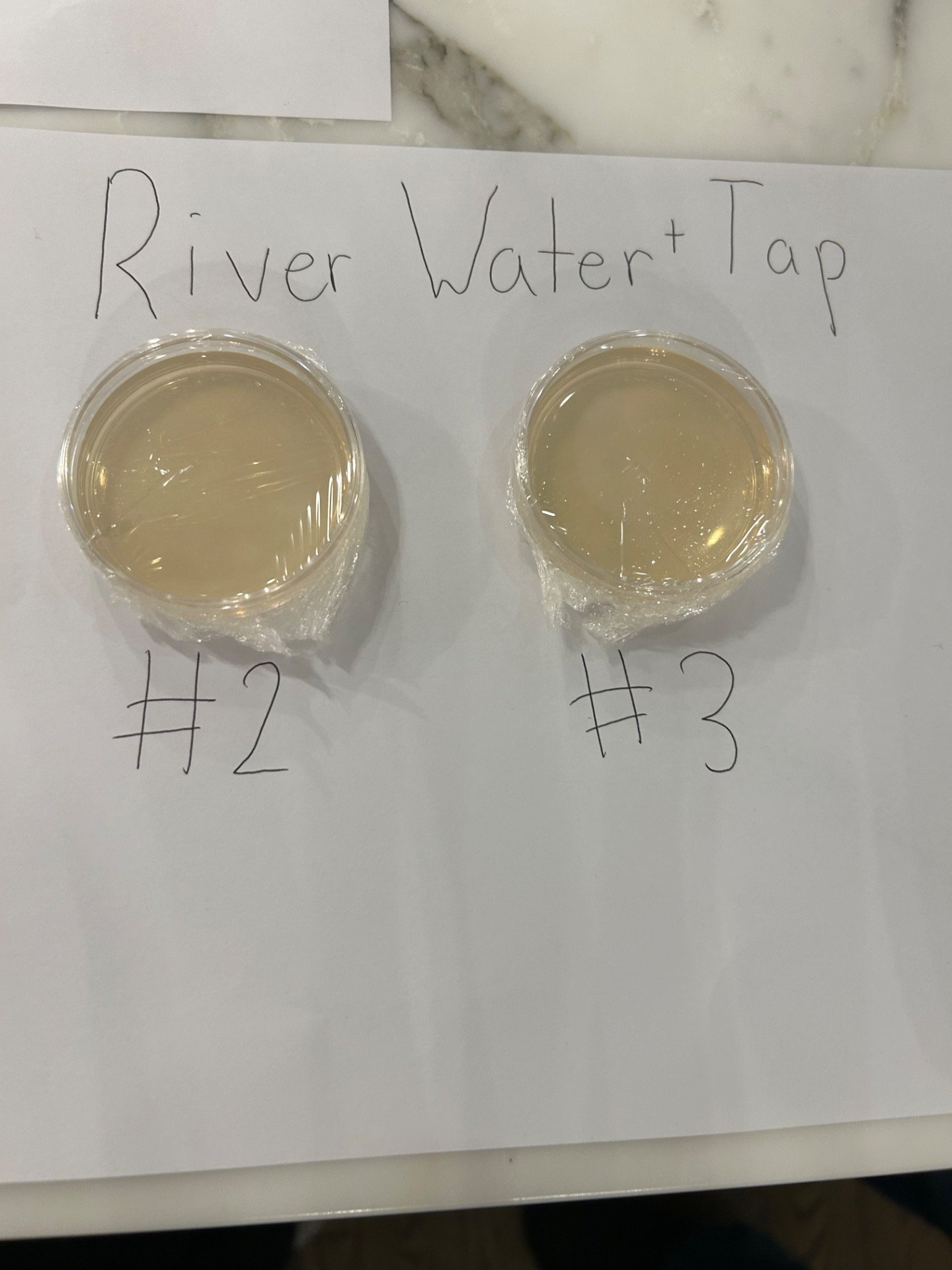
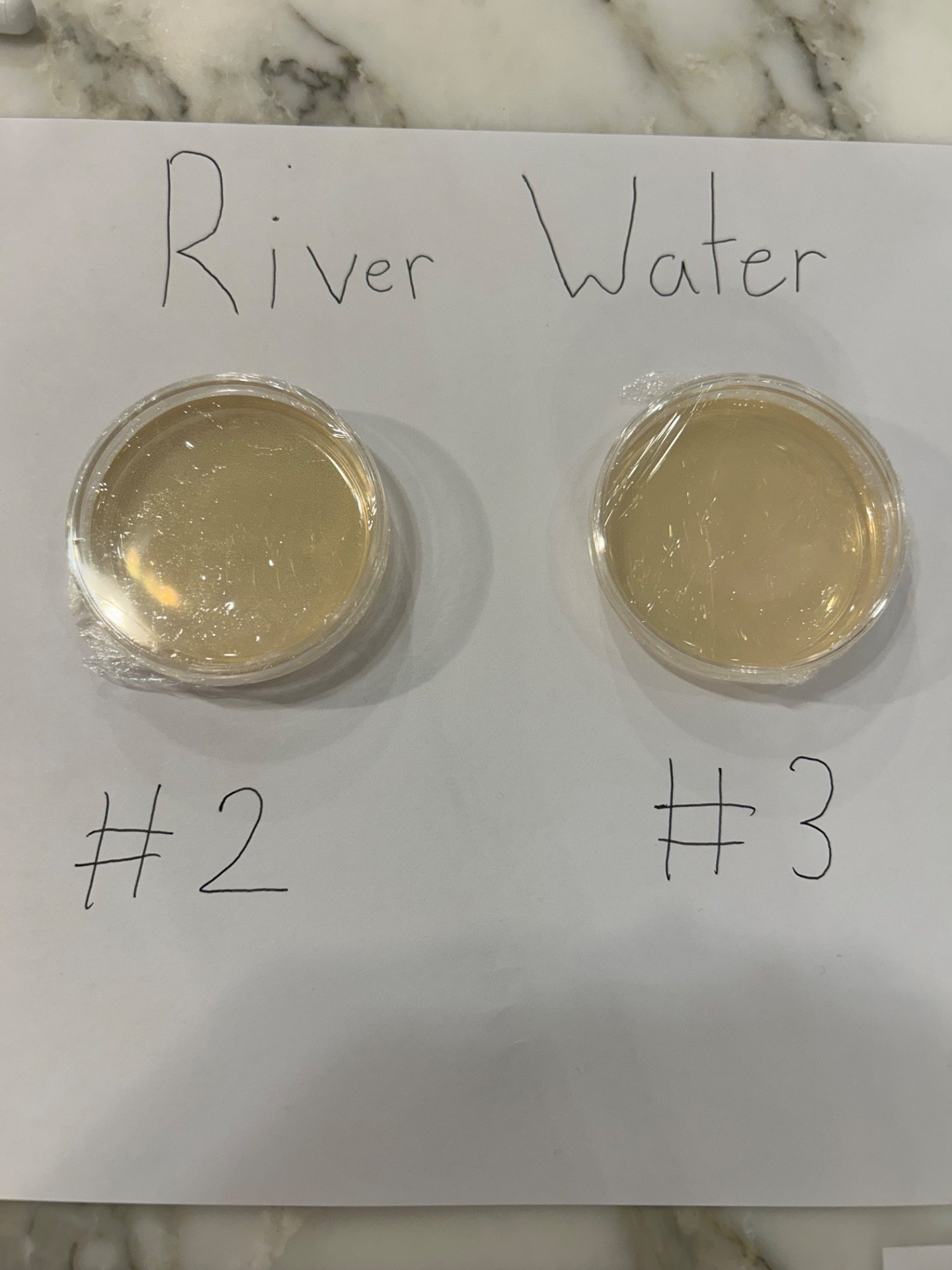
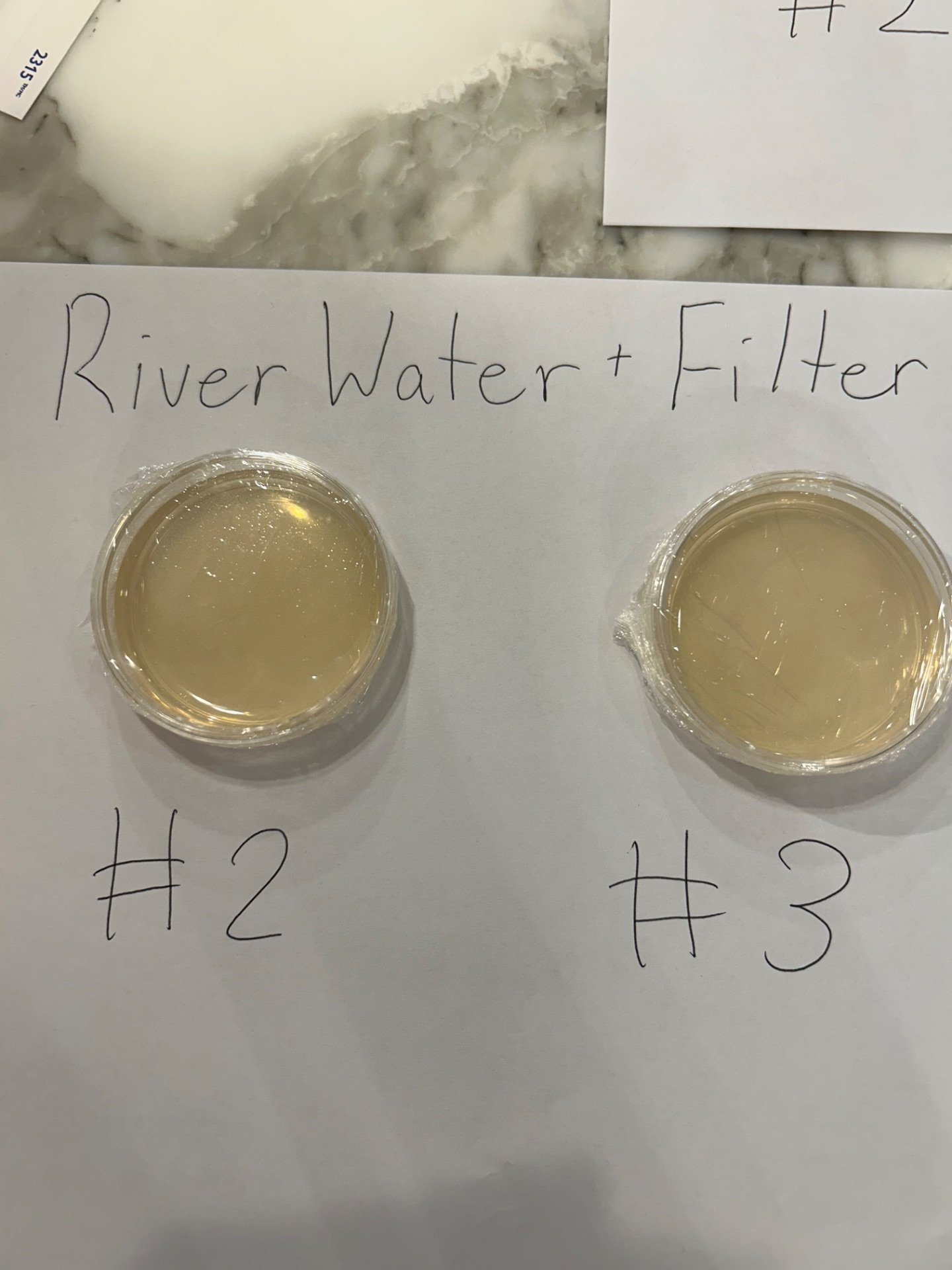 Day 2: There was still no bacterial growth. With an exception of River Water #3! There was a total of 1 bacterial colony!
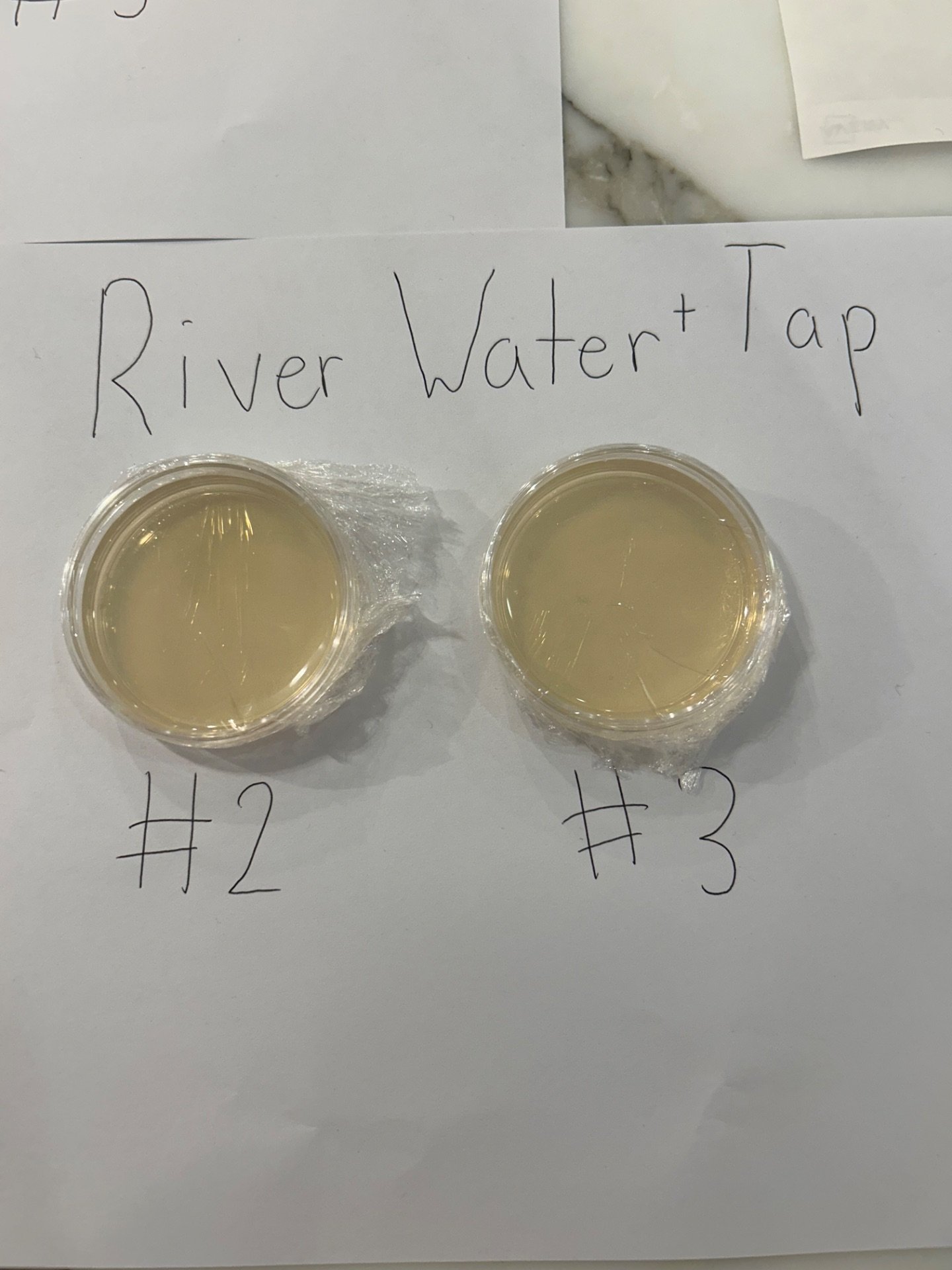
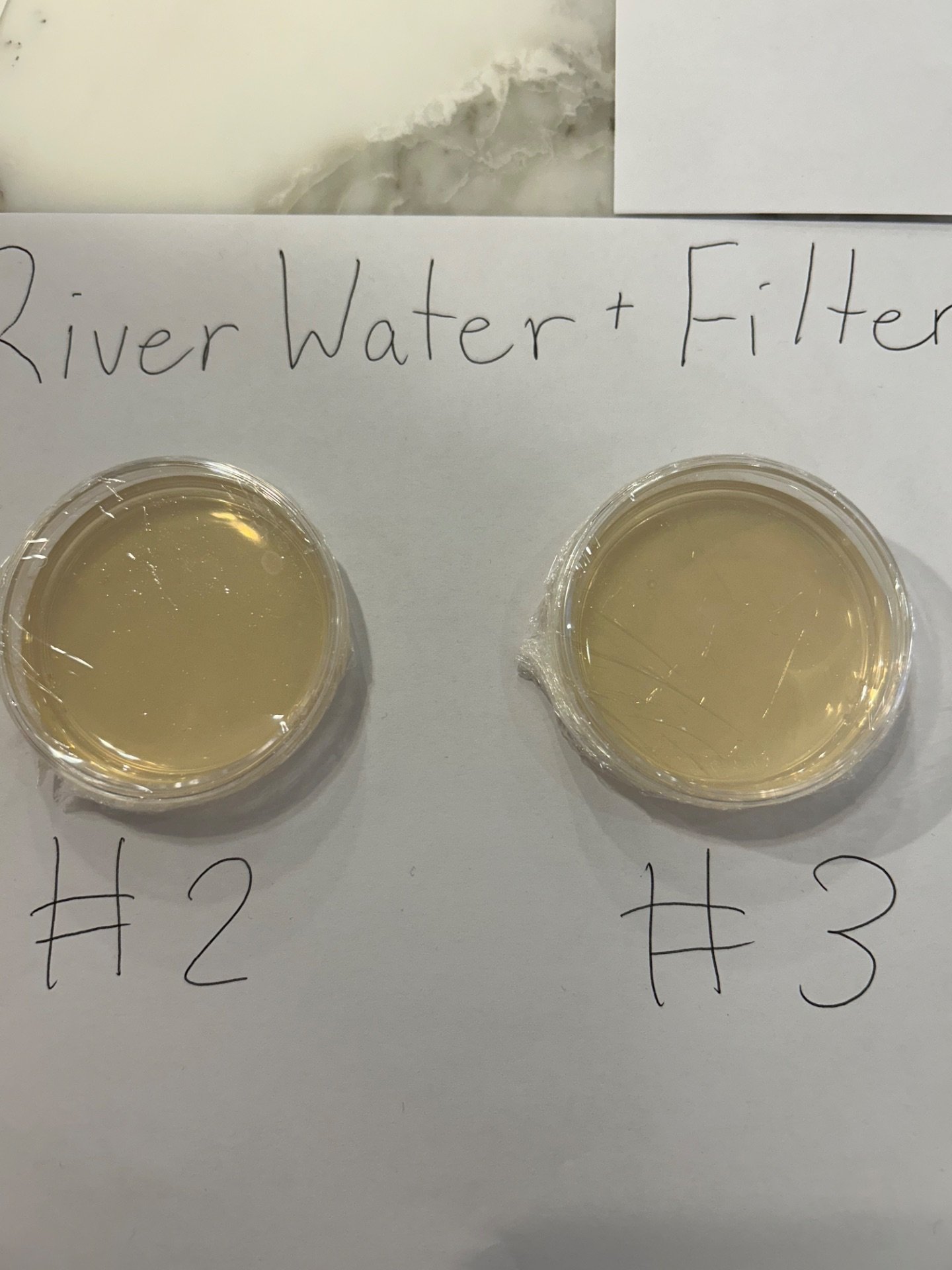
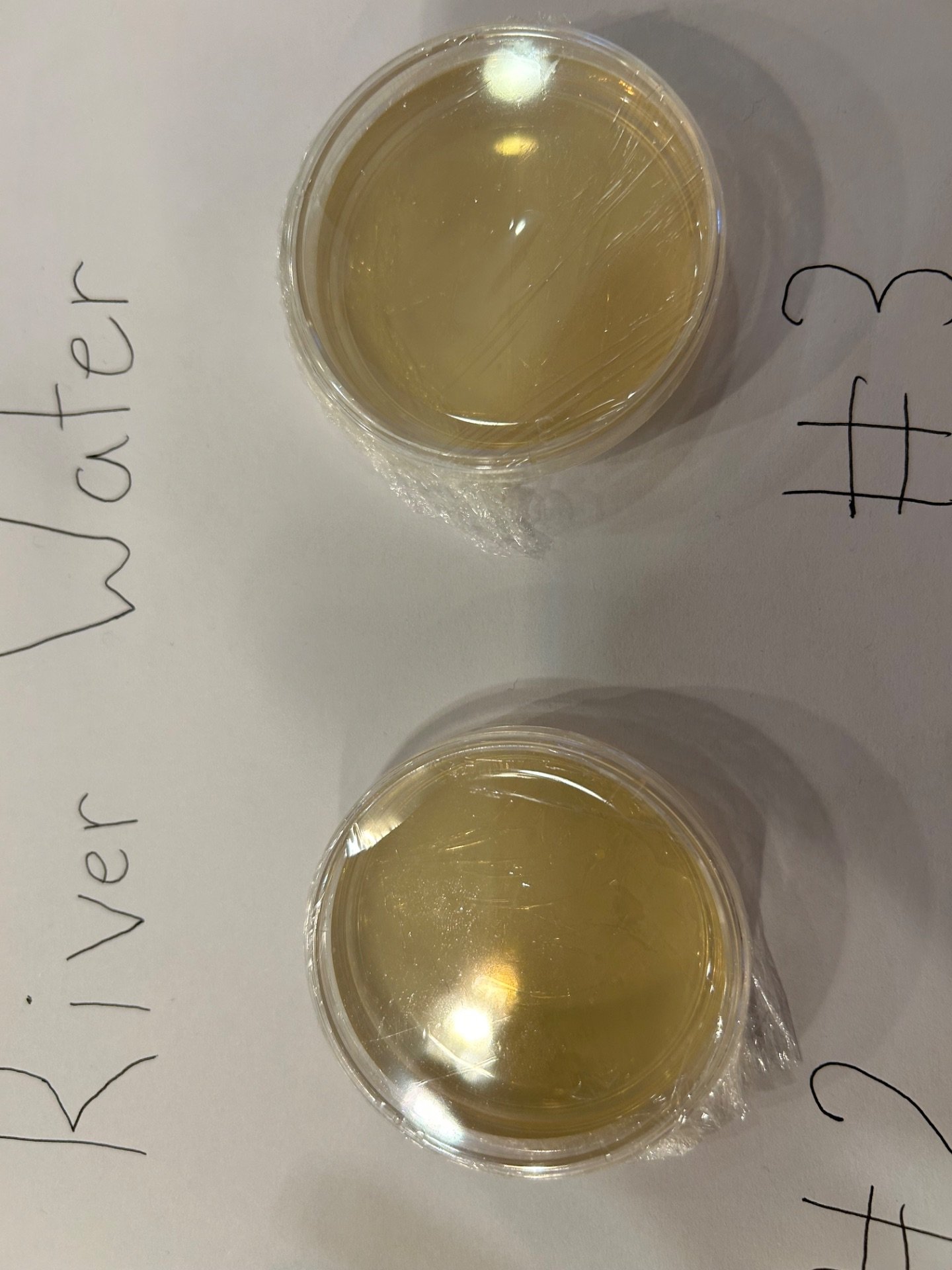 Day 3: There was 2 bacterial colonies in River Water and Filter #3, 1 bacterial colony in River water and Filter #2, No bacterial growth in either of the River Water and Tap agar plates, and there was 2 bacterial colonies in River Water #3 and 4 bacterial colonies on River Water #2!
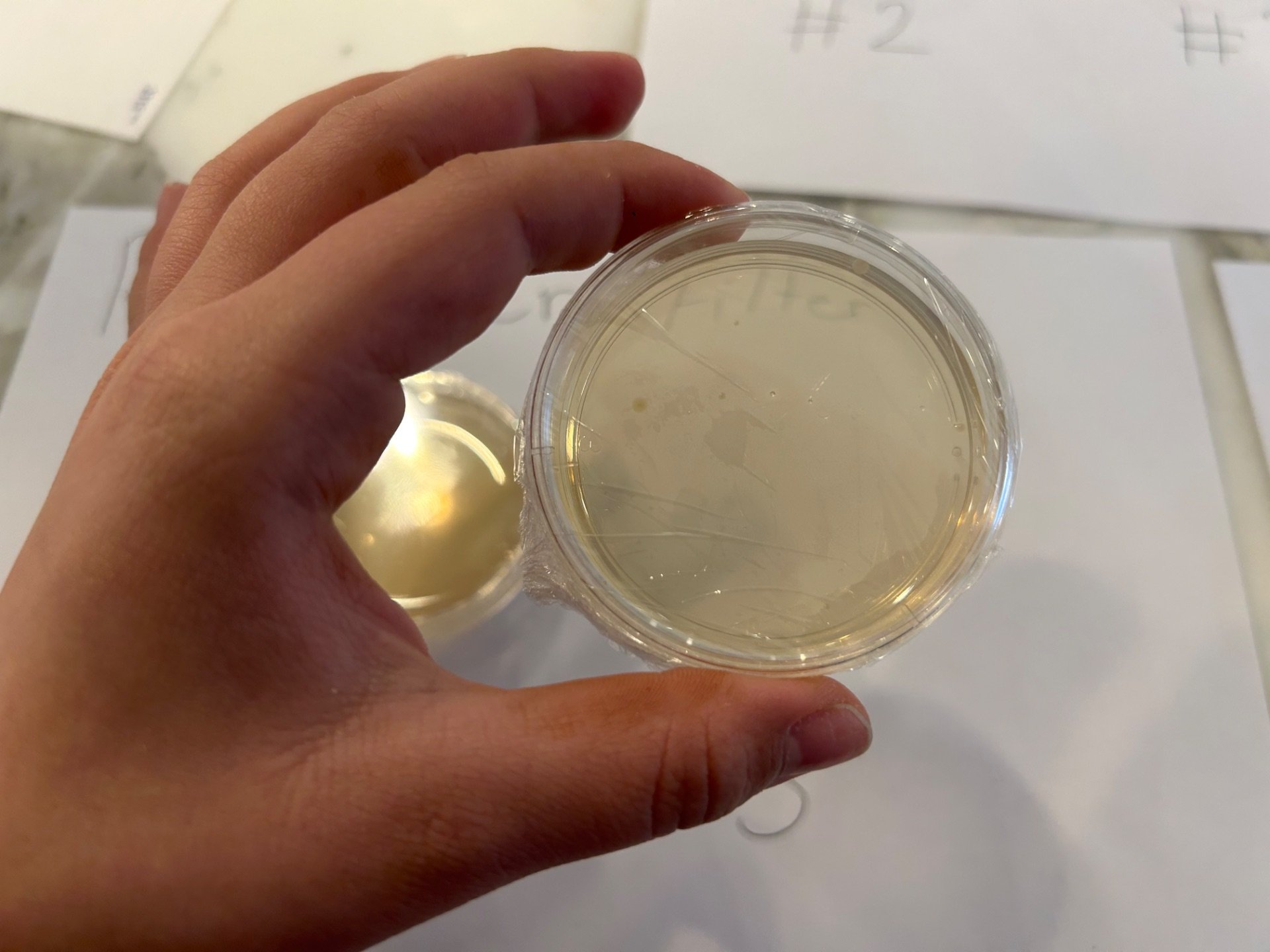
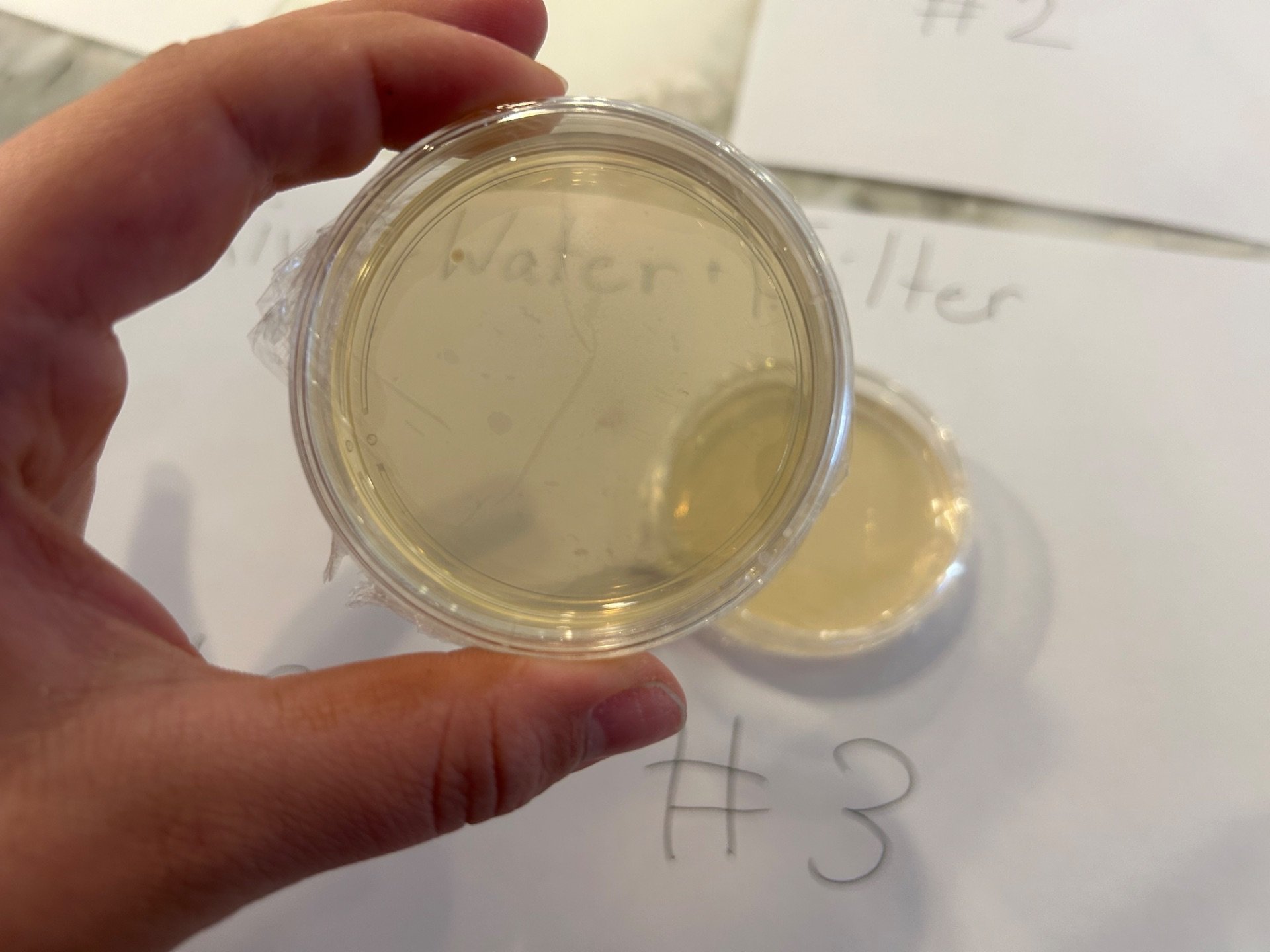
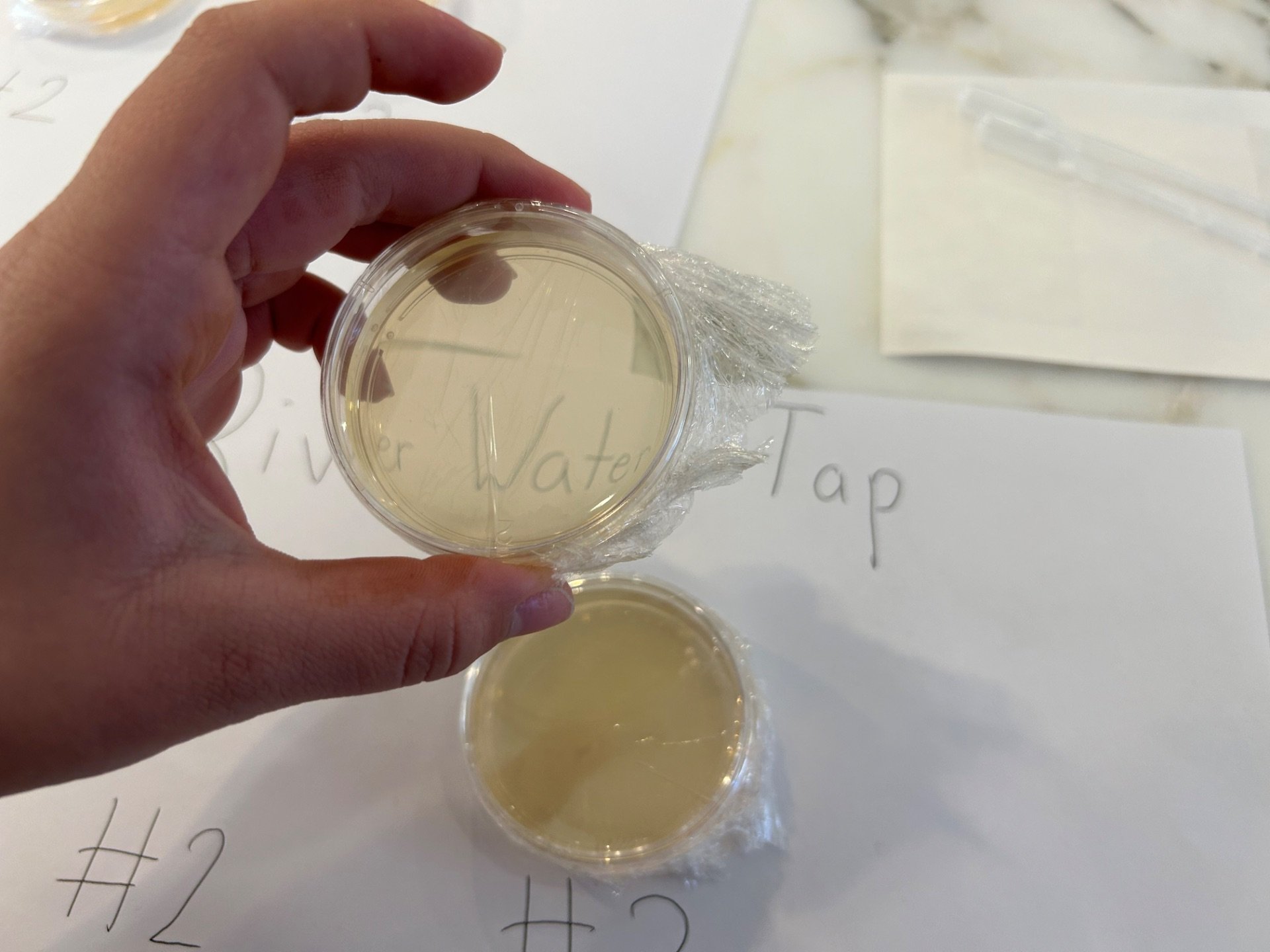
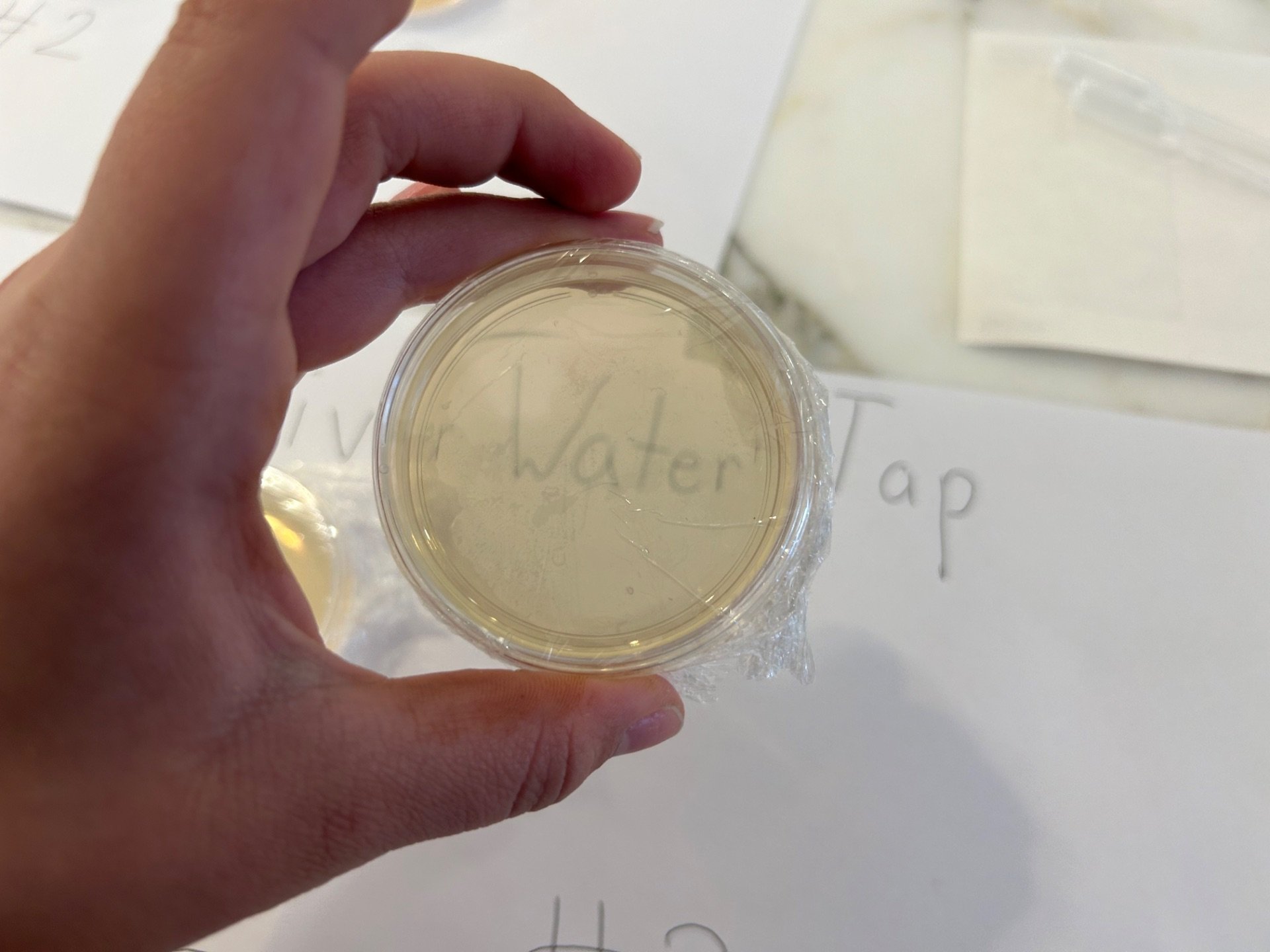
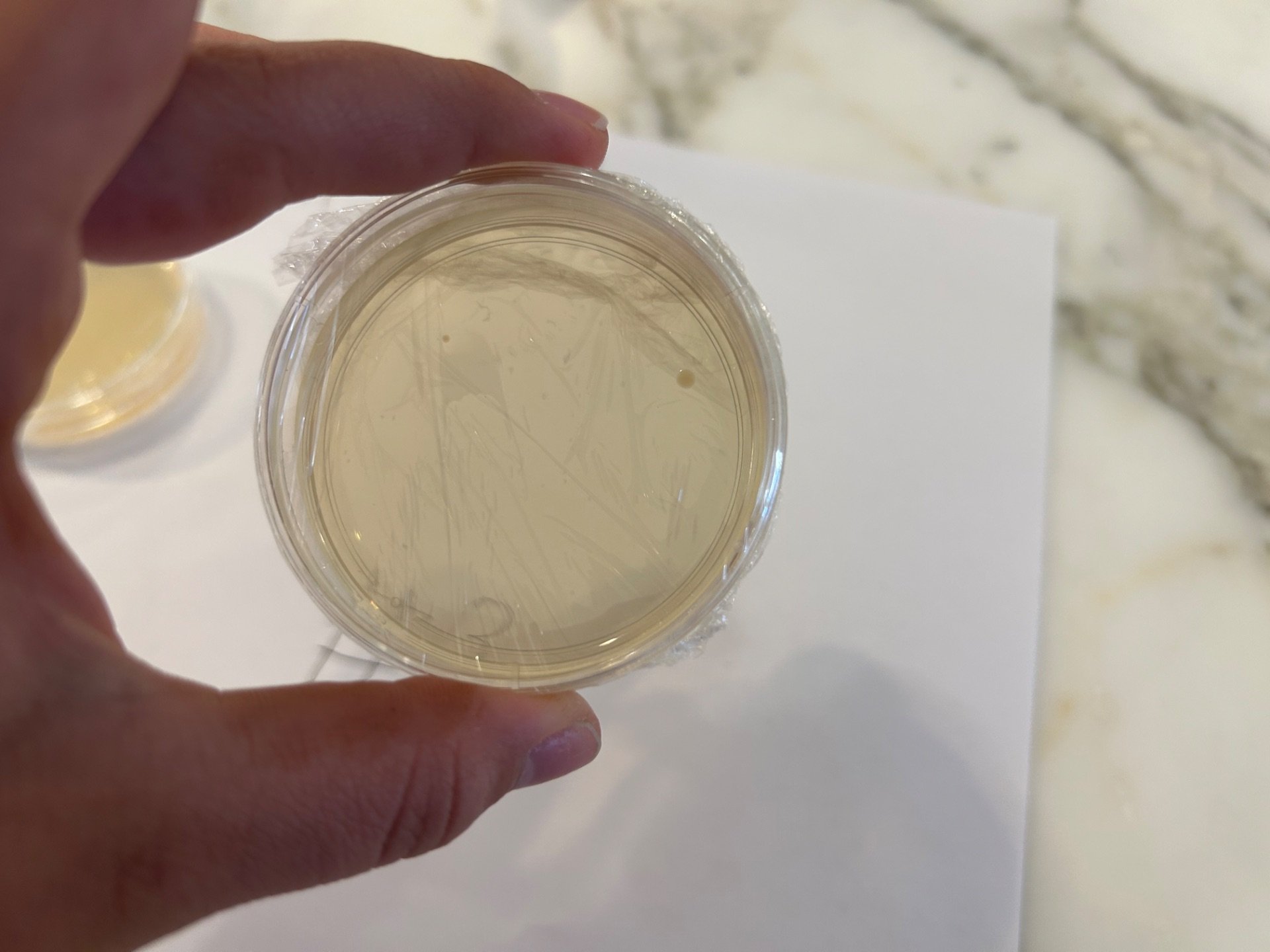
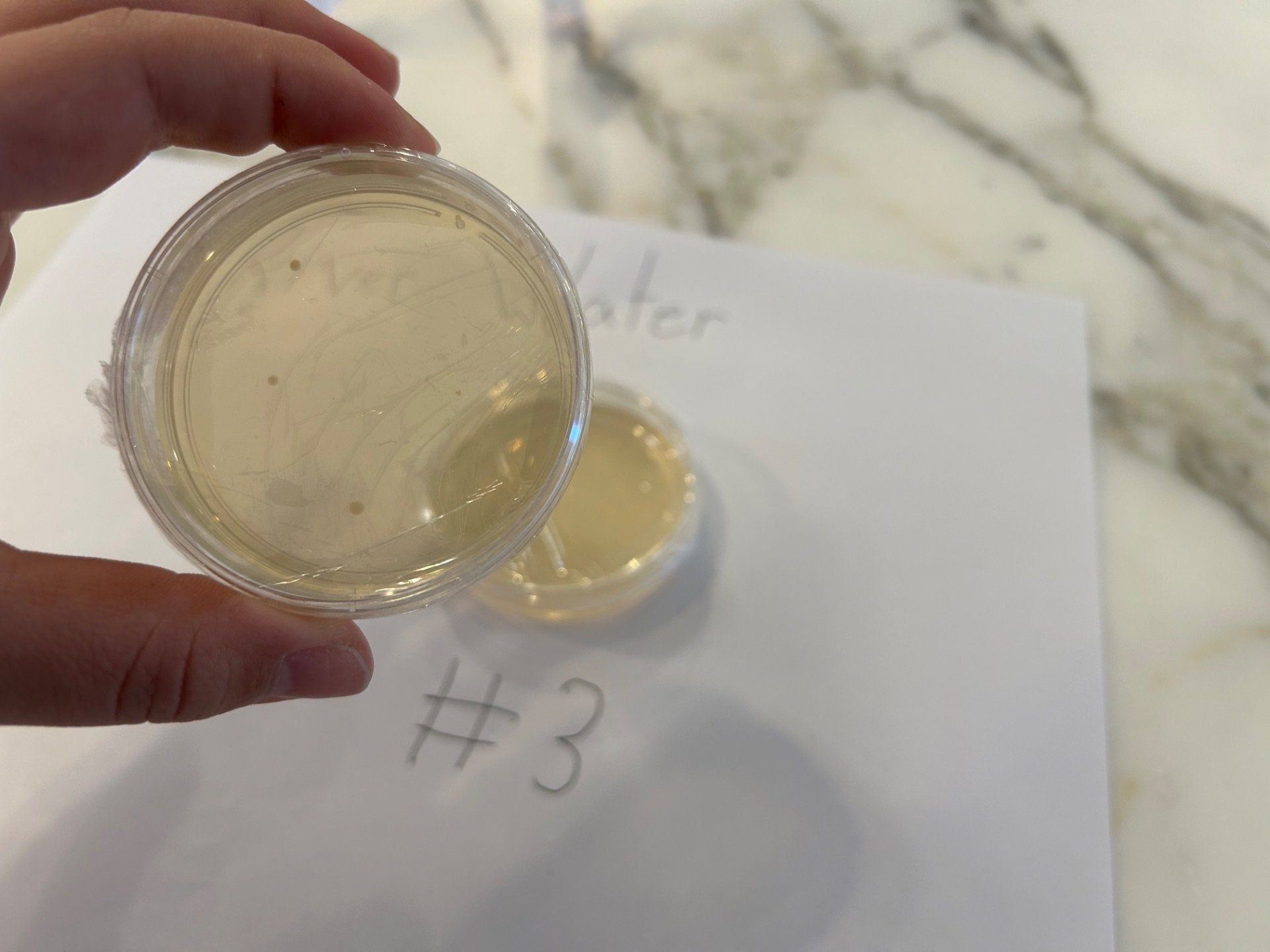 Day 4: Today there was still no growth in River Water and Tap, There was on large bacterial colony in River Water and Filter #2 and 6 bacterial colonies in River Water and Filter #3, And last but not least there was
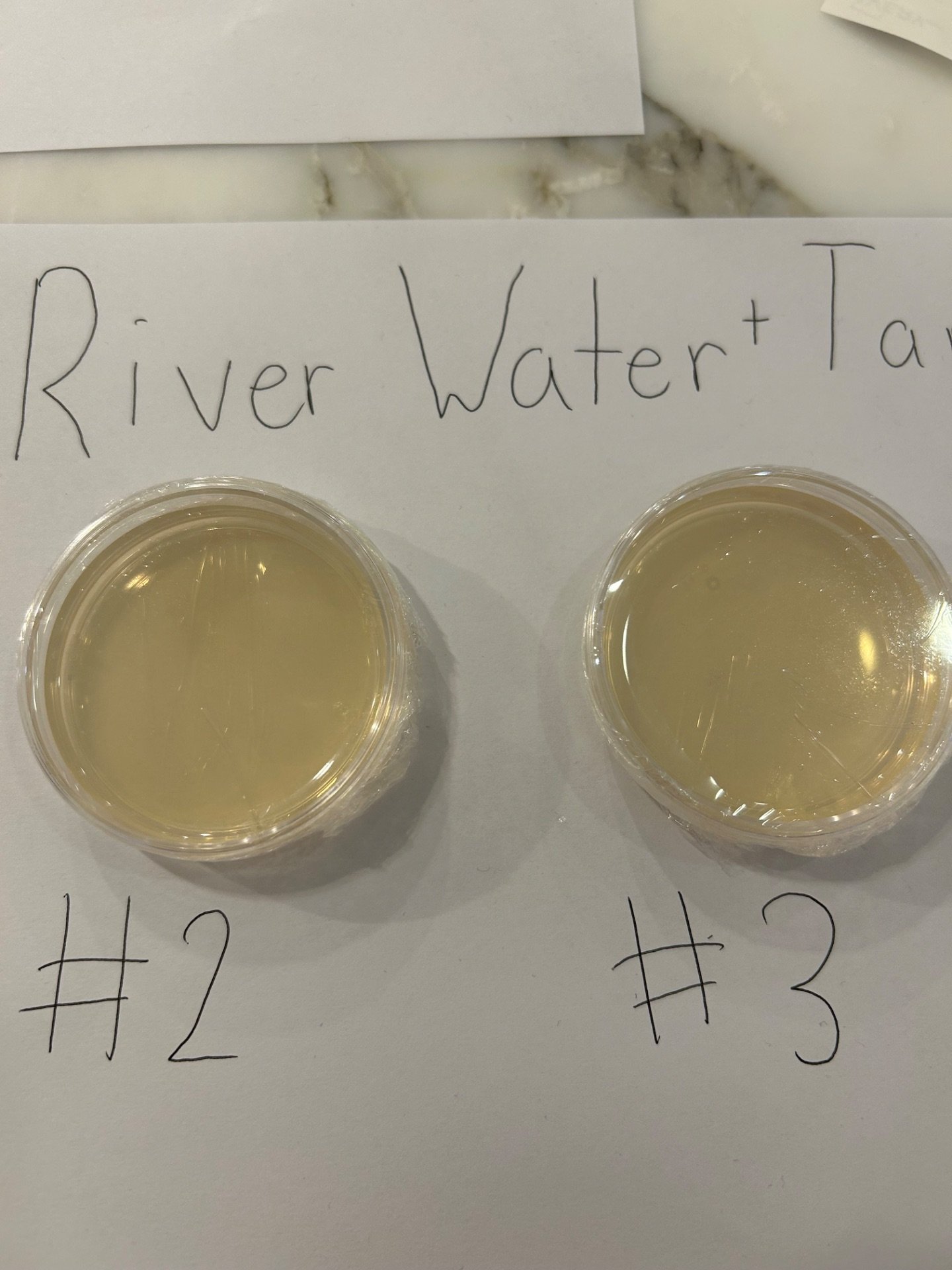
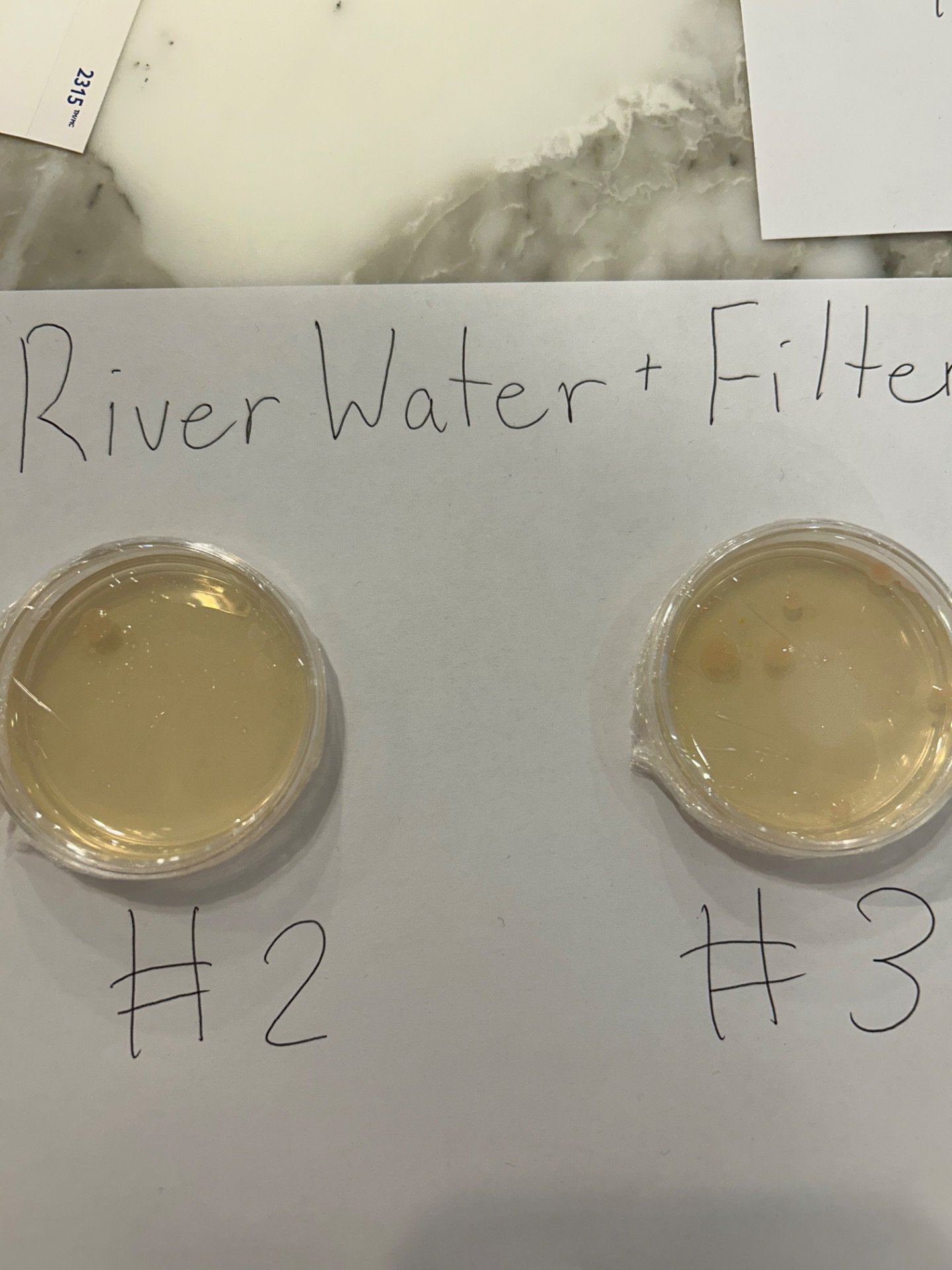
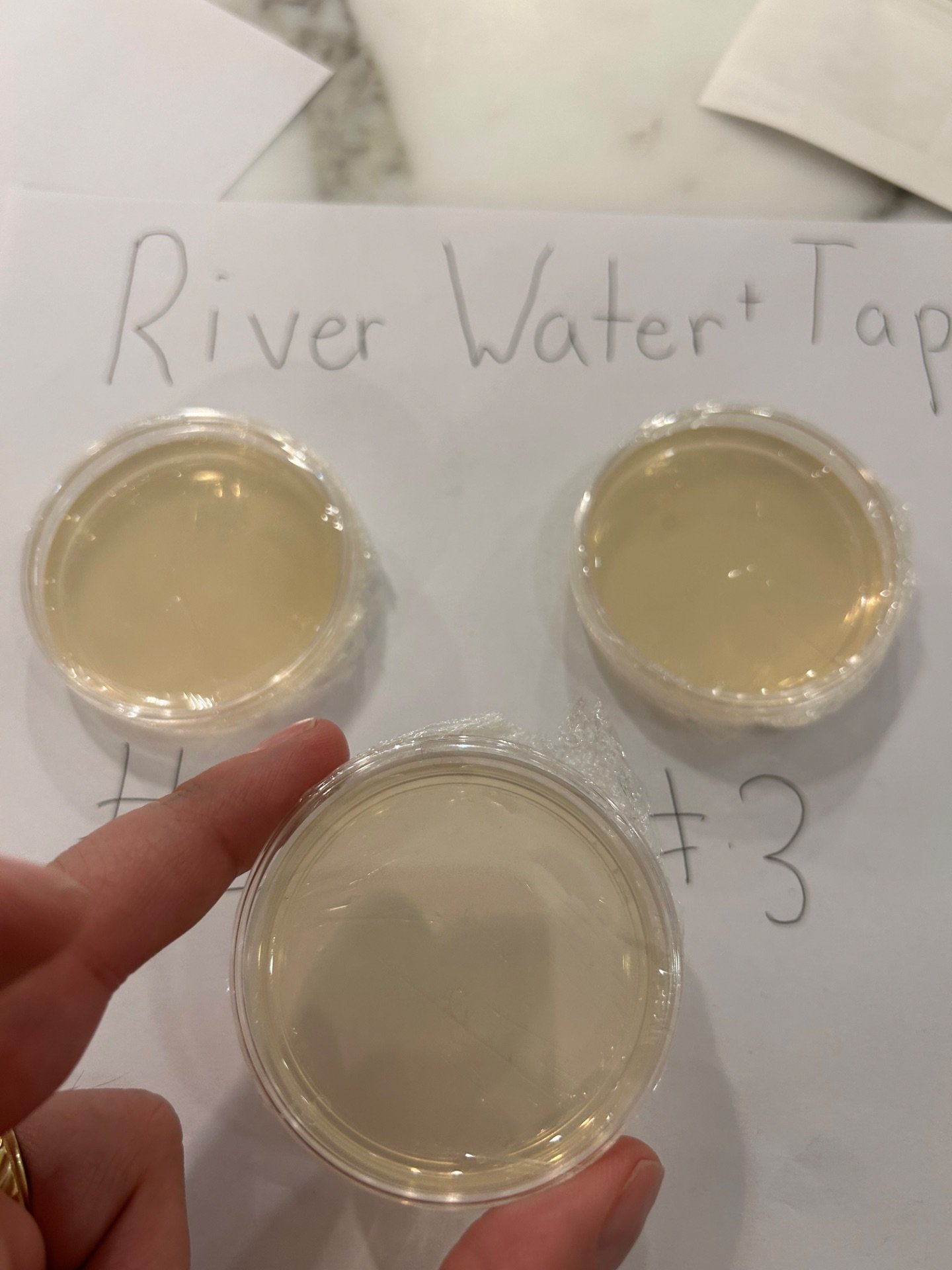 Day 5: This was the last day of doing my experiment and River Water #3 had 24 bacterial colonies and #2 had 5, and River water #1 had 7.Tap And River Water #3 had 1 bacterial colony an #2 had none, and #1 had none.Last but not least Filter and River Water #3 had 11 bacterial colonies, #2 had five, and #1 had 10!
Conclusion
In conclusion, My hypothesis is that If the petri dishes labeled RIVER WATER without additional fluoride is compared to the petri dishes labeled FILTERED WATER that has additional fluoride, Then the Petri dishes labeled RIVER WATER will have a more inhabited and thriving bacterial ecosystem than the petri dishes labeled FILTERED WATER. In which I believe there will be a decrease in bacterial activity Because fluoride prevents further bacterial growth and/or stunts bacterial growth. This was completely wrong. Chlorine from the petri dishes/agar plates labeled "TAP AND RIVER WATER" had only one bacterial colony while " RIVER AND TAP WATER " had a total of 23 bacterial colonies. Chlorine has a larger effect on bacterial growth than fluoride. This could mean that Calgary should stop adding chlorine as a water treatment procedure for the well being of Calgary's underwater bacterial colonies.
Application
My Projects Real world potential is environmental monitoring and water quality. My project can establish a baseline for what are safe or harmful levels of fluoride for natural river ecosystems. Elevated fluoride levels, whether naturally occurring or from industrial runoff (e.g., from fertilizer production or aluminum smelting), can disrupt the natural balance of microbial communities. My project can also help assess ecosystem health: Bacteria are vital for river health, as they drive biogeochemical processes like nutrient cycling (e.g., nitrogen and carbon cycles) and the decomposition of organic matter. My project could show how fluoride contamination impairs these essential functions, affecting the entire food chain, including invertebrates and fish, which are highly sensitive to fluoride toxicity. The future potential that my project fluorideflow would be Informing Regulatory Standards: The results could provide evidence for governments and environmental agencies to review and refine existing safe limits for fluoride concentrations in industrial effluents and natural water bodies to better protect aquatic life and overall ecosystem function. The other future potential would probably be understanding microbiome interactions: Future studies could expand on your findings to investigate how fluoride interacts with other pollutants in the river water, as fluoride may act in synergy with other contaminants to increase overall ecological damage.
Sources Of Error
The sources of Error/ What we would do differently next time.
- Attempt to find out which bacteria’s are contaminating the water for a clearer analysis
- You can’t guarantee that you will catch the same amount of bacteria in each of the agar plates in which we learned with the RIVER WATER #1 that we used in our video
Citations
Citations!!!!:
1. Boger dental ( pros and cons of fluoride ) 2.Cleveland clinic ( skeletal fluorosis) 3. Pubmed central ( common bacteria in bow river ) 4. Division of public and behavioral health ( Fluoride facts ) 5. Quora ( Healthy dose of fluoride ) 6. BBC ( bacteria facts )
Acknowledgement
Acknowledgements/Credits:
1.My parents for all their support and encouragement through this process! ( also for the supplies ;-] ) 2. My teacher Ms.James! I would like to acknowledge her for introducing me to the CYSF and giving me all the heal I need while working at school.