
Exploring The Potential Applications Of mRNA Technology In Other Medical Uses
Lucas Babuk
Joane Cardinal-Schubert High School
Grade 11
Presentation
No video provided
Problem
mRNA technology shows great promise in many areas, but this potential remains unrealized in most such areas. The technology presents some unique advantages over other drug types, such as being cheaper, easier and quicker to manufacture, this presents potential new applications which warrant further exploration, which is the objective here.
Method
Firstly, research was done on the manufacturing, history, and central concepts of the technology, with more research being done as needed, then, potential applications were explored, resulting in the ideas seen here. Research was conducted with various online resources to learn the fundamental aspects of mRNA technology, then returning to gather more information as necessary. New application proposals were based on preexisting knowledge combined with the results of research, then further studied.
Research
1 - Introduction
1.1 - History
Using mRNA for vaccines was an idea that originated decades ago, and first saw experimental research in a 1993 study attempting to use mRNA for a vaccine against influenza[2]. The first major breakthrough came in 2005, with a paper by Katalin Karikó and Drew Weissman, where they discovered that many nucleoside modifications drastically reduced the body’s immune response against synthetic mRNA[3]. This discovery eventually won the 2023 Nobel Prize in Physiology or Medicine for Karikó and Weissman[4]. mRNA vaccines were later used in the COVID-19 pandemic with great efficacy and quick development[1], with the findings of Karikó and Weissman being essential for this. Pfizer/BioNTech was the first to release a vaccine against SARS-CoV-2, Comirnaty, which uses mRNA; Moderna’s SpikeVax soon followed. There are other applications of the technology currently under study, such as cancer immunotherapy[5], and the treatment of autoimmune diseases[6].
1.2 - Technological Background
At the core, mRNA technology is quite simple; it consists of mRNA transcripts inside of lipid nanoparticles (LNPs), once injected, the LNPs protect the transcripts and allow them to enter cells. Once inside a cell, the transcript leaves the LNP, and is translated. The newly created molecule then proceeds to complete the task it was designed for[1]. This system uses the body’s own cellular machinery to produce the desired product, which has benefits for manufacturing, as well as in more specific areas relating to the medication’s purpose. There are many specifics, which are covered in more depth in section 1.3.
1.3 - Manufacturing
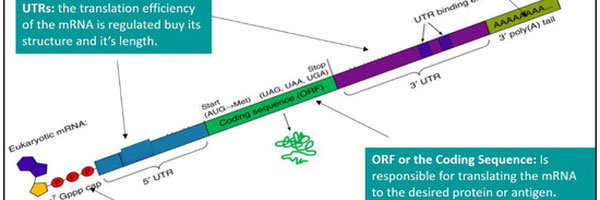
As mentioned in section 1.2\, mRNA technology possesses several benefits related to manufacturing over alternatives\, such as being cheaper\, quicker\, and more versatile than other manufacturing platforms[7]. The process involves three main stages: upstream production\, downstream purification\, and LNP formulation. Upstream production is where the transcripts are created with what is known as an in vitro transcription (IVT) reaction. In the IVT reaction\, RNA polymerase enzymes\, of which the specific one used can vary\, are used to make mRNA transcripts of a DNA sequence encoding the desired final product. It is also in this stage that the critical nucleoside modification occurs; various enzymes are used to this end\, the most notable modifications are the addition of a 5’ prime cap and poly(A) tail. In downstream purification\, the products of the IVT reaction have impurities removed. Impurities can include enzymes used in the IVT reaction\, DNA templates\, and incorrectly formed transcripts; such impurities negatively affect the safety and efficacy of the medication and their removal is very important. There are many methods available for the downstream purification process\, in smaller lab-scale production\, DNase enzymes and lithium chloride (LiCl) precipitation is the most common protocol\, but it notably cannot remove defective transcripts. In larger-scale manufacturing\, various chromatography methods are used. mRNA is quite fragile\, and thus the transcripts need to be protected\, this is typically done with LNPs produced in the LNP formulation step. There are several methods for this step\, and as it is beyond the scope of this research\, they will not be explored here\, but in general\, they involve creating the LNPs separately from the transcripts\, before combining solutions containing the LNPs and transcripts in ways in which the transcripts will naturally become encapsulated in the LNPs. Once LNP formulation is complete\, the final product is a solution of mRNA transcripts coding for a desired peptide\, which are encased in lipid nanoparticles to protect them and allow them to enter cells and be translated. This system possesses many benefits over the manufacturing of other medications\, most notably that it is simple relative to such processes; it also does not involve live cells at any point\, which is often a source of issues in pharmaceutical manufacturing\, the relative simplicity also allows for less expensive production\, the process is highly adaptable as well\, allowing for production to be more accessible\, easy to modify if necessary\, and for the end product to be changed if desired[1][8].
1.4 - Drawbacks
Despite its many strengths\, as with anything else\, mRNA technology possesses weaknesses. First\, there are some minor safety concerns\, most notably pertaining to anaphylaxis; mRNA vaccines have been shown to have higher anaphylaxis rates than standard vaccines\, but still at a low rate[9][10]\, Besin et al propose that this is due to preexisting antibodies against the LNPs[11]. Another issue is that of vaccine hesitancy\, even in non-vaccine uses. Vaccine hesitancy has always been an issue for public health\, and surveys showed that it was definitely present for mRNA vaccines during the COVID-19 pandemic[12]\, much of which is related to the mRNA technology itself[13]\, which could cross over into other areas where it is applied. Lastly\, most mRNA vaccines that have been produced\, whether or not they were eventually deployed\, have required cold storage to the point of -80°C\, portable freezers can help with transport\, but the temperature requirements still pose a potential issue[1].
Data
2 - Potential Applications
mRNA technology has proven very effective in vaccinology[1], but this is not the only area where that could be the case, and innovations in other areas are already being made as mentioned briefly in section 1.1, but there are definitely more where the technology shows potential. Some of those potential alternatives are explored here.
2.1 - Biologic Alternatives
Biologics encompass medications produced with living organisms\, and are often quite effective\, but they have significant downsides as well; they are expensive and complicated to produce[14]\, and they present many logistical issues\, such as strict time requirements due to quick expiry\, and high environmental sensitivity to conditions like certain temperatures\, mechanical stress\, and various others[14][15]. mRNA technology could potentially be utilized in this area. Firstly\, one of the most obvious benefits is in manufacturing; as previously mentioned\, one of the main downsides of biologic medications is their production\, which is complicated\, expensive\, often slow\, and relies on living organisms which is a common point of failure\, among other issues[14]\, mRNA could remedy this. As discussed in section 1.3\, some of mRNA’s biggest strengths are related to manufacturing\, it is fast\, relatively simple\, and by extension cheaper\, and most notably here\, can be done entirely without utilizing living organisms. In essence\, this outsources much of the production to the patient’s own body\, which is already capable of producing proteins in large quantities and maintaining everything required to do so\, which requires much effort to do ex vivo. There is nothing without downsides however; mRNA still retains storage issues as biologics have\, specifically the temperature requirements\, which as mentioned in section 1.4\, are present in most mRNA vaccine candidates that have been tested\, and are stricter than some biologics[1][15]. Still\, the potential of mRNA medications as alternatives to biologics shows promise\, which will likely only grow as more thermostable mRNA medications are developed.
2.2 - Genetic Conditions and Protein Deficiencies
Genetic conditions\, and the protein deficiencies they often cause\, or ones not caused by genetics\, also present an area of interest for mRNA technology. Genetic conditions are\, by their nature\, linked to mRNA in many cases\, if a protein is deficient or defective\, it is quite possible that mRNA technology could provide treatment options for such disorders. Many genetic conditions and protein deficiencies do not even have treatments\, and the treatments for those diseases that do have them often are expensive and/or have potentially significant side effects[17]. The high cost is often due to the medication being plasma-derived\, as the specific protein needed is isolated from donated plasma[17]. However\, similar to biologics as discussed in section 2.1\, this could be outsourced to the patient’s body; all but the genetic template and product is functional in these individuals with genetic conditions\, and those with unrelated protein deficiencies may yet have the capability to produce proteins from mRNA transcripts[18]. The main downside is the cold chain[15]\, which is explained in more detail in section 2.1; it is also possible that the amount of proteins produced is not high enough or sustained for long enough\, in this case\, however\, self-amplifying mRNA (saRNA) could be used. The difference between saRNA and regular mRNA is that saRNA possesses genes for viral replicase enzymes in addition to those for the desired final product\, this allows for more transcripts to be created along with proteins\, thus decreasing the required dose to achieve the same effect\, and extending the duration of the effect[19][20]. This could possibly even allow for the mRNA medication to be more effective than existing ones.
2.3 - Research
mRNA could be a useful tool for researchers to help create specific conditions in the lab, whether in the body of a subject or outside of the body in a cell culture, for example. This is especially true if the research requires the effect to be temporary, as mRNA already requires large doses to produce a long enough effect in vaccines[20]. This also more closely mimics the natural process of a protein being expressed, allowing potentially better results, rather than simply adding a sample of such a protein, and could potentially be cheaper depending on the specific protein involved. For in vivo use\, such as clinical trials\, it may prove safer\, as more long-lasting treatments could cause unintended effects that would linger for longer otherwise\, allowing for the transient nature of mRNA medication to be used as a benefit rather than a detriment[21][22]. The main issue immediately visible with this application is that it may cost more than existing methods\, potentially preventing it’s use.
Conclusion
3 - Conclusion
To conclude this project, mRNA shows great potential in several applications, including ones other than those explored here. The technology itself, and its upsides and downsides were reviewed, and with this in mind, three primary potential applications were presented. Use as an alternative to biologic medications shows promise for mitigating many issues with biologics, such as difficulty with production and high cost in particular, with the problem of cold chain remaining at potentially a worse level, but with a brighter future on the horizon as strides are made towards more thermostable mRNA medications. The technology also may hold the key to better treatment options for genetic conditions and protein deficiencies, or even the first for some, with saRNA possibly allowing for treatment that requires less frequent administration with potentially fewer side effects. Biomedical research could also see mRNA technology’s use in order to allow for more control over conditions in a laboratory environment, and could also make clinical trials safer due to the transient effects of mRNA. These applications all have the potential to improve and save lives, a potential that will only grow as the technology continues to advance, further research into these areas with mRNA should certainly be conducted.
3.1 - Artificial Intelligence Use Declaration
In this project, artificial intelligence (AI) was employed for grammar and citation purposes; the AI did not have a role in the actual research. The model used was the large language model (LLM) Claude Sonnet 4.6 from Anthropic, with extended thinking enabled in some cases. All citations suggested by the LLM were verified.
Citations
3.2 - Citations
[1] Gote, V., Bolla, P. K., Kommineni, N., Butreddy, A., Nukala, P. K., Palakurthi, S. S., & Khan, W. (2023). A Comprehensive Review of mRNA Vaccines. International Journal of Molecular Sciences, 24(3), 2700. https://doi.org/10.3390/ijms24032700
[2] Leong, K. Y., Tham, S. K., & Poh, C. L. (2025). Revolutionizing immunization: A comprehensive review of mRNA vaccine technology and applications. Virology Journal, 22, 71. https://doi.org/10.1186/s12985-025-02645-6
[3] Karikó, K., & Weissman, D. (2007). Naturally occurring nucleoside modifications suppress the immunostimulatory activity of RNA: Implication for therapeutic RNA development. Current Opinion in Drug Discovery & Development, 10(5), 523–532.
[4] The Nobel Assembly at Karolinska Institutet. (2023). The Nobel Prize in Physiology or Medicine 2023 – Advanced information. NobelPrize.org. https://www.nobelprize.org/prizes/medicine/2023/advanced-information/
[5] Oberli, M. A., Reichmuth, A. M., Dorkin, J. R., Mitchell, M. J., Fenton, O. S., Jaklenec, A., Anderson, D. G., Langer, R., & Blankschtein, D. (2017). Lipid nanoparticle assisted mRNA delivery for potent cancer immunotherapy. Nano Letters, 17(3), 1326–1335. https://doi.org/10.1021/acs.nanolett.6b03329
[6] Razavi, R., Kegel, M., Muscat-Rivera, J., Weissman, D., & Melamed, J. R. (2025). Harnessing mRNA-lipid nanoparticles as innovative therapies for autoimmune diseases. Molecular Therapy: Methods & Clinical Development, 33(3), 101566. https://doi.org/10.1016/j.omtm.2025.101566
[7] Kis, Z., Kontoravdi, C., Dey, A. K., Shattock, R., & Shah, N. (2020). Rapid development and deployment of high-volume vaccines for pandemic response. Journal of Advanced Manufacturing and Processing, 2(3), e10060. https://doi.org/10.1002/amp2.10060
[8] Reichmuth, A. M., Oberli, M. A., Jaklenec, A., Langer, R., & Blankschtein, D. (2016). mRNA vaccine delivery using lipid nanoparticles. Therapeutic Delivery, 7(5), 319–334. https://doi.org/10.4155/tde-2016-0006
[9] Shimabukuro, T. T., Cole, M., & Su, J. R. (2021). Reports of anaphylaxis after receipt of mRNA COVID-19 vaccines in the US — December 14, 2020–January 18, 2021. JAMA, 325(11), 1101–1102. https://doi.org/10.1001/jama.2021.1967
[10] McNeil, M. M., Weintraub, E. S., Duffy, J., Sukumaran, L., Jacobsen, S. J., Klein, N. P., Hambidge, S. J., Lee, G. M., Jackson, L. A., Irving, S. A., Marcy, S. M., Donahue, J. G., & DeStefano, F. (2016). Risk of anaphylaxis after vaccination in children and adults. Journal of Allergy and Clinical Immunology, 137(3), 868–878. https://doi.org/10.1016/j.jaci.2015.07.048
[11] Besin, G., Milton, J., Sabnis, S., Howell, R., Mihai, C., Burke, K., Benenato, K. E., Howard, M., Kavanaugh, P., Seitzer, J., Lukacs, C. M., Zhu, X., Chivukula, P., & Tatarova, T. (2019). Accelerated blood clearance of lipid nanoparticles entails a biphasic humoral response of B-1 followed by B-2 lymphocytes to distinct antigenic moieties. ImmunoHorizons, 3(7), 282–293. https://doi.org/10.4049/immunohorizons.1900029
[12] Lazarus, J. V., Ratzan, S. C., Palayew, A., Gostin, L. O., Larson, H. J., Rabin, K., Kimball, S., & El-Mohandes, A. (2021). A global survey of potential acceptance of a COVID-19 vaccine. Nature Medicine, 27(2), 225–228. https://doi.org/10.1038/s41591-020-1124-9
[13] Hammarlin, M.-M., Nilsson, M., Hansson Kivikoski, M., Stenvall, J., & Ekström, M. (2024). Fearing mRNA: A mixed methods study of vaccine rumours. In M. Ekström, J. Stenvall, & A. Eriksson (Eds.), Vaccine hesitancy in the Nordic countries (pp. 157–184). Routledge.
[14] Sanford, J. (n.d.). The challenges of manufacturing biologics compared with traditional molecules. Manufacturing Chemist. https://manufacturingchemist.com/the-challenges-of-manufacturing-biologics-compared-with-traditional-molecules-175188
[15] Fuenmayor, J., & Cantarero, S. (2021). Grand challenges in pharmaceutical research series: Ridding the cold chain for biologics. Frontiers in Medical Technology, 3, 603674. https://pmc.ncbi.nlm.nih.gov/articles/PMC7869771/
[16] Ahmed, Z., Safwan, A., & Ahmad, A. (2025). Cold chain logistics: Challenges and innovations in temperature-sensitive product distribution. ACADEMIA International Journal for Social Sciences, 4(3), 4093–4115. https://doi.org/10.63056/ACAD.004.03.0687
[17] Vavilis, T., Stamoula, E., Ainatzoglou, A., Sachinidis, A., Lamprinou, M., Dardalas, I., & Vizirianakis, I. S. (2023). mRNA in the context of protein replacement therapy. Pharmaceutics, 15(1), 166. https://doi.org/10.3390/pharmaceutics15010166
[18] Schürmann, N., El Andari, J., & Grimm, D. (2025). Therapeutic application of mRNA for genetic diseases. WIREs Nanomedicine and Nanobiotechnology, 17(3), e70019. https://doi.org/10.1002/wnan.70019
[19] Silva-Pilipich, N., Beloki, U., Salaberry, L., & Smerdou, C. (2024). Self-amplifying RNA: A second revolution of mRNA vaccines against COVID-19. Vaccines, 12(3), 318. https://doi.org/10.3390/vaccines12030318
[20] Kon, E., Levy, Y., Elia, U., Cohen, H., Hazan-Halevy, I., Aftalion, M., Ezra, A., & Peer, D. (2022). Self-amplifying RNA approach for protein replacement therapy. Pharmaceutics, 14(11), 2388. https://pmc.ncbi.nlm.nih.gov/articles/PMC9655356/
[21] Schlake, T., Thess, A., Thran, M., & Jordan, I. (2019). mRNA as novel technology for passive immunotherapy. Cellular and Molecular Life Sciences, 76(2), 301–328. https://doi.org/10.1007/s00018-018-2935-4
[22] Dammes, N., & Peer, D. (2022). Unlocking the promise of mRNA therapeutics. Nature Biotechnology, 40(11), 1634–1645. https://doi.org/10.1038/s41587-022-01491-z
Acknowledgement
3.3 - Acknowledgements
Though done with less people’s aid than my project last year, this research still has people who I wish to acknowledge for their contributions. The teacher in charge of Joane-Cardinal Schubert’s Science Fair Club, Jessica Sung, was one of the most important advisors last year; that continues this year, and hopefully the next as well, her guidance has shown to be very helpful, and I am confident in saying that without it, this project and the one before it would have most likely been of noticeably lower quality. My tutor, Jenna LeHocky, also provided not insignificant aid, most notably in the forms of helping with writing and wording when I was struggling to find how to communicate, and helping with citations. And lastly, my parents, Greg and Stephanie Babuk, provided support I needed to finish this project as pressure mounted, and it may have made the critical difference in whether I could have seen this project to completion at all.