

Testing the responsiveness of hydraulic systems under extreme cold weather: Towards faster and more reliable heavy equipment.
Harjee Boparai
Khalsa School Calgary Educational Foundation
Grade 6
Presentation
No video provided
Hypothesis
If the hydraulic system is exposed to extreme cold temperatures, it will experience a slow functionality in the colder weather and the response time will be slower for AST 20 hydraulic oil as compared to Univis HVI 13 because the viscosity for AST 20 is higher in extreme cold compared to Univis HVI 13.
Univis HVI 13 Pour Point- Safety Data Sheet AST 20 Pour Point- Safety Data Sheet

Research
What is a Hydraulic System?
A hydraulic system is a system that uses fluid energy to work. It uses liquid oil to transmit force. This fluid energy is made by compressing hydraulic oil to generate power and control machinery and devices. It can increase a small force by dozens of times and turn it into a great force. Using the hydraulic system helps lift up or move loads easily and safely.
Examples of equipment with hydraulic systems:
NA hydraulic shovel like CAT 6060 is a heavy-duty excavating machine that uses hydraulic cylinders to move its boom, stick, and bucket for digging and material handling.
Other examples are CAT 988H Loader, CAT Skid Steer Loader 279D3.
Viscosity and Pour Point
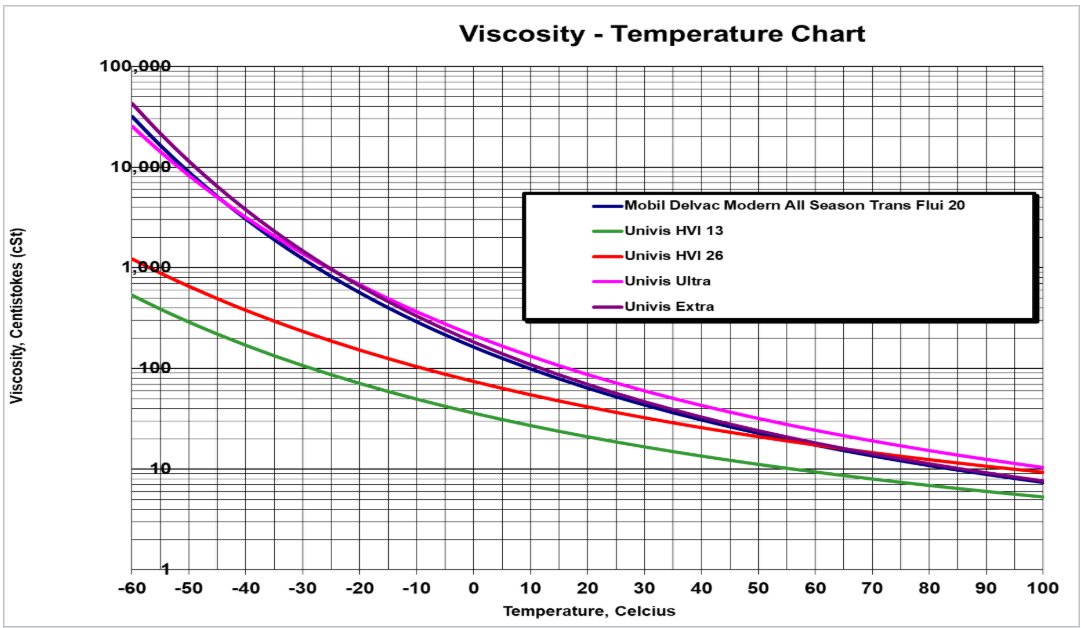
Viscosity is the measure of how thick or thin a liquid is. High viscosity means thick and slow movement. Low viscosity means thin and fast movement. Time increases as viscosity increases. AST 20 (All Season Transmission) oil has a viscosity of 200 centistokes at -10 Deg C, but becomes extremely thick at 10,000 centistokes at -50 Deg C. The pour point is the lowest temperature where oil still flows. Below the pour point, the oil no longer pours or flows and can behave like paste or solid, which will stop the hydraulic circulation and can prevent a system from operating until the oil warms. The pour point is different from viscosity numbers but both describe cold performance and are often listed on an oil’s product data sheet. The pour point of the AST 20 (All Season Transmission) hydraulic oil is -45 Deg C.
Viscosity and Temperature
Viscosity tells us how thick or runny a liquid is. For hydraulic oil, the viscosity tells us how easily the oil flows through pumps, valves, and hoses. When the temperature drops , the oil becomes more viscous (thicker). When the temperature rises, the oil becomes less viscous (thinner). The viscosity increases as the temperature decreases. The high viscosity makes it harder for pumps and motors to operate more efficiently and quickly. This change in flow affects how fast hydraulic systems move and its efficiency. It also increases the risk of component failure. The thick fluid/oil moves bit tough causing more time.
Hydraulic Problems in Extreme Cold
Cold weather causes two linked problems:
- Hydraulic oil thickens and flows poorly, reducing responsiveness and increasing forces required.
- Quick attach hoses fail and the rubber/plastic parts (hoses, seals) become stiff and embrittle (downtime). Together these cause slower movements, stuck valves, leaking or burst hoses, and component damage.
Specific examples of failures:
- Slow actuator response/ limited boom extension: The cylinders move slower because the flow rate through the hydraulic system drops.
- Quick attach hose cracking and rigid fittings: Hoses become stiff and can crack when flexed. The hoses’ elastomers lose elasticity in the cold, increasing the risk of failure.
- Solenoid and valves problems: Solenoid valves and control valves rely on precise movement and pressure. Thick oil delays spool movement and can prevent solenoids from actuating properly. In very low temperatures, valves can stick.
- Pump overload or wear during cold start: Pump draws harder to circulate thick oil at startup. Repeated cold starts with thick oil raises wear, increases heat generation, and cause pump failure.
- Oil “ gelling” or freezing: If the oil cools below its pour point, it can stop flowing entirely and require heating before operation is possible.
Examples of real-world heavy equipment types affected: CAT loaders, dozers, telehandlers, can handlers, skid steers, mining shovels – all use hydraulic pumps, valves, hoses, and cylinders and are related to cold related responsiveness loss and mechanical damage.
Viscosity-Temperature Chart for Hydraulic Oils
Variables
Manipulated/Independent Variable:
Temperature and Hydraulic Oil (one at a time).
Constant/Controlled Variables:
Same hydraulic system, Same motion, Same force, Same Size of tubes, Same actuators and Same volume of hydraulic oil.
Responding/Dependent Variable:
Response Time (Time to complete motion of boom, stick and bucket cylinders- one at a time using valve actuators on the toy hydraulic system model).
Procedure
- Assemble a toy hydraulic system – a similar replica of CAT 6060 shovel that has boom, stick and bucket cylinder and the small tubes will act as the hydraulic hoses. Only difference is the end attachment is not a bucket.
- Fill the hydraulic system with AST 20 (All Season Transmission) hydraulic oil.
- Operate the boom, stick and bucket cylinders using valve actuators one at a time at a given temperature.
- Measure the response time at each temperature.
- Record the readings in the data sheet.
- Repeat the experiment five times for all temperature conditions.
- Repeat the experiment with Univis HVI 13 oil and take 5 readings for same temperature readings.
- Record and organize the data.
- Analyze the results.
- Conclude the findings.


Observations
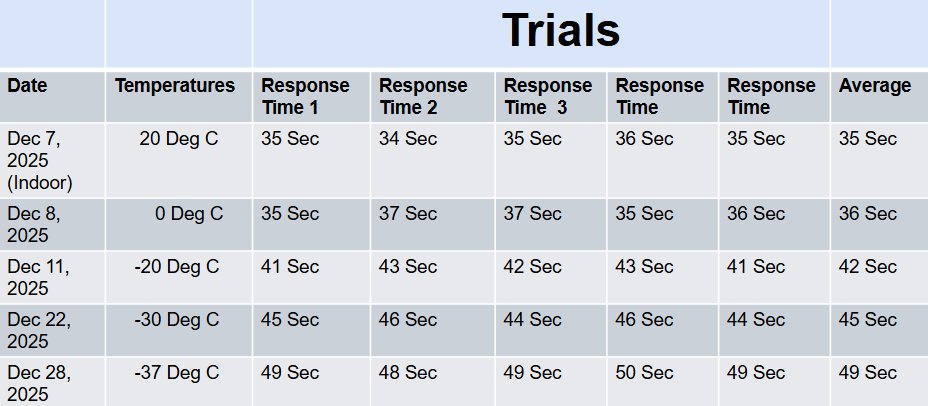
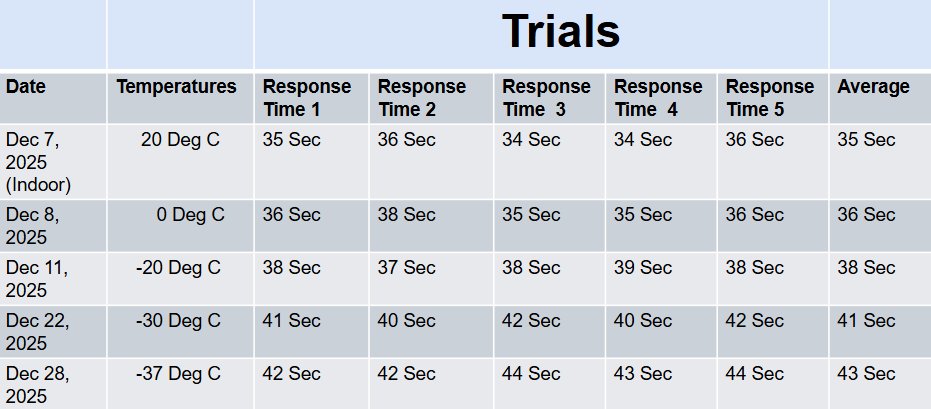
- I conducted five trials in total to assess the impact of the viscosity of hydraulic oil on the responsiveness of the hydraulic system in different temperatures: -40 Deg C to 20 Deg C.
- I noted the readings in the data sheet for all temperature conditions. See the data sheet below.
AST 20 Response Time
Univis HVI 13 Response Time
Analysis
AST 20 has higher response time in extreme cold temperatures as compared to Univis HVI 13 oil.
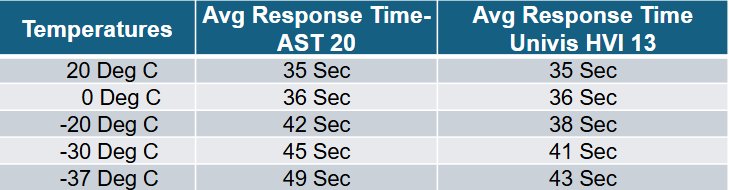
Univis HVI 13 has better (less time means faster) response time in extreme cold temperatures (below -20 Deg C) as compared to AST 20 oil.

Conclusion
I concluded that the hydraulic system’s response time was slower for AST 20 oil by 4 to 6 seconds between -20 to -37 Deg C temperatures as compared to Univis HVI 13 oil.
The conclusion matched my hypothesis.
This conclusion would be helpful to industry to prevent problems discussed by replacing the traditional AST 20 oil with Univis HVI 13 oil.
Industries using heavy equipment can leverage these findings to improve the reliability and productivity across the country and help Canada achieve its critical mineral strategy in a productive and reliable manner.
Application
Switching from AST 20 to Univis HVI 13 in the extreme cold environments significantly improves the hydraulic system's performance, reliability, and operational efficiency in heavy-duty mining equipment operating in the extreme cold (below -40 Deg C).
The findings will help in overcoming operational challenges of the heavy duty equipment in the extreme cold:
- Severe low temperatures increase hydraulic fluid viscosity
- High viscosity causes: - Pump cavitation and pump failure - Solenoid valve sticking and delayed actuation - Quick attach hose stress and cracking - Slow system response and extended warm-up time - Increased downtime and reduced equipment availability
Operational Impacts:
- Faster cold start response
- Improved hydraulic flow at sub-zero temperatures
- Reduced system strain during start-up - Reduced hydraulic pump failures - Lower solenoid valve function rates - Prevention of quick attach hose failures - Reduced cold start stress - Shorter warm-up time Lower maintenance costs
Business Impacts:
- Increased equipment availability
- Improved reliability in the Arctic conditions
- Reduced unplanned downtime
- Higher productivity in the mining operations
- Improved asset life cycle performance
Sources Of Error
Scale and Miniature System Effects
- The toy hydraulic shovel is much smaller than real machinery.
- Fine-diameter hoses increase resistance to flow, exaggerating the effect of viscosity.
- Small cylinders may respond differently than large industrial cylinders due to friction and seal effects.
Measurement Timing Errors
- Using a stopwatch introduces human reaction time error.
- Starting and stopping the watch may not perfectly align with the start/end of cylinder movement.
Temperature Control Limitations
- Achieving exact temperatures (−40°C to 20°C) for small oil volumes can be difficult.
- Oil temperature may not be uniform throughout the system, leading to slightly inconsistent results.
Air Bubbles and Leakage
- Tiny air bubbles trapped in the hoses or syringes can slow movement or make the response uneven.
- Any small leaks at connections will affect pressure, altering response time.
Oil Volume and Flow Rate
- Small-scale systems have less oil, so flow characteristics may differ from full-size equipment.
- Fine hoses may limit flow more than in real machines, exaggerating differences between oils.
Repeatability and Human Error
- Minor variations in actuator force (how you push the syringe) can slightly change the response time.
- Inconsistent marking of reference points for measurement may affect timing accuracy.
Citations
- Caterpillar Inc. (2024). Machine Fluids Recommendations (SEBU6250). Caterpillar Technical Publications. Link to official Caterpillar publication page (PDF/manual download details; may require dealer access/subscription): https://www.petersoncat.com/sites/cat/files/downloads/Caterpillar-Fluid-Recomendations.pdf
- Caterpillar SIS 2.0. (2024). Service information system — Hydraulic and lubricant specifications. Caterpillar. Caterpillar Service Information System (SIS 2.0) — official access page (login required for detailed specs): https://www.cat.com/en_US/support/maintenance/sis2go-app.html
- Caterpillar Dealer Technical PDF. Cold-weather lubricant viscosity tables for hydraulic systems and wheel loaders. Example Caterpillar cold-weather lubricant recommendations available on dealer distribution sites: https://www.automozine.com/doc-t13/128652-lubricant-viscosities-416f2-420f2-and-430f2-backhoe-loaders/
- ExxonMobil. (n.d.). UNIVIS HVI 13 material safety data sheet (MSDS) – Canada. Imperial Oil Downstream. Imperial Oil (ExxonMobil) Safety Data Sheets database (searchable by product): https://www.imperialoil.ca/en-ca/company/products-and-services/safety-data-sheets General Univis HVI product information: https://www.denhartogbv.com/productblad/univis-hvi-series-2/
- Tigercat Ltd. (2025). Winter Care for Forestry Machines: Hydraulic fluids and cold-weather operation. Manufacturer website (likely where this publication would be hosted — search Tigercat technical documents): https://tigercat.com/en_CA/support/manuals-downloads/
- HeavyVehicleInspection.com. (2026). Excavator engine oil and viscosity selection guide. HeavyVehicleInspection.com reference with engine oil & viscosity guidance: https://heavyvehicleinspection.com/excavator-engine-oil-viscosity/
-
Oliveira, C. L. N., Andrade Jr., J. S., & Herrmann, H. J. (2011). Oil displacement through a porous medium with a temperature gradient. arXiv. arXiv preprint (free full text): https://arxiv.org/abs/1111.2099