
Uncovering Secrets of Recycling
Aishu Satyavolu
STEM Innovation Academy Jr. High SW
Grade 7
Presentation
No video provided
Problem
Is recycling actually beneficial for the environment or harmful for the environment?
(I will be looking deeply into the background of recycling and the process behind everything. Starting from the cost association, transportation, CO2 emmisions in total. etc.)
Method
Research: I'll do more research in a number of areas, including the advantages and disadvantages of each of the factors I'll be looking at, such as how recycling affects the four different kinds of spheres, the three different types of recycling, and the results.
Scientific Principles: Second, I will examine each of the Scientific Principles in more detail. These include material properties, environmental impact, energy conservation, chemical processing, and sorting and processing.
Data: After compiling all of the research I have done, I will create a few of my own graphs and look up additional graphs to bolster my argument and properly format all of my data.
What's Next: I began considering the practical applications of my project after completing all of my data and research on recycling. It is crucial that society understands what is going on and what we can do to change it. We should also consider the future solutions that have been proposed for this.
Sources: In order to gain a better understanding of this subject, I have consulted a number of reliable sources as well as an expert. I have learned a lot from Ms. Louise Berger (through outlook) and gained insight into a lot more areas. I compiled the key ideas and fresh perspectives from reading a lot of government publications and documentaries, then used them as the foundation for my research.
Research
Background Research: Recycling offers several important benefits, such as protecting wildlife and ecosystems, reducing CO₂ emissions, and conserving natural resources. However, these advantages are challenged by significant drawbacks. One major issue is cost: recycling is expensive due to factors like transportation, collection, and processing, all of which require more money than standard waste management. Another problem is contamination—when recyclable materials become contaminated, they can no longer be processed. Additionally, only about 9% of the world’s plastic is actually recycled, while the remaining 91% contributes to long-term pollution and environmental disruption. In Canada, approximately 25% of recyclable materials become contaminated, which amounts to roughly 418 million plastic bottles—a much larger number than it may seem. Furthermore, only about 16% of Canada’s recyclables are successfully processed. These figures demonstrate that recycling is far less efficient and effective than many people assume. _______________________________________________________________________________________________________ Research 1- What are the pros of Recycling
Recycling offers several important benefits, such as protecting wildlife and ecosystems, reducing CO₂ emissions, and conserving natural resources. However, these advantages are challenged by significant drawbacks. One major issue is cost: recycling is expensive due to factors like transportation, collection, and processing, all of which require more money than standard waste management. Another problem is contamination—when recyclable materials become contaminated, they can no longer be processed. Additionally, only about 9% of the world’s plastic is actually recycled, while the remaining 91% contributes to long-term pollution and environmental disruption. In Canada, approximately 25% of recyclable materials become contaminated, which amounts to roughly 418 million plastic bottles—a much larger number than it may seem. Furthermore, only about 16% of Canada’s recyclables are successfully processed. These figures demonstrate that recycling is far less efficient and effective than many people assume. _________________________________________________________________________________________________________ Research 2- What are the cons of recycling:
Recycling plays a vital role in protecting the environment by conserving raw materials, lowering energy consumption, and reducing the amount of waste that ends up in landfills. It helps cut pollution, supports ecosystems, and even creates jobs in recycling plants and waste management industries, all while promoting greater environmental awareness within communities. However, recycling also comes with notable challenges: it can be costly to operate, inefficient for certain materials, and sometimes produces lower-quality products than those made from new resources. In addition, the existence of recycling programs may unintentionally encourage wasteful behavior, and recycling facilities themselves can generate pollution and require substantial energy. Some materials—such as plastics, electronics, and hazardous waste—are especially difficult or expensive to recycle, highlighting the need for improved recycling systems and greater emphasis on reducing and reusing materials overall. ______________________________________________________________________________________________________ Research 3- What are the cons of Recycling (Continuation):
Recycling, despite its environmental benefits, comes with several disadvantages that limit its effectiveness. The high cost of recycling programs—especially for materials like plastic—makes the required infrastructure and equipment expensive to establish and maintain. Many recycling processes are also inefficient, often consuming significant energy and resources while still failing to effectively recycle materials such as plastics and electronics that demand special handling. Additionally, the quality of recycled materials tends to be lower, since materials degrade after multiple cycles, making products like recycled paper weaker and recycled plastic less durable. Recycling can also unintentionally encourage wastefulness, as some people may rely on recycling as justification for excessive consumption rather than prioritizing reduction or reuse. Moreover, recycling facilities themselves can negatively impact the environment by using large amounts of energy, generating emissions, and requiring transportation that contributes to pollution. Finally, recycling capacity is limited for certain materials—particularly hazardous waste and electronics—which are difficult, costly, or sometimes impossible to recycle effectively due to the need for specialized systems that are not widely available. _________________________________________________________________________________________________________ The Effect of Recycling on the 4 types of Spheres:
Lithosphere:
Pros: Recycling supports the conservation of the lithosphere by reducing the demand for finite natural resources and limiting environmentally harmful extraction activities. By using recycled materials instead of raw resources, the need for mining, and logging is significantly reduced, helping to preserve mineral reserves and protect natural landscapes. Recycling also consumes less energy than producing materials from virgin sources, which contributes to the conservation of fossil fuels and lowers overall environmental impact. In addition, diverting waste from landfills conserves land that could otherwise be used for agriculture, housing, or natural habitats, while also reducing the risk of long-term soil and subsurface contamination.
Cons: While Recycling has many benefits for the lithosphere, there are also many negative effect on the lithosphere. Some negative effects that have the most impact on the lithosphere are land degradation, resource extraction, pollution and soil pollution. Pollution is one of the main effects on the Lithosphere because the improper disposal of all the recyclable goods leads to pollution in the soil and this pollution overall effects the overall health of the Earth’s surface. Another important factor which effects the Lithosphere is Resource Extraction. This is because the mining and digging to create the area of building can destroy the lithosphere and cause severe negative impacts on the lithosphere. _________________________________________________________________________________________________________ Hydrosphere:
Pros: Recycling has a positive impact on the Hydrosphere by conserving freshwater resources and reserves, reducing water pollution and protecting our marine ecosystem. Recycling also reduces CO2 emmisions which can go up to the atmosphere and precipitate back into various bodies of water. Recycling also helps in conserving energy and money this can lead to significant economic benefits this money will help support water-recycling initiatives.
Cons: As recycling does show some positive effects on the Hydrosphere their are a few more major problems such as acid rain. because all the CO2 gases which gets released into the the atmosphere from all the factory emmisions, vehicle emmisions and other factors go up into the atmosphere and precipitate back down into various bodies of water which can slowly lead to a negative impact on the marine ecosystem. Another Major key point is eutrophication. Eutrophication is when a body of water excessively enriched with nutrition (Usually Nitrogen and Phosphorus)The excessive nutrients cause algea and phytoplankton to appear, this can cause harmful algea to bloom and cause disturbances in the marine ecosystem such as depletion of oxygen in the body of water and wildlife to start dying. The cause of eutrophication is because the contaminated recyclables don’t get recycled which lead to those recyclable good to end up in the ocean causing lots of harm towards the marine ecosystem. ________________________________________________________________________________________________________ Atmosphere:
Pros: Recycling significantly influences the atmosphere, with one of its main effects being the reduction of CO2 emissions generated from landfills. A major advantage of recycling for the atmosphere is its role in decreasing greenhouse gases. Research indicates that approximately 193 million metric tons of CO2 have been prevented. Additionally, recycling has beneficial effects by conserving natural resources, which contributes to maintaining a healthy atmosphere.
Cons: Although most people believe that recycling is a good idea, it is not always environmentally friendly. Recycling can sometimes consume more energy and resources than you might expect. Recycling some materials can sometimes consume more energy than producing new ones from scratch. When this occurs, the process may contribute to climate change by emitting additional greenhouse gases. Furthermore, improper recycling can disrupt the entire process. Even after all of the work of sorting and collecting, contaminated materials have the potential to destroy an entire batch, sending it to the landfill. _____________________________________________________________________________________________________ Biosphere:
Pros: One significant effect of recycling can be observed in the biosphere, which is essential for maintaining living organisms and the ecosystems they support. Recycling contributes to the biosphere by safeguarding the natural habitats of flora and fauna, as it minimizes the need to extract raw materials from the Earth. When raw materials are conserved, ecosystems remain uncontaminated, thereby protecting biodiversity through the ongoing existence of the plants and animals within these environments. Utilizing recycled materials prevents the release of pollutants into the biosphere, which includes the air, water, and soil vital for the survival of both plants and animals. Additionally, the practice of waste recycling decreases the volume of waste produced.
Cons: While recycling has numerous benefits for the biosphere, there are aspects that can diminish these positive effects. One key issue that can negatively impact the biosphere is the degradation of plastic waste. The combustion of plastic releases various harmful compounds, including dioxins and carbon dioxide (CO2), which pose a threat to organisms and microorganisms alike. Additionally, only about 9% of the world’s recyclables actually get recycled, while the remaining 91% are either dumped into the oceans or buried in landfills. This can lead to contamination of both soil and water, harming plants and animals that live in these environments and increasing the risk of death for many species. Recycling plays an important role when done properly, but inefficiencies in the system can lead to significant environmental impacts. ______________________________________________________________________________________________________ Scientific Principles (included with research):
1) Energy Conservation: Definition: The practice of consuming less energy to create new products rather than recycled products, (Avoiding unnecessary energy consumption) for example walking to your bus stop rather than driving.
Pros: Energy Conservation help reduces the need of new and raw materials. Recycling helps reduce the demand for new and raw materials. Recycling also helps to reduce energy consumption during manufacturing for example manufacturers could use recyclable materials to make their product rather than producing from one-time products. Another factor of energy conservation is that it lessens the energy tension of landfills, this is because recyclable products help remove a bit more space from the landfills which helps save much more money
Cons: While Energy conservation has numerous benefits their are a few disadvantages such as the fact that recycling does take of load from landfills but the fact that only a few of recyclables get recycled so it only makes a small difference which cannot make much of a change even in the long run. Energy conservation also includes very initial high costs, and lifestyle changes that could often lead to conflicts. Limited public awareness could also cause conflicts in society ________________________________________________________________________________________________________
2) Chemical Processing: Definition: Chemical Processing is also know and Chemical Recycling. This is the process of where the materials (Basic building blocks of the object) breaks down into their basic structure.
Pros: Chemical Processing offers better and more efficient than the traditional way. Chemical processing allows manufacturers to create more objects with less strain. Pyrolysis is one of the ways that could create synthetic gas and oil which could help to create an alternative energy source. Adding onto that point this could lead to another factor under chemical processing, sustainability. Pyrolysis is an efficient and sustainable way of waste management which could help to reduce our environmental footprint.
Cons: Chemical Processing could start to produce lots of potential and harmful air pollution/emmisions which could disturb the atmosphere. Primary challenges could also include the high capital costs and the cost of energy. Another key problem is that complexity of the down-streaming process. Structural Fails could also lead to failure for adopting Pyrolysis as a method of recycling. _________________________________________________________________________________________________________
3) Material Properties: Definition: The characteristics, behavior and performance in the recycling process and how these influence the material/object.
Pros: Material Processing has many advantages attached to it such as the recyclability, economic benefits, energy conservation, resource conservation, and impact reduction on the environment. All these benefits help to highlight the positive impact on the environment because Material Properties help us to understand the different physical properties in each and every recyclable good which helps in developing an efficient recycling process. Material Properties can lead to an alternative way which reduces less waste and better recyclability. Energy conservation reduction, energy conservation, and resource conversation all promote sustainability in the act of environmental protection.
Cons: While Material Properties come with as many advantages, their are also many disadvantages added to it too. Their are 5 key disadvantages to recycling which are; Energy consumption, Contamination, challenges in economy, environmental risks, and recycles materials have a lower quality than before. There are many disadvantages but one of the main one is contamination. Contamination is a serious issue in recycling because when an abject is contaminated it is no longer good enough to continue on with the recycling process which can lead to 3 different option, a) Be rejected from the sorting pile and be sent to landfills which will eventually take up much more space, b) Without society knowing, they release it into the ocean which will start to kill marine wildlife, c) They will bury it under the soil which would eventually cause soil pollution which could lead to many negative impacts ______________________________________________________________________________________________________
4) Definition: Environmental Impact refers to how recycling can impact the Earth in many various ways.
Pros: Recycling offers many positive impacts on our environment such as; Landfill diversion, Greenhouse gas reduction, Energy saving, Economical support, and Conservation of Natural resources. Recycling makes a big impact on the environment because recycling is now trying to reduce greenhouse gas emmissions which would help heal our atmosphere and if our atmosphere starts to heal, this could help to end global warming which could fic a major problem. Recycling also helps to protect our earth from mining and extraction of raw materials.
Cons: While recycling shows positive impacts on the environment, their are also a few downsides added to this topic such as; Energy consumption, Economic Impact, Energy Consumption, Contamination of recyclables, and Downcycling. Downcycling is a significant part of recycling because all the products that have been recycled are now weaker and transformed into a lower-quality products with a shorter lifespan. Energy Consumption is another main factor to think about here because the process of shipping, operational expenses, sorting and processing all consume lots of energy, creating excessive energy in the environment. _____________________________________________________________________________________________________
5) Sorting & Processing: Definition: Sorting and Processing refers to the process of systematic sorting and separation which handles the waste materials and to verify that they are properly processed and efficient enough to reuse again.
Their are 6 steps that are involved in this process which are:
Step 1: Collection, collection is the process of collecting recyclables from households and businesses. Step 2: Pre-Sorting, Contaminated Recyclable items are sorted out and items tha are good to go are continued on the conveyor belt. Step 3: Conveyor Belts, Items that are good to go are transported through a different section in the factory which are then continued to further sorting. Step 4: Sorting, Different items are sorted into different categories with mechanical, manual, and optical scanners to thoroughly sort each and every item. Step 5: Cleaning, Any leftover food-scraps or liquid residues left on the recyclables will be washed off and also would be cleaned precisely cleaned. Step 6: Processing, Sorted materials are sent out to manufactures who now make new products. ________________________________________________________________________________________________________ The 3 types of Recycling:
Primary Recycling:
Primary Recycling is also know as Mechanical or Closed-Loop recycling This process involves reusing and allowing people to reuse their recyclables for a new and different purpose, this is done by not significantly changing their chemical composition(Material Properties). Primary Recycling offers the process of sorting and collecting. Different types of recyclables such as paper, plastic bottles, and metals are converted back to new products, that are still made from the same product. This is the most straightforward way we see recycling as, this is usually the method we use to recycle. This is because this is the most easiest way to reuse the product without altering the products chemical properties to much. A few examples of implying primary recycling in daily life is: a) Refilling a Glass Bottle/Jar b) Reusing or even Donating your old tires or recyclables. What are the advantages of Primary Recycling: 1) Primary Recycling has Environmental benefits such as; reducing landfill waste, conserves natural resources, lowers CO2 emmissions and has an effective cost. What are the disadvantages of Primary recycling 1) Energy Consumption. 2) Quality issues (Downcycling). 3) Contamination. 4) Challenges with infrastructure. 5)Ineffective money usage. _______________________________________________________________________________________________________ Secondary Recycling:
In order to keep items out of recycling facilities, secondary recycling involves repurposing or upcycling them. In order to do this, recyclable materials must be given new uses or made available to others. A plastic egg carton, for instance, can be used again in a number of ways. The demand for virgin resources is also decreased by secondary recycling, which recovers valuable waste components and turns them into reusable solutions. Recycling in secondary The process of secondary recycling entails repurposing waste materials to create new goods without substantially changing their chemical composition. Glass, metals, paper, and plastics are among the materials that are frequently treated with this technique. Physical reprocessing, such as cleaning, molding, melting, or shredding, is part of the process. In contrast to primary or tertiary recycling, the molecular structure of the material is mostly unaltered. Primary (closed-loop) recycling, in which a material is recycled again for the same purpose, and tertiary (chemical) recycling, in which materials are broken down chemically to create raw feedstocks, are examples of frequently recycled materials. When paired with other strategies like reduction and reuse, secondary recycling is most effective and plays a critical role in sustainable waste management. A few examples of applying primary recycling in our daily life is... a) Plastic egg cartons can be reused for a different purpose. b) Cardboard boxes can be made into many new items and can be used for various purposes. ________________________________________________________________________________________________________ Tertiary Recycling:
In order to produce new materials or fuel, tertiary recycling—also referred to as chemical recycling—involves altering the chemical structure of waste materials. In order to make the materials reusable, this process frequently involves breaking down plastic polymers into monomers or turning organic waste into biofuel. Tertiary recycling chemically modifies the materials to enable reuse, as opposed to secondary recycling, which reuses materials without reprocessing. Tertiary Recycling: The Prospects of the Waste Management Sector Tertiary recycling is a critical component of ecologically friendly waste management strategies. Using methods like chemolysis, gasification, or pyrolysis, waste polymers are chemically changed into monomers, oligomers, or synthetic fuels. This method is particularly helpful for handling highly contaminated materials and mixed plastic waste streams that are unsuitable for conventional mechanical recycling methods. By disassembling polymers into their most fundamental chemical constituents, tertiary recycling yields premium, virgin-equivalent feedstock that can be recycled back into the production cycle to generate new polymers. This capability not only helps to close the material loop but also tackles the issue of downgrading often associated with mechanical recycling processes. __________________________________________________________________________________________________________________________________________________________________________________________________________________
Data
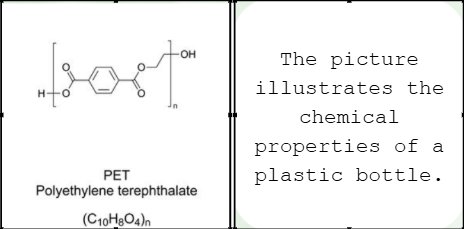
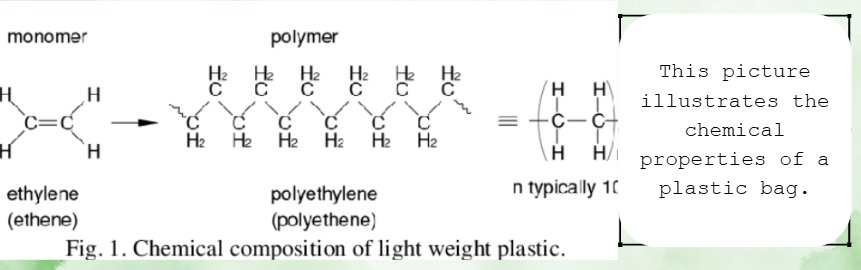
 Credits: NAE| National Environmental Agency.
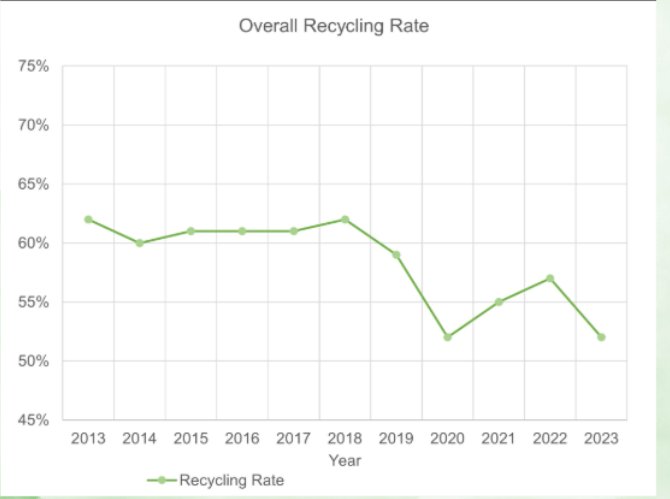
This line graph shows the recycling rate from 2013-2023. As we can see in 2013 recycling was very effective but started to drop slowly. Recycling took a big plunge 2019 to 2020 as the pandemic started and facilities shut down. Now it started to improve but took another dive in 2023
_______________________________________________________________________________________________________
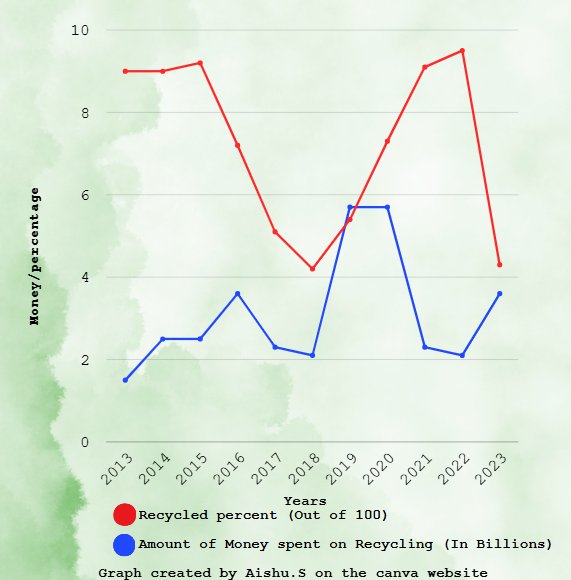 While there is no direct source and information on how much was spent on recycling each year. We can use this formula to calculate the estimated spendings on recycling.
- Recycling Expense= Recycled tonnes * Cost per tonne = answer.
(All numbers amounts are in billion)
This line graph shows the amount of money spent on recycling and how much got recycled.
(The money is a calculated estimation)
_________________________________________________________________________________________________________
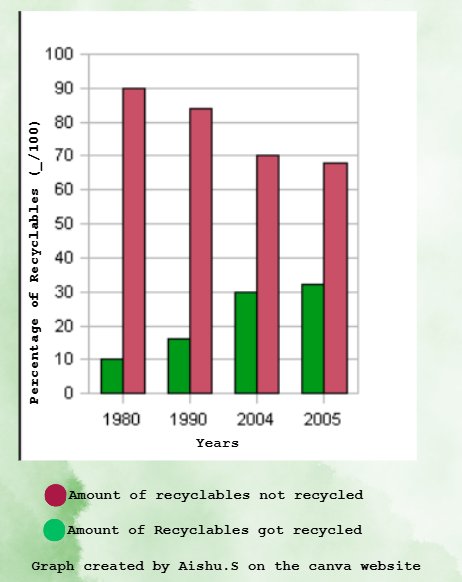 From this bar graph we can analyze that out of 100% recyclables, less than 50% gets recycled and over 60% doesn’t. From this graph we can see that only small amount of recyclables are recycled while a higher amount does not get processed. This shows that their are more negative outcomes than positive ones.
___________________________________________________________________________________________________
From this bar graph we can analyze that out of 100% recyclables, less than 50% gets recycled and over 60% doesn’t. From this graph we can see that only small amount of recyclables are recycled while a higher amount does not get processed. This shows that their are more negative outcomes than positive ones.
___________________________________________________________________________________________________
Prediction of Recycling in the Next 10 years: (This fits into Both Data and Conclusion Category).
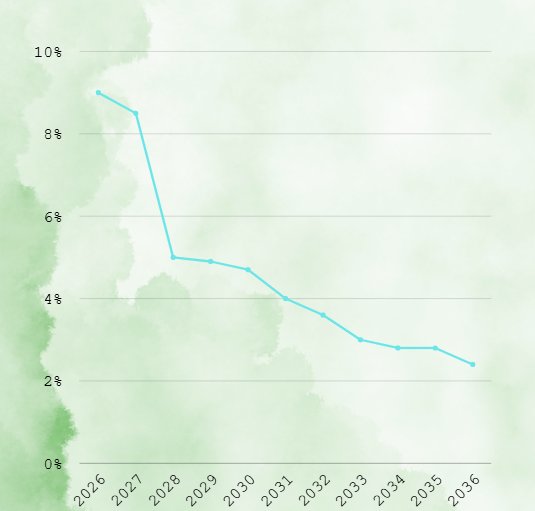 This line graph is an educated prediction based on the data we already have. In my previous data I noticed that it changes by 0.5-3% each year. While reading more graphs I have noticed a pattern where it decreases by the same number (0.5-3%) during each year. So based on the data from the past decade and 2, we could call this an accurate prediction. One can also verify this information by reading the amount of recylables produced each year and use the formula: Recycled tonnes * Cost= our answer. With this method we can verify to see if our estimations are somewhat accurate.
Conclusion
Conclusion:
After Conducting all my Research, I came too a conclusion that in theory, recycling may seem like an eco-friendly alternative to landfills, but in practice, recycling has many dark sides added towards it and when we look at all the factors there are times were the negative impacts outweighs the benefits. Recycling is beneficial if we think of withing 10 plastic bottles but if we look in a larger scale, we can notice that recycling is not the best, alternative way we can help the planet. For example, their are 3 plastic bottles, only 1 of the 3 plastic bottles gets recycled while the remaining 2 plastic bottles don’t. If we imagine this in a way larger scale we will start to see their are more un-recycled plastic than recycled ones. While it feels like recycling is better that landfill management, recycling is worst one in this case because only a few recyclables get recycled while the remaining are sent back to landfills, burned or released into the ocean. This causes more and more items to be sent into landfills which is in general ineffective. So over all, Recycling has both benefits and disadvantages but their are so many times were the disadvantages outweigh the benefits, so in average. Recycling is an ineffective way of waste management and causes overall harm to many aspects to all of the types of spheres. _________________________________________________________________________________________________________ Nano-Recycling: The Future of Recycling:
The goal of nano-recycling is to recover valuable nanoscale materials from products once they reach the end of their lifecycle. This process is key for creating a circular economy and protecting the environment. Nano-recycling involves retrieving materials like lithium from battery cathodes, gold from e-waste, and proteins from fish eyes for medical use. It also includes recycling acid waste from the galvanized steel industry. Nano-recycling technology collects materials that would otherwise go to landfills or be incinerated. It emphasizes materials science and nanoscale manipulation. This method not only saves resources but also helps sustain both the economy and the environment. ________________________________________________________________________________________________________ What's Next?
My research project hopefully reaches out to many individuals and spreads the news that recycling isn’t as clean as we thought. While recycling has many benefits their are so many different factors with disadvantages which could potentially cause harm. My research project is to not change and force the way people think but how their are many more negative impacts on the land. Recycling also has an impact on an individuals behavior and their social thinking because many believe and follow the words of others that recycling is the best method and it has no impacts on out earth, this statement is utterly wrong because recycling has many more factors which slowly add up to a negative cause. Recycling can change a person’s thinking in a way because many believe that if they recycle they are helping the land and that they are certain that their material will get recycled. This causes encouragement to consumers that they can buy whatever they want that has a recyclable logo and it can surely be recycled. That is how recycling changes an individuals way of thinking into manipulating them that recycling is the best alternative then landfills. This causes consumers to go wild and start over-consuming. Many people will be interested in my project because I am spreading unknown facts that people have hid for so long that it would be a big issue to society. My goal is to spread awareness that recycling isn’t as green and clean we thought and that we can change our footprint into a better one. _______________________________________________________________________________________________________ Prediction: What will Recycling Rates look like in the next 10 years?
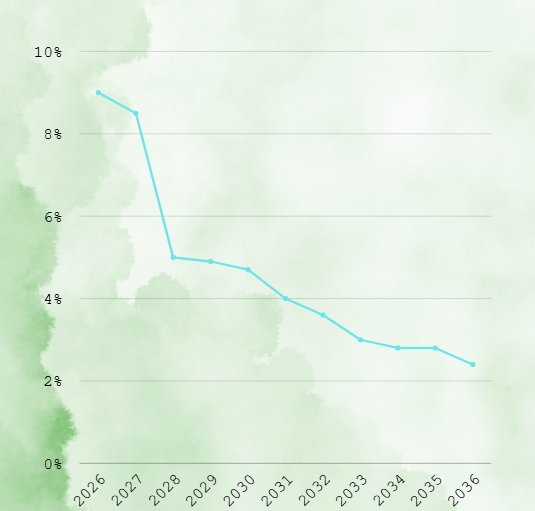 This line graph is an educated prediction based on the data we already have. In my previous data I noticed that it changes by 0.5-3% each year. While reading more graphs I have noticed a pattern where it decreases by the same number (0.5-3%) during each year. So based on the data from the past decade and 2, we could call this an accurate prediction. One can also verify this information by reading the amount of recylables produced each year and use the formula: Recycled tonnes * Cost= our answer. With this method we can verify to see if our estimations are somewhat accurate.
________________________________________________________________________________________________________
This line graph is an educated prediction based on the data we already have. In my previous data I noticed that it changes by 0.5-3% each year. While reading more graphs I have noticed a pattern where it decreases by the same number (0.5-3%) during each year. So based on the data from the past decade and 2, we could call this an accurate prediction. One can also verify this information by reading the amount of recylables produced each year and use the formula: Recycled tonnes * Cost= our answer. With this method we can verify to see if our estimations are somewhat accurate.
________________________________________________________________________________________________________
Citations
15 Benefits of Recycling Explained https://www.ecoredux.com/benefits-of-recycling ___________________________________________________________ Recycling Statistics in Canada for 2025 | Made in CA https://madeinca.ca/recycling-canada-statistics/ ___________________________________________________________ Benefits of recycling https://www.conserve-energy-future.com//benefits-of-recycling.php. ___________________________________________________________ 12 Disadvantages of Recycling https://barazzacarlos.com/advantages-and-disadvantages-of-recycling/ ___________________________________________________________ How Our Trash Impacts the Environment | Earth Day https://www.earthday.org/how-our-trash-impacts-the-enviornment/ ___________________________________________________________ The Science of Recycling https://www.skillarium.org/ _______________________________________________________________________ The Science of Recycling: Insights into Sustainable Material Management - LearningMole https://learningmole.com/the-science-of-recycling-understanding-materials/ _________________________________________________________________________ Recycling Basics and Benefits | US EPA https://www.epa.gov/recycle/recycling-basics-and-benefits ________________________________________________________________________ Key Benefits of Public Recycling: Environmental and Community Impact | Okon Recycling https://www.okonrecycling.com/ ________________________________________________________________________ Recycling Sham- The Netflix Documentary. _________________________________________________________________________ _________________________________________________________________________
Acknowledgement
I would like to acknowledge many people who have helped me throughout this project constantly and gave me advice
- Niharika Satyavolu (Mother): Gave me ideas and how to organize my work as well as giving me more ideas helping me with my communication and letting me talk about my science fair presentation.
- Pranav Satyavolu (Father): He helped me throughout making my trifold and revising my work and giving me more ideas which i could implement to further more extend my research
- Ms. Louise Berger. I have emailed as she is a specialist in this topic and I have asked her multiple questions regarding this topic. She has explained me all her knowledge and I have learned much more. I have deleted all the false information in my text and relaced it with this new knowledge from this expert.
- Gayatri Sakharkar: She has helped me and advised me throughout my project and giving me advice on how I could possibly enhance it and make it better.
These people have been helping me throughout my science fair and contributed major ideas. Thank you for all the people who have helped me through.
Attachments
No Log Book Provided
View Extra Attachment: report/data/exhibit/etc(may download a file)