
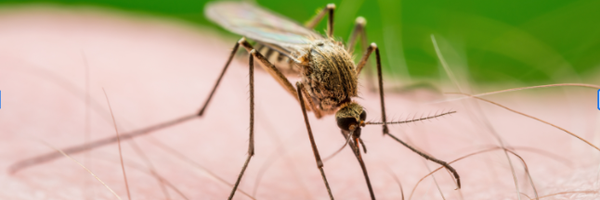
what happens to earth and humans if all the mosquitos died?
Aimee Feng
Nellie McClung School
Grade 6
Presentation
No video provided
Problem
What would happen if all the mosquitoes went extinct? this is my problem that I think effects the world. What would this to come true one day? Would it be a problem, or would it in fact, be helpful?
This is a research project since I could not do an experiment.
Method
I studied mosquitoes role in the ecosystem and their evolution throughout the ages.used books and used websites to find information about mosquitoes.eventually I created inferences to predict the most accurate consequences if mosquitoes died.
Research
Mosquitoes are threatening insects that feed on fruit nectar and animals’ blood. Mosquitoes transmit lethal illnesses like malaria and yellow fever, which kill 1 million or even more people each year making the more dangerous than sharks or lions. There are over 3,500 known species but only a small fraction are a lethal threat to humans. Mosquitoes live in warm climates and live in every continent but antartica. They have an appearance of 6 long slim legs , a thin sort of “sucker” on the end of it’s rounded oval-like head. They have 2 wings and a abdomen that stores blood or nectar and their vital organs.
Mosquitoes have a fascinating evolution line. Mosquitoes originated approximately 100 million years ago in the cretaceous period, when dinosaurs still roamed the earth.they are believed to evolved from a family of insects known as the Chaoboridae. Mosquitoes have since spread worldwide and are found in almost every country except for Iceland and Antarctica. They evolved and adapted to various habitats, including freshwater, saltwater, and urban environments. Mosquitoes have evolved very little in the past 100 million years. They almost look identical in the past, meaning that they had no need to adapt and change to different environments, meaning that their original body was perfectly adapted to any different environments.
Diseases: If the mosquitoes were driven to extinction , this would greatly benefit mankind. The eradication of these insects would prevent as much disease transmitting , saving many vulnerable people. Daily life: Our day-to-day lives would be much more bearable, without mosquitoes existence. Vacations to warm weathered areas would be much more pleasurable as well. Less irritating itchy bites and bumps would be eradicated.
Water Quality changes Mosquito larvae are filter feeders that consume organic matter in stagnant water, which helps to improve water quality and control algae blooms. Without them, these aquatic environments could see an accumulation of organic debris and increased algae. Replacement by other species Other insect species may replace the mosquitoes position, Possibly the species may be even more threatening than the mosquitoes. There is a possibility the new species may be a more aggressive disease transferer. Unforeseen consequences The complete eradication of 3,500 species may result in unexpected ways. Complex effects on the natural world that scientists do not fully understand, highlighting the potential dangers of large-scale ecosystem manipulation. surprisingly, there are not as many positive impacts for the environment if the mosquitoes fell in extinction. Instead their eradication would lead to minor changes. If they all died, This would lead to short-term effects to the environment because other insects would likely replace their position in the food web. The food web: The extinction of mosquitoes have a great ecological impact. It would greatly disturb the food web animals like fish , frogs, bats,birds , and dragonflies would be affected because there diet heavily relies on the population on the mosquitoes. These animals would have difficulties finding sources of food, potentially impacting their populations as well. Pollination loss: Adult male mosquitoes feed on nectar , acting as pollinators to some plants, if they go extinct other insects would have to participate in pollinating.
Microhabitat changes: Specific communities within pitcher plants that depend on mosquito larvae would be altered. Adaptation Other insects (like flies or midges) might increase in population and fill the food/pollination roles, allowing ecosystems to stabilize. Unpredictable Shifts The sheer complexity of ecosystems means the full effects are hard to predict, with some speculating catastrophic shifts while others think nature would find a balance.
If mosquitoes went extinct, humans would benefit greatly from the elimination of deadly diseases like malaria, but ecosystems would face major disruptions as mosquitoes are a key food source for fish, birds, bats, other insects, and others. Their nectar-feeding adults are pollinators, leading to food web changes and potential population shifts in other insects, though other insects might eventually fill their spot.
Data
Mosquitoes are threatening insects that feed on fruit nectar and animals’ blood. Mosquitoes transmit lethal illnesses like malaria and yellow fever, which kill 1 million or even more people each year making the more dangerous than sharks or lions. There are over 3,500 known species but only a small fraction are a lethal threat to humans. Mosquitoes live in warm climates and live in every continent but antartica. They have an appearance of 6 long slim legs , a thin sort of “sucker” on the end of it’s rounded oval-like head. They have 2 wings and a abdomen that stores blood or nectar and their vital organs.
Conclusion
While beneficial for human health, a world without mosquitoes would force rapid, significant changes in ecosystems, potentially causing short-term hardship for insectivores, but likely leading to a new equilibrium as other species adapt or new insects fill the void. Mosquitoes may be a lethal illness transmitter and additionally a nuisance to humans as well, But they do play a essential role in the food web and in pollination. The extinction of the mosquitoes would actually give short-term effects, due to adaptation of other animals.
Citations
https://en.wikipedia.org/wiki/Mosquito
https://www.ecospark.ca/mosquito
https://www.britannica.com/animal/mosquito-insect These are all my resources I have retrieved my research and information from. Mainly Britannica and ecospark is used Wikipedia led me to a larger variety of websites.
Acknowledgement
Thanks to my mom brother sister to supporting me. Also to Ms.schmitz, ms. Polly and ms.tanis!! Thank you to autumn and Ramona too!! Especially for helping me continue and support my project. These are the people I truly admire and would like to thank!