
The Taste Buds: How They Change As You Age
Bronwen Rubenstein, Kiana Tajallipour
Branton School
Grade 6
Presentation
Problem
Taste is one of our main senses, and an important one too. Imagine if you couldn't taste anything at all, it would be very hard. Taste buds are at the center of taste, so we were intrigued to see how they work, and how when you eat something the flavor comes with it. From this research, we want to know how those taste buds change. We would like to ask people if they liked a food now, when they were younger did they like fish, and if they like fish now. We chose to do fish, because we find that people always that if you don't like fish now, you will like it when your older. We were inspired by this to do a projects on taste buds and how they change as you age.
Method
To conduct this research, we will do a survey. We will ask people of all ages if they like fish now, if they liked fish before, and at what age they started liking fish. From this research, we will make a chart to see if taste buds change, by seeing at what ages people start liking fish. We will see if adults taste buds prefer fish. This is a research project.
Research
From our research we have learned a lot about taste buds and how they work. Essentially, taste buds sense if a food or drink is 'good' or 'bad'. Taste buds can detect 5 main groups of taste: salty, sweet, sour, bitter and unami. Your taste buds can taste theese 5 groups on their own, but sometimes you will eat a food and it is a bit salty but maybe a bit sweet too, which makes your taste buds more complex. Taste buds work with receptors in your nose to experience flavour. Think about when you hold your nose and eat. You can still taste the food, but the flavour is not as strong. When you chew food your teeth and saliva break down the food and release chemicals that flow to your taste buds. Theese chemicals also flow up to the receptors in your nose. However, taste buds do not sense when something is cold or hot. Other cells in your mouth sense this.
As you age you lose taste buds. An average adult has anywhere from 2,000 taste buds to 10,000 taste buds. An average kid has anywhere from 10,000 to 30,000 taste buds.
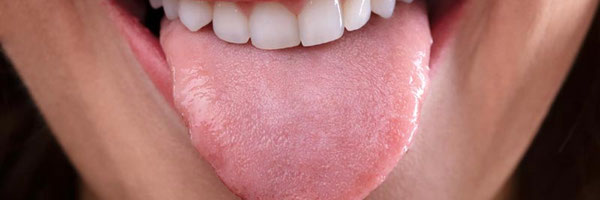
Taste buds are located on your tougne, but you do have taste buds on the roof of your mouth and some in your throat. The taste buds on your tougne are in invisable bumps called papillae. There are 3 types of papillae that house taste buds. Fungiform: these papillaes are located on the tip and sides of you tongue. They house around 1,600 taste buds. Circumvallate: these taste buds are located on the back of your tongue. They contain around 250 taste buds. Foliate: these are located on the back of your tongue on each side. There are 20 papillaes that each have several hundred taste buds. It is a common misconception that your tongue has taste zones, and that the 5 deifferent types of taste buds are together. That being said some parts of your tongue are more sensitive to certain tastes. For example, the back of your tongue are especially sensitive to bitter foods.
The structure of a taste bud: Each taste bud has 50 to 150 receptor cells. The receptors have hairs called microvilli. These receptors connect to your nerves that transmit signals to your brain about the taste. Basal cells: these cells are tiny stems that will eventually become receptor cells. Supporting cells (sustentacular cells): these cells are sprinkled around your tongue and although they're in your taste buds, they can not taste anything.
How often do taste buds change: taste buds regenerate every 10 days.
Data
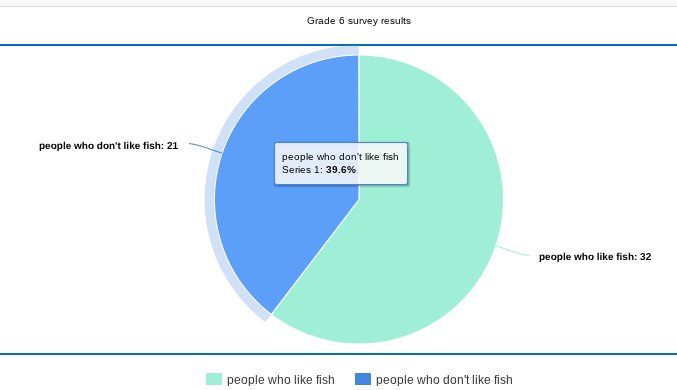
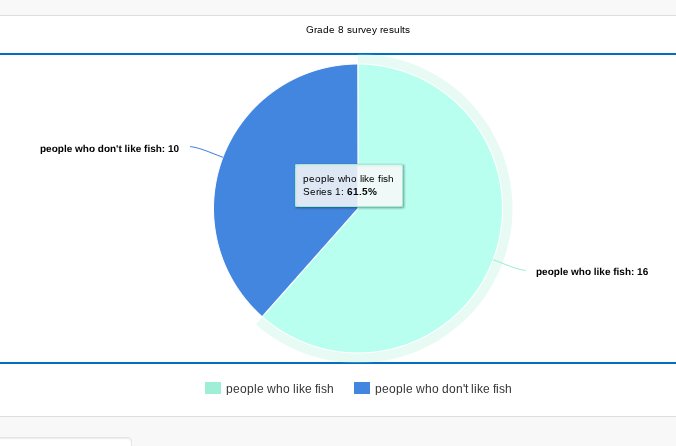
Below is what a normal 6 and 8 grade classroom thinks about fish: https://docs.google.com/spreadsheets/d/12M00SeKE7s3f3eMTTfHNsU8VSOd_8qPwvUAdR-YeabA/edit?resourcekey=&gid=796842988#gid=796842988 We compared the results, and grade 8 like fish more. This is most likely because the 8th graders don’t taste the fish as strongly. Many grade 6 students replied that they didn’t like fish because it tasted very strong. As you age, you do lose taste buds, so you taste things less strongly.
 Below, is the people we asked randomly on the streets
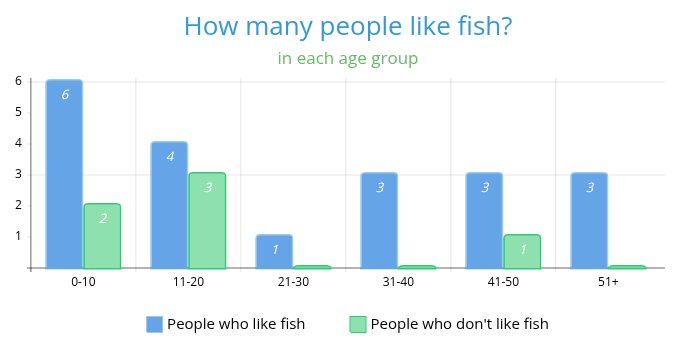 Here is the link for the spreadsheet version of this
Conclusion
From our research and data, we have found that most people do like fish, which surprised us. Especially with younger kids, who we thought would hate fish, actually quite enjoyed it. One thing we found was that really young kids( zero to ten range) really liked fish, but the eleven to twenty range did not as much. In fact, most people from eleven to twenty did not like fish. This is very interesting, and might have to do with hormone changes, but we do not know. Many adults noted that they liked fish when they were very young, but in their teenage years they did not like it. We also found that most people who liked fish had tried fish a lot, which is interesting. Many people found that they had to try it again and again to like it, which might be because they got used to the strong flavour of fish. In addition to this, many people who grew up near the ocean, or a place with a lot of fish seemed to like it more. This might be because they felt a need to like fish, and again tried it a lot. The fish is more fresh in these places and does not to be transported and will most likely not have any preservatives. For older people, many of these people said they liked fish because it was digestible, chewable, and very easy to cook. Also, many people added how they loved how versatile fish is, and how you can season it differently, and can be added in different dishes, or simply cooked differently. People who did not like fish commented that the smell can be very strong, and not very appetizing. In addition, many people added how fish was very slimy, and bland. Since smell is very connected to your taste buds, so when something does not smell good, you naturally do not want to eat it. Many people also found that when they had one bad encounter with fish, it turned them off for a while, and simply did not try it for a very long time. Many people in their teenage years said that they began liking fish when they were around 3, or 5 or 8. Many people in their teenage years also stated that they began to like fish as a baby. We talked to parents of babies and they said that their babies quite liked fish, and the parents loved how easy and digestible it was for their babies. Many people 30+ said that they started liking fish in their 20s after not liking it in their teenage years, which is quite fascinating. We asked 2 grade 6 classes and 1 grade 8 class about their thoughts on fish. The grade 8 liked fish more than the grade 6 students. This may be because you do lose taste buds as you age, and lose papillae as you age. Children's taste is very strong and can distinguish foods very clearly, and teenagers can still taste flavours very well, but they do lose a few taste buds, so their taste is a little less strong. Since fish has a very strong flavour, the 8th graders will experience the flavour a little less then the 6th graders would. Also, the 8th graders have tried fish more times then the 6th graders, and their taste buds have adapted a little more, so it does make sense. It is possible that puberty plays a role in how your taste buds change, but we are not sure. All in all, people seem to like fish a lot, especially when they’re younger, but less in their teenage years. When people hit adulthood, they start to like fish again. But taste buds do change as you age, you experience flavour on a different level, because you lose and you become more adapted to different flavors. So if you don’t like fish now, there is a very strong chance you will like it when you are older.
Citations
We used Cleveland Clinic: taste buds to do research on project. This is a site that gives a lot of information about taste buds. We also used AI for part of the research.
Acknowledgement
Thank you to the community of West Hillhurst for participating in our survey. We could not have done the project without you. You were a very important part of the project. We would also like to thank the grade 6 and 8 classes who did our survey. We would also like to thank Naomi Cohen for being the science fair cordinator.