
Reducing Landfill Waste With AI
Carter Cook
R. T. Alderman School
Grade 9
Presentation
No video provided
Problem
Recycling Information
1 Consumer Applications
- There are AI powered applications for consumers that aim towards a similar goal, apps like GreenScanr’s (1.) are using ai to identify if an item is recallable or not, then implement a game and points to encourage users to continue to use the app. Additionally Green Scanr’s has installed public recycling stations where users can scan their items then place them into bins, these have been installed in places such as, Bush Gardens, and VCU basketball games.
- In addition to GreenScanr's applications, the Toronto Airport is also using AI to help reduce landfill bound waste. They are doing this through an AI recognition system that instructs people where to put their waste. This is meant to help people who may not be familiar with Canada and may have a language barrier or not have familiarity with the system used here. (7.)
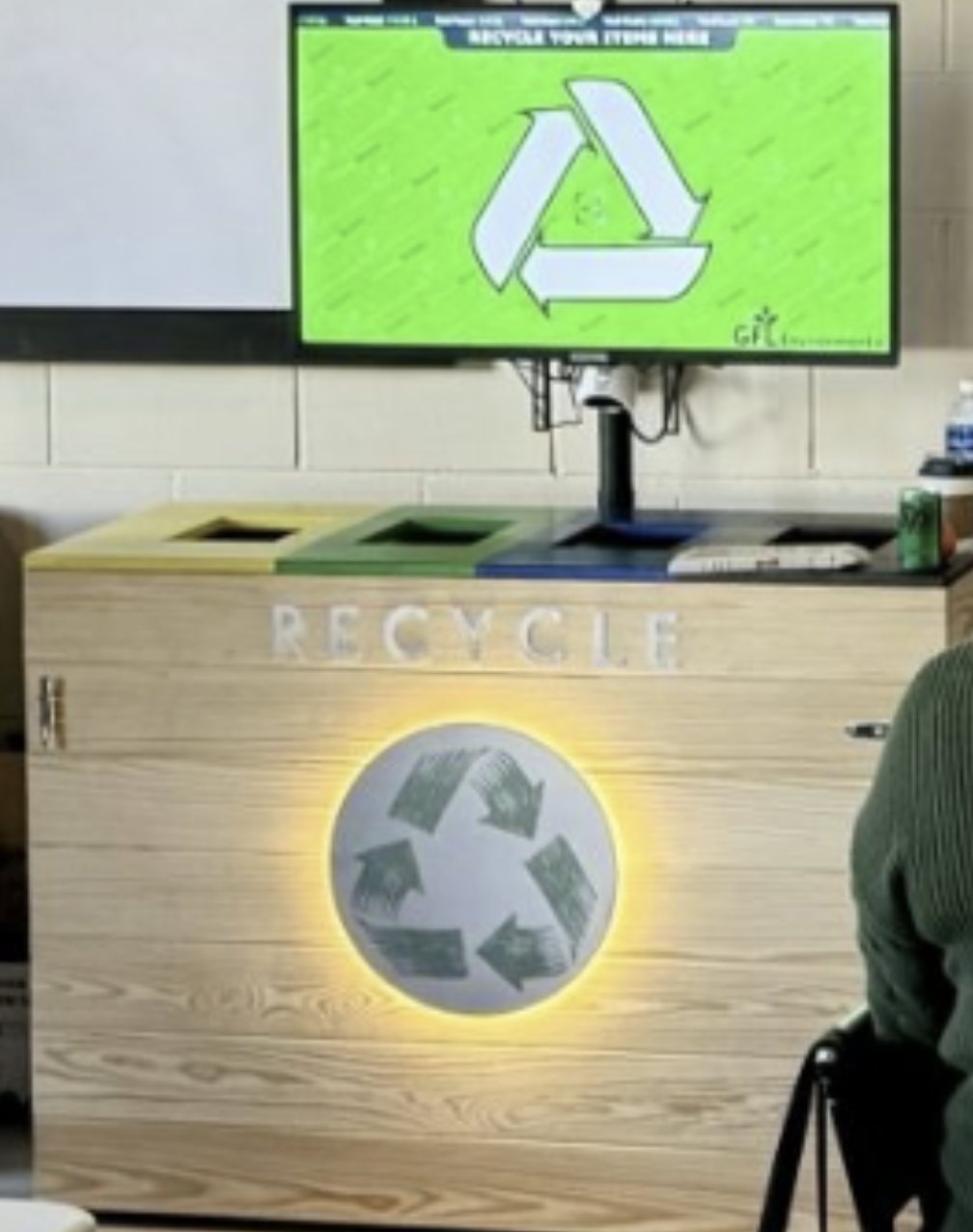 Example of sorting station
Recycling Statistics
In Calgary 20% of all “blue cart items” are not recycling, this leads to additional cost and waste though the municipal waste system. (5.)
Recycling Processes City of Calgary
There are many complex systems inside the recycling process, it starts in the unloading area where the trucks are unloaded, and the materials are fed onto a conveyer belt. Then it moves onto presort, this is when workers remove plastic bags and shredded paper alongside items that are not meant for recycling. This is an important and yet costly step. This is where some centers are instituting AI to assist humans by catching mistakes and letting humans just focus on the items that the AI was not able to operate on. (6.) 
2. Industrial Applications
- In recycling centers new AI technology is being deployed to sort whether an item is landfill waste and incorrectly sorted or if it is recycling, although for most recycling centers they still primarily rely on humans for sorting. The rollouts of this technology have been successful in reducing costs and increasing efficiency for example. At the Alameda County Industries near San Francisco after implementing AI costs were reduced by 59% and the robots were able to operate more than 99% of the working hours. (2.)
AI/ Machine Learning Components
3. Least Squares Method
- The mathematics behind modern AI is extremely complex, but to start in the late 1700’s the models were very simple and used simple algorithms such as the least squares model. The least squashes method is an algorithm that reduces the error present in a model by taking the difference between the predicted value and the actual datapoint and squaring it then finding the curve that minimizes the sum of all of the squared differences. This allows for minimised skewing of the datapoints present in the model. (10)

4. Computer Vision
- Computer Vision is used within my project to identify the two types of refundables. Computer Vision is a field of AI research that allows for advanced pattern recognition within images, traditional machine learning methods. This is when an AI engineer labels an image of whether it contains an object that is desired then the computer will notice trends through reinforcement learning. (3.) Computer Vision with deep learning, deep learning models can learn directly from an image without any human made labels. This method uses layered neural networks to accomplish complex image recognition tasks, but at the cost of high computation and data needs. A deep neural network automatically detects an image's raw pixel value and then recognizes patterns and makes predictions about that image.
5. Types of Neural Networks
- Feedforward Networks
To understand the later models such as the one used in my project it is good to understand simple machine learning. The first and most basic type of Neural Network is Feedforward, (8) this is when during training information flows in a single direction. So an input is taken and weighted through the program but is never passed through again. To achieve this the inputs are multiplied by weights to get the desired output prediction. (9) The applications of this type of machine learning are in visual and voice recognition technology. This type of network is also used in forecasting and financial applications.
- History of Feedforward Networks
The first and simplest Feedforward Network was developed in 1795 by Carl Friedrich Gauss. This network was made up of a single weight layer. And trained by the least squares method. (see pg. 3. a.) This model was used for the prediction of planetary movement. Improvements continued throughout the 20th century, including changes inspired by natural neural networks. Then interest increased starting in the early 2000s due to the successes of AI in the scientific field.
- Convolution Neural Network
The type of neural network used in my project is a convolutional Neural Network is an advanced iteration of an artificial network network that understands and identifies features from grid patterned datasets. This type of neural network is mainly utilized in computer vision. A convolutional neural network is made up of layers, most networks will take a small portion of the image along with the RGB values of that section as the data images, this process is called Convolution. (11)
- Layers of Convolutional Networks
Input Layers
This is the layer where the inputs are provided, usually it is an order of images that have the raw input normally 32 x 32 x 3 (11)
Convolutional Layers
This layer is used to extract the feature from the data, it uses filters such as kernels, this means that the computer area is often between 2 x 2 or 5 x 5. This means that the processing is more efficient. (11)
Activation Layers
Activation layers add nonlinearity to the network that can increase the reliability of the output, this because often data sets can not be separated with a simple linear expression so need to be more complex this improves the effectiveness of the model. (14)
Pooling Layer
This layer is a step used to make the model more effective and fast to run, this means that it can run on lower class hardware. It does this by making the data smaller while still retaining important features.
6. Transfer Learning
Transfer learning is a technique used in machine learning, this type of learning is notably found in Google's Teachable Machine Project. This is the model training software that I am using. This type of learning uses a pre-trained model as a foundation for new models. Instead of creating a new model for every project, the model then uses the new provided data set. This means that with a lower amount of data the model is still able to be accurate, this technique only works when the content is similar to the original training data and model. In addition to these benefits the model training takes much less time and is able to run on lower power devices.
7. Kernel Method
Within the model that I am using, the kernel method is heavily leveraged. The kernel method is an algorithm in machine learning that can separate different data points by drawing a complex boundary to isolate the category. This is in contrast to SVM separations, this is another type of machine learning that simply to separate data classes draws a flat plain to maximise separation. It can greatly improve the efficiency of training an AI model as it reduces the computational load of SVM models.
Concluding paragraph: Using AI to improve recycling is an idea that has been explored from many different approaches. One approach is taken by GreenScanr's where the consumer has an application on their phone where they can use AI to identify if a product is recyclable. On the other hand, there is also AI being used in the recycling centers to sort out the items not meant for the process, these were introduced to aid the humans who were previously doing this job. All these applications use some form of machine learning whether traditional, where a human labels the data and the AI trains on that or through deep learning where the AI uses advanced neural nets to compute the result. In conclusion AI is being implemented for the improvement of the recycling process and to reduce waste and help the environment.
Method
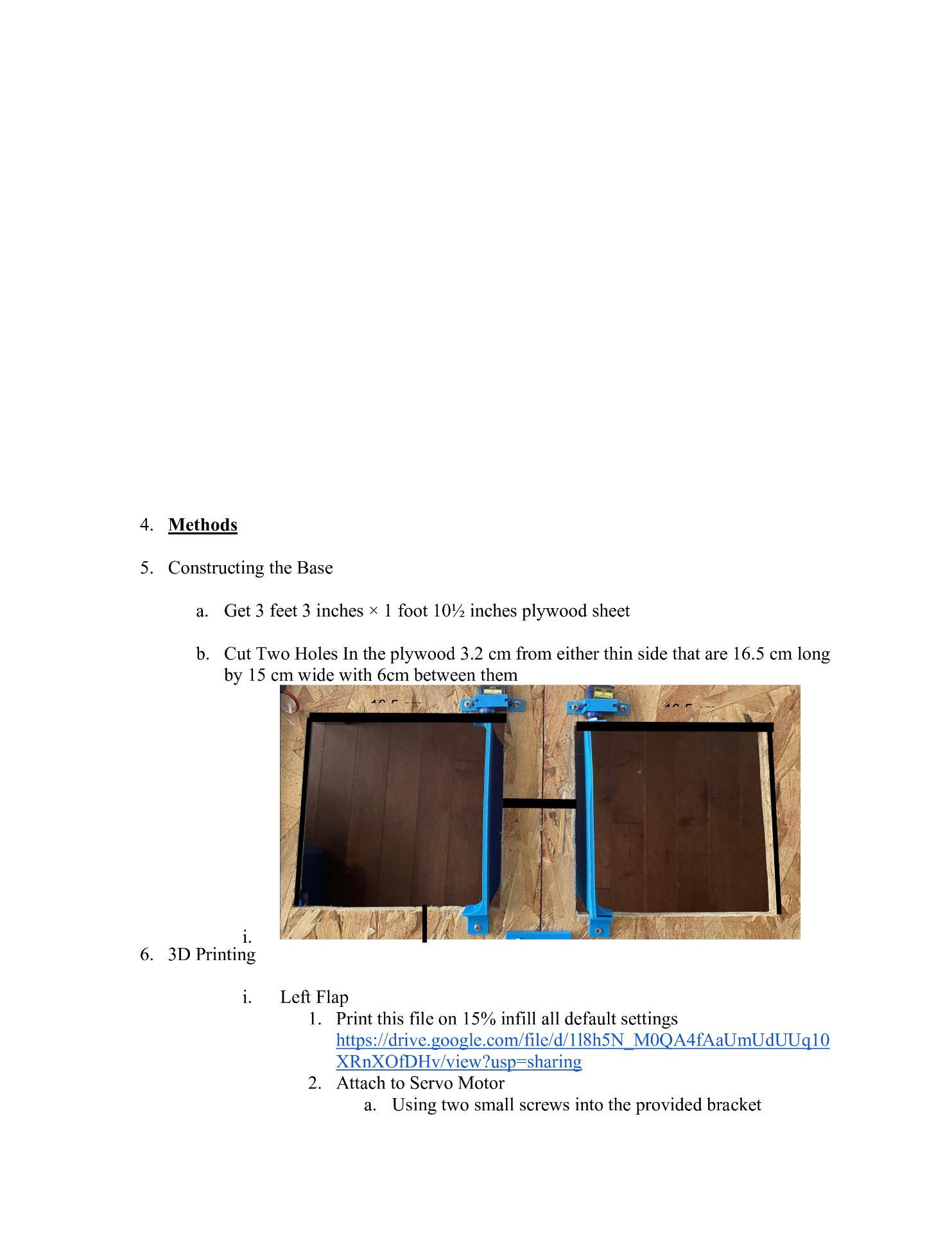
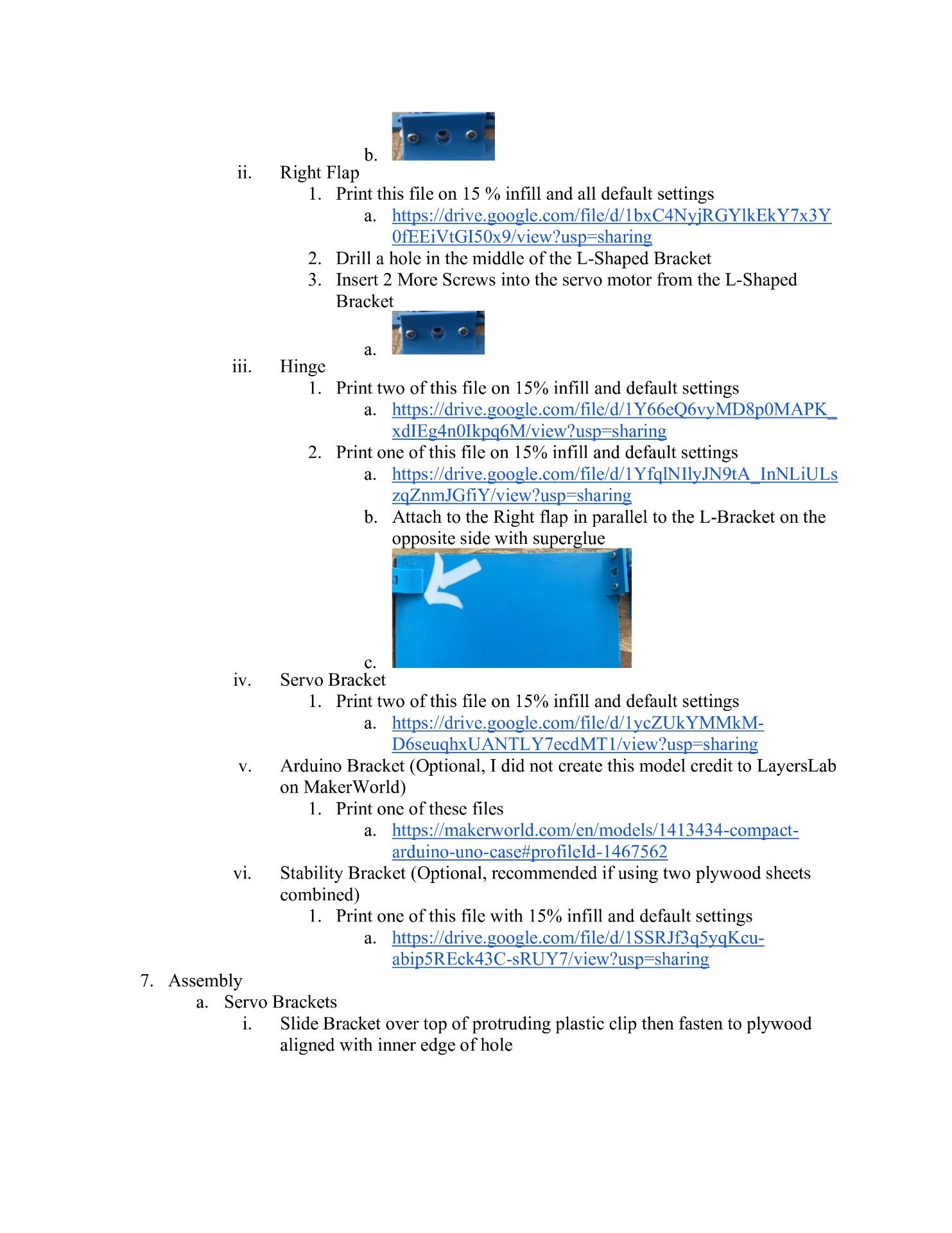
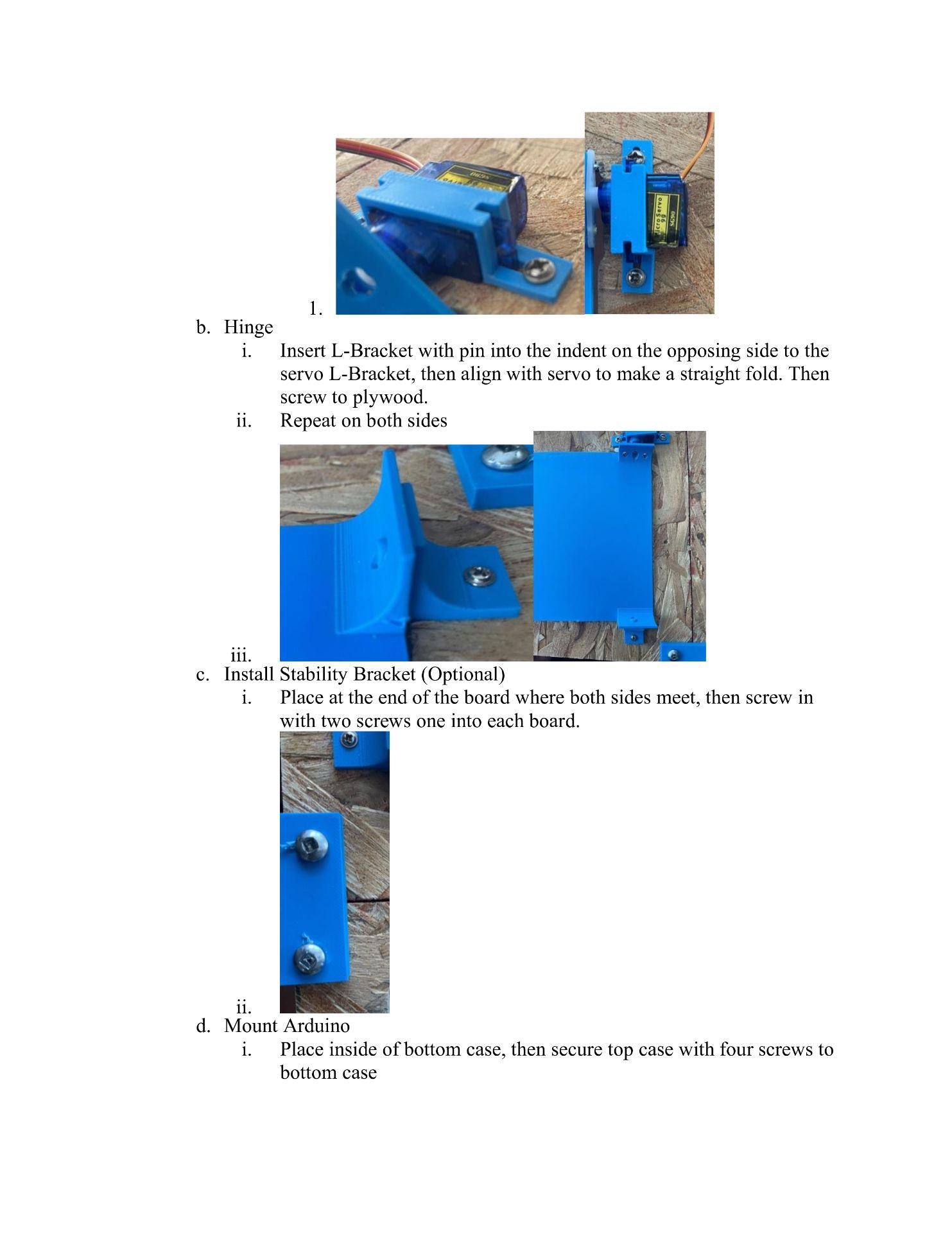
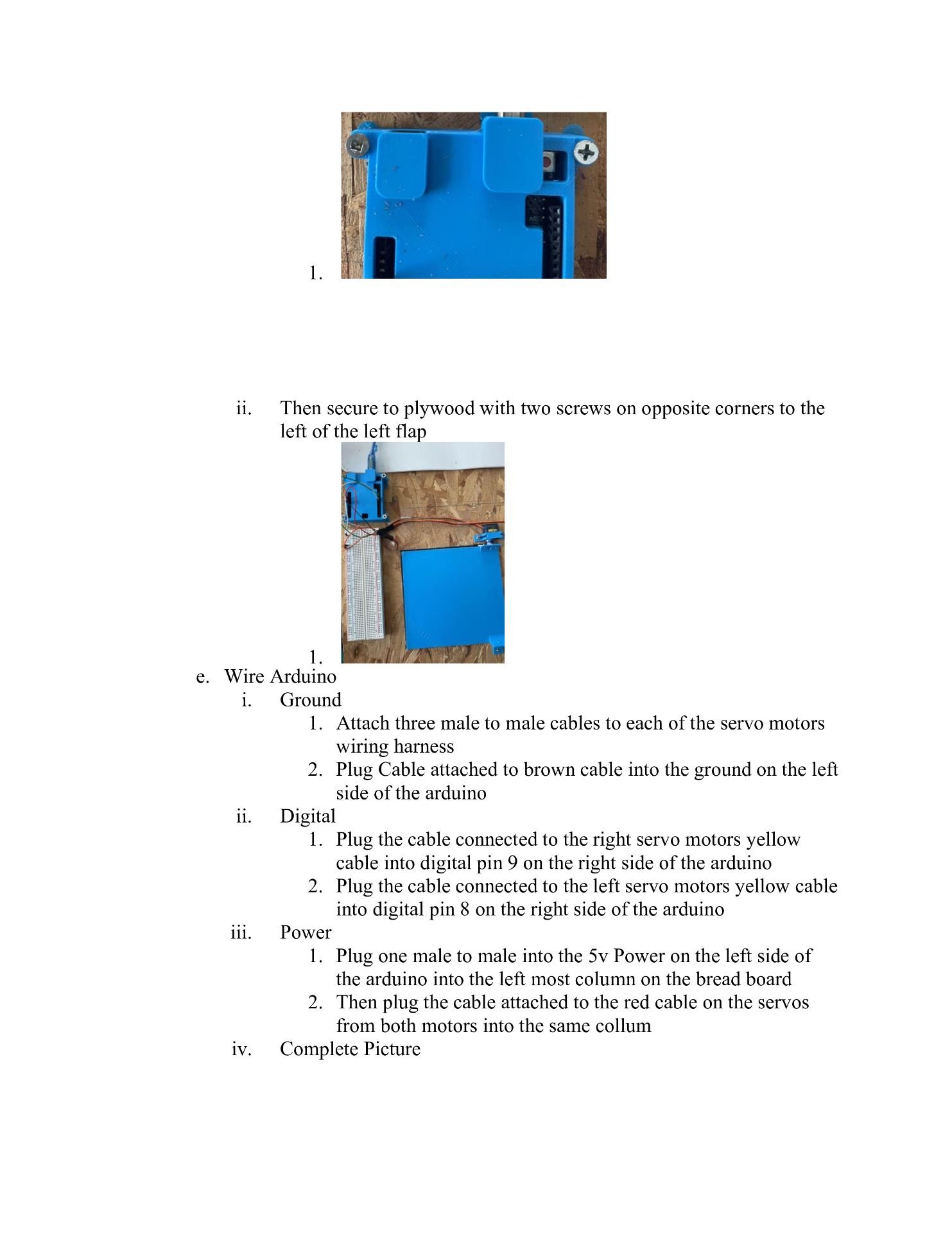
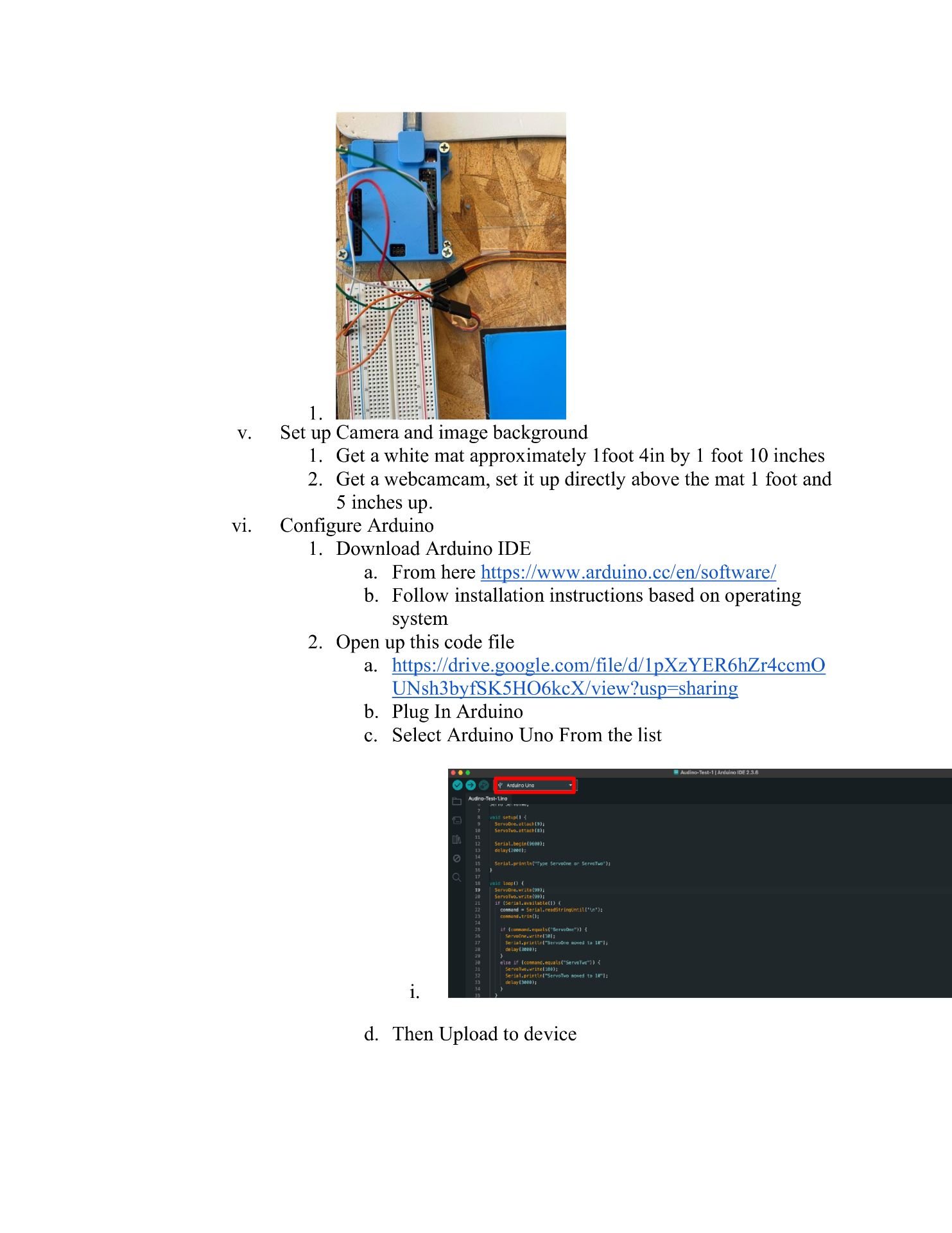
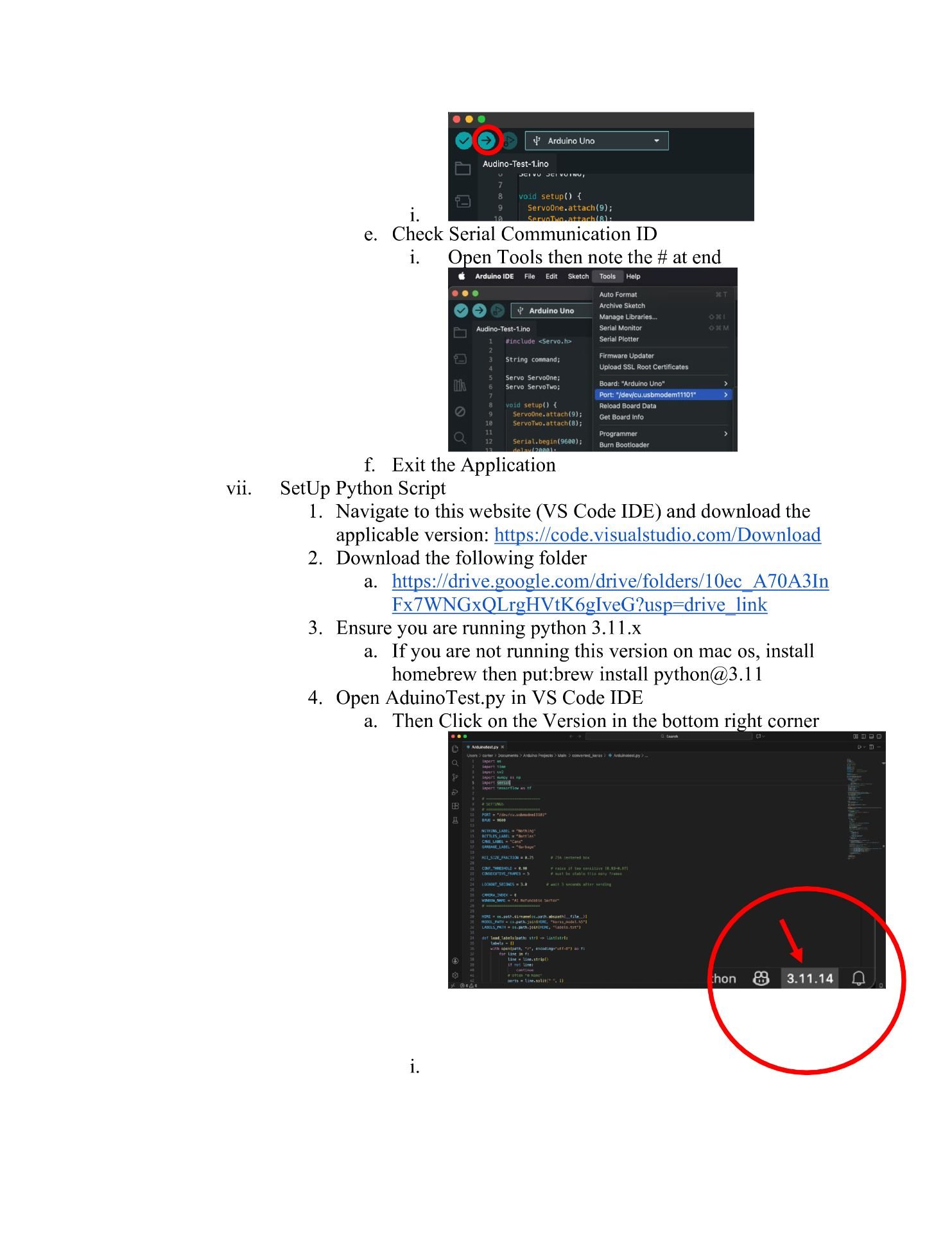 *The Python Code used in this project was primarily AI generated by ChatGPT 5.2 - The Arduino code used in this project was written by me
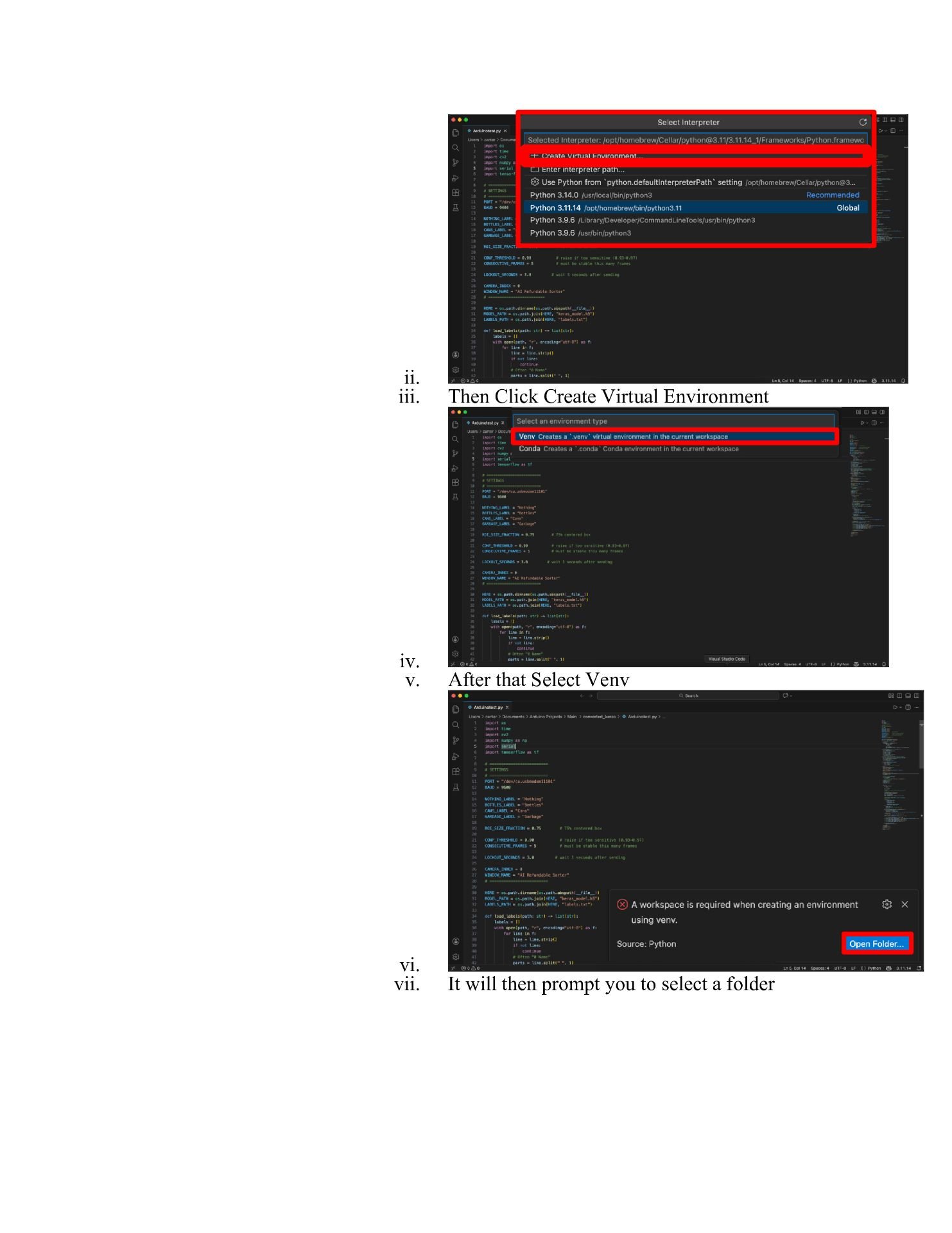
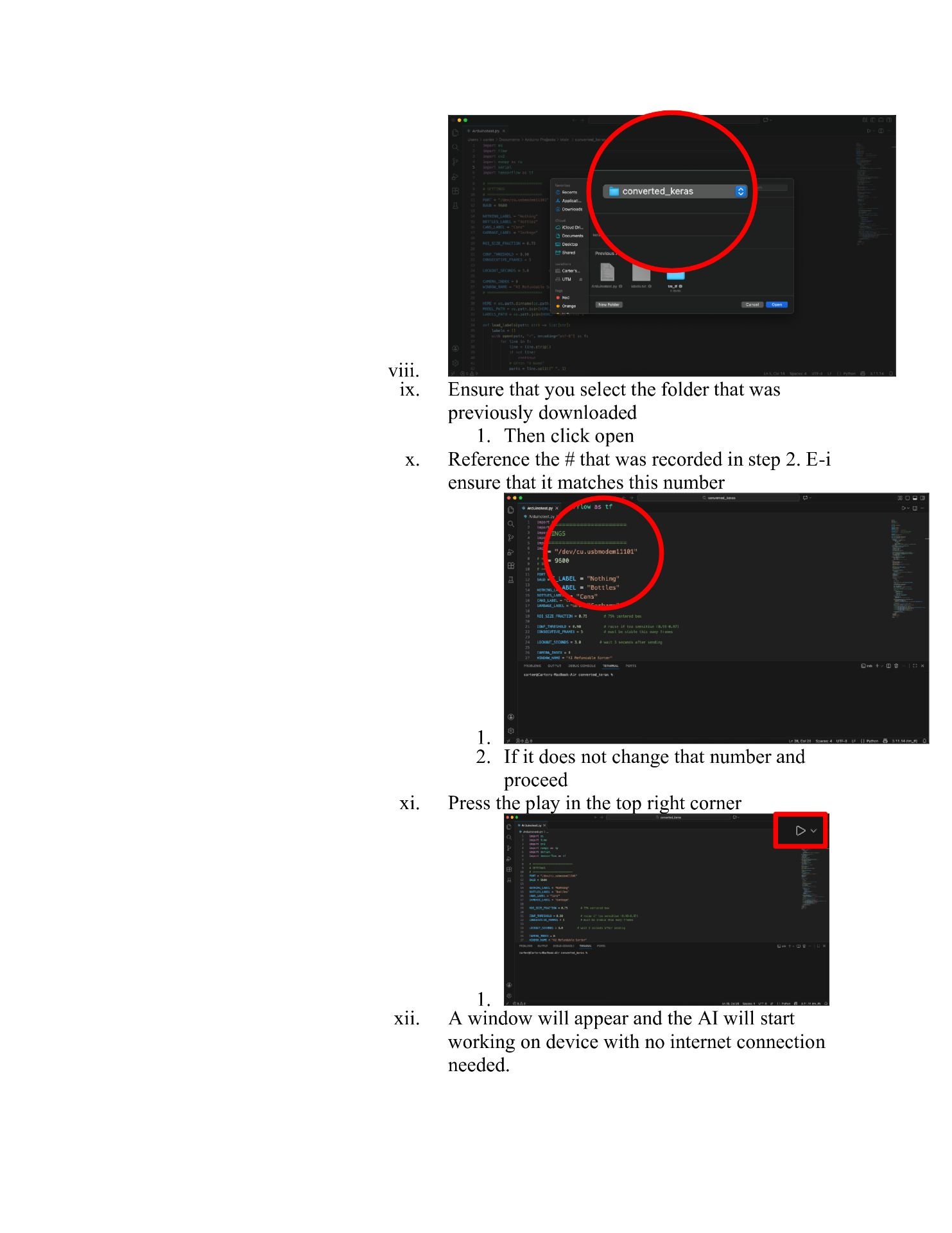 Materials and Budget
| Item | Description/purpose | Cost ($) | Funding source |
|---|---|---|---|
| M4 MacBook Air | For computing and AI model use. (Will work with other apple computers) | 0 | Already own it |
| Logitech Web Cam | To capture images of the products | 0 | Already own it |
| White Mat | TO provide simple background | 0 | Already Own it |
| Tri Pod | Hold up Web Cam | 0 | Already Own it |
| Arduino | Control Servos | 0 | Already Own it |
| 2 SG 90 Servos | To move the lids - less powerful servos will not work | 8+0 | Already Own One bought another. |
| Jigsaw | To Cut the Holes | 0 | Already Own it |
| Screwdriver | To Screw together the project | 0 | Already own it |
| 3D Printer + PLA Filament | To Fabricate many of the components | $5 | Already own printer, used filament |
| Assorted Refundable and other general items | To train the AI | $0 | I already own them. |
| Plywood | To construct the base | $0 | I already own it. |
| Total cost of project: | $ 13 |
Analysis
Data Collection
|
| Cans | Bottles | Plastic Utensils | Napkins | Packets |
| --- | ---- | ------- | ---------------- | ------- | ------- |
|
| 108/108 | 56/57 | 14/15 | 15/15 | 10/10 |
|
| 108/108 | 57/57 | 15/15 | 14/15 | 10/10 |
|
| 108/108 | 57/57 | 15/15 | 15/15 | 10/10 |
Processing of Data
|
| Cans | Bottles | Plastic Utensils | Napkins | Packets | Overall Error Rate By Type |
| Overall Error rate by # of items |
|
| --- | ---- | ------- | ---------------- | ------- | ------- | -------------------------- | --- | -------------------------------- | --- |
| Error Rate | 0% | 0.58% | 2.22% | 2.22% | 0.00% | 1% |
| 0.49% |
|
Analysis and Discussion
My data shows that my model, which is a convolutional neural network built on google foundational model, is very accurate. My model has a 0.49% error rate when tested against all individual items. In my testing, there have not been any motor issues or malfunctions which demonstrates reliability of my bin system.
Conclusion
Significance
My innovation has the possibility to majorly reduce costs and help the environment. It could reduce costs by reducing the amount of recycling centers that would be necessary. In Calgary's recycling system 20% of the waste that goes into the blue bin is contaminated. In contrast to my system that only has a 0.49% error rate per item, which in addition to the cost savings, it will also help the environment. One way waste could be reduced through my innovation is that often when users are unsure of which bin a waste product belongs in they may dispose of the waste in the garbage instead of the correct bin, my innovation along with the products by GreenScannr and OSCAR can prevent this situation. In addition to the aforementioned benefit, my innovation also features auto opening lids. This is important because if interacting with the system is not the easiest thing to do, people will make the choice not to. Data I gathered on the OSCAR system installed at Telus Spark in Calgary Alberta proved this point. During the observation period only 8.5% of the people that disposed of items used the system, this almost completely nullifies any reduction in human mistakes.
Conclusion
The prototype that I have created shows promise in reducing the levels of contamination found within the waste management system by considering the behaviors of the users as well as the technology present within the system. My innovation is far from polished and would not be ready for widespread use without improvements to areas such as, design, tamper resistance, model accuracy, an override button, and including more categories of waste. Starting with design the system would benefit from a more compact design along with stronger materials. The next category that needs improvement is the tamper resistance of the system, with the current design, a person could easily destroy the system by just unplugging a single cable. In addition to the improvements needed for a tamper resistant design, my project would also benefit from a more accurate model. While 0.49% error rate is a huge reduction over human error rates, it could always be improved. One way to do this would be an option where the user could tell the robot if it made a mistake and that could be used as additional data. The final main area of improvement is the amount of waste categories present within my system. When designing an AI system, the same complexity constraints that must be considered when designing waste systems for humans do not apply; this means that an AI powered system could have 20 different bins for different types of products instead of that sorting being done at the sorting center. That would cut down on the amount of sorting that has to be done at the recycling centers. In summary, my project has potential to reduce the amount of waste inaccurately disposed of and there are many improvements that could be made to increase the viability of the innovation.
Citations
1 Buchanan J. First Saturday Electronics Recycling Event. CVWMA - CVWMA serves Central Virginia with curbside and drop-off recycling, solid waste collection, electronics recycling, household hazardous waste disposal and more. Published March 10, 2025. Accessed December 28, 2025. https://cvwma.com/news/recycling-knowledge-gets-a-boost-with-ai-based-greenscanr/
2 Cho R. How AI Is Revolutionizing the Recycling Industry. State of the Planet. Published June 18, 2025. Accessed December 28, 2025. https://news.climate.columbia.edu/2025/06/18/how-ai-is-revolutionizing-the-recycling-industry/
3 Mucci T. Image Recognition. Ibm.com. Published November 12, 2024. Accessed December 28, 2025. https://www.ibm.com/think/topics/image-recognition
4 Youtube.com. Published 2025. Accessed December 28, 2025. https://www.youtube.com/watch?v=R9OHn5ZF4Uo
5 Why recycling matters. https://www.calgary.ca. Published 2025. Accessed December 28, 2025. https://www.calgary.ca/waste/residential/why-recycling-matters.html
6 How the Blue Cart recycling facility works. https://www.calgary.ca. Published 2025. Accessed December 28, 2025. https://www.calgary.ca/waste/residential/how-recycling-works.html
7 Alevato J. How this Toronto airport is using AI to help reduce garbage waste. CBC. Published July 23, 2025. Accessed December 28, 2025. https://www.cbc.ca/news/canada/toronto/billy-bishop-airport-oscar-garbage-waste-1.7591851
8 GeeksforGeeks. Types of Neural Networks. GeeksforGeeks. Published May 27, 2024. Accessed January 8, 2026. https://www.geeksforgeeks.org/deep-learning/types-of-neural-networks/ 9 to C. artificial neural network in which connections between the nodes do not form a cycle. Wikipedia.org. Published April 7, 2005. Accessed January 8, 2026. https://en.wikipedia.org/wiki/Feedforward_neural_network. 10 to C. approximation method in statistics. Wikipedia.org. Published September 8, 2002. Accessed January 8, 2026. https://en.wikipedia.org/wiki/Least_squares 11 GeeksforGeeks. Introduction to Convolution Neural Network. GeeksforGeeks. Published August 21, 2017. Accessed January 8, 2026. https://www.geeksforgeeks.org/machine-learning/introduction-convolution-neural-network/ 12 Ph.D JM, Kavlakoglu E. Transfer Learning. Ibm.com. Published February 12, 2024. Accessed January 8, 2026. https://www.ibm.com/think/topics/transfer-learning 13 Youtube.com. Published 2026. Accessed January 8, 2026. https://www.youtube.com/watch?v=Q7vT0--5VII&t=127s. 14 GeeksforGeeks. Activation functions in Neural Networks. GeeksforGeeks. Published January 29, 2018. Accessed January 8, 2026. https://www.geeksforgeeks.org/machine-learning/activation-functions-neural-networks/ 15 GeeksforGeeks. CNN | Introduction to Pooling Layer. GeeksforGeeks. Published August 5\, 2019. Accessed January 8\, 2026. https://www.geeksforgeeks.org/deep-learning/cnn-introduction-to-pooling-layer/ 16 Chat GPT chatgpt.com
Acknowledgement
I would like to thank my parents for letting me use materials and devices for this project and I would like to thank my dad for assisting in the building the base, and taking me on supply runs to get materials that I needed.