

Lighting the Trail: Clean Energy from Every Step.
Yashvardhan Jadon
STEM Innovation Academy Jr. High N.W. Campus
Grade 8
Presentation
No video provided
Problem
Clean energy is important because it helps us power devices without polluting the environment or wasting limited fossil fuels. Technologies like piezoelectric and electromagnetic induction can create electricity from everyday motion, which makes them exciting clean‑energy options. These methods can reduce how often we rely on regular batteries, which is great because batteries always seem to die at the worst possible moment. When a battery dies, it stops our devices from working and creates more electronic waste when we throw old batteries away. That’s why finding new clean‑energy solutions, like the ones in my project, can make our future more reliable and environmentally friendly.
Clean energy is also important because it reduces pollution, and studies show that switching to renewable power could cut global carbon emissions by almost 70% by 2050. Research also shows that motion‑based energy systems, like piezoelectric and electromagnetic induction, can generate small but useful amounts of electricity from everyday movement. These technologies help reduce how often we rely on regular batteries, which is helpful because the average household throws away over 100 dead batteries every year.
I wanted to make something that could not only generate electricity, but also do it in a way that is portable, easily generated and can generate enough to power small appliances when electricity is stored in a battery. Also, can I light up an LED as proof of concept to show that my prototype is able?
Method
Before doing anything, I needed to do some background research to find out how I can really generate any considerable amount of electricity. I started by researching piezoelectric crystals.
HOW DO PIEZOELECTRIC CRYSTALS WORK? Piezoelectricity is a special property found in certain crystals, like quartz, that allows them to turn movement or pressure into electricity. Inside these crystals, the atoms are arranged in a way that isn’t perfectly balanced. Quartz, for example, is made of silicon and oxygen, and the bonds between them are slightly uneven. When the crystal is squeezed or pressed, the atoms shift, and this causes positive and negative charges to move to opposite sides of the crystal. This shift creates an electrical imbalance. If wires are attached to the crystal, the charges will try to move toward each other, and that produces a small electric current. Even though one crystal only makes a tiny amount of electricity, scientists and engineers have found ways to use many crystals together to create more power. This process is already used in everyday technology, such as sensors in microphones, watches, and even in medical ultrasound machines. For smaller uses, piezoelectricity can light up LEDs, which don’t need much energy. Imagine a hiker’s shoe with piezoelectric crystals built into the sole: every step would press the crystals, generating electricity that could charge a flashlight or power small trail lights.
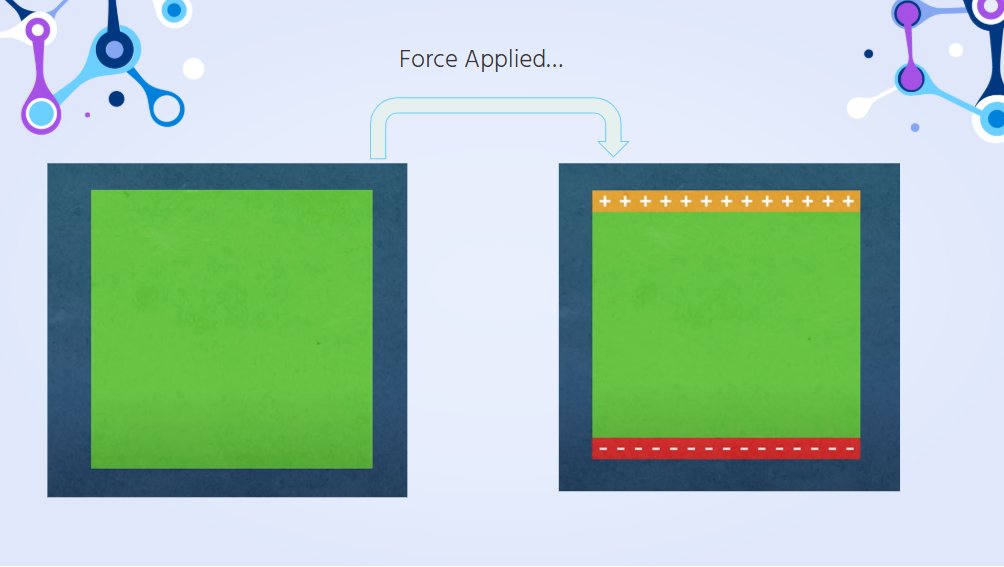
As you can see in this image, whenever the piezoelectric crystal is pressed, the negatively charged oxygen and positively charged silicon are brought to either side of the crystal. When wired, these charges can generate electricity, which is exactly what we need.
HOW DOES ELECTROMAGNETIC INDUCTION WORK?
Electromagnetic induction is the process of using magnetism to create electricity. It works because electricity and magnetism are closely linked. When a wire carries an electric current, it produces a magnetic field around it. On its own, this field is small, but if the wire is coiled into loops, the field becomes stronger. This stronger field is called magnetic flux, which is basically the amount of magnetic field passing through the coil. The key idea is that when magnetic flux changes, it produces something called emf, or electromotive force. Emf is what pushes electrons through a wire, creating an electric current. For example, if you move a magnet near a coil of wire, the magnetic flux changes, and that change induces a current in the wire. Similarly, opening and closing a circuit changes the magnetic field, which can also induce emf in a nearby wire.
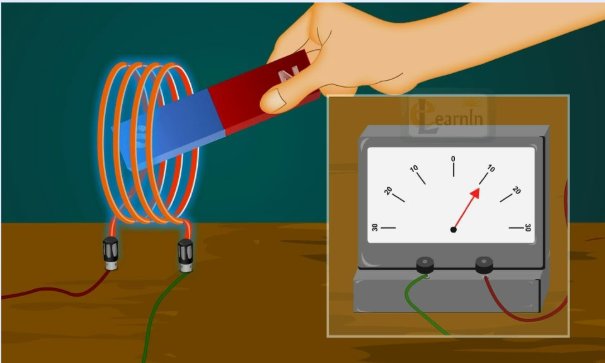
Applications of Electromagnetic Induction
Induction Stoves: Induction stoves use electricity to create heat directly in cookware. Alternating current flows through copper coils beneath the cooktop, producing a changing magnetic field. This field induces eddy currents in the pot or pan, and the metal’s resistance to those currents generates heat inside the cookware itself. As a result, the stove surface stays cool while the food cooks efficiently, converting electrical energy into thermal energy.
Electric Motors: Electric motors work by turning electricity into motion. When current flows through a coil of wire, it creates a magnetic field that interacts with permanent magnets around it. A commutator switches the current direction every half-turn, ensuring the coil keeps spinning. This continuous push and pull converts electrical energy into mechanical energy, powering devices from fans to cars.
RECITFICATION AND CAPACITATORS: A bridge rectifier is a group of 4 diodes that let current in one way, but do not let that current flow back. In an alternating current, the current varies and can be unpredictable, leading to the led not staying on but only flashing. A rectifier straightens out this unstableness and makes it so the flow of electricity is straight and constant. A capacitor is similar in the fact that it it smoothens current, but it stores the electricity then it releases it, helping keep the led on and making sure it doesn't only flash.
PROTOTYPES AND DESIGNS While I was designing my energy harvester, I made some prototypes that I have listed below.
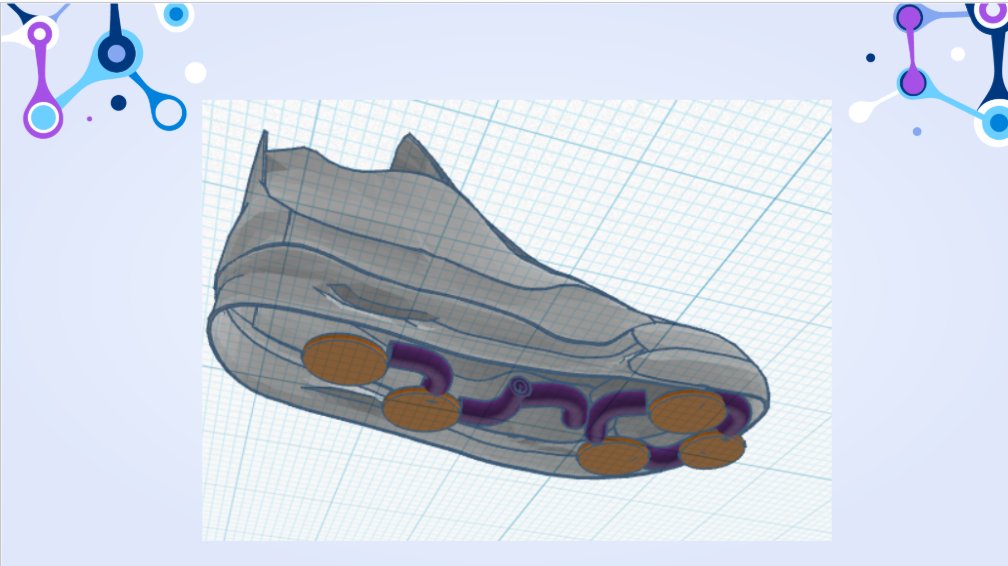 How this will work is when I step on the piezo disc, the charges will be brought to either side, which is when I can use that to generate electricity. In this, I have shown the discs as orange and wiring as purple.
 This image shows my prototype for an electromagnetic induction pen, in which a magnet will be in the center, and wrapped around will be coils of wire.
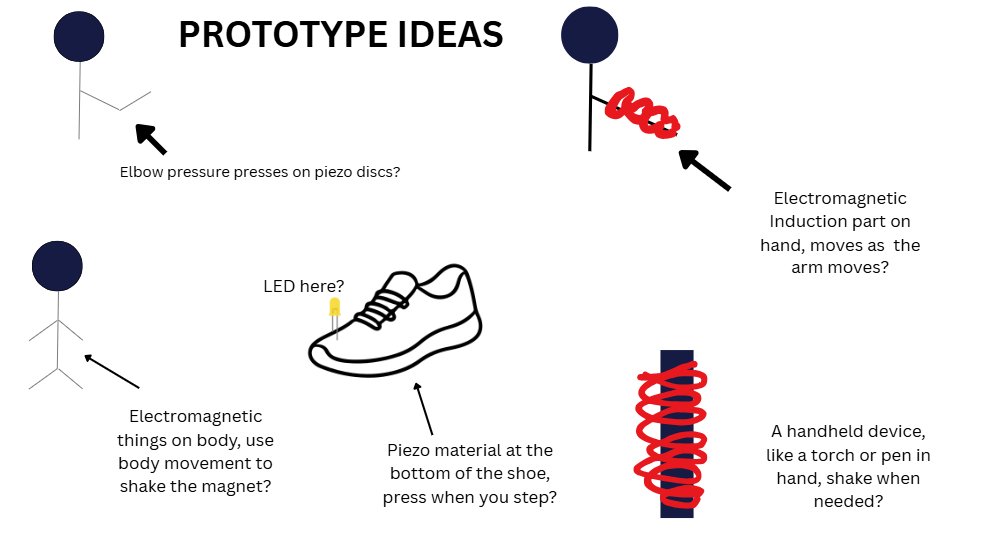 This shows a general prototype of all the designs I had thought of making.
THE BUILD
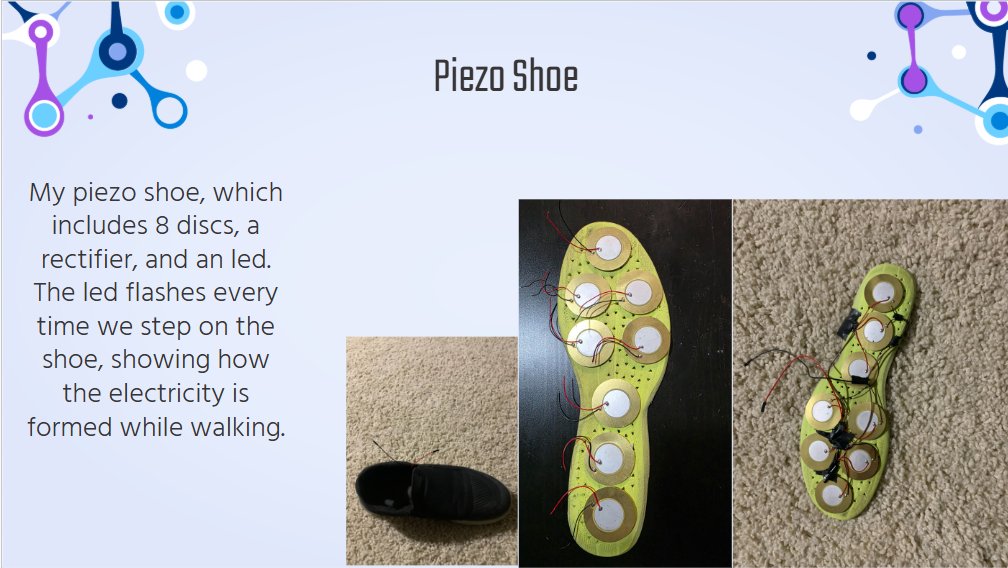 This shows my final build pieces of my shoe.
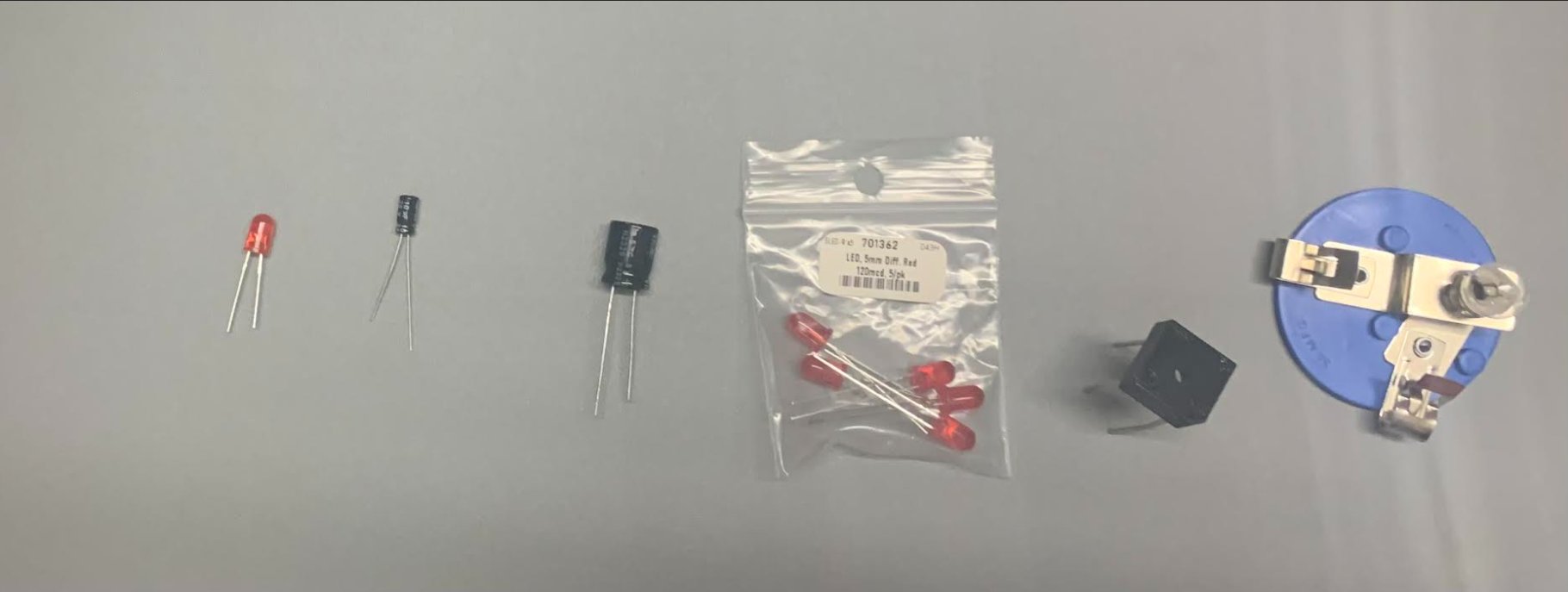 These are all the pieces of my project. The capacitators had turned out to be faulty, but I was eventually able to use them. More in the conclusion section. The LEDs were all faulty, especially the blue one on the right and the middle one in the bag. The blue one demanded too much energy, and the latter wouldn't turn on no matter battery or shoe.
Analysis
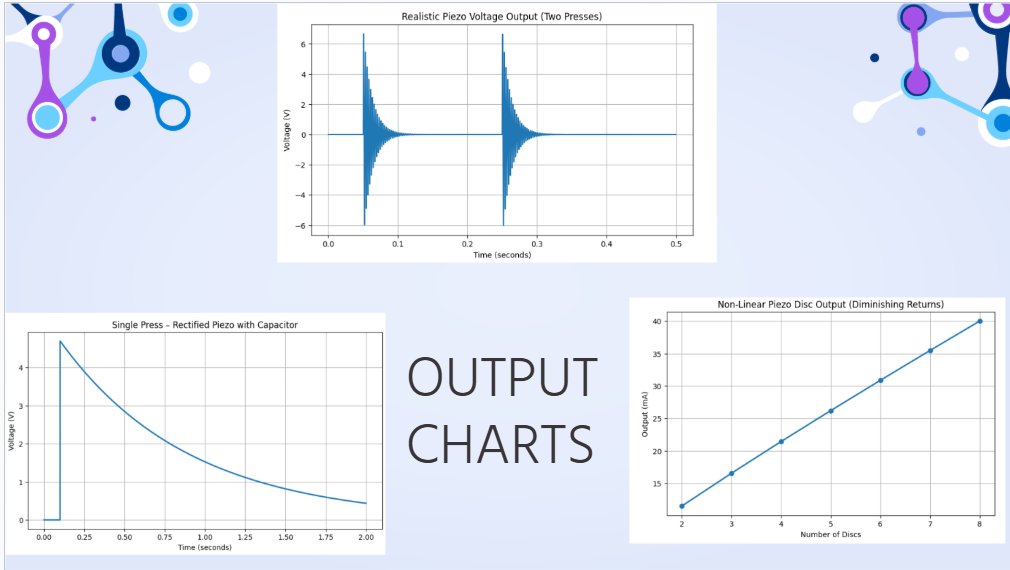 This chart is showing the outputs for my piezo shoe. I have not included the pen, as it showed minimal results and was mainly just a test.
SOURCES OF ERROR: When constructing a piezoelectric shoe, several sources of error can affect how much energy the device actually produces. One major issue is inconsistent pressure applied to the piezo discs, since uneven foot strikes or poor placement inside the sole can lead to unreliable voltage output. Another common error comes from weak or messy wiring connections, which can introduce resistance, short circuits, or signal loss. The materials used in the shoe—such as foam thickness, tape, or sole thickness—can also dampen the force reaching the piezo elements, reducing efficiency. Measurement errors may occur if the multimeter or testing setup isn’t calibrated properly or if readings are taken during irregular walking patterns. Finally, environmental factors like temperature, humidity, or bending stress can alter the piezo material behavior, creating variations that make the results less consistent.
PROBLEMS IN THE DESIGN: When building my shoe, I realized the capacitor I originally chose had far too much storage capacity for the system. Piezo discs generate very low current, so trying to charge a large capacitor meant the voltage never rose high enough to light the LED. In other words, the capacitor acted like a giant bucket that the piezo could barely fill. Because of this, I removed the capacitor entirely and used only a rectifier to convert the piezo’s AC output into DC, ensuring the LED receives a clean, usable current. However, when using the capacitor with the multimeter, it showed numbers that were given in the charts, a more stable output that uses the capacitor to slowly release the electricity.
Another problem is with my pen. I used jumper wires to make the coils, as I had realized the copper wires I had bought were not insulated. They had to be insulated, or else it would just short circuit itself as the wires are overlapping. So that's why I uses jumper wires, and didn’t expand more as I just wanted to show how electromagnetic induction could really work.
Conclusion
COMBINING THE BUILDS: Next time I make this project, I would like to showcase my innovation in a more compact and aesthetic way. By doing this, I can show how this device can really be a thing in the future, and how it could look if used by the regular person. A few ways I could compact it are making the whole things hidden in a compartment in the wearable, design a new wearable that has these things integrated, etc.
A MORE COMPACT BUILD: If I had the chance to do this project again, I would like to find a way to combine all the different components I have built. By combining them, I could create a real product, one that uses maximum efficiency to conduct at a much higher rate. By combining them, a more compact product could be made, one which uses all components to make the output as high as it can be.
While I was researching different methods, I came upon a new source of energy harvesting, triboelectric nanogenerators, or TENGS
TENGS: Triboelectric nanogenerators (TENGs) are small devices that harvest energy from motion using the triboelectric effect. When two different materials come into contact and then separate, electrons are transferred between them, creating an electrical potential. This potential drives electrons through a circuit, producing electricity. A simple example is rubbing two balloons together, where one becomes positively charged and the other negatively charged, and separating them creates electrical potential.
TENGs apply this principle at very small scales, often with nanostructured surfaces to maximize charge transfer. They can generate high voltage but low current, which makes them especially useful for powering sensors, wearable electronics, and other low-power devices. By capturing energy from everyday movements, vibrations, or even environmental sources like wind and waves, triboelectric nanogenerators offer a sustainable way to produce electricity for modern technologies.

This image shows how TENG technology is actually used in real life. A simple balloon experiment is what the TENGs use to generate electricity.
 This show a real example of TENG. When layers that are more attracted to accumulating positive or negative charges respectively are touched together, they gather the different charges, and that can be used to generate the electricity needed in this project.
Citations
Steve Mould. “Piezoelectricity - Why Hitting Crystals Makes Electricity.” YouTube, 16 May 2019, www.youtube.com/watch?v=wcJXA8IqYl8.
CNBC International Live. “Pavegen: How a Footstep’s Energy Is Converted to Electrical Power.” YouTube, 31 July 2023, www.youtube.com/watch?v=N_Li7gQQLLY.
Storr, W. (2025, September 19). Electromagnetic induction and faradays law. Basic Electronics Tutorials. https://www.electronics-tutorials.ws/electromagnetism/electromagnetic-induction.html
CrashCourse. “Induction - an Introduction: Crash Course Physics #34.” YouTube, 16 Dec. 2016, www.youtube.com/watch?v=pQp6bmJPU_0.
Fxstageadmin. “Piezoelectricity in Everyday Applications | APC Int.” Americanpiezo, 18 Feb. 2026, www.americanpiezo.com/blog/top-uses-of-piezoelectricity-in-everyday-applications.
Storr, Wayne. “Electromagnetic Induction and Faradays Law.” Basic Electronics Tutorials, 19 Sept. 2025, www.electronics-tutorials.ws/electromagnetism/electromagnetic-induction.html. Accessed 03 Mar. 2026.
“Triboelectric Nanogenerators.” FOAMIFY, 9 Dec. 2021, wp.icmm.csic.es/foamify/home. Accessed 03 Mar. 2026.
“FaradayFlashlight.” YouTube, www.youtube.com/watch?v=fiyaYII7ROA. Accessed 03 Mar. 2026.
Acknowledgement
I would like to acknowledge a ton of people, starting with my parents. They supported me throughout my entire project, helped me when I needed it, kept me on track and gave me optimism when I needed it most. I would also like to thank my Science Fair teacher, Ms. Bretner, for her support and guidance throughout my entire project. I am also thanking the people at SolarBotics, which is a shop that sells every type of electronical part you need, which was extremely helpful for my project. Finally, I want to acknowledge the people at CYSF for hosting this fair, it has been so much fun designing my project throughout the year!