
Cleaning Earth's Orbit
Prabhmeet Singh Jhinjar
STEM Innovation Academy Jr. High SW
Grade 9
Presentation
Problem
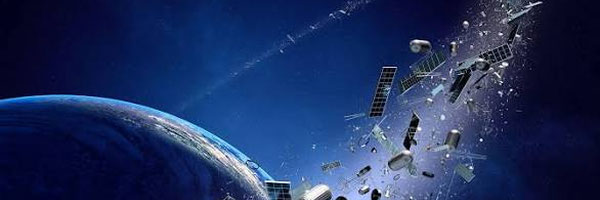
The Problem is that Space Debris is a growing problem that, if not addressed, could have severe impact on space exploration. The current methods to deal with this problem are still concepts or were discontinued due to factors such as unneffectiveness or price.
Method
My process was roughly inspired by our schools 'create, design, explore' framework.
1. Identifying the problem - EXPLORE - I identified the problem of Space Debris after reading about it last year\, and got this oppurtunity to go deeper into it 2. Brainstorming Basic Solutions - After brainstorming\, I decided to create my first prototype - a spring design 3. Researching the Materials - I researched different materials that would be suitable for this environment and the main materials that I ended up with was kevlar and tungstein 4. Building the prototype - The spring loaded prototype - DESIGN I built the prototype while testing different springs using lego SPIKE prime kit 5. Testing - The prototype did not work The prototype did not work, and after further research, the prototype did not work in space either 6. Back to designing - New motorized prototype The new motorized prototype used two high powered wheels to launch the net 7. Designing the prototype - (big mistake) Without doing research, I decided to make another prototype 8. Testing - Works! But not in space! The prototype works, but would not work in space 9. Research Again I researched different propulsion methods and materials that would work for propulsion (lead azide, stainless steel, compresed hydrogen, etc.) 10. Design Prototype The same design without the explosion 11. Test Prototype Works! 12. Make trifold - SHOWCASE 13. Get feedback 14. Make improvements
Analysis
My 2026 science fair project addresses the growing threat of space debris, consisting of over 100 million man-made junk larger than 1mm that travel at speeds of 7 km/s, and many above 10cm. This is a threat due to space exploration issues. The NASA ADRV doesn't work due to high expenses and rates of failure. Previous debris removal concepts I made include a spring-loaded prototype, which unfortunately lacked the power to launch heavy payloads at the necessary speeds. Additionally, motorized designs were unreliable due to risks of gear slippage, motor burnout, and significant room for operational error, and on top of that, although faster than a spring, are still not reaching the 7km/h limit. To solve these issues, your new prototype uses a very effective net system propelled by an exothermic reaction between Phlegmatized Lead Azide and compressed hydrogen. Phlegmatized Lead Azide is regular lead azide mixed with small quantities of Dextrin, which makes the lead azide slightly more stable to prevent premature explosions. The N3 particle in lead azide is very unstable, so when it is impacted, it breaks down and releases an exothermic reaction and ignites the compressed hydrogen, sending the prototype at speeds that can reach 8km?s. This design incorporates tightly knit Kevlar and impact sensors to efficiently capture debris in the net area, and polyethylene balloons are deployed to drag the mass into the atmosphere to burn up. Since this is in low earth orbit, hydrogen would still have some sort of effect in slowing it down, as it is not in outer space. The vehicle's protection is ensured by an external shell made of Titanium and stainless steel, because of their expansion/contraction properties, explosion proofness, and resistance to damage (to some degree). I also used liquid rocket fuel because little energy is needed due to the very minimal amount of forces acting upon the object in the Near Earth Orbit (even though their are some, there is not a lot.)
Conclusion
In conclusion, this project is innovative and effective in making an impact in the growing problem of Space Debris. This concept can lay the framework for space debris missions. The materials, the concept, and all the research is well-done and thorough, using sources in the citations. I learned a lot from this project about space, problems engineers can encounter, and some soft skills such as perseverance and consistency.
Citations
Nasa.gov NASA. (2018, August 13). Spacecraft to remove orbital debris. NASA. https://technology.nasa.gov/patent/MSC-TOPS-90 University of Surrey Removedebris. SpaceDEBRIS mission | University of Surrey. (n.d.). https://www.surrey.ac.uk/surrey-space-centre/missions/removedebris# Google Scholar Google scholar (N.D.) https://google.scholar.com SpaceFlight101 RemoveDebris – dragon SPX-14: Spaceflight101. Dragon SpX14 Spaceflight101. (n.d.). https://spaceflight101.com/dragon-spx14/removedebris Nasa Technology Transfer Program (.gov) NASA. (2018, August 13). Spacecraft to remove orbital debris. NASA. https://technology.nasa.gov/patent/MSC-TOPS-90 Britannica Kids Encyclopedia Bright, M., Lloyd, C., Ruffle, M., & Tite, J. (2020). Britannica All new kids encyclopedia: What we know & what we don’t: Edited by Christopher Lloyd with more than 100 experts in their fields, including space, animals, wars, mummies, brain science, and many, many more! Britannica Books.
Lead Azide: Fair, H. D., & Swotinsky, R. F. (1977). Inorganic Azides: Vol. 1. Program and Abstracts. Plenum Press. (Focuses on the explosive properties and crystalline structure). Tungsten: Lassner, E., & Schubert, W. D. (1999). Tungsten: Properties, Chemistry, Technology of the Element, Alloys, and Chemical Compounds. Springer Science & Business Media. Stainless Steel: Davis, J. R. (Ed.). (1994). Stainless Steels. ASM International. (A comprehensive guide to the metallurgy and corrosion resistance of various grades). Titanium: Leyens, C., & Peters, M. (Eds.). (2003). Titanium and Titanium Alloys: Fundamentals and Applications. Wiley-VCH. Composite Comparison: Boyer, R. R. (1996). "An overview on the use of titanium in the aerospace industry." Materials Science and Engineering: A, 213(1-2), 103-114. TiAlCr Alloys: Brady, M. P., et al. (1996). "The oxidation and protection of gamma titanium aluminides." JOM, 48(11), 46-50. Stratospheric Balloons: Smith, M. S., & Rainwater, E. L. (2003). "Applications of Scientific Ballooning Technology." Advances in Space Research, 33(10), 1622-1629. Kessler, D. J., & Cour-Palais, B. G. (1978). "Collision frequency of artificial satellites: The creation of a debris belt." Journal of Geophysical Research: Space Physics, 83(A6), 2637-2646. Liou, J. C., & Johnson, N. L. (2006). "Risks in space from orbiting debris." Science, 311(5759), 340-341. Klinkrad, H. (2006).Space Debris: Models and Risk Analysis. Springer-Praxis.
Acknowledgement
I want to acknowledge my parents for dropping me off at numerous locations and getting many materials I would also like to thank Graeme Sabiston, an engineer at Vast Robotics, who helped me by giving som feedback, some problems that I failed to address, and ways to make my presentation more relatable to people who may not understand the true extent of space. I would like to thank my teachers, Mr. Joseph and Ms. Perez for the feedback they gave me about my presentations, And lastly, I would like to thank all of the judges who came on the in-house science fair for the massive amount of great feedback they gave me regarding my presentation skills, aesthetics, and additional information suggestions.