
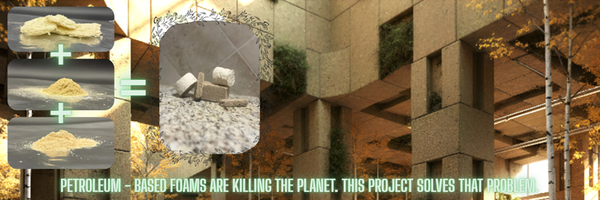
Sustainable Fire-retardant, Thermal Insulating Biomass-derived Foams for Green Buildings
Mika Wan
Webber Academy
Grade 10
Presentation
Problem
High Demand & Projected Growth in Global Industrial Foam Market
The industrial foam insulation market has created critical and inevitable issues in our current world: the extensive depletion of petrochemicals, the pollution of non-degradable plastic materials that dominates landfills, the production of ozone-destroying chemicals, and the dispersion of microplastic materials that taints natural ecosystems. Such problems are a result of the synthetic polymers found in building insulation foams, including polystyrene foamsーexpanded polystyrene (EPS) foams and extruded polystyrene (XPS)ーand polyurethane (PU) foams for example. Assessment reports published by the United Nations have concluded that the total global production of polymeric foams continues to grow at a rate of 3.9% per year, with 29 million tonnes of global building insulation material produced solely in 2024. As a result, an effective and innovative solution composed of biodegradable materials that have similar physical and chemical properties (as polymeric environment-destroying foam) has become a pressing subject in this field.
Formation & Classification of Foams
Foams, classified as dispersed media, contain gas bubbles that act as the dispersed phase, which are trapped in a continuous phase that is either liquid or solid, giving it unique physical properties. The volume of dispersed gas is greater than the liquid or solid material, often achieved by using surfactants (like sodium dodecyl sulfate), which are chemical molecules that reduce the surface tension between liquids, gases, and solids, yielding a greater physical ability for them to mix and interact while creating stabilized bubbles. Surfactants consist of a hydrophilic head and hydrophobic tail, allowing them to weaken cohesive forces that prevent gas pockets from forming. Foam gas volumes typically range from 50% to 95% of the total volume. As well, solid foams, also known as cellular solids, can be classified into two main groups based on their pore structure: open cell foams and closed cell foams. Open cell foams are physically softer and can absorb any surrounding gases. Closed cells have isolated pores, contributing to its greater compressive strength. Other physical properties include being denser than open cell foams and how they can be enhanced with certain gases to create better insulation.
Problems with Petroleum-Based Foams (XPS, EPS, and PU)
The main types of polymeric foams, which are derived from petroleum-based raw materials, used for industrial insulation in buildings include polystyrene foams (\~25%-30% of global foam market share) and polyurethane foams (\~38%-41% of global foam market share), which are both closed celled. XPS foams, which fall under polystyrene foams, are made by mixing with polystyrene pellets with additives like flame retardants and colorants. Then, it is heated in an extruder until it melts. That molten material is immediately pushed through a shaping tool, while a blowing agent vaporizes, which releases gas within the polymer, causing the material to expand into a foam that is lightweight and insulative. EPS foams, the latter type of polystyrene foam, are created though raw polystyrene beads that are mixed with a blowing agent. Applied steam then causes the beads to swell up and expand further in a mold. Unlike polystyrene foams, polyurethane (PU) foams are formed through an exothermic chemical reaction between isocyanates and polyols (with additives and catalysts), which creates a liquid polymer that expands from the assistance of a blowing agent.
Both the XPS and EPS foams and the PU foams utilize blowing agents, varying from carbon dioxide, pentane, and hydrofluorocarbons (HFCs). Though some blowing agents, like hydrofluoroolefins (HFOs), have lower global warming potential than others, all of them still deduce problems that are excruciatingly harmful to the environment. HFCs have been commonly used in foam-making, and are classified as super-greenhouse gases that have high global warming potential. These harmful blowing agents are trapped in foam cells and are released during the manufacturing process, over time as the foam ages in buildings, and significantly when slowly degrading after disposal. This "degradation" is not instant: UV radiation that causes foam to become brittle, physical fragmentation creating microplastics that enter soil and waterways, and off-gassing when these minacious chemicals begin to slowly leak out of their closed cells all take 500 years or more to “decompose” of the foams fully. However, rather than actually decomposing, it will often just break into microplastics that persist for centuries more.
Since these common types of industrial insulation foams all contain petrochemicals (i.e. styrene monomers from crude oil in XPS), they are unsustainable and contribute heavily to the release of greenhouse gases that causes global warming. Especially due to their high annual production at around 30 million tonnes per year and how there is always an expected growth in global construction and development, polymeric foams are becoming increasingly alarming because of their ineffective use of resources like petrochemicals.
Problems of Current Bio-Based Foams
Bio-based methods that have targeted the environmental problems created by petroleum-derived foams have been researched and successfully produced. Such foams have been shown to contain flame retardant, thermal insulative, and other similar mechanical properties to preexisting industrial foams. However, though this first step is complete, further research is needed to improve the cost and scalability of this method in the real world. The first problem posed by these bio-based foams is that they are expensive because many are made using nanocellulose: a biomaterial that requires an energy-intensive, multi-step chemical process and specialized equipment for its extraction and refinement. Converting raw materials into actual nanocellulose requires lots of chemical and mechanical alterations that are not cost effective; thus, finding a way to keep the properties of the resulting foam while decreasing the energy intensity required to convert these materials into being usable is necessary for the scalability of this method. Another issue that these nanocellulose foams face is the lengthy, complex, and inefficient process needed to create them in commercial environments in factories. Thus, it is difficult to produce mass amounts to keep up with the rising industrial demand and global market of these insulation foams.
Method
Objectives of Foams
- Mechanical strength: Current industrial foams that are petroleum-based have high tolerance to shear and compressive forces; however, current biobased foams lack this property.
- Fire retardancy: To protect buildings from structure fires and the harms caused by them (i.e. release of toxic gases and collapse), it is crucial for all industrial foams to possess fire retardant properties.
- Hydrophobicity: Moisture sensitivity, especially in humid environments, causes mold and undesired degradation to occur in foams. The hydrophilic behavior of most biobased foams makes this an important factor to consider.
- Biodegradability: 30% of PU foams produced end up in landfills yearly while that number is more like \~80% for EPS foams. They often sit in landfills for over 500 years, waiting to break down.
- Thermal insulation: Foam insulation boards must keep indoor room temperatures the same regardless of outside environments (increase HVAC efficiency).
- Scalability: Current processes to make biobased foams require expensive chemicals (i.e. isocyanate binders, lignin, soy, tannin) that makes it an unrealistic alternative to petroleum-based ones.
Novelty of Hemp and Aspen as Scalable Biomaterials
Finding a cost-effective, scalable material to successfully replace current industrial foams has been difficult for researchers around the world. In this project, hemp and aspen lignocellulose were used because they are very cheap, naturally degradable byproduct materials that are also more readily viable options compared to nanocellulose. Hemp, recognized as one of the fastest growing plants on Earth, roughly generates 150 million tons of natural waste per year, while the aspen tree is the most widely distributed and common native tree species in North America that can adapt to a variety of habitats and can thus be found in Europe and Asia as well. Processing both of these raw biomaterials into lignocellulose requires less energy input compared to converting raw materials into nanocellulose, which requires more costly chemical and physical alterations (to purify cellulose by removing lignin and hemicellulose) that are not necessarily needed to achieve foams that possess the same excellent properties. Nanocellulose processing is hugely energy demanding due to the need of isolating cellulose nanofibers, which means overcoming the strong hydrogen bonds between cellulose microfibrils. In addition, the actual process of foam-making using these types of lignocellulose is much more cost-effective since it utilizes cheaper chemicals compared to the process of converting nanocellulose into foams, which is a crucial aspect when considering industrial scalability and manufacturing.
Why Hemp and Aspen?
Hemp insulation boards are being sold on the market; however, due to their high industrial production costs, these boards must be replaced by cheaper, more scalable options. There are also many issues with these preexisting foam boards: they have high moisture sensitivity, giving it undesirable physical properties that could lead to mold and biodegradation, which is why many homes choose to continue using petroleum-based foams. Thus, it is necessary to create hemp foam boards with enhanced properties, such as adding a hydrophobic agent to counter moisture sensitivity. As well, hemp-based boards are currently expensive on the global foam market: ranging from $1.50-$3.10 per board foot, hemp insulation has much higher upfront costs compared to petroleum-based foams. PU foams range from $0.45-$1.50 per board foot, EPS foams are between $0.25-$0.35 per board foot in cost, and XPS foams typically cost $0.40-$0.50 per board foot. The low prices of the petroleum-based foams make consumers reluctant to buy the highly-priced current hemp boards. Hemp-based foam boards currently sold on the market are criticized by researchers because of another reason too: they lack mechanical strength and collapse easily due to the flaky materials used.
The lesser studied aspen-derived insulation foams, similarly, have problems involving cost and moisture sensitivity too. However, according to a research study done by J.W. Lawton and colleagues, aspen still remains an advantageous biomaterial since it is typically used to enhance mechanical properties (specifically durability). For example, it is used in baked cornstarch foams to increase tensile strength especially under humid conditions, reducing the overall brittleness. Thus, utilizing aspen lignocellulose in samples to create foams with greater mechanical tolerance was hypothesized and tested to fulfill the first aim of enhancing its strength to shear and compressive forces.
Note: Foams that contain aspen and hemp do not currently exist.
Additives
Nanoclay, a biomaterial that is made up of very fine clay particles which is a necessary property for successful dispersion in foaming, was used as an additive to ensure that it would be able to give the foam desired advantages: enhanced mechanical properties and fire-retardancy. This biomaterial is made of layered mineral silicates that travel to the surface of a material when ignited, creating a protective layer of char that acts as a thermal shield for inner components of the whole system. Very low weight percentages (wt%) of nanoclay can still be effective at being fire resistant, often ranging from 1-5 wt%. In current polyurethane foams, nanoclay is utilized to make foams more resistant to compression as well. It acts like a reinforcing filler that strengthens the cells within a foam.
Silane groups, specifically hexadeclytrimethoxysilane (HDTMS) and octadecyltrimethoxysilane (ODTMS), were used to change the foam from hydrophilic to hydrophobic. These chemicals work by binding to other materials (silanization), then creating a nonpolar, low surface energy barrier that is “incompatible” with water, which has high surface energy. Due to these simple chemical reactions, it is therefore able to be easily added to foams during its creation process.
Foam Creation Process
 Figure 1. Summation of foaming process used to create lignocellulose-based foams in this project. This three-step methodology of producing foams is derived from previous research knowledge. An important note to this process is that all chemicals used are bio-based, which is something typical foaming processes lack. This makes it an innovative and quite novel methodology. It was used in my experiments to create foams with different weight percentages of aspen, hemp, and nanoclay.
The first step, foaming, is crucial to this process: it is where the lignocellulose fibres are combined with distilled water, additives, and surfactants (specifically sodium dodecyl sulfate (SDS)). This foaming takes about 15 to 20 minutes to allow air to be enveloped into the fibres, creating pockets filled with gas, as well as complete dispersion. Secondly, the processing step involves various cheap and commonly accessible chemicals to ensure the foam does not collapse. Importantly, using inexpensive materials was to ensure that the creation of foams was economically scalable to larger industrial markets, which was a main objective in this project. The crosslinker sodium alginate reacted with fibres during processing to make interconnected polymer chains, ensuring that the closed-cell foams were durable and strong. Sodium alginate is inexpensive and extracted from brown seaweed, making it also a bio-based material. Air drying is the last step: it converts wet foams to dry foams and can take up to two days.
Analysis
Testing Rationale
Using the three part process explained previously, there were various weight percentages of biomaterials tested. This was to examine the combination of lignocellulose fibres and additives that had the most desirable properties which included tests of: mechanical strength, fire retardancy, hydrophobicity, biodegradability, and thermal insulation at the end with the most optimal foam.
Manipulating Hemp and Aspen WT% (No Additives)
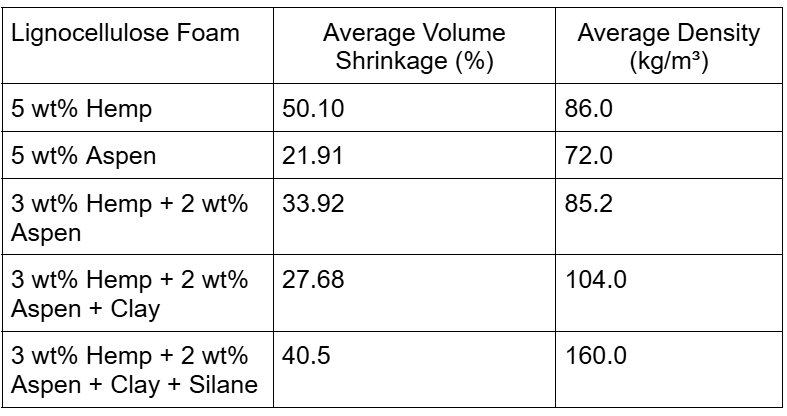
The lignocellulose fibres were individually created and tested to see which weight-percent of fibres created the foams with the least shrinkage (from being converted from wet to dry foams in the third step). This is crucial because different lignocellulose fibres work well with different wt%. Lower volume shrinkage correlates to more effective foaming, while high density foams are typically high-performance and able to last longer.
4 wt% hemp, 5 wt% hemp, 6 wt% hemp, 4 wt% aspen, 5 wt% aspen, and 6 wt% aspen were all tested; the 5 wt% fibres generated the most optimal properties due to the lowest shrinkage rates (correlating to more successful foaming). This was observed qualitatively over five trials of each test group.
Since 5 wt% concentration proved to have the lowest shrinkage rate for both types of lignocellulose, the combination of hemp and aspen together required the total sum of fibres to be 5 wt%. Thus, the next set of experiments were focused on creating various wt% combinations of hemp and aspen.
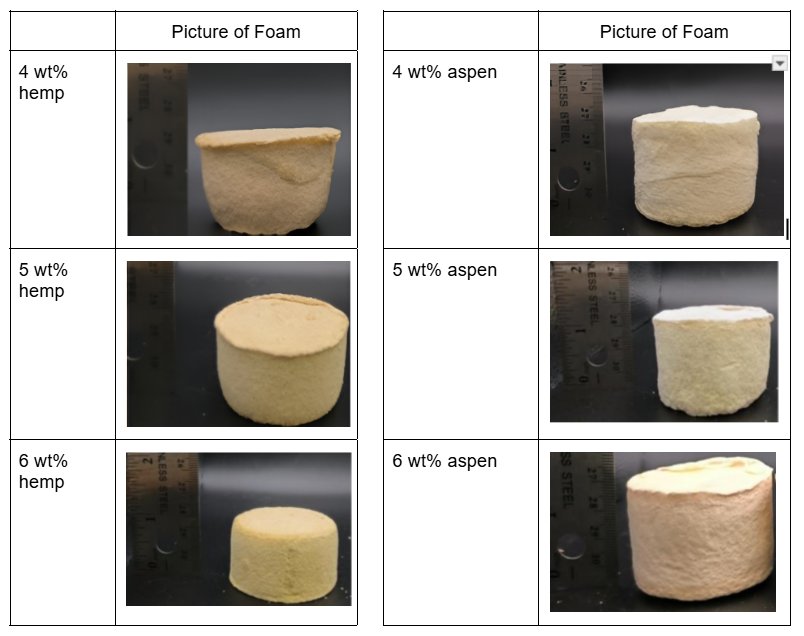
4 wt% aspen/1 wt% hemp, 3wt% aspen/2 wt% hemp, 2 wt% aspen/3 wt% hemp, and 1 wt% aspen/4 wt% hemp were the concentrations tested. There were five samples of each test group.
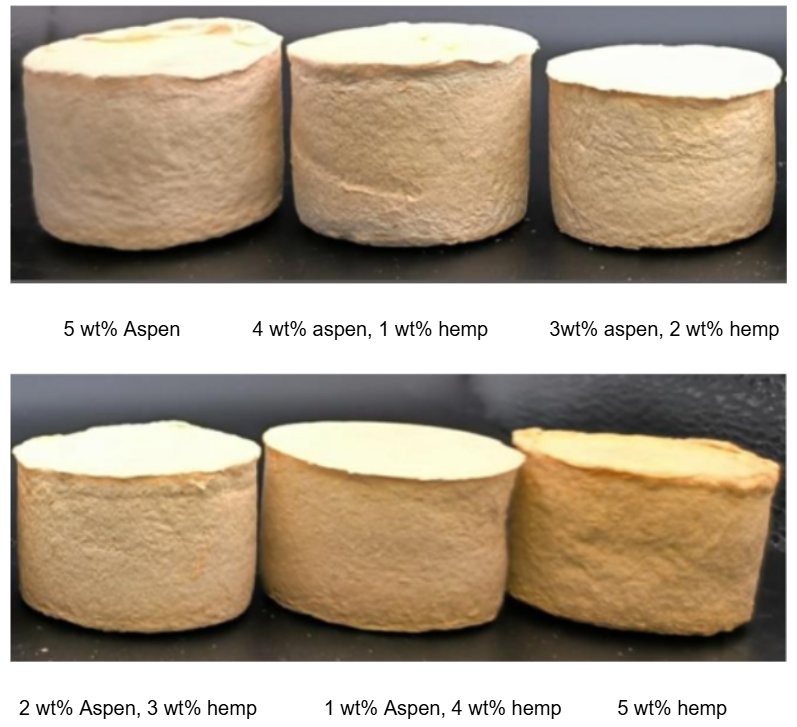
RESULT: The most advantageous aspen and hemp combination was 3 wt% hemp and 2 wt% aspen because when qualitatively assessed, it was the most mechanically strong and had little to no cracks.
Manipulating WT% of Foam Additives
Nanoclay was added to the 3 wt% hemp and 2 wt% aspen samples. The tests included various weight percentages of this substance: 1 wt%, 2 wt%, 2.5 wt%, 3 wt%, 3.5 wt%, 4 wt%, 4.5 wt%, and 5 wt%. Importantly, no matter the percent of clay content added, the samples were all still fire retardant. Thus, choosing the sample type that foamed the most successfully (i.e. no cracks and solid shape) was how 2.5 wt% nanoclay was decided. There were five samples of each test group.
 Figure 2. Depiction of various nanoclay concentrations in 3 wt% hemp and 2 wt% aspen samples.
The hydrophobic agent was the silane group, specifically, hexadeclytrimethoxysilane (HDTMS) and octadecyltrimethoxysilane (ODTMS). Prior research showed that 1 wt% was needed to create hydrophobic properties, and adding any more of the chemical would not influence its water-repelling nature.
Foam Property Tests
To ensure that the final resulting foam (3 wt% hemp + 2 wt% aspen + 2.5 wt% nanoclay + 1 wt% silane group) had all the necessary properties that were required to be a satisfactory industrial foam, many tests were run to ensure long-term integrity and scalability.
Mechanical strength:
To demonstrate its resistance to compression, various size samples and weights were used to compare it to existing petroleum-based foams. A 27.63 gram foam could tolerate more than 30 times its own weight (\~800 grams). A sample that weighed 8.44 grams was able to hold up more than 500 grams (\~60 times its weight), while a 2.02 gram sample that was less than 1cm thin held up to 250 grams, almost 125 times its own mass. All of the results were similar to the amount of mass petroleum-based foams could tolerate. Note: The foams maintained their physical states throughout this test.
Fire retardancy:
To show the implications of how effective nanoclay was at transforming the foam into a fire retardant biomaterial, this test compared samples with and without clay. With the nanoclay, the sample was able to completely stop burning after only ten seconds with minimal char length. On the other hand, without it, the burning time was about 540 seconds or 9 minutes with most of the sample completely consumed by char. See figures below for graphical and visual representation.
 Figure 3. Graph shows how foam with clay had significantly lower burning time and smaller char length compared to foam without clay.
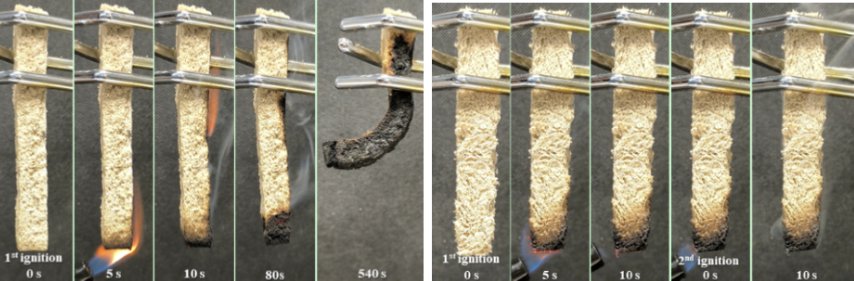 Figure 4. Left image: burning test of foam without clay. Right image: burning test of foam with clay.
Hydrophobicity:
The foams created in this experiment were qualitatively hydrophobic due to silane groups used, but to get a close-up image of water molecules on foams with and without silane, a Contact Angle Meter (instrument used to measure contact angles and wetting properties of liquid on solid surface).
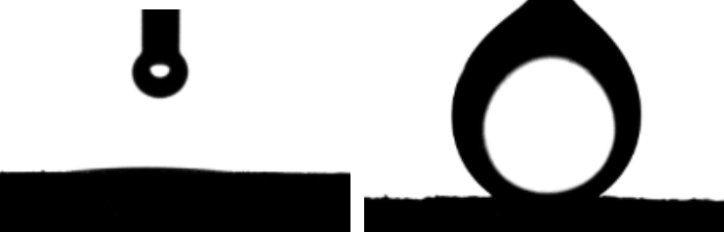 Figure 5. Images taken by Contact Angle Meter. Left image: foam without silane had water droplet that completely absorbed into foam surface. Right image: water droplet with cohesive properties on foam with silane sample.
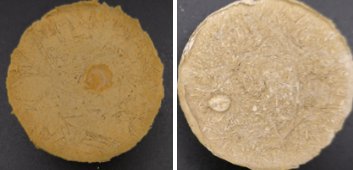 Figure 6. Left: sample without silane. Right: sample with silane.
Biodegradability:
After a thirty day test of placing the foam samples (with clay only, with silane only, without additives) into soil, results showed that the lignocellulose foams produced in this project were able to successfully degrade. This was measured by calculating the original mass, then the final mass, which was able to give a percentage of the weight lost (weight loss correlates with rate of biodegradability).

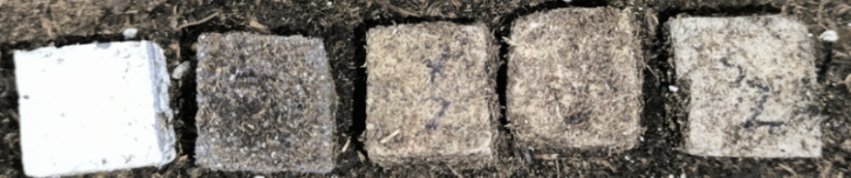
Figure 7. Top: samples on Day 1. Bottom: samples on Day 30. From left to right: EPS, PU, without additives, with clay, with silane. The EPS and PU foams retained 100% of their weights on Day 30 as expected, but the foam without additives only retained 65% of original weight, the foam with clay retained 75% of its weight, and the foam containing silane retained 88%.
Thermal Insulation:
To ensure that the foams had thermal insulating properties as a proof of concept, a model demonstration was created where a glass box, hot plate, thermometer, and large foam piece were used to simulate the conditions of a building. The hot plate was the heat source at 150 degrees Celsius, while a thermometer was placed inside the box to see the change in indoor temperatures over a period of 120 minutes. Results showed that the bio-based foam had a smaller change in temperature than industrial PU foams, proving that it was able to insulate the same amount or even better than current existing foams on the market.
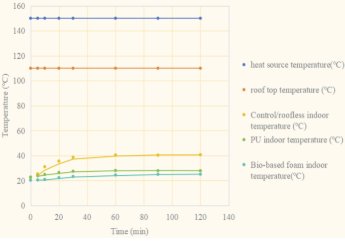 Figure 8. Graph depicting results of thermal insulation experiment.
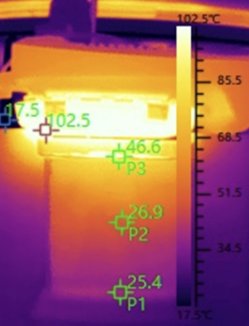 Figure 9. Experimental set up through infrared light camera.
Conclusion
Summation of Experimental Results
Based on several experimental trials with various materials and weight percentages tested in each, the foam combination that exhibited the most advantageous mechanical properties was the foam with: 3 wt% hemp + 2 wt% aspen + 2.5 wt% nanoclay + 1 wt% silane group
It was able to achieve all the objectives listed at the start of the experiment which included high mechanical strength, fire retardancy, hydrophobicity, biodegradability, and thermal insulation. In addition, using the foam production technique (foaming, processing, air drying) with biobased materials and cheap chemicals proved it could be scalable for industrial production compared to existing methodologies that use unsustainable chemicals.
Novelty and Significance
Global Scale:
Thermal insulation foams play an important role in reducing energy consumption in buildings. Buildings account for nearly 30% of global energy use, and a large portion of this energy is used for heating and cooling. Improving insulation performance correlates to significant reduction in heat loss in winter and heat gain in summer, ultimately leading to lower energy bills and reduced greenhouse gas emissions. In this project, I used materials that were low in cost and high in supply to create a solution to current petroleum-based foams. This, in addition, solved the problems with current lignocellulose-based foams: moisture sensitivity, expensive chemical processing, and lack of structural integrity.
Practical Functionality:
The bio-based, fire-retardant thermal foams developed in this project were primarily designed for building insulation including: wall and roof panels, floor insulation systems, sound-absorbing interior panels, and energy-efficient retrofitting of older buildings. Due to their enhanced fire resistance and mechanical stability, these materials may also have applications beyond buildings: aerospace and transportation insulation, electronic device thermal protection, protective clothing and personal protective equipment, as well as for industrial systems (i.e. boilers, furnaces, reactors, etc.).
Overall, the lignocellulose based foams created in this project have properties that align with current industrial foams. This can be used to make safer buildings with lower energy consumption and more sustainable construction materials.
Impacts of this Project
- An innovative foam fabrication method with cheap and bio-based chemicals was successfully used, showing its scalability in the market.
- The foams, hence, show strong potential for large-scale manufacturing and real building applications.
- This project demonstrates that sustainable alternatives can replace conventional insulation materials.
- The small amount of existing aspen and hemp based foams have problems that were solved in this series of experiments.
Future Directions
- To scale up the foam production process from laboratory scale to pilot-scale manufacturing to evaluate performance consistency, cost efficiency, and industrial feasibility.
- To validate the foams in simulated building environments and real world conditions to assess long-term thermal performance, durability, fire resistance, and adaptability for practical construction applications.
Citations
References
2023 global status report for buildings and construction beyond foundations. United Nations Environment Programme. (n.d.-a). https://globalabc.org/sites/default/files/2024-11/global_status_report_buildings_construction_2023.pdf
Alonso, M. P. (2024, November 17). Enhancement of the physical and mechanical properties of cellulose nanofibril-reinforced lignocellulosic foams for packaging and building applications. MDPI. https://www.mdpi.com/2079-4991/14/22/1837
Bozsaky, D. (n.d.). The historical development of Thermal Insulation Materials. Periodica Polytechnica Architecture. https://pp.bme.hu/ar/article/view/12
Das, P. (2023, June 8). Foams for thermal insulation. ACS Publications. https://pubs.acs.org/doi/abs/10.1021/bk-2023-1440.ch007
Dong, H. (2025, March 19). Bioinspired Lignocellulose Foam: Exceptional Toughness and Thermal Insulation. ACS Publications. https://pubs.acs.org/doi/abs/10.1021/acsnano.4c11945
Drenckhan, W. (2015, August). The science of foaming. Science Direct. https://www.sciencedirect.com/science/article/abs/pii/S0001868615000603
Ferrerira, E. (2020, May 13). Naturally Hydrophobic Foams from Lignocellulosic Fibers Prepared by Oven-Drying. ACS Publications. https://pubs.acs.org/doi/abs/10.1021/acssuschemeng.0c01480
FoamOnline https://foamonline.com/wp-content/uploads/2021/11/Foamonline-Logo-340x-e1654784352768.png. (2024, July 25).
Foam types - definitions, qualities and common uses. FoamOnline. https://foamonline.com/foam-types/?srsltid=AfmBOooaojgnbdKrp0D3Qb6XKK8JdBuQFO-RAeoFeBtcIGjyrMNFrTS1
FSTOC Assessment Report 2022: Ozone secretariat. United Nations Environment Programme. (n.d.-b). https://ozone.unep.org/node/13473
Gama, N. V. (2018, September 27). Polyurethane foams: Past, present, and future. MDPI. https://www.mdpi.com/1996-1944/11/10/1841
Hassain, R. (2025, August 29). Structure-property insights into foam-forming processing of lignocellulosic materials. Science Direct. https://www.sciencedirect.com/science/article/abs/pii/S0950061825025528
Hjelt, T. (2021, March 8). Full article: Foam forming of Fiber Products: A Review. Journal of Dispersion Science and Technology. https://www.tandfonline.com/doi/full/10.1080/01932691.2020.1869035
Lawton\, J. W. (1998\, December). Https://www.sciencedirect.com/science/article/abs/pii/s1051200421000968 | request PDF. Science Direct. https://www.researchgate.net/publication/351163114_httpswwwsciencedirectcomsciencearticleabspiiS1051200421000968
Li, X., & Cao, H. (2021, March 19). Structures and physical properties of rigid polyurethane foams with water as the sole blowing Agent - Science China Chemistry. SpringerLink. https://link.springer.com/article/10.1007/s11426-006-2007-8
Lohtander, T. (2022, January 6). Lightweight lignocellulosic foams for thermal insulation - cellulose. SpringerLink. https://link.springer.com/article/10.1007/s10570-021-04385-6
Lu\, X. (2024\, September 15). Https://www.sciencedirect.com/science/article/abs/pii/s1051200421000968 | request PDF. Science Direct. https://www.researchgate.net/publication/351163114_httpswwwsciencedirectcomsciencearticleabspiiS1051200421000968
Modesti, M. (2004, April 8). Chemical and physical blowing agents in structural polyurethane foams: Simulation and characterization. SPE Inspiring Plastics Professionals. https://4spepublications.onlinelibrary.wiley.com/doi/abs/10.1002/pen.11337
Qin, X. (2006, March 22). Rheological Comparison of Chemical and Physical Blowing Agents in a Thermoplastic Polyolefin. ACS Publications. https://pubs.acs.org/doi/abs/10.1021/ie0510932
Shi, H. R. (2013). Cited by (6) Elsevier Procedia Engineering Volume 52, 2013, Pages 131-136 Procedia Engineering Experiment Study on the Ignition Point of XPS Foam Plastics. Science Direct. https://www.sciencedirect.com/science/article/pii/S1877705813002361
Sun, H. (2023, November 8). Multiscale Design for Robust, Thermal Insulating, and Flame Self-Extinguishing Cellulose Foam. Wiley Online Library. https://onlinelibrary.wiley.com/doi/full/10.1002/smll.202306942
Tang, N. (2019, February). Mechanical performance of polystyrene foam (EPS): Experimental and numerical analysis. Science Direct. https://www.researchgate.net/publication/351163114_httpswwwsciencedirectcomsciencearticleabspiiS1051200421000968
Zhu\, Y. (2022\, December 15). Https://www.sciencedirect.com/science/article/abs/pii/s1051200421000968 | request PDF. Science Direct. https://www.researchgate.net/publication/351163114_httpswwwsciencedirectcomsciencearticleabspiiS1051200421000968
Zhu\, Y. (2023\, November 7). Engineering of an evolved artificial formolase enzyme to facilitate in vivo synthetic C1 metabolism | ACS Sustainable Chemistry & Engineering. ACS Publications. https://pubs.acs.org/doi/10.1021/acssuschemeng.5c03359
Acknowledgement
Thank you so much to the Biomass and Biorefinery Research Lab and the University of Calgary for allowing me to conduct my research and experiments at their facilities.
I would like to recognize my family's consistent support: thank you for being my cheerleaders!
Thank you Dr. Garcia and Mrs. Kale for being the directors of my school Science Fair.
I appreciate Webber Academy and CYSF for giving such amazing opportunities for brilliant minded youth passionate about STEM.