
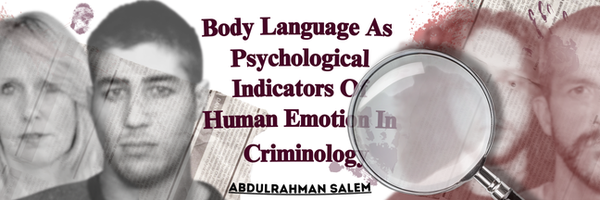
Body Language As Psycholgical Indicators Of Human Emotion In Criminology
AbdulRahman Salem
Al-Amal Academy
Grade 9
Presentation
No video provided
Problem
Research Question
How can body language (kinesiology as the psychological part) relate to criminology, and how do investigators use this to know how suspects feel or the different emotions they are experiencing?
Abstract
‘Body Language as Psychological Indicators of Human Emotions’ shows that psychology is probabilistic rather than deterministic, as proved by the survey, laying out the basis of human emotions as indicators rather than a real diagnosis. Looking at four different high-profile cases: Stephen McDaniel, Chris Watts, Susan Mellen, and Ryan Ferguson, and finding different behaviours from Ekman’s facial, Verbal Cues, and Nonverbal cues. The survey also helps us see how others analyze behaviours, showing a clear relationship between Behaviours and Criminal Psychology, while keeping in mind that culture, drugs, and many other factors can affect these indicators.
Hypothesis
My hypothesis is that suspected individuals will always show a cue, whether it be different or the same. I can't test this by analyzing four different high-profile cases of two convicted and two who were innocent - looking at case footage, indicated body language, reactions, cues, etc. For example, if a suspect is lying, they avoid eye contact, see how the survey was created, and interpret it from different perspectives. Additionally, how body language, such as the couple mentioned above, relates to the psychology of human emotions and, in turn, to criminology.
Purpose
- The purpose of this project is to further understand how investigators use several methods to analyze human body reactions, including a brief summary of Ekman's FACS, verbal cues, and nonverbal cues.
- This project is also designed to demonstrate psychology's deterministic rather than probabilistic nature through a survey of many individuals and to apply this information to real-world cases (e.g., Stephen McDaniel, Susan Mellen).
Project Objectives
The objectives of this project are the following;
- Understanding Body Language; Ekmans FACS, Verbal Cues, Non-Verbal Cues, Etc.
- Connect it to Psychology
- Connect it to Criminology
- Apply what we've learned to real-life cases
Method
Case Study Analysis
Innocent
Susan Mellen
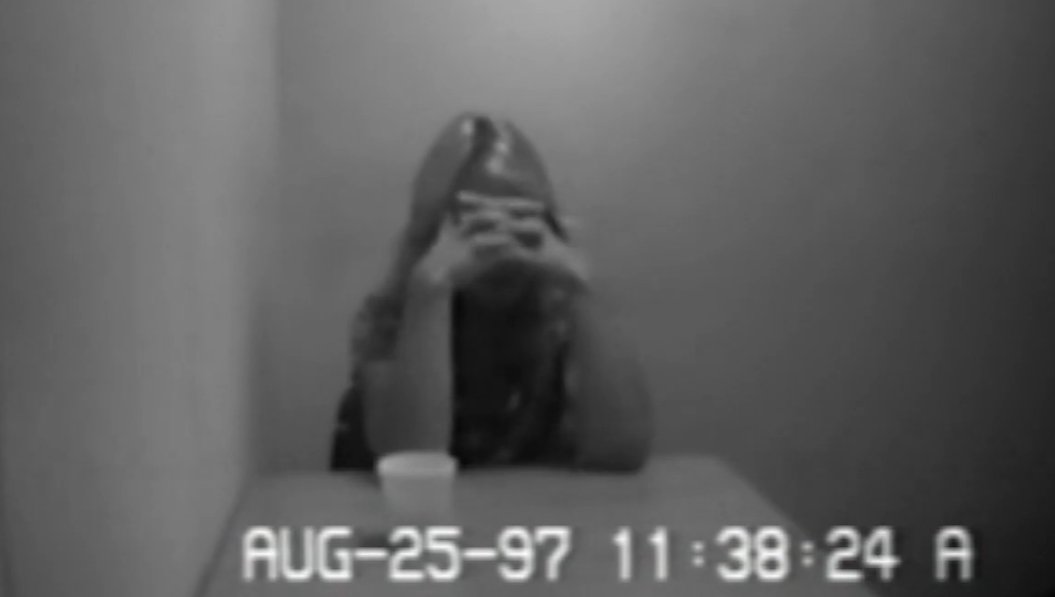
Susan Mellen went to McDonald's to get her daughter a Happy Meal one day in 1997 (Image B), while entering, police had stopped her and put her in cuffs, accusing her of killing her ex-husband, Ricky Daly (Image C), who was brutally murdered by burning to death in a dumpster. While the investigation footage is less than 5 minutes due to lost files, sealed files, immunity, and more, we can unpack a lot from it. Ekman's FACS is discarded because the camera quality isn't high enough to capture distinct facial movements. We can easily see verbal cues, talking without filler words but talking rapidly (Image A), according to jeremytolly.com, talking quickly is a nervous system pattern of anxiousness, nervousness, lack of confidence, and fight or flight response - clearly showing that compared to other cases, talking quickly is an indicated pattern of Susan herself. Compared to other cases, Susan recollects herself and tries to actually process what is occurring, something so sudden and unfolding within one hour of her day, and returns to prayers for help (Image D). Susan Mellen was sentenced to 25 years with parole, but with the help of the organization Innocence Matters, 17 years after her arrest, she was released, as Detective Winn was known as a liar and very untrustworthy from many sources and several other cases, such as Obie Anthony, who was also innocent and wrongfully accused by Detective Winn. Susan Mellen ended with a case giving her $12 million dollars for this wrongful accusation.
Image A:
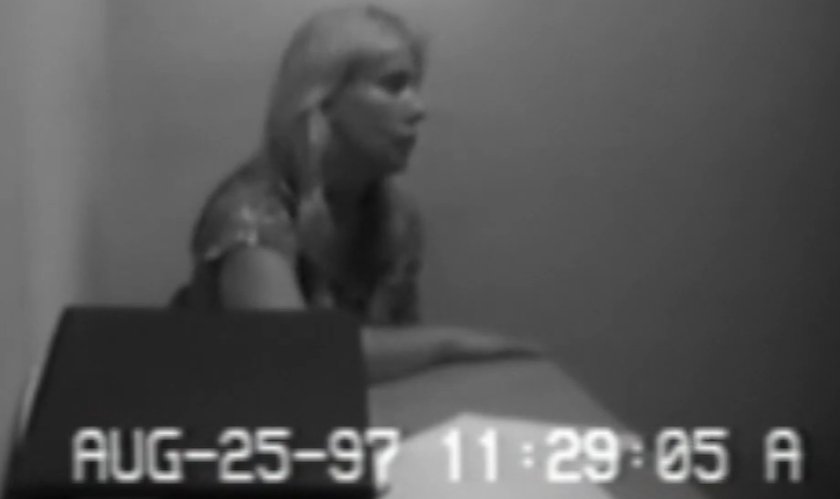 Image B:
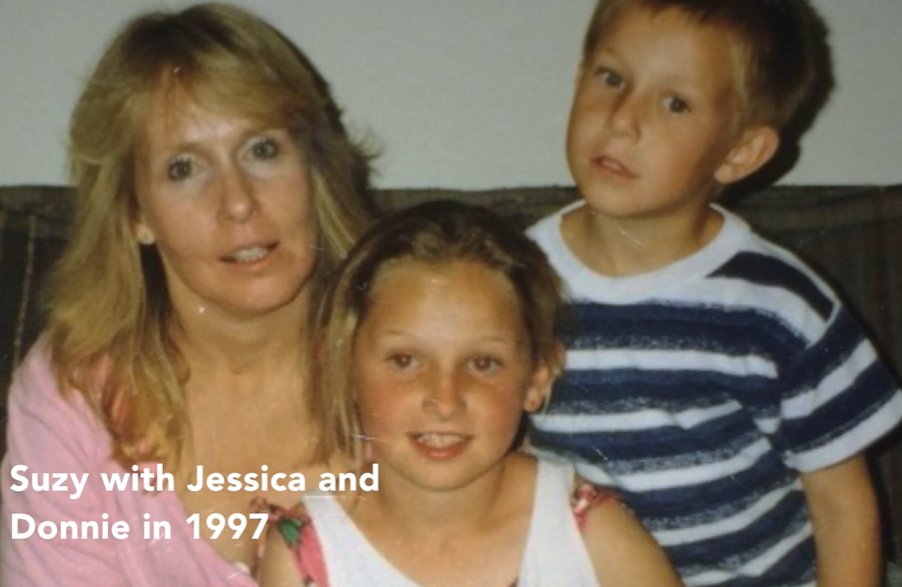 Image C:
 Image D:
Ryan Ferguson
One day in 2003, Ryan Ferguson was leaving his class before getting pulled over by police and accused of brutally murdering Kent HeitHolt (Image D) in 2001. Police interrogated him for hours, trying to get a confession, but right down the hall was his classmate, Erickson, who confessed to the killing but blamed it on Ryan, too. Without further evidence, the courts immediately sent him to a 40-year sentence with no parole. Given the camera quality, we cannot apply Ekman's FACS (Image B), so we will focus on the audio, including verbal and nonverbal cues (Image A). Later in the case footage, Ryan Ferguson also recollects himself due to all these accusations occurring of what had no proof, this can also relate to non-verbal cues (Image B) - according to abcnews.go.com, Professor Chris Ulrich at the Body Language Institute in Washington says that putting your hands over your face helps soothe yourself and hide yourself from the situation that is occurring. Increased use of hand movements is another thing (Image C) that Ryan had done, which also relates to non-verbal cues - according to calahealth.com, hand movements are a direct physical manifestation linked to our body's fight or flight response. Ryan also speaks with fewer verbal cues and filler words, which also relates to the other innocent case, but these are still indicators and are probabilistic. After 10 years, Ryan Ferguson was released based on a review of the case and other circumstances, due to the lack of evidence and an unfair trial. Ryan Ferguson was given $38 million dollars in compensation.
Image A:
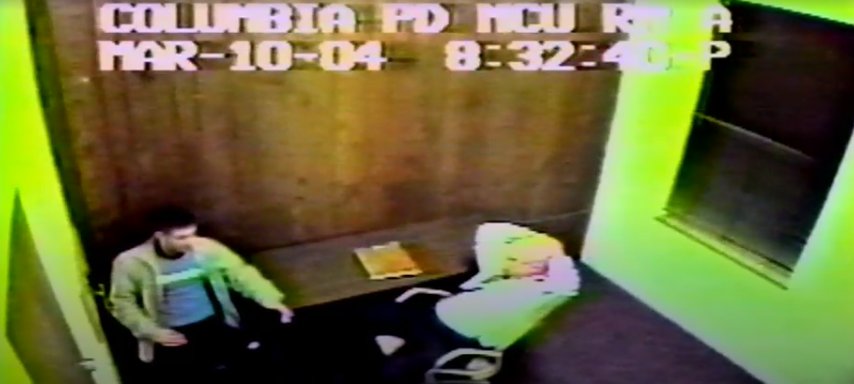
Image B:
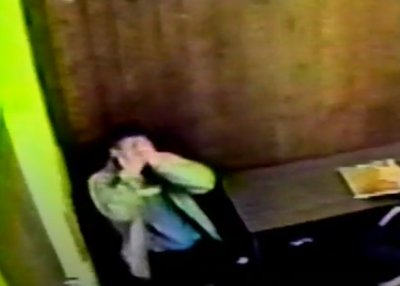 Image C:
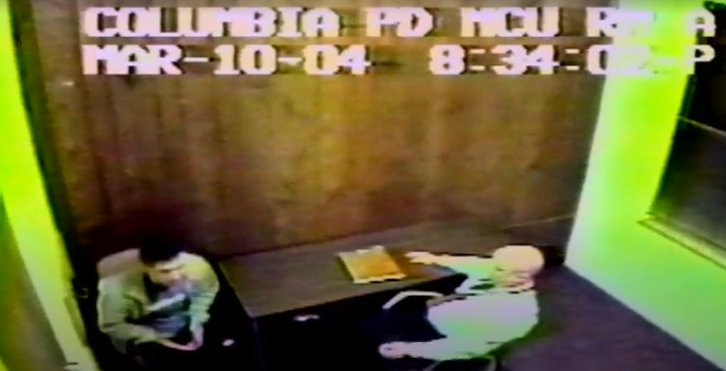 Image D:
Guilty
Stephen McDaniel
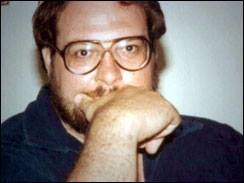
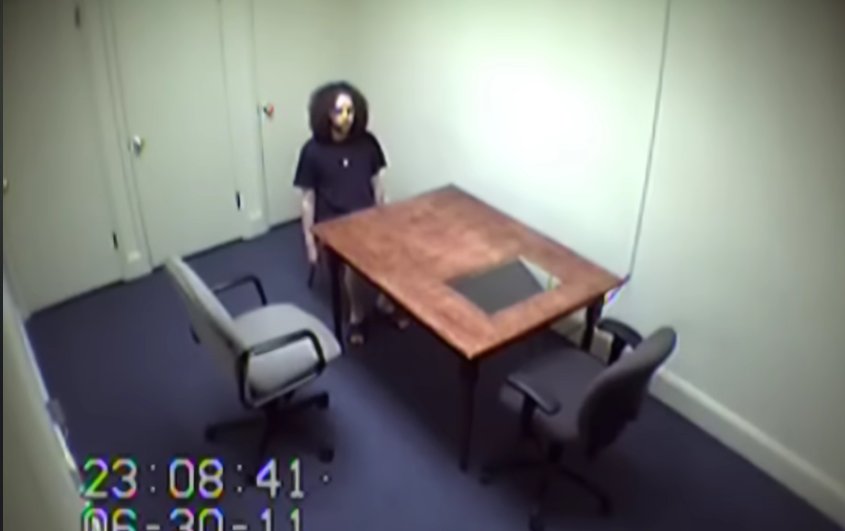
In June of 2011, Lauren Giddings of Macon, Georgia (Image B), went missing, which was unusual for her. Her neighbour, a law student, Stephen McDaniel, was placed as the first suspect due to abnormal activities, and DNA traces to a dumped human torso in a trash bin near the area (Image C). Stephen was taken into custody and questioned by Detective Carl Fletcher. During the interview, Stephen McDaniels body language proves that psychology is probabilistic, throwing out Ekman's FACS, and verbal cues - talking with such formality and hands put on the table in a symmetrical form (Image A) with a very uneasy and scary feel while just staring blindly into the detective's eyes. We can only relate the survey question ‘When Under Pressure How Do You Usually React?’ and look at the ‘other’ responses, such as freezing up, as Stephen McDaniel did (Image D). Stephen McDaniel does reply to the investigator's questions in a more formal, concise Yes, No, I don't know format, while also noting that he “doesn’t seem to remember a lot”. Stephen McDaniel is currently serving life in prison with possible parole. In April of 2025, the Giddings family renewed the investigation to find the rest of Lauren's remains.
Image A:
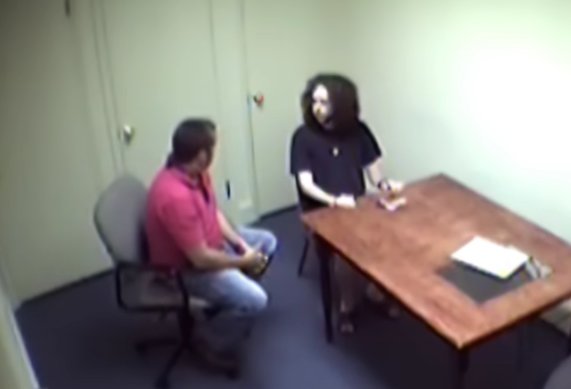 Image B:
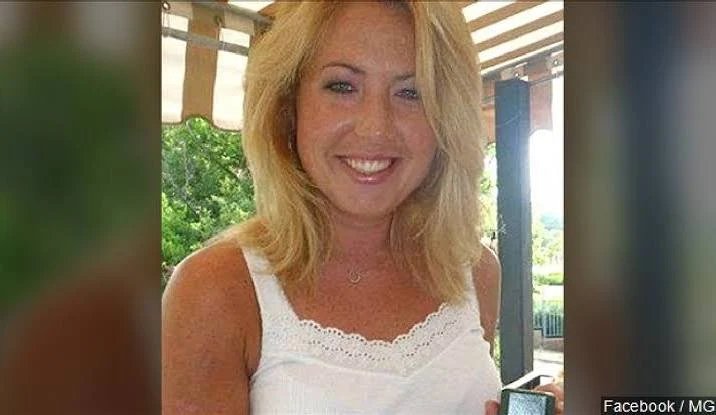 Image C:
 Image D:
Chris Watts
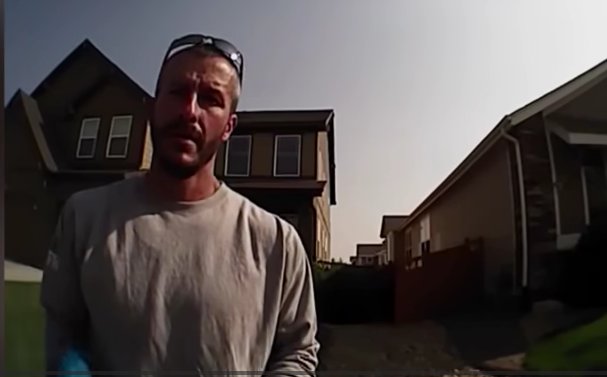
Chris Watts is a very well-known case back in 2018 due to him brutally murdering his family, including his wife and two children aged 4 and 3. Ekman's FACS can easily be used in this situation. Once officers arrive at Chris Watts' home, his face is red and already scrunched up in a worried/stressed expression. In Ekman's FACS, this is related to the action units of muscle tension in the eyes and eyebrows, indicating anxiety, stress, and hidden anger (Image D). Within this footage, Chris blatantly lies to police officers, stating that he had no idea where they were and was home the entire time. During the Investigative footage in the investigator's room, the camera is positioned opposite Chris, so we cannot definitely see his face, but we can hear what he said, so verbal and nonverbal cues come into play. At the start investigators throw at him that he failed the polygraph, he immediately stutters through many filler words like ‘um’ ‘er’ stuttering on ‘I’ (Image B). The investigators in this case are extremely admirable; Investigator Tammy Lee tells him straight up that she can see from his face that he is hiding something so bad within himself, and immediately tries to come clean, which indicates to her that this is occurring. Within every sentence, Chris Watts uses 1-3 ‘likes’ to try to prove his point, overlining the verbal cue indicator and relating it to lying. With nonverbal cues, he is frozen, with only his hand moving stiffly. When confessing to the murder, he was shaking rapidly (Image A), which relates to Non-verbal cues of nervousness, anxiety, etc. Shannan (Image C), Celeste, and Bella were all found within his same crude oil factory submerged for four days, while Shannan was found in a grave. Chris Watts motive was to have a ‘fresh start’; he is currently serving five life sentences with a possibility of parole.
Image A:
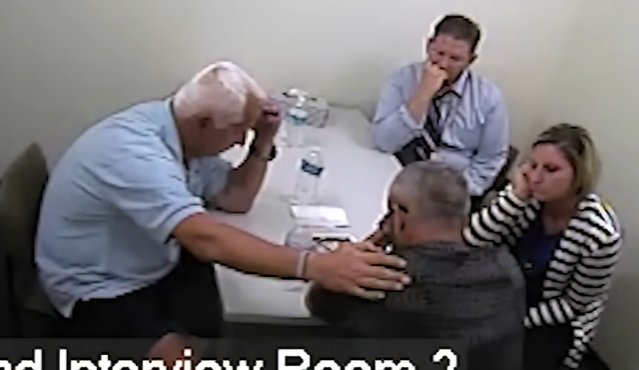
Image B:
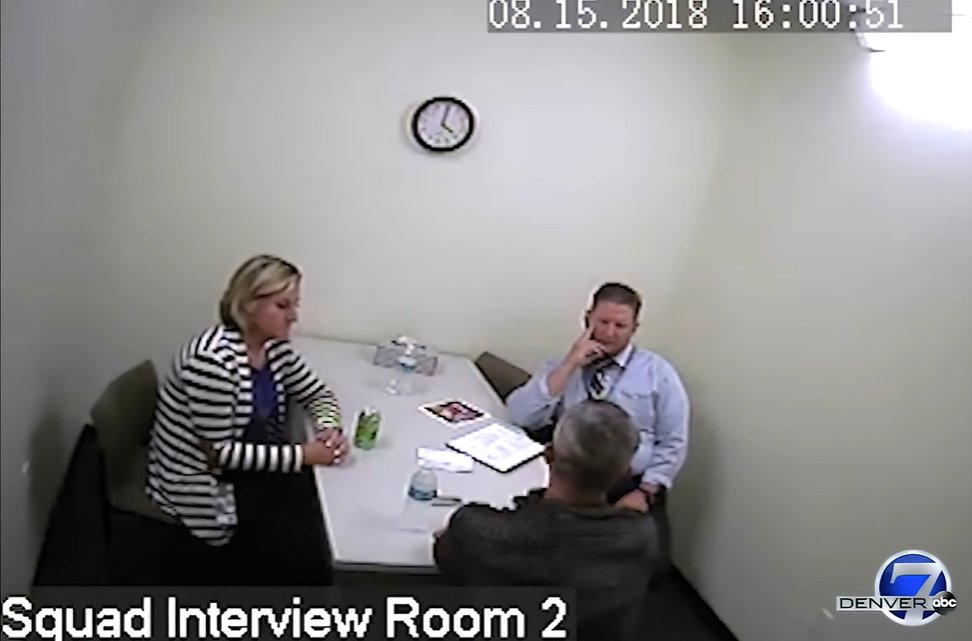
Image C:

Image D:
Cases Conclusion
Common Reactions between Innocent and Guilty
--
Innocent
Though these are only indicators, there's a connection between the two innocent cases but to take note that it is probabilistic, the following are some connections between innocent and guilty;
- Common Recollection Moments
- Talking Quickly
- Extensive Hand Movements
- More emotions of scared or crying
--
Guilty
Between the two guilty cases, there are some connections we can make, but again, they vary between the cases and cannot be used as definitive proof, as this is probabilistic. The following are connected:
- Frozen Body Movements
- Less Talking
- Trying to prove they never committed the action without even knowing what occurred
- More nervous/hidden anger Ekmans FACS
--
Survey
Survey Information 1. Out of 74 participants 2. Any Age and Around the World (Culture Effect Applies) 3. Distributed through tally.so
After reading the interpretations and the graph, knowing that different answers completely reflect and represent the idea that humans and psychology are probabilistic. This is meant to show that this entire project won't be completely correct but is the best guess, just as psychology aims to do.
Interpretations/Application Of Data
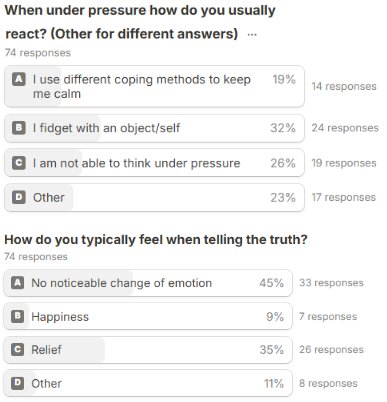
1. When Under Pressure\, How Do You Usually React?
- This relates to this project, as it clearly shows what to look for in the cases and the different body reactions under pressure.
2. How Do You Typically Feel When Telling The Truth?
- This could help us see whether telling the truth brings a sense of relief or makes no difference in situations.
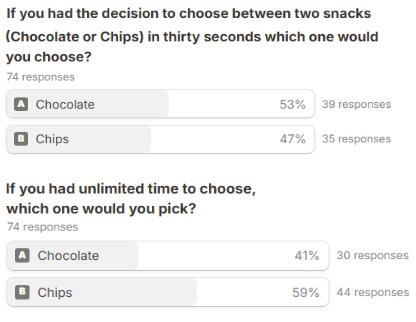
3. If You Had The Decision To Choose Between Two Snacks (Chocolate or Chips) in Thirty Seconds Which One Would You Choose?
- This question further demonstrates people's decisiveness and how they change their answers depending on the time available to choose between two options.
- Graph; Chips = 47%, Chocolate = 53%.
4. If you had unlimited time to choose\, which one would you pick?
- Following on from the previous question, this gives the person unlimited time to choose between the snacks, rather than a limited amount.
- Graph; Chips = 59%, Chocolate = 41%.
- This 12% jump clearly shows that we are more likely to change our answers and decisions depending on how much time we have to make a decision. This relates to the cases, as it shows that a suspect who lies will give different accounts of what happened, depending on how much time they have to answer.
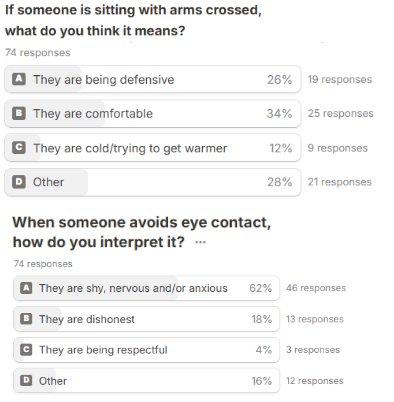
5. If someone is sitting with their arms crossed\, what do you think it means?
- This question can help determine when an investigation is warranted, depending on how a suspect behaves or moves, such as when their arms are crossed. How do we as humans interpret these things? (Culture Effect Applies Here!)
6. When someone avoids eye contact\, how do you interpret it?
- This can help us understand how different people interpret avoiding eye contact, and non-verbal cues can let us know (of course, depending on the situation) that the nervous system is in a fight-or-flight mode, showing anxiety, fear, etc.
Also, refer to the data for more info!
Research
Outline
We are going to research and learn more about the main idea of body language (kinesics), relating it to psychology, and taking a step further in psychology to create a survey and prove that psychology is different for each person and how each person interprets different body languages, and proving that psychology is probabilistic while human actions are deterministic. Then, relating everything we learned to criminal psychology. How investigators can use this information on kinesics and different body language to make assumptions about how a criminal acts, lies, etc., through their body language, and how they use different behaviour analysis methods, exploring them while also applying them to real-world scenarios.
Basic Information
Body language significantly influences how we interact with each other, giving us different impressions and feelings. In this project, the main aspect is body language, which we can analyse through Ekman's FACs, Verbal Cues, and Non-verbal Cues. Teaching us the probabilistic side of humans and using all the information to relate it to criminology. Investigators can observe different body language indicators and use physical reactions to determine whether a person is lying or how they are feeling. We can show this by studying our own cases and indicators.
Behavior Research
There are three behavioral categories I will look at: Ekman's FACS, Nonverbal Cues, and Verbal Cues.
1. Ekmans FACS Ekman’s FACS (Facial Action Coding System), was created by Paul Ekman and Wallace V. Friesen is a comprehensive way to describe different facial expressions by dissecting it into different parts, like eyebrow raise, upper lip raised = happiness and more with each facial movement categorised as Action Units. We can use this extensively by analyzing facial movements as indicators of various emotions.
2. Verbal Cues Different verbal cues can be filler words or ‘uhm’, ‘like’, ‘oh’, ‘er’, ‘ah, and much more, depending on preference and usage. We can use this as according to Michael Erards Filler word book, these filler words are commonly linked to nervousness, anxiety or even different reactions when under pressure. We can use this by counting the amount of filler words or eloquence in their language, and see their emotional behavior
3. Non-Verbal Cues Relates to Ekman's face but is more about hand and body movements rather than facial movements. According to healthline.com, nervousness and anxiety can cause many physical issues, such as increased heart rate, dizziness, freezing up, and a lot more. It also varies from person to person. We can see different bodily reactions and apply them to the cases.
Probabilistic Vs. Deterministic
Probabilistic
-- Probabilistic refers to the idea that something has many possible outcomes; it's random and uncertain, and it's not a direct cause-and-effect.
Deterministic
-- Deterministic refers to the idea of something having a direct cause and effect, like 2+2=4. It's a straightforward answer with no variation.
Relation to Psychology
-- This relates to psychology as everyone is different; we do not all act the same way. In the following survey, I will show that psychology and how people act are all probabilistic, and when we analyze, we have to keep in mind that we are just analyzing indicators; the real truth could be that they just have an itchy nose, and we see it as anxiety or nervousness.
Relation to Survey
-- This also relates to the survey, as the entire idea of having different answers and interpreting different behaviors completely proves that we have different answers, and it varies, it's random based on the person.
Culture Effect
Culture is a huge part of psychology and interpreting different body languages from each person's perspective. It shapes how a person thinks just based on their culture. For example, the hand gesture in which the thumb touches the index finger is considered pleasant and enjoyable in Italy, whereas in Egypt or other Arab countries, it's seen as a threat. Another example is putting your arms crossed; it can be seen as comfy, as a sign of defense in colder countries, as a sign of getting warmer in colder countries, or as a sign of defense in hotter countries. Culture is a very large aspect of psychology and should not be overlooked.
Data
Survey
This survey was conducted to further support the idea that psychology is probabilistic rather than deterministic. Having different answers is the first piece of evidence for this idea, as it shows different brain responses and behaviours. This shows how we respond and react to threats and interpret situations differently. This data will also be used to interpret and reflect on the four cases we will be analysing.
Survey of 74 People Using Tally.so
---
Conclusion
Conclusion
In conclusion, psychology is probabilistic based on the survey. Investigators use Ekman's FACS, Verbal Cues, NonVerbal Cues, and more, with deep, comprehensive research behind them, and human emotions. This connection bridges kinesiology and Psychology, with investigators using it to link to Criminology. With four cases and an indicator of the connection between innocence and guilt, this supports the hypothesis that any cue is always shown, even when it is successfully analyzed. While also supporting my research question that kinesiology relates to criminology and that investigators use these cues, among others, to assess a suspect's reactions.
Future Steps and Improvements
This project can be significantly improved by conducting further research, developing a deeper understanding of Ekman's FACS, adding more examples, and improving the case analysis. Four cases are not enough, but are sufficient for a base-level understanding. So many more cases and real-life examples, in person rather than a large bulk of information, can help this project a lot more. As for application, this project can help investigators better understand and outline a clearer set of main points at baseline and could help develop easier, more effective methods for understanding human emotions and indicators.
Citations
Citations
ABC News. “Conviction Overturned for Mo. Man Who Spent Almost a Decade in Prison for Murder.” ABC News, 15 Nov. 2013, https://abcnews.go.com/US/conviction-overturned-missouri-man-spent-decade-prison-murder/story?id=20796603. Accessed 2 Dec. 2025. ABC News. “Why Surprise Looks the Same in Every Country.” ABC News, 8 Aug. 2013, https://abcnews.go.com/Health/emotional-responses-country/story?id=19893909. Accessed 5 Dec. 2025. Cala Health. “Anxiety Tremors and Shaky Hands.” Cala kIQ, https://calahealth.com/tremor-resources/general-tremor/anxiety-tremors-and-shaky-hands/. Accessed 5 Dec. 2025. California PC. “Innocence Matters and So Does Rick Daly.” ListenNotes, 23 Jan. 2020, https://www.listennotes.com/podcasts/california-pc-187/innocence-matters-and-so-s-ZvYCo1A4a/. Accessed 1 Dec. 2025. Carmona, Melissa. “What Drugs Cause Dilated Pupils? MDMA, LSD, Cocaine and More.” The Recovery Village, 30 Aug. 2024, https://www.therecoveryvillage.com/drug-addiction/drugs-dilated-pupils/. Accessed 14 Oct. 2025. Cherry, Kendra. “Criminal Psychology: What Do Criminal Psychologists Do?” Verywell Mind, 10 Mar. 2025, https://www.verywellmind.com/criminal-psychologist-a-career-profile-2795649. Accessed 24 Oct. 2025. Denver7. “Full Video: Chris Watts Tells Father and Investigators About Deaths of His Wife and Daughters.” YouTube, 29 Nov. 2018, https://www.youtube.com/watch?v=hs_CInVpwo0. Accessed 1 Dec. 2025. Explore With Us. “When a Predator Dad Realizes He’s Been Caught.” YouTube, 17 Aug. 2025, https://www.youtube.com/watch?v=lkAEZnAnAyw. Accessed 26 Oct. 2025. “EXPLORE WITH US.” YouTube, 17 Aug. 2015, https://www.youtube.com/@ExploreWithUs. Accessed 26 Oct. 2025. “FACS Manual.” Paul Ekman Group, https://www.paulekman.com/product/facs-manual/. Accessed 24 Nov. 2025. Farnsworth, Bryn. “Facial Action Coding System (FACS) – A Visual Guidebook.” iMotions, 18 Oct. 2022, https://imotions.com/blog/learning/research-fundamentals/facial-action-coding-system/. Accessed 26 Oct. 2025. Girolimon, Mars. “What Is Forensic Psychology?” Southern New Hampshire University, https://www.snhu.edu/about-us/newsroom/social-sciences/what-is-forensic-psychology. Accessed 1 Dec. 2025. “How to Eliminate Filler Words for More Impactful Presentations.” Teleprompter.com, 11 Nov. 2024, https://www.teleprompter.com/blog/how-to-eliminate-filler-words. Accessed 24 Nov. 2025. iStock. “136,200+ Different Cultures Stock Illustrations, Royalty-Free Vector Graphics & Clip Art.” https://www.istockphoto.com/illustrations/different-cultures. Accessed 1 Dec. 2025. Innocence Matters. “Day 3: Interrogating the Innocent.” YouTube, 11 Aug. 2014, https://www.youtube.com/watch?v=-65NTKGEkmA. Accessed 1 Dec. 2025. Justice for Kent Heitholt. “Justice for Kent Heitholt.” Facebook, 21 Aug. 2013, https://www.facebook.com/justice4kentheitholt/. Accessed 24 Nov. 2025. Knoll, Corina. “L.A. Judge Says Woman Who Spent 17 Years Behind Bars Is Innocent.” Los Angeles Times, 10 Oct. 2014, https://www.latimes.com/local/lanow/la-me-ln-woman-freed-after-17-years-in-prison-for-murder-20141009-story.html. Accessed 1 Dec. 2025. “L.A. Judge Says Woman Who Spent 17 Years Behind Bars Is Innocent.” Daily Breeze, 9 Oct. 2014, https://www.dailybreeze.com/2014/10/09/innocent-gardena-woman-who-spent-17-years-in-prison-for-lawndale-murder-to-be-released/. Accessed 1 Dec. 2025. NBC News. “Christopher Watts Sentenced to Life in Prison for Killing His Pregnant Wife and Young Daughters.” NBC News, 19 Nov. 2018, https://www.nbcnews.com/news/us-news/colorado-dad-christopher-watts-sentenced-life-prison-killing-his-pregnant-n937931. Accessed 1 Dec. 2025. NBC News. “Police Interrogate Ryan Ferguson.” NBC News, 11 May 2011, https://www.nbcnews.com/video/police-interrogate-ryan-ferguson-44584515888. Accessed 5 Dec. 2025. “Oxford Languages and Google – English.” Oxford Languages, https://languages.oup.com/google-dictionary-en/. Accessed 26 Sept. 2025. O’Donnell, Bernie. “Family of Lauren Giddings Renew Search for Her Body, Setting Sights on Pike County.” 13WMAZ, 7 Apr. 2025, https://www.13wmaz.com/article/news/local/macon/family-of-murdered-mercer-law-student-lauren-gidding-renew-search-body/. Accessed 26 Nov. 2025. Raj, Boopathi. “Understanding Deterministic vs. Probabilistic Machine Learning: A Unified View Across Learning.” Medium, 3 June 2025, https://medium.com/@rajboopathiking/understanding-deterministic-vs-probabilistic-machine-learning-a07176b0ce3d. Accessed 1 Dec. 2025. Recognition of Emotion from Verbal and Nonverbal Expressions and Its Relation to Effective Communication: A Preliminary Evidence of a Positive Link. 28 Dec. 2022, https://pmc.ncbi.nlm.nih.gov/articles/PMC9862275/. Accessed 24 Nov. 2025. “Ted Bundy Interview Utah Full Confession, Remastered.” True Crime Review – YouTube, 30 Dec. 2016, https://www.youtube.com/watch?v=X5fVY720ias. Accessed 24 Oct. 2025. “10 Turning Points Ryan Ferguson's Attorney Says Led to His Release.” NBC News, 12 Nov. 2013, https://www.nbcnews.com/dateline/10-turning-points-ryan-fergusons-attorney-says-led-his-release-flna2d11583392. Accessed 1 Dec. 2025. “The Psychology of Speaking Too Quickly.” Jeremy de Tolly, 14 Sept. 2023, https://www.jeremydetolly.com/blog/054. Accessed 1 Dec. 2025. University of North Dakota. “Criminal Psychology vs. Forensic Psychology: Which to Choose?” 14 Aug. 2024, https://und.edu/blog/criminal-psychology-vs-forensic-psychology.html. Accessed 1 Dec. 2025. “What Are Sanpaku Eyes?” 1800 Contacts Team, https://www.1800contacts.com/eyesociety/what-are-sanpaku-eyes. Accessed 15 Oct. 2025. “Where Is Chris Watts Now? Inside His Life in Prison 7 Years After Murdering His Wife and Kids.” People.com, 13 Aug. 2025, https://people.com/where-is-chris-watts-now-11789570. Accessed 1 Dec. 2025. WGXA News and Dannielle Apoliner. “Convicted Murderer Stephen McDaniel Files for Habeas Corpus.” WGXA News, 21 Feb. 2018, https://wgxa.tv/news/local/convicted-murder-stephen-mcdaniel-files-for-habeas-corpus. Accessed 1 Dec. 2025. Wilson, Debra Rose, and Bailey Mariner. “Effects of Anxiety on the Body.” Healthline, https://www.healthline.com/health/anxiety/effects-on-body. Accessed 24 Nov. 2025. Womack, Amy Leigh, and Joe Kovac. “How Stephen McDaniel Clung to a Deadly Secret.” Macon Telegraph, https://media.macon.com/static/media/projects/McDaniel/sinclair.jquery/McDaniel/. Accessed 17 Nov. 2025.
Ethics and Consent (Read)
‘Body Language as Psychological Indicators of Human Emotion in Criminology’ covers many sensitive topics of murder, crime, and cases that occurred in real life. Much care was taken to approach this subject respectfully, mindful of the sensitive topics, victims, and their families, and to avoid desensitisation. The project focuses objectively on the scientific aspect rather than graphic or sensational in-depth details. The main focus of this project is to examine indicators of how humans react in different situations, without covering sensitive parts of the case, whilst still acknowledging what occurred. All information was obtained from research-backed sources, and case study information and videos came from credible sources such as ‘Innocence Matters’ and other organisations that worked closely with investigators, notably Investigator Tammy Lee. The purpose of this research is to purely educate on this topic and demonstrate scientific understanding rather than justifying or glorifying violence and heinous crimes that have/or caused a life to be harmed.
Ethical measures were taken to obtain consent; this research required formal consent to complete the survey. This survey did not cover or glorify any cases or sensitive issues. Primarily focusing on human emotions, how you react, etc. Participants from around the world, of different ages, presented diverse points of view throughout this research. This survey clearly stated that it would be anonymous, whilst still complying with Tally.so's terms and conditions, which allowed data such as country and responses only. This allowed me to further look in depth at my project and cover many other topics. All participants who took part in this survey have consented to the terms and conditions of both the survey and tally.so. All data collected was used only for educational and scientific purposes.
Acknowledgement
Acknowledgements
I would like to thank my friends for providing me with more insights and for helping me spread my survey worldwide (the Philippines, especially!), with a special thanks to Abrar for providing insight and tips for my project!.
Extremely grateful for the help that Mr. Bosman has given me for my project this year!
To my older sister, Nardeen, who helped me a lot with the psychological aspect of this, making my project much better!
Thank you!!