
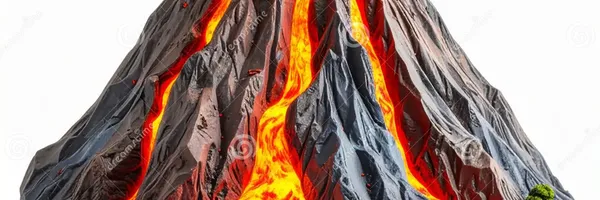
Baking Soda Volcano
Eric Kea
St. Rose of Lima Junior High School
Grade 7
Presentation
Hypothesis
I am standing right in front of this model volcano I made, getting set to see what happens when I test it out. It is built around a little container at the base, and I spoon some baking soda into the top opening. Right now it just sits there all still, kind of like a quiet mountain that might blow any second. I add a couple drops of red food coloring too, so whatever comes out will have that lava look. Nothing is moving yet.
My hypothesis goes like this, I think when I add the vinegar it will mix with the baking soda and start a reaction. That should make carbon dioxide gas, and since there is not a ton of room in the container, the pressure from the gas will push everything up and out the top. I predict it will erupt a bit like a real volcano, but smaller of course. Before I pour anything in, I mix the vinegar with some water and a bit of dish soap. The water might slow things down a little by making the vinegar weaker, or diluted I guess. And the soap, it seems like it could catch the gas in bubbles, turning the whole thing into this foamy overflow instead of just a fast splash.
I expect the red foam to come rising up quick and spill over the sides from where I am watching. Maybe if I put in more baking soda or vinegar, the eruption gets bigger, that stands out as something to try next time. Using less of either one probably means a smaller reaction, shorter too. It feels like the soap will make it last longer with all those bubbles. Overall this setup with the baking soda, vinegar, coloring, water, and soap should cause some chemical thing that bubbles and foams up. The gas forces it all upward out of the volcano, making a pretty dramatic but safe little show. I am not totally sure how thick the foam will get though.
Research
VOLCANOES: Studying volcanoes is basically scientists trying to understand how these giant\, fiery mountains function. Volcanologists spend a large amount of time monitoring phenomena such as tiny earthquakes\, gas rising from vents\, and changes in the ground's surface. They also grab rock samples and use satellites to see what’s going on beneath the surface. All of this helps them figure out what volcanoes are doing and whether they might be gearing up for an eruption. Another significant aspect of volcano research is ensuring the safety of people. Scientists look for warning signs so they can give communities as much notice as possible if a volcano might erupt. Their work helps guide evacuation plans and safety decisions\, which can make a major difference during an emergency. At the same time\, studying volcanoes teaches us a lot about Earth’s history and how the planet has changed over millions of years. It’s fascinating stuff\, dangerous\, but incredibly important.| Making a baking soda and vinegar volcano is a super fun experiment because it looks like a real volcano erupting\, but it’s actually really simple. You just mix baking soda\, some dish soap\, food colouring\, and a bit of water in the “volcano\,” and then pour in the vinegar. When the vinegar hits the baking soda\, it makes a fizzy reaction that bubbles up and overflows everywhere like lava. It’s basically the acid and base reacting to make gas\, but honestly\, it just looks cool and messy\, which is the best part.
VOLCANO MODEL:
Making a baking soda and vinegar volcano is a super fun experiment because it looks like a real volcano erupting, but it’s actually really simple. You just mix baking soda, some dish soap, food colouring, and a bit of water in the “volcano,” and then pour in the vinegar. When the vinegar hits the baking soda, it makes a fizzy reaction that bubbles up andoverflowsw everywhere like lava. It’s basically the acid and base reacting to make gas, but honestly, it just looks cool and messy, which is the best part.
| People usually build the volcano out of clay or paper, but you can use anything that can hold the ingredients. Once everything starts bubbling and spilling out, it shows how pressure builds up in real volcanoes before they erupt. Even though it’s not dangerous at all, it still teaches you how eruptions happen. Plus, adding bright foocolouring makes it look way more awesome. It’s one of those projects that almost everyone has done at least once, but it never gets old because it always eruptdifferently. |
|---|
Variables
In the experiment, the independent variables are the things I decide to change to see what happens. Like the amount of baking soda I put in, or how much vinegar, and then the dish soap amount, too. Water is another one, and food colouring, either the type or how much. The temperature of the liquids seems important, sort of, and the size or shape of the container for the volcano.What I measure as dependent variables are the height the eruption goes up, and the amount of foam it makes. Duration, too, how long it keeps going, and the speed of the whole reaction. For controlled variables, I keep everything the same to make it fair. Same type of baking soda each time, same vinegar, dish soap, and so on. The environment stays consistent, at room temperature, and on the same surface. And if I am comparing different tests, I use the same container for each trial. It feels like some of these might overlap a bit. I am not totally sure how to separate them perfectly. The foam amount and height, they kind of go together anyway.
1. Independent Variables (What I can change) These are the elements you can manipulate to see how the "eruption" changes.
- Ratio of Vinegar to Baking Soda: Increasing the vinegar usually leads to a faster, more intense reaction.
- Amount of Dish Soap: More soap creates more bubbles (surface tension), leading to a slower, foamier "lava" rather than a quick splash.
- Water Dilution: Adding water to the vinegar slows down the reaction by lowering the concentration of the acetic acid.
- Temperature of Vinegar: Warmer vinegar typically reacts faster with baking soda than cold vinegar.
2. Dependent Variables (What I measure) These are the results you observe based on the changes you made above.
- Duration of Eruption: How many seconds the foam continues to flow.
- Height/Distance: How far the lava shoots up or how far it spreads across the base.
- Volume of Foam: The total amount of "lava" produced (measured by how much it fills a secondary container).
- Texture: Whether the eruption is watery and thin or thick and bubbly.
3. Controlled Variables (What stays the same) To ensure your results are fair, these should remain constant across different tests.
- Size/Shape of the Container: A narrow bottle neck creates more pressure than a wide bowl.
- Order of Ingredients: Always adding the vinegar last ensures the reaction starts at the same experience every time.
- Amount of Food Colouring
Procedure
I started putting my model together in my clear bowl, to catch any spills so it does not get messy all over the table. The bottle went right in the center, that plastic one I reused, and it has to be there or the whole thing just falls apart. I tried to cover it up a bit with the model stuff around it, makes it seem more like a real volcano I suppose. Adding the baking soda came first after that. Two or three spoons full, enough to cover the bottom inside the bottle. It seemed like plenty, but I did not want to overdo it right away. Then the dish soap, just a couple drops, and that is what gets the foam going strong, like actual lava bubbling up. Without it, the eruption looks kind of flat, not as fun to watch. Food coloring was next, I went with red since that fits lava the most. Dropped in four or five drops, and it colored the mix pretty quick. Water after, maybe two tablespoons, stirred it slow so nothing splashed out yet. The whole thing turned into this thick paste, sort of sticky looking, but the truth is that in reality when I add the vinegar, it all becomes foamy, satisfying liquid as the reaction occurs.
The Procedure
- Prepare the Base: Place your empty bottle or jar in the center of a tray or large dish to contain the overflow.
- Mix the Dry-ish Ingredients: Add 2–3 tablespoons of baking soda into the bottle.
- Add Water and Soap: Pour in ¼ cup of warm water and a big squirt of dish soap. Give it a gentle stir or swirl to combine.
- Add Colour: Add several drops of food colouring into the bottle and mix again.
- The Eruption: When you are ready, quickly pour ½ cup of vinegar into the bottle.
- Observe: Step back and watch as the foamy "lava" overflows and oozes down the sides.
Observations
To kick off my experiment, I combined warm water, a few drops of dish soap, and a splash of red food colouring inside my volcano model. I then stirred in several spoonfuls of baking soda until it was well mixed. To kick off the experiment, a combination of warm water, a few drops of dish soap, and a splash of red food coloring can be placed inside a volcano model. Then, several spoonfuls of baking soda can be stirred in until it is well mixed. The real action happens the moment vinegar is poured in. As soon as the liquid hits the base, a chemical reaction occurs, creating a bubbling, frothy "lava." The addition of dish soap helps to create a thick, overflowing foam that oozes slowly down the sides of the volcano, looking remarkably like a real lava flow. Notice that the more vinegar is added, the more gas is produced, keeping the eruption going for several minutes.
1. The Pre-Reaction Phase Before the vinegar is added, the mixture of baking soda, water, dish soap, and food colouring sits at the bottom of the "crater."
- Physical State: The mixture is a thick, grainy slurry.
- Activity: Completely stable with no movement or bubbles.
2. The Initial Contact (The Eruption) The moment the vinegar (acetic acid) touches the baking soda (sodium bicarbonate), the reaction is instantaneous.
- Auditory: A distinct fizzing or hissing sound occurs as gas is rapidly released.
- Visual: The liquid quickly rises up the neck of the container. Unlike a real volcano which uses molten rock, this "lava" is a collection of thousands of tiny bubbles.
- The Role of Soap: Because of the dish soap, the bubbles don't just pop and disappear. The soap traps the gas, creating a thick, oozing foam rather than a thin, watery splash.
3. The Flow (The "Lava") As the mixture spills over the rim:
- Texture: The foam appears opaque and frothy.
- Colour: The food colouring provides a vibrant visual contrast, making the "lava" look more like a real volcanic flow.
- Movement: The foam moves relatively slowly down the sides of the volcano, mimicking the viscosity of real lava flows.
4. The Aftermath Once the bubbling slows down:
- Residue: A watery, coloured puddle remains at the base.
- Chemical Change: If you touch the liquid (carefully), it may feel slightly cooler than room temperature, as this is an endothermic reaction (it absorbs heat).
- The Scent: There is a sharp, pungent smell of vinegar lingering in the air.
Analysis
Making a volcano eruption using baking soda, vinegar, dish soap, food colouring, and water is a practical demonstration of a chemical reaction between an acid and a base. The main reaction occurs when baking soda (sodium bicarbonate) reacts with vinegar (acetic acid). When these two substances combine, they produce carbon dioxide gas, water, and sodium acetate. The rapid formation of carbon dioxide gas creates pressure within the mixture, which forces the liquid to rise and overflow, creating the appearance of an eruption. The role of each ingredient in the experiment is important. Baking soda acts as the base, while vinegar provides the acid needed for the reaction. Water is often added to help dissolve and evenly distribute the baking soda, ensuring a smoother and more consistent reaction. The amount of each ingredient can affect the strength and duration of the eruption, showing how changes in variables influence the outcome of a chemical reaction. Dish soap plays a significant role in enhancing the visual effect of the eruption. It traps the carbon dioxide gas in bubbles, producing a thick, foamy substance rather than a quick splash of liquid. This makes the eruption last longer and appear more dramatic. The soap does not alter the chemical reaction itself, but it affects the physical appearance of the result by modifying how the gas is released. Food colouring is added for visual impact rather than chemical influence. It gives the foamy mixture a lava-like appearance, making the model volcano more realistic and engaging. Although it does not affect the reaction, it improves observation by making the movement and flow of the “lava” easier to see. Overall, this experiment is an effective method for analyzing chemical reactions, gas production, and the impact of added substances on physical outcomes. It demonstrates the difference between chemical changes (the formation of carbon dioxide) and physical changes (the creation of foam). By observing how each ingredient contributes to the final eruption, learners can better understand scientific concepts such as reaction rates, variables, and cause-and-effect relationships.
Analysis Board of ingredients and their purposes:
| Ingredient | Role | Scientific Purpose |
|---|---|---|
| Baking Soda | The Base | The reactant that provides the carbonate source for the gas. |
| Vinegar | The Acid | The catalyst that triggers the release of. |
| Dish Soap | The "Engine" | Lowers surface tension and traps gas to create foam,irather thanjust bubbles. |
| Water | The Diluent | Thin the mixture to ensure the reaction flows smoothly, rather than forming a hard texture. |
| Food Colour | The Visual | Adds aesthetic realism to mimic molten lava (usually red or orange). |
Conclusion
This baking soda volcano thing is pretty cool for seeing science happen right in front of you. You use stuff like vinegar, baking soda, food colouring, dish soap, and a bit of water to make it erupt. It is not a real volcano or anything, but it looks dramatic and gets you thinking about chemical reactions. The main part is mixing the baking soda and vinegar. Baking soda acts as a base, I guess, and vinegar is the acid. When they go together, they make carbon dioxide gas that builds up fast. That pressure pushes everything out in bubbles, kind of like lava spilling over. It shows how gases from reactions can cause all this movement we can watch. Dish soap helps make it foamier. It traps those gas bubbles, so the eruption lasts longer and looks thicker. Without it, it might just fizz and stop quick. Food coloring adds the color, like red for hot lava flowing down. That part makes it way more fun to look at, especially if you build a little volcano shape around it. Water just mixes everything so it is not too thick or whatever. All these ingredients team up for a safe experiment you can do at home. Building the volcano itself lets you get creative, maybe with clay or paper. Not everything has to be perfect, it still works. I think the whole thing teaches about reactions and how gases form without being boring. Kids or students can see cause and effect up close. It might even make science seem less scary, you know. Sometimes the eruption surprises you with how messy it gets, but that is part of it.
More clearly explained:
-Firstly, making a volcano eruption with baking soda, vinegar, food coloring, dish soap, and water is a fun and creative way to learn about science. It allows us to see how simple household ingredients can be used to demonstrate an exciting chemical reaction.
-Secondly, the experiment helps us understand how acids and bases react to form carbon dioxide gas. This gas creates pressure and causes the bubbling eruption, showing how chemical reactions can produce visible and dramatic results.
-Thirdly, adding dish soap and food coloring makes the eruption more realistic and visually appealing. The soap creates extra foam, while the coloring makes the lava look bright and exciting, which makes the experiment more enjoyable to watch.
-Finally, this volcano experiment is both educational and entertaining. It encourages curiosity, creativity, and hands-on learning, helping us see that science can be fun, safe, and easy to explore at home or in the classroom.
Application
Volcano Eruption Model Using Vinegar and Baking Soda
Aim: To show how a volcano erupts using baking soda and vinegar and to understand the gas formed during a chemical reaction.
Materials
- 2–3 tablespoons baking soda
- ¼ cup vinegar
- A few drops dish soap
- A little water
- Red or orange food colouring
- Small bottle or cup
- Tray (to keep area clean)
- Clay or paper (optional, to make volcano shape)
Procedure
- Place the bottle in the middle of a tray.
- Build a volcano shape around the bottle using clay or paper (optional).
- Put baking soda into the bottle.
- Add a few drops of food colouring.
- Add a few drops of dish soap.
- Mix vinegar with a little water and pour it into the bottle.
- Watch what happens.
Observation
When vinegar is poured into the bottle, bubbles form quickly. Foam rises and flows out of the bottle like lava from a volcano.
Scientific Explanation
Baking soda and vinegar react together in a chemical reaction. This reaction produces a gas called carbon dioxide. The carbon dioxide gas makes bubbles. The dish soap traps the bubbles and makes thick foam. The food colouring makes the foam look like lava.
Analysis
The eruption happens because carbon dioxide gas is produced very quickly. The gas builds up pressure inside the bottle and pushes the foam out. If we add more baking soda or vinegar, the eruption becomes bigger because more gas is produced. The dish soap helps make more foam by trapping the gas bubbles. This experiment is a model of a real volcano. In real volcanoes, gases inside the Earth build up pressure. When the pressure becomes too high, the volcano erupts.
Conclusion
This experiment shows that when baking soda and vinegar react, they produce carbon dioxide gas. The gas creates pressure and causes the eruption. The model helps us understand how pressure from gases can cause volcanic eruptions in nature.
Sources Of Error
1. Measurement Errors
- Incorrect ratios of baking soda to vinegar (too much or too little affects eruption size).
- Not measuring liquids accurately (using approximate amounts instead of measuring cups/spoons).
- Adding too much water, which dilutes the reaction.
- Too much dish soap, which can create excessive foam unrelated to the chemical reaction.
2. Mixing & Procedure Errors
- Uneven mixing of baking soda inside the volcano.
- Adding vinegar too slowly or too quickly (affects how dramatic the eruption looks).
- Not stirring ingredients consistently before the reaction.
- Adding ingredients in the wrong order.
3. Material & Environmental Factors
- Old or expired baking soda (reduced reactivity).
- Low-strength or diluted vinegar.
- Room temperature differences (very cold liquids can slightly slow the reaction).
- Shape and size of the volcano model (narrow openings produce taller eruptions; wide openings spread out).
4. Observation & Recording Errors
- Not timing the reaction accurately.
- Estimating eruption height visually instead of measuring.
- Inconsistent camera angles or perspectives when comparing trials.
- Not repeating the experiment enough times to check reliability.
5. Human Errors
- Spilling ingredients.
- Inconsistent preparation between trials.
- Changing multiple variables at once ( changing vinegar amount and soap amount together).
Citations
THE FOLLOWING ARE WEBSITES THAT I HAVE USED WITH DETAILED INFO ON HOW I USED THEM:
We Are Teachers – Classic Baking Soda Volcano Experiment: Step-by-step guides and free printable student sheets for classroom or home volcano projects using baking soda and vinegar reactions 1. Science Notes – 5+ Amazing Volcano Eruption Methods: Offers multiple eruption types including the classic baking soda volcano, yeast-peroxide, and other acid-base reactions with instructions 1. Teaching Expertise – 20 Volcano Activities for Middle School: Collection of crafts, visual demonstrations, and hands-on experiments like the baking soda eruption for middle school learners 1.Little Bins for Little Hands – Best Sandbox Volcano Eruption: Outdoor volcano experiment using sand and baking soda, with optional foam enhancement and volcano facts pack NASA JPL Education – Make a Volcano Project: Build multi-layer volcanoes with baking soda, vinegar, and play dough, simulating scientific investigation like NASA researchers 1. Teach Beside Me – Awesome Volcano Science Project: Detailed printable worksheets and salt dough volcano construction guide with step-by-step eruption instructions 1. Chase Day – Erupting Volcano Step-by-Step: Demonstrates building a volcanic structure with household items and simulating eruptions using baking soda and vinegar 1. wikiHow – How to Make a Volcano: Illustrated step-by-step tutorial for making a baking soda volcano with homemade clay dough and safe materials 1. Learning with Kids – Build a Volcano at Home: Easy instructions for a classic baking soda volcano and optional creative variations for visual learning 1. National Park Service – Kīlauea Lava Cam: Live volcano footage to integrate with classroom baking soda eruption projects, enhancing context and observation skills 1 Science Sparks – Snow Volcano Experiment: Alternative volcano setups using snow as a base with acid-base reactions, applicable with baking soda 1. Growing a Jewelled Rose – Pop Rocks or Baking Soda Volcano: Fun twists on classic eruptions with visual effects and chemical reaction explanations 1. Little Bins Classic Science Activities Pack: Collection includes baking soda volcano templates and experiments for comprehensive STEM learning
Acknowledgement
All Thanks To:
-Mom (Camera Woman for my presentation & helped find all of the materials I needed during the Fair Event)
-Dad (Supported me through my journey and wished me the best of all (also encouraged me to keep on trying until I finally got it just right))
-Mr. Landa (My science fair conductor whogave me all of the info I needed during meetings and callouts)