
A plant farm that generates electricity from air noise
Mahmud Khodjimatova, Mohamed Mohamed
Horizon Leadership Academy
Grade 9
Presentation
No video provided
Problem
Noise pollution is a growing problem in modern cities. Traffic, factories, construction sites, and crowded public spaces produce large amounts of sound every day. This noise negatively affects human health, plants, and the environment, while the energy carried by sound waves is completely wasted. Currently, there are very few systems that attempt to reuse or convert noise energy into useful electrical power. As a result, a potentially renewable energy source is ignored, and noise pollution remains an unsolved environmental issue.
Method
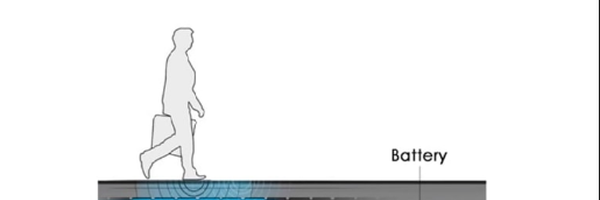
To solve the problem of wasted noise energy, we designed and built a simple system that converts sound into electrical energy. First, we researched how sound waves can be transformed into vibrations and then into electricity. We used a microphone or sound sensor to capture sound waves from the environment. The vibrations produced by the sound were converted into small electrical signals using a piezoelectric sensor. Next, the electrical energy was transferred through wires into a small circuit. The energy was then stored in a battery or used to power a small LED light to demonstrate that electricity was successfully generated. We tested the system using different sound levels, such as clapping and music, and observed how louder sounds produced more electrical output. Finally, we recorded our results and compared the efficiency of the system under different conditions. This method helped us understand how noise can be reused as a renewable energy source.
Analysis
The results of the project show that sound energy can be converted into electrical energy, but only in small amounts. When louder sounds such as clapping or music were used, the electrical output increased. This shows that sound intensity directly affects the amount of energy produced. However, quiet sounds produced very little electricity, which means the system is not efficient enough to power large devices.
Conclusion
In conclusion, this project demonstrated that sound energy can be converted into electrical energy using simple components. The experiment showed that louder sounds produce more electrical output, while quieter sounds generate very little energy. This confirms that sound intensity plays an important role in energy production. Although the amount of electricity produced was small, the project was successful in proving the concept of sound-to-energy conversion. The system is not powerful enough for large-scale energy production, but it has potential for small applications such as lighting LEDs or powering sensors. Overall, this project increased our understanding of renewable and alternative energy sources and showed that sound energy could be used more efficiently in the future with improved technology.
Citations
Below are all the websites that we used for our science fair project:
https://www.britannica.com/science/sound-energy
https://www.explainthatstuff.com/piezoelectricity.html
https://www.sciencedirect.com/topics/engineering/noise-energy-harvesting
https://www.electronics-tutorials.ws/diode/diode_6.html
https://www.energy.gov/eere/vehicles/articles/lithium-ion-batteries
https://www.explainthatstuff.com/leds.html
Acknowledgement
Thank you to our parents for their support and guidance throughout this project helping us with unsafe materials when we needed to and also thank you to the teachers who helped guide us during this project.