
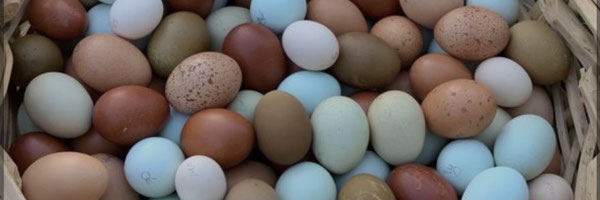
Chicken egg diffrerences
Gwyneth Taylor, Madison Kurtenbach
St. Marguerite School
Grade 6
Presentation
No video provided
Hypothesis
Our hypothesis is that if the chicken eggs have big differences, then the eggs prices should vary because one will be better for you to use/easier to get from the chickens.
Research
Diets: Cadged chickens eat food biased on grain like corn or soy. Free range chickens eat a variety of bugs, worms and grass. Salmonella: Caged chickens might have less external contamination (presence of harmful substances like bacteria, chemicals, or foreign materials on the birds outer surfaces) due to quick removal and less contact with their feces. Free range hens have more access to the environment including wind, soil, and birds salmonella can get on to the shells of eggs when birds lay the eggs, and then when eggs touch bird feces after the have been laid. Facts: The caged chicken is usually kept inside small, crammed cages, where they spend most of their lives. Free range chickens have access to the outside environment and are a little bit more free/wilder.
Variables
Controlled variables 1. The temperature we cooked the eggs at stayed the same 2. The bowl we used to put the eggs in stayed the same 3. The string we used to measure stayed the same Manipulated variables 1. The types of chicken 2. The taste of the eggs Responding variables 1. The raw eggs became cooked 2. We saw the different sizes of string measurements
Procedure
2. Grab two bowls of the same size 3. Crack free range egg 1 and caged egg 1 then crack the eggs in the separate bowls 4. Analyze the eggs and note there differences 5. Set a stove to either medium to low\, but keep it the same temp every time 6. Next\, put the eggs on two separate pans of the same size and time how long they cook for. Write it down 7. Taste both the eggs and write down there differences 8. Then repeat it two more times and write down any other differences
Observations
The caged eggs cooked faster and needed to be flipped before the free range eggs. When we mixed them in bowl, the free range was darker and a richer color.
Analysis
Something inside of the free range eggs made it take a longer time thoroughly cook, ulike the caged which took a quick time because of the egg whites and protein in them.
Conclusion
We concluded that there is a couple different differences that we found out about the eggs and the actual mother chickens themselves. The caged eggs we tested were white, while the free range we tested were brown, and the size were mostly the same. Free range eggs are a tiny bit more expensive at the local grocery store because it is more expensive to keep them, while caged eggs are less money because the costs of keeping the mother hens are less. Either one works for many different things, and which you buy does not entirely matter.
Application
If you are in a rush or simply want to spend less money, the caged eggs do cook faster and cost less, but free range eggs have a richer taste, and our opinion is that they are better for the mother hens health. Being stuck in a wired cage their whole life with lots of boredom and stress for the chickens makes it a little unappetizing. You can use the end result of our project to decide which would be better to use at that time.
Sources Of Error
Our experiment went smoothly, and our hypothesis was correct. There was nothing that went wrong at all.but we did think we could of put more information about how the food the chickens eat affects people when they eat them.
Citations
We used: -Compassion for the world of farming -Mercy for animals -Poutly-farm.com -Nature.com -NCIBI.NIM.NI.GOV -Science direct .com -Zoosnica -ivis.org
Acknowledgement
We would like to thank Mrs. Kline for always helping us, Mr. Moony for clarification on confusing things, Paul (Gwynn's father) for giving us the idea, Madison's parents, and Janice (Gwynn's nana)