
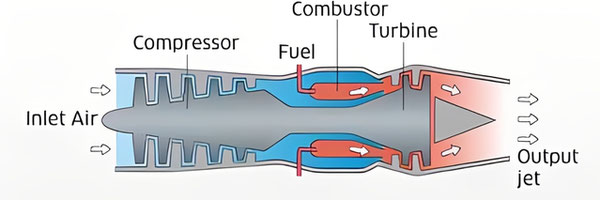
Fuel atomization chemistry and combustion efficiency in jet engines
Alagar Senthil, Jivansh Vig
Balmoral School
Grade 7
Presentation
No video provided
Problem
Hypothesis If fuel is injected into an aircraft engine in smaller droplets rather than larger droplets, then there will be an increase in combustion efficiency in the engine, and less fuel will be wasted. This is because smaller droplets will evaporate faster and mix more thoroughly with the oxygen due to their significantly higher surface area to volume ratio. This improved mixing will then lead to a more complete and efficient combustion.
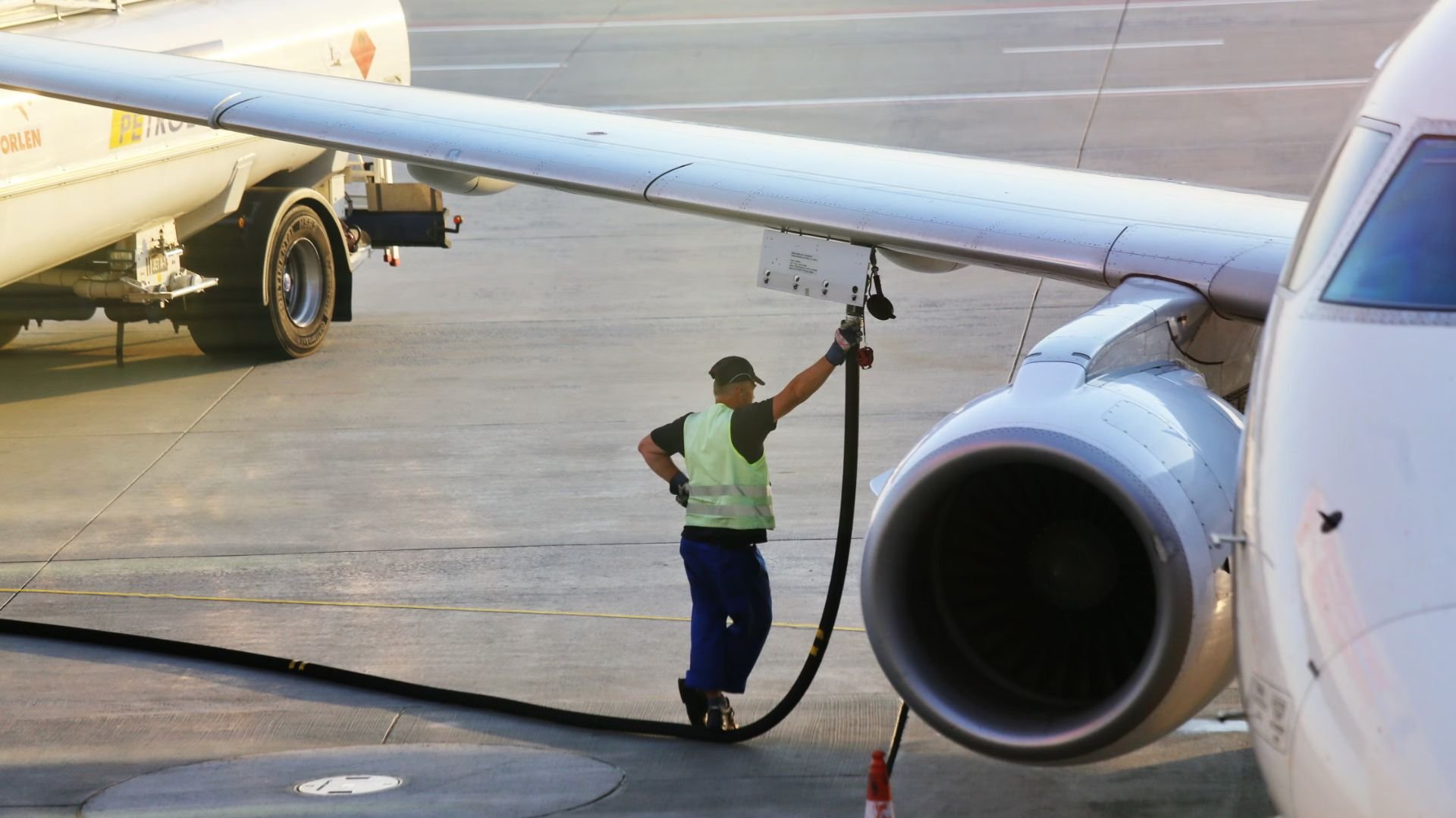
Problem Research shows that up to $75 Million can be saved annually with proper fuel efficiency. In the airline industry, fuel is one of the most major expenses accounting for up to 20-30% of operating expenses. In the year of 2024 alone, it was reported that airlines spent $291 billion on jet fuel. Thus, even the smallest change in order to avoid operational inefficiencies can lead to millions of dollars saved around the world. For example, a 3% fuel saving on a fleet of 50 Boeing 737-800s equals $9.6M annually.
In order to generate sufficient thrust, jet engines rely heavily on highly efficient combustion of fuel. However, when fuel is injected into the combustion chamber in larger droplets, it mixes poorly with the air. This poor mixture of fuel in the chamber will lead to incomplete burning of fuel. This will not only prevent the engine from producing maximum energy, but also waste fuel, reducing engine performance, and increasing emissions. This can be improved with better fuel atomization by injecting objectively smaller droplets of fuel into the engine system, providing more surface area, thus allowing the droplets to mix more thoroughly with air and burn more efficiently. This project investigates how the droplet size impacts the mixing of fuel and air using a model that demonstrates basic airflow and droplet evaporation.
Method
Procedure
-
Gather all the materials required for the experiment:
-
Plastic bottle
- Fan or hair dryer
- Spray bottle with colored water (one that sprays bigger droplets and one that sprays smaller droplets)
- Tape
- Scissors or a cutting tool
-
White paper.
-
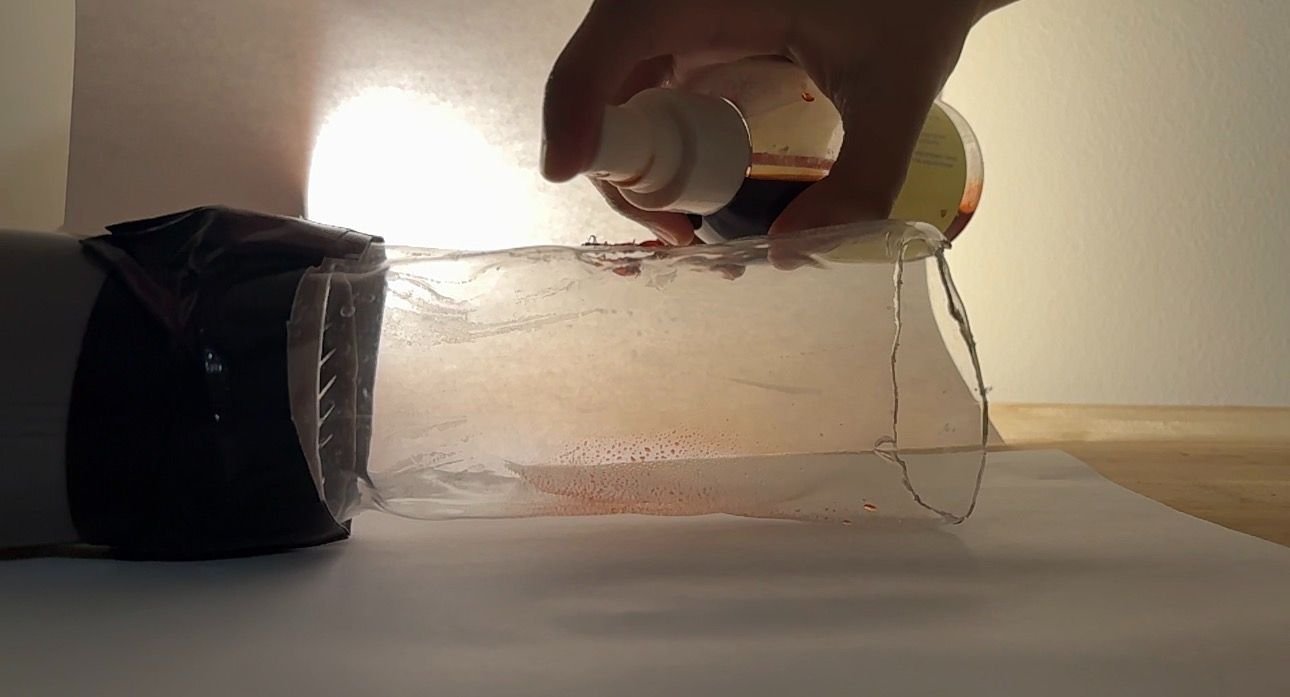
Carefully cut both ends of the bottle so that air can enter through one and leave through the other.
- Make a small hole at the top of the bottle to insert the spray nozzle
- Attach a hair dryer or high speed fan to one end of the bottle so that air flows through the bottle and exits through the other hole.
- Use tape to seal the connection between the fan and the bottle so air will not escape.
- Place a sheet of white paper at the end of the open hole to capture droplets that exit. .
- Turn on the fan to create a steady airflow through the bottle. Keep it the same speed for both trials.
- Spray colored water into the hole at the top of the bottle so that droplets enter the airflow.
- Observe the movement of droplets through the clear bottle and note how much residue of colored water is left at the bottom of the bottle.
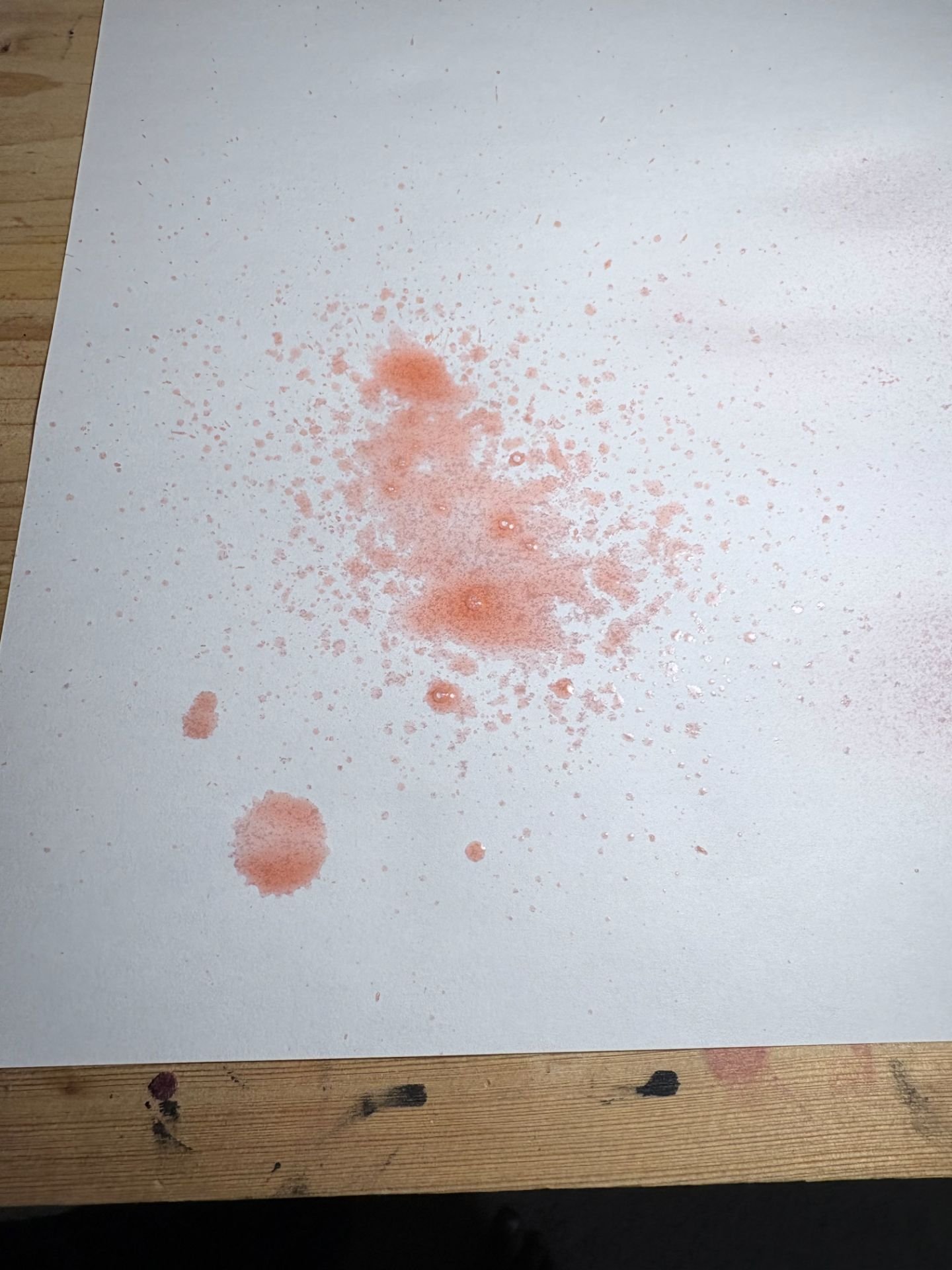
- Observe the droplet pattern that forms on the white paper placed near the open end of the bottle.
- Repeat the experiment using different droplet sizes by adjusting the spray bottle nozzle.
- Record observations for each trial and compare how droplet size affects dispersion and residue.
 Large droplets
 small droplets
 small droplet
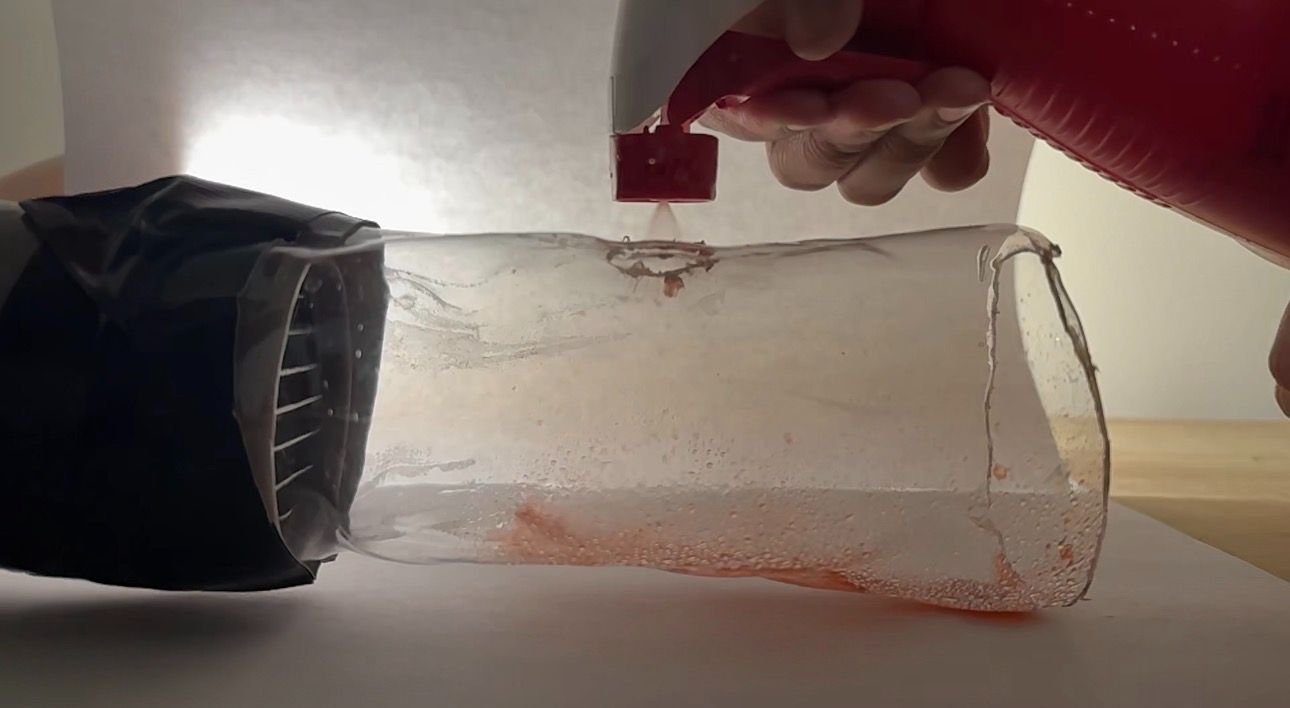 large droplets
Research
Research (Combustion) Burning of fuel is known as combustion. Combustion needs three things to actually work: Oxygen, heat, and fuel, often referred to as the “combustion triangle”. If even one of these things are missing then the combustion reaction will not be successful. During a combustion reaction, the released fuel reacts with the oxygen and releases energy in the form of heat and light. In many combustion reactions including ones that take place in aircraft engines, there are three key components that help the reaction occur effectively. These are known as the three T’s, which are time, temperature, and turbulence. For any combustion to happen, you need enough time for the reaction to occur and the duration of fuel in the hot zone, allowing reaction between fuel and oxygen to occur. Temperature must be high enough to successfully ignite the fuel and sustain the reaction. Turbulence is required to mix the oxygen and fuel properly, so combustion can occur more efficiently. However, excessive amounts of turbulence can also lead to more pressure losses inside the engine, which can reduce overall engine efficiency. It is also important to note that combustion does not occur with pure oxygen. In real systems such as an aircraft engine, combustion takes place using air, and not pure oxygen. Air is a mixture of multiple gasses: 21% oxygen, 78% nitrogen, with about 1% other gasses, such as argon, carbon dioxide, etc. In order to analyze combustion scientifically, air is often expressed using moles (SI base unit for measuring the amount of a substance). Because air contains 21% oxygen, 78% nitrogen, and 1% other gasses, for every mole of oxygen, there are approximately 3.76 moles of nitrogen.
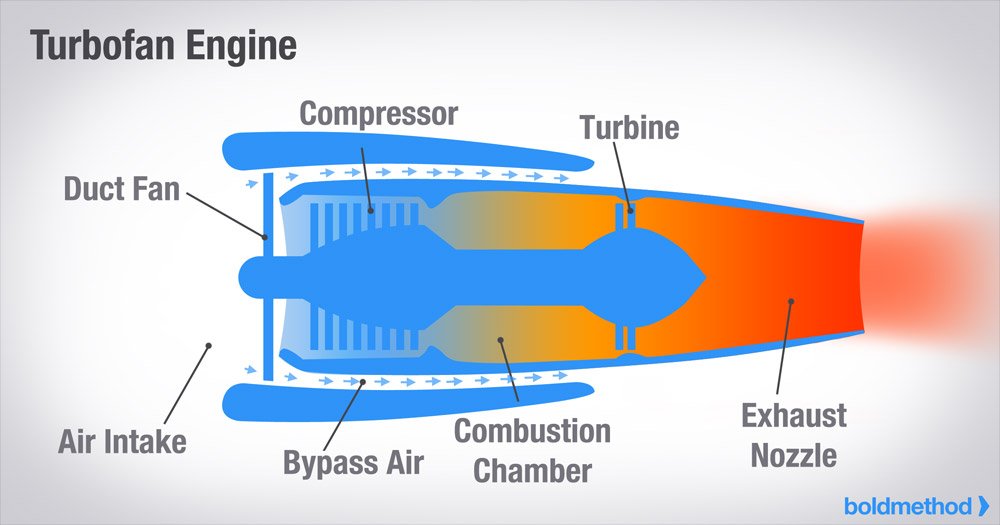
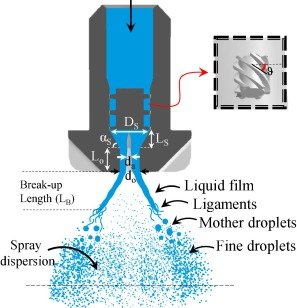
(Atomization) Atomization is the process of breaking liquid fuel into very small droplets so that it can mix easier with the air. When it comes to aircraft engines, fuel is injected into the combustion chamber in small droplets as a fine spray. The smaller the droplets, the larger the surface area relative to their volume. This allows the droplets to evaporate more quickly and mix more thoroughly with the oxygen in the chamber. Improvement in this mixing process, with smaller droplets rather than larger ones allows the combustion reaction to occur more efficiently. In aircrafts, the engine thrust, efficiency, and the emission levels are directly related to the performance of the liquid fuel injector designs. If fuel droplets are too large, they do not mix well with the surrounding air in the chamber. This leads to wasted fuel, higher emissions, and an incomplete combustion. Thus, the size of the fuel droplets injected plays a critical role in the engine performance. Atomization happens when the magnitude of the disruptive force (any force that acts to overcome the cohesive, stabilizing forces of the fuel) are stronger than surface tension forces, which hold the liquid together. When this occurs, the fuel breaks into much smaller droplets.
(Atomizers) Atomizers are devices that break down liquid fuel into a fine mist with small droplets and are driven by blades/fans. In a general aircraft engine, fuel is injected through small nozzles right into a fast moving air spray. The interaction between the fast moving air and the fuel droplets helps with breaking down the liquid into small droplets. This process then creates a spray plume (the pattern formed by the droplets for atomization). The plume for an atomizer is very narrow for many meters before the atomizer gauze/nozzle, and follows the direction of the airflow. Since the droplets are small, they have very little inertia which means they follow the movement of the air instead of continuing in a straight path. This results in improved combustion as droplets remain within the airflow, mixing efficiently. Additionally, as airflow speed increases, so do the forces acting on the liquid fuel. This will help break the fuel into smaller droplets, improving atomization.
(Avogadro’s Law) Equal volumes of gas at the same temperature and pressure have the same amount of molecules. In fact a mole is expressed by Avogadro's constant, which is 6.02214076 × 10 to the power of 23 particles.
Variables
| Type of variable | Variable | Description |
|---|---|---|
| Independent Variable | Size of liquid Droplets | In this experiment, size of the liquid droplets is changed from larger to smaller to observe how droplet size affects mixing with airflow. |
| Dependent Variable | Droplet behaviour in airflow | The distance and pattern the droplets travel in the airflow will be observed to determine how well they mix with the air. |
| Controlled Variable | Airflow device | The same hair dryer will be used in every trial. |
| Controlled Variable | Airflow speed | The hair dryer will be operated at the same speed each trail. |
| Controlled Variable | Location of experiment | The experiment will be held in the same location to avoid any environmental changes. |
| Controlled Variable | Type of liquid | The same liquid (water) will be used in each trial. |
If any of these items changed it could result in inaccurate data and we wouldn’t be able to say with confidence what changed the results.
Data
Observation
| Trial | Droplet Size | Residue at Bottom of Bottle | Droplet Pattern on Paper | Mixing with Air |
|---|---|---|---|---|
| 1 | Large droplets | High amount of liquid collected at the bottom | Few large droplets with uneven spacing | Poor mixing |
| 2 | Large droplets | High amount of liquid collected at the bottom | Few large droplets with uneven spacing | Poor mixing |
| 3 | Small droplets | Very little residue collected | Many small droplets forming a fine mist pattern | Good mixing |
| 4 | Small droplets | Very little residue collected | Many small droplets forming a fine mist pattern | Good mixing |
Each droplet size and condition was tested twice to ensure results remained consistent. As observed through our table, both trails for both small and large droplets produced similar results, indicating the significant effect droplet sizes have on liquid mixing with airflow.
Analysis
The results of our experiment using our model show the clear difference between the behavior of smaller droplets in contrast to the behaviour of larger droplets in steady airflow. When we introduced the larger droplets into our airflow, we observed that the amount of liquid collected at the bottom of the bottle was noticeably higher. This indicated that the droplets were too big or too heavy to stay suspended in the moving air and follow the airflow, therefore fell to the bottom much quicker. The white paper we placed at the open end of the bottle had collected very few large droplets, suggesting that the liquid did not disperse efficiently.
In contrast to this, when the smaller droplets were introduced to the steady airflow, much less liquid residue collected at the bottom of the bottle. Instead, the droplets remained suspended in the air and followed the airflow eventually exiting through the open end of the bottle. This was clear when we observed the white paper placed by the open end. The pattern showed many small droplets evenly spread across the paper forming the shape of fine mist. This shows that smaller droplets mix more efficiently with the airflow.
Using our prior research this behavior can be explained through the concept of atomization. When a liquid is broken into smaller droplets, the surface area of that liquid increases, allowing the liquid to interact efficiently with the surrounding airflow. In this experiment, the spray bottle acts as the atomizer while the whole process represents the airflow inside of an aircraft engine. This experiment further proves that a combustion system such as an aircraft engine can be improved by using smaller fuel droplets, leading to less waste, and a more complete combustion reaction.
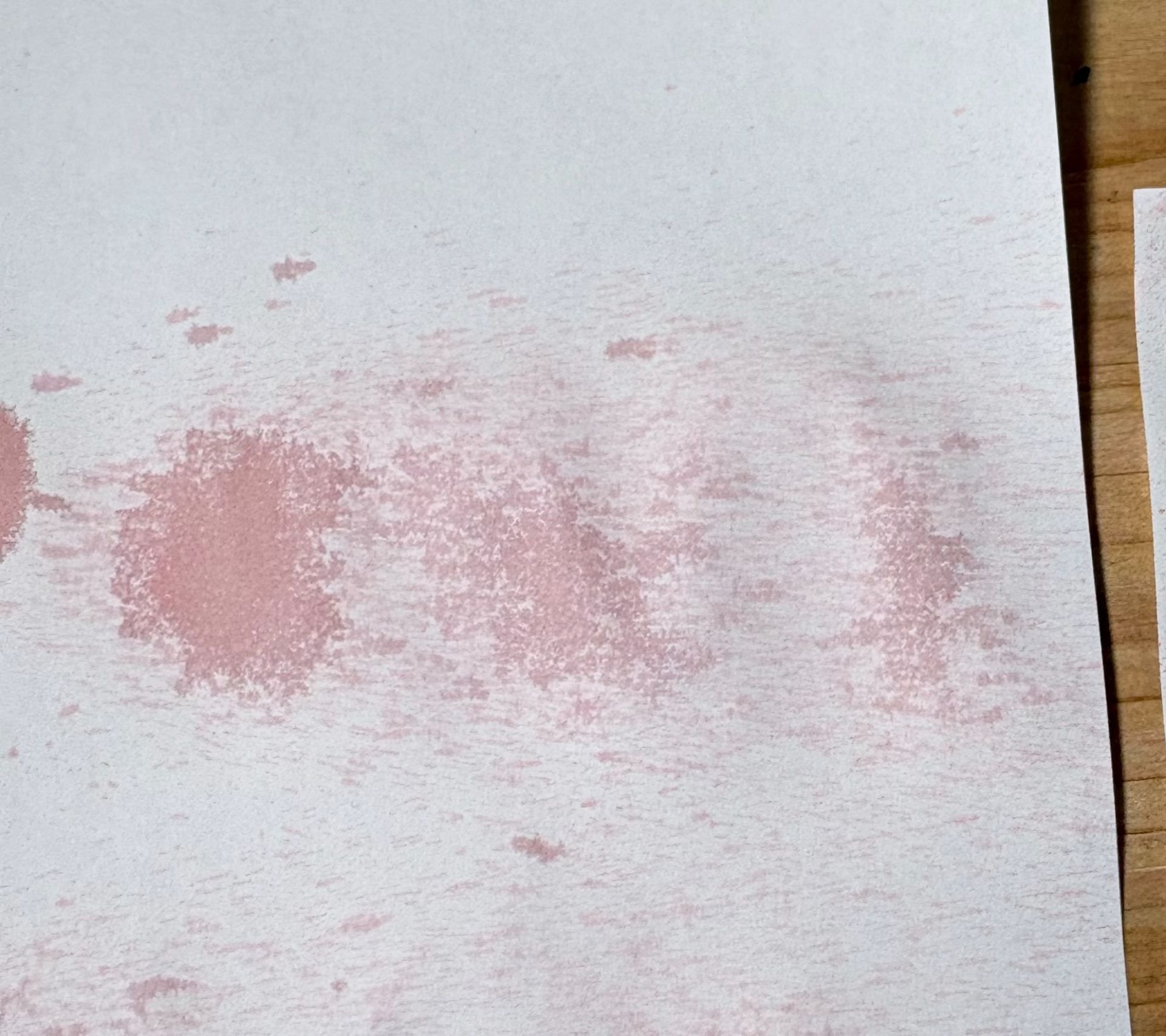 larger droplet residue on white paper
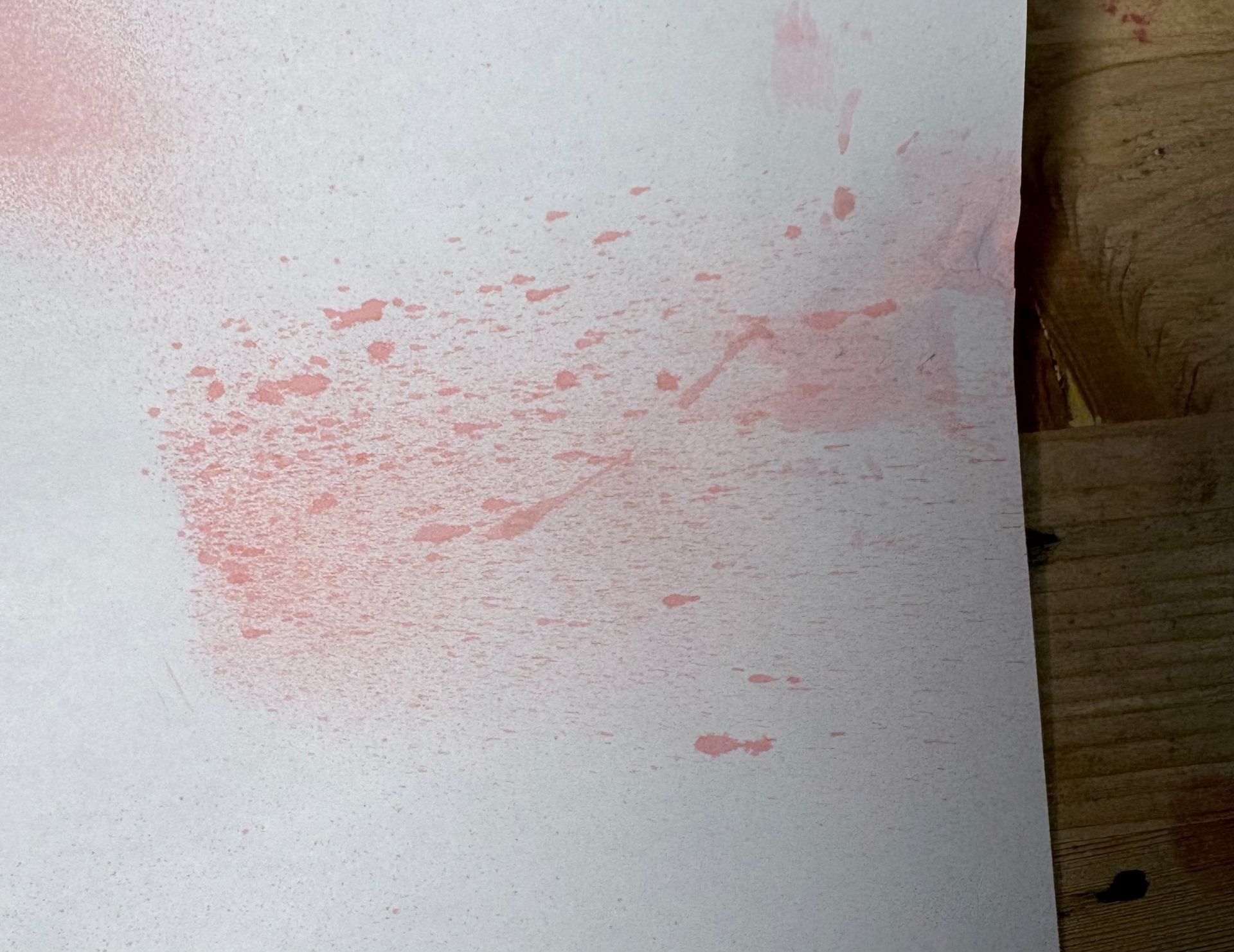 smaller droplet residue on white paper
Conclusion
Conclusion
The purpose of this experiment was to observe clearly the effects of the droplet sizes and mixing with the airflow. In our hypothesis, we stated that “If fuel is injected into an aircraft engine in smaller droplets rather than larger droplets, then there will be an increase in combustion efficiency in the engine, and less fuel will be wasted.” The results prove that smaller droplets disperse more evenly with the steady airflow caused by the hairdryer while larger droplets struggle to stay in the air and move with the airflow, causing them to pool at the bottom of the bottle. This experiment also demonstrated the process of atomization using a basic model. The spray bottle acted as the atomizer in our experiment by producing different sizes of droplets (small and large) for four trials. We observed that the smaller droplets were able to follow the airflow more efficiently, allowing the liquid to spread more evenly. These results support our hypothesis that smaller fuel droplets allow for better mixing of fuel with the air leading to a more efficient combustion and much less wasted fuel.
Sources of error
- The spray bottle may not have produced consistent droplet sizes. Though we used two different spray bottles, one with larger droplets and one with smaller ones, they may not have been perfectly consistent.
- Some droplets may have ended up on the outside of the bottle while spraying, causing a change in amount of droplets entering airflow which can alter the final observed amount of water pooled at the bottom of the bottle.
- The airflow from the hair dryer may not have been perfectly consistent throughout the experiment. Water may have entered the hair dryer causing mild fluctuations in air flow speed. This could have an impact on how the droplets moved through the bottle.
Application The whole project itself is basically an application because we are trying to find better ways to use fuel instead of wasting it. The smaller the size of the droplets the better, which has been proved by our experiment. By using smaller droplets you could save more money, more fuel, and increase efficiency in aircrafts. If we could spray smaller droplets every plane ride, we could save billions of dollars annually. If this is the case, spraying smaller droplets of fuel can save lots of money. We could use that money for tons of different things. We could build more houses, banks, schools, bridges, ect. It's one thing to change, which can cause a big effect on the world around us.
Citations
- https://blog.openairlines.com/time-is-money-fuel-inefficiency-costs-us-airlines-daily
- https://www.britannica.com/science/Avogadros-law
- httwww.youtube.com/watch?v=c0S9iJ6AXyk
- www.youtube.com/watch?v=c0S9iJ6AXyk
- https://www.youtube.com/watch?v=WM-SwTheaqs
- https://www.youtube.com/watch?v=c7E6zNsrF7c
- How atomizers really work
- https://www.thermopedia.com/cn/content/573/
- www.grc.nasa.gov/www/k-12/airplane/combst1.html
- https://www.sciencedirect.com/science/article/abs/pii/S0016236118320283
- https://www.boldmethod.com/learn-to-fly/systems/the-4-types-of-turbine-engines/
- https://www.boldmethod.com/blog/expressjet/how-a-jet-engine-starts-on-a-erj-145/
- https://simpleflying.com/what-is-aviation-fuel-made-of/
Acknowledgement
Alagar- I would like to thank my sister and my parents for encouraging me through this journey. Also I would like to thank my friend Jivansh and Mrs. Ontko for helping me finish this project. Without these people, I would not have been able to accomplish this.
Jivansh- I would like to thank my parents for the support and encouragement. I would also like to thank my friend Alagar and his sister for helping with this project. My teacher for this fair is Ms.Ontko for all the help and support and for answering any question i asked.