

Moment before Movement
Shiloh Mwebaze
Mount Royal School
Grade 9
Presentation
No video provided
Hypothesis
Hypothesis
If the heart has more or less time to anticipate a given task, then this may affect the magnitude of pre-activity heart rate change. My hypothesis for this project is that a longer anticipation period will be associated with greater changes in the heart rate before physical movement begins. I believe this because if the brain has more time to process the activity, this will create more built-up anticipation, making the heart more prepared for more activity
Research
Research
Research question
Does the duration of anticipation affect one's heart rate?
What is heart rate? Your heart rate is the number of times your heart beats in a minute. Your body automatically controls your heartbeat to match whatever you’re doing or what’s happening around you. That’s why your heartbeat gets faster when you’re active, excited, or scared. And why it slows down when you’re resting, calm, or comfortable. Blood pressure (BP) is the pressure exerted by the blood against the arterial walls as it is forced through the circulatory system by the action of the heart. It has two components: systolic blood pressure and diastolic blood pressure. Systolic blood pressure is the blood pressure recorded as blood is ejected during the contraction phase of the heart cycle. It is the higher of the two blood-pressure values. Diastolic blood pressure is the blood pressure recorded during the relaxation phase of the heart cycle. It is the lower of the two blood-pressure values.
What is anticipation? Anticipation is fundamentally about the act of expecting something to happen. It can evoke a range of emotions, from excitement and joy to anxiety and dread, depending on the nature of the anticipated event. This emotional response is crucial as it shapes how we prepare for and react to future experiences.
Part of the brain is in charge of anticipation -The part of the brain in charge of anticipating things is the prefrontal cortex. It plays a crucial role in planning and setting goals, allowing individuals to anticipate what they will in the near future. This part of the brain helps in making decisions and adapting to situations, contributing to our ability to plan and prepare for events
How does the heart's movement connect to the brain
The part of the brain that primarily controls heartbeat, located in the brain stem, is the medulla oblongata. This contains the cardiac centre. The cardiovascular center forms part of the autonomic nervous system and is responsible for the regulation of cardiac output. Located in the medulla oblongata.
Brain stem
-Communication between the heart and brain occurs through several pathways. One primary route is the neural pathway, particularly involving the autonomic nervous system, which is located in the brainstem
What is the autonomic nervous system? -Your autonomic nervous system is a network of nerves throughout your body that control unconscious processes. These are things that happen without you thinking about them, such as breathing and your heart beating. The autonomic nervous system regulates how fast and hard your heart pumps and the width of blood vessels. Those abilities are how your autonomic system helps manage your heart rate and blood pressure The autonomic system splits into two parts that are connected to the heart, parasympathetic nervous system and the sympathetic nervous system
Parasympathetic nervous system Your parasympathetic nervous system’s job is usually to relax or reduce your body’s activities. It lowers your heart rate and the pumping force of your heart. The vagus nerve, also known as the vagal nerve, is the main nerve of your parasympathetic nervous system. Your vagus nerve makes up about 75% of your parasympathetic nervous system overall, connecting to your heart
Sympathetic nervous system Your sympathetic nervous system is a network of nerves that helps your body activate its “fight-or-flight” response. This system’s activity increases when you’re stressed, in danger, or physically active. Your sympathetic nervous system activates to speed up your heart rate, deliver more blood to areas of your body that need more oxygen, or make other responses to help you get out of danger. Your sympathetic and parasympathetic nervous systems have opposite roles. While your sympathetic nervous system carries signals that put your body’s systems on alert, your parasympathetic nervous system carries signals that relax those systems.
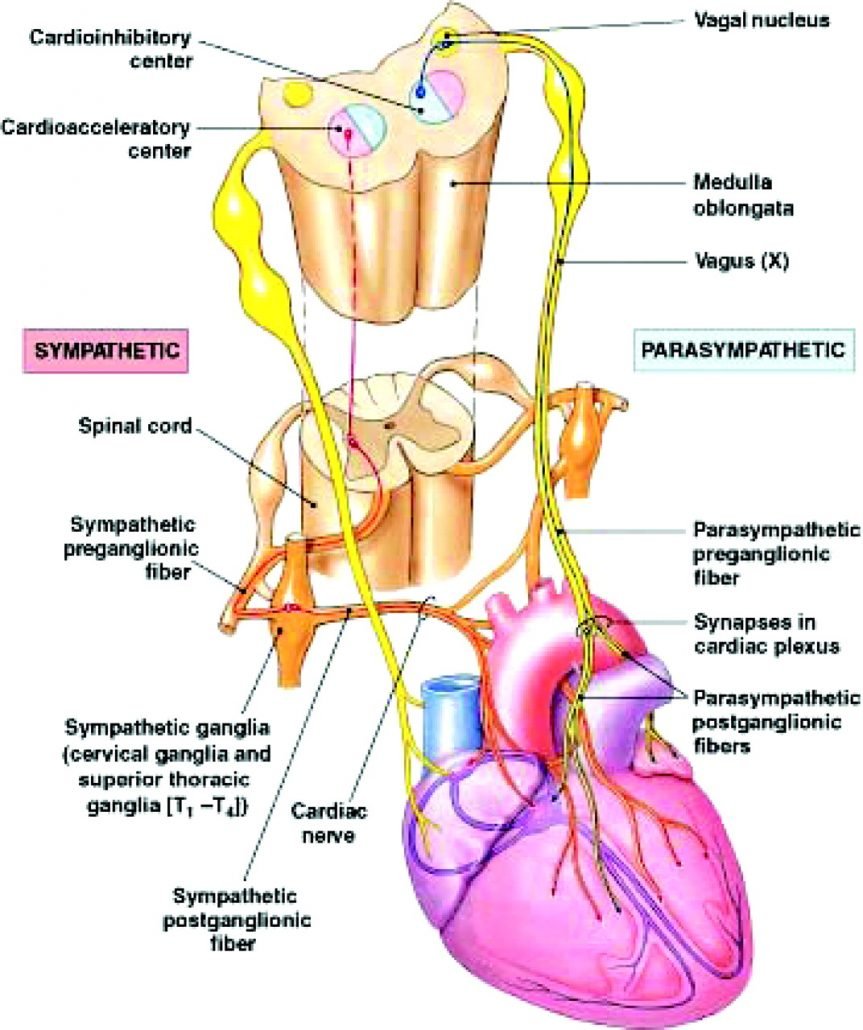
The heat and anticipation
How the Heart Reacts Before and During Anticipation
anticipatory heart rate: Anticipatory heart rate refers to an increase in heart rate that occurs in anticipation of a future event or activity. Anticipatory heart rate is a complex response influenced by the autonomic nervous system and the brain's predictive systems. During anticipation, the heart rate spikes due to the activation of the sympathetic nervous system, which prepares your body for the expected task. However, the heart rate feedback loop ensures that the body maintains stability by counteracting these changes. The medulla oblongata, the control center of the autonomic nervous system, integrates signals from various sensors and adjusts the heart rate accordingly. This feedback mechanism helps maintain cardiovascular stability and prepares the body for the expected demand of the situation.
Experiment done by the National Library of Medicine
This study aimed to investigate whether anticipatory cardiorespiratory responses vary depending on the intensity of the subsequent exercise bout, and whether anticipatory cardiorespiratory adjustments contribute importantly to enhancing exercise performance during high-intensity exercise. Eleven healthy men were provided advance notice of the exercise intensity and a countdown to generate anticipation during 10 min prior to exercise at 0, 50, 80, or 95% maximal work-rate (Experiment 1). A different group of subjects (n = 15) performed a time to exhaustion trial with or without anticipatory countdown (Experiment 2). In Experiment 1, heart rate (HR), oxygen uptake (VO2 ) and minute ventilation (VE ) during pre-exercise resting period increased over time and depended on the subsequent exercise intensity. Specifically, there was already a 7.4% increase in HR from more than 5 min prior to the start of exercise at 95% maximal work-rate, followed by progressively augmented increases of 12.5% between 2 and 3 min before exercise, 24.4% between 0 and 1 min before exercise. In Experiment 2, the initial HR for the first 10 s of exercise in the task with anticipation was 11.4% larger compared to without anticipation (p < 0.01), and the difference in HR between the two conditions decreased in a time-dependent manner. In contrast, the initial increases in VO2 and VE were significantly lower in the task with anticipation than in the task without anticipation. The time to exhaustion during high-intensity exercise was 14.6% longer under the anticipation condition compared to no anticipation (135 ± 26 s vs. 119 ± 26 s, p = 0.003). In addition, the enhanced exercise performance correlated positively with increased HR response just before and immediately after exercise onset (p < 0.01). These results showed that anticipatory cardiorespiratory adjustments (feedforward control) via the higher brain that operate before starting exercise may play an important role in minimizing the time delay of circulatory response and enhancing performance after onset of high-intensity exercise in man.
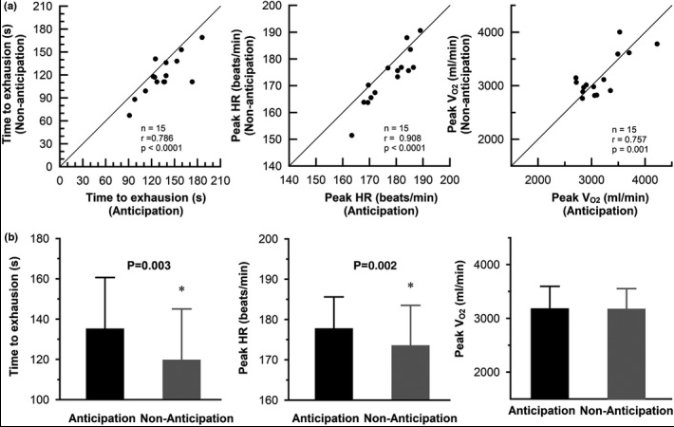 This research was mainly focused exercise performance, but still it found that:
- Heart rate increases gradually as exercise onset approaches
- The increase gets bigger closer to the movement
- Anticipation changes cardiovascular preparation
It shows that the heart rate increases many minutes before the beginning of the physical movement when participants are given advanced notice and a countdown. These findings suggest that anticipatory adjustments start before activity begins, supporting my hypothesis that if the heart has more or less time to anticipate a given task, it may affect the magnitude of cardiovascular activity.
Variables
Variables
Independent
- Anticipation duration(e.g 15-20 secs)
Dependent
- heart rate ( beats per minute)
Controlled
- same position
- same instruction for all participants
- same place
- same device
- same time of day (only if possible
(heart rate is not recorded while participants are standing) When the participant starts movement, recording will stop immediately.
Explanation -independent variable: Since we are testing the anticipation duration for two different time limits, we will have two different anticipation durations.
-dependent variable: The dependent variable is the variable that is observed and measured to determine the effect of changes or manipulators, which in this case is our independent variable. So we are going to be measuring the heartbeat since it is the variable that is being observed to detect changes.
-controlled variables: A control variable is any factor that is controlled or held constant during an experiment. For this reason, it’s also known as a controlled variable or a constant variable. A single experiment may contain many control variables. Unlike the independent and dependent variables, control variables aren’t a part of the experiment. Still, they are important because they could affect the outcome. So the variables that could affect the outcome of my experiment are all my participants will sit in the smae position so back posture will not vary between participants, i will also use the same instructions for participants with the only difference being when they are told to stand up, the same place (if possible), same device and same time of day as well (only if possible).
Procedure
Procedure for the experiment
- Step one:
Qualifications for participants - above the age of 12 and below the age of 50 - in a healthy condition - can perform the given task movement without any difficulty - has consented to participating in the experiment
- Step two:
Procedure for conducting the experiment
Short anticipatory experiment: The participant is sitting in a quiet room (can be a classroom) a timer of two minutes will be set. The participant will sit quietly for those 2 minutes with no movement or talking. This is to ensure that the participant's heart rate has calmed down and is at a normal resting pace. The last 5 secs of these two minutes will be recorded as participants' resting heart rate before anticipation. Then a twenty-second timer will be set, and participants will be told to stand up once the timer hits zero. The last 5 secs of this will also be recorded. Once the timer stops and the participant has stood up, the recording will stop immediately. ( This is to ensure I am solely focusing and isolating anticipation time alone and not focusing on the participant's physical movement.)
Long anticipation experiment: The participant is sitting in a quiet room (can be a classroom) a timer of two minutes will be set. The participant will sit quietly for those 2 minutes with no movement or talking. The last 5 secs will be recorded. Then a 50-second timer will be set (this is the longer anticipation time). Participant is then told that in 50 secs they will stand up, the last 5 secs will be recorded, and the recording of heart rate will be stopped when the timer stops, and the participant has stood up. * Both the short and long experiments will be performed on each person
Tools I will be using to conduct this experiment
- Watch or phone timer
- BP machine
- smartwatch(if possible)
- a notebook to record data
Step three Using the BP machine Same instructions for long and short anticipation times Cuff resting on arm at heart level
Using a smart watch Same instructions for long and short anticipation times recording of the final 30 secs of resting for two minutes recording at the start of anticipation and before standing recover between short and long
Observations
Observations
-
The magnitude of the participants' heart rate increase varies
-
Some participants showed a big increase, while some showed a small one
-
There was a decline inthe short anticipation heart rate from the baseline heart rate
-
Most participants showed higher levels of cardiovascular activity for the long anticipation
-
I noticed a pattern in most participants that their heart rate often started off exceptionally high and lowered for the shorter anticipation activity, and increased again for the long anticipation
Analysis
| Data collected |
|---|
| participant 1 | participant 2 | participant 3 | participant 4 | participant 5 | participant 6 participant 7 |
|---|---|---|---|---|---|
| baseline HR - 110 | baseline - 89 | baseline - 65 | baseline - 86 | baseline - 82 | baseline - 72 baseline - 82 |
| short anticipation HR - 97 | short- 86 | short - 80 | short - 94 | short - 83 | short - 71 short - 79 |
| long anticipation HR - 108 | long - 92 | long - 72 | long - 94 | long - 86 | long - 79 long - 93 |
Data collection
Baseline heart rate: The average baseline HR for all participants 89 + 65 + 86 + 82 + 72 +82 average = ------------------------------ 6
= 79
Short anticipation: Average short anticipation HR for participants 97 + 86 + 80 + 94 + 83 + 71 avertage = ---------------------------------------- 6
= 85
Long anticipation: Average long anticipation HR for participants 108 + 92 + 72 + 94 + 86 + 79 +93 average = ------------------------------------------ 6
= 104
Change from baseline for each condition
Group averages
short increase:
| p1 | p2 | p3 | p4 | p5 | p6 | p7 |
|---|---|---|---|---|---|---|
| 110-97 | 89-86 | 80-65 | 94-86 | 83-82 | 72-71 | 82-79 |
| decreased by 13 | decreased by 3 | increased by 15 | decreased by 8 | increased by 1 | decreased by 1 | decreased by 3 |
Overall, there was a decline from the baseline heart rate to short anticipation time
long increase
| p1 | p2 | p3 | p4 | p5 | p6 | p7 |
|---|---|---|---|---|---|---|
| 110-108 | 92-89 | 72-65 | 94-86 | 86-82 | 79-72 | 93-82 |
| decrease by 2 | increased by 3 | increased by 7 | increased by 8 | increased by 4 | increased by 5 | increased by 11 |
Overrall an increase from the baseline heart rate was shown from the long anticipation experiment
Statement of why this happens and hypothesis
In conclusion, the heart showed more cardiovascular activity when participants were doing the long anticipation before they stood up , suggesting that the heart prepares in advance before activity happens. This happens because when the brain is preparing the body for expected events, it sends signals to the heart. The longer you wait for something to happen, the more time the brain has to send those signals to the sympathetic nervous system, which prepares the body for action. Therefore, this experiment supports my hypothesis that a longer anticipation period will be associated with greater changes in the heart rate before physical movement begins.
Conclusion
Conclusion
In conclusion i come to state that the purpose of this experiment was to test the question of whether the duration of anticipation affects one's heart rate. The results of my experiment showed that participants do, in fact, generally experience a general increase in cardiovascular activity with a longer anticipation time before movement compared to a shorter anticipation time, supporting my hypothesis that a longer anticipation period will be associated with greater changes in the heart rate before physical movement begins. The pattern in my observation and analysis suggests that the body begins preparing for movement before it begins. When the participants expected an upcoming task, the brain sent signals to the systems in charge of cardiovascular activity, such as the autonomic nervouse sytem that in return increased heart rate in preparation for activity.
Application
Application
How can this be used in the real world:
If prolonged anticipation increases heart rate more than short anticipation does, this suggests that the duration of given task time in high pressure enviroments like sports, emergency rooms, or sometimes even the military may unintentionally increase physical strain and sympathetic activity in chronic regulation of blood pressure and the potential risks associated with excess sympathoexcitation. Sympathoexcitation is considered (by some) to be causative in hypertension. Elevated sympathetic nerve activity is observed in hypertension, heart failure, and even aging. Prolonged anticipation can also contribute to heightened stress levels over time. Understanding more about this field could support future research into stress regulation strategies and cardiovascular care, particularly for people involved in constant high stress environments. This experiment is on a small scale but contributes to the ongoing study of the brain and heart connection by examining how timing and heart rate turn into a measurable physiological change
Sources Of Error
Sources of error
- Noisy hallways
- Low number of participants/ uneven number of participants
- Bp machine accuracy
- Order effect (although some participants started with the long anticipation most of them started with the short anticipation)
- performing both trials in a single time period
Citations
Citations
Cleveland Clinic: Every Life Deserves World Class Care
The Science and Psychology of Anticipation - Biology Insights
Brain: Parts, Function, How It Works & Conditions
https://my.clevelandclinic.org/health/body/22638-brain
Parts of the Brain and Their Functions
Autonomic Nervous System: What It Is, Function & Disorders
https://my.clevelandclinic.org/health/body/23273-autonomic-nervous-system
Parasympathetic Nervous System (PSNS): What It Is & Function
https://my.clevelandclinic.org/health/body/23266-parasympathetic-nervous-system-psns
https://pmc.ncbi.nlm.nih.gov/articles/PMC10757437/
https://pubmed.ncbi.nlm.nih.gov/35246949/
Acknowledgement
I acknowledge the help of my teachers, who helped me answer the questions that I had about conducting my experiments and learning about the different aspects of the science fair project info that I needed to know. I also acknowledge all the participants who were willing to take part in my experiments and help with the collection of my data. Lastly i acknowledge the sites that were used that gave me a wider range of information that I needed to know.