
From Plastic Pollution to Power Production
Manha Ali
Annie Gale School
Grade 9
Presentation
No video provided
Problem
Every year, millions of tons of plastic waste end up in landfills as well as oceans. Most plastics take decades to decompose, causing polluted environments and harming animals of all sizes. To solve this problem, scientists are exploring new ways of “advanced recycling,” where plastics are broken down into its original chemical building block or even converted into oil that can be reduced to make fuels or new products. This method would reduce the amount of waste going into landfills, save natural resources, and create energy from materials that would’ve been thrown away. However, to fulfill this the new technology must be safe, efficient, and environmentally friendly.
The recycle-to-oil process uses a process called pyrolysis, which is when heating plastics in an oxygen-free environment to prevent burning and instead break the molecules down into useful hydrocarbons. Those hydrocarbons can be collected and reused as synthetic oil or even fuel. This process can lower the demand for fossil fuels and support cleaner waste-management systems. Yet, for this technology to be widely adopted, it must be proven to be safe and efficient, and environmentally friendly first.
Method
1. Research was conducted through scientific articles\, educational resources\, and partially the Henan Mingjie Environmental Equipment CO.\, LTD. These resources were used to understand how the technology works\, and how plastic waste affects the environment. 2. Different types of plastics were identified and whether they're suitable for oil conversion and which are unsafe for the process. 3. A density separation demonstration was performed using water and salt solutions to model how plastics are sorted before processing in recycle-to-oil facilities. Plastics that floated or sank were recorded. 4. A condensation demonstration using heated water was used to model how vapors are produced during pyrolysis are cooled and condensed into liquid fuel in factories. 5. Data and observations from the demonstrations were recorded and compared to real-world recycle to oil processes. 6. The environmental benefits\, risks\, and limitations of recycle to oil technology were analyzed
Research
What is Recycling and why is it important? Recycling is the process of collecting, sorting, and reusing materials that would’ve been thrown away. Instead of allowing items like paper, plastic, glass, and metal to end up in landfills or oceans, recycling turns them into innovative products. It starts as people throwing recyclable materials into specific labeled bins, which are taken to a recycling center. There, the materials are thoroughly sorted by type and cleaned. They are then processed so they can be reused. For example, old plastic bottles can be melted down and shaped into new containers while old paper can be recycled into cardboard. Recycling is very important because it helps reduce the amount of waste that pollutes the environment. It saves trees, animals, water, and minerals.
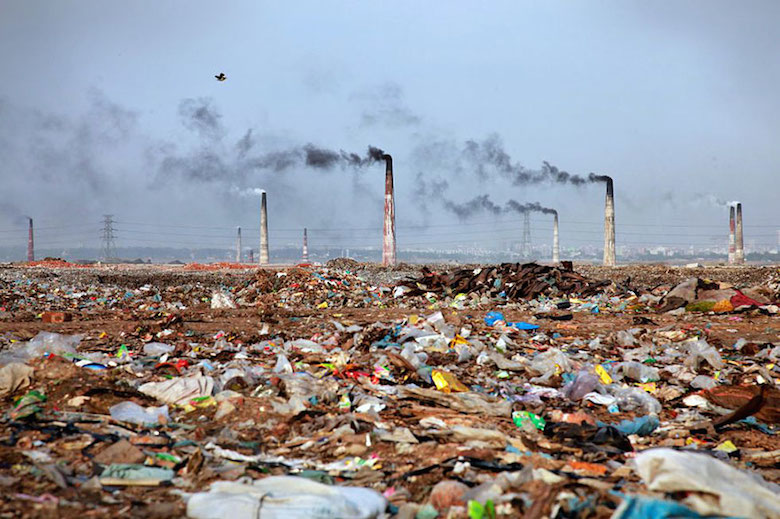
What happens to plastic waste if it is not recycled? If plastic waste isn’t recycled, it usually ends up in landfills, the environment, or the ocean, where it causes long- term harm. Plastics take hundreds of years to break down, so they keep building up over time. Plastics that aren't biodegradable stay in landfills for centuries. As the microplastics break down, chemicals can leach into the soil and contaminate crops and groundwater/ aquifers. Landfills take up space and destroy natural habitats. It pollutes oceans, rivers, and lakes. Wind and rain wash plastics into water systems. About 8 million tons of plastic enter the ocean each year. Marine animals like turtles, fish, and seabirds mistake plastic for food, causing injury or death. Microplastics pollute drinking water. In many places plastic is even burned instead of recycled. Burning plastic releases toxins into the air like dioxins, methane, and carbon monoxide. This contributes to climate change, smog, and respiratory problems. It harms wildlife by entangling animals in plastic items similar to bags, loops, and fishing gear. Eating plastic blocks their stomachs, causing starvation. Plastic pollution destroys habitats like coral reefs and beaches.
Where do our recyclables go? We put our recyclables in a bin, usually blue. They don’t immediately become new products, they go through several steps before they turn into something useful again. First they are picked up by a garbage truck specifically for recycling, and it goes to a specific facility called Material Recovery Facility. They are then turned into new products like bottles, paper, metal, cans, and clothing.
What can be converted into Recycling? Recycling can create many new things, in fact you can create new items using recycled materials. This includes book marks, storage boxes or organizers recycled from cardboard, paper and boxes. Planters or flower pots, bird feeders, and jewelry holders form plastics. Tin can lanterns, pencil holders and plant pots. From organic waste such as leaves, fruit peels, egg shells, rotten or food scraps can be recycled into compost and fertilizers. Glass jars can be used as vases or candle holders, storage jars for snacks, buttons and craft supplies. As well as home decor, they can be painted or wrapped.
How does waste harm the environment? Waste harms the environment in many ways, which are pollution, resource loss, and harm to wildlife and humans. When waste is not managed properly, similar to dumping somewhere, burning, or materials left in landfills, it causes long term damage to ecosystems, air. Water, and soil. - Land Pollution: Garbage builds up in landfills and takes up huge areas of land. Toxic chemicals from plastics\, batteries\, and electronics can leak into soil\, making it unsafe for plants and animals. Non biodegradable waste\, like plastic\, can remain for hundreds of years\, preventing new plants from growing. That equals less oxygen\, and resources. - Water Pollution: Waste dumped into rivers\, lakes\, or oceans pollutes water bodies. Plastic waste breaks down into microplastics that harm fish\, sea birds\, and other marine life. Chemicals and heavy metals from waste seep into the groundwater\, making drinking water unsafe and harmful to our anatomy. - Air Pollution: Burning waste releases toxic gases such as carbon monoxide\, and methane. These gases cause air pollution and contribute to climate change by trapping heat in the atmosphere. People living near dumps or burning sites often suffer from asthma\, lung disease\, and other health issues. - Harm to Wildlife: Animals often mistake plastic for food\, which can block their digestive system and cause death. Any sort of net\, rings\, or other plastic debris can injure or even kill marine and land animals. Waste pollution disrupts natural habitats\, leading to the loss of biodiversity.
What types of materials can be recycled into Oil? Several types of plastics can be recycled and converted into oil. This process is called pyrolysis, meaning heating plastics without oxygen. Shampoo bottles, milk jugs, detergent bottles, all have high density polyethylene (HDPE). This is a thermoplastic polymer which comes from petroleum, it is packed together which is why it has a higher density. Petroleum is a type of fuel that is actually converted into gasoline, diesel, jet fluid, and heating oil. Actually petroleum is the main reason why plastics can become oil. Plastic wrappers, bags, packaging, have low density polyethylene (LDPE). So they are one of the easiest plastics to convert into oil, because they break down smoothly. Yogurt containers, bottle caps, straws, have polypropylene that gives good oil output during the pyrolysis process. Polystyrene could be broken down into oil, but it releases more impurities. This is found in styrofoam, disposable cups, and packing peanuts.
What plastics can NOT become oil? Not all plastics can safely be turned into oil. Some release dangerous chemicals when heated, others don’t break down. Polyvinyl Chloride (PVC) contains chlorine, which turns into toxic gases like hydrochloric acid. Extremely dangerous for the environment. Polyethylene Terephthalate (PET) also isn’t recommended because it is used in water bottles and soda bottles. It can technically be processed, but it produces low oil yield and lots of unwanted by-products. Polycarbonate (PC) is found in reusable bottles and some electronics. It contains BPA which forms toxic residues during heating. Plastics with mixed materials similar to metal coated chip bags, laminated pouches, plastics attached to paper or foil all contaminate the process and lower the oil quality. Lastly plastics with hazardous additives like coloured plastics, flame-retardant plastics and medical waste plastics release toxins, chemicals or ashes during heating.
What chemical changes happen during Pyrolysis? During the pyrolysis process, waste materials such as plastics or rubber are heated in a sealed chamber without any oxygen, so they do not burn. The heat breaks long chains of molecules (carbon and hydrogen) into smaller pieces. This creates very reactive pieces called free radicals, which quickly join back together in new ways to form different fuels. The process makes three main products which are gases like methane and ethane, liquid oil that can be used as fuel, and a solid leftover called char that is mostly carbon. Since there’s no oxygen, the material doesn’t turn into carbon dioxide, and water. Most of the carbon stays in a form that can be used as fuel.
Which type of plastics is the best for this process? The best type of plastic for the recycle-to-oil process are hydrocarbon- based plastics because they are almost entirely made of carbon and hydrogen, similar to crude oil. These plastics break down easily during pyrolysis and produce high quality synthetic oils. The most suitable oils are: -High Density Polyethylene #2: Produces a diesel like oil and has a high energy output -Low Density Polyethylene #4: Commonly used in plastic bags and films produces a high oil yield -Polystyrene #5: Creates fuel-grade oil with strong energy value -Polystyrene #6: Breaks down into gasoline type oils. They contain few additives and don’t release toxic chemicals when heated without oxygen. How can the recycle-to-oil process help reduce landfill waste, or pollution? The recycle-to-oil process helps reduce landfill waste by dividing non-recyclables away from landfills and turning them into useful fuel instead. Plastics that would normally take hundreds of years to break down will be reused as energy.
However this process also reduces pollution by lowering the amount of plastic entering oceans and waterways. Reducing the burning of waste will decrease the release of toxic gases. Lowering greenhouse gas emissions compared to traditional waste disposal which sits in landfills waiting to be decomposed. Reduces the need for new fossil fuels by creating synthetic oil from waste. Therefore this process helps protect the environment by turning harmful plastic waste into a valuable resource.
Can this decrease our reliance on fossil fuels? Yes, recycle-to-oil technology can reduce our reliance on fossil fuels, yet it can’t completely replace them. By converting plastic waste into synthetic oil, this process provides an alternative fuel source that can be used for transportation, electricity generation, or industrial energy. This reduces the need to extract new crude oil from the ground. However, because the supply of plastic waste is limited, recycle-to-oil is best used as an addition to renewable energy, not a complete replacement yet.
Are there any environmental risks during/after this process? There are some environmental risks if the process is not properly controlled. During pyrolysis, certain plastics can release toxic gases if they are not sorted correctly. Poorly created plants may also release air pollutants and leave solid residues that must be disposed of safely. After the process, the oil still produces carbon emissions when burned. However, when filters are used, this process produces fewer pollutants than burning or placing plastics into landfills.
How can communities benefit from the recycle-to-oil procedure? Communities can benefit in several ways. Recycle-to-oil facilities reduce the amount of plastics sent to landfills. This helps keep neighborhoods cleaner and healthier. They can create local jobs in waste collection, plant operation, and maintenance. The fuel produced can also help support power local infrastructure, lowering energy costs. Overall, this technology supports environmental sustainability, economic growth, and improved waste management in communities.
How will this impact the future? Recycle-to-oil technology could play an important role in the future by helping manage the growing problem of plastic waste. As plastic production increases, this process allows us to convert waste into a useful source instead of letting it pollute the Earth. In the future, recycle- to-oil plants could help us lower pollution or at least pause the increase of pollution, reduce landfill use, lower pollution, and conserve natural resources. It is not a complete cure to pollution but a sustainable management system.
Are there any other countries involved in this technology? Several countries are researching or already using recycle-to-oil and pyrolysis technology. A few countries that are involved include Canada and the United States which have established research facilities and pilot plants which is basically a small test facility used to experiment with, before the full power plant is built. The United Kingdom and Spain are both developed commercial plastic-to-oil plants that operate on a larger scale. In Japan they use advanced plastic recycling and fuel recovery systems to manage plastic waste effectively. Germany and the Netherlands focus on waste-to-energy innovations which includes pyrolysis and other sustainable technologies.
What are the challenges in setting up Pyrolysis? Setting up pyrolysis contains multiple challenges including:
1. High startup cost for equipment and safety systems
2. Strict sorting requirements\, since some plastics release toxic gases
3. Environment regulations that must be followed carefully
4. Energy use\, because the process requires high temperatures
5. Public concern\, as some people worry about emissions or safety
Pyrolysis must be carefully designed and monitored to be effective and environmentally responsible
Data


Conclusion
The research supports the hypothesis that plastic waste can be removed into oil through thermal processes such as pyrolysis. Scientific evidence shows that heating plastic without oxygen breaks long polymer chains into smaller hydrocarbon molecules, which can condense into liquid.
This confirms that plastic is a valuable resource instead of just “waste.” Since plastics originate from petroleum, they still contain chemical energy that can be recovered.
However, while the process is scientifically effective, there are significant ideas that block this from happening. High energy requirements, expensive equipment, and environmental concerns. Therefore, plastic-to-oil conversion is best viewed as a recycling method instead of the traditional route.
Overall, the research demonstrates that chemical recycling technologies have the potential to reduce landfill waste and recover useful resources, yet further development is still necessary to make them safer, cheaper, and more efficient.
Citations
- https://www.britannica.com/science/recycling
- https://www.boisestate.edu/cobe/blog/2023/07/recycling-is-it-as-good-as-we-think/
- https://www.investopedia.com/terms/p/petroleum.asp
- https://www.sciencedirect.com/topics/chemical-engineering/high-density-polyethylenes
- https://www.sciencedirect.com/topics/chemical-engineering/high-density-polyethylenes
- https://recyclewest.ca/summer-safety-tips-for-handling-hazardous-waste-in-industrial-settings/
- https://www.denveroil.co/what-types-of-oil-can-be-recycled
- https://www.piedmontplastics.com/blog/best-plastic-oil-gas
- https://en.wikipedia.org/wiki/Pyrolysis
- https://en.wikipedia.org/wiki/Plastic
- https://www.anl.gov/article/plastic-production-via-advanced-recycling-lowers-ghg-emissions
- https://kleanindustries.com/projects/plastic-pyrolysis/
- https://arxiv.org/abs/2505.16513?utm_
- https://arxiv.org/abs/2305.16350?utm
- https://pyrolysisunit.com/a-review-on-pyrolysis-of-plastic-wastes/?utm
- https://www.edmonton.ca/programs_services/garbage_waste/materials-recovery-facility
Images:
- https://sagehillbottledepot.ca/recycled-item-usage-what-do-they-get-turned-into-when-recycled/
- https://ca.pinterest.com/pin/695524736234357135/
- https://depositphotos.com/photos/water-pollution.html
- https://www.vecteezy.com/free-photos/air-pollution
- https://canadiangeographic.ca/articles/do-not-disturb-practicing-ethical-wildlife-photography/
- https://us.envguide.com/number-under-the-plastic-bottle/
- https://stock.adobe.com/search?k=pyrolysis
- https://www.hlc-metalparts.com/news/what-is-ldpe-plastic-85157227.html
- https://somewang.com/blog/what-type-of-plastic-is-polystyrene-understanding-its-uses-and-properties/
- https://collegedunia.com/exams/polyvinyl-chloride-physics-articleid-7446
- https://ud-machine.com/blog/polyethylene-terephthalate-uses/
- https://pom-material.com/blog/what-is-polycarbonate-plastic-made-of/
- https://www.britannica.com/science/plastic
- https://www.shutterstock.com/search/biochar?page=2&dd_referrer=https%3A%2F%2Fsearch.brave.com%2F
- https://www.istockphoto.com/photos/synthetic-oil
- https://www.change.org/topic/clean-up-our-neighborhood-en-us
- https://www.sourgum.com/the-sour-scoop/11-rewarding-careers-in-the-waste-industry/
- https://pixabay.com/images/search/cost/
- https://realpython.com/sorting-algorithms-python/
- https://digitalsynopsis.com/buzz/environmental-pollution-pictures-earth-day/
- https://digitalsynopsis.com/wp-content/uploads/2015/05/environmental-pollution-pictures-earth-day-21.jpg
- https://cer-rec.gc.ca/en/data-analysis/canada-energy-future/2021energydemand/
- https://www.istockphoto.com/photos/upcycling
- https://www.istockphoto.com/illustrations/upcycling
Acknowledgement
I would like to express my sincere gratitude to my CYSF guidance teacher, Mr Chiu for his leadership, feedback, and support throughout this project. Also I would like to thank my parents for their encouragement and motivation, especially my dad who works as an employee at BSG Engineering.
Based on that I would also acknowledge Big Horn and BSG Engineering for inspiring my interest in engineering and specifically in this topic, how its sustainable, and innovative solutions to environmental problems. Additionally, I would for sure thank the educational resources, books, and articles that provided me with the valuable information that supported my research.