
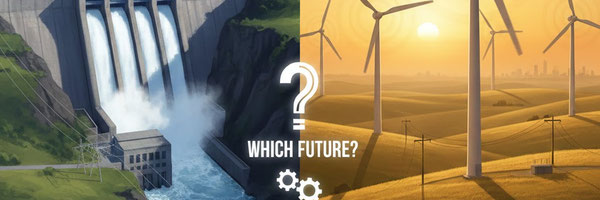
Hydro energy vs Wind energy
Gurshan Nanreh
Muriel Clayton Middle School
Grade 7
Presentation
Problem
Problem statement:
Hydro energy vs wind energy The demand and need for clean and reliable energy is rising globally at an immense rate, due to the reason that the population of humans is rising rapidly and the earth is going through an intense period of climate change. It is well known that fossil fuel is the biggest contributor to air pollution and the release of greenhouse gases, which increases the rate of global warming, thereby harming the environment in the worst possible way. As a result, most nations around the world have turned to different renewable sources of energy with the aim of decreasing their level of carbon footprint in order to guarantee themselves a stable source of energy in the future. Hydro energy and wind energy stand among the most popular renewable energy sources yet both energy sources face challenges. Hydro energy operates through continuous water flow, which becomes disrupted when droughts and changing rainfall patterns and environmental damage to aquatic ecosystems occur. Wind energy depends on weather conditions and wind patterns, which display unpredictable behavior that differs across different locations. The two sources of energy are clean and renewable; they differ by their operational performance, power generation capability, waste production, and environmental impact; besides, they differ by the accessibility of their systems. Knowledge about the positives and negatives of hydro energy, apart from knowledge about the positives and negatives of wind energy, is quite essential in making proper judgments about sustainable power generation. Comparing these energy sources can help better learn which of the two options is more viable to comply with meeting energy requirements while conserving the environment for long-term sustainability.
Method
When I started doing this project. I was confused, how to start this research project then my father guided me that we should use proper method and then we need to follow it step by step.
First, I found the topics about which I was needed to collet the information I googled the topics of research about hydro energy vs wind energy. I searched many websites. Eventually I selected the following topics: 1. Impact on the environment and ecosystem. 2. Public health and community (social and policy factors. 3. Life cycle global warming emissions. 4. Cost and economic analysis. 5. Sustainability & Future Use (stability and reliability). After searching these topics I started exploring different websites by putting keywords of above topics and I searched the information for hydro energy and wind energy. I pasted the links of the websites searched by me in the topic citations. I read all the data and tried to write all the information in my own language.
Research
1. Impact on Environment and Ecosystem
Once a dam is built it creates distinct layers in the water which make the river downstream colder in summer and warmer in winter which can confuse or kill native fish species. These become the reason for the oxygen sink. In the deep hypolimnion, there is no contact with air and no light for photosynthesis, due to this organic matter sinking to the bottom and decomposing resulting in the destruction of the local fishes' habitats, or obstructing their natural waterway. This can lead to a decline in fish populations, particularly for anadromous species like salmon and steelhead trout, which migrate from the ocean to freshwater rivers to spawn. Fish ladders and other mitigation measures can help, but they are often not fully effective and can be costly to implement. Changes in river flow patterns can also affect vegetation along the riverbanks. The reduction in flooding can lead to the encroachment of terrestrial vegetation into the riparian zone, reducing habitat for aquatic organisms and altering the overall ecosystem structure. Wind energy helps decrease climate change that humans create, but wind turbines create danger for wildlife especially birds and bats. Many birds and some bats die after colliding with turbine blades. Some bats also die from barotrauma, which happens when a drop in air pressure damages their lungs. A 10-year study in Ontario showed that each wind turbine kills approximately 5 birds and 12 bats every year. The province has 2,577 turbines which results in approximately 12,885 birds and 30,924 bats being killed every year. Wind turbines create multiple effects on animal populations through their impact on animal habitats and animal behavior. Animals face danger because their essential resources which include food and safe locations and breeding grounds become unavailable. Birds must navigate through roads which connect to the wind turbines. Migrating birds need to discover alternative migration paths. When animals face difficulties in locating their partners and nesting territories their populations will experience declines. This situation will lead to decreased biodiversity while specific species face increased danger of extinction. A global review also examined how species traits and turbine features influence collision rates. Researchers evaluated the susceptibility of 9538 bird species and 888 bat species to danger throughout the globe. Bird collision risk depends on three factors which include migratory strategy and dispersal distance and habitat associations, while bat risk is determined by their dispersal distance. Larger turbines create more collisions, but using fewer big turbines results in decreased collision risk for each energy output unit, yet the largest turbines cause increased bat deaths. High-risk areas include major migration corridors where many vulnerable species travel. The impact of wind turbines on wildlife, especially birds and bats, has been well documented and studied. A recent review by the National Wind Coordinating Committee (NWCC) of peer-reviewed research found evidence of bird and bat deaths from collisions with wind turbines. It also noted deaths due to changes in air pressure caused by the spinning turbines and from habitat disruption. Offshore wind turbines can affect marine birds, but like onshore wind turbines, the bird deaths linked to offshore wind are low. Wind farms offshore will also influence fish and other marine wildlife. Some studies suggest that turbines might actually boost fish populations by serving as artificial reefs. The impact will differ from one location to another. Proper research and monitoring systems are necessary for each offshore wind facility.
2.Public health and community( social and policy factors)
Social sustainability is made possible through the people factor in energy production. The social effects of hydropower tend to be substantial. Large dams displace people, alter the economic structure of the affected population, and destroy cultural heritage sites, as noted in a comprehensive sustainability analysis. Its benefits include flood protection and irrigation services. However, this is done at a tremendous social cost. Canadian Hydro Beyond points out that such effects can easily outweigh the benefits in a highly populated region. Wind power also faces challenges but is ahead in the social sustainability category.One of the major health issues related to dam construction is the displacement of people living in the dam area. When a dam is constructed, it usually involves the displacement of people from their places of residence. Displacement from one’s place of residence is likely to cause a variety of health effects. These effects include stress, lack of social support systems, and a lack of access to healthcare services. In addition, the living conditions during the period of displacement may not be conducive for health since people may not have access to clean water.Additionally, the development of reservoirs as a result of the construction of the dam may lead to environmental impacts that may affect the health of the public at large. This is due to the flooding of the area, which may lead to the development of stagnant water bodies that may harbor mosquitoes, thus spreading diseases such as malaria and dengue fever among the population living in the area. Further, the change of the flow of water as a result of the construction of the dam may alter the habitat of aquatic life, thus affecting the health of the public through the food chain. Sound and visual impact are the main public health and community concerns tied to operating wind turbines. Most of the sound from wind turbines comes from the movement of turbine blades through the air. There is also sound from the turbine itself. Overall sound levels depend on the turbine design and wind speed. Some residents near wind facilities have raised concerns about sound and vibration, but studies funded by industry and government in Canada and Australia found that these issues do not harm public health. Still, it is essential for wind turbine developers to address community concerns seriously. They should follow best practices for siting turbines and start open conversations with local residents. Additionally, advances in technology, such as reducing blade surface flaws and using materials that absorb sound, can help lessen wind turbine noise. In certain lighting conditions, wind turbines can cause what is known as shadow flicker. This annoyance can be reduced through careful placement, by planting trees, or by installing window awnings, or by limiting wind turbine operations during certain lighting situations. The Federal Aviation Administration (FAA) requires that large wind turbines, like all structures over 200 feet tall, have white or red lights for aviation safety. However, the FAA recently decided that as long as there are no gaps in lighting of more than half a mile, it’s not necessary to light every tower in a multi-turbine wind project. Daytime lighting is not needed as long as the turbines are painted white. Regarding aesthetics, wind turbines can provoke strong opinions. Some people view them as elegant sculptures, while others see them as eyesores that detract from the natural landscape. Whether a community accepts a changed skyline in exchange for cleaner power should be determined through open public discussions.
3. Life-cycle global warming emissions
While hydroelectric power is often touted as a clean energy source, dams can contribute to greenhouse gas emissions, particularly in tropical regions. Methane Production The decomposition of organic matter in dam reservoirs can produce significant amounts of methane, a potent greenhouse gas. This is particularly true in tropical reservoirs where warm temperatures and abundant organic matter promote anaerobic decomposition. Studies have shown that some large reservoirs can emit more greenhouse gases than fossil fuel power plants. The greatest advantage of wind power is its ability to substitute the consumption of fossil fuels, thereby reducing the emission of greenhouse gases. Unlike coal, oil, and gas-fired power stations, wind power stations do not burn fuel to produce electricity. As a result, they emit very little carbon dioxide (CO2), which is the major contributor to global warming. Other harmful gases that contribute to acid rain and air pollution, like sulfur dioxide (SO2) and nitrogen oxides (NOx), are also not released by wind power. With the help of wind power, we can significantly reduce our carbon emissions and combat climate change. Improved Air and Water Quality The burning of fossil fuels emits different kinds of pollutants into the atmosphere. Wind energy, on the other hand, is a clean form of energy that does not emit any pollutants into the atmosphere. This makes the air cleaner, resulting in a reduction in respiratory diseases, cases of smog, and a healthier environment for both human beings and animals. Wind energy also does away with the need for cooling systems that use a lot of water, which is a precious resource that can lead to water scarcity in arid areas.
4. Cost and economic analysis
Breaking Down Capital Expenditures (CAPEX) in hydropower project costs Capital Expenditures (CAPEX) are the costs incurred to move a hydropower project from the drawing board to actual implementation. This is the highest component of the cost of a hydropower project. The costs are very much and range from $1,050 to $7,650 per kilowatt for big hydropower projects and from $1,300 to $8,000 per kilowatt for small projects. When a project is developed on an existing non-powered dam, the cost can be as less as $500 per kilowatt because the basic dam infrastructure is already in place. The 2024 Annual Technology Baseline indicates that the cost for retrofitting Non-Powered Dams in the U.S. varies between $3,045 and $20,043 per kilowatt, while building from scratch (New Stream-Reach Development) is higher cost at $6,574 to $8,611 per kilowatt. CAPEX is affected by two broad categories: civil works (dams, tunnels, and powerhouses) and electro-mechanical equipment (turbines, generators, and transformers). In the case of large schemes, civil works are the most costly. In the case of smaller schemes, the advanced machinery may be costlier per kilowatt. According to the 2022 report by IRENA, the global weighted average installed cost increased by 25% in one year due to cost overruns, supply chain challenges, and inflation. However, after construction, Operations and Maintenance costs start. Operations and Maintenance costs include all costs involved in maintaining the facility and keeping it in working condition. In most cases, Operations and Maintenance costs lie between 1% and 4% of the original installed costs of the facility annually. This equates to $5 million to $20 million annually for a facility valued at $500 million. Size matters Since Operations and Maintenance costs lie between 2% and 2.5% of CAPEX costs, large-scale projects enjoy economies of scale. However, small-scale projects do not enjoy economies of scale and therefore have higher Operations and Maintenance costs, ranging from 1% to 6%. While hydropower plants have a lifespan of 50-100 years and more, infrastructure aging requires more frequent maintenance. For a hydropower plant to remain economically sustainable, it must factor in its long-term maintenance requirements.
5. Sustainability & Future Use( stability and reliability)
Sustainability starts with environmental issues, and in this regard, the two energy sources are different. Hydropower, especially big-scale projects like dam construction, has the potential to cause dangers to the environment. According to the U.S. EIA, building dams affects river ecosystems by preventing fish migration, raising water temperatures, and flooding natural habitats. In a more detailed view, a 2017 study printed on ScienceDaily considers hydropower the most dangerous of the “green” energy sources because of the damage of biologically diverse habitats, especially in tropical rainforests. More than this, the reservoirs created by dams can produce methane gas, a strong greenhouse gas that affects the carbon-neutral nature of hydropower, as reported in a lifecycle assessment review (ScienceDirect, 2022). Although wind turbines can be dangerous to birds, killing up to 328,000 per year in the north part of America, From Innovation News Network, such effects are usually discussed. Actually wind turbines land can't be used for other purposes, such as agriculture or grazing, reducing habitat damage. The assessment in China indicates that wind energy could have negative impacts in terms of categories such as acidification and human toxicity than hydropower. On a global scale, large dams create more damage to inhabitants than wind energy. The second important thing to discuss is the use of land efficiently. According to Our World in Data, the land use intensity for onshore wind is 0.5 to 1 m² per MWh of electricity made, while for hydropower, it is 1 to 10 m² per MWh, with some projects going to 1,000 m² per MWh because of floods. The lifecycle assessment by the UNECE states this, adding that the variation in hydropower is because of the size of the reservoir, while the bigger land area of wind farms (8 to 184 m² per MWh) still allows for joint use. Climate change impacts this issue. As IPCC’s SRREN report, the technical potential for hydropower could change thoroughly depending on climate change effects, while wind energy potential remains the same, although it could change in terms of distribution. Dependence on water resources makes hydropower more favourable to droughts, which could affect its sustainability in the long run. Financial sustainability is a fundamental aspect of sustainability, and in this case, wind power usually shows the way. According to the International Renewable Energy Agency (IRENA), in 2023, the global weighted average levelized cost of energy (LCOE) for onshore wind was $39/MWh, while for hydropower, it was $60/MWh. Lazard’s LCOE+ study assists this, indicating that wind power remains competitive even when interest rates are much. The large maintenance expenses of hydropower are compensated for by the high capital expenditures involved in constructing dams, which cost billions and are therefore less adaptable in a dynamic energy sector. Employment generation is another area where wind power is on the top. According to the EIA, wind power capacity grew by 10 GW in the U.S. in 2019, which shows strong employment generation in the construction and maintenance sectors. Hydropower, with fewer new large projects on the drawing board, gives small opportunities for new job openings. Nevertheless, the dispatchability of hydropower and its ability to create electricity on demand—provides grid stability, which could obviate the requirement for expensive backup power systems, as Wind Cycle points out.
Data
In my study about hydro energy vs wind energy, I explored different websites where I verified and compared the data. I discussed the following topic on the basis of my research. 1. Impact on the environment and ecosystem. 2. Public health and community (social and policy factors. 3. Life cycle global warming emissions. 4. Cost and economic analysis. 5. Sustainability & Future Use (stability and reliability). I compared the following data: Cost efficiency Environment impact Reliability Land use
1. Cost Efficiency
I compared the cost efficiency which is measured by LCOE (Levelized cost of energy)
| Metric | Wind energy | Hydro energy |
|---|---|---|
| Average LCOE | \~$45-$65 CAD | \~$60-$90 CAD |
| Upfront cost | Moderate fast to build | Very high slow to build |
| Operating cost | very low as wind is free | extremely low (once made) |
| Lasting years | 20-25 years | 50-100 years |
2. Environment impact
Wind energy
1. No water use\, no greenhouse gas emissions. 2. It impacts the population of bats and birds. 3. Visual pollution or noise for nearby residents.
Hydro energy
1. No air pollution. Reservoirs can be used for irrigation and flood control. 2. Destroy habitats of animals due to installation on massive areas of land. 3. Decompose plants due to production of CH4.
3.Stability and reliability
Wind energy
1. It is dispatchable means demand can be matched by turning off and on the water. 2. Its capacity is 40% to 80% (high capacity).
Hydro energy
1. It is intermittent. It only works when the wind blows. 2. Its capacity is 25% to 45% which means lower capacity.
4. Land use
Hydro Energy
1. 1 to 10m²/mwh. 2. Land can't be used for other purposes.
Wind Energy
1. 0.5 to 1m²/mwh 2. Land can be used for growing crops or grazing cattles.
I compared the data of 2024 Annual technology the cost of installing dams in the U.S. I have read the report of IRENA and their costs of installation. We compared the world's data that despites land use intensity for offshore wind in 0.5 to 1²/mwh of electricity made while for hydro power, it is 1 to 10m²/mwh.
Conclusion
Both hydropower and wind energy are essential for a renewable future, but sustainability requires a more complex approach. Wind energy, with a less adverse impact on the environment, economic viability, and less social disturbance, tends to be more compatible with long-term objectives.
Citations
https://gocontractor.com/resource/hydropower-impact-environment-canada/ https://royalsocietypublishing.org/rspb/article/284/1862/20170829/84636/Bird-and-bat-species-global-vulnerability-to https://letstalkscience.ca/educational-resources/stem-explained/how-do-wind-farms-affect-birds-and-bats https://agupubs.onlinelibrary.wiley.com/doi/full/10.1029/2023RG000819 https://www.ucs.org/resources/environmental-impacts-wind-power#references https://www.hydropower.org/factsheets/greenhouse-gas-emissions https://www.hydropower.org/blog/carbon-emissions-from-hydropower-reservoirs-facts-and-myths https://iere.org/how-does-wind-energy-help-the-environment/ https://energy-solutions.co/articles/sub/offshore-wind-economics-2026 https://www.energy.gov/eere/wind/windexchange/economics https://docs.nrel.gov/docs/fy25osti/91775.pdf https://fdehydro.com/hydropower-project-costs/#:~:text=How%20does%20hydropower's%20cost%20compare,in%20the%20clean%20energy%20transition https://www.carboeurope.org/hydropower-vs-wind-energy/ https://diversedaily.com/the-health-impacts-of-dam-construction-and-operation-on-local-communities/
Acknowledgement
Mr. Dan New-Vice principal He introduced this science competition to me.
I would especially like to express my thanks to my Mother and Father, who supported me throughout this entire project. I feel very lucky to have them as my parents. When I discussed about this competition to my parents and I was so nervous but due to my parents encouragement, I got confidence to come forward and do my best.