
The wow factors of the fruit batteries
Evanna Cheryl Joe
Northern Lights School
Grade 5
Presentation
Hypothesis
Dose the thickness and concentration of fruit pulp affect the voltage produced by fruit batteries, apart from acidity?
- Fruit acidity influences voltage production.
- Pulp thickness and concentration may also change how much voltage is generated.
Research
My research :
- \~ 20%- 50% of fruit pulp is wasted in fruit juice factories across North America
- I learned about anodes and cathodes
- Natural fruit juice has water content and water takes out electricity from the fruit source
- Different colored LEDs need different amounts of voltage to light up
Variables
- The experiment uses different types of fruit pulp:
- These fruit pulps are the independent variables (Pulp) as they are the factors being changed.
- Each type of pulp may affect the chemical reaction in the fruit battery differently.
- The dependent variable (V) is the voltage produced by each fruit battery.
- Voltage is measured to see how much electrical energy each fruit can generate.
- By comparing the voltage results, the experiment shows how different fruits affect electricity production.
- Factors such as acidity and composition of the fruit may influence the voltage output.
Procedure
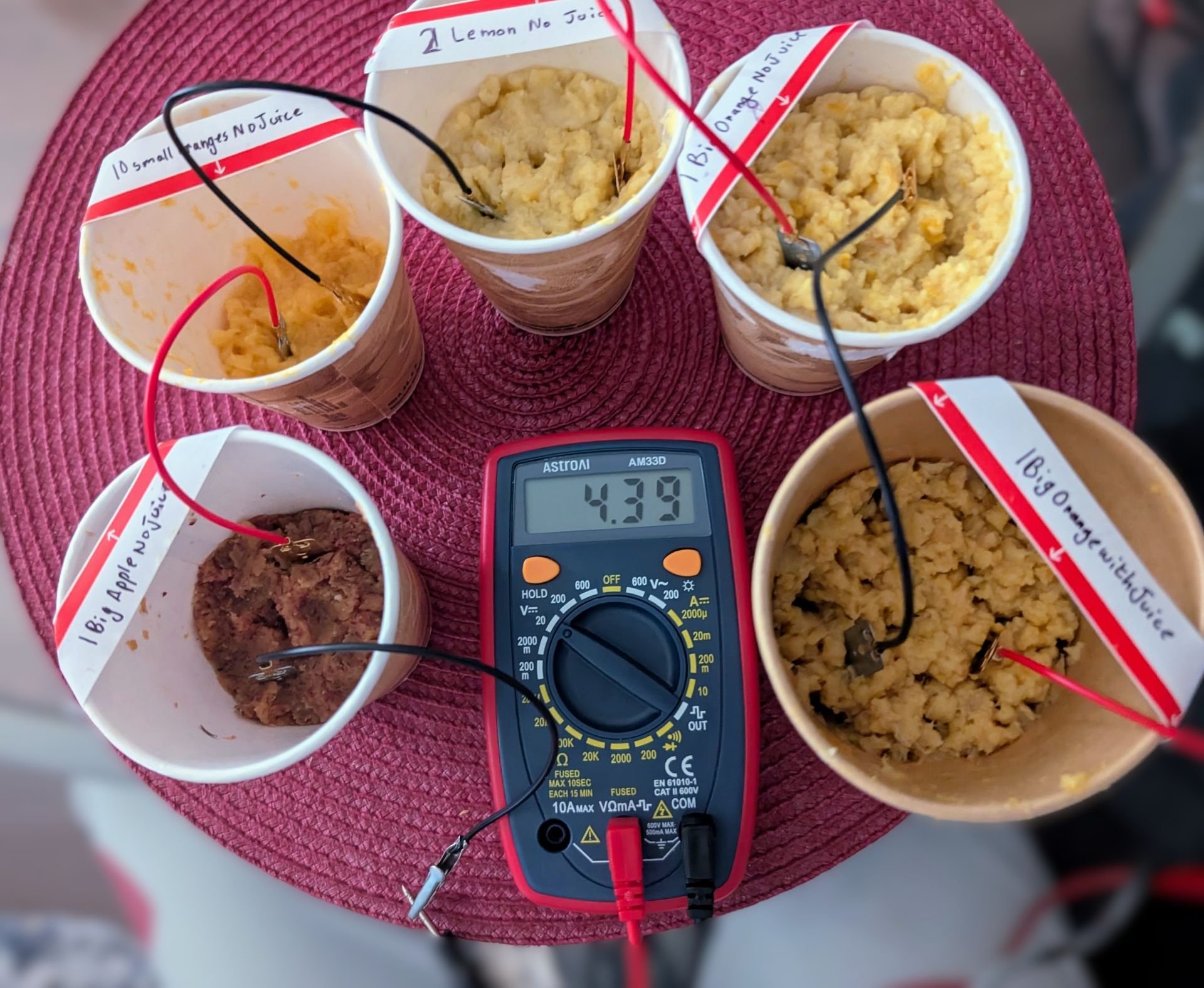
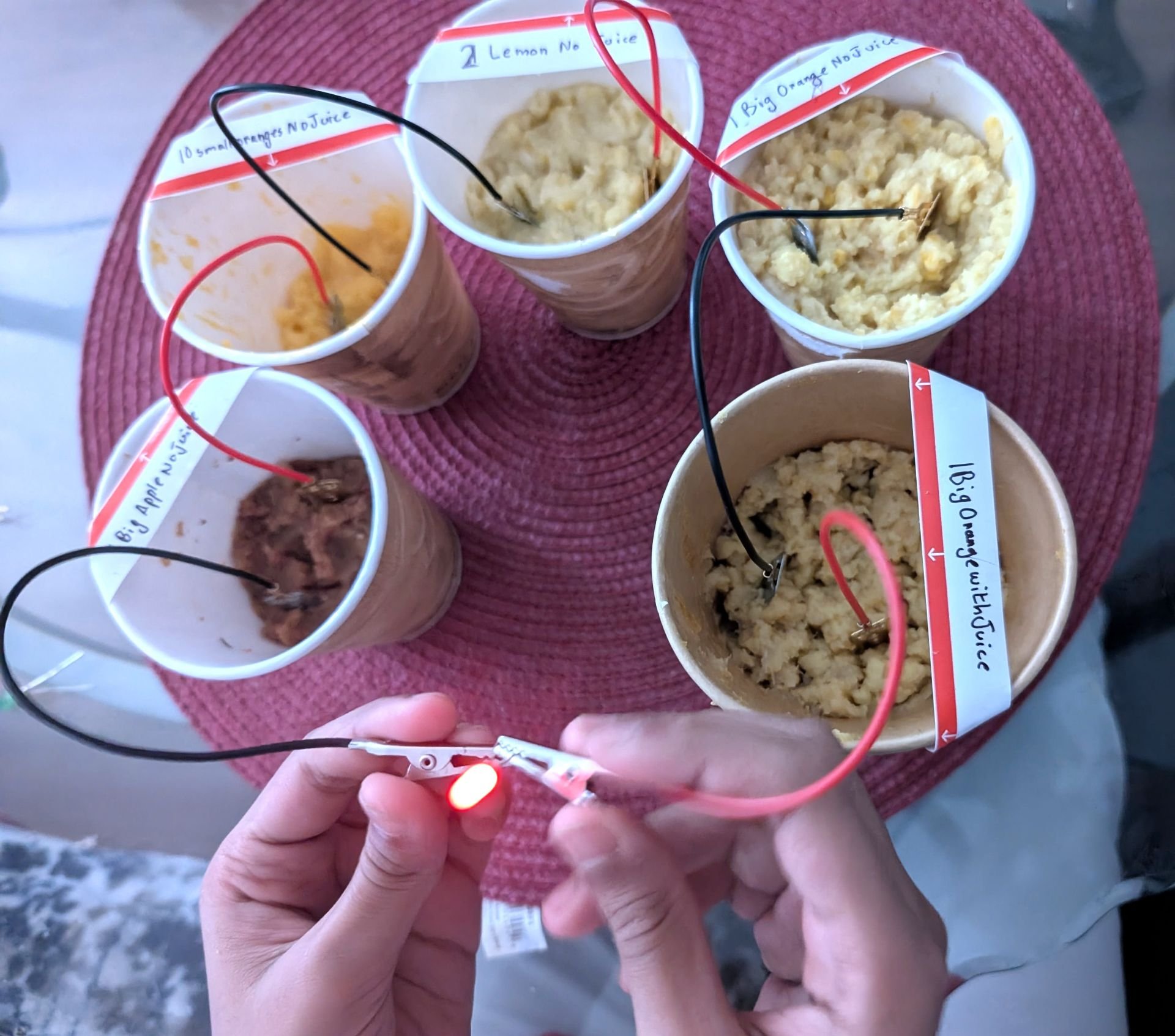
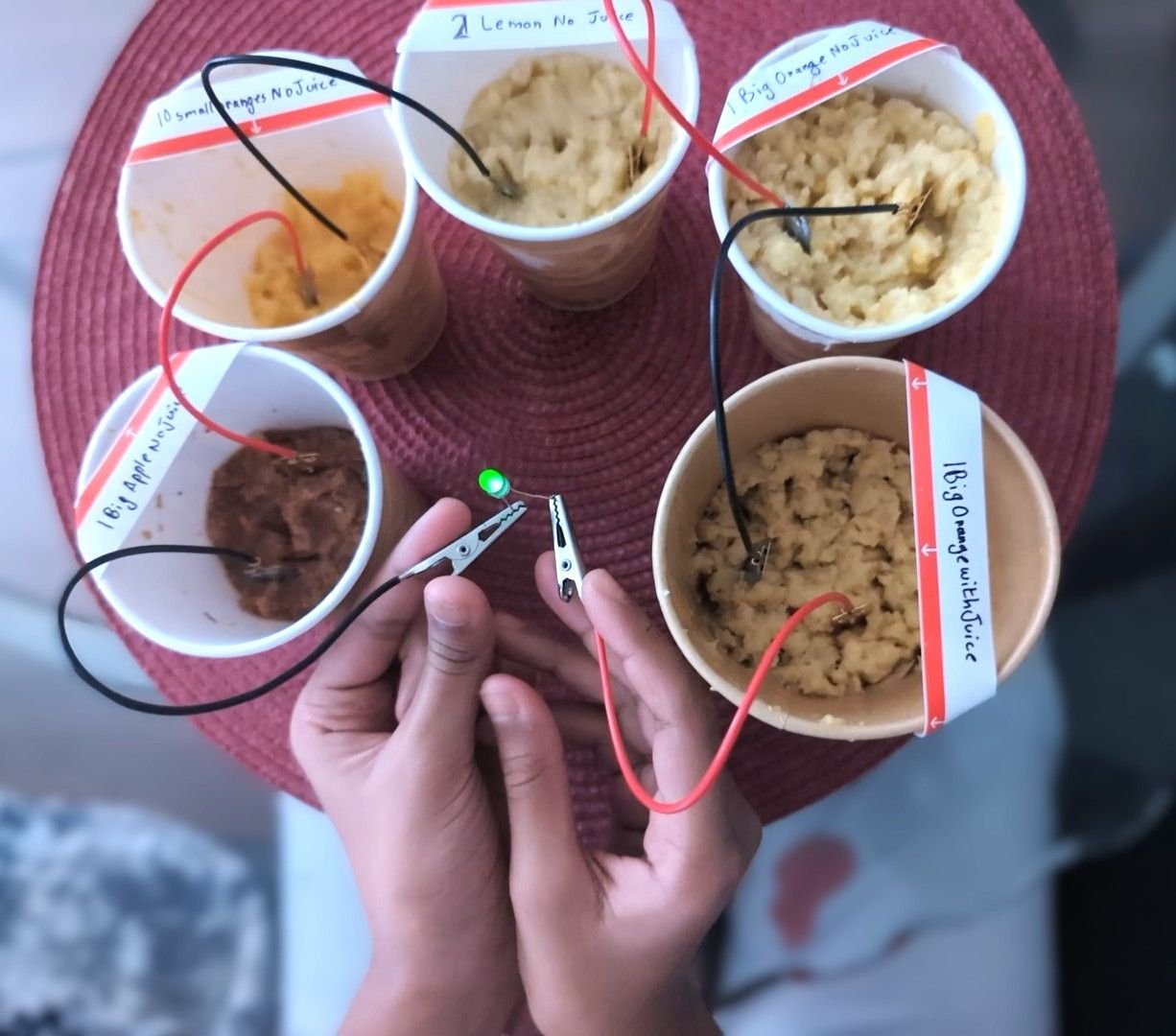
1. Collect different fruit pulps (apple\, lemon\, orange\, and orange with added juice).
2. Insert zinc and copper electrodes into each pulp sample.
3. Connect the electrodes to a multimeter using wires - black probe to COM terminal and red probe to the voltage (V) terminal.
4. Measure and record the voltage for each sample.
5. Repeat trials to ensure accuracy.
6. Connect multiple fruit cells in series by connecting the copper electrode of one cell to the zinc electrode of the next cell.
7. Connect the free zinc end to the black (COM) probe and the free copper end to the red (V) probe.
8. Measure and record the total combined voltage of the fruit batteries connected in series.
9. Connect the red LED - shorter leg (cathode) to the negative (black)side and longer leg (anode) to the positive (red) side.
Test the ability to power both red and green LEDs
Observations
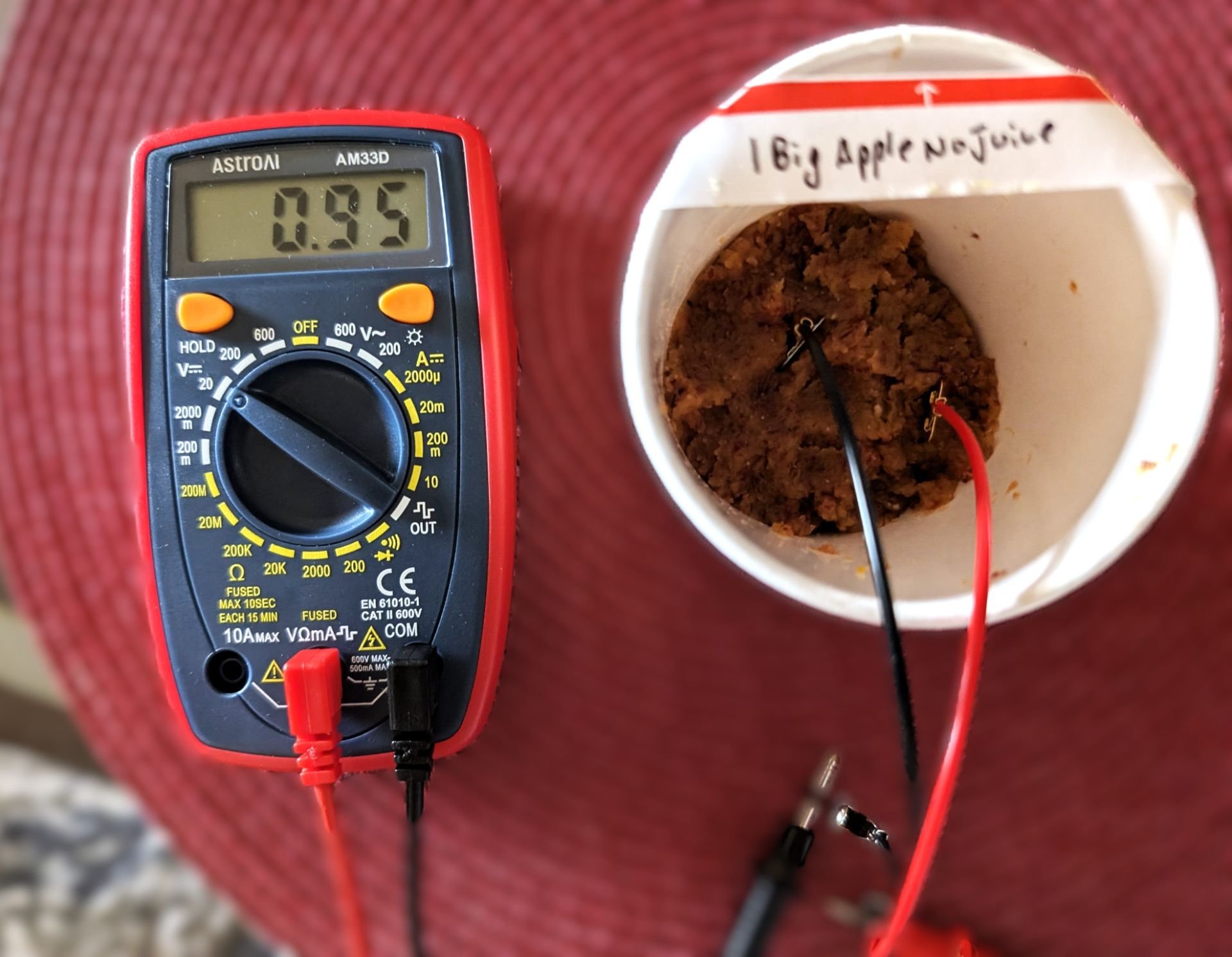
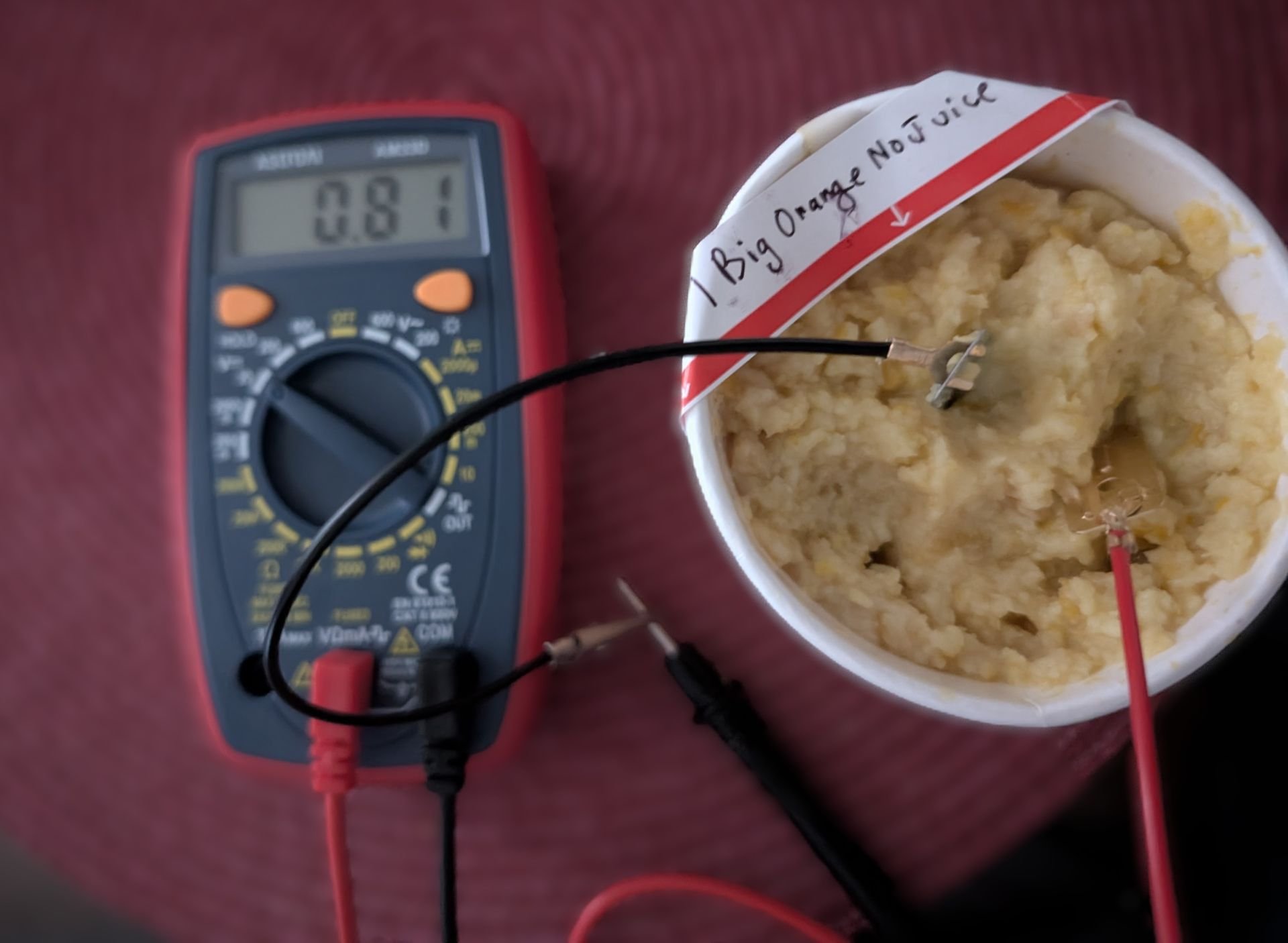
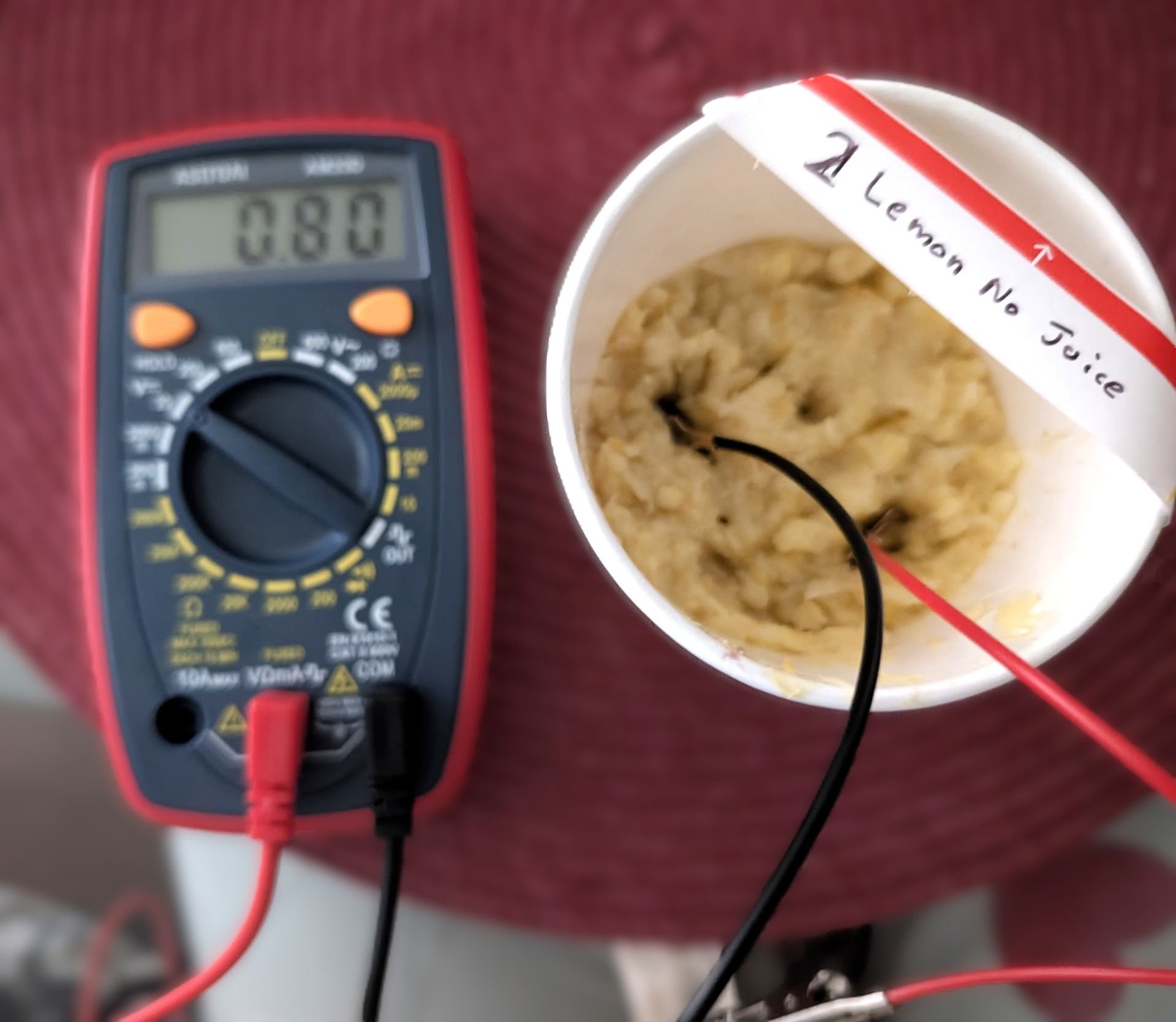
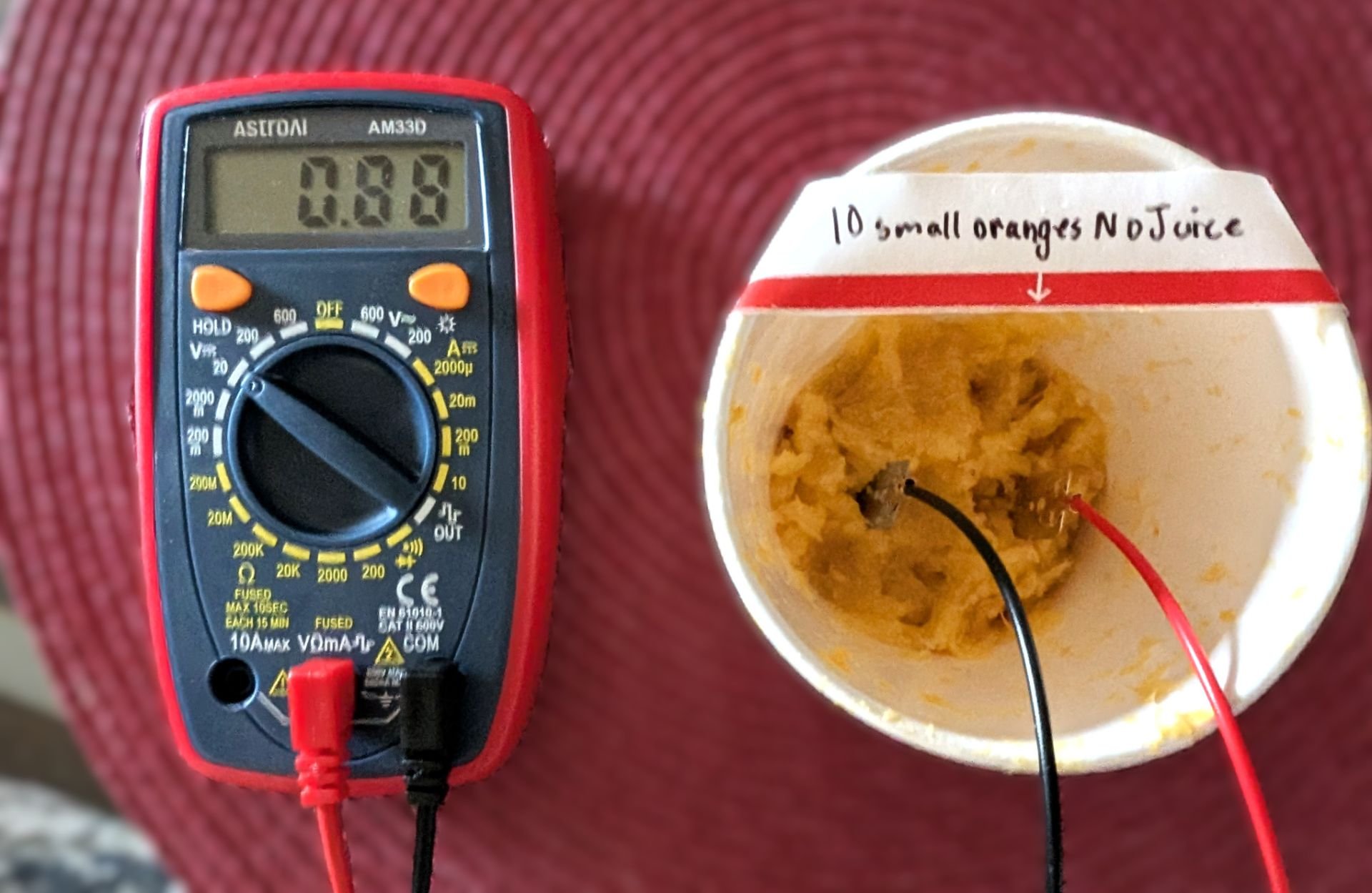
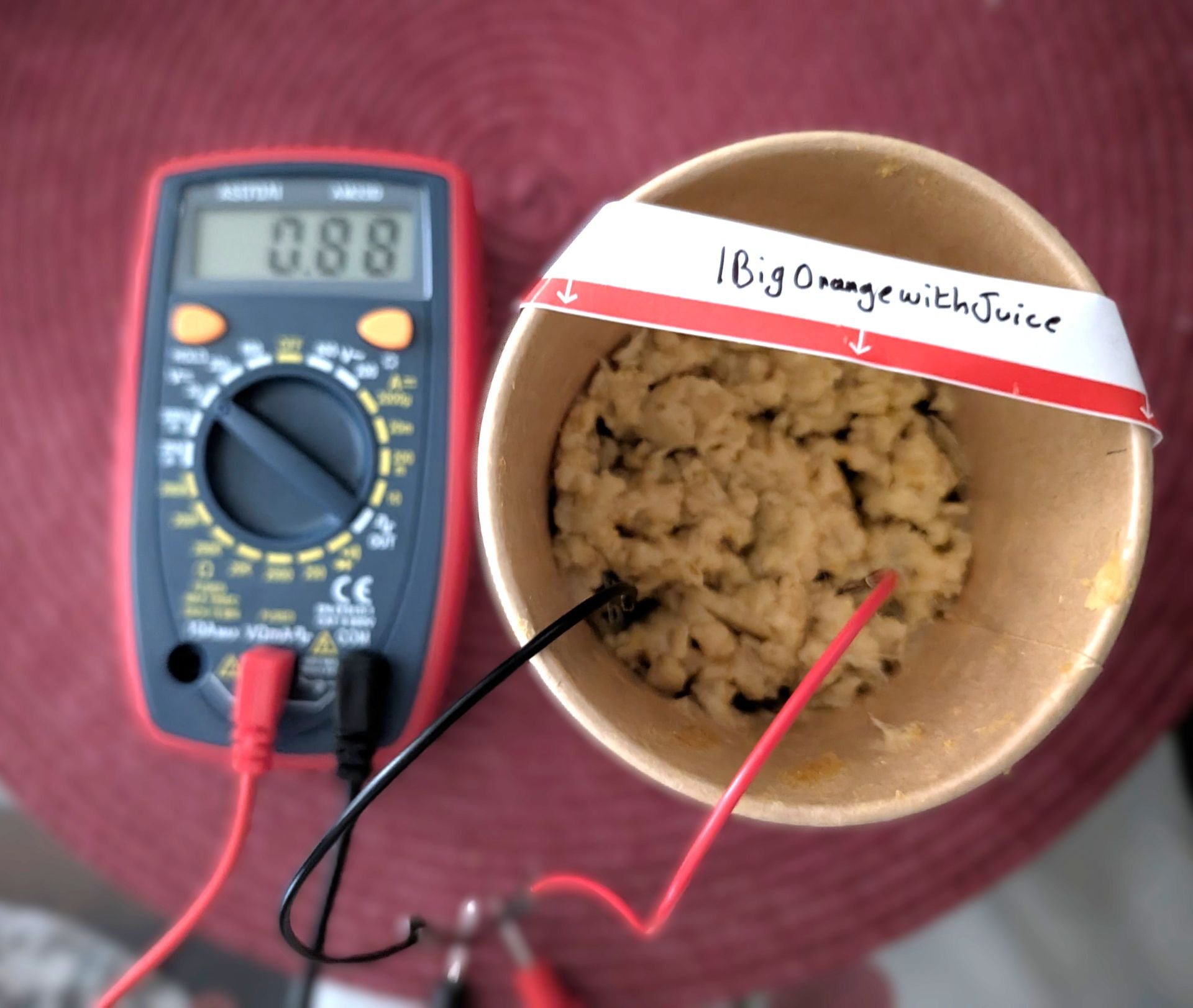
Out of 5 different fruit pulps the Ambrosia Apple of 92.8g produced the most voltage of 0.95V than the 10 mini mandarins (0.88V), the lemon (0.80V) , the clementine with juice (0.88V) and the clementine without juice (0.80V).
But why?
This is because acidity doesn't always matter, its the ion concentration , thickness in the pulp and low internal resistance that contributes to the flow of electrons in a fruit battery.
Analysis
-
All fruits produce>1 V individually.
-
Apple pulp gave the highest voltage (0.95).
-
Lemon and Orange pulps produced slightly lower voltages (0.80-88 V).
-
Acidity alone doesn't determine voltage; pulp thickness & concentration matter.
-
Series connections increase voltage, allowing higher output.
Fruit Pulp Weight vs Voltage Table:
| Fruit Pulp Type | Weight (g) | Voltage (V) |
|---|---|---|
| Ambrosia apple (w/o juice) | 92.8 | 0.95 |
| Lemon (w/o juice) | 135.8 | 0.80 |
| Clementine (w/o juice) | 180 | 0.81 |
| Small mandarins (w/o juice) | 70 | 0.88 |
| Clementine (with juice) | 208 | 0.88 |

Conclusion
-
Fruit pulp generates electricity through an electrochemical reaction between zinc and copper electrodes, where the pulp acts as an electrolyte that allows ions to move and complete the circuit.
-
The results show that apple pulp produced the highest voltage, demonstrating that ion concentration and internal resistance have a greater effect on voltage output than acidity alone.
-
When multiple fruit batteries are connected in series, their voltages add together, making it possible to power small electronic devices such as LEDs. This demonstrates the potential of fruit pulp as a simple, low-cost, and sustainable bio-energy source.
Application
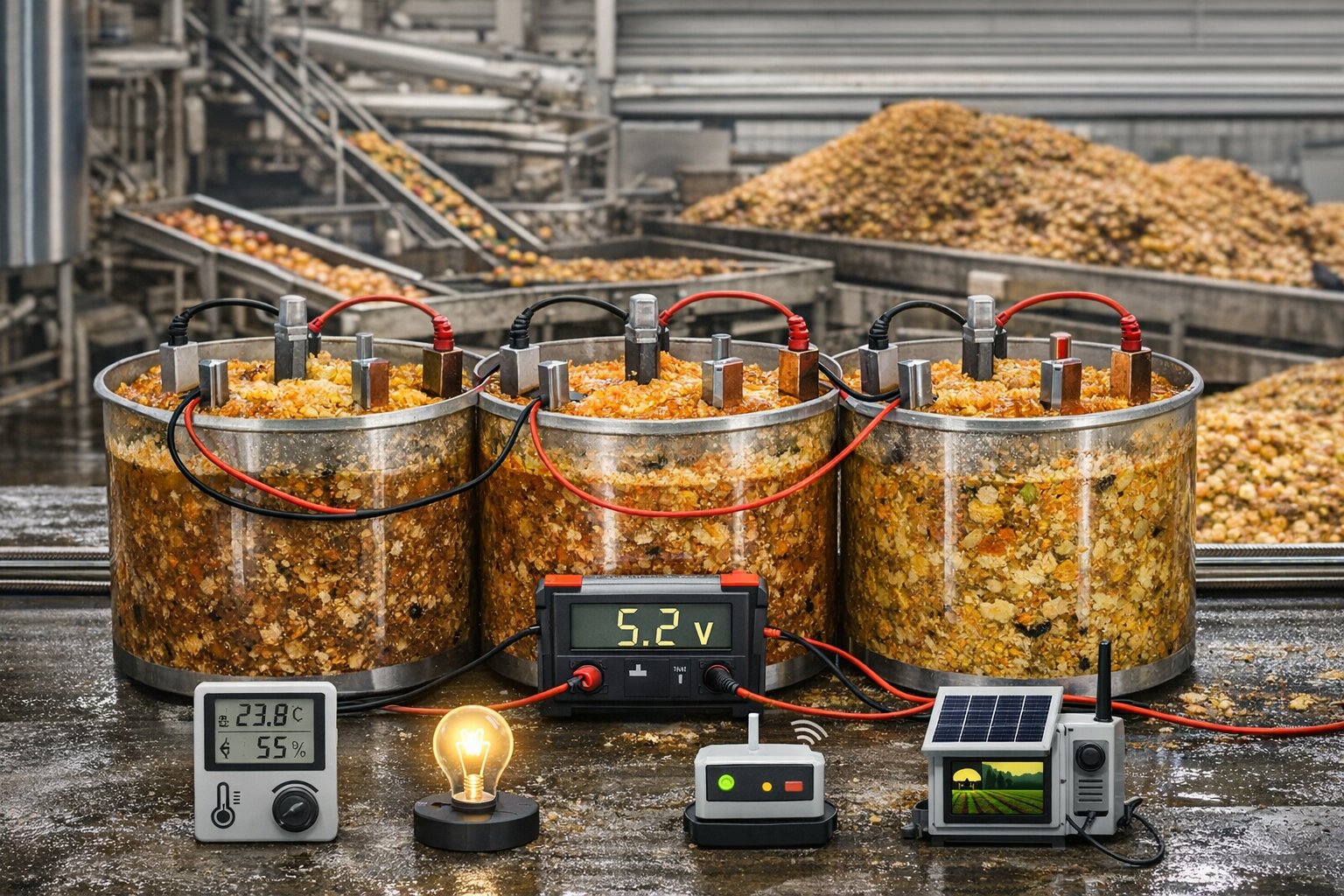
People would be interested in my experiment because it shows that even fruit can produce voltage and generate electricity. Other people could use this idea to reduce fruit waste by turning leftover pulp into a small source of energy to power devices like LEDs, light bulbs, alarms, mini thermostats etc.
I can make my experiment bigger by collecting larger amounts of the fruit sources I used and increasing the number of batteries connected in series. I could also test more different types of fruits to compare their voltage output and see which works best.
Sources Of Error
Some sources of error that I encountered and can possibly occur are,
-
Electrode placement – If the zinc and copper electrodes were placed at different distances or depths in each fruit, it could affect the voltage readings
-
Electrode surface condition – Oxidation or dirt on the zinc or copper could reduce the efficiency of the reaction.
-
Measurement errors – The multimeter may have slight inaccuracies or fluctuations in readings .
Citations
Fruit waste : https://pmc.ncbi.nlm.nih.gov/articles/PMC7024247/
pH value of apples : https://www.verywellhealth.com/are-apples-acidic-8623591
How to use a multimeter: https://www.homedepot.com/c/ah/how-to-use-a-multimeter/9ba683603be9fa5395fab90d6f3ffa5
Acknowledgement
I could not have finished this project with these special people:
- My Dad for helping me buy the trifold. - My Mom for helping me with taking the pictures - My Teachers for helping me fill out stuff in th CYSF