
Energy scavenger: how to convert wasted heat energy into usable forms of energy
Ranuga Agalawatte
Indira Weerasinghe
Grade 5
Presentation
Problem
Energy conservation is important to protect the environment as well as to save money. My parents have always asked us to save energy by turning off extra lights in the house. Some of the ways we lose energy in our home is:
- The stove –once the kitchen stove has been used it remains hot for hours. The heat energy from it slowly dissipates into the air and it slowly cools down.
- The oven –Similar to the stove once the oven is turned off it remains hot for hours with the heat slowly dissipating into the air.
- Windows –on cold days the heat inside the house conducts out through the windows as they are not very well insulated.
One day, I was walking by the stove and felt how warm it was. I actually thought that the stove was on and tried to off it. I then realized that the stove was not on and it felt warm because it had just been turned off a few minutes ago. I felt bad about all the heat energy that was being wasted.
About 60% of energy from a gas stove is wasted as heat energy. While 20%-26% energy is wasted in a smooth top stove and 10%-20% of energy is wasted in an induction stove. Furthermore, in a conventional oven 20%-25% of energy is wasted through heat loss.
One thing that we all do while cooking or baking and even after cooking/baking is to turn on the exhaust fan. This also uses energy. Therefore, if we use the wasted heat energy from the stove top/oven and use it to power the exhaust fan then we would make our stoves and ovens more energy efficient.
Method
Principle behind my project
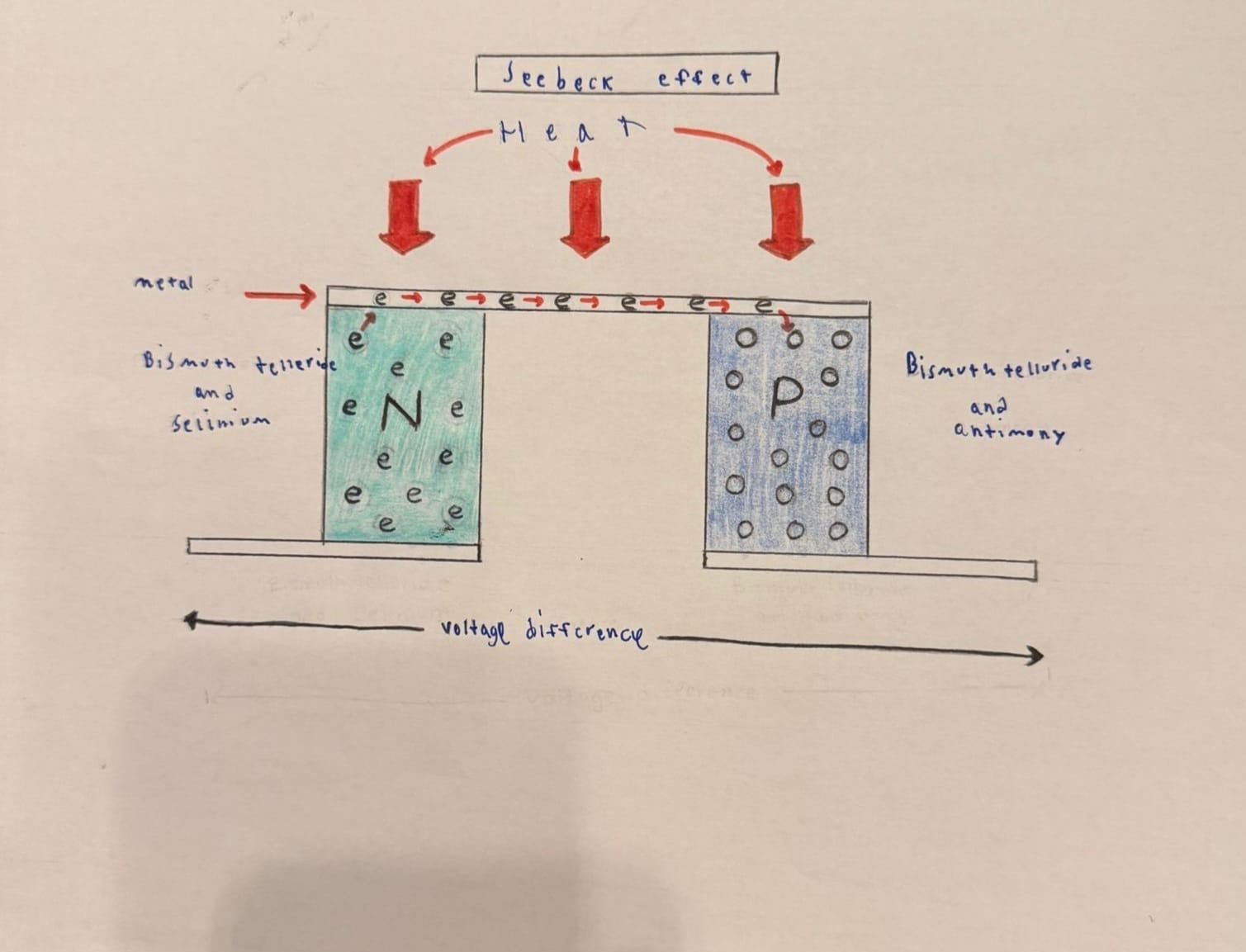
- A thermoelectrical plate is made out of a series of P and N type semiconductors that are connected together.
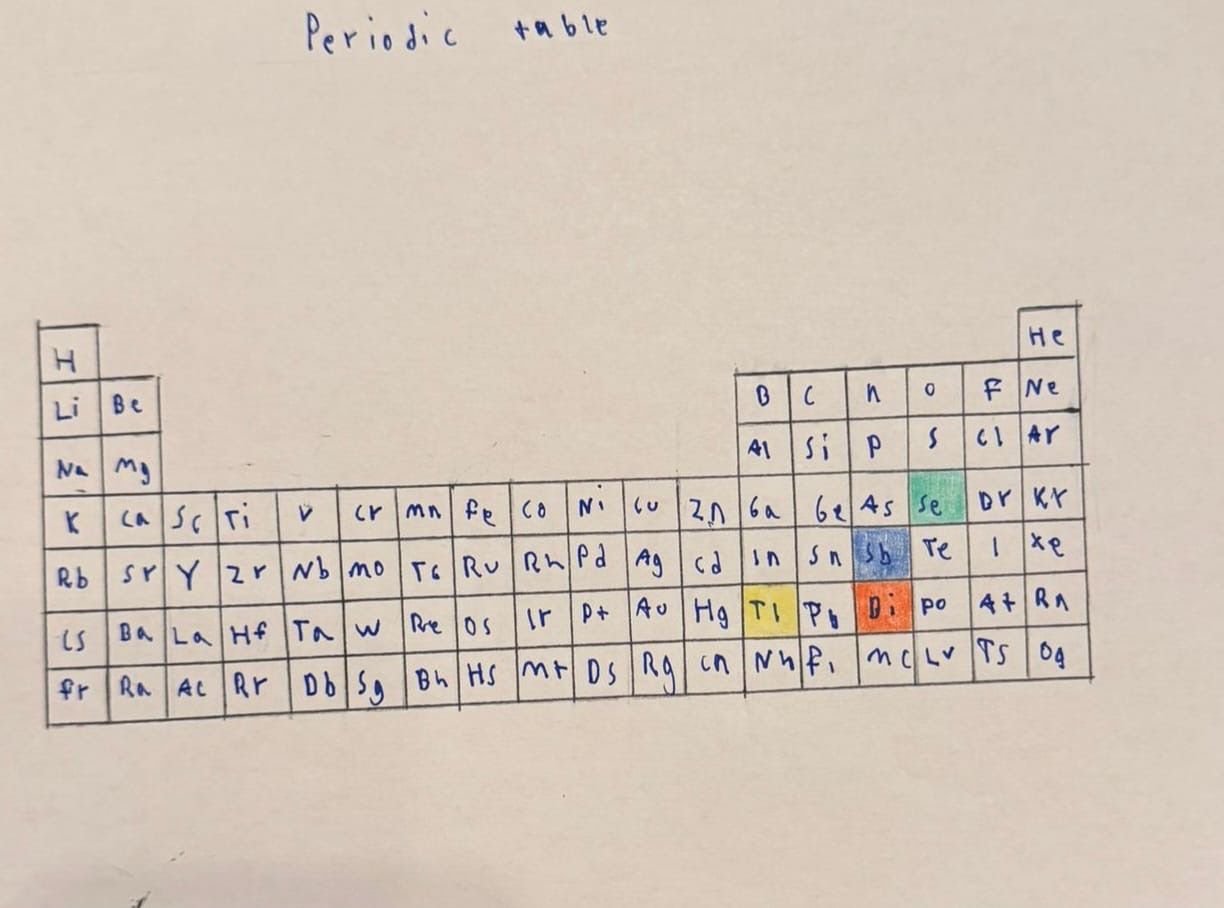
- The main material in the thermoelectric plate is Bismuth telluride.
- when Bismuth telluride is doped with selenium it creates a lot of free electrons and this makes a good N-type semiconductor. Furthermore when Bismuth telluride is doped with antimony it creates less electrons or in other words more holes. This makes a good P-type semiconductor.
- When there is a difference in temperature between the two sides of the thermoelectric plate it agitates the electrons, and they move from the N-type semi conductor towards the P-type semi conductor creating a voltage difference and therefore electricity. This is called the Seebeck effect.
- I used thermoelectric plates and the principles of the Seebeck effect to make the fan run.
Method
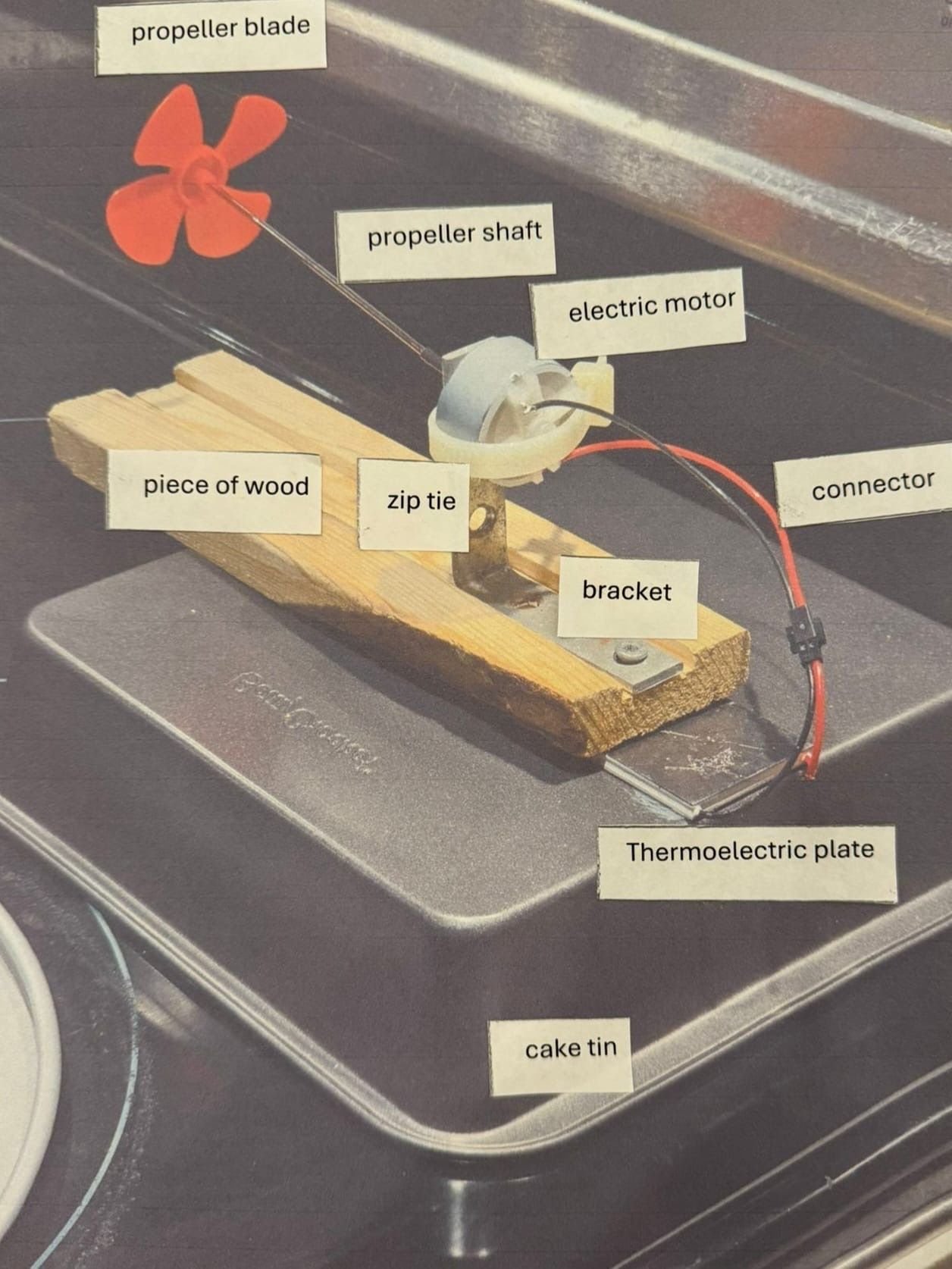
- A thermoelectric plate was glued to the cake tin using thermal glue.
- A bracket was attached to a piece of wood and a motor was attached to the bracket with a zip tie.
- The propeller shaft was attached to the electrical motor using a piece of plastic tubing.
- The propeller blade was attached to the end of the propeller shaft.
- A wire connector was soldered onto the other end of the electric motor so that the motor can connect to the thermoelectric plate.
Analysis
- When the thermoelectrical plate is connected to the electric motor and the device is placed on the stove top after it was turned off (but still hot) the fan spins!
Conclusion
With just one thermoelectric plate I was able to use the wasted heat energy from the stove to make the fan spin. If I was able to use more thermoelectric plates and they are installed on the inside of the oven or stove top then we could generate more electricity from the wasted heat energy and would likely be able to run the exhaust fan. If we could do this we could make our stoves and ovens more energy efficient.
Citations
- https://doc.comsol.com/5.5/doc/com.comsol.help.heat/heat_ug_theory.07.59.html#:\~:text=The%20Seebeck%20effect%20is%20the,current%20density%20and%20temperature%20gradients.
- https://www.britannica.com/science/semiconductor
- https://en.wikipedia.org/wiki/Thermoelectric_effect
- https://www.youtube.com/watch?v=cZodo_BxBIo
- https://www.youtube.com/watch?v=cEZ9wUbu1R8
- https://www.youtube.com/shorts/uUuJjalZLek
- https://www.google.com/searchq=how+much+heat+energy+is+wated+from+a+stove&rlz=1CAJNSW_enCA1138&oq=how+much+heat+energy+is+wated+from+a+stove&gs_lcrp=EgZjaHJvbWUyBggAEEUYOTIJCAEQIRgKGKABMgkIAhAhGAoYoAHSAQkxNTI0NWowajeoAgiwAgHxBUsuH5Y4qs1G&sourceid=chrome&ie=UTF-8&safe=active&ssui=on
Acknowledgement
- I would like to thank my father for helping me set up my model.
- I would like to thank my mother for enrolling me in the science fair.
- I would like to thank my sister who is my sibling, friend and constant competitor.