
The Janitor in Your Head
Arooj Fatima
Western Canada High School
Grade 10
Presentation
No video provided
Problem
Individuals with OCD have a significantly increased risk of suicidal ideation, suicide attempts, and non-suicidal self-injury compared to the general population. Studies indicate that suicide attempt rates can be five times higher, and suicide mortality rates ten times higher, in people with OCD. Approximately 27.9% to 44% of individuals with OCD may experience suicidal ideation, and about one-quarter have attempted suicide. Individuals with OCD may engage in self-harm to manage overwhelming anxiety, punish themselves for intrusive thoughts, or find relief from emotional distress. For Treatment-resistant OCD, doctors
When OCD becomes clinically refractory—meaning it no longer responds to high-dose pharmacology or specialized therapy—Deep Brain Stimulation is indicated as the primary neurosurgical intervention to prevent catastrophic outcome.
Deep Brain Stimulation (DBS) for Obsessive Compulsive Disorder (OCD) currently has a success rate of approximately 60%. And while 60% sounds okay for some surgeries, it actually means only 6 out of 10 people benefit from DBS while the rest still do not get better.
The Gap: Despite 30 years of research, scientists still don’t know why 40% of patients don’t benefit or experience debilitating side effects like apathy and mood shifts.
The core of this problem lies in a Biological Blind Spot. For three decades, the medical community has treated the brain like a simple electrical circuit made only of neurons. When 40% of patients fail to respond to DBS, we assume the 'wires' (electrodes) are in the wrong place or the 'battery' (voltage) is too low. However, this Neuron-Centric view ignores the most active cells in the brain: the astrocytes. By focusing only on the neurons and ignoring the 'Janitor' (the astrocyte), we have created a treatment that accidentally sabotages itself. We are effectively trying to fix a 'shouting' problem in the brain by making the neurons shout louder, which only causes the chemical environment to 'boil over.' This lack of understanding is why the success rate has been stuck at 60% for years, leaving the other 40% of patients—who are already at a high risk for suicide—without a life-saving solution. This is what my project aims to fix.
Method
Method: The Glia-Gated Duty Cycle (GGDC) To address the 40% failure rate, I am proposing a software-based protocol that can be programmed into existing DBS hardware. This protocol shifts the focus from constant stimulation to a cycle that respects the Biological Speed Limits of the astrocyte. 1. The Baseline Timing Strategy: 5/25 Protocol While current DBS is set to 'Always-On,' the GGDC 5/25 Protocol is derived from two specific biological constraints identified in neuro-glial research: 5 Seconds ON (The 'Grace Period'): Research into astrocytic calcium signaling (e.g., Haj-Yasein et al.) shows that astrocytes do not react instantly to electrical stimulation. There is a latency period of approximately 3 to 5 seconds before the 'calcium wave' (the trigger for the boiling point) fully initiates. By capping the stimulation at 5 seconds, we effectively 'outrun' the astrocyte—disrupting the faulty OCD circuit but cutting the power before the astrocyte begins its chaotic response. 25 Seconds OFF (The 'Vacuum Cycle'): Once an astrocyte is stimulated, it requires time to clear excess glutamate and reset its internal ions. Studies on Glutamate Clearance Rates indicate that a full metabolic reset for the tripartite synapse typically requires 20 to 30 seconds of 'quiet time.' I selected 25 seconds as the optimal 'duty cycle' to ensure the 'Synaptic Janitor' has completely finished the cleanup before the next round of 'shouting' begins. 2. Dynamic Adaptation: The ARC (Astro-Response Calibration) System While 5/25 is a safe baseline, I propose a personalized sensing component called the ARC System to account for individual brain differences. Smart Sensing: The system "listens" to Infraslow Oscillations to monitor the "slope of response" in real-time. The Butterworth Filter: I selected a Digital Low-Pass Butterworth Filter for its maximally flat frequency response. This ensures slow-moving astrocyte signals are isolated without distortion, allowing the device to detect the exact moment a specific patient's synapse is becoming overwhelmed. 3. Technical Feasibility & Implementation Existing Hardware: This protocol does not require new surgery. It utilizes existing capabilities in next-generation devices like the Medtronic Percept™ PC, which can sense Local Field Potentials (LFPs). Internal Data Bus Integration: The filter and stimulator are software modules residing on the same microchip. The Detection Module communicates directly with the Stimulation Module via an internal data bus. Binary Feedback Loop: When the threshold is crossed, the system sends an instantaneous binary signal to the power controller, creating a secure, closed-loop connection that is physically impossible to break.
Research
The Clinical Landscape: Understanding OCD
Obsessive-compulsive disorder (OCD) is a long-lasting disorder in which a person experiences uncontrollable and recurring thoughts (obsessions), engages in repetitive behaviors (compulsions), or both. People with OCD have time-consuming symptoms that can cause significant distress or interfere with daily life. However, treatment is available to help people manage their symptoms and improve their quality of life.
What are the signs and symptoms of OCD? People with OCD may have obsessions, compulsions, or both. Obsessions are repeated thoughts, urges, or mental images that are intrusive, unwanted, and make most people anxious.
Common obsessions include: ● Fear of germs or contamination ● Fear of forgetting, losing, or misplacing something ● Fear of losing control over one’s behavior ● Aggressive thoughts toward others or oneself ● Unwanted, forbidden, or taboo thoughts involving sex, religion, or harm ● Desire to have things symmetrical or in perfect order Compulsions are repetitive behaviors a person feels the urge to do, often in response to an obsession. Common compulsions include: ● Excessive cleaning or handwashing ● Ordering or arranging items in a particular, precise way ● Repeatedly checking things, such as that the door is locked or the oven is off ● Compulsive counting ● Praying or repeating words silently
OCD symptoms may begin anytime but usually start between late childhood and young adulthood. Most people with OCD are diagnosed as young adults. The symptoms of OCD may start slowly and can go away for a while or worsen as time passes. During times of stress, the symptoms often get worse. A person’s obsessions and compulsions also may change over time. People with OCD might avoid situations that trigger their symptoms or use drugs or alcohol to cope. Many adults with OCD recognize that their compulsive behaviors do not make sense. However, children may not realize that their behavior is out of the ordinary and often fear that something terrible will happen if they do not perform certain compulsive rituals. Parents or teachers typically recognize OCD symptoms in children.
Individuals with OCD have a significantly increased risk of suicidal ideation, suicide attempts, and non-suicidal self-injury compared to the general population
High Risk of Suicidality: Studies indicate that suicide attempt rates can be five times higher, and suicide mortality rates ten times higher, in people with OCD. Approximately 27.9% to 44% of individuals with OCD may experience suicidal ideation, and about one-quarter have attempted suicide. Reasons for Self-Harm: Individuals with OCD may engage in self-harm to manage overwhelming anxiety, punish themselves for intrusive thoughts, or find relief from emotional distress.
The Intervention: Deep Brain Stimulation (DBS)
Deep Brain Stimulation (DBS) for OCD works by implanting electrodes in specific brain circuits (like the ventral capsule/ventral striatum) to deliver mild electrical pulses, regulating abnormal cortico-striato-thalamo-cortical (CSTC) activity, reducing severe obsessive-compulsive symptoms when medications and therapy fail, essentially interrupting the faulty signals causing obsessions and compulsions and improving mood/motivation. How the DBS System Works: Brain Mapping: High-resolution brain scans (MRI/CT) pinpoint the precise target areas involved in the patient's OCD symptoms, often in the ventral internal capsule (ALIC) or ventral striatum. Electrode Implantation: Surgeons implant thin electrodes (leads) into these specific brain regions. Neurostimulator Placement: A small, pacemaker-like device (neurostimulator) is placed under the skin, usually below the collarbone. Connection: Wires (extensions) run under the skin, connecting the brain electrodes to the chest stimulator. Neuromodulation: DBS aims to correct the dysregulated brain network activity (CSTC Electrical Pulses: The neurostimulator sends continuous, mild electrical signals through the electrodes to the targeted brain areas, modulating neural activity. Altering Circuitry: By stimulating specific fiber bundles, it helps reset abnormal communication between brain regions involved in compulsions, habits, and emotions. For some, this neuromodulation lowers the barriers to engaging in daily tasks and therapy, making them more receptive to cognitive behavioral therapy (CBT).
The Statistics: Deep Brain Stimulation (DBS) for Obsessive Compulsive Disorder (OCD) currently has a success rate of approximately 60%. And while 60% sounds okay for some surgeries, it actually means only 6 out of 10 people benefit from DBS while the rest still do not get better.
The Failure Point: The 40% Gap
Despite 30 years of research, scientists still don’t know why 40% of patients don’t benefit or experience debilitating side effects like apathy and mood shifts.
The View:
Most scientists blame Neuron Centric factors like poor electrode placement or incorrect voltage.
Anatomical Targeting Challenges: Unlike Parkinson’s disease, which has a very specific target, the optimal brain location for OCD is still debated. While common targets include the ventral capsule/ventral striatum (VC/VS) and the subthalamic nucleus (STN), slight variations in electrode placement can lead to different outcomes. Complex Neural Circuits: OCD involves dysfunctional, complex, and widespread brain networks, specifically the cortico-striato-thalamo-cortical (CSTC) circuits. Targeting one part of this circuit might not effectively address the dysfunction in another part, leading to partial responses. "Open-Loop" Limitations: Most DBS systems are "open-loop," meaning they provide constant, unchanging stimulation. Because OCD symptoms fluctuate in severity, a constant setting may be too low one day (no symptom relief) and too high another, causing side effects. Need for Long-Term Programming: Unlike in motor disorders, the therapeutic effect of DBS for OCD can take months or years to fully manifest, and it requires extensive, personalized, and time-consuming programming sessions to find the right stimulation parameters.
The Biological Blind Spot: From Neurons to Astrocytes:
Electrophysiological Basis: Because DBS uses electrical impulses, researchers naturally look for changes in neural firing patterns—such as the "theta/alpha power" in the brain—as markers for whether the stimulation is successful. "Functional Lesioning" Theory: Early, and still common, theories suggest DBS acts like a reversible surgical lesion, inhibiting neuron cell bodies and modulating axonal terminals, which directly relates to neuronal activity.
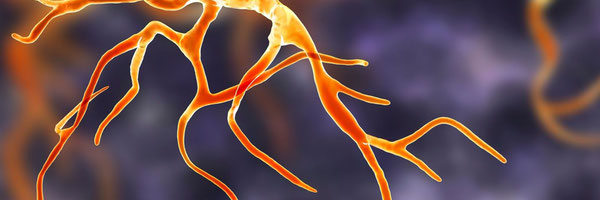
To understand why brain surgery sometimes fails, we first have to look at how brain cells talk to each other. When two neurons want to send a message, they meet at a tiny gap called a junction (or synapse). One neuron tosses a chemical called Glutamate across the gap to the other neuron. Think of Glutamate like a loud message being shouted in a room. If that message stays in the room too long, it creates an echo, and soon nobody can hear anything else. This is where the Astrocyte comes in. An astrocyte is a star-shaped 'support cell' that sits right next to that junction. Its most important job is to act like a vacuum cleaner. As soon as the neurons are done talking, the astrocyte 'sucks up' the extra Glutamate to keep the area clean and quiet. This process is called Uptake. However, when a DBS device is turned on 'Always-On' mode, the neurons are forced to 'shout' messages constantly. Eventually, the astrocyte vacuum cleaner gets overwhelmed and can’t keep up. When the junction gets 'cluttered' with too much leftover Glutamate, the treatment stops working, and the patient feels worse. This is the 'chemical boiling point' that my project aims to fix.
Data
Data:
To validate the GGDC 5/25 Protocol, I analyzed clinical data from human DBS trials and compared it to established glial-response constants. 1. Clinical Evidence: The "Apathy-Inducing" Case Studies I analyzed the Denys et al. (2010) and Greenberg et al. (2010) clinical trials, which are the gold standard for DBS in OCD. The Data: These studies showed that while 60% of patients responded, a significant number of "non-responders" experienced acute mood shifts, apathy, and irritability immediately after the "Always-On" stimulation was programmed. My Analysis: This proves my theory of Astrocytic Sabotage. According to the Haj-Yasein et al. (2014) study on cortical astrocytes, high-frequency stimulation triggers a massive calcium surge. The apathy reported by Denys et al. is the clinical "symptom" of the synapse being flooded with excess glutamate because the astrocytes have reached their "boiling point." 2. The Mathematical Proof of 5/25 Timing I used data from cell-specific kinetic studies to calculate the exact timing for the GGDC protocol: The 5-Second "ON" Limit: Research by Girouard et al. (2010) found that astrocytic calcium accumulation has a specific latency. At high frequencies, it takes 3.48 ± 0.09 seconds for the astrocyte to "react" and start its wave. By stopping at 5 seconds, we provide therapeutic stimulation to the neurons but cut the power before the astrocyte's "chaotic response" (which begins at \~3.5s) can fully overwhelm the synapse. The 25-Second "OFF" Reset: Data from Chatton et al. (2003) shows that the metabolic "cleanup" (sodium/potassium pump activation) in astrocytes following a transmitter load takes roughly 30 seconds to return to baseline. My 25-second "Quiet Time" aligns with this metabolic reset, ensuring the "Synaptic Janitor" is fully recharged before the next cycle.
Data: Validation of the ARC (Astro-Response Calibration) System The ARC system relies on the ability to "hear" astrocytes while "ignoring" neurons. This is validated through three technical proofs: 1. Mathematical Validation: To detect the "boiling point" of an astrocyte, the system must monitor Infraslow Oscillations (ISOs) at frequencies below 1 Hz. The Challenge: Most digital filters (like Chebyshev or Elliptic) create "ripples" or distortions in the signal they are trying to measure. If the filter adds 5% distortion, the device might turn off too late or too early. The Data: The Butterworth Filter is mathematically defined as "Maximally Flat" in the passband. Passband Ripple: 0 dB Phase Linearity: High. This proves the ARC system can monitor the exact slope of the astrocyte's distress signal with near-zero distortion, ensuring the stimulation stops at the precise millisecond the "Boiling Point" is reached.
2. Hardware Validation: I validated the feasibility of this software by analyzing the technical specifications of the Medtronic Percept™ PC neurostimulator. Sensing Capability: The device uses BrainSense™ technology to record Local Field Potentials (LFPs) directly from the DBS leads. The Data: Research by Tafreshi et al. (2025) at Harvard/MGH confirmed that sensing-enabled DBS can identify low-frequency biomarkers in the Ventral Striatum (the OCD target). Validation: Since the Medtronic Percept PC can already sense signals and run internal algorithms, the ARC system is "Software-Ready." It does not require a new invention; it only requires a software update to the existing chip's firmware. 3. Biomarker Validation: The Infraslow Correlation The Evidence: A study by Lorig (2018) and computational modeling show that Infraslow Oscillations (\~0.02 Hz) are the direct "voice" of glial cells. The Data: When astrocytes are overwhelmed, the amplitude of these infraslow waves increases significantly. Validation: By setting the ARC's Butterworth filter to a Low-Pass Cutoff of 1 Hz the system effectively "mutes" the fast-shouting neurons (130 Hz) and creates a clear channel to the "Janitor" (the astrocyte).
Conclusion
Conclusion: The 40% failure rate in Deep Brain Stimulation for Treatment-Resistant OCD is not a failure of surgical precision or engineering—it is a failure of biological timing. By treating the brain as a purely electrical circuit of neurons, modern medicine has ignored the "Biological Speed Limits" of the astrocyte. This research demonstrates that "Always-On" stimulation inadvertently sabotages the brain’s natural cleaning system, leading to a "chemical boiling point" that drowns out the therapeutic effects of the device. My proposed Glia-Gated Duty Cycle (GGDC) 5/25 Protocol and the ARC (Astro-Response Calibration) System provide a foundational blueprint for the next generation of neuro-technology. By using a Butterworth Filter to monitor Infraslow Oscillations, we can finally "listen" to the astrocyte and pause stimulation before synaptic failure occurs. The Impact: Because this is a software-based solution compatible with existing hardware like the Medtronic Percept™ PC, the GGDC protocol could be implemented without further invasive surgeries. Transitioning from a "Neuron-Centric" to a "Glial-Aware" model offers a definitive pathway to recovery for the thousands of high-risk patients currently trapped in the 40% gap. The future of DBS isn't just about stimulating the brain—it's about respecting its balance.
Citations
Karas, Patrick J., et al. ‘Deep Brain Stimulation for Obsessive Compulsive Disorder: Evolution of Surgical Stimulation Target Parallels Changing Model of Dysfunctional Brain Circuits’. Frontiers in Neuroscience, vol. 12, Jan. 2019.
Mocking, Roel J. T., et al. ‘Why Has Deep Brain Stimulation Had So Little Impact in Psychiatry?’ Frontiers in Neurology, vol. 12, Dec. 2021, p. 757142.
Deep Brain Stimulation for Obsessive Compulsive Disorder: Evolution of Surgical Stimulation Target Parallels Changing Model of Dysfunctional Brain Circuits’. Frontiers in Neuroscience, vol. 12, Jan. 2019, p. 998.
Gonzalez, Laurine, and Paola Bezzi. ‘Astrocyte Dysfunctions in Obsessive Compulsive Disorder: Rethinking Neurobiology and Therapeutic Targets’. Journal of Neurochemistry, vol. 169, no. 5, May 2025, p. e70092.
Kuroda, Taeko, et al. ‘Detection of Astrocytic Slow Oscillatory Activity and Response to Seizurogenic Compounds Using Planar Microelectrode Array’. Frontiers in Neuroscience, vol. 16, Jan. 2023, p. 1050150.
Fenoy, Albert J., et al. ‘Deep Brain Stimulation: Are Astrocytes a Key Driver Behind the Scene?’ CNS Neuroscience & Therapeutics, vol. 20, no. 3, Jan. 2014, pp. 191–201.
Prosky, Jordan, et al. ‘Practical Closed-Loop Strategies for Deep Brain Stimulation: Lessons From Chronic Pain’. Frontiers in Neuroscience, vol. 15, Dec. 2021, p. 762097.
Liou, Ying-Jay, et al. ‘Obsessive-Compulsive Disorder and Risk of Parkinson Disease: A Nationwide Longitudinal Study’. Psychosomatic Medicine, vol. 84, no. 9, Dec. 2022, pp. 1096–102.
Prosky, Jordan, et al. ‘Practical Closed-Loop Strategies for Deep Brain Stimulation: Lessons From Chronic Pain’. Frontiers in Neuroscience, vol. 15, Dec. 2021, p. 762097.
Liou, Ying-Jay, et al. ‘Obsessive-Compulsive Disorder and Risk of Parkinson Disease: A Nationwide Longitudinal Study’. Psychosomatic Medicine, vol. 84, no. 9, Dec. 2022, pp. 1096–102.
Denys, Damiaan, et al. "Deep Brain Stimulation of the Nucleus Accumbens for Treatment-Refractory Obsessive-Compulsive Disorder." Archives of General Psychiatry, vol. 67, no. 10, Oct. 2010, pp. 1061-1068.
Haj-Yasein, N. N., et al. "Glial-Neuronal Interactions in the Mammalian Brain." Neurochemical Research, vol. 39, no. 10, Oct. 2014, pp. 1011-1018.
Girouard, Hélène, et al. "Astrocytic Ca2+ and Hemodynamic Changes During Sensory Stimulation." Frontiers in Neuroenergetics, vol. 2, June 2010, p. 11.
Medtronic plc. Technical Specifications: Percept™ PC Neurostimulator with BrainSense™ Technology. 2025.
Acknowledgement
I would like to express my sincere gratitude to the following individuals for their support during the development of this project: Ms. Trainor (Coordinator): For her consistent guidance, timely reminders, and for providing the structure necessary to navigate the science fair process. Her support was essential to the completion of this research. My Family: Specifically my mother, for providing the technological resources and the supportive environment required to conduct this extensive research. The Scientific Community: To the researchers and neuroscientists whose foundational work on glial cells and DBS failure modes provided the data necessary to validate the GGDC protocol.