

Clear Doesn't Equal Safe Flow Rate as a Hidden Variable in Bacteria Removal Testing the Contact Time Hypothesis
Evia Seeliger, Zhizhi Gao
Webber Academy
Grade 6
Presentation
No video provided
Hypothesis
Hypothesis Slower flow rates significantly increase bacterial removal because longer contact time enhances particle trapping and adsorption between filter layers.
Research
Background research
-
E. coli :Rapid Reproduction: Under ideal laboratory conditions, E. coli can double its population every 20 minutes. 2.Types of bacteria in river water
- E.coli - produces toxins inside human intestines, causes stomach pains, vomiting, diarrhea, etc. A bacteria that lives inside the intestines of humans and animals, gets into river water by sewage leaks, animal waste, and rain washing waste into rivers. Some types release toxins, cause diarrhea, vomiting, stomach cramps, and show signs of fecal contamination. Can be removed with sand and/or gravel filtration, chlorine or UV light disinfection
- Salmonella - infects the digestive system, causes fever, vomiting, diarrhea, stomach pains, etc. A disease-causing bacteria found in human and animal waste. Gets into rivers with farm runoff, sewage, wildlife waste. Infects intestines, causes fever, diarrhea, and vomiting. Can be removed by activated carbon filters, chlorination, UV treatment.
- Shigella - attacks lining of intestines, causes bloody diarrhea, fever, cramps etc. Gets into rivers by untreated sewage, poor sanitation. Produces toxins, causes diarrhea. Can be removed by fine filtration, and chlorine or UV disinfection.
How To See/Prove If The Water Is Drinkable and Not Dangerous Sensory Tests * Look: Water that looks cloudy, discolored, or has visible particles could indicate a problem, although cloudiness can sometimes be harmless air bubbles. * Smell: A chlorine smell is common in treated water, but metallic, musty, or sewage-like odors are red flags. * Taste: While a metallic, bitter, or otherwise unpleasant taste can signal an issue, many dangerous contaminants don't have a taste. (We are not going to taste, in case we get sick)
Home testing * Water testing kits: You can buy simple kits online or at hardware stores. These often use test strips that change color or chemical drop kits that react to certain contaminants like lead or bacteria. * Digital meters: Some devices can measure specific parameters like pH or TDS (Total Dissolved Solids).
Professional testing * Lab tests: For the most accurate results, send a sample to a state-certified laboratory. This is the best way to identify specific contaminants like bacteria, chemicals, or heavy metals. * Municipal reports: You can request a water quality report from your local water company, which tests the water daily and can provide results upon request.
Chemical dosing tablets : First filter water a little bit with cloth/fabric and glass, then use chlorine-based tablets Hypothesis If we use the first method (Layered Water Filtration System and UV Light), then the water we end up with will be the cleanest.
Municipal Water Treatment Plants
-
Water treatment plants use multiple stages to remove sediment and organic matter and then disinfection to ensure safe drinking water.

Treatment plants are effective in providing safe drinking water, but they have some disadvantages: * Plant are expensive to built and maintain. * Not practical in smaller urban or rural communities in many parts of the world. * Not all water use needs to be treated to drinking water standards.
Low-Cost Filter Systems
- Layered systems have many different types and scales.
- Effective in removing sediment and harmful contaminants.
- Cleans water to allow efficient disinfection for drinking water purposes.
- Effective for non potable uses, cloth washing, growing food, irrigation and industrial processes.
- Filters consist of different layers such as sand, gravel, activated carbon and filter separating layers.
Filter System Design * Sand – removes sediment, clay, mud, bacteria, viruses, parasites and turbidity * Gravel – biological growth on surface can remove nutrients and organics * Activated Carbon – removes pesticides, herbicides, bad odour and taste and micro plastics * Contact time is a critical variable in filter performance in any water treatment system.
Ways to Filter Water https://www.h2odistributors.com/info/how-to-make-a-water-filter/?srsltid=AfmBOooS2xCt_3jrU2EjL5ROEmmo1Mb4AaVoQGeyVrh3I7Orf4nfTFq5 https://longsecowater.com/blog/how-to-purify-your-homes-water https://www.bushcraftspirit.com/wilderness-water/ https://data.calgary.ca/Environment/Watershed-Monitoring-Program-Results/aaif-i7ky
Variables
Variables
Controlled Variables: same batch of water, same filter structure, same volume treated, same incubation time, same testing procedures and the same environmental conditions. Manipulated variables: Filter treatment flow rate ( High / Medium / Low) Responding variables: estimated bacterial removal and water clarity
Procedure
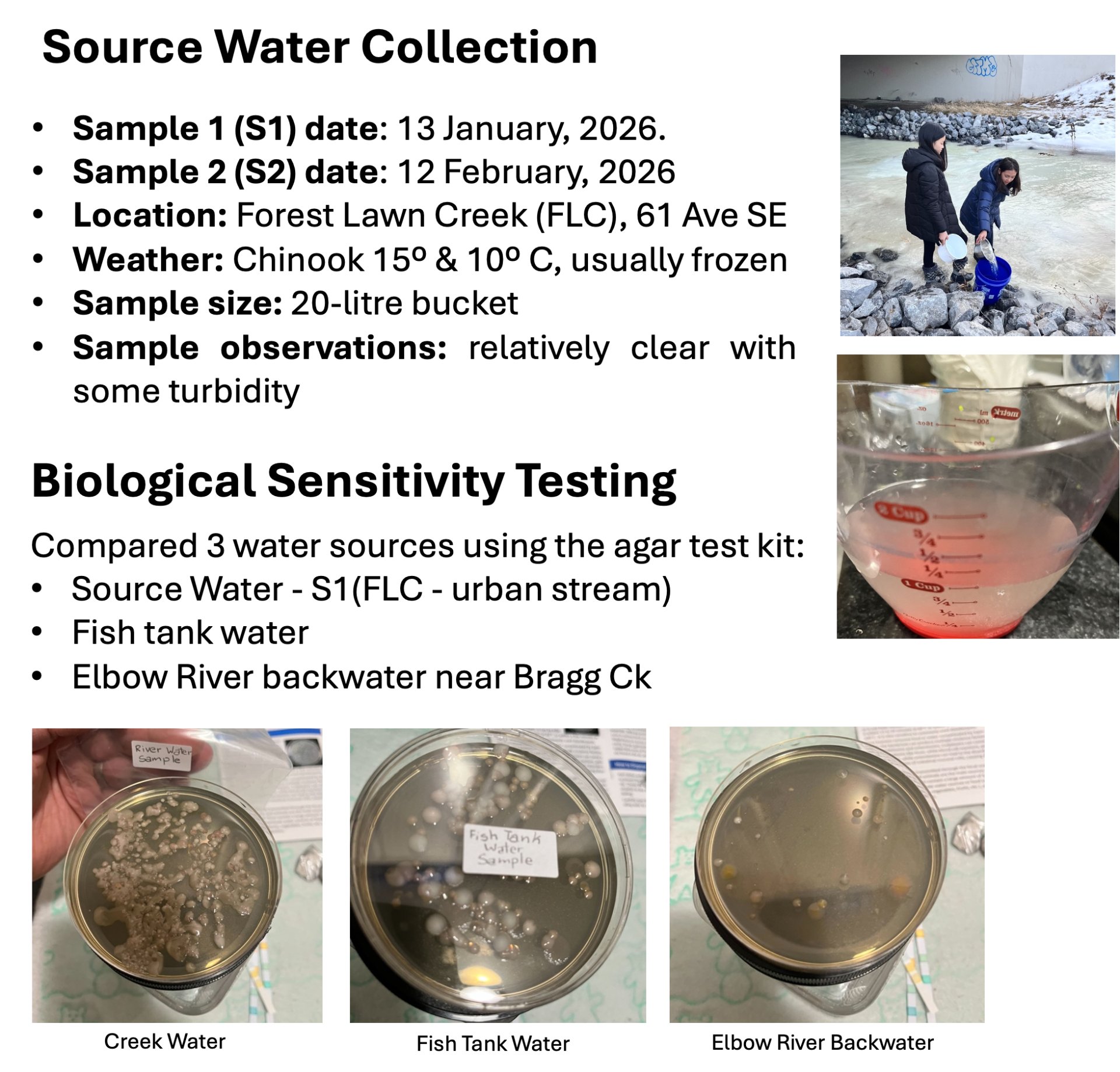
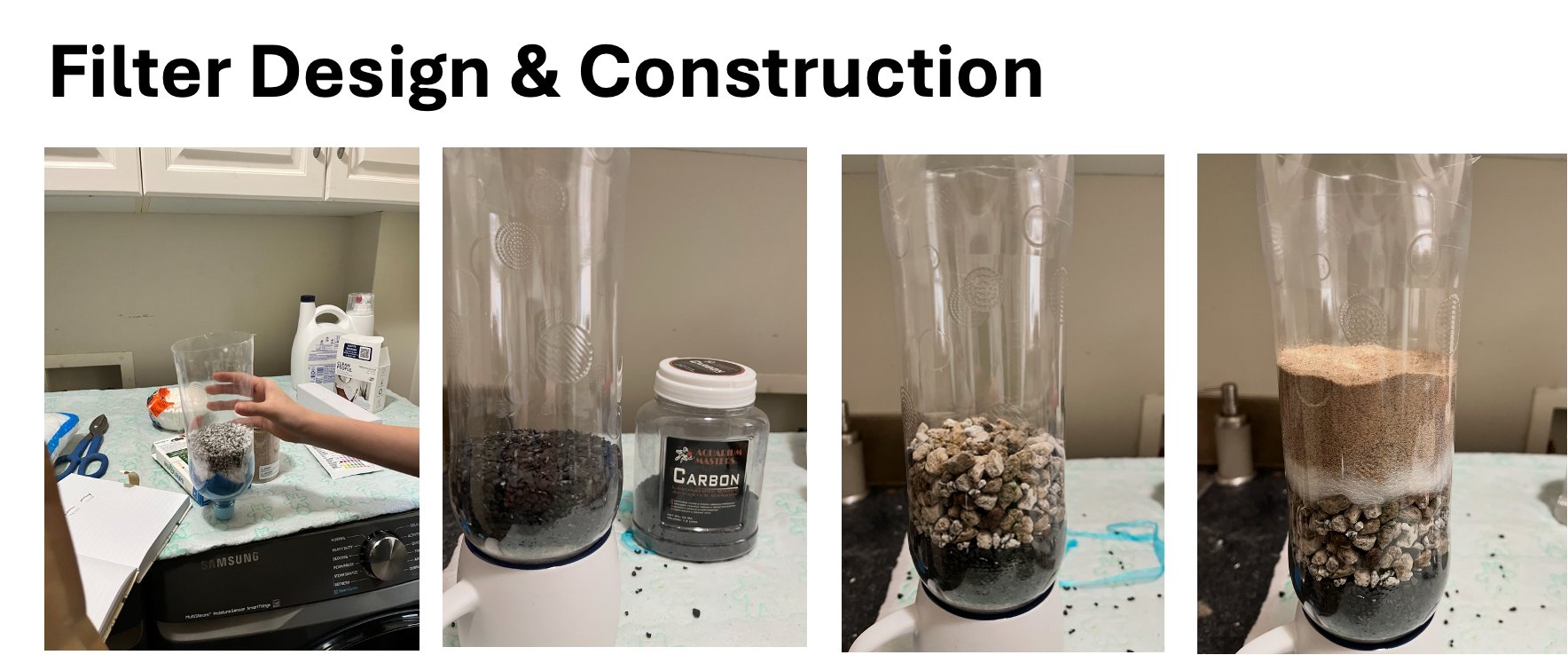
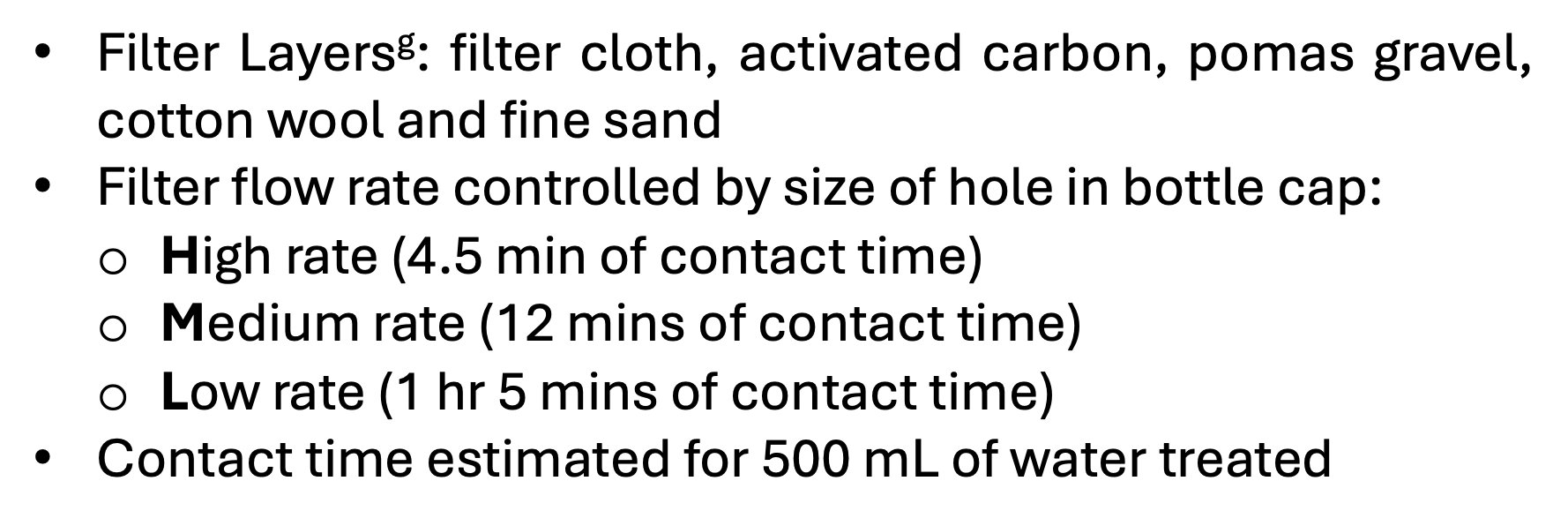
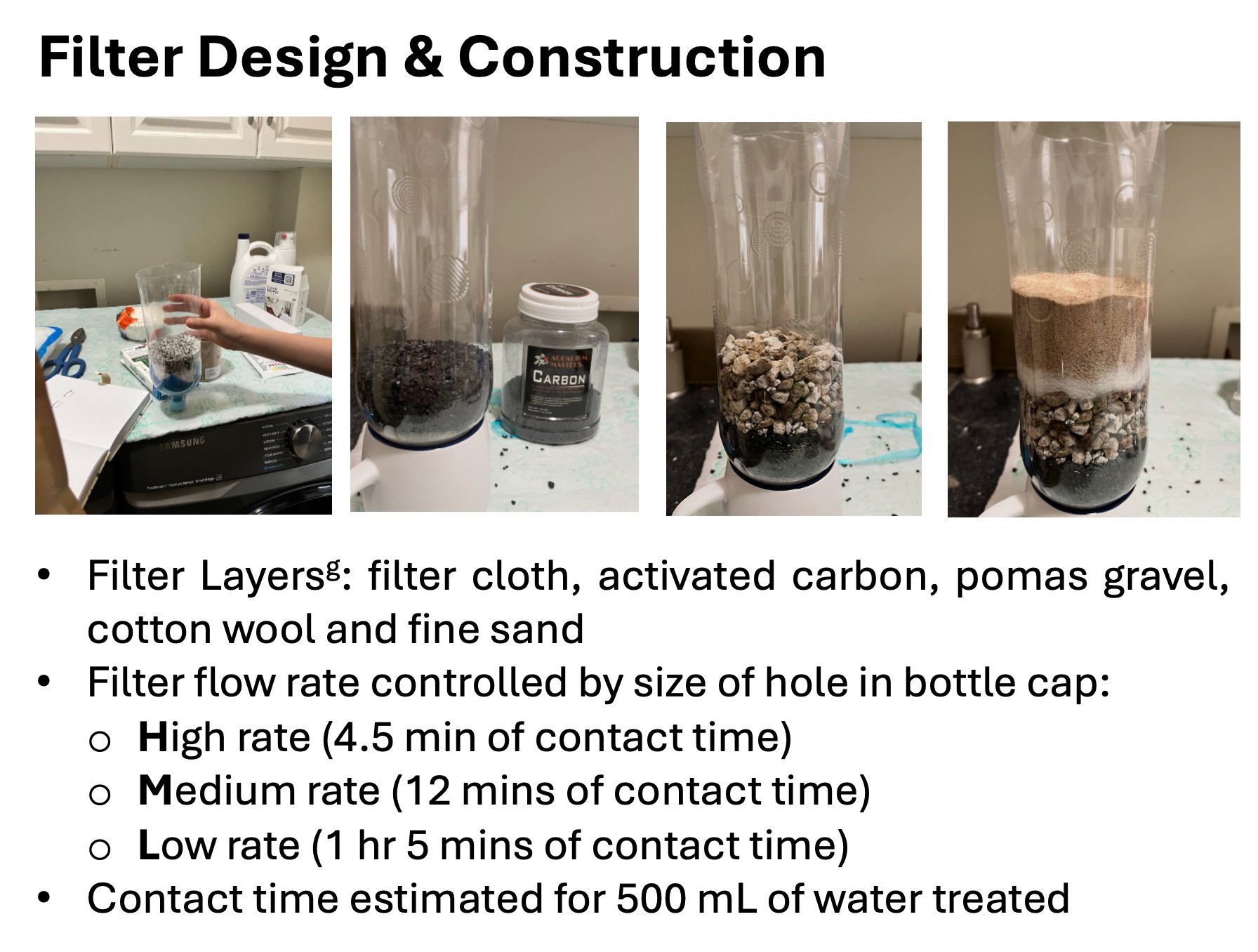
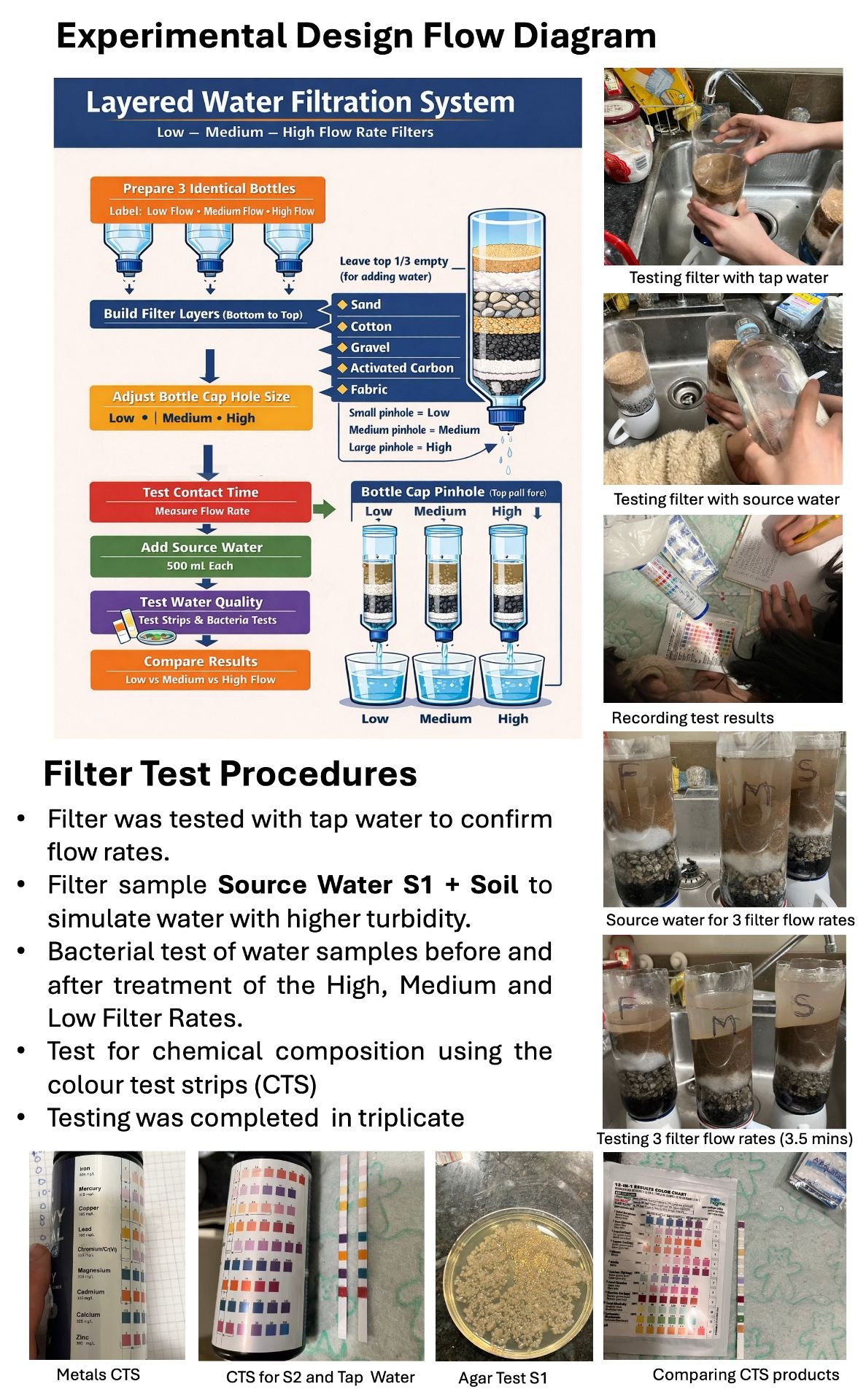 Filter Treatment Procedure
- Make the Layered Water Filtration System for 3 identical filters for a Low Medium and High flow rate. Put fabric at the very bottom of the bottle. Then put the activated carbon on top of the fabric. Then, put stones on top of the activated carbon. Then, put cotton on top of the stones. Then, put sand on top of the cotton. Provide the layers so the top ⅓ is empty to allow the water sample to be added.
- Adjust the cap size to control the treatment flow rate (contact time)
- Test the contact time for the Low, Medium and High flow rate filters
- Apply the source water (500 mL) to each different flow rate filter.
-
Test water quality using test strips and bacterial agar testing kit.\
-
The bacterial agar jars were left for 2 days before reading
- The sample from the creek showed a strong presence of bacteria
- After the samples passed through each filter, a reduction in bacteria was observed for each filter rate, fast, medium & low
- The low-flow-rate filter showed a substantial reduction in bacteria
- Tap water indicated that no bacterial was present, providing a control for our experiment
- 3 tests were completed for each filter type, with results being consistent
Observations
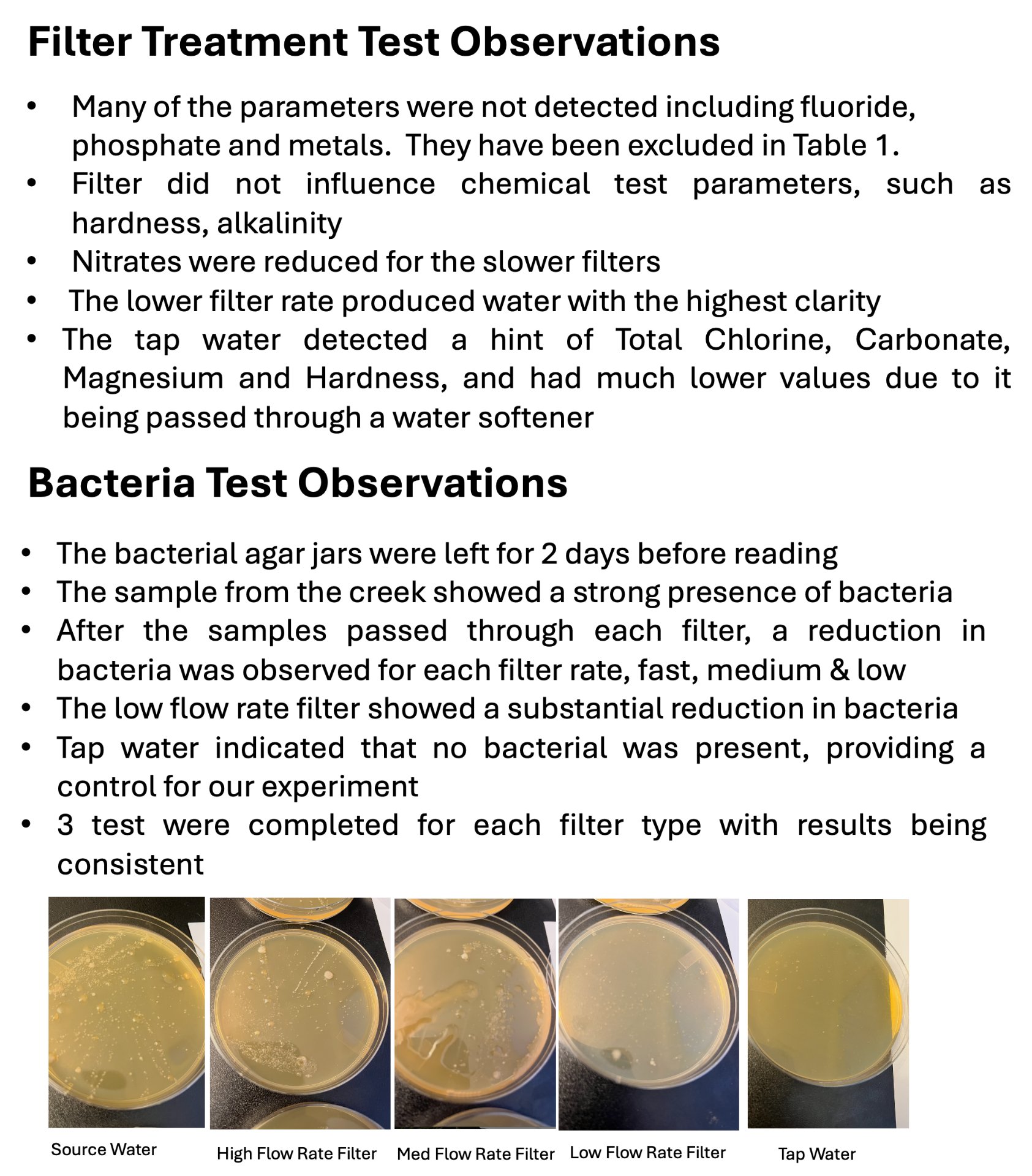
•The bacterial agar jars were left for 2 days before reading •The sample from the creek showed a strong presence of bacteria •After the samples passed through each filter, a reduction in bacteria was observed for each filter rate, fast, medium & low •The low flow rate filter showed a substantial reduction in bacteria •Tap water indicated that no bacterial was present, providing a control for our experiment •3 test were completed for each filter type with results being consistent
Analysis
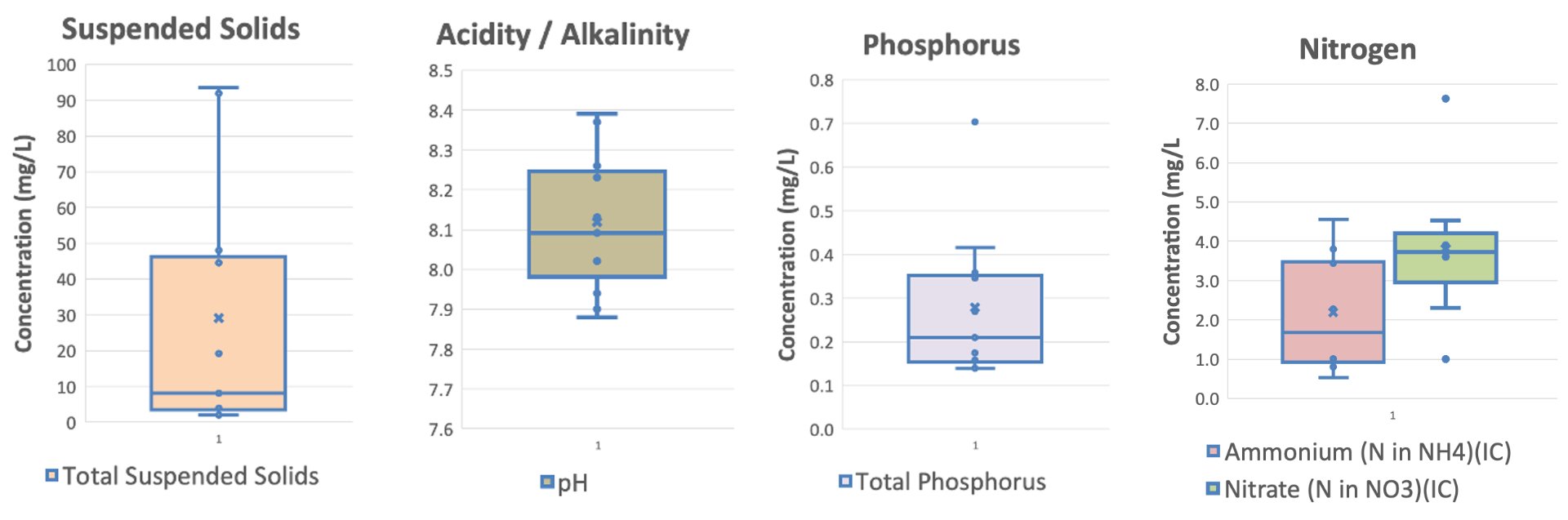
ISource Water Analysis: •10 Years of historical water quality tested during January g. •Box plot summarizing and comparing the distribution of water quality data across different time points. •It displays key statistics, including the median (middle value), 25th-75th percentiles (middle 50% of data), range, and outliers, making it easy to spot pollution variability.
Bacterial Test Kit: demonstrates level of bacterial content can be estimated by using the testing kit
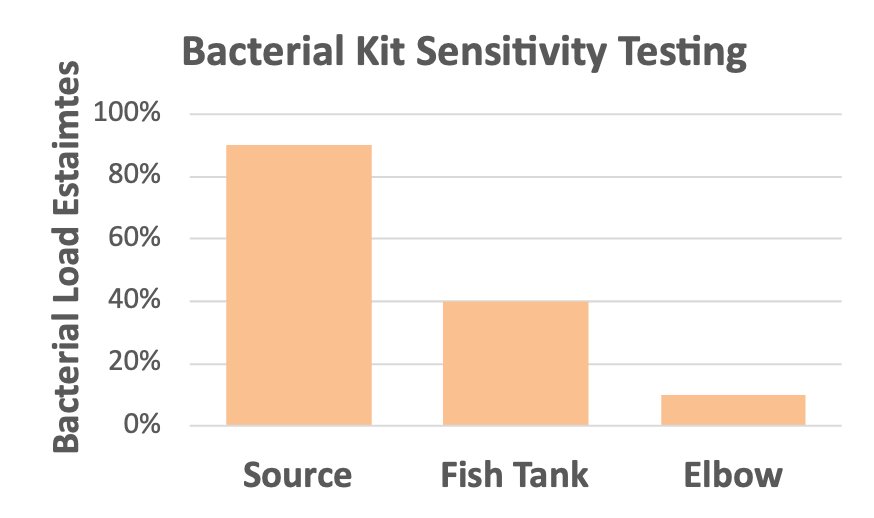
Bacterial Removal: used test kits to estimate bacterial removal rates from filter treatment flow rates

Benefits of Contact time: Comparing the results shows that longer contact time reduces the levels of bacteria in the water.

|
Conclusion
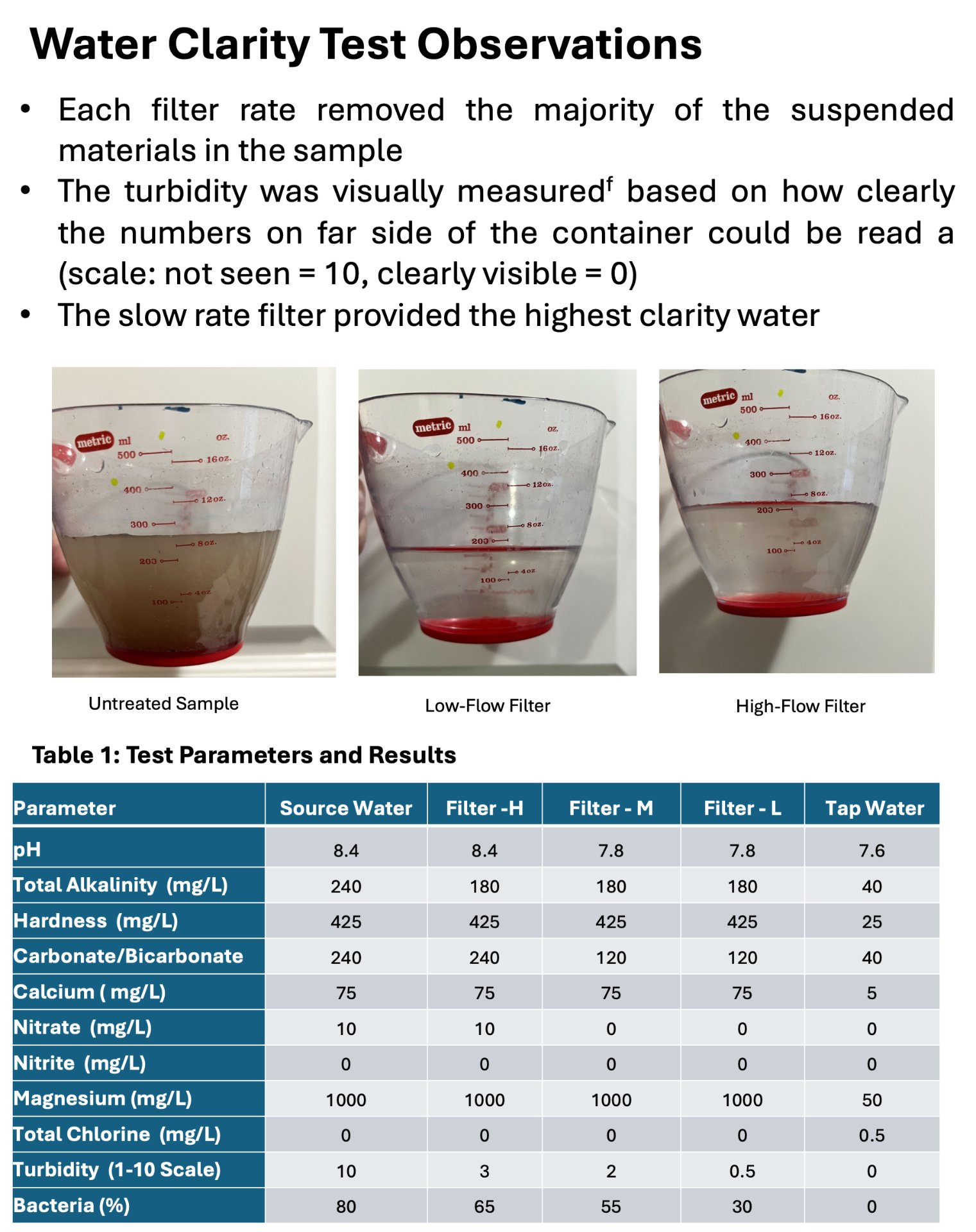
- All filter rates substantially reduced the high turbidity within the sample water, including particulate contaminants, if present.
- The filter did not remove dissolved contaminants like salts that makes water hard
- The slow filter produced the highest reduction in turbidity
- The low flow rate filter gave the highest bacterial removal rate
- This demonstrates that contact time is most important when designing and using a filter system
Application
Real Life Application: It is very useful because it connects science to real-life health, safety, and decision-making. This experiment shows which methods remove dirt, germs, and harmful organisms. This helps people find a safe way to filter their water when they cannot have access to clean water. It can also help people to clean water, but not for drinking, but for washing clothes or washing dishes or something similar.
Using different layers can be as effective replacement to a full water treatment plant. Using various layers, such as activated carbon can make the water more palatable to drink, remove other harmful chemicals such as pesticides and micropollutantsj that commonly occur in poor social economic regions.
The filter method should be further tested, improved and combined with a suitable disinfection processi. The system can then be provided as part of an education program in areas that don’t have access to safe drinking water supplies.
In more domestic settings, such as Calgary, these filters could provide “fitness for purpose” water to reduce the need for potable quality water. Such examples include filtering stormwater before being used to irrigate sports fields or cooling water for buildingsk. This could potentially reduce the size of the water pipes and the size of the water treatment plantl.
Sources Of Error
Sources of Errors •Fine sediment and contaminants from filter construction could leach out during testing. Error minimized by passing tap water through the sample 10 times to confirm no leaching. •Application of test water samples was not applied uniformly onto the bacteria test kits. •Temperature and elapsed time are not constant for each test •Source water bacterial concentration changes over time during the experiments •Reading test strip colour graduation in different light conditions gives different results when the sample is uniform • The test strip does not provide adequate sensitivity for changes to the readings.
Citations
- a.https://www.hhs.gov/answers/public-health-and-safety/what-is-the-difference-between-salmonella-and-e-coli/index.html#:~:text=Symptoms%20include%20fever%2C%20diarrhea%2C%20abdominal,The%20usual%20treatment%20is%20antibiotics. b.https://pmc.ncbi.nlm.nih.gov/articles/PMC6015860/#:~:text=The%20bacterium%20Escherichia%20coli%20can,More%20recently%20Yang%20et%20al. c.https://romegamart.com/blog-details/water-treatment-plant-process/ d.https://www.samaritanspurse.ca/wp-content/uploads/Safe-water-curriculum-biosand-filters-summary.pdf e.https://www.bushcraftspirit.com/wilderness-water/ f.https://blogs.worldbank.org/en/water/how-test-water-quality-here-are-some-low-cost-low-tech-options#:~:text=In%20the%20absence%20of%20water,%2C%20see%20the%20CAWST%20manual). g.https://data.calgary.ca/Environment/Watershed-Monitoring-Program-Results/aaif-i7ky h.https://www.deeproot.com/blog/blog-entries/the-role-of-trees-and-plants-in-bioretention-2-2/ i.Slow Sand Filters for the 21st Century: A Review, https://www.mdpi.com/1660-4601/20/2/1019 j.https://www.wisewell.com/pages/carbon-filter#:~:text=What%20Does%20It%20Remove?,cancerous%20compounds%20like%20chlorine%20byproducts. k.Non-potable water irrigation https://www.calgary.ca/our-services/parks-non-potable-water.html#:~:text=What%20parks%20in%20Calgary%20use,S.E. l.Reusing stormwater can release untapped benefits https://www.weberthompson.com/thought/reusing-stormwater-benefits/
- https://www.h2odistributors.com/info/how-to-make-a-water-filter/?
- srsltid=AfmBOooS2xCt_3jrU2EjL5ROEmmo1Mb4AaVoQGeyVrh3I7Orf4nfTFq5
- https://longsecowater.com/blog/how-to-purify-your-homes-water
- https://www.bushcraftspirit.com/wilderness-water/
- https://data.calgary.ca/Environment/Watershed-Monitoring-Program-Results/aaif-i7ky
- https://www.water4chad.org
- https://water.org raz
Acknowledgement
- David Seeliger, a stormwater engineer, for guiding us and sharing knowledge about filtering water and bacteria in river water. - Mr. Baillie for hosting the science fair and club meetings.