
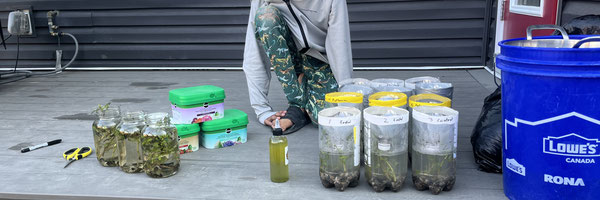
NPK Eutrophication Madness
Amare Lakhani
Reneeta Lakhani
Grade 7
Presentation
Hypothesis
If I give multiple microcosms excess nitrogen, phosphate, and potassium-rich fertilizers, then the nitrogen-rich microcosms will experience fewer impacts of eutrophication such as algae blooms and Hygrophila Polyperma (aquatic plant) height, since the Hordeum Vulgare, Barley (terrestrial plant) will take up more of the fertilizer mass in the roots for plant functions, meaning less fertilizer leeching into the water. Meanwhile, the phosphate-rich microcosms will experience greater impacts from eutrophication since less fertilizer is taken up by the barley’s roots for plant function.
Research
- What is Eutrophication?
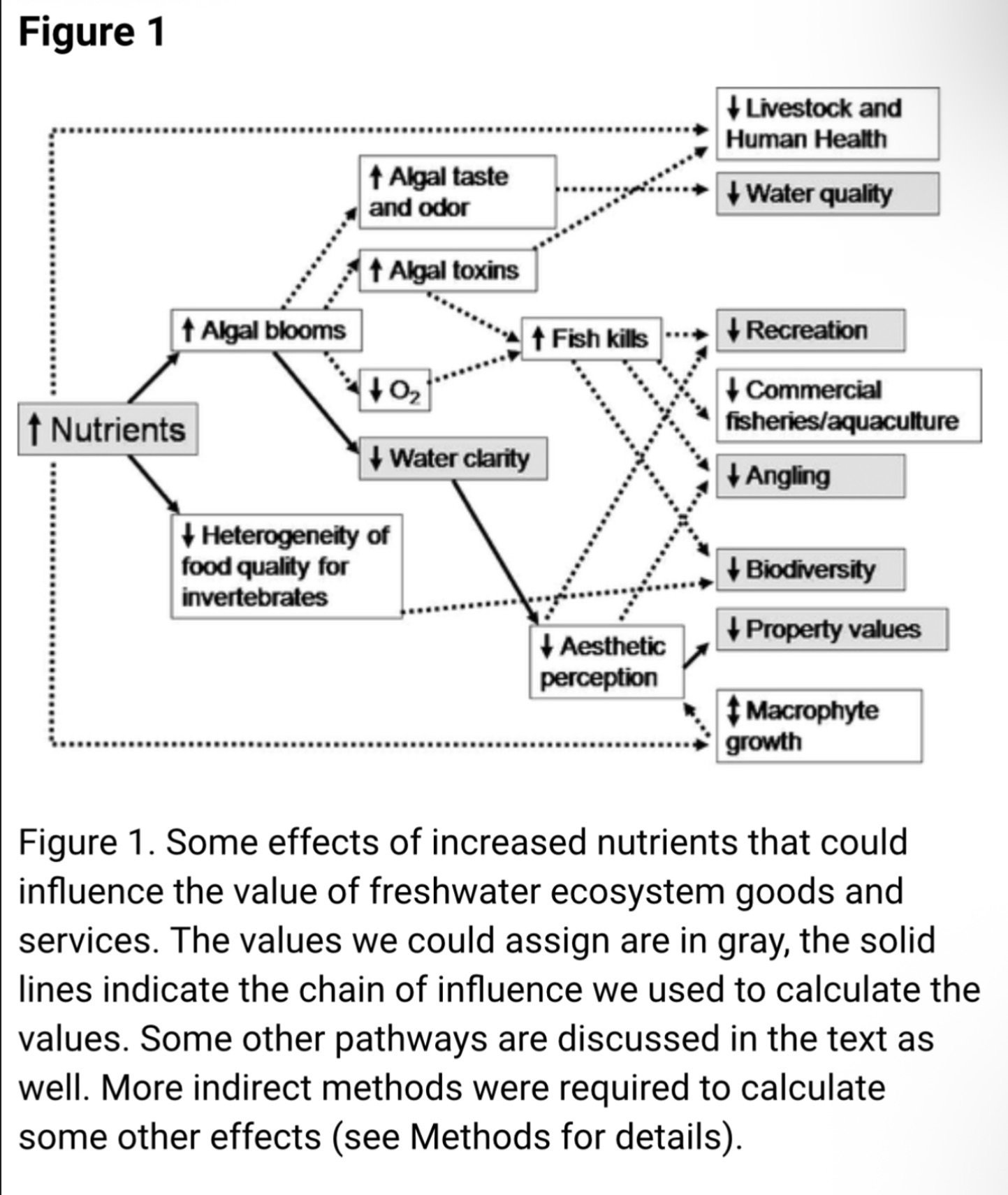
- Is when you feed fertilizer to your plants and part of the fertilizer leeches/runs off into the water, creating algae bloom. The algae blocks the sunlight so the plants underwater can’t grow. Cyanobacteria (Algae) produce cyanotoxins, toxins produced by the algae, destroy our enzymes in our body. Leads to organ shutdown. When the algae naturally dies, it steals oxygen from the water, causing fish to suffocate.
- Creates DEAD ZONES in water and all aquatic animals cannot live there, either have to relocate or they go extinct in that body of water
- DECREASED BIODIVERSITY
- Bad for aquatic ecosystems
- DECREASED BIODIVERSITY
-
What is plant and crop fertilizer made of?
- 3 Main Nutrient Types in Fertilizer
- Nitrogen
- Nitrates: plants need nitrogen in the form of nitrates to survive and grow. Too much can be harmful and run off into aquatic ecosystems. Main cause of Eutrophication.
- Ammonia: Is a toxic substance for ecosystems (if too much)
- Phosphorus
- Phosphates: can run into underwater ecosystems and cause eutrophication. Phosphates can also create poisonous gases
- Potassium
- Potassium can run off and cause eutrophication although plants are much better with potassium.
- Nitrogen
-
Why do we use fertilizer? What are the benefits to terrestrial plants?
- We use fertilizer to help our plants grow faster
- Nitrogen:
- Nitrogen is a Macronutrients because plants require nitrogen because they need to build important metabolic molecules (such as amino acids which make proteins and enzymes). There is not enough nitrogen in the soil naturally. So we give the plants nitrogen fertilizer to supplement for the lack of nitrogen
- Phosphorus:
- Phosphorus is an essential macronutrient that can strengthen stems and stalks and increase root growth. And adding this can produce quality of the plants.
- Potassium:
- Potassium is also an essential macronutrient. Potassium builds immunity by protecting against pathogens by activating enzymes.
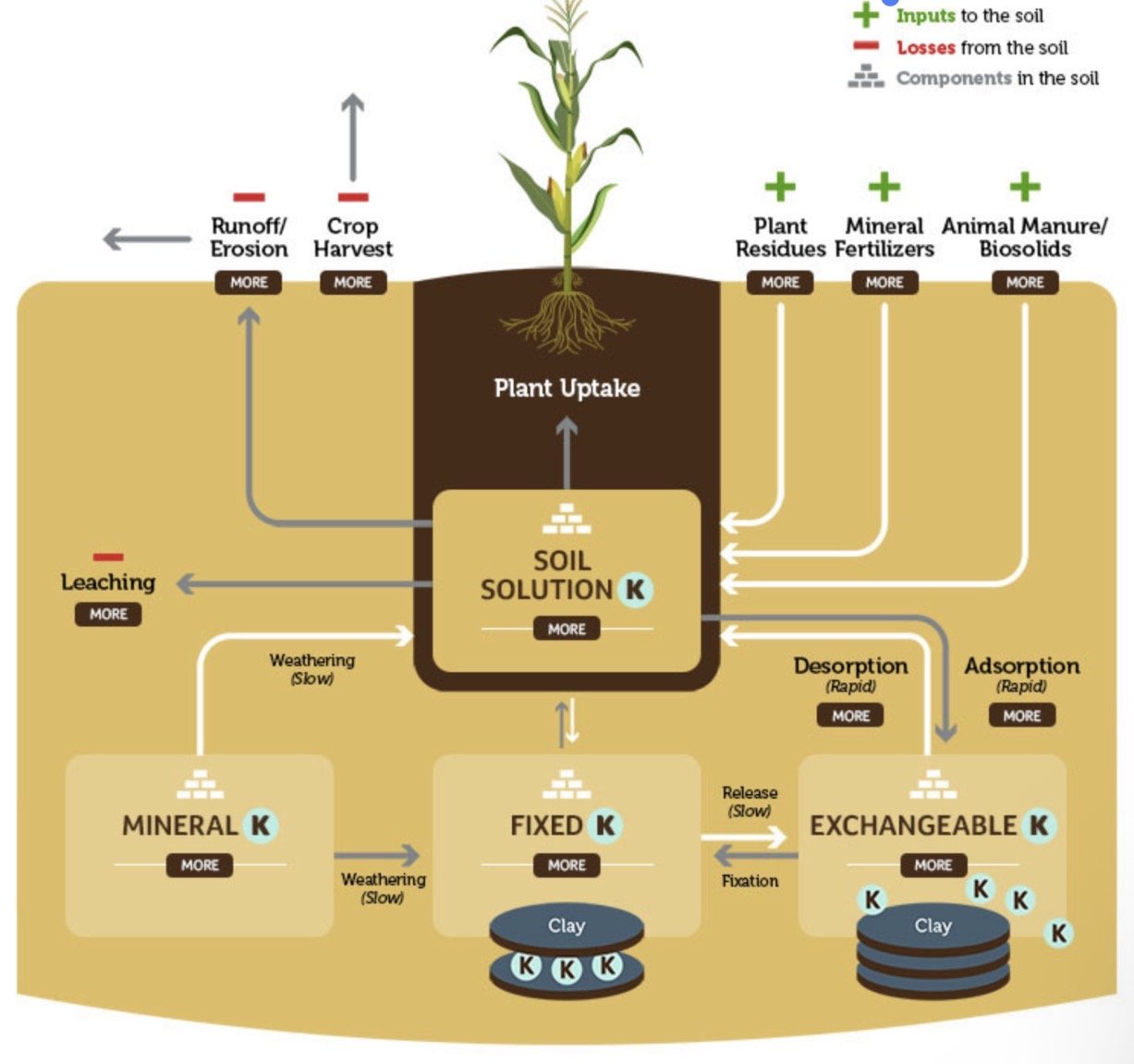
Fig. The cycling of potassium through the soil and where it gets deposited as well as exchanged into different forms * What organisms are impacted by Eutrophication? * Aquatic plants, aquatic animals, algae, bacteria, land animals, terrestrial plants * What effect does a small dose vs a big dose of fertilizer have on terrestrial plants * Examples of Eutrophication? * Applications? * People will learn how much fertilizer is good for their plants and be more careful with how it affects aquatic plants * We should also consider proper placement of canola farms and maybe buffer zones * Road, Mound, Metal Containment * Canola: Not the chosen plant but great reference * Canola, also known as Brassica Rapa (Rapeseed) is a genetically modified plant * Farmers and the agricultural industry use lots of fertilizer to help enhance crop productivity
- 3 Main Nutrient Types in Fertilizer
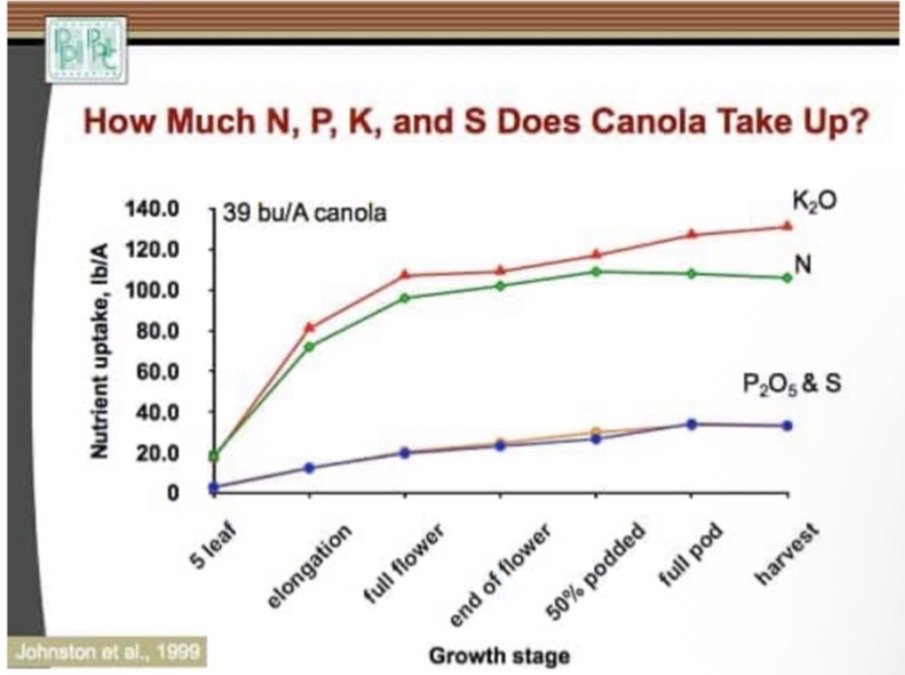
- Fig. Shows the root uptake of varying fertilizers at different growth stages of Brassica Rapa
- Based on information displayed in this graph above, we can conclude that potassium is up-take most by canola plants as they grow and phosphorus up-taken least, leaving nitrogen in the middle.
- Potassium causes mild erosion, leeching and run off chemicals. The chemicals can cause eutrophication. Although it can start eutrophication, canola takes up more potassium than nitrogen or phosphate causing less to run into the soil and water bodies.
- We are using canola in our project because…
- Grows relatively fast (\~3 months to harvest)
- Major cause of Eutrophication in Alberta
- Benefits from fertilizer
- Easy to measure growth (straight up)
- CHOSEN TERRESTRIAL PLANT: BARLEY (Hordeum Vulgare)
- Barley can be used to make beer, soups, cereals, snakes and protein bars.
- It grows best when the weather is cool and dry with low humidity.
- Barley requires fertilizer to grow efficiently, especially in agricultural conditions.
- Nitrogen and potassium fertilizers are used the most while phosphate is used the least
- Barley is an upright sturdy small seed plant. It requires full sun or partial shade to grow effectively and must be grown in warm, summer temperatures.
- Growing time from seed to maturity in barley is about 90 days, or 3 months.
- Barley does NOT require germination in separate conditions from the soil. Seeds can be planted into soil.
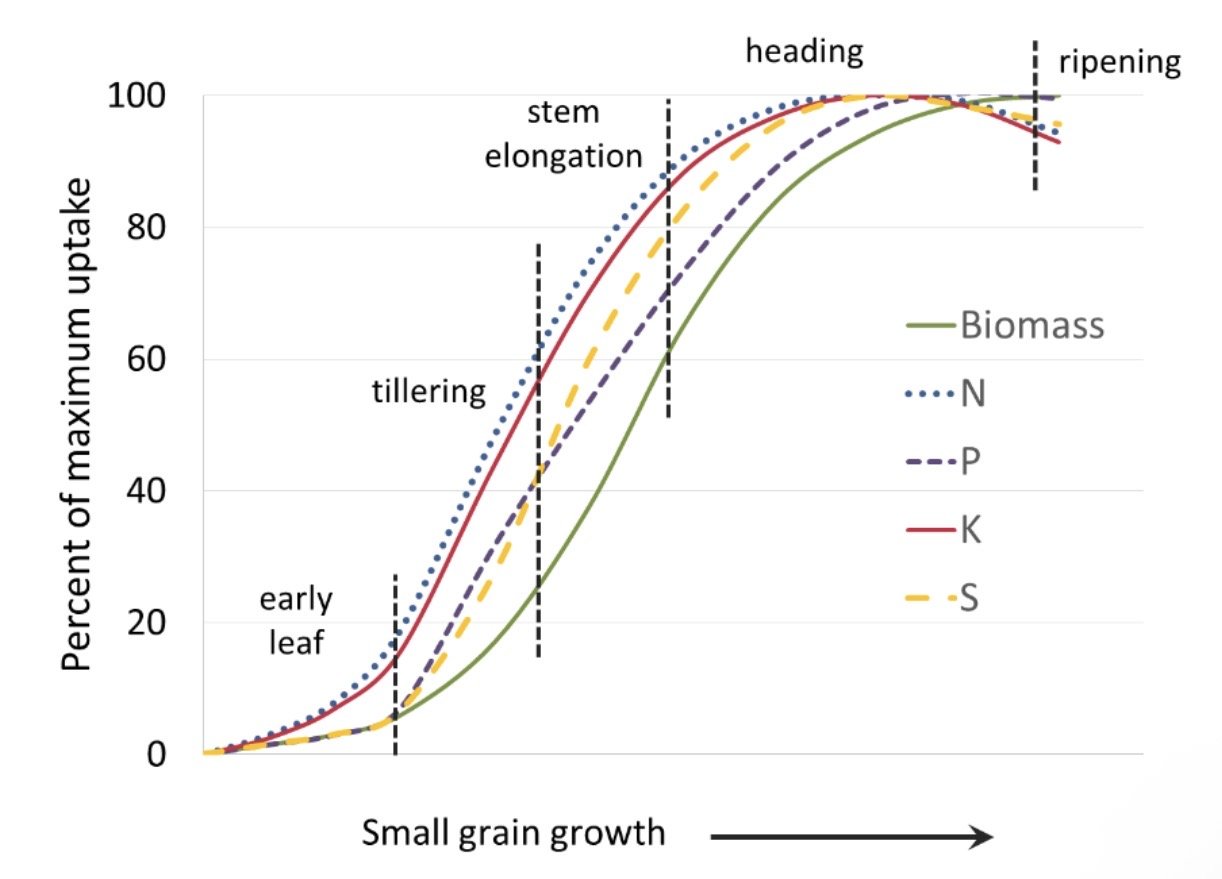 Fig. Shows the root uptake of varying nutrients (N, P, K, S, Biomass) throughout different growth stages of Hordeum Vulgare
- Winter Wheat (Not Chosen but good reference)
- Triticum Aestivum
- Plant 2cm below top soil
- Each winter wheat plants needs roughly 3-5mm water per day
- Winter wheat is a very hardy crop that is germinated and slies dormant in the fall and winter, then grows in the spring
- Required Nutrients:
- Nitrogen: Winter Wheat best grows under nitrogen in the spring. In winter, when the soil is frozen, the nitrogen cannot be uptaken the plant, causing excess nitrogen leakage.
- Phosphate: Phosphates are important for winter wheat to establish their root systems as well as growing their crowns.
- Potassium: for strong growth and stress resistance
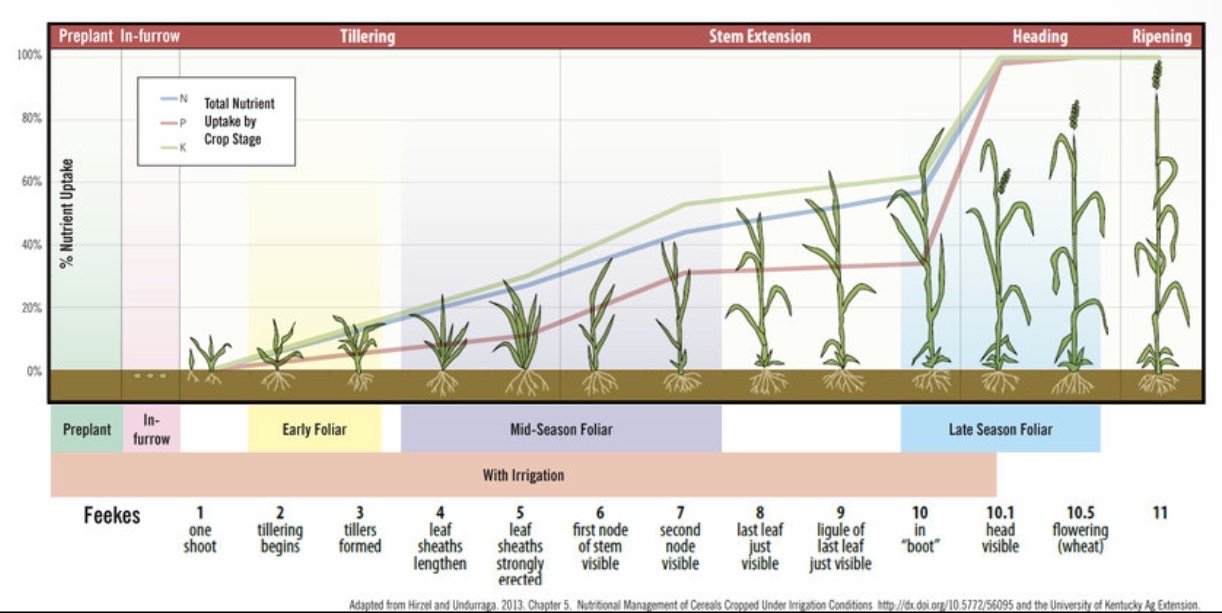 Fig. Shows root uptake of different fertilizers (N, P, K, S) throughout the growing stages of Triticum Aestivum
- Algae:
- Cyanobacteria (Not chosen algae but good reference)
- Some favourable conditions for Cyanobacteria to multiply and bloom: Abundant sunlight, Still Water, Sufficient nutrients
- When algae dies: HYPOXIA (less oxygen)
- Fish and BENTHIC organisms (Bottom Dwellers) most impacted
- Benthic animals cannot easily move when the area is depleted of oxygen
- Fish and BENTHIC organisms (Bottom Dwellers) most impacted
- Stratification In Eutrophication:
- The separation of layers in water bodies due to algae growth
- Top Layer: Algae. Very bright (take all sunlight). High oxygen.
-
Bottom Layer: Denser water with little sunlight since the algae is taking all. Same with the oxygen. The algae takes it up. This creates a dead zone.
-
ALGAE: CHLORELLA VULGARIS
- Chlorella Vulgaris is a microalgae, and is unicellular.
- The best growth conditions for Chlorella vulgaris is 205 mg/L. Micro algae require optimum light (maximal light), temperature (25 degrees C), pH (9), fertilizer (Nitrogen, Phosphorus, Potassium)
- Like other micro algae, when Chlorella Vulgaris dies, it creates dead zones
- They account for 50% of the earth's photosynthesis activity.
OUR AQUATIC PLANT: HYGROPHILA POLYSPERMA
- The Temperature: 22°C - 26°C (Warm water)
- pH: 6.5 - 7.5
- Lighting: Moderate to high light intensity
- Hygrophila Polysperma is a fast growing, versatile aquatic plant. Originated in Southeast Asia.
- A good model organism to study as it grows fast, requires sunlight and proper gasses for gas exchange, etc.
- Hygrophila Polysperma is dependent on temperature and daylight in order to grow
- Growth rate will dramatically increase in the presence of nutrients.
- Can be an invasive aquatic plant in certain environments
- Can survive in low light condition
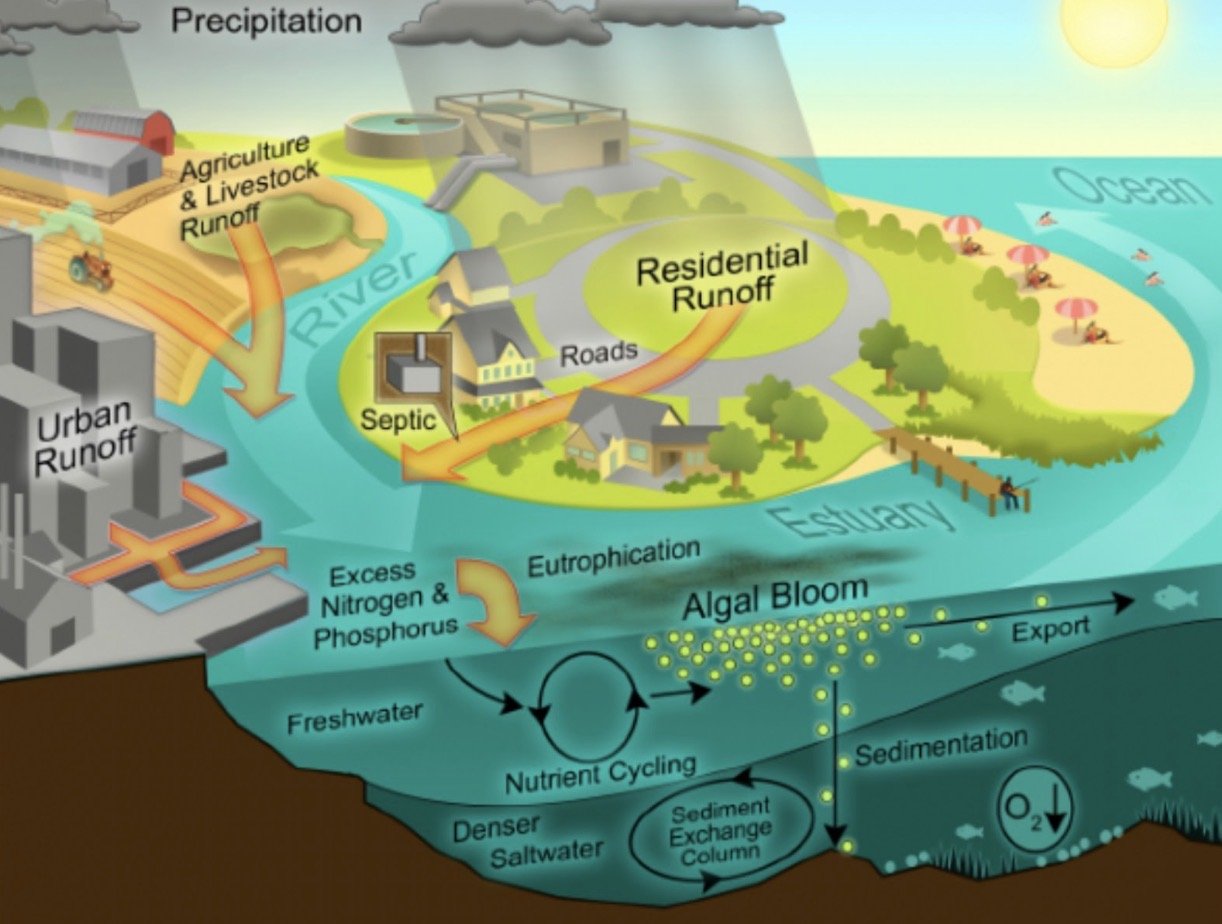 Fig. The cycle of Eutrophication in an environment, where runoff from urban and agricultural centres lead to algal blooms in nearby water bodies
- Timeline
- August: Topic Brainstorming and Research
- Early September: Collect materials, continue research, develop hypothesis and materials and procedure.
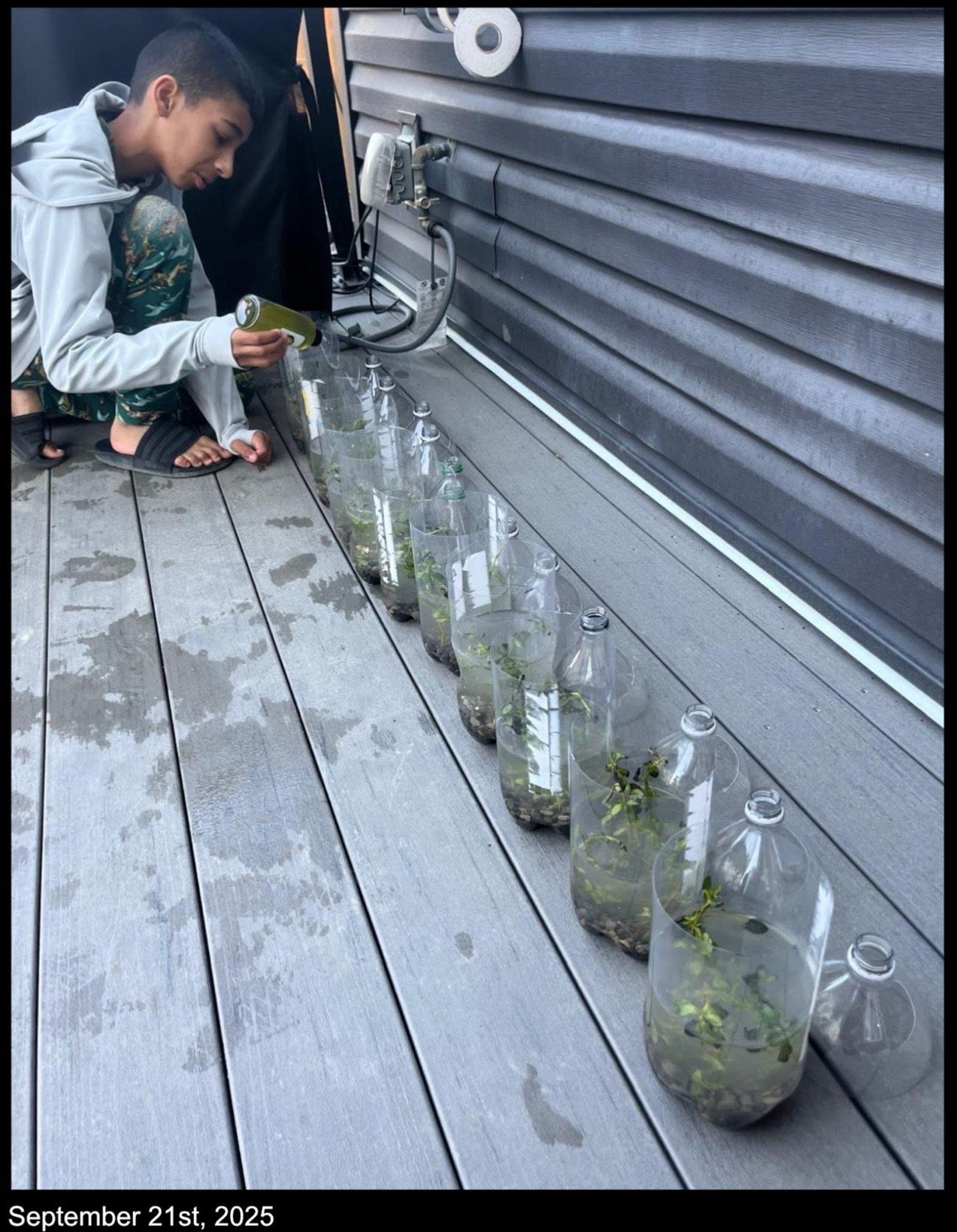
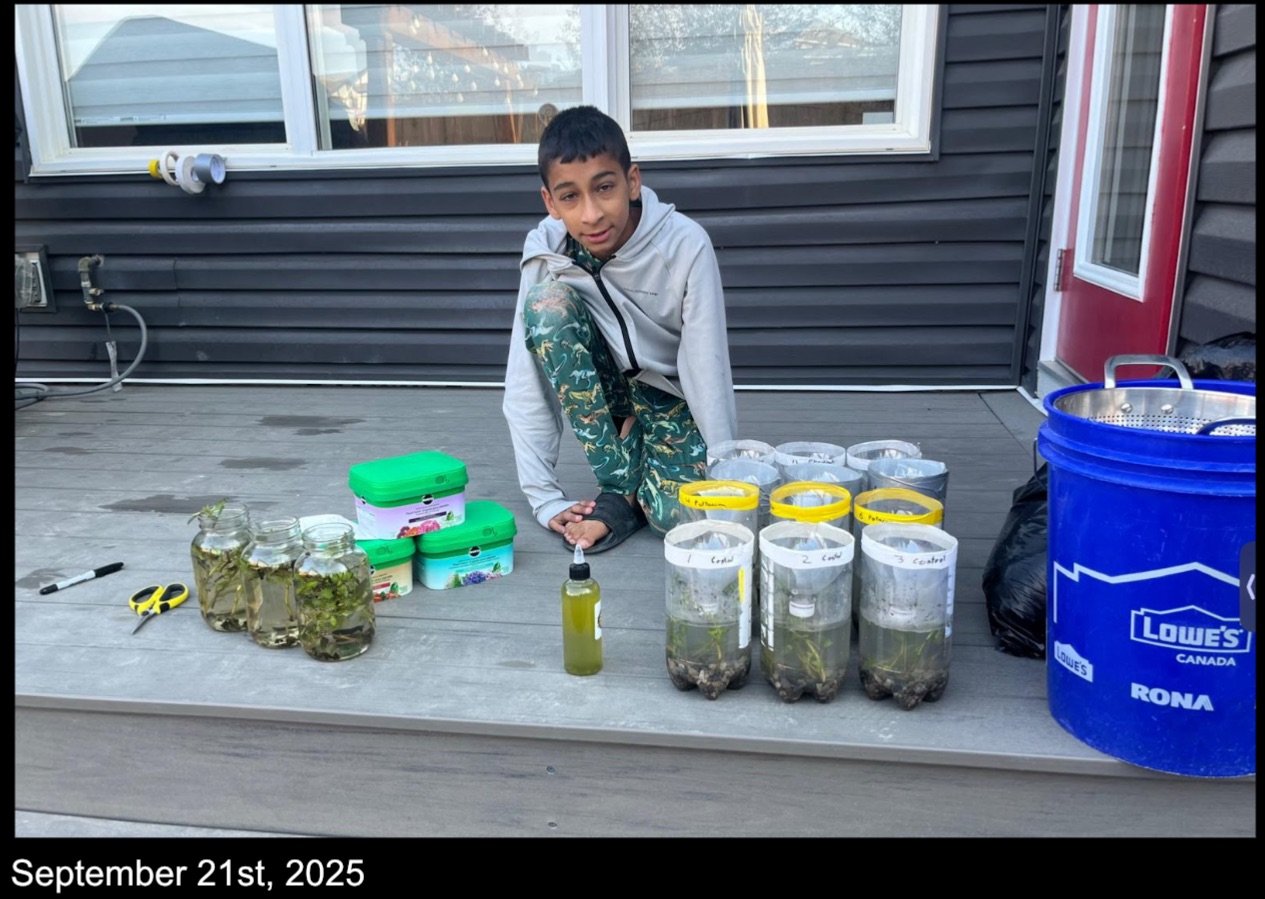
- September 21st: Assemble the microcosm, gave initial water and fertilizer treatment
- September/October/November: Grow + Add Fertilizer + Record Data
- November 30th: Disassemble microcosms, record final measurement
- December: Interpreting results, making conclusions, filling out submission forms, making figures and table, reviewing research and reflecting on hypothesis.
- January-February: Finish submission form, work on trifold and making information more presentable
- March 4th: all online submissions due
- March/April: Finish trifold and prepare for the science fair
- April 9-11th: SCIENCE FAIR!
- Plants and Fertilizer Used:
- Terrestrial Plant: Barley (Hordeum Vulgare)
- Aquatic Plant: Indian Swampweed (Hygrophila Polysperma)
- Algae: Chlorophyta micro algae (Chlorella Vulgaris)
- Fertilizers:
- Potassium-Rich
- Nitrogen-Rich
- Phosphate-Rich
- Materials:
- 12 Big Bottles (Pop Bottles)
- Gravel
- Aquatic Plant Stems (Hygrophila Polysperma)
- Terrestrial Plant Seeds (Barley - Hordeum Vulgare)
- Tap Water (0.5 cups per microcosm per week)
- Fertilizer (Miracle Gro Plant Food)
- Nitrogen Heavy (28-10-10)
- Potassium (15-30-15)
- Phosphate (18-18-21)
- Soil
- Coloured Tape
- Control = hockey
- Potassium=colored tape
- Nitrogen=duct tape
- Phosphate=masking tape
- pH meter
- Ruler
- Algae (Chlorella Vulgaris)
- Scale (measured in lbs and oz)
- Notebook and Pencil to record observations
- Measuring tape
- Box cutter
Variables
- Variables:
- Controlled Variables:
- Plant type (Hordeum Vulgare (Barley) and Hygrophila Polysperma (Indian Swampweed))
- Barley Seeds planted: 12 seeds planted per microcosm
- Indian Swampweed rooted: 4 stems per microcosm
- Fertilizer Dosage: Each microcosm got ⅓ teaspoon of fertilizer each week
- Amount of water given: ¼ cup of water given each week with the fertilizer
- Amount of Algae: 12 drops Chlorella Vulgaris at the beginning of the experiment
- Temperature of Incubation: About 21 degrees Celsius (Room Temperature)
- All were exposed to the same amount of sunlight (Beside a window, in a uniform line)
- Manipulated Variable:
- Type of Fertilizer Used (N-P-K)
- 1 = Nitrogen (28-10-10)
- 2 = Phosphorus (15-30-15)
- 3 = Potassium (18-18-21)
- Type of Fertilizer Used (N-P-K)
- Responding Variables: Results
- Amount of algae grown (Visual)
- Measured by the darkening of the water and the development of the layers of algae
- Terrestrial Plant Health (Statistical)
- Change in Soil pH
- Change in Hordeum Vulgare (Barley) shoot height (cm)
- Aquatic Plant Health (Statistical)
- Change in Hygrophila Polysperma (Indian Swampweed) shoot height (cm)
- Overall Ecosystem Health (Statistical)
- Change in microcosm weight (oz)
- Amount of algae grown (Visual)
- Controlled Variables:
Procedure
-
Procedure:
-
Collect and gather all materials
-
Research and develop hypothesis
-
Assembling the Microcosms:
-
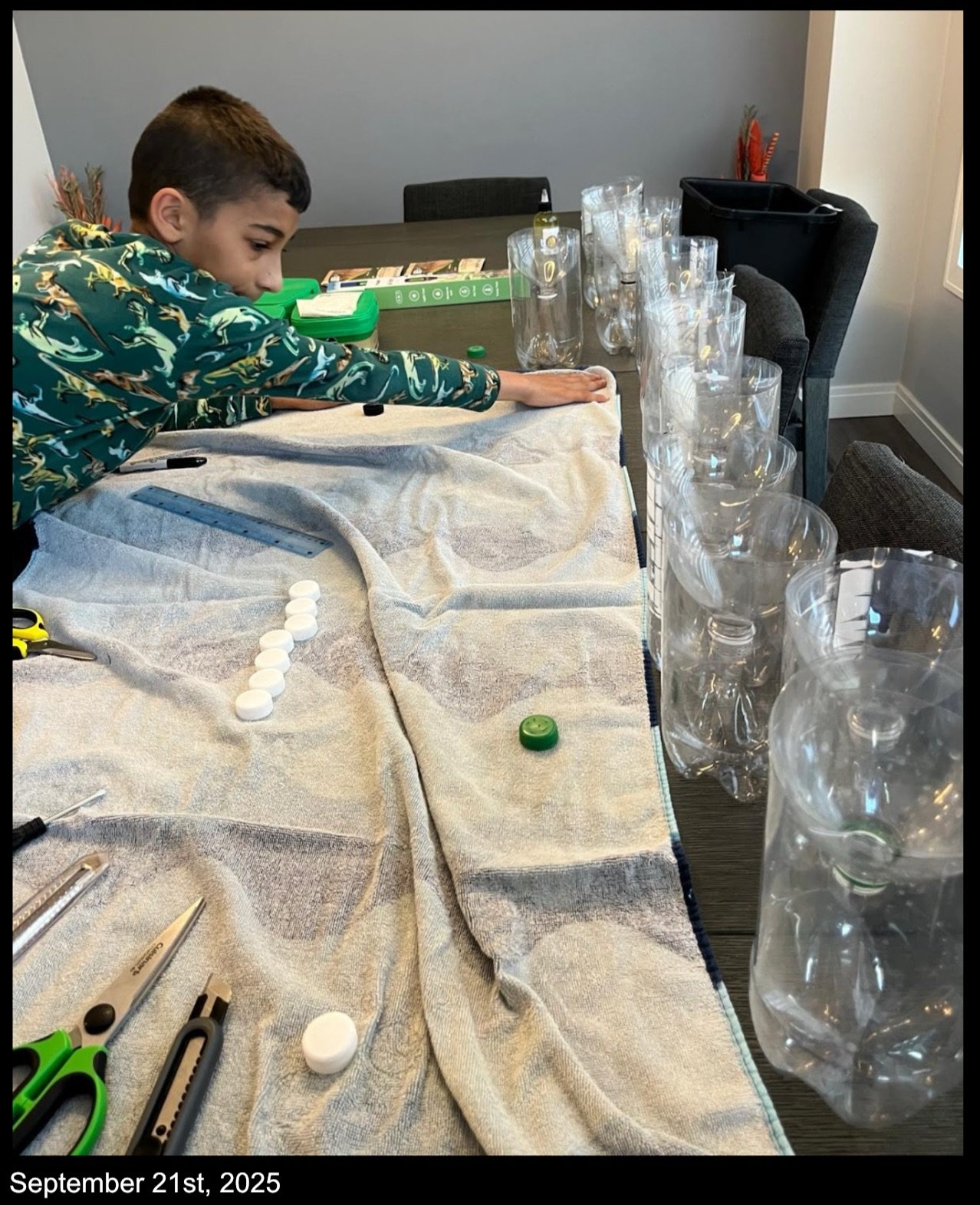
Cutting open 12 pop bottles about ⅔ height, in order to separate the top and bottom layers.
- Poke 4-5 holes in the bottle cap of the top layer with a box cutter
- Place a 3 inch layer of gravel in the bottom layer of each microcosm
- Rooted 4 stems of Hygrophila Polysperma (aquatic plant) in the gravel of the lower layer of each microcosm
- Fill them bottom layer with room temperature water about halfway up.
- Add 10 drops of Chlorella Vulgaris algae culture to each microcosm bottom layer
- Gently place the top layer of the microcosm upside down on top of the bottom layer, and tape the two layers together
- Label each with different tape for identification
- Control (1, 2, and 3) = hockey
- Potassium (4, 5, and 6) = yellow
- Nitrogen (7, 8, and 9)= duct
- Phosphate (10, 11, and 12) = masking
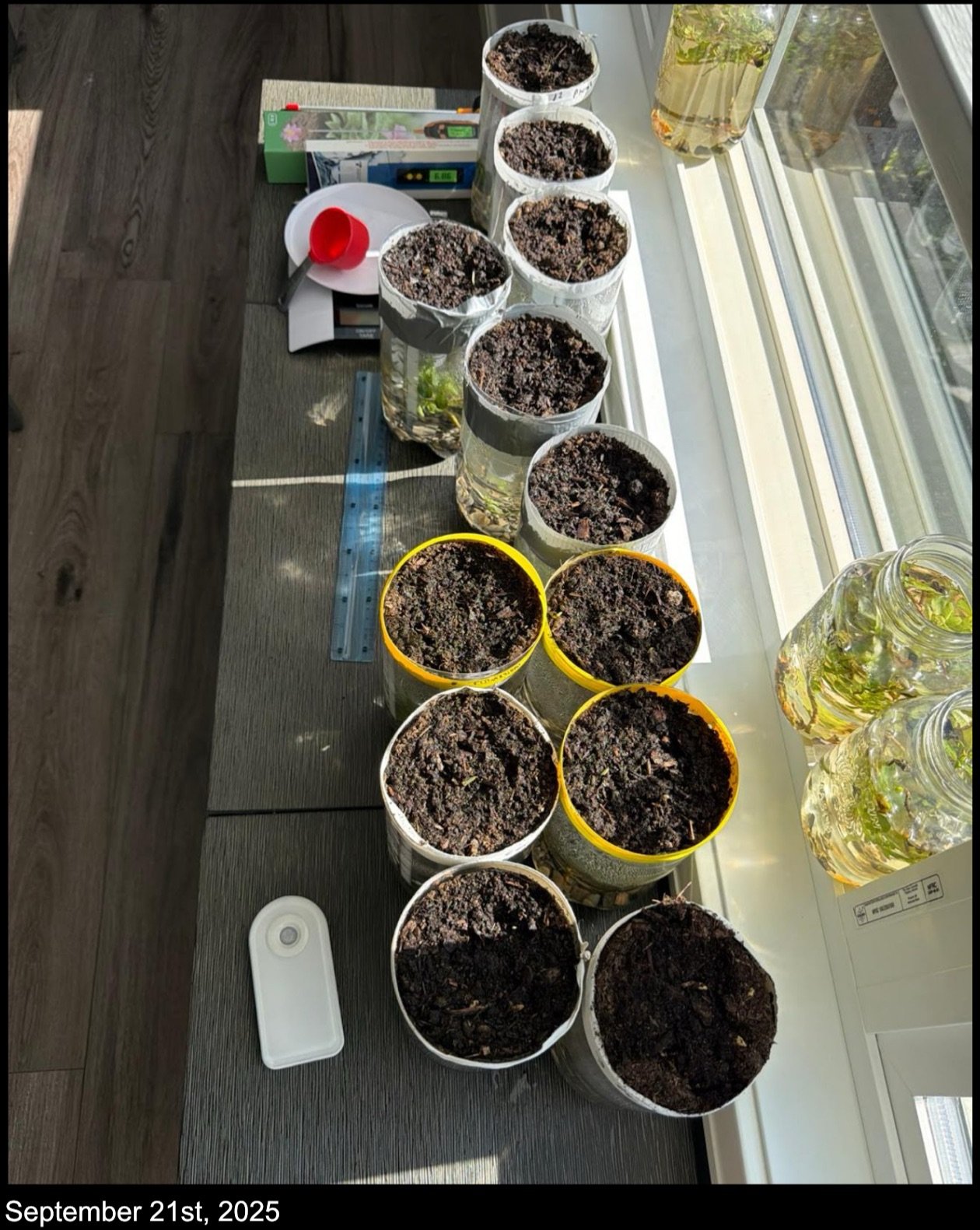
- Plant soil in the top layer, plant 12 barley seeds
- Give terrestrial plants first dosage of respective fertilizer (⅓ teaspoon and water equally ½ cup)
- Place microcosms next to window in an orderly line to grow
-
For initial measurements
- Microcosm Weight: place each completed microcosm on a scale, then measure and record accordingly
- Aquatic Plant Height: set ruler next to microcosm, take approximate measurements of rooted aquatic plant shoots and record, accordingly.
- Soil pH: Turn on the pH meter, set about an inch into the soil, and record the displayed pH measurement.
-
Weekly Microcosm Care
-
Each week, add ¼ cup of water with ⅓ teaspoon if each respective fertilizer into every microcosm.
- For barley height measurement, place ruler beside a plant stalk in a microcosm, and record the height on a notebook. Repeat as many times as stalks growing. Record as you go along
-
Add extra water equally to all microcosms as they may need it
-
Microcosm Disassembly
-
Take final measurements
- Microcosm Weight: Repeat process in 14a
- Aquatic Plant Height: Following disassembly, remove remaining aquatic plant stems and measure with a ruler, record accordingly.
- Soil pH: Prior to disassembly, repeat process in 14c
- Remove the upper terrestrial layer but removing adhesive tape and dumping out the soil and plants into the compost
- Remove the aquatic plants by up-rooting them, place in compost
- Drain water in the bottom portion of the microcosms, store safely away.
- Remove gravel from all microcosms, place in a bucket to return outside
- Gather, wash, and recycle all pop bottles
- Disassembly complete
Observations
Weekly Observations:
The initial soil pH for all microcosms was 7.2
- Measure once a month
Barley Growth: All started at 0cm
- Measure weekly
Week 1 (First Planted) (Sept 21)
- No algae shown yet
- Some aquatic plants were uprooted
- Barley had not grown yet (were just planted)
- Clear water quality
- pH was 7.2 for all 12 microcosms
- Water added to each microcosm:
- 0.5 cups to each (With fertilizer) (Sept 21st)
- ¼ cup to each (Sept 24)
- 2 tbsp to each (Sept 27)
Week 2 (Sept 28)
- A few barley plants started growing
- Still no visible algal blooms
- Potassium had the most growing plants in number (more but shorter)
- Control grew taller plants (less in amount but taller)
- Water added to microcosm
- 0.5 cups to each (With fertilizer) (Sept 28th)
Week 3 (Oct 5th)
- Control terrestrial plants grew less than the fertilized plants
- List of plants (container number) with noticeable algae growing:
- 4
- 8
- 9
- 10
- 12
- Added 3 more barley seeds per microcosm
- Microcosm number 5 had no barley growing
- Small layer of topsoil added
Week 4 (Oct 12th)
- Some of the barley plants from the nitrogen microcosm only have been beginning to exhibit a yellow colour, some wilting
- Barley plants grow really tall, very fast.
- Microcosms 4-12 have all grown algae cultures
- Not much difference in aquatic plants
Week 5 (Oct 20th)
- MISSED
Week 6 (Oct 26th)
- Control has small, yellow tips (Lack of Chloride)
- Due to lack of fertilizer
- Nitrogen microcosm was VERY dead
Week 7 (Nov 2nd)
- Phosphate showing more algae than nitrogen at the moment
- Potassium and phosphate doing the best in growing
- Nitrogen plants doing worst
- Some droopy plants
- Phosphate has layer of algae on surface
- pH soil measurements
- 1 - 7.2
- 2 - 7.0
- 3 - 7.0
- 4 - 6.8
- 5 - 7.0
- 6 - 6.8
- 7 - 6.9
- 8 - 6.8
- 9 - 6.8
- 10 - 7.0
- 11 - 6.8
- 12 - 6.6
- Ranking of algae
- Most = Phosphate
- 2nd Most = Nitrogen
- 3rd most = Potassium
- Least = Control
Week 8 (Nov 9th)
- Barley
- Phosphate = best
- Potassium = 2nd best
- Control = 3rd best
- Nitrogen = worst
- Algae
- Control = least algae
- Potassium = 2nd least
- Nitrogen = 3rd least
- Phosphate = worst
- Phosphate is showing a layer of algae on top of the water (Microcosm 12)
- But 10 and 11 are starting to form this layer
- Nitrogen is very murky
- Potassium has residue of algae on side
- Control barley plants have some yellowed spots, likely due to lack of nutrients
Week 9 (Nov 16th)
- ALL Nitrogen barley plants are officially dead
- Some control barley plants are yellowing (lack of macronutrients)
- Microcosm 10 had a 25cm barley stem break off
- Algae
- Same as last week
- Barley
- Same as last week
Week 10 (Nov 23rd)
- Barley
- Brightest Green = Phosphate
- Most Dead = Nitrogen
- Potassium is starting to die
- Control is growing straight up
- Phosphate has the longest leaves
- Algae
- Same as last week
Week 11 (Nov 30)
- Final pH measurement
- 1: 7.0
- 2: 7.2
- 3: 7.2
- 4: 7.0
- 5: 7.0
- 6: 7.1
- 7: 7.0
- 8: 7.0
- 9: 70
- 10: 6.8
- 11: 6.8
- 12: 7.0
- All microcosms got final recordings and were taken down.
Analysis
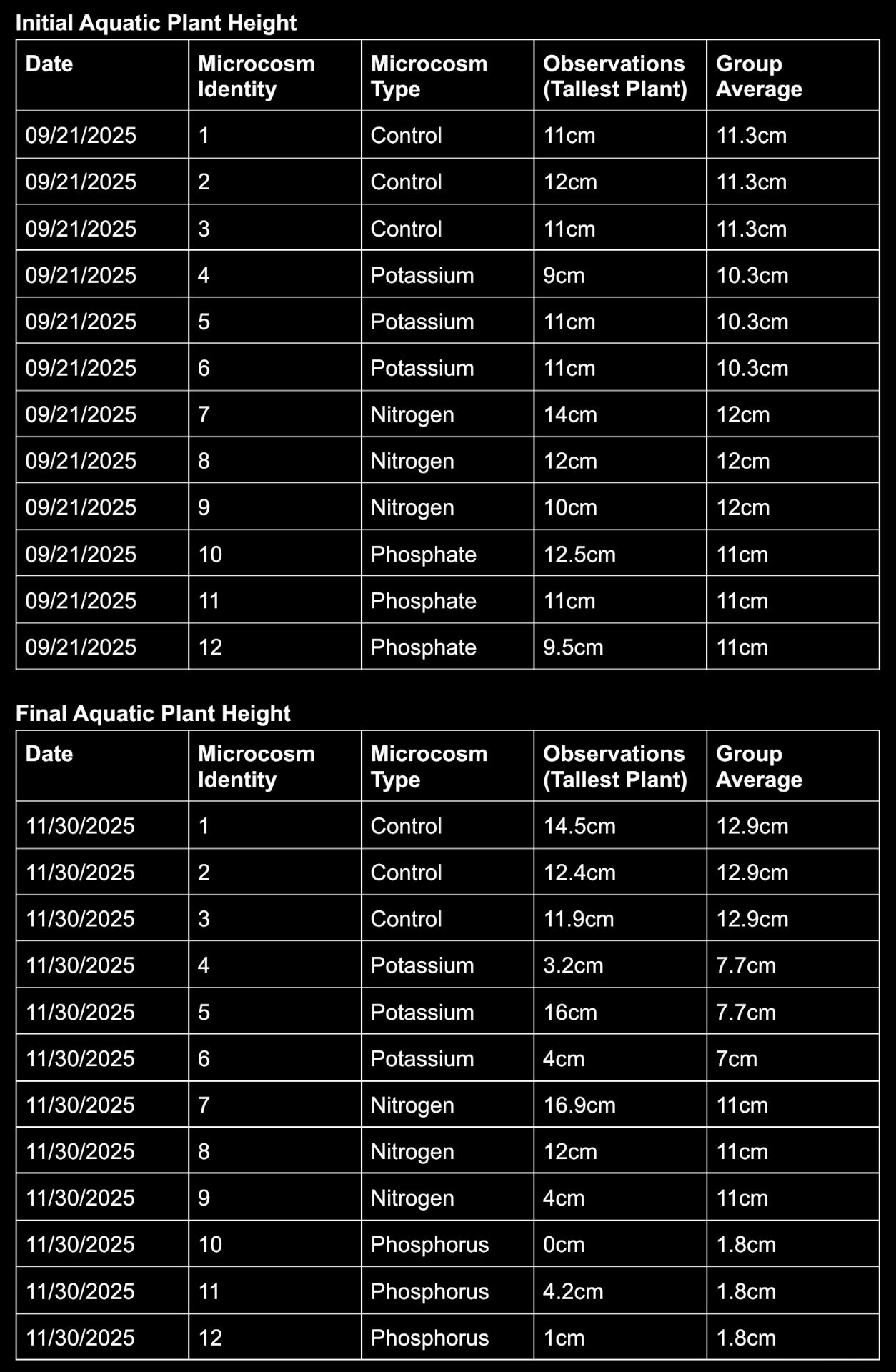 Table 1. A measure of Hygrophila Polysperma initial and final shoot height. Data is measured in centimetres. Final measurements taken 10 weeks after initial measurements**.** Each microcosm group average is shown.
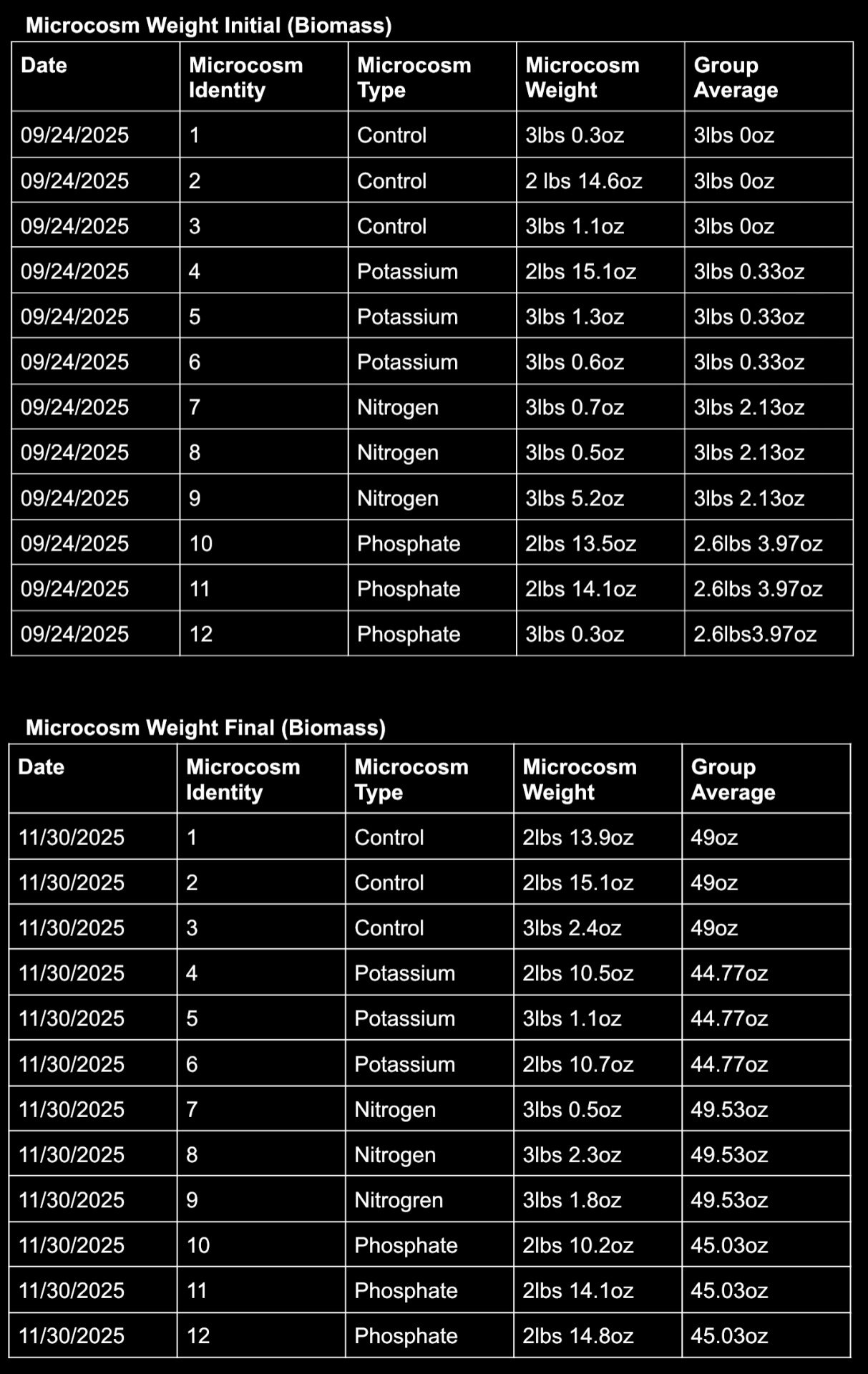 Table 2. Initial and final weight of microcosms, measured 10 weeks apart. Data measured in pounds and ounces. Microcosm includes terrestrial and aquatic habitats, therefore a measure of the ecosystem as a whole and its biomass. Each microcosm group average is shown.
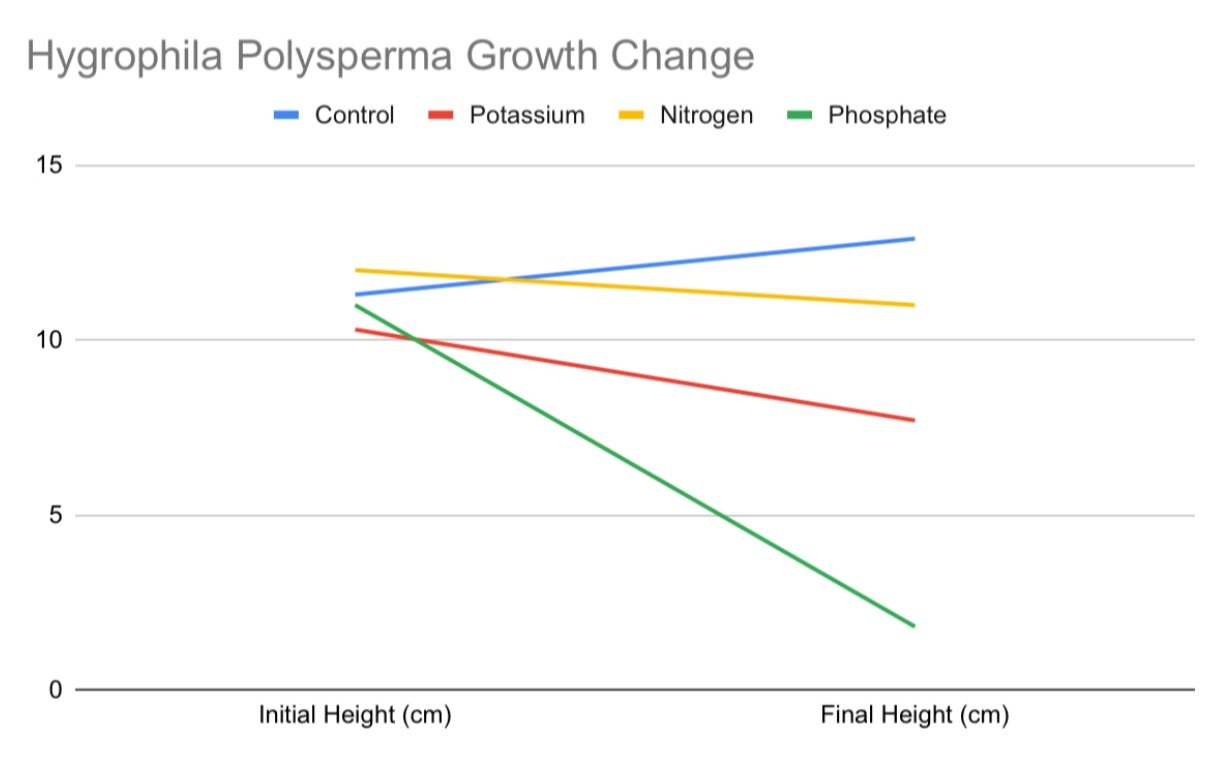
Figure 1. Graph visually depicting the change in shoot height of the aquatic plant, Hygrophila Polysperma. All data shown in graph was taken from Table 1. Measurements in centimeters, and were taken 10 weeks apart, at the start and end of the experiment.
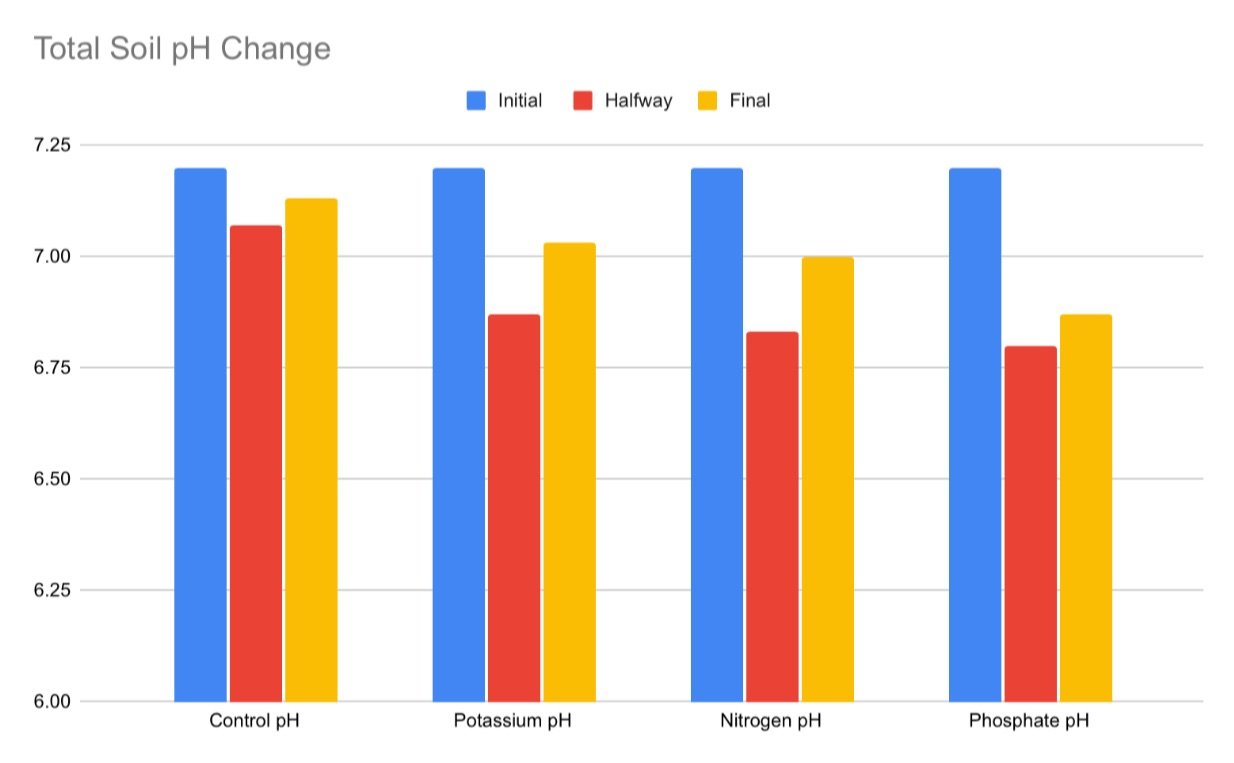
Figure 2. Bar graph representing the initial and final pH levels of the soil in each microcosm group. Measurements were taken via a pH meter, and were taken 10 weeks apart in order to demonstrate the change in soil pH as a result of varying fertilizers.
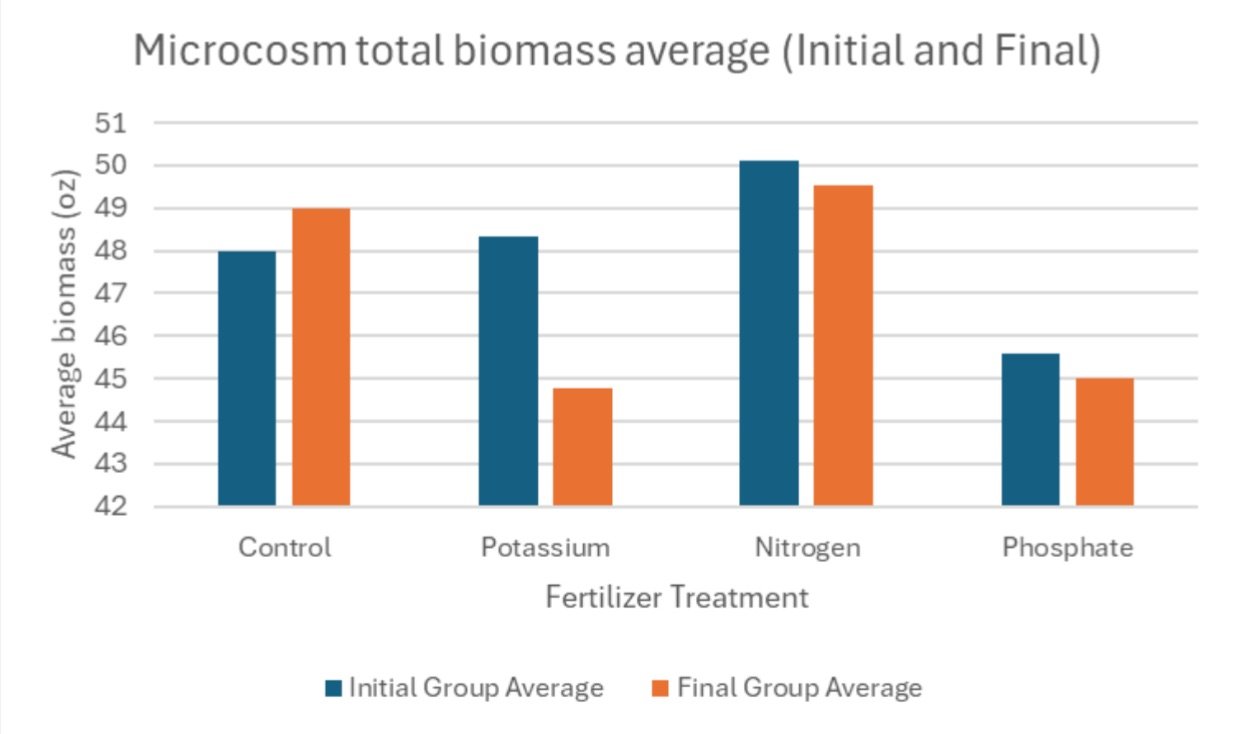 Figure 3. The change in total weight of the microcosm, initial and final. Measurements taken via a kitchen scale, and taken 10 weeks apart to show the change in biomass. Units are in ounces, and all data shown is taken from Table 2.
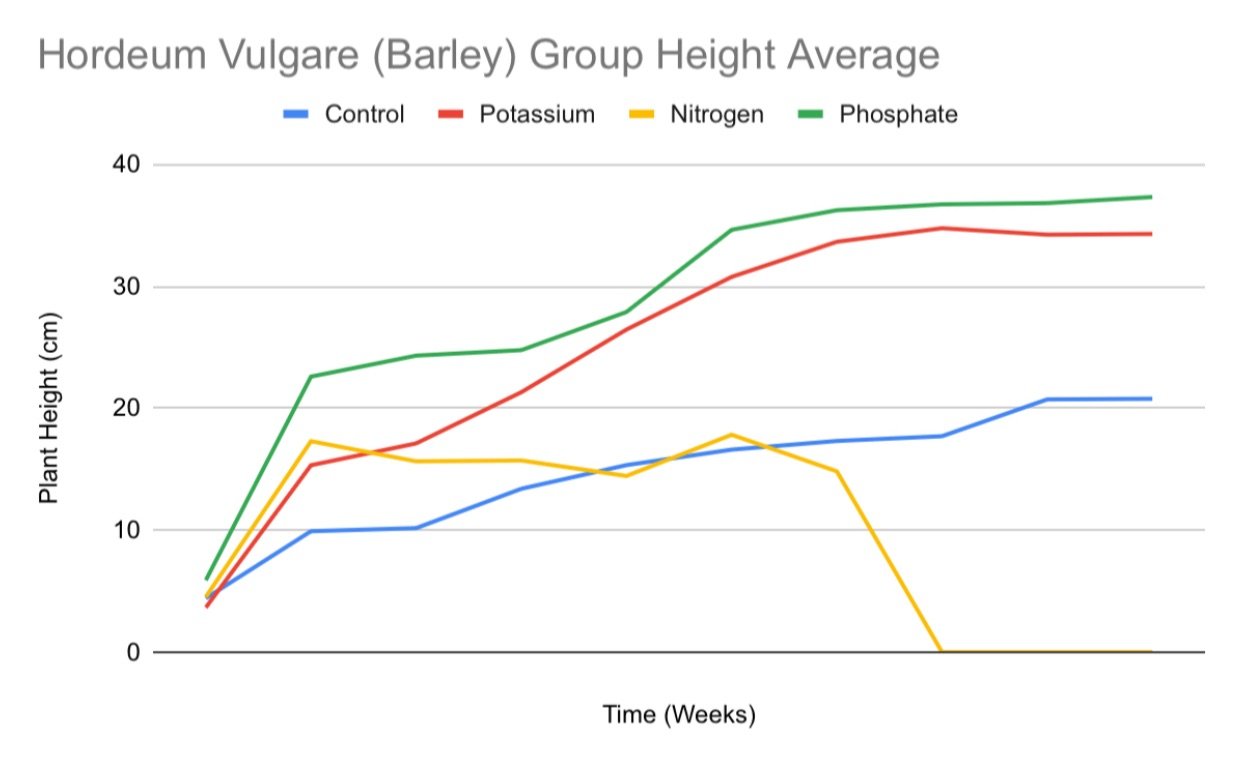
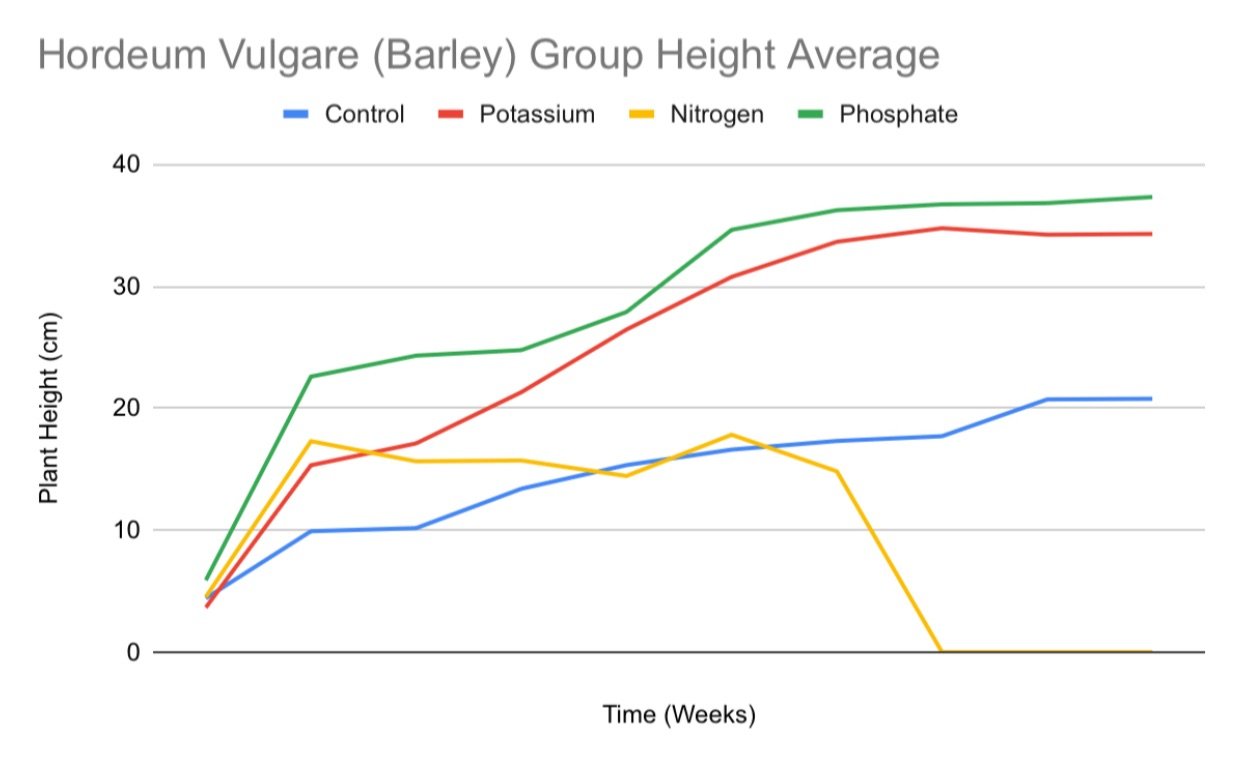 Figure 4. Graph represents the continuous change in Hordeum Vulgare, or Barley shoot height. Measurements were taken via a measuring tape, and were taken each week rather than at the beginning and end. Units are in centimeters, and show the health of the terrestrial portion of the microcosms.
Conclusion
Conclusions:
In my experiment, the main goal I had was to measure the impacts of eutrophication on aquatic and terrestrial ecosystems and the varying levels of harm that nitrogen-rich, potassium-rich, and phosphate-rich fertilizers would have on these ecosystems when given in excess. In my experiment I made 12 microcosms to simulate a real environment with the top terrestrial section imitating Albertan farmland, while the bottom aquatic section imitated natural lake or pond ecosystems nearby.
Prior to starting my experiment, I hypothesized that when I add nitrogen-rich fertilizer in excess to my barley plants, it will have the least impact on the aquatic ecosystem below. I also predicted that phosphate-rich fertilizers in excess would cause greater eutrophication and death of the aquatic ecosystem. My experiment was run to see which of these fertilizers would benefit the terrestrial crops the most while having the least eutrophication impact on the aquatic ecosystem. When measuring the aquatic plant (Hygrophila Polysperma) shoot height, I noticed that the final shoot height of the aquatic plants in the phosphate decreased the most in comparison to other microcosm groups. Nitrogen and Potassium aquatic plant height did much better than Phosphate. The potassium aquatic plants saw an average decrease in height of 2.6cm, while nitrogen saw an average decrease of 1.0cm. Meanwhile, the phosphate ecosystems saw an average aquatic plant height decrease of 9.2cm, way more than the other fertilizer treatments. Although they both still decreased slightly from start to finish, the impact or decrease was less than the phosphate group. The control group had the highest final plant height, seeing an increase of 1.6cm in shoot height, being the only group to see an increase in aquatic plant shoot height. Based on my analysis, excess fertilizer of any type decreases the health and biomass of an aquatic ecosystem, negatively impacting aquatic plants. In the control group, where no fertilizer was added, the Hygrophila Polysperma benefited the most, seeing the greatest shoot height. In conclusion, the nitrogen fertilizer had the least severe impact of eutrophication on the aquatic ecosystem, meanwhile phosphate fertilizer had the most severe impact of eutrophication on the aquatic ecosystem (Figure 1).
In regards to the terrestrial plant health (Hordeum Vulgare), Figure 4 shows the impacts of different fertilizer types on barley plant shoot height, the representative for the terrestrial ecosystem. Based on my analysis, the fertilizer type to suffer the greatest effects of eutrophication in their terrestrial ecosystem was the nitrogen group. During the experiment, initially, the barley plants given a nitrogen-based fertilizer grew very well, until they began to decrease in shoot height and all eventually died (0cm final height). This indicates that nitrogen-based fertilizers in excess amounts become toxic for terrestrial environments, but other studies suggest that adding nitrogen-based fertilizers in the right amount could allow for a healthy terrestrial ecosystem. Meanwhile, microcosms given the phosphate-based fertilizer showed the most growth in barley shoot height, with a final average height of 37.33cm. This indicates that terrestrial plants prefer phosphate as a fertilizer in larger amounts, as the plants utilized the fertilizer much better than the other fertilizer types, resulting in more growth. But microcosms in a potassium-rich fertilizer environment also showed average high growth of 34.30cm, indicating that potassium does well. All of these fertilizer groups were compared to the control group which was given only water. The control group showed decent growth of the barley shoot height with an average final height of 20.78cm, but not to the same extent of the other fertilizer groups.
Other measurements I took included soil pH, microcosm weight, and algae amount. According to Figure 2 with soil pH, the phosphate microcosms had the most acidic pH at the end with 6.87. Meanwhile the control microcosms had the least acidic pH at 7.13. It is important to note that the potassium microcosms had a pH that resembled the control the most with a pH of 7.03. Therefore I can conclude that the potassium-rich fertilizer causes the least-severe soil acidification, an indication that potassium fertilizers might be healthier for both aquatic and terrestrial ecosystems. Total microcosm weight was another measurement I took. I noticed how the control group was the only group that saw an increase in microcosm weight, indicating an increase in biomass. Meanwhile, the potassium microcosms saw the greatest decrease, according to figure 3. Lastly, I observed algae growth in the water of each microcosm as a visual indication of eutrophication. The group that displayed the highest algae content visually, was phosphate. This indicates that phosphate-rich fertilizer encourages algae growth the most in aquatic ecosystems, creating intense eutrophication impacts. On the other hand, the fertilizer group with the least algae (besides control) was their potassium-rich microcosms, which showed the least algae growth in comparison to the other fertilizer types, further proving potassium-concentration fertilizers to be the healthiest for aquatic ecosystems.
Taking into account all results, my hypothesis was incorrect. I had predicted that nitrogen-rich fertilizers would create the least harmful impacts of eutrophication on ecosystems, but it turns out that potassium-rich fertilizers caused the least negative impacts on the aquatic ecosystem while also benefitting the terrestrial ecosystem. This conclusion was made based on my results. Although potassium fertilizers weren’t the best in each category, it performed well in all categories. The barley plants given potassium-rich fertilizers grew quite well (34.30cm), while the aquatic plants did not decrease as much as others (2.6cm decrease), as well as potassium-rich fertilizer maintained a stable soil pH of 7.03, similar to the control amount. All of this information together tells me that compared to the other fertilizer types, the potassium-rich fertilizer microcosms overall showed the least negative impacts of eutrophication on both aquatic and terrestrial environments. Although control experienced no eutrophication, in reality farmers will use fertilizer no matter what, therefore the control group was not considered to be the best option. Lastly, I did correctly predict that phosphate-rich fertilizers created the most severe impacts of eutrophication, as seen in my results.
Application
Applications:
Fertilization of crops is used by many farmers, including those here in Alberta. Fertilizing crops adds essential nutrients to the soil and allows for greater plant growth, giving farmers more profit for the crops they sell. But there are very harmful side effects to practices like this.
Often, farmers end up over-fertilizing their crops, leading to excess nutrients in the soils gets leeched into nearby water bodies as runoff from forces such as rainfall. This fertilizer, now in the water, creates algal blooms, causing many harmful impacts to aquatic ecosystems as seen in my research above.
My project had one main goal, which was to investigate different fertilizer types, of different essential nutrient concentrations, to see which fertilizer type (potassium-, nitrogen-, and phosphate-rich) would allow for the greatest growth of common Albertan crops (ie. barley) while having the least harmful impacts on nearby aquatic ecosystems.
Based on my conclusions, I recommend that Albertan farmers switch to a more Potassium-rich fertilizer type (18-18-21). Although adding no fertilizer causes the least impact on aquatic ecosystems, I simply cannot tell farmers that they can’t fertilize their plants because fertilizers are essential to their income and profit. Therefore, I must encourage all farmers to use a specific type of fertilizer, which will still allow for ample growth of their crops, while protecting nearby water bodies the best we can.
As for nitrogen and phosphate-rich fertilizers, I found that they have a much more significant impact on aquatic ecosystems. I know that most farmers use these harmful fertilizers more often, as they’re more common and important to their plants, but my recommendation of switching the nutrient contents to have more potassium, will protect our local environment as a whole, through preserving essential water bodies.
Sources Of Error
Sources Of Error
1. Planted too many barley seeds: We planted too many barley seeds (12) per microcosm, this led to the over-crowding of the terrestrial ecosystem. Due to the large number of barley plants in each microcosm, there was increased competition between each stem to obtain all of the water, sunlight, and fertilizer. This was particularly a problem in the potassium and phosphate microcosms where the barley plants responded well to those types of fertilizers, causing increased competition, likely resulting in the terrestrial plants having limited growth compared to if they had more space. Another reason for this source of error is the difficulty it gave with measuring the barley shoot height. Many plants were ‘jumbled up’ and were sharing very tight spaces, making distinguishing each stem hard and figuring out how many plants grew in each microcosm.
2. Very high dosage of fertilizer each week Although the goal was to slightly over fertilize the microcosms to induce eutrophication and algae growth, each week more fertilizer than needed was added to each microcosm. This resulted in the death of the barley plants in the nitrogen microcosms. If I had added slightly less fertilizer each week, then this would have reduced the amount of fertilizer each barley plant took up, therefore helping them grow more and create data that is more accurate to the fertilizer dosages in Alberta farms with their crops such as barley. Next time, I will add a slightly lower concentration of fertilizer to prevent any pre-mature plant death
3. Mistakes with assembling microcosms Particularly, taping the top and bottom portions of the microcosms together was not done properly. The tape added at the beginning was not secure enough, causing a couple microcosms throughout the remainder of the experiment to break apart , where the top terrestrial portion of the microcosm would fall into the bottom aquatic portion, disturbing the algae and the aquatic plants. In the future, I will secure the microcosms with even more tape to prevent this. I could also glue or staple them together to make sure they do not fall down and disturb the ecosystems I built.
Citations
- References:
- https://www.nature.com/scitable/knowledge/library/eutrophication-causes-consequences-and-controls-in-aquatic-102364466/
- https://pmc.ncbi.nlm.nih.gov/articles/PMC2266883/
- https://oceanservice.noaa.gov/facts/eutrophication.html
- https://www.sciencedirect.com/science/article/pii/S2667010023000574
- https://pubmed.ncbi.nlm.nih.gov/37845569/
- https://www.caryinstitute.org/news-insights/podcast/downside-nitrogen-fertilizer
- https://stateofthebay.ca/microbes-in-the-bay-a-deep-dive-into-algae/
- https://www.cropnutrition.com/resource-library/the-facts-nitrogen-fertilizer/
- https://eos.com/blog/nitrogen-fertilizers/
- https://nutrien-ekonomics.com/news/the-importance-of-potassium-fertilizer/
- https://www.canolacouncil.org/canola-watch/fundamentals/how-much-fertilizer-does-canola-need/
- https://www.waterquality.gov.au/issues/blue-green-algae
- https://www.wri.org/initiatives/eutrophication-and-hypoxia/learn
- https://www.gov.mb.ca/agriculture/crops/crop-management/winter-wheat.html
- https://www.ndsu.edu/agriculture/extension/publications/fertilizing-winter-wheat
- https://www.researchgate.net/post/What_are_the_appropriate_growth_stages_of_wheat_to_apply_nitrogen_fertilizer
- https://realfarmlives.ca/guide-to-canadian-barley/
- https://www.gov.mb.ca/agriculture/crops/crop-management/barley.html
- https://landresources.montana.edu/soilfertility/nutuptake.html
- https://eos.com/blog/growing-barley/
- https://extension.umn.edu/growing-small-grains/spring-barley-growth-and-development-guide#growth-timeline-and-process-791511
- https://www.ebsco.com/research-starters/botany/chlorella-vulgaris
- https://www.researchgate.net/publication/348063343_Determination_of_Growth_Conditions_for_Chlorella_vulgaris
- https://aquascaperoom.ca/potted-hygrophila-polysperma/?srsltid=AfmBOoowSk8Gb77584H4V9avsPE8IFDsX-Yu_Ka8jsUkekwqrbz20x3l
- https://nas.er.usgs.gov/queries/greatLakes/FactSheet.aspx?Species_ID=225&Potential=Y&
- https://plant-directory.ifas.ufl.edu/plant-directory/hygrophila-polysperma/
Acknowledgement
Thank you to my mom (Reneeta Lakhani), who helped keep me organized throughout the project, assisting in watering, measuring, and recording of data.
Thank you to Clayton Gilson, who introduced this concept to me and helped me understand different areas of my project.
Thank you to my teachers, who helped give me important background information on the environment and how biology and plants work.