
How we can utilize biological control to save pine trees from bark Beatle pest problem
Aiden Liang, Aryan Khadka
Balmoral School
Grade 7
Presentation
No video provided
Problem
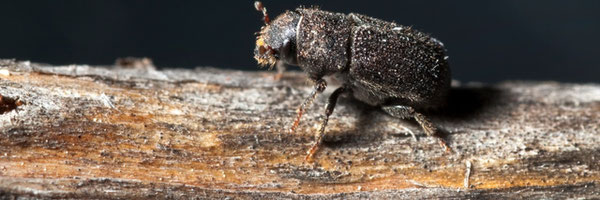
After mild winters lately, mountain pine beetles thrive more across Canadian forests. Warmer seasons help them multiply fast - especially where cold once slowed their spread. Because temperatures shifted, survival rates climbed through the colder months. Forests in British Columbia and Alberta now face wide losses. Trees fall in droves when beetle numbers rise unchecked each year. Tiny insects called mountain pine beetles target certain pines - lodgepole, jack, ponderosa, Scots, whitebark, limber among them. Come summer, females drill into trunks seeking spots to deposit eggs. After hatching, young grubs begin eating inner bark layers. Their feeding disrupts how water and food travel inside the plant. That damage often leads straight to death for the tree. From there, new adults fly out, hopping across short gaps to reach untouched neighbors. A quiet takeover creeps through stands, one weakened trunk at a time. Stopping the spread takes work, yet results are uncertain. Surveys show where beetles move, followed by cutting down affected trees. Tracking happens at bait locations meant to attract insects. Efforts exist through initiatives such as the Mountain Pine Beetle Program. Cost adds up quickly while nature sometimes pays the price. Outbreaks continue despite attempts to contain them. Flocks of woodpeckers peck into bark, hunting mountain pine beetles beneath - yet even that steady feeding rarely slows outbreaks much. Wasps lay eggs inside beetle larvae; checkered beetles chew through them by the dozens - but still pines keep dying across wide slopes. When entire stands turn red with dead needles, something beyond nature's usual hunters may be needed. What if helpers already live nearby, waiting to tip the balance? Could tiny allies like fungi or mites pull back the tide where birds fall short? This test looks at how well those quiet animals might hold ground against swarming beetles.
Method
How we tackled the problem (method) : How we tackled this problem was simple. I worked on the research part of it, while my partner Aiden, helped with extra parts that needed to be completed. Whenever we got the chance, we'd go on a call and work together on the research.
How we tackled the problem (pine beetles) : Besides targeting the core challenge, our approach involved introducing native enemies of the pine beetle directly into affected forests. Instead of relying on new solutions, we boosted creatures already present yet typically overwhelmed when infestations surge. These natural controls usually struggle at peak outbreak levels - so we gave them a push where they were weakest. Even though old-school tactics - like plane-based counts, scent-driven traps, and cutting down sick trees - have delayed the bug's march east through Alberta and stamped out a few scattered spots, they’ve failed to stop the overall wave rising from milder cold months and extended flying times for the pests. Creatures that usually keep things in check - woodpeckers, tiny killer wasps, hitchhiking mites, roundworms, and speckled hunter beetles - do their job well when beetle levels stay low or steady, yet vanish into helplessness once swarms blanket huge forests of lodgepole and jack pine.
Something shifted when scientists began testing lab-grown predators in spots most at risk. In places where forests change from coastal to northern types - like parts of British Columbia and Alberta - the mountain pine beetle had moved into fresh territory. Work there leaned on findings about a fungus called Beauveria bassiana, one that hit hard on beetle young and grown-ups during tests between 2019 and 2021. Instead of waiting, teams grew powerful versions of it, then placed them straight onto sick trees or near traps meant to lure beetles in. The idea? Get the fungus spreading through newborns before they fly off elsewhere. At the same time, helpful bugs such as certain checkered beetles got released too - they go after hidden larvae under tree skin. Alongside these moves, changes in surroundings made it easier for local woodpeckers and other insect-eating birds to feed more often inside those zones. Now it seems results differ by location: where moisture stayed high, fungus cut beetle numbers by 40–70%, yet sunlight breakdown, shifting temperatures, and sticky sap inside trees often blocked steady outcomes. Outcomes shifted when predators were released - they helped in small outbreaks, still failed across vast forest spans. Alongside cutting down infected trees and controlled burns, these living tools slowed how fast beetles moved through key zones, giving woods breathing room while scientists test stronger pines or fine-tune scent-based interference. The core issue here? Not only insects invading, rather disrupted systems worsened by climate, calling for smart fixes paired with subtle help already present in wild ecosystems.
Research
BASIC INFORMATION
- The MBPB (Mountain Pine Beetle Program) is working on projects to help eradicate mountain pine beetles
- They have worked on:
- Aerial and ground surveys of the land
- Killing Mountain pine beetle larvae before they can complete their life span
- Ultilizes low density bait sites to give an early indication to record unaffected forests
- The Albertan government formed the Mountain Pine Beetle Program
- Trees at risk: Lodgepole, Jack, Ponderosa, Scots or Scotch, White Bark, and Limber
- They affect the ecosystem primarily in the summer, when its mating season
- Adult female beetles burrow into trees and lay their eggs there
- Once hatched, the larvae feed from the inside of the tree
- The pine beetles colonize trees around July through August, around when mating season start
- The Canada Forest Service has deduced several factors as to why Mountain Pine beetles have been thriving for the past 30 years
- The Mild winters and warm summers has increased MPB growth
- Their natural pattern of flying tree to tree to colonize trees as a part of their normal life
- Their unprecedented growth led to a larger range that expanded beyond it's normal range of British Columbia and Alberta
- Their surge of growth started in the 1996 Mountain pine beetle outbreak
- It's most recent peak was in 2019
- They are extremely concentrated in lodgepole pine forests
- Life cycle of a mountain pine beetle:
- Larvae stay overwinter, feeding until they are adults
- The adults hatch out of the tree mid-summer
- Then, they begin to find mates to reproduce and repeat the cycle
- Their average life span is a year
Natural Predators and Environmental Factors
- The Cold winters, lack of food and government action has caused a steep decline in the Mountain Pine Beetle population
- Climate change adds more heat to the atmosphere, increasing beetle growth
- Droughts help increase beetle growth by limiting resin, the trees natural defense system against mountain pine beetles
- Traditional forest management styles has also increased beetle growth
- Predators of the mountain pine beetle include checkered beetles (Most notably Thanasimus undatulus and Thanasimus dubious species), parasitic wasps, downy woodpeckers, hairy woodpeckers, Black-backed woodpeckers, Three-toed wood peckers
- Unfortunately for the predators, Mountain pine beetles have acquired an adaptation that allows them to that alerts other mountain pine beetles to help attack the predator together
Biological control agents that will leave minimal harm to ecosystems
- The woodpecker seems best suited for exterminating the pest since it's the natural predator of the Mountain Pine Beetle, and forest insects make up most of the woodpeckers diet. They also don't hibernate and remain active in the winter.
- A strain of fungus known as Beauveria bassiana has shown promising results in agricultural control for Mountain pine beetles. It is not native Canada, but is not invasive as it is found globally. Scientests are attempting to make a even stronger strain of the fungi.
How we will tackle the issue
Note that these steps comes in phases
- Start with government actions that are being implemented around the approximate area of where there have been spotted Mountain pine beetles (MPB). This will need the cooperation of the British Columbia government and the Alberta government. This must be done before October otherwise this will fail.
- Plant Beauveria Bassiana in densely forested areas in the approximate infested area
- Wait until mating season is over and winter starts peaking (Mating season begins around July through August), the specific month we will need is October.
- Send out wood peckers into the wilderness to start feeding on the MPB
- Repeat phases 1-3 for good results
Data
Because we aren't doing an experimental project, we will use online databases to support our case. We used provincial websites, Canada's broadcasting network, and biology reports.
Conclusion
In conclusion, if we combine the predators and government actions. Then we can successfully contain the outbreaks in North America, causing the pine beetles to be reduced.
Government Actions: Back in 2007, Alberta started tackling mountain pine beetles by going after individual trees where bugs were found - this was the quick fix. At the same time, longer plans unfolded: crews began cutting down clusters of older pines on purpose, breaking up large patches that beetles love. Because of this mix - one sharp, one steady - the creep of infestation lost momentum, especially near headwaters along the eastern edges and farther north into thick woods. Cold spells joined the fight too; frost levels made life tough for developing beetles. With nature pitching in, bug numbers dropped sharply, nearly vanishing by 2023 compared to four years earlier. That nosedive shows progress when effort meets timing. Still, watchful eyes stay trained on leftover pockets of beetles just in case things shift again.
Predators:
Black-backed Woodpecker is the best example species listed Woodpeckers share trees with sapsuckers, flicking between branches alongside northern flickers. Nuthatches climb down trunks while brown creepers inch up bark on nearby limbs. Each bird works a different angle through the forest They're arguably the most effective because: Beneath the bark, they dig out beetles by hand. Their search focuses on where these insects live. Reaching into tight spaces, they remove each one carefully. Wherever the bugs hide, that is where the digging happens. Precision guides every movement during extraction Most meals for eleven out of fifteen kinds here come from bugs living in woods, especially bark-eating types such as the mountain pine beetle. That heavy reliance shows eating these creatures isn’t just chance - survival hinges on finding them. Feeding this way defines how they stay alive Beneath the bark, they find beetles in various phases of life a resource out of reach for many others Flying birds and bats eat beetles too - western pine beetle among them - yet they’re limited to snatching their meals midair, which doesn’t happen often. Beetles must be aloft before these hunters can strike, narrowing the chance significantly. Woodpeckers show up where old trees stand, even when they’re damaged. Because these birds hunt beetles under bark, leaving some dead or dying trunks helps them thrive. Where such habitat exists, nature handles pests more easily. Trees left standing become shelters, not just sheltered spots but active defense points. Over time, bird activity reduces beetle numbers without interference.
Citations
Mountain Pine Beetles in Alberta Mountain Pine Beetle - Tree Canada Mountain Pine Beetle Program - Forest Resource Improvement Association Of Alberta Mountain pine beetle - Natural Resources Canada Battle in the bark Why mountain pine beetle populations in Alberta are in sharp decline | CBC News Mountain Pine Beetle - Facts, Habitat, Diet, Life Cycle, Pictures What Eats Bark Beetles? Key Insect and Avian Predators - Biology Insights Appendix 2 - Animals that consume forest pests - Province of British Columbia How Often Do Mountain Pine Beetles Reproduce Fungal infections affect pine trees’ ability to ward off mountain pine beetle | Folio Fungal infections in trees can hurt — or help — in the battle against mountain pine beetles Genomic virulence features of Beauveria bassiana as a biocontrol agent for the mountain pine beetle population - PMC Beauveria bassiana | NYSIPM Biocontrol Fact Sheet What Is Beauveria bassiana? White Muscardine Fungus – Out GrowBeauveria bassiana exhibits strong virulence against Dendroctonus ponderosae in greenhouse and field experiments | Applied Microbiology and Biotechnology | Springer Nature Link
Acknowledgement
We acknowledge the sources and the researchers that helped us get information for this project. We also acknowledge the companies that posted their research online.