
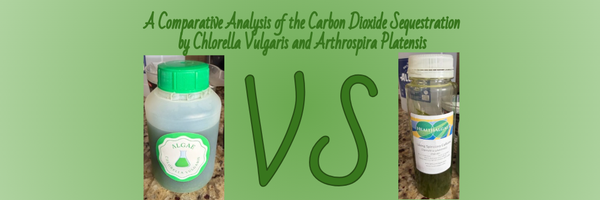
Microscopic Allies Against Climate Change: A Comparative Analysis of Carbon Dioxide Sequestration by Chlorella and Spirulina
Gurseerat Brar
Khalsa School Calgary Educational Foundation
Grade 8
Presentation
No video provided
Hypothesis
If Arthrospira platensis and Chlorella vulgaris are exposed to the same temperature, light, and nutrient conditions, I believe Chlorella vulgaris will absorb more carbon dioxide than Arthrospira platensis because this algae has more chlorophyll than Arthrospira platensis, which causes it to perform more photosynthesis leading to more growth of algae.
Research
Arthrospira Platensis
Common Name: Spirulina
Arthrospira Platensis is a filamentous micro-algae that transforms nitrogen into a more usable form. This algae has helical shaped filaments that can help us distinguish this algae from other algae. However, this only exists in culture mediums and liquid environments. Because of this property and the gas filled vacuoles in its cells, this algae is able to float in mats. This algae is a prokaryote Gram-negative bacterium that has a cell wall composed of multiple layers. It mainly consists of peptidoglycan and lipopolysaccharide natures. This algae has many inclusions, such as polyphosphate, polyglycan, and cyanophycin granules. This algae thrives in alkaline conditions, but it grows best in salt waters with a high pH of 8.5-11, especially when, at tropical elevations, there are high levels of solar radiation. When this algae goes through the process of photosynthesis, the main thing it creates is glycogen, which is a branched polysaccharide that consists of multiple linked glucose units and serves as the main energy storage molecule in bacteria, animals, and fungi.
Biochemical composition
- 55-70% protein - 15-25% polysaccharide - 6-13% nucleic acids - 5-6% lipid - 2.2-4.8% minerals This algae contains multiple minerals, vitamins, insulin-like proteins and photosynthetic pigments.
Daily Carbon Dioxide Absorption
According to an article on PubMed, Arthrospira platensis absorbs 0.876-1.051 grams of carbon dioxide per litre per day in preferred conditions.
Health Benefits
Spirulina has many health benefits. For example, it is rich in many nutrients, can reduce swelling or irritation, may protect the body from damage, lower cholesterol and triglyceride levels, reduce blood pressure, and improve muscle endurance and strength.

Chlorella Vulgaris
Common name: Chlorella
This algae is a single cell algae that belongs to the Chlorophyta family. This algae is a green microalga that contains large amounts of minerals, vitamins, polysaccharides, protein, dietary fibre, and pigments. Chlorella vulgaris is cultivated in fresh water that has an enzyme-digestible cell wall. It reproduces asexually, through a process called auto sporulation. Auto sporulation is when the parent cell divides into multiple daughter cells internally. This algae is a spherical unicellular eukaryotic green algae whose main characteristic is a thick cell wall. This algae is one of the most used microorganisms for waste treatment because its cell wall provides chemical and physical protection and heavy metal resistance. Carbonic anhydrase, one of Chlorella vulgaris’s enzymes, is responsible for the algae’s uptake of carbon. This causes the formation of HCO3−(bicarbonate ion/hydrogen carbonate) and a proton.
Daily Carbon Dioxide Absorption
Chlorella vulgaris (as stated in an article in the website MDPI), in certain conditions, absorbs on average 0.144 L (144 mL) of carbon dioxide per day for 1 L of algae.
Health Benefits
Chlorella vulgaris is very nutritious, helps the body detoxify, can improve our immune system, acts as an antioxidant, and promotes eye health.

pH
pH is the measurement of a liquid’s acidity or basicity. A pH scale is a tool for measuring acids and bases.It has numbers ranging from 0-14. A pH of 7 is considered neutral. Anything below the pH of 7 (6.9 or less) is considered acidic and anything above the pH of 7 (7.1 or more) is considered alkaline (basic). The more carbon dioxide there is in water, the more acidic the water is. This also means that if there is less carbon dioxide in the water, the water will be more basic. When carbon dioxide combines with water, it makes carbonic acid. The carbonic acid decreases the pH of water by increasing the amount of hydrogen ions and thus the water becomes acidic. Arthrospira platensis favour high pH levels of 9-10 for their growth. Chlorella vulgaris favour a pH of 7.5-8 for their growth.
Climate Change
What is it?
Long term changes in average weather patterns in Earth’s global, regional, and local climates is known as climate change.
What causes it?
Climate change can be natural because of large volcanic eruptions or alterations in the sun’s activity. However, since the 1800s the drastic use of fossil fuels like coal, oil, and gas has been the main cause behind climate change. When the fossil fuels are burned, they produce greenhouse gases which trap the heat coming from the sun, thus raising the temperatures of the Earth. Carbon dioxide and methane are the major greenhouse gases. Fossil fuels are mainly used by humans for transportation, heating the buildings, and energy production. The amount of carbon dioxide in the air also increases when land is cleared by cutting forests for agriculture or other purposes, such as mining. Methane gas is produced by agriculture, oil, and gas operations. Climate change can cause intense drought, water scarcity, severe fires, rising sea levels, flooding, catastrophic storms, and declining biodiversity by killing many natural ecosystems.
Why is it different from global warming?
The terms climate change and global warming are not the same. Climate change refers to a broad range of things happening to Earth’s climate, such as rising sea levels and melting glaciers. Global warming is an aspect of climate change because it only refers to the long-term warming of Earth’s surface.
Increase of Carbon Dioxide in the Atmosphere
It has been recorded by satellites and ground-based measurements that there has been a sharp increase in the amount of carbon dioxide in our atmosphere over the past few decades. Specifically, after the industrial revolution in the 18th century, there has been more than a 50% increase of carbon dioxide in the atmosphere.
 (From a NASA website)
Climate Change and the pH of Water Bodies
Due to increased amount of carbon dioxide in the atmosphere from human activities such as burning of fossil fuels, large amounts of carbon dioxide are getting dissolved into Earth’s oceans and other water bodies. When carbon dioxide dissolves in water, it reacts with the water to form carbonic acid. Carbonic acid dissociates in water to form hydrogen ions and thus lowers the pH of water and makes it more acidic. As per the report published in Smithsonian National Museum of Natural History, surface water of oceans have become 30% more acidic over the past 200 years due to industrial revolution.
Increased Acidity of Water Bodies and the Impact on Marine Life
When the water in oceans and other water bodies becomes more acidic, it makes it hard for some marine organisms to thrive and survive. These organisms include shell-building animals such as corals, oyster, clams, sea urchins, and some kind of plankton who depend on carbonate ions to form calcium carbonate shells and skeletons. When the carbon dioxide mixes with water , it forms carbonic acid and this carbonic acid dissociates to form hydrogen ions, which decrease the pH of water. Additionally, these hydrogen ions combine with carbonate ions present in the water to form bicarbonate ions. The carbonate ions are required by the shell building animals to build their shells which are composed of calcium carbonate. The combination of hydrogen ions with carbonate ions reduces the availability of carbonate ions for the shelled marine animals. In fact, the United States Environmental Protection Agency has published that increased acidity not only slows down the growth of calcium carbonate structures like shells, but in severe cases, can dissolve structures faster than they are formed. Acidification of oceans also stresses other marine life and they need more energy to grow and maintain healthy body chemistry. These alterations in water chemistry can disrupt the entire ecosystems, which can in turn impact food webs negatively and reduce biodiversity. The amount of increasing carbon dioxide can be decreased by natural methods like algae photosynthesis.
How Can Algae Be Used to Fight Against Climate Change
Algae can reduce the amount of carbon dioxide in the air through photosynthesis. Photosynthesis is the process in which plants and some protists go through to make their own food. In this process, a plant or protist absorbs carbon dioxide and water, and by using the energy from light and the chlorophyll in it, produces glucose and oxygen, The scientific formula for this process is:

 As shown in the above image, algae make their food in the form of biomass by using carbon dioxide, water, and nutrients in the presence of sunlight. So algae can be used to reduce the amount of carbon dioxide from the atmosphere like trees do on land and convert them into useful carbohydrates. Additionally, algae can grow 10 times more rapidly than the terrestrial plants and it can also be grown on non-productive land as well as in the water. The algae photosynthesis also synthesizes useful byproducts such as renewable biofuels, aquaculture feed products, fertilizers, and other “green” products.
Previous Research
One of the studies carried out by Moreira D., Pires, and C.M.J. have shown that microalgae can be effectively used to mitigate carbon dioxide from the atmosphere through photosynthesis. In this process, biofuel is produced as a bioproduct which can be used in many ways. In another research by Silva et al. (2024) has shown that coralline algal beds can be effectively used in removing carbonate ions from the oceans thereby decreasing the acidity of oceans.
Variables
| Variable Type | |
|---|---|
| Controlled | Amount of baking soda, vinegar, nutrients, water, and the type of algae sample |
| Dependent | pH of water |
| Independent | The algae present in the container |
| Uncontrolled | The temperature of the room and the light that shines on the cultures when the LED light is off |
Procedure
- Take three 1L glass containers and wash them thoroughly to get rid of any impurities and avoid contamination.
- Dry the containers and label them as jar A, jar B and control group.
- Measure 800mL of non-chlorinated distilled water at room temperature(20 degrees celsius) and pour it in jar A.
- Again measure 800mL of non-chlorinated distilled water at room temperature(20 degrees celsius) and pour it in jar B.
- Again measure 800mL of non-chlorinated distilled water at room temperature(20 degrees celsius) and pour it in a jar labelled control group.
- Measure the temperature and pH of water in all three jars ( jar A, jar B & control group jar). Note it down in your logbook.
- Take an empty 500mL plastic bottle, clean it, dry it, and make a hole in its lid by using a knife.
- Measure 5g of baking soda with a weighing scale and pour it in an empty dry plastic bottle.
- Now take a paper straw and place it in a hole made by a knife in the lid of a plastic bottle.
- Measure 60mL of vinegar with a measuring cylinder and pour it over the baking soda in a plastic bottle.
- Immediately close the lid of the plastic bottle to prevent the escape of carbon dioxide produced during this reaction and bubble the carbon dioxide through the water in the control group jar for 1 minute by immersing the end of plastic straw in water.
- Measure the pH of water by using a pH meter.
- Repeat steps 7-11 for bubbling carbon dioxide in jar A and jar B.
- Note the pH of all three jars (A,B & control) in your logbook.
- Measure 20mL of chlorella vulgaris culture with a graduated measuring cylinder and pour it in jar A.
- Add 20mL of NPK( Miracle Grow ) fertilizer, prepared by dissolving 36g of solid fertilizer in 1 L of distilled water, in jar A.
- Immediately close the lid to prevent any escape of gases.
- Measure 20mL of Arthrospira platensis culture with a graduated measuring cylinder and pour it in jar B.
- Add 20mL of NPK( Miracle Grow ) fertilizer, prepared by dissolving 36g of solid fertilizer in 1 L of distilled water, in jar B.
- Immediately close the lid to prevent any escape of gases.
- Set up all three jars( A, B & control group) under artificial LED grow lights for 7 days.
- After 7 days, remove the jars from under the artificial lights and measure the pH of each jar by using the ph meter.
- Note the final reading of pH in your logbook.
- Repeat steps 1-23 for the remaining two trials.


Observations


Analysis
Quantitative Observations: Chlorella vulgaris absorbed more carbon dioxide than Arthrospira platensis in all three trials. In trial 1, the pH of the water the Chlorella vulgaris was grown in increased by 3.18 and the pH of the water Arthrospira platensis was grown in increased by 1.78. In the second trial, the pH of the water Chlorella vulgaris was grown in increased by 2.37 while the pH of the water Arthrospira platensis was grown in increased by 1.61. In trial 3, the pH of the water the Chlorella vulgaris was grown in increased by 3.04 and the pH of the water Arthrospira platensis was grown in increased by 1.92. The average pH increased by Chlorella vulgaris in three trials was 2.86 and the average pH increased by Arthrospira platensis was 1.77. However ,the pH of water in control group decreased by 0.16.
Qualitative Observations: In all the three jars, after 7 days lots of evaporation was seen on the walls and lids of jars. The water in jar A looked much greener than in jar B at the bottom of the jar in all three trials. When the jars were opened after 7 days, I could tell some sort of gas escaped from the sound I heard while opening the jar. In jar B , a very funny smell was coming out of the sample of Arthrospira platensis while adding it to the jar during the start of experiment.
Conclusion
The objective of this experiment was to determine whether Chlorella vulgaris or Arthrospira platensis absorbs more carbon dioxide. To test it, I first filled 7 glass jars with 800mL of water. I checked the pH of the water using a pH meter. Then I bubbled carbon dioxide in the water of each jar by mixing 60mL of vinegar with 5g of baking soda in an empty plastic water bottle and transferring the carbon dioxide through a paper straw into the water in jar for one minute.After that, I measured the pH of water in each jar again.When carbon dioxide is bubbled through water, it combines with water to form carbonic acid, thus increasing its acidity and decreasing the pH of water.
 I then poured 20mL of Chlorella vulgaris in jar A and 20mL of Spirulina in jar B. I also added 20ml of NPK (Miracle Grow) fertilizer in jar A and jar B to promote algae growth. Then I left the jars undisturbed under the LED lights for 7 days. After 7 days, I measured the final pH of each of the jars.
In all three trials, the jar with Chlorella vulgaris in it had the greater increase in pH which occurred due to more absorption of carbon dioxide by it. It proved my hypothesis that when Chlorella vulgaris and Arthrospira platensis are grown under similar conditions, Chlorella vulgaris absorbs more carbon dioxide than Arthrospira plantenis, was correct. This happened because Chlorella vulgaris has more chlorophyll than Arthrospira platensis, which enabled it to perform photosynthesis at a faster rate. In photosynthesis algae produces its own food by using carbon dioxide, water, and nutrients in the presence of sunlight.Cholorophyll, a green pigment in algae, helps to absorb sunlight for photosynthesis. As Chlorella vulgaris has more chlorophyll than Arthrospira platensis,it means Chlorella vulgaris absorbed more carbon dioxide than Arthrospira plantenis and thus performed more photosynthesis. It has resulted in more consumption of carbon dioxide in water in which Chlorella vulgaris has grown, in comparison to water in which Arthrospira platensis has grown.
I then poured 20mL of Chlorella vulgaris in jar A and 20mL of Spirulina in jar B. I also added 20ml of NPK (Miracle Grow) fertilizer in jar A and jar B to promote algae growth. Then I left the jars undisturbed under the LED lights for 7 days. After 7 days, I measured the final pH of each of the jars.
In all three trials, the jar with Chlorella vulgaris in it had the greater increase in pH which occurred due to more absorption of carbon dioxide by it. It proved my hypothesis that when Chlorella vulgaris and Arthrospira platensis are grown under similar conditions, Chlorella vulgaris absorbs more carbon dioxide than Arthrospira plantenis, was correct. This happened because Chlorella vulgaris has more chlorophyll than Arthrospira platensis, which enabled it to perform photosynthesis at a faster rate. In photosynthesis algae produces its own food by using carbon dioxide, water, and nutrients in the presence of sunlight.Cholorophyll, a green pigment in algae, helps to absorb sunlight for photosynthesis. As Chlorella vulgaris has more chlorophyll than Arthrospira platensis,it means Chlorella vulgaris absorbed more carbon dioxide than Arthrospira plantenis and thus performed more photosynthesis. It has resulted in more consumption of carbon dioxide in water in which Chlorella vulgaris has grown, in comparison to water in which Arthrospira platensis has grown.
Application
My experiment helps us to find out an effective method to remove carbon dioxide from water. The amount of carbon dioxide present in water is increasing day by day due to burning of fossil fuels and pollution. It has resulted in acidification of oceans, due to which shells of mussels, corals and many other aquatic species have been dissolving. It puts the existence of these species in danger as shells of these creatures play an important role in their survival as they provide them protection, shelter and mobility. Chlorella vulgaris can be cultivated to use this excessive carbon dioxide and maintain the healthy pH of water, enabling marine life to survive and grow in a healthy environment. Also, Chlorella vulgaris and Arthrospira platensis are very high in nutrition and can be used as an excellent food source for human consumption. In conclusion, my experiment suggests a sustainable way to reduce the acidity of water bodies on Earth, which is happening due to climate change and also provide a possible food solution for human consumption.
Sources Of Error
There are many sources of error in my experiment which could have altered or impacted my final results. These are as following:
- Unequal light exposure: During my experiment the amount of light received by each jar from LED lights could be different which could have affected the rate of photosynthesis and the rate of absorption of carbon dioxide.
- Different algae concentration: Another factor which could have impacted my results of my experiment is the starting concentration of Chlorella vulgaris and Arthrospirsa platensis. If one type of algae has more algae cells, it could have absorbed more carbon dioxide.
- Temperature Fluctuations:The rate of photosynthesis depends on temperature. If there was a difference in temperature in different jars due to uneven distribution of heat, it could have affected the enzyme activity and thus carbon dioxide absorption rates.
- Errors in measurement of pH by pH meter: Sometimes the accurate measurement of pH could have been impacted in my experiment due to inaccurate calibration of pH meter.
- Sometimes the carbon dioxide could have escaped while opening the jars for measurements of pH and this could have altered the results.
- I could have done more trials for longer periods of time for more accurate results.
Citations
- What is Spirulina? - What is Blue Green Algae? - Fresh Spirulina, 9 July 2023, https://www.freshspirulina.com.au/spirulina-benefits/what-is-spirulina/. Accessed 2025.
- Adobe Stock, https://stock.adobe.com/ca/search?k=chlorella+plant. Accessed 2025.
- “#6 ALGAE: CARBON DIOXIDE CAPTURE AND STORAGE.” Minerva Action Group, LLC, June 2024, https://www.minervaaction.com/6-algae-and-climate-change-hs-version-copy. Accessed 2025.
- “Arthrospira Platensis.” labroots, https://www.labroots.com/tag/arthrospira-platensis?srsltid=AfmBOopRXmdbfAhHiAgzL6QIbJYbq69SK-NLQqMPARNm8wKxEeI75Xlt. Accessed 2025.
- Bennett\, Jennifer. “Ocean Acidification | Smithsonian Ocean.” Smithsonian Ocean\, https://ocean.si.edu/ocean-life/invertebrates/ocean-acidification. Accessed 18 January 2026.
- Brookshire, Bethany. “Scientists Say: pH.” Science News Explores, 26 August 2019, https://www.snexplores.org/article/scientists-say-ph. Accessed 2025.
- “Carbon Dioxide - Earth Indicator.” NASA Science, 25 September 2025, https://science.nasa.gov/earth/explore/earth-indicators/carbon-dioxide/. Accessed 2025.
- “Chlorella Vulgaris- Agricultural and Biological Sciences.” Science Direct, https://www.sciencedirect.com/topics/agricultural-and-biological-sciences/chlorella-vulgaris#definition. Accessed November 10 2025.
- “Chlorella Vulgaris- Engineering.” ScienceDirect, https://www.sciencedirect.com/topics/engineering/chlorella-vulgaris. Accessed 10 November 2025.
- Chunzhuk EA, Grigorenko AV, Kiseleva SV, Chernova NI, Ryndin KG, Kumar V, Vlaskin MS. The Influence of Elevated CO2 Concentrations on the Growth of Various Microalgae Strains. Plants (Basel). 2023 Jun 28;12(13):2470. doi: 10.3390/plants12132470. PMID: 37447030; PMCID: PMC10347109
- “Climate Change - Reasons Which Show Humans Cause It?” Geohoney, 23 August 2022, https://blog.geohoney.com/climate-change-reasons-which-show-humans-cause-it. Accessed 2025.
- “Commercial Applications of Chlorella sp. and Spirulina sp.: Comparison.” Encyclopedia, https://encyclopedia.pub/entry/history/compare_revision/108596?utm_source=chatgpt.com. Accessed 2025.
- Dawood, Mahmoud A.O., et al. “Arthrospira Platensis- Agricultural and Biological Sciences.” ScienceDirect, https://www.sciencedirect.com/topics/agricultural-and-biological-sciences/arthrospira-platensis https://www.sciencedirect.com/topics/medicine-and-dentistry/arthrospira-platensis https://www.healthline.com/nutrition/10-proven-benefits-of-spirulina#antioxida. Accessed 29 October 2025.
- de Souza DS, Valadão RC, de Souza ERP, Barbosa MIMJ, de Mendonça HV. Enhanced Arthrospira platensis Biomass Production Combined with Anaerobic Cattle Wastewater Bioremediation. Bioenergy Res. 2022;15(1):412-425. doi: 10.1007/s12155-021-10258-4. Epub 2021 Feb 28. PMID: 33680280; PMCID: PMC7914118.
- Detrell\, Gisela. “| Microscope picture of Chlorella vulgaris cells\, cultivated at IRS. | Download Scientific Diagram.” ResearchGate\, https://www.researchgate.net/figure/Microscope-picture-of-Chlorella-vulgaris-cells-cultivated-at-IRS_fig2_353402576. Accessed 2025.
- “Difference Between Alkali And Base.” BYJU'S, https://byjus.com/chemistry/difference-between-alkali-and-base/. Accessed 10 November 2025.
- “Difference Between Gram-positive and Gram-negative Bacteria.” BYJU'S, https://byjus.com/biology/difference-between-gram-positive-and-gram-negative-bacteria/. Accessed 10 November 2025.
- “Effects.” NASA Science, 23 October 2024, https://science.nasa.gov/climate-change/effects/. Accessed 2025.
- “Effects of Ocean and Coastal Acidification on Marine Life | US EPA.” EPA\, 22 April 2025\, https://www.epa.gov/ocean-acidification/effects-ocean-and-coastal-acidification-marine-life? Accessed 18 January 2026.
- Ghosh, Sahana. “Boosting algae's carbon absorption.” nature, 10 October 2024, https://www.nature.com/articles/d44151-024-00165-w. Accessed 2025.
- “Here’s Why the Health World is Crazy For Chlorella.” Urban Cultivator, https://www.urbancultivator.net/chlorella/. Accessed 2025.
- Jennings, Kerri. “9 Impressive Health Benefits of Chlorella.” Healthline, 8 April 2017, https://www.healthline.com/nutrition/benefits-of-chlorella#TOC_TITLE_HDR_2. Accessed 10 November 2025.
- Lambers, Hans. “Photosynthesis - General characteristics.” Britannica, 30 November 2025, https://www.britannica.com/science/photosynthesis/General-characteristics. Accessed 11 November 2025.
- Moreira, Diana, and Jose C.M. Pires. “Atmospheric CO2 capture by algae: Negative carbon dioxide emission path.” ScienceDirect, https://www.sciencedirect.com/science/article/abs/pii/S0960852416303546. Accessed 2025.
- Muthu, Babu, et al. “EFFECT OF pH ON ARTHROSPIRA PLATENSIS PRODUCTION.” Research Gate, May 2020, https://www.researchgate.net/publication/341312500_EFFECT_OF_pH_ON_ARTHROSPIRA_PLATENSIS_PRODUCTION. Accessed 2025.
- “pH Scale Defined - What is pH? - JAN/SAN CONSULTING.” jan/san consulting, https://www.jansanconsulting.com/ph-scale.html. Accessed 2025.
- Politaeva, Natalia. “Carbon Dioxide Utilization Using Chlorella Microalgae.” MDPI, https://www.mdpi.com/2076-3298/10/7/109#Results. Accessed 20 November 2025.
- Rachlin JW, Grosso A. The effects of pH on the growth of Chlorella vulgaris and its interactions with cadmium toxicity. Arch Environ Contam Toxicol. 1991 May;20(4):505-8. doi: 10.1007/BF01065839. PMID: 2069424.
- Richter, Amy, and Katherine Marengo. “10 Health Benefits of Spirulina.” Healthline, 29 June 2023, https://www.healthline.com/nutrition/10-proven-benefits-of-spirulina#antioxidant-and-anti-inflammatory. Accessed 10 November 2025.
- Schubert, N., Tuya, F., Peña, V. et al. “Pink power”—the importance of coralline algal beds in the oceanic carbon cycle. Nat Commun 15, 8282 (2024). https://doi.org/10.1038/s41467-024-52697-5
- Song, Linsheng, and Lingling J. Wang. “Peptidoglycan- Agricultural and Biological Sciences.” ScienceDirect, https://www.sciencedirect.com/topics/agricultural-and-biological-sciences/peptidoglycan. Accessed November 10 2025.
- “SPIRULINA (Arthrospira Platensis).” https://pr1meraphilippines.wordpress.com/the-power-of-8/spirulina-arthrospira-platensis/. Accessed 2025.
- “Spirulina (Arthrospira platensis) algae.” StemFoods Holistics, https://www.stemfoods.com/products/ingredients/spirulina. Accessed 2025.
- Watkins, Linda R., et al. “Lipopolysaccharide- Neuroscience.” ScienceDirect, https://www.sciencedirect.com/topics/neuroscience/lipopolysaccharide. Accessed 10 November 2025.
- Weyers, Murielle. “The Use of Algae to Reduce CO2 Emissions.” Anavo, 24 August 2023, https://www.anavo.com/learn/the-use-of-algae-to-reduce-co2/. Accessed 11 November 2025.
- “What Is Climate Change?” NASA Science, 21 October 2024, https://science.nasa.gov/climate-change/what-is-climate-change/. Accessed 11 November 2025.
- “What Is Climate Change? | United Nations.” Welcome to the United Nations\, https://www.un.org/en/climatechange/what-is-climate-change. Accessed 2025.
- “What’s the difference between climate change and global warming?” NASA Science, 18 March 2024, https://science.nasa.gov/climate-change/faq/whats-the-difference-between-climate-change-and-global-warming/. Accessed 11 November 2025.
- Zebib\, Bachar. “Schematic ultrastructure of C. vulgaris representing different organelles. | Download Scientific Diagram.” ResearchGate\, https://www.researchgate.net/figure/Schematic-ultrastructure-of-C-vulgaris-representing-different-organelles_fig1_261918083. Accessed 2025.
- Zhao, Chao, et al. “Arthrospira Platensis- Medicine and Dentistry.” ScienceDirect, https://www.sciencedirect.com/topics/medicine-and-dentistry/arthrospira-platensis. Accessed 10 November 2025.