
How Physics, Materials Science, and Human Limits Determine the Maximum Possible Height of Skyscrapers
Ali shefet, Yasir Ismail
Calgary Charter School Hub – Almadina Campus
Grade 11
Presentation
Problem
This project would examine what limits how tall skyscrapers can realistically be by exploring the physics, materials, environmental forces, and human factors involved in building mega-tall structures. It would discuss how a building’s own weight creates increasing compressive stress on lower floors, eventually reaching the strength limits of materials like steel and concrete. The project would also explain how wind becomes a major challenge as height increases, causing sway and vibrations that can affect both structural safety and human comfort. In addition, it would cover practical constraints such as elevator technology, energy use, construction cost, and evacuation safety, showing why taller buildings become less efficient and more expensive. By combining theoretical calculations with real-world examples like the Burj Khalifa, the project would show that the maximum height of skyscrapers is not set by one single factor, but by a combination of physical laws, engineering limits, and human practicality.
Method
Engineering formulas are then used to calculate how compressive stress builds in the lower floors as a building gets taller and how wind forces increase with elevation, helping determine when materials like steel and concrete reach their practical limits. The project also studies actual skyscrapers, such as the Burj Khalifa, and skyscraper concepts like the x-seed 4000 to compare their height, structural design, and wind-control strategies with the theoretical results. Graphs and numerical data are created to show how structural stress, wind force, cost, and efficiency change as height increases. All of this information is then analyzed together to identify which factors most strongly limit how tall skyscrapers can realistically be.
Research
The X-Seed 4000 is a proposed mega-structure designed in Japan that would reach 4,000 meters (4 km) tall, making it far taller than any existing building. At 4,000 meters tall, the building’s own weight would create enormous compressive stress at the base. The lower sections would need to be extremely thick to support the structure above. With current materials like reinforced concrete and structural steel, the amount of material required would be massive, and much of the lower interior space would be taken up by structural support. Even with advanced materials, the base would need to function almost like an artificial mountain to distribute the load safely. At 4 km high, the upper sections would extend into different atmospheric conditions where wind speeds are significantly stronger and more unpredictable. The structure would experience extreme lateral forces and potential oscillations. To remain stable, the building would require an enormous structural core and possibly active stabilization systems. Wind engineering at that scale becomes exponentially more complex than in existing skyscrapers. Vertical transportation becomes one of the biggest challenges. Traditional elevator systems would be impractical over 4 km. The design concept suggested high-speed, possibly magnetic-levitation systems running in stages. Even then, a huge portion of the interior would need to be dedicated to transportation infrastructure, reducing usable living and working space. From that alone it would be correct in saying that this would not properly function as an office filled skyscraper.
Data
As a skyscraper grows taller, several measurable factors limit its height. Compressive stress increases with each additional floor, calculated by dividing the weight of the building above by the supporting area, and in towers like the Burj Khalifa, the base already experiences roughly 25 MPa of stress, while hypothetical towers above 1,500 m would exceed the practical limits of concrete and steel. Wind forces and sway also grow with elevation, with top-floor movement in the Burj Khalifa around 1.5 m, but at 2 km the sway could reach 6 m, and a 4 km structure like the X‑Seed 4000 could sway up to 24 m, far beyond human comfort limits. Elevator requirements compound the problem, as taller buildings need more shafts to maintain efficient vertical transport, taking up 15% of floor space in the Burj Khalifa and potentially 40–50% in a 4 km tower. Finally, construction costs rise exponentially with height, from $1.5 billion for the Burj Khalifa to an estimated $500 billion–$1 trillion for a megastructure like the X‑Seed 4000. Together, these data show that structural stress, wind, transportation, and cost all combine to define realistic height limits for skyscrapers.
Conclusion
In conclusion, the maximum height of skyscrapers is determined not by a single physical barrier but by the combined effects of structural limits, environmental forces, economic feasibility, and human practicality. As buildings grow taller, increasing compressive stress from their own weight pushes materials like steel and reinforced concrete toward their strength limits, while stronger winds at higher elevations create greater lateral forces that cause sway and vibration, affecting both safety and occupant comfort. Real-world examples such as the Burj Khalifa show how advanced structural systems and aerodynamic design can successfully manage these challenges, whereas ambitious concepts like the X-Seed 4000 highlight how extreme heights quickly become limited by cost, energy demands, elevator efficiency, and evacuation concerns. Ultimately, skyscraper height is constrained by the need to balance engineering capability with economic and human considerations, meaning the realistic limit is set not by one factor alone, but by the point at which building taller is no longer practical.]]
Citations
Research 1. Skyscraper Center. (n.d.). X‑Seed 4000. Retrieved March 3, 2026, from https://www.skyscrapercenter.com/building/x-seed-4000/4
2. Comer\, S.\, & Katari\, S. (2025). Engineering supertall skyscrapers: Challenges and solutions. WorldScholarsReview.org. Retrieved March 3, 2026.
3. Wei\, S. (2024). Research on wind resistance principles and design of super high‑rise buildings. Proceedings of the 2nd International Conference on Mechatronics and Smart Systems.
4. RDT Technology. (n.d.). 7 engineering feats that make Burj Khalifa an architectural marvel. Retrieved from https://rdttech.co/7-engineering-feats-that-make-burj-khalifa-an-architectural-marvel/
Data 1. Burj Khalifa structural design and wind engineering: International Code Council. (2023, August 8). Lead structural engineer shares insights on the Burj Khalifa, the world’s tallest structure. ICC Building Safety Journal. Retrieved March 3, 2026, from https://www.iccsafe.org/building‑safety‑journal/bsj‑technical/a‑tall‑adventure‑the‑burj‑khalifa‑the‑worlds‑tallest‑structure/
2. Commercial Interior Design. (2023\, July 4). How Burj Khalifa was built, including design, foundations, cladding, and elevators. Commercial Interior Design. Retrieved March 3, 2026, from https://www.commercialinteriordesign.com/insight/updated‑how‑the‑burj‑khalifa‑was‑built‑including‑design‑foundations‑cladding‑and‑urban‑myths
3. Building The Skyline. (2019\, October 23). Skyscraper height (tag). Building the Skyline. Retrieved March 3, 2026, from https://buildingtheskyline.org/tag/skyscraper‑height/
4. Building The Skyline. (2019\, October 23). Elevators (tag). Building the Skyline. Retrieved March 3, 2026, from https://buildingtheskyline.org/tag/elevators/
5. The Skyscraper Center. (n.d.). X‑Seed 4000 PDF facts. Council on Tall Buildings and Urban Habitat. Retrieved March 3, 2026, from https://www.skyscrapercenter.com/pdf/complex/4
6. Malevus. (n.d.). X‑Seed 4000: A man‑made building taller than mountains. Retrieved March 3, 2026, from https://malevus.com/x‑seed‑4000/
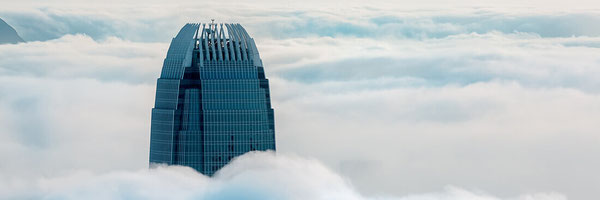
HEADER 1. APA 7th Edition Reference (for the image source) Stephens, J. (2022, March 14). Reaching for the heavens. Common Edge. https://commonedge.org/reaching-for-the-heavens/
Acknowledgement
We would like to express our sincere gratitude to our teacher for their guidance, support, and valuable feedback throughout this project. Their encouragement and constructive suggestions helped us refine our ideas and strengthen our understanding of the engineering principles behind skyscraper design. We are also thankful to the engineers and researchers whose work on structures such as the Burj Khalifa has provided important real-world insight into the challenges of constructing buildings at extreme heights. In addition, we appreciate the academic resources and references that supported our research and allowed us to connect theoretical calculations with real-world examples. Finally, we are grateful to our families and peers for their encouragement and support during the completion of this project.