
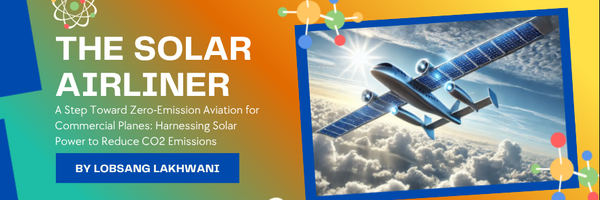
The Solar Airliner: Future of Sun Powered Commercial Aviation
Lobsang Lakhwani
Louis Riel School
Grade 7
Presentation
No video provided
Hypothesis
For the prototype build process
If I build a representation of “2” 10 cell solar panelled commercial aircraft then that would generate power (working propellers) using vertical take off and landing systems because it would demonstrate how the use of higher efficient resources would enhance air transportation and decrease the dependency of the aviation industry on non-renewable resources such as dangerous fuels. Also because of the abundant source of solar energy that the aircraft can receive from high altitude.
For the prototype testing
If I test my prototype, a representation of a commercial airliner but solar powered, in snowy conditions, then I think it will show poor performance and take the longest to generate power or not even generate power. This is because the harsh weather or clouds could block the amount of sunlight reaching the solar panels. Also because, if too much snow is accumulated (approx 3-5 centimeters), it could block photons reaching the photovoltaic cells and decrease or stop solar production.
Research
Aviation History: Invention of Airplanes
The first passenger carrying air transportation to be launched was the Montgolfier brothers hot air balloon. This was conducted on June 4, 1783 in Annonay, France. The two brothers were Joseph Michel and Jacques Etienne. The first commercial flight to be conducted was the DELAG* in Germany in 1910. This flight was used to operate Zeppelin airships which also transported passengers for sightseeing tours and scheduled routes. Sir George Cayley, who was known as the Father of Aviation, was an English polymath whose work helped understand aerodynamic principles and practical aircraft design. He drew an aircraft using a fixed wing design and separate mechanisms for lift and thrust. These were known as the earliest known plans for air transportation. A year before he died in 1854, he conducted his biggest achievement which was building a full sized glider that successfully flew near Scarborough, England. Wilbur and Orville Wright were the inventors of the first heavier than air powered aircraft. Before this time, there were many types of air transportation already invented such as hot air balloons, kites, gliders etc. The Wright Brothers were known as clever bicycle mechanics because of their previous business. They began their aeronautical research in 1899 starting to learn and experiment with gliders and wind tunnels. In 1900 at Kitty Hawk, they tested their first full sized glider generating less lift than the brothers had expected. However, this flight proved that their control system operated successfully. Three years later, they built their first powered flyer and operated it on December 17, 1903. They had achieved the first pilot controlled flight. The 1903 Wright Flyer is still an iconic part of American History and Aviation. Some other flyers they had invented:
- 1902 First Controlled Glider
- 1905 Flyer III: First Reliable Powered Airplane
- 1909 Wright Military Flyer
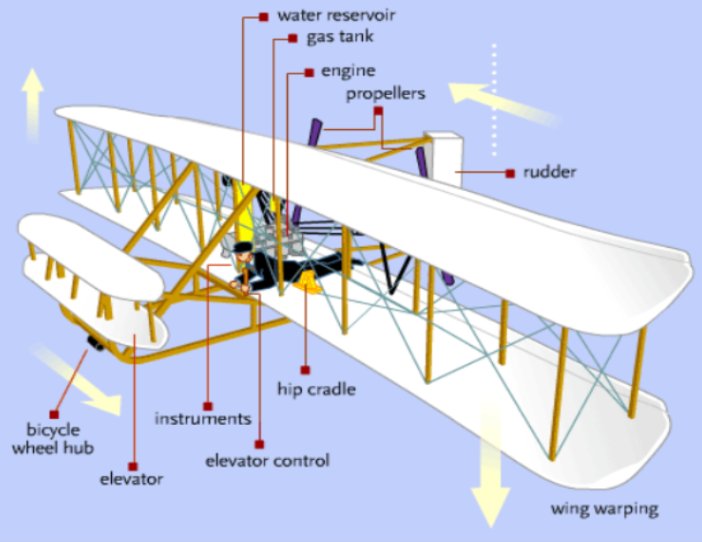
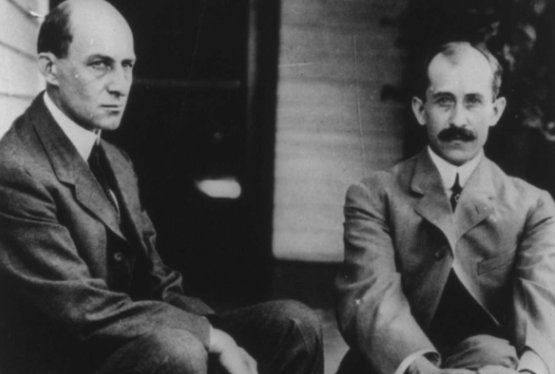 The Wright Brothers had also invented air transportation tools and what makes today’s flight possible. Some examples include the following:
- Built their own wind tunnel to learn about wing shapes
- Enhanced propeller or wing design
- Built the first lightweight, gasoline powered engine
- First Three Axis Control System: Allowing the pilot to steer the aircraft
- First Launch System because early planes didn’t include wheels
*Deutsche Luftschiffahrts-Aktiengesellschaft (In German) OR German Airship Travel Corporation (In English)
They conducted their first public flights which took place in Europe and America. This happened during 1908 and they presented their innovation to the public. Two years before, a Brazilian experimenter named Alberto Santos-Dumont made the first public flight in Europe in 1906. A flyer named Farman III had completed the first circular flight of a minimum of 1 kilometer in early 1908. Moving forward through 1909, new monoplane designs of the stick and rudder control systems were adopted by many builders. Pioneers such as Robert Esnault-Pelterie were the first to build and fly these planes. Other early aviation pioneers include the following:
- Otto Lilienthal
- Glenn Hammond Curtiss
- Bessie Coleman
- Wiley Post
How Do Airplanes Work
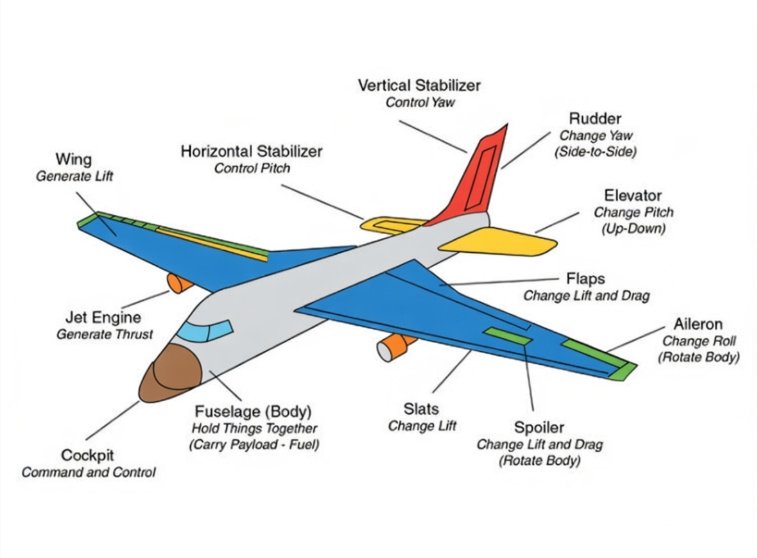
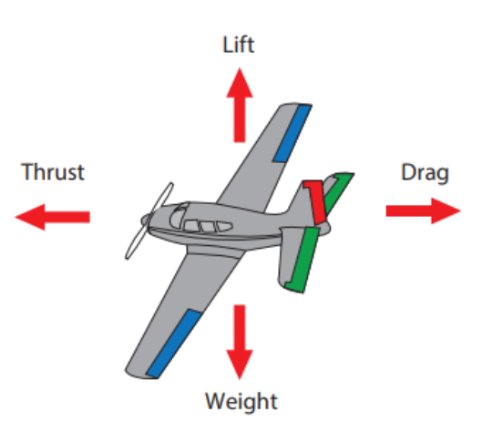 The four forces is a system that powers a plane using physics and all have characteristics that affect flight operations. It is the system that most types of aircraft use worldwide for space exploration, passenger transport, cargo movement etc. These components of an aircraft constantly act to create a dynamic balance for controlled movement through the air.
The first force is weight which is a type of gravitational force. This force is caused by the gravitational attraction of the Earth and pulls an airplane to move or act in a downward direction toward the center of the Earth. Weight is always directed toward the center of the Earth because gravity pulls all mass towards the planet’s center of mass which is in the inner core. Mass is defined as a large body of matter that has no definite or fixed shape. This force is a really crucial factor in flight because it is a force that must be overcome for a plane or aircraft to leave the ground and stay airborne. Even though the weight of passengers, cargo and fuel is evenly distributed throughout the plane, it still ends up affecting the aircraft’s center of gravity. This is important to know for the aircraft’s safety and how it is easily able to be controlled for stability by the pilot. The center of gravity can only sustain weight up to certain limits. There are two types of aircraft that are most dangerous in this situation. The first type is if the plane is too nose heavy. This means that the plane will tilt or lean forward if the center of gravity is more at the front. The second type is if the plane is too tail heavy. This means that the plane will tilt or lean backward if the center of gravity is more at the back. For my build, this point helped me a lot because it conveys a design change in the model I am building by telling me that I should keep the weight to a minimum so it can require less (in this case) sunlight or battery power.
The second force is lift, a type of upward aerodynamic force. This force is caused so it counteracts weight and allows the aircraft to stay airborne. To stay airborne means to stay in the air or transport by air. This occurs when a moving flow of gas is turned by a solid object. The flow is turned in one direction or going in one direction and the lift is generated in the opposite direction. Picture air molecules or particles, a type of gas, freely moving about until an aircraft approaches deflecting these particles and their flow. When an aircraft deflects these particles, the aircraft’s wings also contribute to the flow turning and when they do, they generate lift for the aircraft. This is how: when air is flowing over the top of an airplane’s curved wing and tends to flow faster, it applies less pressure. However, when air flows below an airplane’s wing, it tends to flow slower due to the straight surface and more pressure is applied pushing the plane’s wing upward and finally generating lift.
The third force is thrust; a type of mechanical propulsion force. This motion component of an aircraft is the main force that powers an aircraft. It is produced by the aircraft’s propeller, fan or turbojet engine to force a mass of air to the rear of the plane and propel the aircraft in the direction of motion. This process helps overcome air resistance or drag to achieve flight and plays a critical role in determining an aircraft’s ability to take off, climb, cruise and maneuver. Additionally, it is associated with Newton’s Third Law of Motion which states that for every action there is an equal and opposite reaction. Meaning for every force an aircraft releases on the air, the air releases an equal, opposite force back on the aircraft. In today’s aircraft, fuel acts as the action being released and the reaction is the air pushing the aircraft forward.
The fourth force is drag; a type of mechanical force also known as fluid or air resistance. It behaves like friction by acting opposite to the direction of movement when a solid object touches a fluid such as gas or liquid. Simply meaning that the plane’s surface is physically interacting with air particles and creating a friction force called drag. In the aviation world, there are two types of drag with their own characteristics and properties. The first type of drag is “Induced Drag”. This type is an unavoidable consequence of lift that is caused when air climbs around the wingtips making swirling wind tunnels known as wingtip vortices. Also it happens because air moves from a high pressure area to a low pressure area which is on top of the wing creating swirling air over the edges. This swirling air creates an effect pushing the total lift force backwards acting like brakes. This works greatest on high angle of attacks*. The second type of drag is “Parasite Drag”. This type increases with the square of airspeed and has four types. The first type is ‘Form or Pressure Drag’ which is a resistance caused by the aircraft’s shape. Secondly, there is ‘Skin Fraction’ which is a resistance caused by the air rubbing against the surface of the plane (usually rough). Thirdly, there is ‘Interference Drag’ which occurs when the different parts of the plane meet, disrupting the air and creating air swirls or currents. Lastly, there is ‘Wave Drag’ which mostly happens during high speeds such as transonic or supersonic. This happens because the air particles can’t move fast enough to make way for the aircraft coming through and creates shock waves.
The four forces is a system that powers a plane using physics and all have characteristics that affect flight operations. It is the system that most types of aircraft use worldwide for space exploration, passenger transport, cargo movement etc. These components of an aircraft constantly act to create a dynamic balance for controlled movement through the air.
The first force is weight which is a type of gravitational force. This force is caused by the gravitational attraction of the Earth and pulls an airplane to move or act in a downward direction toward the center of the Earth. Weight is always directed toward the center of the Earth because gravity pulls all mass towards the planet’s center of mass which is in the inner core. Mass is defined as a large body of matter that has no definite or fixed shape. This force is a really crucial factor in flight because it is a force that must be overcome for a plane or aircraft to leave the ground and stay airborne. Even though the weight of passengers, cargo and fuel is evenly distributed throughout the plane, it still ends up affecting the aircraft’s center of gravity. This is important to know for the aircraft’s safety and how it is easily able to be controlled for stability by the pilot. The center of gravity can only sustain weight up to certain limits. There are two types of aircraft that are most dangerous in this situation. The first type is if the plane is too nose heavy. This means that the plane will tilt or lean forward if the center of gravity is more at the front. The second type is if the plane is too tail heavy. This means that the plane will tilt or lean backward if the center of gravity is more at the back. For my build, this point helped me a lot because it conveys a design change in the model I am building by telling me that I should keep the weight to a minimum so it can require less (in this case) sunlight or battery power.
The second force is lift, a type of upward aerodynamic force. This force is caused so it counteracts weight and allows the aircraft to stay airborne. To stay airborne means to stay in the air or transport by air. This occurs when a moving flow of gas is turned by a solid object. The flow is turned in one direction or going in one direction and the lift is generated in the opposite direction. Picture air molecules or particles, a type of gas, freely moving about until an aircraft approaches deflecting these particles and their flow. When an aircraft deflects these particles, the aircraft’s wings also contribute to the flow turning and when they do, they generate lift for the aircraft. This is how: when air is flowing over the top of an airplane’s curved wing and tends to flow faster, it applies less pressure. However, when air flows below an airplane’s wing, it tends to flow slower due to the straight surface and more pressure is applied pushing the plane’s wing upward and finally generating lift.
The third force is thrust; a type of mechanical propulsion force. This motion component of an aircraft is the main force that powers an aircraft. It is produced by the aircraft’s propeller, fan or turbojet engine to force a mass of air to the rear of the plane and propel the aircraft in the direction of motion. This process helps overcome air resistance or drag to achieve flight and plays a critical role in determining an aircraft’s ability to take off, climb, cruise and maneuver. Additionally, it is associated with Newton’s Third Law of Motion which states that for every action there is an equal and opposite reaction. Meaning for every force an aircraft releases on the air, the air releases an equal, opposite force back on the aircraft. In today’s aircraft, fuel acts as the action being released and the reaction is the air pushing the aircraft forward.
The fourth force is drag; a type of mechanical force also known as fluid or air resistance. It behaves like friction by acting opposite to the direction of movement when a solid object touches a fluid such as gas or liquid. Simply meaning that the plane’s surface is physically interacting with air particles and creating a friction force called drag. In the aviation world, there are two types of drag with their own characteristics and properties. The first type of drag is “Induced Drag”. This type is an unavoidable consequence of lift that is caused when air climbs around the wingtips making swirling wind tunnels known as wingtip vortices. Also it happens because air moves from a high pressure area to a low pressure area which is on top of the wing creating swirling air over the edges. This swirling air creates an effect pushing the total lift force backwards acting like brakes. This works greatest on high angle of attacks*. The second type of drag is “Parasite Drag”. This type increases with the square of airspeed and has four types. The first type is ‘Form or Pressure Drag’ which is a resistance caused by the aircraft’s shape. Secondly, there is ‘Skin Fraction’ which is a resistance caused by the air rubbing against the surface of the plane (usually rough). Thirdly, there is ‘Interference Drag’ which occurs when the different parts of the plane meet, disrupting the air and creating air swirls or currents. Lastly, there is ‘Wave Drag’ which mostly happens during high speeds such as transonic or supersonic. This happens because the air particles can’t move fast enough to make way for the aircraft coming through and creates shock waves.
*Angle of Attack Definition: Happens when an aircraft’s wing is tilted upward to generate lift for climb after takeoff. The wing is facing upward into the oncoming air. If the aircraft points too high, it can cause a stall and a sudden loss of lift. This is known as a crucial factor of flight control and safety. Stall is when the smooth airflow separates over the wing becoming turbulent and forcing the aircraft to descend.
Environmental Impacts Of Aviation
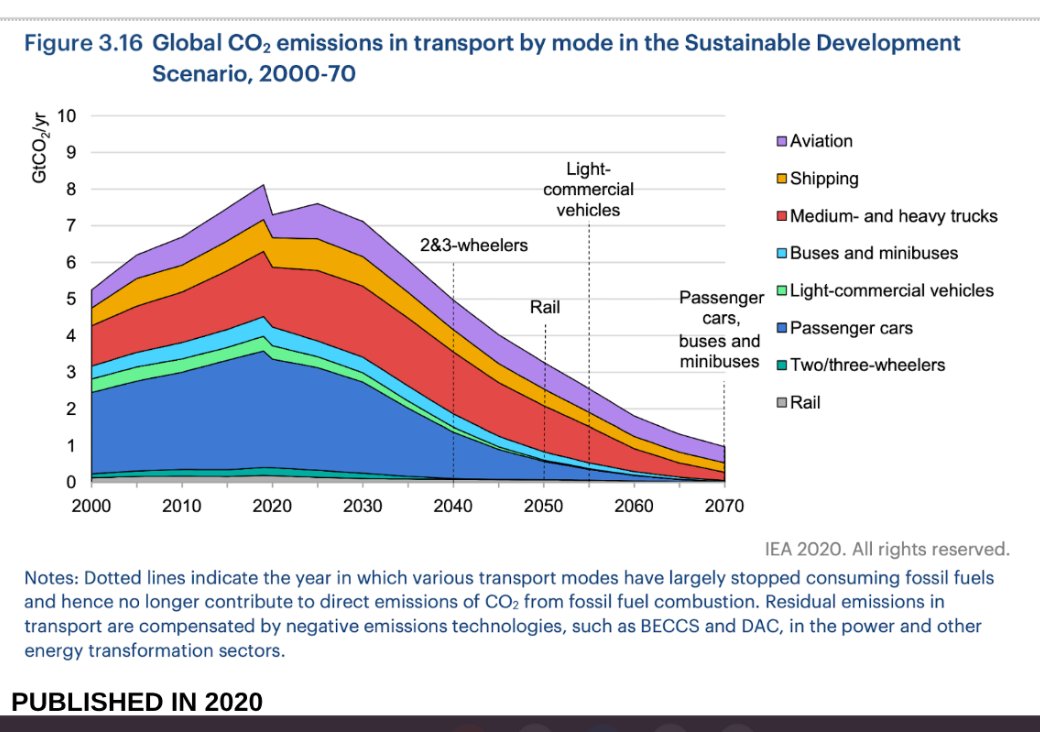
Firstly, plane engines produce many dangerous gases such as carbon dioxide, nitrogen oxides, sulfur oxides, carbon monoxide, and particulate matter (soot). These gases create smog and acid rain disrupting the air quality and surrounding ecosystems. The engines also produce toxic chemicals that are unsafe for the body such as tricresyl phosphate, a dangerous chemical known to damage the nervous system. Such chemicals can cause many diseases like asthma, heart diseases, strokes, lung irritation and lung cancer. Secondly, engines produce noise pollution affecting nearby residential areas, workplaces, etc. It also affects human sleep patterns, learning, and cardiovascular health which is the circulatory system (the well-being of your heart and blood vessels). Between 1940 and 2018, aviation CO2 emissions grew from 0.7% to 2.65% of all CO2 emissions. This was a 278.57% increase. For short haul flights, CO2 emissions averaged 154 grams per passenger per kilometer in 2018 and 202 grams in 2025. Over approximately seven years, this was a 31.17% increase. For long haul flights, CO2 emissions averaged 88 grams per passenger per kilometer in 2018 and 170 grams in 2025. Over approximately seven years, this was a 93.18% increase. The International Energy Agency (IEA) predicts global CO2 emissions for various transport modes in the Sustainable Development Scenario for 2000 to 2070. The chart shows that the amount of CO2 released by the aviation industry in 2020 was the peak at approximately one gigatonne of CO2 in total, over its timeframe of 2000 to 2070. In recent years around 2023 and 2024, the aviation industry released approximately 882 to 950 million tonnes of CO2 which decreased by just a little from 2020. In a single day, the industry releases around 2.2 to 2.4 million tonnes on average. However, a single day in July released approximately 2.5 million tonnes of CO2! All these amounts of CO2 released by planes entirely depends on aircraft type, payload, range, altitude, efficiency and many other factors. For instance, planes that have a low range, burn and release more CO2. This is because low range or short haul flights proceed through inefficient phases in which they burn disproportionate amounts of fuel during takeoff and climbing. It simply means that when an aircraft flies for a short period of time, the aircraft spends a large part of its flight time in takeoff and climbing to the desired altitude. And because the flight ends quickly, the aircraft doesn’t get much time to fly straight at a high altitude where it burns less fuel.
The graph below displays the carbon footprint of different passenger transport modes. It shows that one short haul flight releases around 246 grams of CO2 per passenger per kilometer and one long haul flight releases around 148 grams of CO2. Additionally, medium haul flights release around 151 grams. When I compare flight statistics, I see that there is a large difference between long haul and medium haul to short haul flights. This tells me that decreasing the amount of short haul flights being taken by people around the world would drastically change the amount of CO2 being burned by the industry overall. This would be achievable through my project, which involves using solar panels for short-haul commercial flights to reduce CO2 emissions.
 The graph below displays the carbon footprint of different passenger transport modes. It shows that one short haul flight releases around 246 grams of CO2 per passenger per kilometer and one long haul flight releases around 148 grams of CO2. Additionally, medium haul flights release around 151 grams. When I compare flight statistics, I see that there is a large difference between long haul and medium haul to short haul flights. This tells me that decreasing the amount of short haul flights being taken by people around the world would drastically change the amount of CO2 being burned by the industry overall. This would be achievable through my project, which involves using solar panels for short-haul commercial flights to reduce CO2 emissions.
 PUBLISHED IN 2024
Solar Energy & Technology: How it Works
Solar panels contain small solar cells which capture the sun’s rays and convert them into electricity through a process known as the photovoltaic effect. These rays are composed of particles called photons which carry energy. When photons are absorbed by a solar panel, they are transferred to electrons to create an electrical current through photovoltaic cells. Photovoltaic or solar cells are made up of semiconductors which collect, channel, and transport the electrical current. These conductors are usually silicon, cadmium telluride and copper indium gallium selenide. In the end, the photovoltaic effect is the process by which electricity is produced.
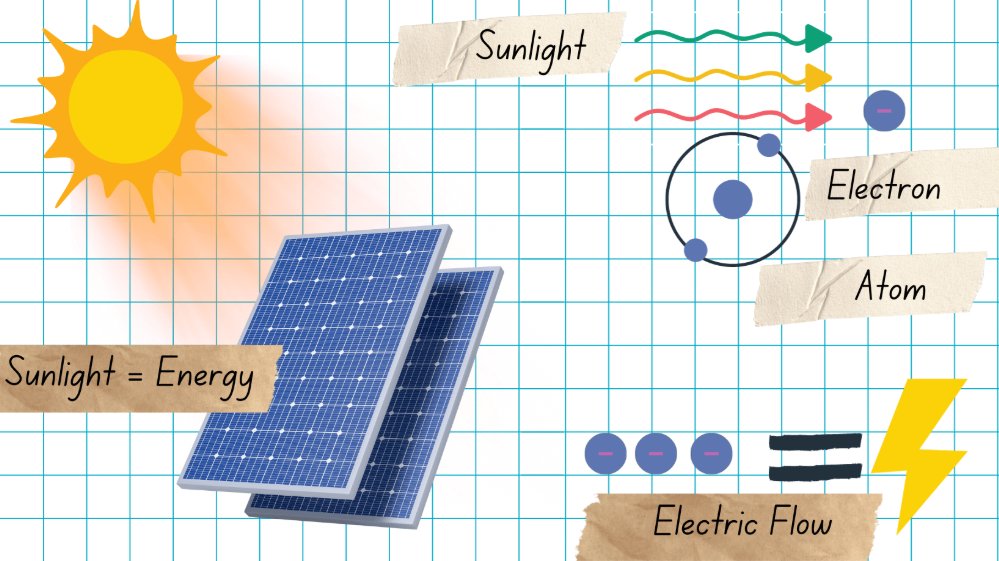 The sun is an extremely powerful energy source and is the largest source of energy received by Earth (approximately 173 thousand terawatts). It is capable of providing energy for photosynthesis, creating food and oxygen, producing heat, and causing chemical reactions such as nuclear fusion (only in the core of the sun). Most importantly, it is capable of generating electricity. This is through solar panels which were developed to harness the sun’s clean, renewable and abundant source of energy. Additionally, this made people rely less on dangerous fossil fuels.
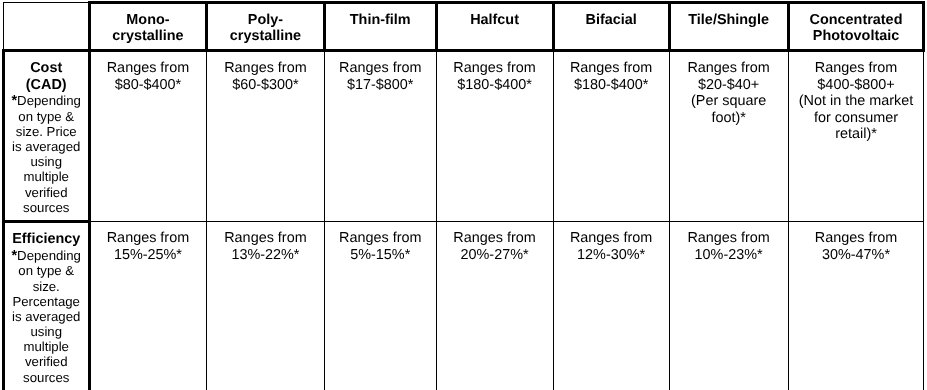
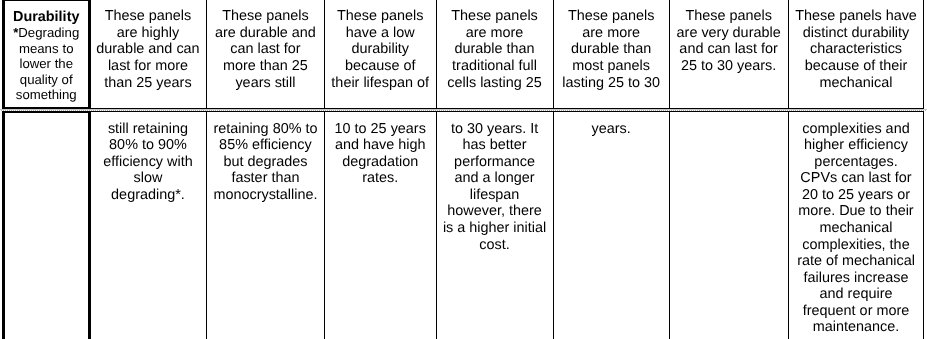
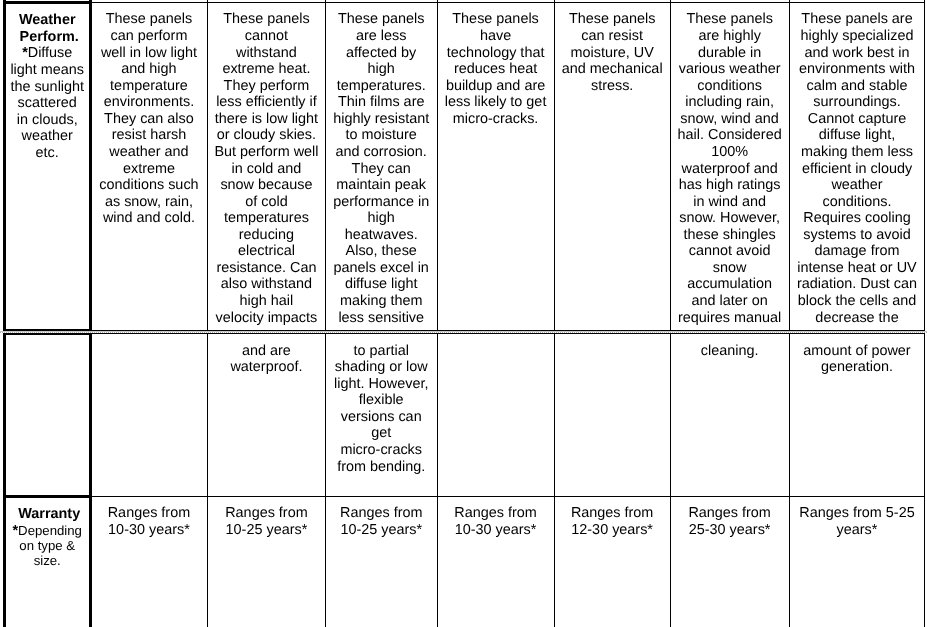
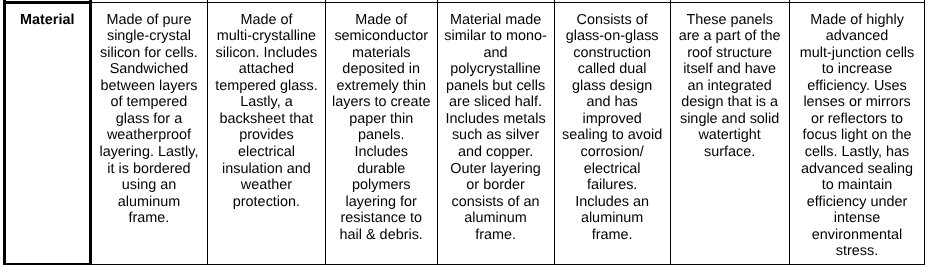
Below is a table I made which explains the differences between the seven main types of solar panels. The differences include examining the solar panels’ cost, efficiency, durability, temperature/weather performance, warranty terms, and material.
Limitations and Issues w/ Existing Solar Planes
Existing solar powered planes face many challenges such as technical, environmental, and operational constraints.
Technical Issues:
- Low Energy Density: Solar energy is not dense enough to power large and heavy aircraft especially commercial or passenger planes
- Conversion Efficiency: Overall solar panels convert only 15 to 45 percent of the sun’s energy which is composed of photons.
- Intermittency and Storage: Solar planes rely on batteries for nighttime flight because sunlight is unavailable.
- Winter Performance: During winter, shorter days and lower sun angles make it difficult to collect energy.
Environmental Issues:
- Weather Vulnerability: Refers to the exposure, sensitivity and adaptive capacity of an aircraft to weather conditions. The presence of people, infrastructure, ecosystems and climate/weather can increase an aircraft’s susceptibility to risks.
- Aircraft Structure: Solar aircraft are incredibly lightweight making them fragile and sensitive to turbulence.
- Temperature Effects: High ambient temperatures can reduce solar cell efficiency.
Operational Issues:
- Takeoff/Landing Issues: Solar planes require specialized conditions to become airborne because of the low amount of power generated.
- Payload LImitations: Absolute minimum weight required to remain airborne.
- Limited Operational Season: Only can operate nine months of the whole year (12 months) in some parts of the world such as Canada, Norway etc. due to low performance in the winter. Sun is low on the horizon and days are short
- Night Flight: Unable to generate energy in night flights which means energy has to be stored. The more energy stored increases the payload (Payload Limitations).
- High Initial Cost: Developing and maintaining solar aircrafts is expensive. Components such as panels/cells and batteries can be difficult to repair constantly. It is also expensive to replace.
Analyzing Solar Powered Planes (Where solar planes are being designed, tested and used?)
Solar planes are being designed, tested, and used primarily for long-endurance, high-altitude surveillance and research purposes. These surveillance systems are known as HAPS (High-Altitude Pseudo Satellites). Solar powered planes are mainly used in countries such as the United States and New Zealand. Aviation companies that are involved mainly work on creating solar fuel and optimize airport infrastructure using floating solar panels. These companies include Skydweller Aero, Airbus, ETH Zurich, and Technical University of Munich (TMU). Airbus has manufactured a solar aircraft known as Zephyr S, a high-altitude solar plane that is being used by the Ministry of Defence of the UK. Kea Aerospace has also designed and manufactured the Kea Atmos. This aircraft is designed mainly for stratospheric flights over the pacific ocean that are long-enduring. Companies such as Atlantik Solar have used their models for research in the Arctic.
Understanding the Physics and Energy of Flight
Physics involves mechanics, thermodynamics, electromagnetism and quantum mechanics. It also involves aerodynamics and studies air, motion & the forces acting on an aircraft. Air resistance is a force that causes friction due to air molecules or particles interacting with an aircraft’s body. Key types of energy include mechanical, kinetic, potential, thermal, electrical, radiant, chemical, nuclear and sound
How Do Motors Work?
Works through a process known as electromagnetism by transferring electrical energy to mechanical energy. Main key components include the rotor, stator, magnets, brushes and commutators. This process occurs by creating a magnetic field when a rotor is connected to a stator and is receiving electrical currents from a battery or another energy source. This field makes the rotors rotate by developing a torque or rotation.
Variables
| Manipulated Variable | Responding Variable | Controlled Variables |
|---|---|---|
| The weather condition that the prototype is being tested in. Weather types are sunny, cloudy, and snowy. The prototype is examined and analyzed to test its durability, functionality, and performance | The time taken for the prototype to generate power: functioning propellers and solar panels | 1) The prototype: a commercial aircraft model similar to the Leonardo AW609. 2) The area where testing was conducted: a high altitude park. 3) The time of day on which testing was conducted: around 4:05 pm. 4) The electronic timer: my phone. 5) The person testing the prototype: Lobsang L. 6) The direction the prototype is facing during tests: north. 7) The box: in which the prototype stayed in until 4:05 pm to be tested (this was to keep the results accurate so all three tests start to receive sunlight at the same time). |
Procedure
1) Gather all the necessary materials and equipment to conduct the experiment.
2) Plan three specific days to conduct the experiment and note down the dates.
3) On the first day: before leaving your house, put your prototype model in a cardboard box or a box in which sunlight can’t get through and walk to a nearby location with a calm environment such as a park.
4) You will start testing your prototype around 4:05 pm in snow conditions. Test 1 will last for 10 minutes from 4:05 pm to 4:15 pm. Stop timer. Then test 2 from 4:15 pm to 4:25 pm. Stop timer. And lastly, test 3 from 4:25 pm to 4:35 pm.
5) If between the 30 minutes, across 3 tests with 10 minutes each, your prototype model generates power and has working propellers, stop the timer and note down the time it took to start up in your logbook. The goal of this test is to find out the least amount of time it takes for the prototype to generate power in different weather conditions.
6) Repeat steps 4 & 5 over the next two days to record the results for sunny and cloudy weather conditions. (*NOTE: The start time of Test 1 has to be the exact same for all weather conditions to keep the time of day [controlled variable] same.)
7) During the tests:
- take 1 photo per test for each weather condition (3 for each weather type and 9 in total including all weather types)
- take only 1 video across the 3 tests for each weather condition: if working propellers or no working propellers
- observe and notice the surroundings and what might affect the reason the prototype has working propellers or not - note or jot this down in your logbook
8) Lastly, create a type of graph or chart to organize your results and outcomes of the total of 9 tests - 3 for each weather condition. Create this in either your logbook or on a computer.
Observations
Analysis
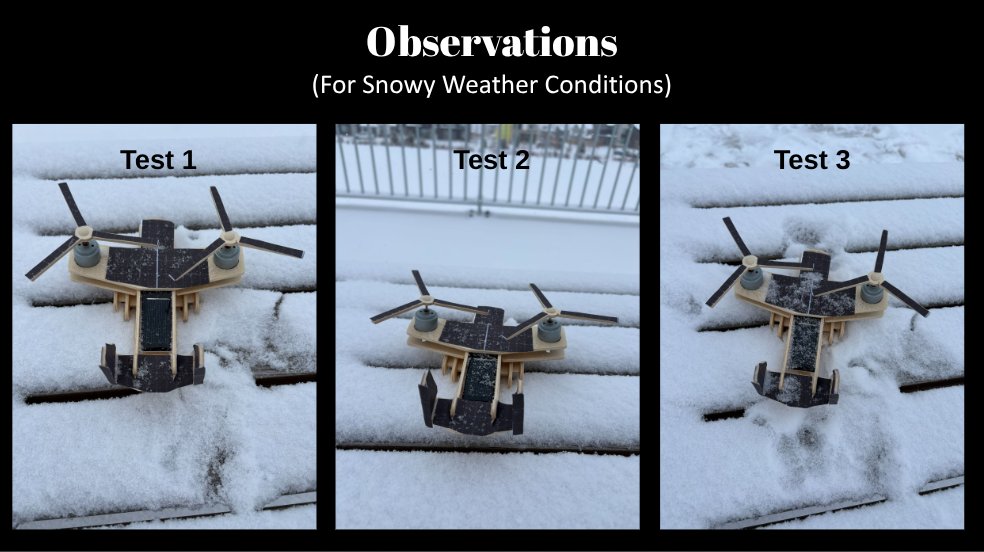
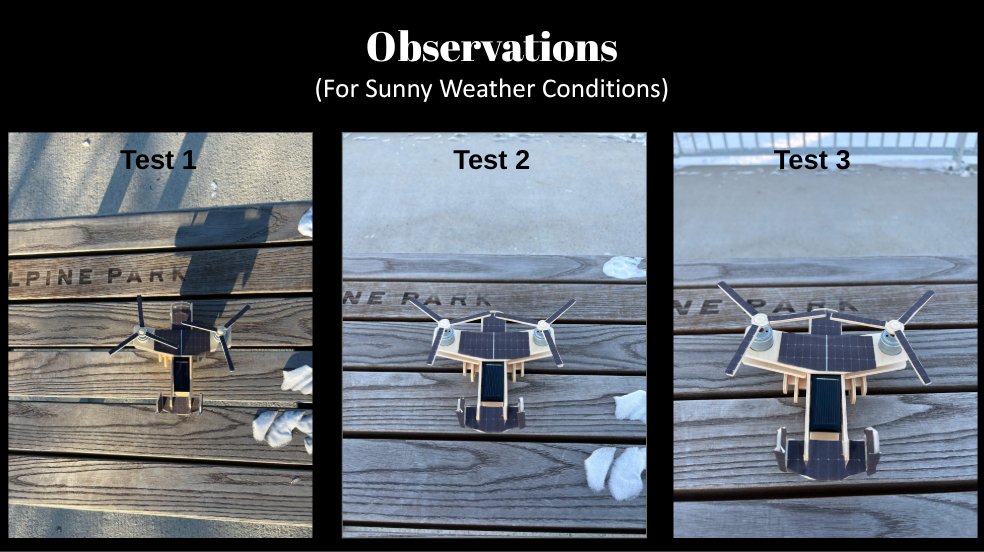
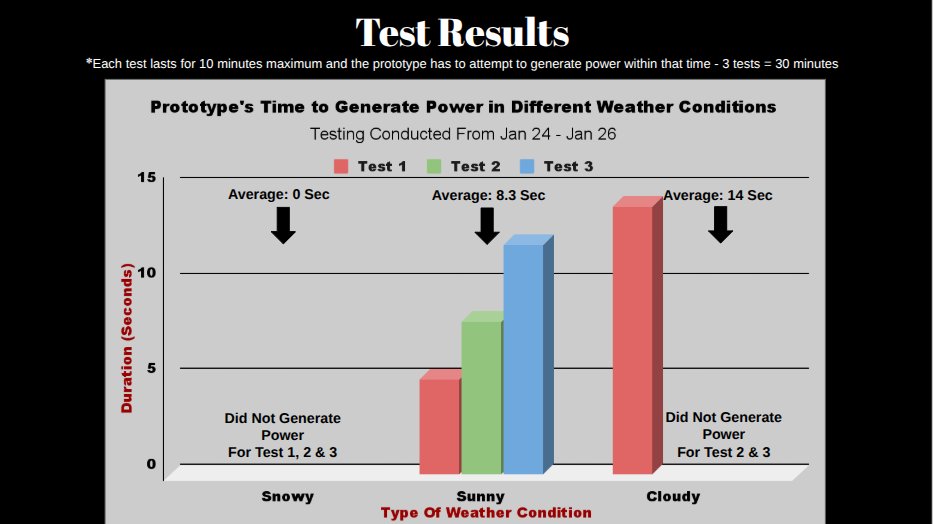
Snowy: During tests, a lot of snow was accumulated by approximately 1 to 1.5 inches. Sunlight was extremely minimal and the sky was very cloudy. This decreased the chance of solar energy reaching the panels to generate power and have working propellers. However, the panel had a thin weatherproof layering so it was a bit waterproof and was prevented from completely covering up from the snow. Next time, if I was to build another prototype similar to this, I would install the solar panels at a diagonal angle to slide off snow and make the panel more sensitive to sunlight by adding more photovoltaic cells. This makes it produce energy more efficiently.
Sunny: During tests, I noticed that the amount of sunlight started to decrease because of sunset and slowed the speed of the prototype. The sky was a little clear and was partly cloudy. Secondly, I noticed that if too much sunlight is received by the prototype, the model stops generating power because it can’t handle that high amount of photons reaching the photovoltaic cells. Next time, if I was to build another prototype similar to this, I would build a larger model composed of large solar panels that can handle more voltage. This was a safety issue because if the model was flying and suddenly stopped generating power, then that could damage the model and injure passengers or the payload inside the aircraft.
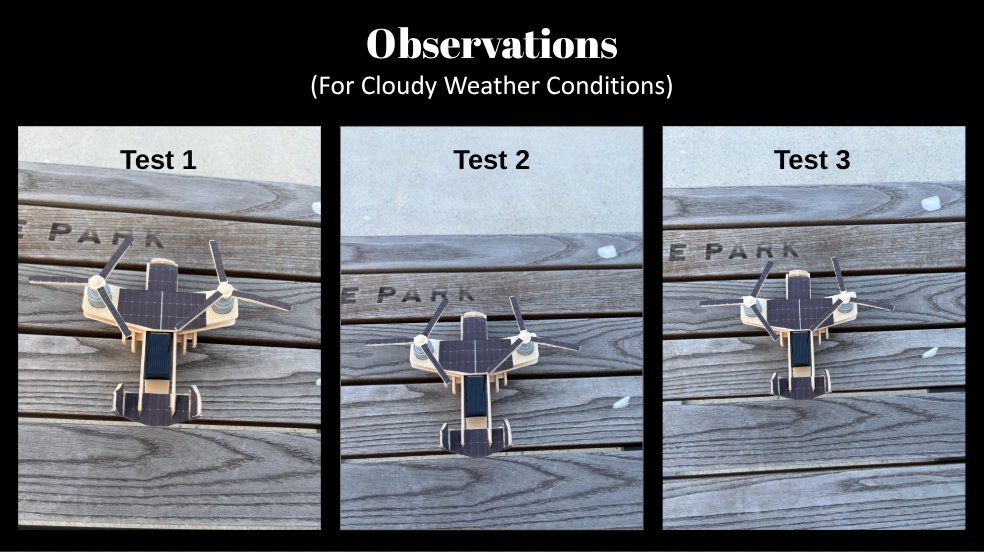
Cloudy: During tests, I noticed that the amount of sunlight was extremely minimal and the sky was very cloudy. This decreased the chance of solar energy reaching the panels to generate power and have working propellers. Next time, if I was to build another prototype similar to this, I would make the panel more sensitive to sunlight by adding more photovoltaic cells because this makes it produce energy more efficiently.
Conclusion
The purpose of this experimental science project was to attempt to find a sustainable and renewable source of energy that could power airplanes. After multiple testing in different weather conditions such as snowy, sunny and cloudy, my hypothesis was confirmed stating that the prototype would take the longest in generating power in snowy conditions and have working propellers. This was evident when I observed and noticed the model’s propellers not spinning in any of the three tests that lasted for 30 minutes. This happened because a lot of snow (around 1 to 1.5 inches) had accumulated around and in the solar panels which blocked the amount of photons reaching it. Additionally, the sky was extremely cloudy which decreased the chance of any sunlight getting to the panels and completely stopped energy production. Next time, if I was to build another prototype similar to this, I would install the solar panels at a diagonal angle to slide off snow and make the panel more sensitive to sunlight by adding more photovoltaic cells. This makes it produce energy more efficiently. In the end, this would improve and mostly change the original layout or design of the traditional commercial airliner due to the addition of components.
Application
My project attempts to make a big change in decreasing the amount of CO2 produced globally mainly from the aviation industry. The transportation industry accounts for most of the CO2 produced globally. A prototype similar to the Leonardo AW609 includes solar panels which make the aircraft completely sun powered without relying on specialized airplane fuel. This helps scientists and engineers in the aviation industry look at a different perspective of a commercial, passenger airliner which includes poly-crystalline and half-cut solar panels. Scientists can use these tests and knowledge to improve the model made and change the layout or design based on their understanding. Also, it demonstrates how the use of sustainable energy resources would enhance air transportation efficiently because of the abundant source of sunlight that the aircraft can receive from high altitude.
Sources Of Error
Controlled Variables: Sunlight intensity and surrounding temperature of the testing area was difficult to control. This affected all tests in all weather conditions because of the decrease or increase of photons at times. I attempted to solve this by testing my prototype over 9 days (3 days = 3 tests for 1 weather condition) at the same time of day (4:05 pm). This might help keep the temperature and sunlight intensity similar or the same due to the specific timings.
Sample Size: The amount of tests that were conducted in this experiment were small and limited my ability to generalize my findings. I would have to conduct multiple tests (repeated testing) to have a valid conclusion. By doing this, it also increases reliability of the data collected and shows (if any) consistency. Next time, I would do repeated testing to identify similarities and differences in the data, making my results solid and reliable. Additionally, this helps identify potential outliers and reasons for why those happened.
Variety of Environmental Conditions: Next time, I would test my prototype in different types of environmental conditions and atmospheric states other than sunny, cloudy, and snowy (most common types according to Canadian climate). These types would include rain, hail, fog, tropical, polar, arctic, and high-altitude areas. By doing this, it would add variation to the types of manipulated variables and inform me how the prototype's durability, functionality, and performance is affected.
Citations
Bibliography
APA 7 (American Psychological Association 7th edition) Style
Project Planning
1) Aeronautics Research Mission Directorate . (n.d.). 5-12 grades future flight solar power museum in a box museum in a box. National Aeronautics Space Administration. https://www.nasa.gov/wp-content/uploads/2023/06/solar-power-5-12.pdf
2) Blais\, C. (2026\, February). MIT school of engineering |» is it possible to make solar-powered airplanes? Mit Engineering; Massachusetts Institute of Technology. https://engineering.mit.edu/engage/ask-an-engineer/is-it-possible-to-make-solar-powered-airplanes/
3) Buddies\, S. (2015). Aerodynamics science fair projects: Planes\, rockets\, kites\, drones & more | science buddies blog. Science Buddies; Science Buddies. https://www.sciencebuddies.org/blog/aerodynamics-science-projects
- National Aeronautics Space Administration. (2010). Beginner’s guide to aeronautics. Nasa.gov; Space Administration. https://www.grc.nasa.gov/WWW/k-12/airplane/
5) National Aeronautics Space Administration. (2025\, August 13). Beginners guide to aeronautics. Glenn Research Center | NASA; Space Administration. https://www1.grc.nasa.gov/beginners-guide-to-aeronautics/
- World, S. (1957, February 5). Flight. Science World; Science World. https://www.scienceworld.ca/resource/flight/
Expert’s Website
- Mabel, G. (2024, May 28). Fly with Mabel. The Best Aviation Ground School Provider in Canada; Godly Mabel. https://flywithmabel.com/
History of Airplane Invention & Aviation History
1) Andrews\, E. (2016\, March 8). 6 Little-Known Pioneers of Aviation | HISTORY. HISTORY.com; History.com. https://www.history.com/articles/6-little-known-pioneers-of-aviation
- Crouch, T. (2020). In Encyclopedia Britannica: History of flight - other aviation pioneers. Tom Crouch. https://www.britannica.com/technology/history-of-flight/Other-aviation-pioneers 3) EAA. (2025). Chapters | History of Aviation. Eaa.org; Experimental Aircraft Association. https://chapters.eaa.org/eaa1252/roots-of-aviation/history-of-aviation
- National Air and Space Museum. (2018). The Wright Brothers. National Air and Space Museum; Smithsonian. https://airandspace.si.edu/explore/stories/wright-brothers
5) Peekaboo Kidz: Dr. Binocs. (2025\, August 26). The Invention of Airplanes । History of Airplane Invention | Aviation History with Dr. Binocs. YouTube; Peekaboo Kidz. https://www.youtube.com/watch?v=NpqU3eSeS1c
How Airplanes Work? & Flight Operations/Systems
1) Johnston\, M. (2023\, September 20). The Basics of the Cockpit of a Plane | CAU. CAU; California Aeronautical University. https://calaero.edu/aeronautics/flight-instruments/the-basics-of-the-cockpit-of-a-plane/
- NASA. (n.d.). The Four Forces of Flight. National Aeronautics Space Administration. https://www.nasa.gov/wp-content/uploads/2020/06/four_forces_5_8.pdf?emrc=811ef4
- NASA. (2021, May 13). Dynamics of Flight. Nasa.gov; National Aeronautics Space Administration. https://www.grc.nasa.gov/WWW/K-12/UEET/StudentSite/dynamicsofflight.html
4) NASM. (2011). The Four Forces | How Things Fly. Si.edu; National Air and Space Museum. https://howthingsfly.si.edu/forces-flight/four-forces
- Select Aviation College. (2023, May 5). Principles of Flight – The Four Forces Simply Explained. S.A; Select Aviation. https://selectaviation.com/principles-of-flight-the-four-forces-simply-explained/
6) Woodford\, C. (2018\, April 17). How Planes Work | The Science of Flight. Explain That Stuff. https://www.explainthatstuff.com/howplaneswork.html
Flight Terms & Concepts
- ACS. (n.d.). A Glossary of Flight Terms - Air Charter Service. Www.aircharterservice.com; Air Charter Service. Retrieved February 22, 2026, from https://www.aircharterservice.com/about-us/news-features/blog/an-a-z-of-aviation-definitions
- AP. (n.d.). The 7 Basic Parts of an Airplane & Their Main Functions with Photos, Labeled Diagrams & Videos. Www.airpowerinc.com; Air Power. https://www.airpowerinc.com/parts-of-an-airplane
- EFA. (n.d.). Aviation Terminology. EFA; Epic Flight Academy. https://epicflightacademy.com/aviation-terminology/
- FAA. (n.d.). PHAK Glossary. U.S Federal Aviation Administration. Retrieved February 22, 2026, from https://www.faa.gov/sites/faa.gov/files/21_phak_glossary.pdf
- GlobeAir . (2026). 583 aviation terms explained by GlobeAir . Globe Air. https://www.globeair.com/glossary
About Expert
- Babych, S. (2022, November 18). Teen’s dream of becoming pilot takes flight after family moves to Calgary from India. Calgaryherald.com; Calgary Herald. https://calgaryherald.com/news/young-pilot-calgary-india-teen-dream-takes-flight
- Calgary, J. J. (2022, November 12). Canadian girl with Keralite roots youngest flight instructor in North America. Onmanorama.com; Onmanorama. https://www.onmanorama.com/career-and-campus/top-news/2022/11/12/keralite-girl-now-youngest-flight-instructor-in-north-america.html
- UNN. (2022, November 17). Kerala-Born Godly Mable Is Youngest Licensed Flight Instructor In North America. Theunn.com; The Universal News Network. https://theunn.com/kerala-born-godly-mable-is-youngest-licensed-flight-instructor-in-north-america/
- WW. (2026). Beyond Local: Innisfail teen believed to be the youngest licensed flight instructor in Canada. Westernwheel.ca; Western Wheel. https://www.westernwheel.ca/beyond-local/innisfail-teen-believed-to-be-the-youngest-licensed-flight-instructor-in-canada-7400805
- Mabel, G. (2024, May 28). Fly with Mabel. The Best Aviation Ground School Provider in Canada; Godly Mabel. https://flywithmabel.com/
Environmental Impacts of Aviation (Cardiovascular issues, Pollution issues etc)
- BBC. (2019, August 23). Climate change: Should you fly, drive or take the train? British Broadcasting Channel News. https://www.bbc.com/news/science-environment-49349566
- CAC. (2019, September 25). Aviation and the Environment. Canadasairports.ca; Canadian Airports Council. https://canadasairports.ca/advocacy/industry-priorities/aviation-and-the-environment/
- EPA. (2024, May 14). Carbon pollution from transportation. US EPA; United States Environmental Protection Agency. https://www.epa.gov/transportation-air-pollution-and-climate-change/carbon-pollution-transportation
4) EPA. (2025\, January 9). Transportation Sector Emissions | US EPA. US EPA; United States Environmental Protection Agency. https://www.epa.gov/ghgemissions/transportation-sector-emissions
- Fleck, A. (2024, June 4). Infographic: Which mode of transport is the most polluting? Statista Daily Data; Statista. https://www.statista.com/chart/32350/greenhouse-gas-emissions-by-mode-of-transport/
- IEA. (n.d.). Global Energy Review 2025. In IEA. International Energy Agency. Retrieved February 22, 2026, from https://iea.blob.core.windows.net/assets/5b169aa1-bc88-4c96-b828-aaa50406ba80/GlobalEnergyReview2025.pdf
- IEA. (2025). Aviation. IEA.org; International Energy Agency. https://www.iea.org/energy-system/transport/aviation
- Lebling, K., Gangotra, A., Hausker, K., & Byrum, Z. (2023). 7 Things to Know About Carbon Capture, Utilization and Sequestration. World Resources Institute. https://www.wri.org/insights/carbon-capture-technology
- Ritchie, H. (2020, October 6). Cars, planes, trains: Where do CO2 Emissions from Transport Come from? OWD; Our World in Data. https://ourworldindata.org/co2-emissions-from-transport
- Ritchie, H. (2024). What Share of Global CO2 Emissions Come from Aviation?. Our World in Data. https://ourworldindata.org/global-aviation-emissions
- Rupcic, L., Pierrat, E., Saavedra-Rubio, K., Thonemann, N., Ogugua, C., & Laurent, A. (2023). Environmental Impacts in the Civil Aviation Sector: Current State and Guidance. Science Direct: Transportation Research Part D: Transport and Environment, 119(1), 103717. https://doi.org/10.1016/j.trd.2023.103717
- Steadman, S., & Pickard, S. (2024, February 19). Airports, air pollution and climate change. Odi.org; ODI: Think Change. https://odi.org/en/publications/airports-air-pollution-and-climate-change/
- Wikipedia Contributors. (2025, March 24). Environmental Impact of Aviation. Wikipedia; Wikimedia Foundation. https://en.wikipedia.org/wiki/Environmental_impact_of_aviation?utm_source=chatgpt.com
- Zeke Hausfather. (2021, November 11). Global CO2 emissions have been flat for a decade, new data reveals. WEF; World Economic Forum. https://www.weforum.org/stories/2021/11/global-co2-emissions-fossil-fuels-new-data-reveals/
Solar Panel Technology & How it Works?
- AS. (2021, January 16). Comprehensive Guide to Solar Panel Types. Aurorasolar.com; Aurora Solar. https://aurorasolar.com/blog/solar-panel-types-guide/
- Canada, N. R. (2022). Solar energy. Canada.ca; Government of Canada. https://natural-resources.canada.ca/energy-sources/renewable-energy/solar-energy
- CH. (2025, December 22). How Solar Power Works. YouTube; Central Hudson. https://www.youtube.com/watch?v=-3l5EVglqig
- Chukavelli. (2025, March 1). These Are The 7 Types Of Solar Panels. YouTube; Chukavelli. https://www.youtube.com/watch?v=vxYv8KLrIvw
- Cleversolarpower by Nick. (2025, June 18). Different Types of Solar Panels: What is PERC, TOPCon, N-Type, HJT,... YT; Youtube. https://www.youtube.com/watch?v=B6BAYz563Yg
- MIT. (2015). The Future of Solar Energy. Mit Engineering; Massachusetts Institute of Technology. https://energy.mit.edu/research/future-solar-energy/
- TED-Ed. (2016). How do solar panels work? - Richard Komp [YouTube Video]. In YouTube. https://www.youtube.com/watch?v=xKxrkht7CpY
- U.S EIA. (2024, May 24). Photovoltaics and Electricity. Eia.gov; U.S. Energy Information Administration. https://www.eia.gov/energyexplained/solar/photovoltaics-and-electricity.php
- U.S. DE. (2025). How Does Solar Work? Energy.gov; U.S. Department of Energy. https://www.energy.gov/eere/solar/how-does-solar-work
- Wikipedia Contributors. (2019a, February 14). Solar panel. Wikipedia; Wikimedia Foundation. https://en.wikipedia.org/wiki/Solar_panel
- Wikipedia Contributors. (2019b, April 30). Photovoltaics. Wikipedia; Wikimedia Foundation. https://en.wikipedia.org/wiki/Photovoltaics
What is Physics? & Studies/Theories
- LT. (2020, July 16). 1.1: The Basics of Physics. Libretexts.org; LibreTexts. https://phys.libretexts.org/Courses/Tuskegee_University/Algebra_Based_Physics_I/01%3A_Nature_of_Physics/1.01%3A_The_Basics_of_Physics
- Miacademy & MiaPrep LC. (n.d.). Physics. YouTube; Miacademy & MiaPrep Learning Channel. Retrieved February 23, 2026, from http://www.youtube.com/playlist?list=PLvJNSf-7NfrOhMrc0s5DrjJzIxA3F6yL6
- Miacademy & MiaPrep LC. (2024, January 8). The Physics of Flight - Fluid Motion and Lift. YouTube; Miacademy & MiaPrep Learning Channel. https://www.youtube.com/watch?v=6OlZXxXRtP0
- Miacademy Learning Channel. (2019). What is Air Resistance? [YouTube Video]. In YouTube. https://www.youtube.com/watch?v=KV9rvqeR3sU
- MTU. (2024). What is Physics? Mtu.edu; Michigan Technological University. https://www.mtu.edu/physics/what/
- Weidner, R. T., & Brown, L. M. (2019). What is Physics? In Encyclopedia Britannica. Britannica. https://www.britannica.com/science/physics-science
Engines/Motors
- 3D Requiem. (2024, April 20). Electric Motor, How It Works? (3D Animation). YouTube; 3D Requiem. https://www.youtube.com/watch?v=dWNZSxlkTxw
- Brain, M., & Hall-Geisler, K. (2021, October 5). How Electric Motors Work. Howstuffworks.com; How Stuff Works. https://electronics.howstuffworks.com/motor.htm
3) eMOTORSDIRECT. (n.d.). How Does a DC Motor Work? | eMotors Direct. www.emotorsdirect.ca. Retrieved February 22\, 2026\, from https://www.emotorsdirect.ca/knowledge-center/article/how-does-a-dc-motor-work
- Engineering World. (2016). How Plane Engines Work? (Detailed Video) [YouTube Video]. In YouTube. https://www.youtube.com/watch?v=3dPFvJ_Csgg
- Evans, P. (2021, February 25). How Electronic Motors Work. Theengineeringmindset.com; The Engineering Mindset. https://theengineeringmindset.com/how-electric-motors-work/
- HAT. (n.d.). Aerospace.honeywell.com; Honeywell Aerospace Technologies. Retrieved February 22, 2026, from https://aerospace.honeywell.com/us/en/about-us/blogs/electric-aircraft-propulsion-how-it-works?utm_source=google&utm_medium=cpc&utm_campaign=23-aero-ww-dsa-blogs&utm_content=dyn-en-lp&gad_source=1&gad_campaignid=19572477822&gbraid=0AAAAADn8KJewiilYTpi2oHxX9HzmBnpbM&gclid=Cj0KCQiA7-rMBhCFARIsAKnLKtDSAMWWWDfFIw0fzTgERs8c_RfacEKwkbfUerrtNearCEyjxOxXSHsaAhRDEALw_wcB
- Lesics. (2015). Jet Engine, How it works ? [YouTube Video]. In YouTube. https://www.youtube.com/watch?v=KjiUUJdPGX0. Sabil Civil Engineering.
- NASA. (2021, May 13). Engines - How does a jet engine work? Nasa.gov; National Aeronautics Space Administration. https://www.grc.nasa.gov/www/k-12/UEET/StudentSite/engines.html
- Owen, J. (2020). How does an Electric Motor work? (DC Motor) [YouTube Video]. In YouTube. https://www.youtube.com/watch?v=CWulQ1ZSE3c
- SU. (2019). Jet Engines. Stanford.edu; Stanford University. https://cs.stanford.edu/people/eroberts/courses/ww2/projects/jet-airplanes/how.html
- The EM. (2022, November 8). How does an Electric Motor work? (DC Motor). Www.youtube.com; The Engineering Mindset. https://www.youtube.com/watch?v=1AaUK6pT_cE
- Wikipedia Contributors. (2019, February 24). Electric motor. Wikipedia; Wikimedia Foundation. https://en.wikipedia.org/wiki/Electric_motor
Acknowledgement
I would like to acknowledge my parents for helping and supporting me in this School Science Fair. They thoroughly helped me in conducting the experiment and in my research. Thanks to them, I was provided with all the necessary materials and equipment needed for me to conduct this experiment. I would also like to acknowledge my CYSF Science fair coordinator Karen Davis for guiding me through all the steps to make it into CYSF. I would like to thank my teachers who guided me through this project. Lastly, I would like to thank Godly Mabel for her valuable expertise and contribution to the project she has provided. I have made my best effort to work according to last year's Science fair project feedback given by my teachers and judges.