
Face Pareidolia: Why Do We See Illusory Faces in Objects?
Isabella Paszcza, Suzannah Lee
Ascension of Our Lord
Grade 8
Presentation
No video provided
Hypothesis
Experiment 1: Does symmetry or image complexity affect whether we experience pareidolia with the image or not? Yes, symmetry and image complexity will affect whether we experience pareidolia with a given image. If the image is less complex, then we think it will be less probable to experience pareidolia than with an image with high complexity, whether the image is symmetrical or asymmetrical. Because if an image that is symmetrical like a face, and has high detail, it is more likely to be recognized as a face rather than an asymmetrical and low detail image.
Experiment 2: When faced with an object with an illusory face, are people more likely to recognize the illusory face first, or the object itself? If faced with an illusory face, I think that we will recognize the face first because even if both the recognition of faces and objects are very important, we will recognize the face first because I think that is what our visual system puts more importance on. I think it will be more probable to recognize the face first but there may be other factors that could distract us from that like the color of the object and background of the picture. If the object is brightly colored or made to draw our attention, I think it will be more probable to recognize the object first in that scenario.
Research
Pareidolia is a phenomenon where people perceive resemblance from random objects and images. Pareidolia is not a disorder; it’s the tendency of the brain to designate meaning where it can due to its adaptation to familiarize important objects and faces.
A popular example of pareidolia is seeing faces on burnt toast. This first gained attention in 2004 when toast was put up for sale on ebay, claiming to show the face of Virgin Mary. Years later, a man sold toast once again, perceiving Jesus Christ on it. This became a widespread phenomena, which led to multiple studies on it. One Canadian led study was awarded the Ig Nobel prize on the research of Jesus on toast linking with face pareidolia at Harvard University.
Early research of face pareidolia surfaced in the late 1800s. A paper by the German physicist, philosopher and psychologist, Gustave Fechner, wrote about our tendency as humans to see faces in objects.
When people experience face pareidolia, the brain is recognizing patterns and is trying to make sense of them. A part of the brain called the fusiform face area activates when it notices something that resembles a face, this action happens in just milliseconds, because the brain has evolved to spot faces as an important survival and social mechanism. The FFA is located near the back of your head, at the bottom of our temporal and occipital lobes. The brain also uses “top-down processing”, which means it is always anticipating faces and is searching for them. Due to this, the brain may see faces in unclear or random images, such as shapes, shadows, and patterns.
Pareidolia is a common phenomenon that is observed in humans, but its not just limited to us. Face pareidolia is not uniquely a human experience. A study published in 2017 shows that in rhesus monkeys, a breed of monkey sound in southeast asia, was observed to focus longer at images where face pareidolia was reported by humans, rather than pictures that did not. The monkey was specifically fixated on features like the eyes, and mouth.
Now that we know that face pareidolia is not limited to humans, we have to ask, where did face pareidolia come from? In another way, pareidolia is seen as a mistake of the brain during face detection. Some evolutionary scientists argue that pareidolia in general, evolved as a survival mechanism from our ancestors. The survival advantage of pareidolia is speculated to be that a false positive, seeing a face where there isn't one, is better than a false negative, failing to see a predator when there is one.
Human-like face pareidolia emerges in deep neural networks optimized for face and object recognition by Pranjul Gupta and Katharina Dobs
This study started with a hypothesis that face pareidolia happens because of the visual system’s optimization for recognizing both faces and objects. Using task trained CNNs (convolutional neural networks) the scientists studied the links between face recognition and object recognition through human and neural responses. CNNs trained on face recognition and object recognition matches pareidolic faces, real faces, and objects more similarly to the results of human recognition. In the end, they found that CNN's trained for both face and object recognition relied on face like features (ex. eyes) to experience face pareidolia. Which was similar to what was discovered in human perception. In the end, they found that face pareidolia in humans may come from our visual systems focus on face recognition within the general object identification.
“This suggests that face pareidolia may result from the interplay between fine-grained face identification and generalized object categorization processes in the brain. Our findings shed light on the origins of face pareidolia and highlight the potential of using artificial neural networks to understand the complexities of visual perception.”
How our brains are drawn to and spot faces everywhere, how it can benefit advertisers and future products? by the University of Surrey, Dr Di Fu
Research showed that averted gazes from real faces and perceived faces in objects can direct where we look, but they do so differently. Processing real faces is different from perceived faces because in real faces, we focus on things like the direction of the eyes. With perceived faces, or face like objects, we tend to focus more on their overall structure and the position of their ‘eye’ like features. Perceiving face like objects drives a stronger attention response from us. This can be used for advertisers to incorporate face like features/eye like elements into their products to draw attention from customers. An example of a logo that uses pareidolia is the HP logo. In reality it’s just four lines, but we still see the letter h and p.
Robinson, A.K., Stuart, G., Shatek, S.M. et al. Neural correlates reveal separate stages of spontaneous face perception.
This study first focused on the question if when faced with a face like object, we perceive the face first, the object, or a mix of both? Face pareidolia gives us an opportunity to understand how image properties contribute to the neural representation of faces and objects. Most experiments on face pareidolia so far have motivated participants to look for the faces, which could bias the end result. This study took a different approach, using a ‘odd one out’ method of experiment to measure perceived differences between 100 real faces, 100 perceived faces, and 100 objects. This study aimed to uncover the hidden features/properties of visual recognition without biasing the results of participants. In the ‘odd one out’ experiment, they found that in the results graph, human faces and objects formed distinct clusters while perceived faces fell into a mix of both. This hints that pareidolic faces have a dual nature, they are perceived as different even when participants were not prompted to look for faces.
Jiangang Liu, Jun Li, Lu Feng, Ling Li, Jie Tian, Kang Lee, Seeing Jesus in toast: Neural and behavioral correlates of face pareidolia, Cortex
“These findings suggest that face pareidolia is not purely imaginary; rather, it has a basis in physical reality. However, because the images do not actually contain faces, face pareidolia clearly requires substantial involvement of the brain's interpretive power to detect and bind the faint face-like features to create a match with an internal face representation.”
Wardle, S.G., Taubert, J., Teichmann, L. et al. Rapid and dynamic processing of face pareidolia in the human brain.
An experiment involved participants viewing 96 images, 32 which were pareidolic faces in objects, 32 real faces, and 32 non face objects. The results show that the perception of an illusory face in an object modulates the brain’s response to that object in face-selective cortex only. The study showed that illusory faces are represented uniquely in the brain compared to real faces and non face objects.
Variables
Experiment 1: Independent variable: categories of images, images used in the form Dependent variable: the scale from 1-5 Controlled variable: images used in experiment, form sent to all participants, same scale from 1-5 for each question
Experiment 2: Independent variable: features of images(color, resolution, object in focus) Dependent variable: System of answering A or B Controlled variable: video sent to each participant, time each image was on screen, question asked after each image was shown
Procedure
Experiment 1:
- Create presentation of symmetrical, asymmetrical, high complexity and low complexity image examples of pareidolia faces
- Create a way for survey participants to answer 0-5 how strongly they feel pareidolia from each image on the presentation
- Collect 10 people to take survey
- Collect data from survey
- Create conclusion
Experiment 2:
- Collect 10 images of objects with illusory faces with varying backgrounds, colors, and sizes
- Stitch images together in a video, each object being shown for 1 second with a period of time in between images that is just a blank screen
- Collect 15 female peer participants
- Ask participants in the period of darkness between images whether they saw the illusory face first(A) or the object itself(B)
- Collect data from all participants
- Create conclusion
Observations
Experiment 1:
Through the form, I noticed questions that included symmetrical non-complex examples of face pareidolia collected the most amount of 5 star ratings in total. But they also collected the most amount of 1 star ratings. Asymmetrical complex and non-complex examples of face pareidolia had the same average rating in the end after counting and calculating.
Experiment 2:
After all 15 of the participants have submitted their answers, we can observe that there is no true pattern between each one. Each answer that was submitted was different. In some participants like participant 15, 9/10 of their answers were A. But some people like participant 13 had an equal amount of A’s and B’s. In the video, the 6th image was the one who received the most amount of answers that said they saw the face first. The second image was the one to receive the most amount of answers that said they saw the object first.
Analysis
Experiment 1: The category, symmetrical non-complex had the highest average rating because it had the most ratings of 5(22 ratings) out of all categories. But what's also interesting is that it also had the most ratings of 1(4 ratings). This could hint that symmetrical non-complex examples of face pareidolia are not always obvious to everyone. This does not support our hypothesis, which stated that a symmetrical non-complex pareidolic inducing image was most likely obvious to everybody. But either way, this category still got the most ratings of 5, which means that most people can still see a very clear face in simple and symmetrical pareidolic images.
Experiment 2:
I think that because most of the images had sort of obvious faces in them, it heavily influenced the way the results ended up. Over 67% of the results from participants said that they saw the face first in the picture. I believe that the reason it was so easy for participants to spot the face in the image is because 9/10 of the images had prominent eye features. Maybe if we included more pictures with no obvious 'eye' like features, the results would have been different. This proves our hypothesis right that people are more likely to spot the face first in the image. One unexpected results was the variety in each of the participants results. Some participants had equal answers of A(I saw the face first), and B (I saw the object first), but some participants had a ton of A's or a ton of B's. When we first designed the experiment, we expected that most of the participants would be similar. But because all of the results from each participant are so different, we can say that each image is perceived differently by each person.
Conclusion
Experiment 1:
Our experiment has revealed that symmetrical imagery has been the most probable to trigger face pareidolia. Symmetrical non-complex imagery has been the most perceived as a face, whereas both complex and non-complex asymmetry had fewer ratings of 5. It seems that both symmetry groups had the most diverse ratings, but asymmetry had very similar results. This indicates that symmetrical images are more likely to be perceived differently by each person, but asymmetrical images are more probable to be viewed similarly for each participant. In summary; we have discovered symmetrical images are more likely to be recognized as a face.
Experiment 2:
Our experiment showed that after being exposed to a pareidolic inducing image, no matter variables like image quality (pixels), colors, etc, we are more probable to see the face first. After receiving 10 answers from 15 participants, we found that out of 150 answers, 101 of them answered A’s (face), and 49 were B’s (object). Each answer set was different from each participant, which shows that pareidolic images can be reacted by differently by each person even if all our participants were female and of similar age (12-14). Images with no noticeable eye-like features are most likely for participants to see the object first. Images with noticeable eye-like features are more likely for participants to see the illusory face first.
Application
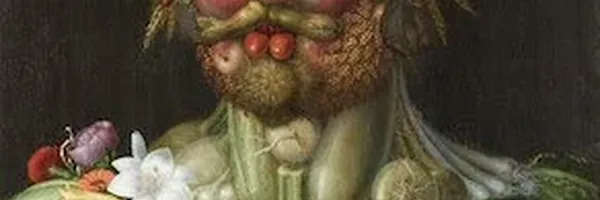
We believe that pareidolia is a topic that is important because it is experienced by so many people. Pareidolia is seen in our everyday lives, and can be seen anywhere since pareidolia is a phenomenon that comes from randomness. Studies on pareidolia can apply in the real world in marketing and advertisers. When we perceive face like objects, it results in a stronger attention response from us. Face pareidolia is most obvious to us when there are prominent eye like features. If advertisers incorporated face/eye like design features in their products, it could make the product more eye catching to consumers. Industries like robotics could benefit from face pareidolia as well. By adding face features to their robots, they become more humanoid, which in turn makes them more socially acceptable and trust worthy to us. Artists have also used pareidolia to their advantage to make interesting and unique paintings, such as the painting Vertumnus by Giuseppe Arcimboldo. In the painting, the subject is constructed using a complex arrangement of vegetables and fruits. Even though the face of the subject is made of food, we can still see the face and features of the subject. This is an example of face pareidolia.
Sources Of Error
Experiment 1:
Some sources of error in this experiment were that there were too little participants, which affected how diverse our results were. The questions should have had a scale of 0-5 instead of 1-5, which I had put on the form and forgot to change before releasing. I believe that the loss of the 0 on the scale contributed to most of the average ratings of each category of face pareidolia being similar. When participants saw no face in the image on the question they would rate it as a 1 instead of a 0, which actually contributed towards the average rating to be higher instead of lower. With more participants and more specific questions, we should have been able to achieve more conclusive results than we have from this experiment.
Experiment 2:
Some sources of error in this experiment was that we underestimated the time it would take to do the experiment and receive responses. Some participants did not even end up doing the experiment so we had to find new people. Another thing that may have affected the results was that the video in the experiment was too fast paced. The time between the images being shorter may have caused a bias from the image that was last shown to the new image. One of my main errors is that in some of the pictures, the pareidolic face was very obvious. Almost every participant would have answered A when faced with that image, which does not make our results very specialized or useful. Another error is that I forgot to record the names or the participants.
Citations
https://www.youtube.com/watch?v=zpOoBtFNYuw https://www.merriam-webster.com/dictionary/pareidolia https://www.sciencedirect.com/science/article/pii/S0960982217308126 https://susanwardle.com/pareidolia/ Pareidolia | Psychology Today Man Trying To Sell His \'Jesus Toast\' On eBay For $25K - Christian Today Canadian-led ‘Jesus in toast’ study wins Ig Nobel Prize | Globalnews.ca Pareidolia: Seeing Faces in Things https://www.psychologytoday.com/sg/blog/the-gravity-of-weight/202306/on-the-face-of-it-pareidolia https://en.wikipedia.org/wiki/Pareidolia https://www.facebook.com/groups/thingswithfaces/posts/3017544475048763/ https://www.theswaddle.com/why-we-see-human-faces-in-objects-sometimes https://www.hotcars.com/front-of-cars-look-like-face/ https://pmc.ncbi.nlm.nih.gov/articles/PMC11790231/ https://www.nature.com/articles/s44271-025-00308-4 https://www.surrey.ac.uk/news/new-research-details-how-our-brains-are-drawn-and-spot-faces-everywhere https://globalnews.ca/news/1314023/why-some-people-encounter-the-jesus-in-toast-phenomenon/ https://www.sciencedirect.com/science/article/abs/pii/S0010945214000288 https://www.nature.com/articles/s41467-020-18325-8 https://www.sciencedirect.com/science/article/abs/pii/S001002772200004X?via%3Dihub https://www.nature.com/articles/s41598-024-60892-z https://link.springer.com/article/10.3758/s13414-021-02267-4 Brain with Face: Unraveling the Mystery of Pareidolia https://www.inc.com/ilan-mochari/hp-logo-new-ideas-old-ideas-design.html https://pin.it/GZv0k46Yn https://www.treehugger.com/eerie-faces-of-pareidolia-from-the-natural-world-4867881 https://pin.it/7h2UPub6m https://pin.it/1Md2pls5I https://pin.it/70a4S1YJX https://pin.it/6k66p62Gi https://english.elpais.com/science-tech/2024-04-16/jesus-christ-on-toast-brain-scan-explains-how-facial-pareidolia-happens.html?outputType=amp https://share.google/5dJVsHVwYi9lJzh5 https://pin.it/71Zz1Lqra https://pin.it/4rPpIM2Jm
Acknowledgement
We would like to thank our science teacher, Mrs. Pepper, for guiding us through the steps of making graphs for our experiments. She was kind to us when we asked questions and supported us when we asked for her help. We would also like to thank Suzannah's mom, who gave Suzannah advice about her experiments based on her experience.