
Biodegradable Plastics
Hanna Vatrana, Liuru Huang
F. E. Osborne School
Grade 8
Presentation
Hypothesis
Industrial made bioplastics take about 3-6 months on average to full decompose. According to this statement the Industrial level bioplastic compared to the homemade and simplified plastic we made should take a month to decompose 65% in soil and 40% in water. The bioplastic made from organic sugar and water - a simplified PLA-would take longer to decompose in soil as the particles are more packed together. In water, the process may be slower due to the lower microbial organism rate in the aquatic environment. Whereas, the cornstarch and sugar would decompose quicker due to its higher water absorption rate and higher porosity. The Respirometry rate for the cornstarch and sugar mixture is higher because of its increased Microbial Consumption as the particles are easier for microorganisms to digest. Soil decomposes bioplastic made from corn starch and sugar in a shorter time than water due to its conducive environment for microbial-driven degradation. Soil that is in a warm environment often preserves a higher temperature, which allows microbes to properly digest the bioplastic. Water in lakes or ocean are usually too cold for the bioplastic to degrade efficiently and have lower amounts of microbes. We believe that the particles of each of our simplified bio plastics will slowly start to separate from the main body and emerge in to the soil and water through the microbes. The microbes will breakdown the matter into smaller pieces and convert it into carbon dioxide, water and biomass.
Research
WHY BIOPLASTICS?
A recent article published by The Northeastern Global News shares that The Northeastern University Researchers have discovered that materials used in the making of transient electronic devices— devices designed to biodegrade at the end of their life — can break down into microplastics, which casts a shadow over the reality of their true dissolubility. PEDOT:PSS–a conductive polymer that carries electrical charge and a sultanates polystyrene that makes the substance water-soluble and easier to process– which is popularly used in medical applications, has been found to live for more than eight years and its degradation could lead to the formation of microplastic fragments, according one of this lead authors of the research. Bioplastics, on the other hand, are plastics that are derived from renewable biomass sources such as corn starch, sugarcane, and potato starch. Unlike traditional plastics which are made from petroleum-based materials, bioplastics are biodegradable and can be broken down by natural processes PLA is a bio-based, biodegradable polymer that's becoming increasingly popular in the packaging industry. It has many of the same properties as traditional petroleum-based plastics, but it's much more environmentally friendly. PLA can be used to make a wide variety of products, including food packaging, disposable cups and utensils, and even 3D printing filaments.
HOW DO MICROPLASTICS AFFECT YOUR BODY?
Research shows that the negative impacts microplastics can cause to our body lead towards Oxidative damage, Genetic changes which, may lead to the risks of cancer. Microplastics are found throughout our body, including the blood, saliva, kidneys, liver and placenta. The process of the intake of microplastics is hardly noticeable, microplastics exist in our food, water, clothes, air, etc. This can harm our body systems such as the reproductive system, it can lead to reduction of sperm quality and ovarian dysfunction resulting in metabolic disorders in offspring. Scientists are discovering microorganisms that consume microplastic and alternatives for plastic. And that is what inspired our project.
Variables
Dependant variables- Degradation rate - Physical changes to structure of matter Controlled variable- Temperature -Types of soil and water -Duration Independent variable- Sample A( Corn starch + water+sugar+oil) -Sample B(sugar+water+vinegar+oil) -Environment(soil vs water)
Procedure
Step 1- gather material: Sugar, cornstarch, oil, vinegar, water, pot, spoon, parchment paper Step 2- making sample A by adding sugar, cornstarch, oil, water, and vinegar into a pot and mix throughly. Step 3- heat the pot on medium and stir frequently with the spoon, preventing lumps building up. Step 4- cook until the substance gets less viscous and pour it on to the spread parchment paper. Step 5- wash the pot Step 6- Add sugar ,water and oil to the pot and stir until milky looking. Step 7 - Pour and spread onto new parchment. Step 8 - let it dry for 24 hrs Step 9 - Dig a hole about 2 inches deep Step 10- place the sample in and bury it completely Step 11- check on them weekly
Observations
Day 7:
After 7 days of both our Bioplastics being in the environments, they showed minor cracking in soil while remaining mostly intact in water. In the soil, the Bioplastics showed slight loss in colour and minor shrinkage most likely due to the presence of microbes. On the other hand, the Bioplastics in water expanded in size and began to look more solid rather that transparent. This showed early stages of degradation, suggesting slower degradation similar to real bioplastics rather that dissolving immediately.
*The left side is starch based bio plastic and the right side is cellulose based bioplastic.*
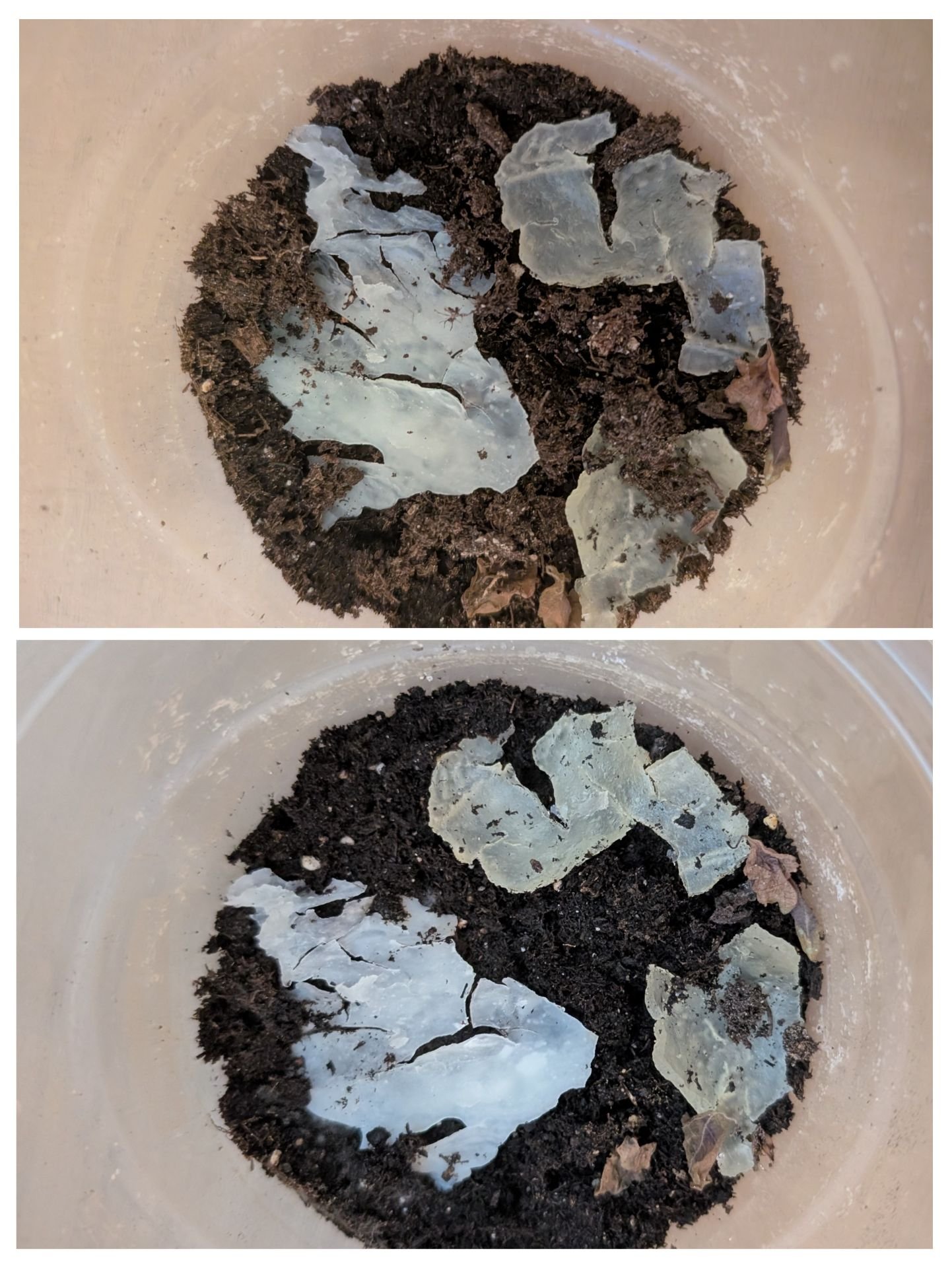 Above:Day7; Below:Day1
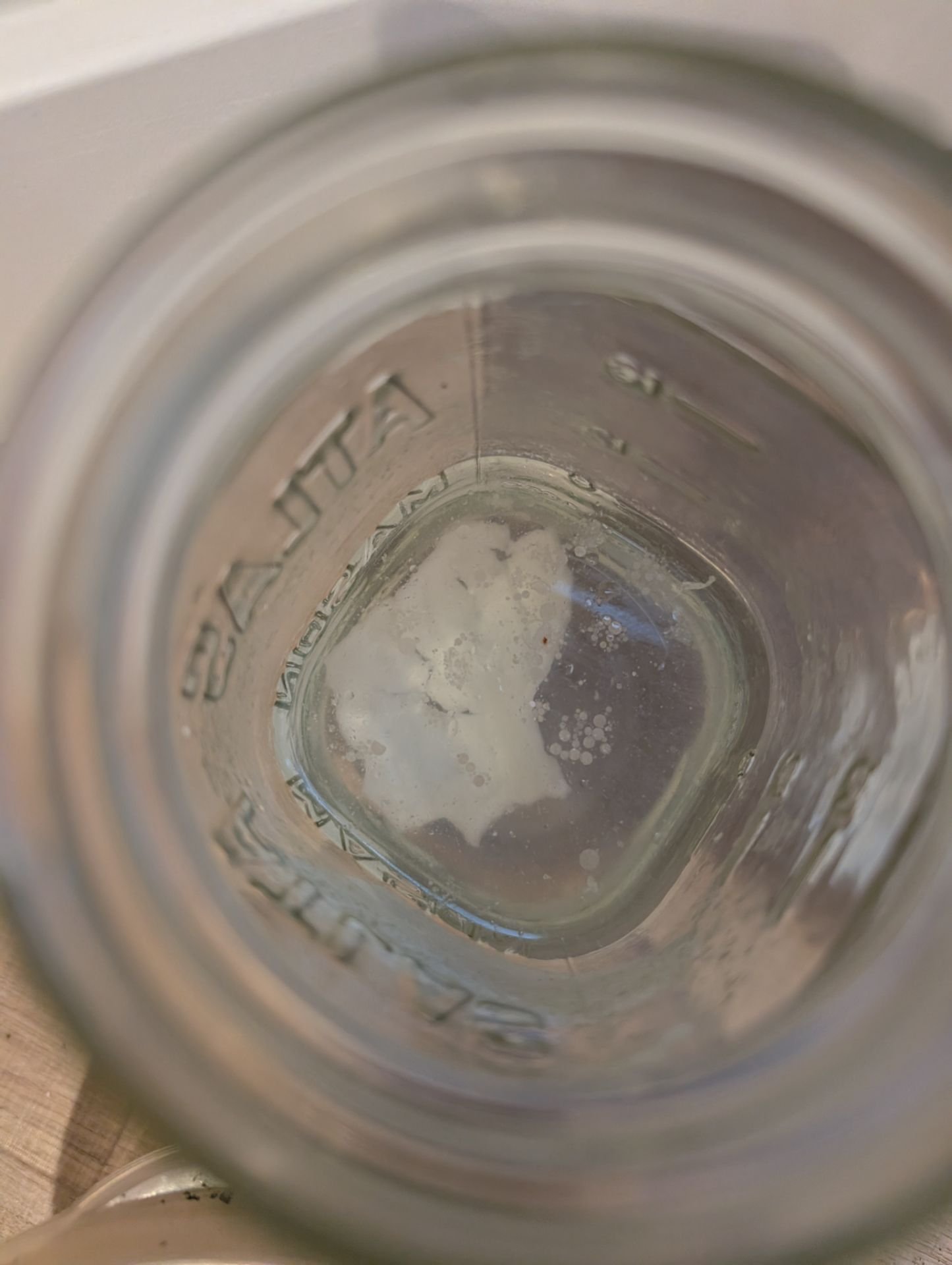
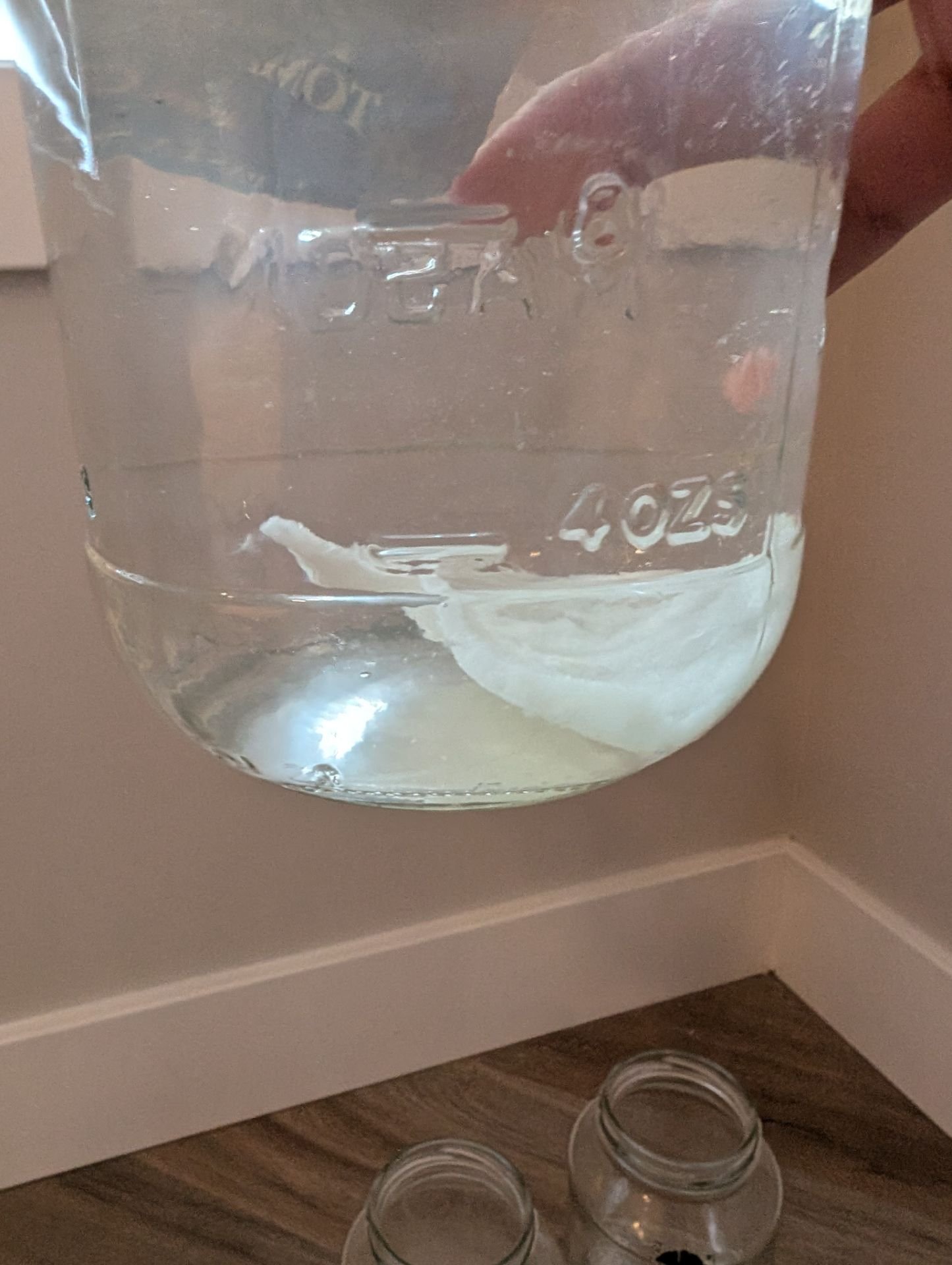 Cellulose based bio plastic after 7 days in water
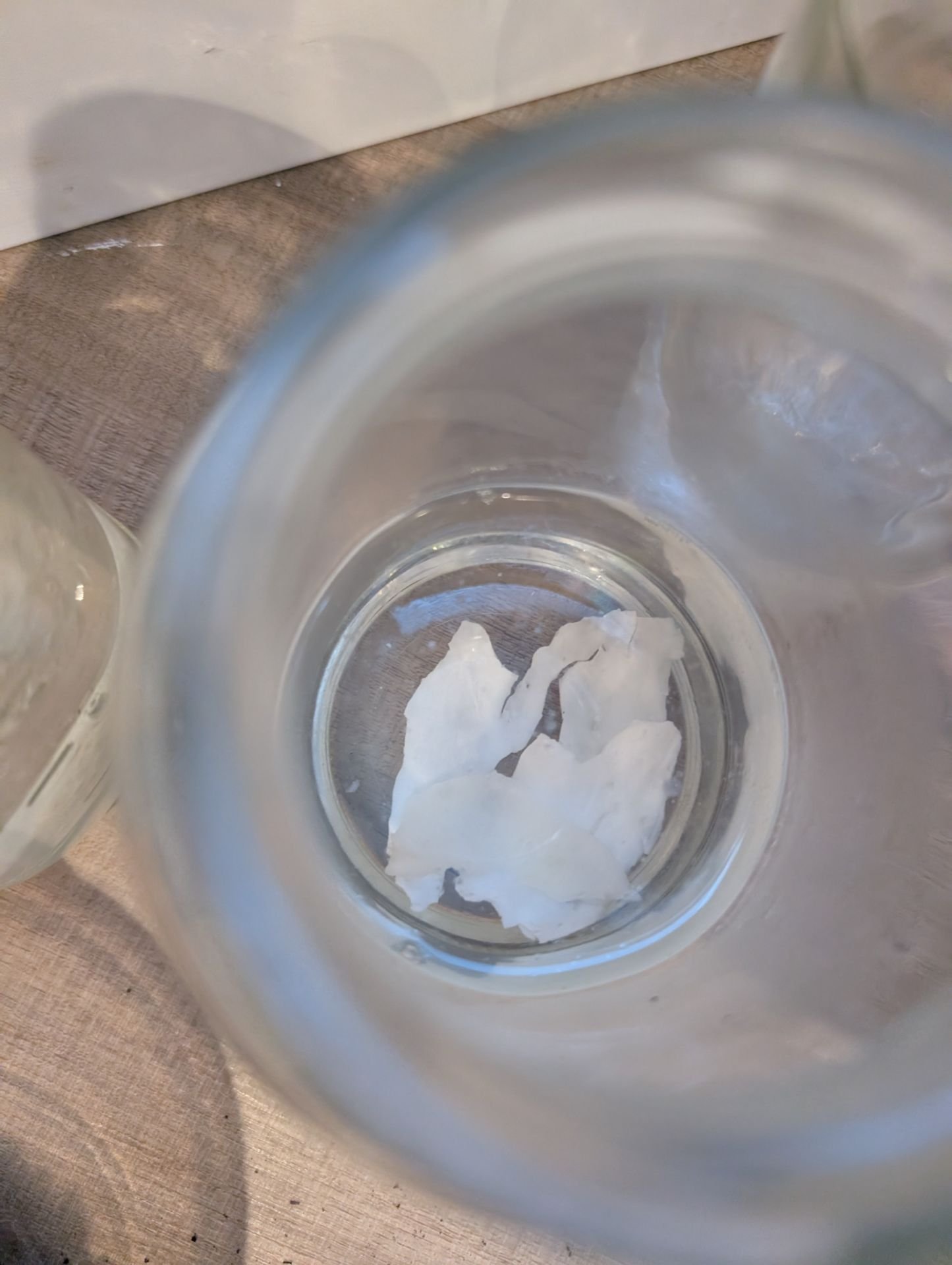
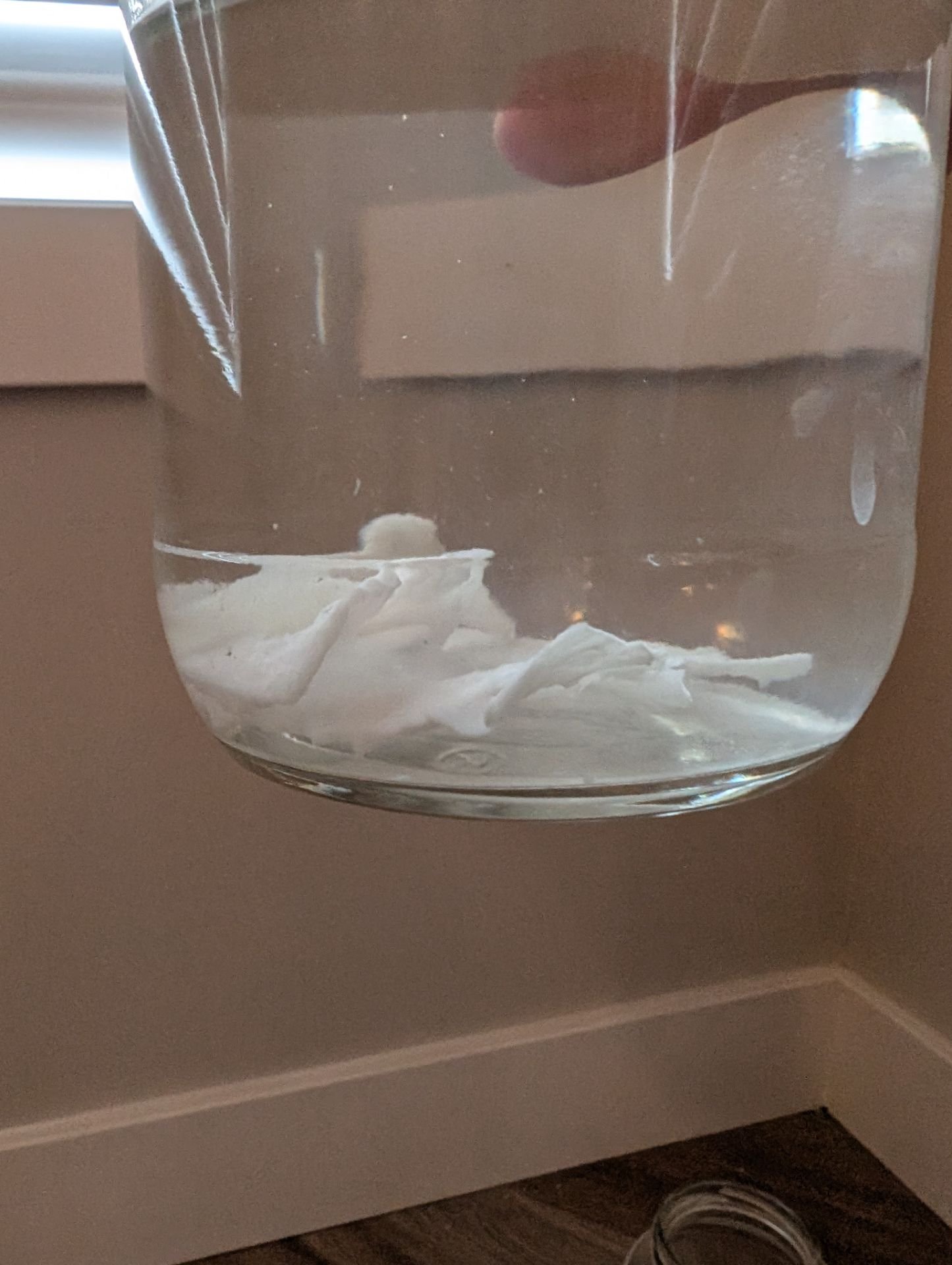 Starch based bio plastic after 7 days in water
Days 14:
Nothing happened to the water bioplastics but the ones in soil depict clear shrinkage and loss of colour.
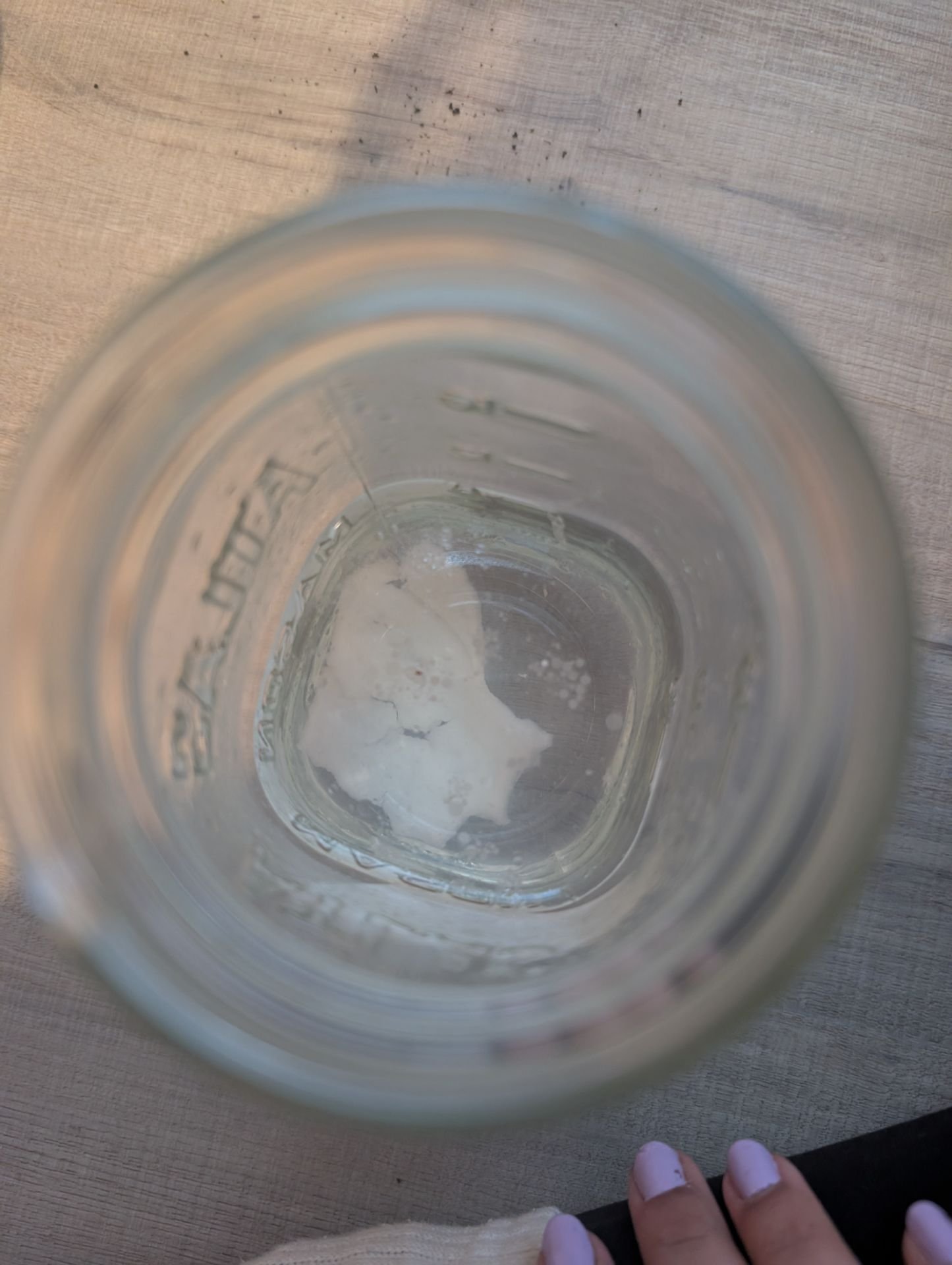
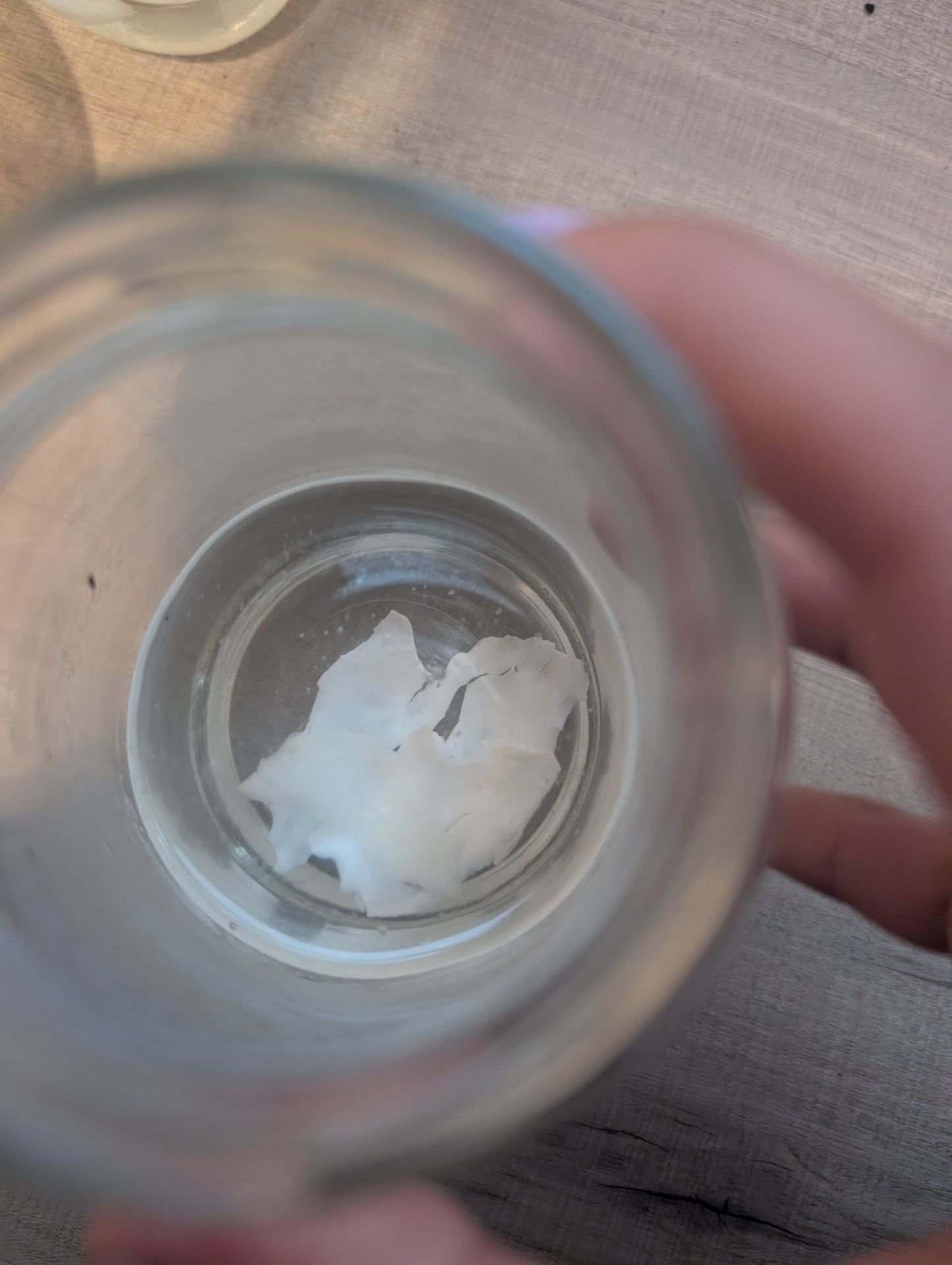
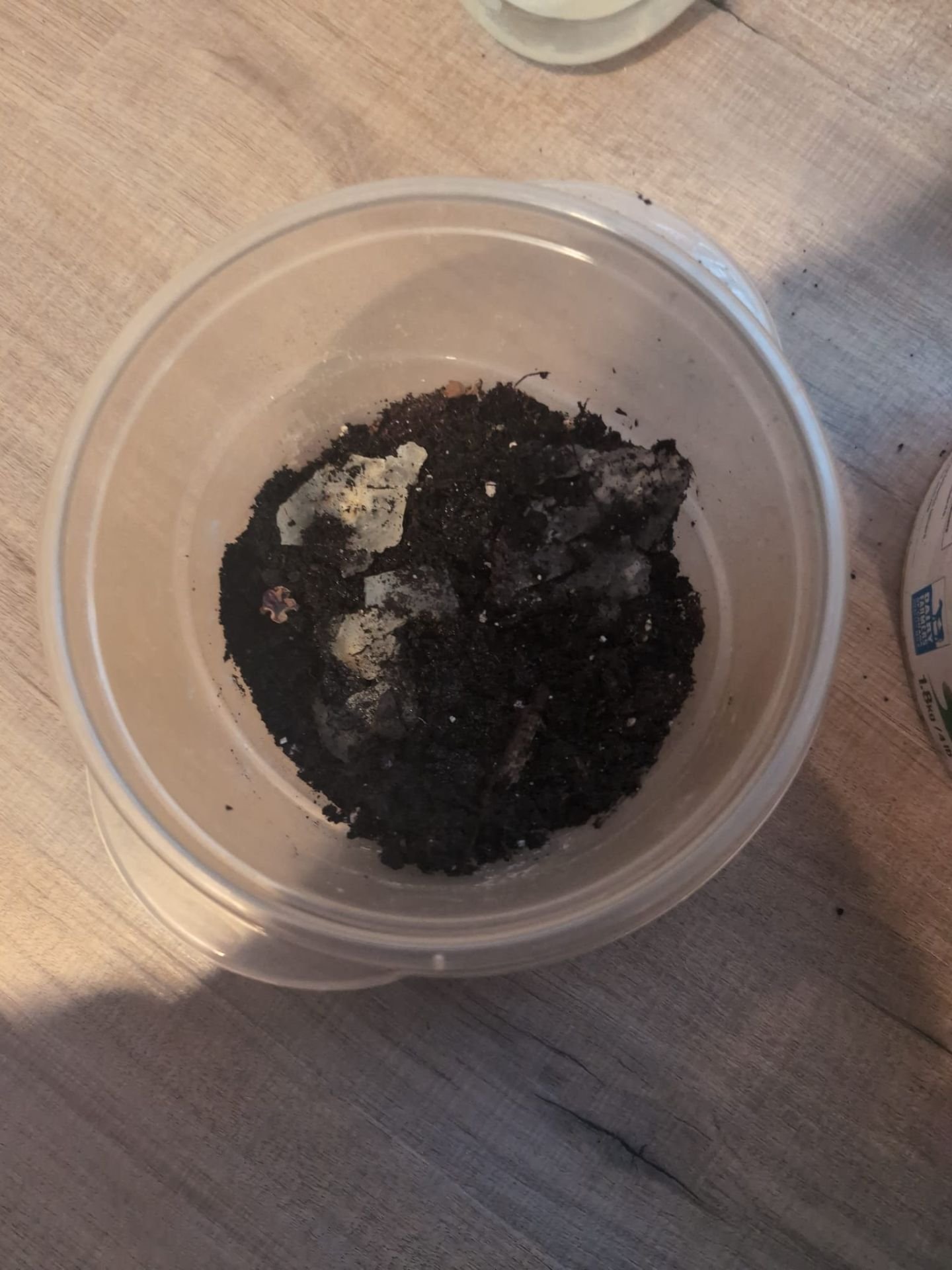
Days 21
The Bioplastics in soil : starch based had completely broken into pieces and started mixing in with the soil; the cellulose based was still a bit solid but had grown algae.
The bioplastics in water: turned squishy and mushy when touched and started breaking apart.
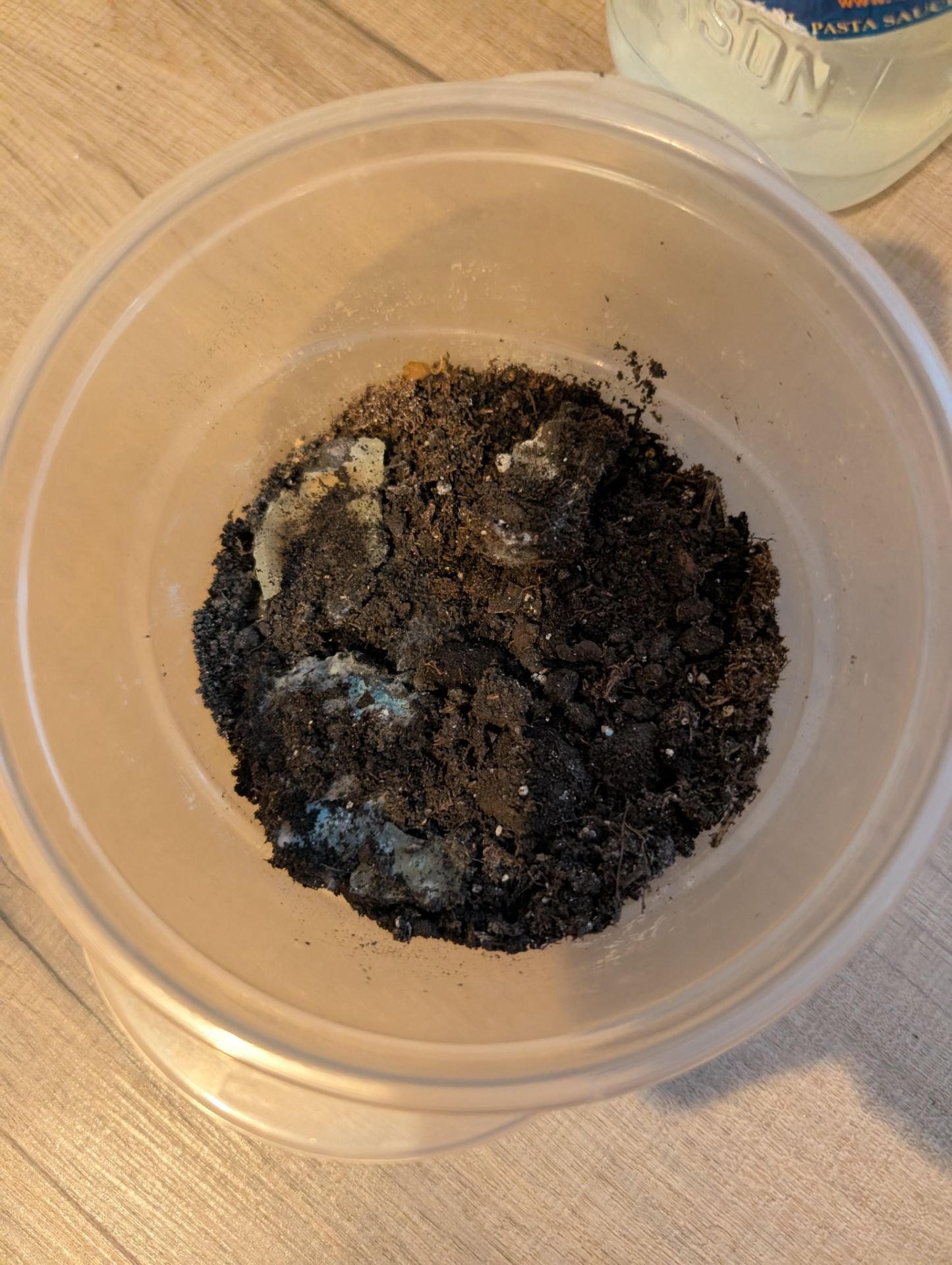
Analysis
After burying the bioplastics in the soil for 7 days, the bio plastics that are in the soil shows minor cracks in them. And the bio plastics that’s in water shows less cracks in them. That is because natural aquatic environments often lack high microbial diversity, elevated temperatures, and specific conditions for breakdown. In contrast, the soil provides a moist and warm climate for the bio plastic, this will increase the speed and process of degradation. In the soil, the bioplastics showed slight loss in colour and minor shrinkage, this is most likely due to the presence of microbes. Microorganisms from diverse taxa, including Firmicutes, Proteobacteria, Ascomycetes and Basidiomycetes, can degrade bioplastics. These microbes can be found in several different environments, such as soil, On the other hand, the Bioplastics in water expanded in size and began to look more solid rather than transparent. This happens because in many bioplastics, particularly starch-based ones, contain hydrophilic groups (such as hydroxyl groups) that readily absorb water. As water is absorbed, the molecules force their way between the polymer chains, increasing the spacing between them, which causes the material to swell and expand. This showed early stages of degradation, suggesting slower degradation similar to real bioplastics rather than dissolving immediately.
After 14 days, the bioplastics in water did not change much. However, the bioplastics in soil had a vast difference in size and color compared to the first week of burying. The bioplastics shrunk in size and the colors faded. This happened because the bacteria and fungi in the soil eats the bioplastic substances and the loss of moisture in the bioplastic.
After 21 days, the bioplastics in the soil had completely broken down into small pieces and mixed with the soil, in these 3 weeks, the starches in the bioplastics had decomposed into soil particles through a multi-stage process where bacteria and fungi in the soil converts the materials in bioplastics into water, carbon dioxide, and biomass. The green algae in the soil proved that there is microbial environment present, and the bioplastic is emerging into the soil which is proof of degradation. The bioplastics in water turned squishy and soft while they start to separate and break apart. This happened because bioplastic particles are held together by hydrogen bonds between molecular chains. Water molecules act as the solvent that pushes itself through these chains, breaking the bonds and increasing the space between polymer chains.
Conclusion
The purpose of this experiment was to test if bio plastic made from mainly starch and sugar would fully decompose within 2 full months on a domestic level in water and soil.This would occur due to microbial environment present in soil which will bite on the plastic and break then down slowly . In water ,the bioplastics would degrade through a combination of hydrolysis and microbial action . The Independent variable in this experiment were our bioplastics samples ans the environment. The dependent variable was the rate of degradation and physical changes to the structure of matter.The control variable was the temperature,type of soil, water and duration.After a week, the bioplastics in soils started showing minor cracks while the one in water only showed minimal cracking . After week 2,the bioplastics in water didn't change a lot while they did change color and the ones in soil had a reduced size and pigment compared to the first week.During the third week, the bioplastics in soil had completely broken down in small pieces and had mixed into the soil with some algae growth. The bioplastics in water turned squishy and soft while they started to break into small pieces and spread apart. These results lead us to fail this Hypothesis as the bioplastics in soil were almost degradation meaning 80% done in 3 weeks and the ones in water 65% done in 3 weeks.This experiment relates to the real world as it is a far better replacement for traditional as it degrades quicker, works just like original plastic and produces minimal harmful substances. It is mainly cellulose and starch based ,both of which can be easily be industrially produced and doesn't add up to a larger cost bracket. Bio plastic does not pollute our environment as after use when thrown away ,bioplastics start their degradation process almost immediately leading to minimal to low micro plastic in the oceans and soil. This domestic based experiment demonstrates how much replacing traditional plastic with better alternatives can make the degradation faster and less polluting, making this experiment a useful representation of real industrial based Bioplastics.
Application
Why does the planet need bioplastic?
Traditional plastic takes over 1000 years to start decomposing and it will not fully decompose for centuries. Over these 1000 years, the plastic has caused many problems to the environment and organisms. Such as sea animals getting stuck in plastic bags and ropes, or eating the harmful materials by mistake, in addition to garbage building up in forests and rivers. These are some of the most common consequences for the wastes plastic distributes into our environment. Bioplastic is derived from renewable biomass sources, unlike traditional plastic which are made from petroleum based materials. Bioplastic only takes up around 3-6 months to decompose most of the substance. This short time period of decomposing and the safe material used to produce bioplastic reduces the chances of harm towards the ecosystem.
Why do humans need bio plastic?
Humans need plastic in our daily lives because it is essential for many tools and materials. Such as food wrap, bottles, and containers. However, traditional plastic which are made from petroleum based products produce various harmful chemicals that the human body reacts to. For example, microplastics are a big concern to human health. It exists in clothing, dining utensils, food, and even the air. We ingest and breathe in these damaging substances and they remain in our organs and body systems. The microplastics can cause cancer or damage to the body systems. As a solution, bio plastic is a better alternative for traditional plastic as it causes less damage to the human body. Bioplastics are primarily made up of cornstarch, sugar, and proteins. These materials are unlikely to harm the body’s health so that’s why bio plastic is necessary for the long term maintenance of the human health.
Sources Of Error
Our sample A didn't turn out perfectly because the texture wasn't looking right. We were looking for a liquidy mix to pour whereas the ending turned out to be clumpy. when it dried it turned out looking like smashed rice.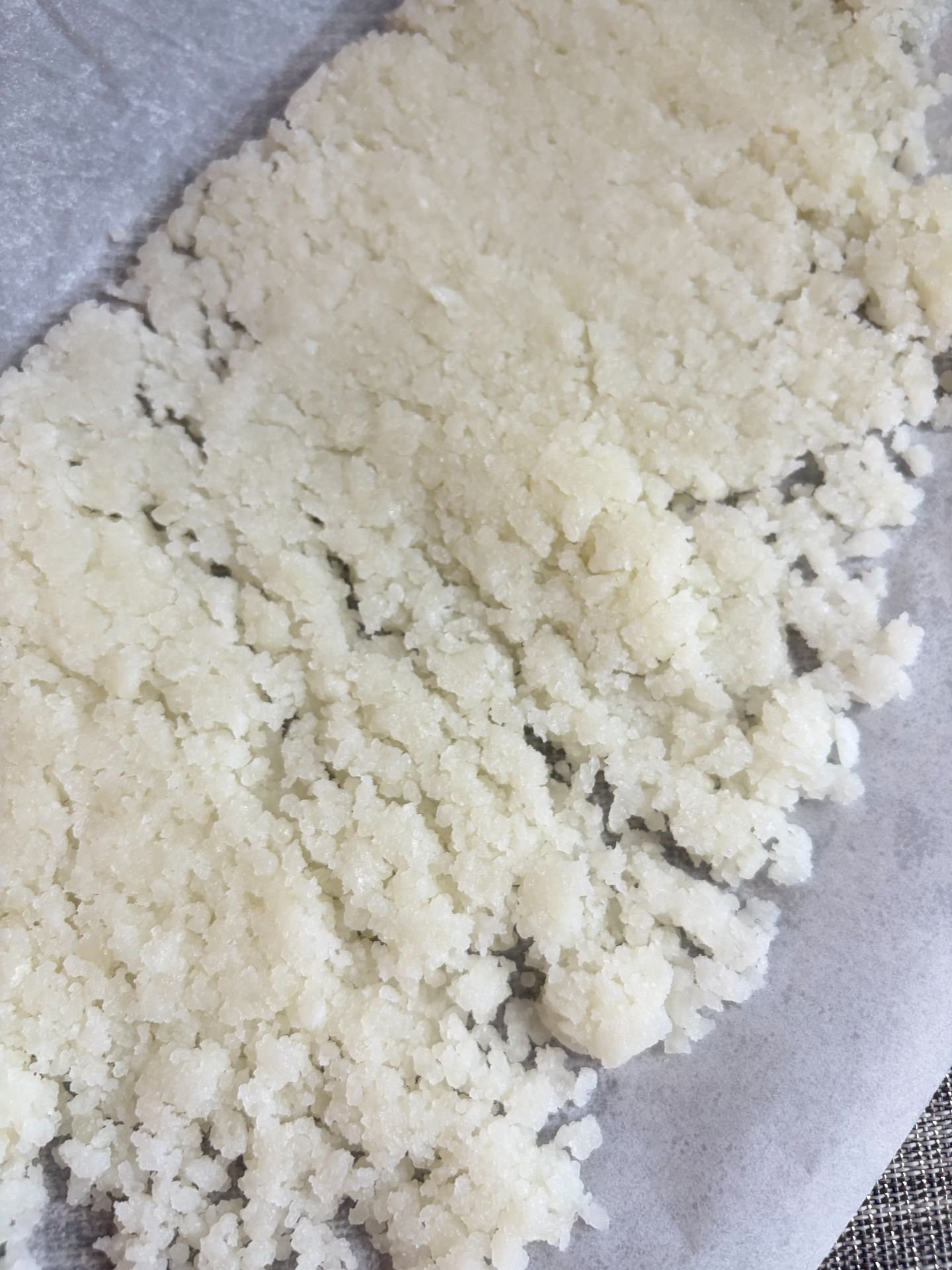
So we tried again by adding more sugar and it turned out better but still crumply and very thick.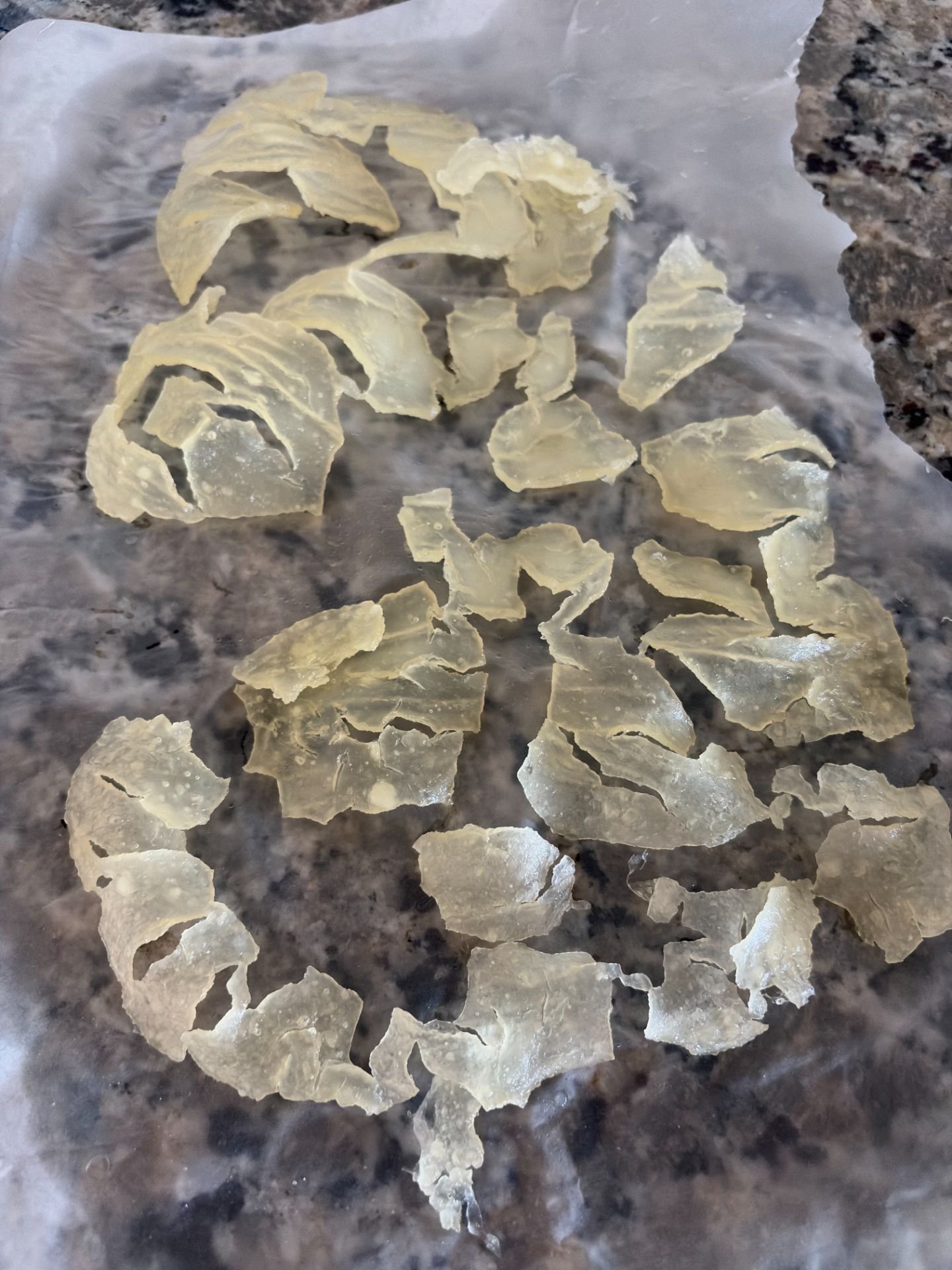
We tried again and tried mixing the mixture before heating it and it came out perfect!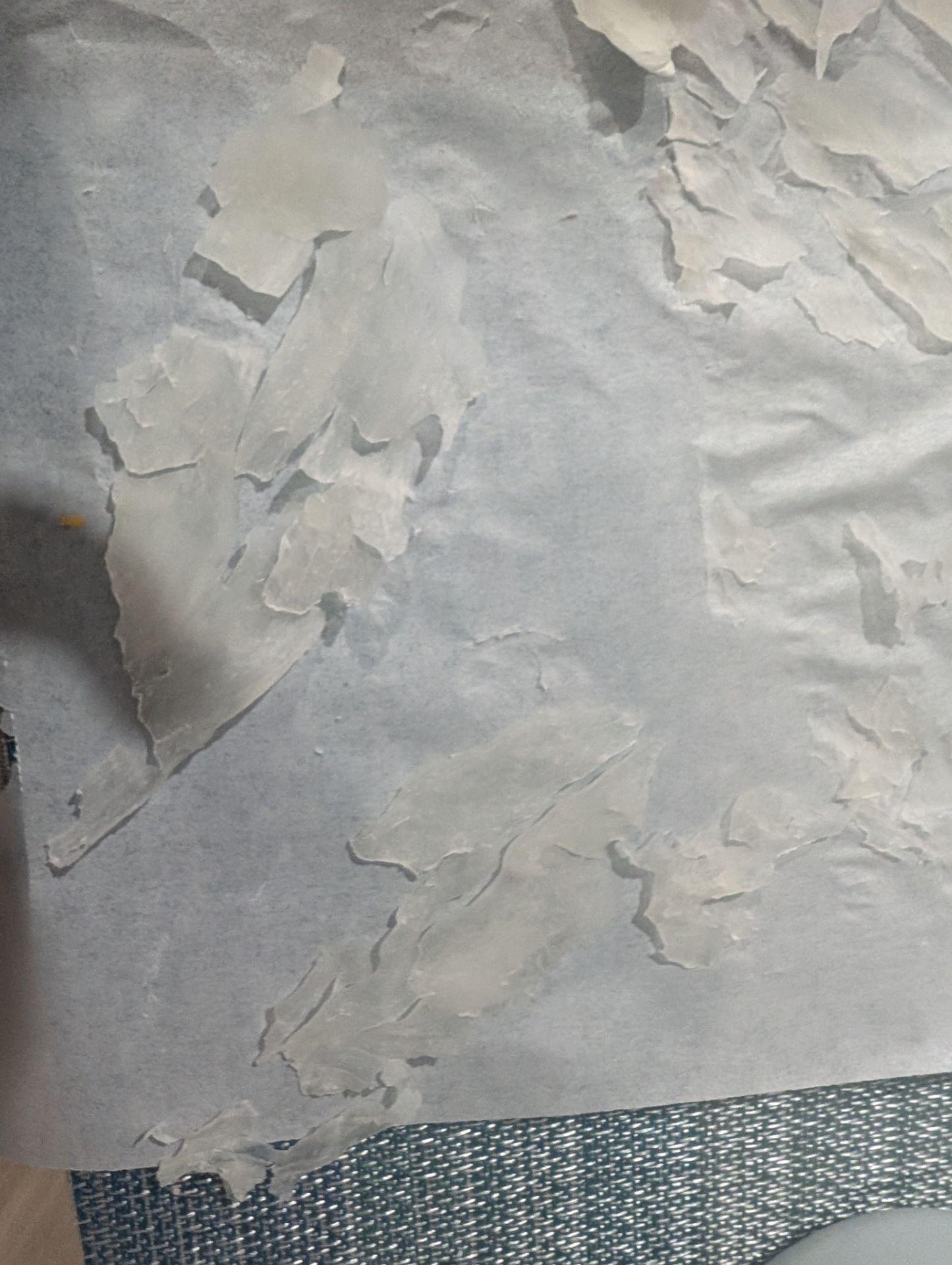 We realized halfway through the second week that the bioplastic had to be fully buried in soil instead of just placing it on top of the soil.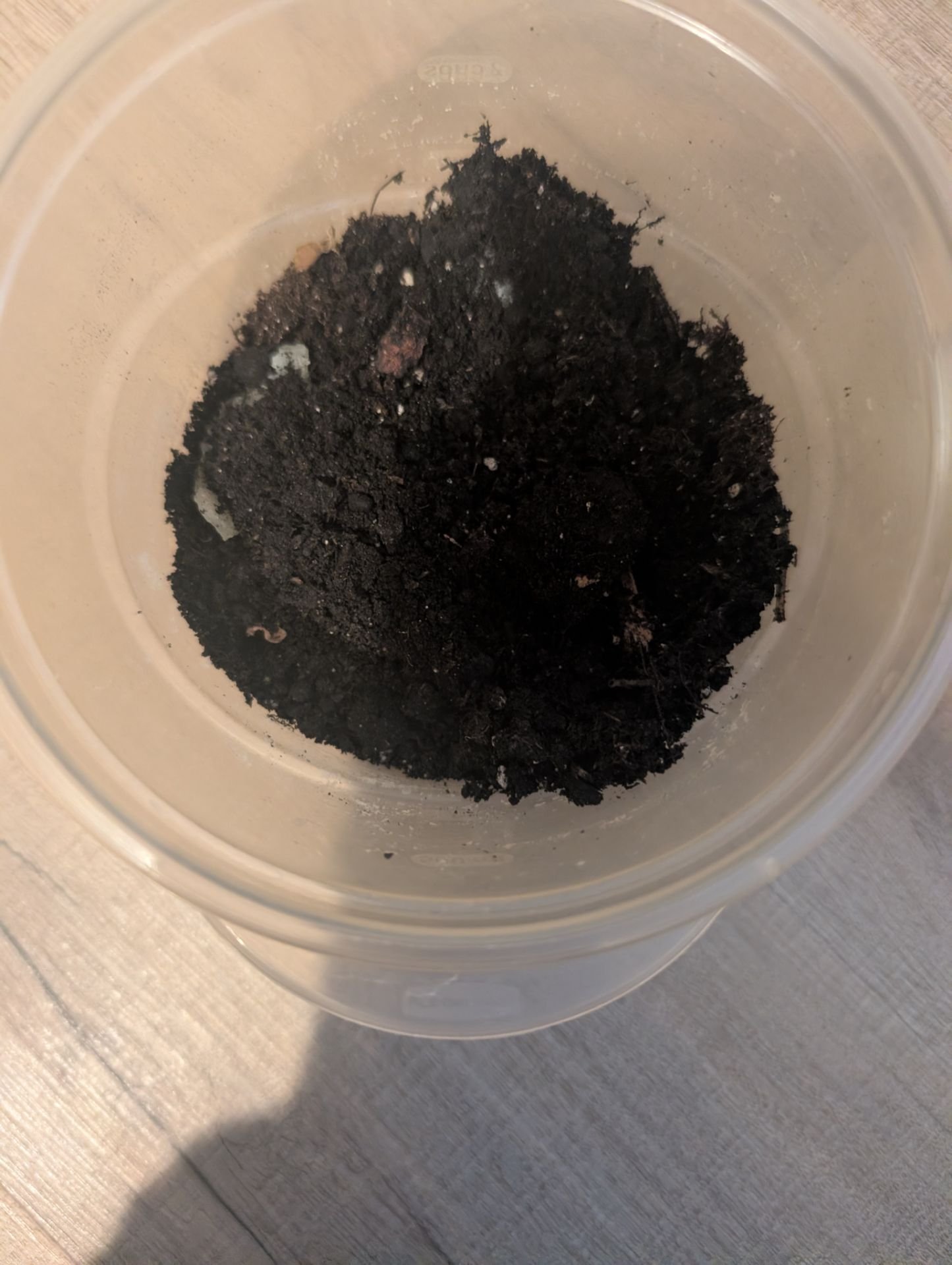
Citations
Kumari, Anita."**Fastest Biodegradable Materials That Can Be a Game-Changer For Reducing Plastic Waste.".**Made-With-Regen.ca, Made With Regen, 9 Jan. 2025
Dutchen, Stephanie.“Microplastics Everywhere.” Harvard medicine, March 2023, magazine.hms.harvard.edu/articles/microplastics-everywhere. February 17, 2026.
Contreras, Cesareo. “Biodegradable technology can dissolve into harmful microplastics, Northeastern research uncovers.” Northeastern Global News, December 19, 2025, news.northeastern.edu/2025/12/19/degradability-transient-electronics-research/. February 17, 2026.
Pistofidou, Anastasia. “Bioplastic Cook Book.” Issuu Platform, July 2018, issuu.com/nat_arc/docs/bioplastic_cook_book_3/s/159731. February 17, 2026.
“Corn Starch and Bioplastics: How It’s Revolutionizing Packaging.” https://www.myandegroup.com/, www.myandegroup.com/blog/corn-starch-bioplastics-how-its-revolutionizing-packaging.
Winiarska, E., Jutel, M., & Zemelka-Wiacek, M. (2024). The potential impact of nano- and microplastics on human health: Understanding human health risks. Environmental Research, 251(Pt 2), 118535. https://doi.org/10.1016/j.envres.2024.118535
Elise Phillips, Ph.D. “Microbial Bioplastic Degradation.” ASM.Org, 12 Nov. 2021, asm.org/articles/2021/november/microbial-bioplastic-degradation.