
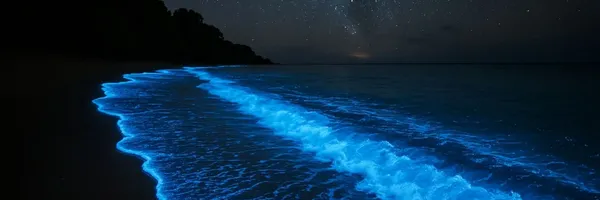
Bioluminescence
Alisha Shoukat
Northern Lights School
Grade 5
Presentation
Problem
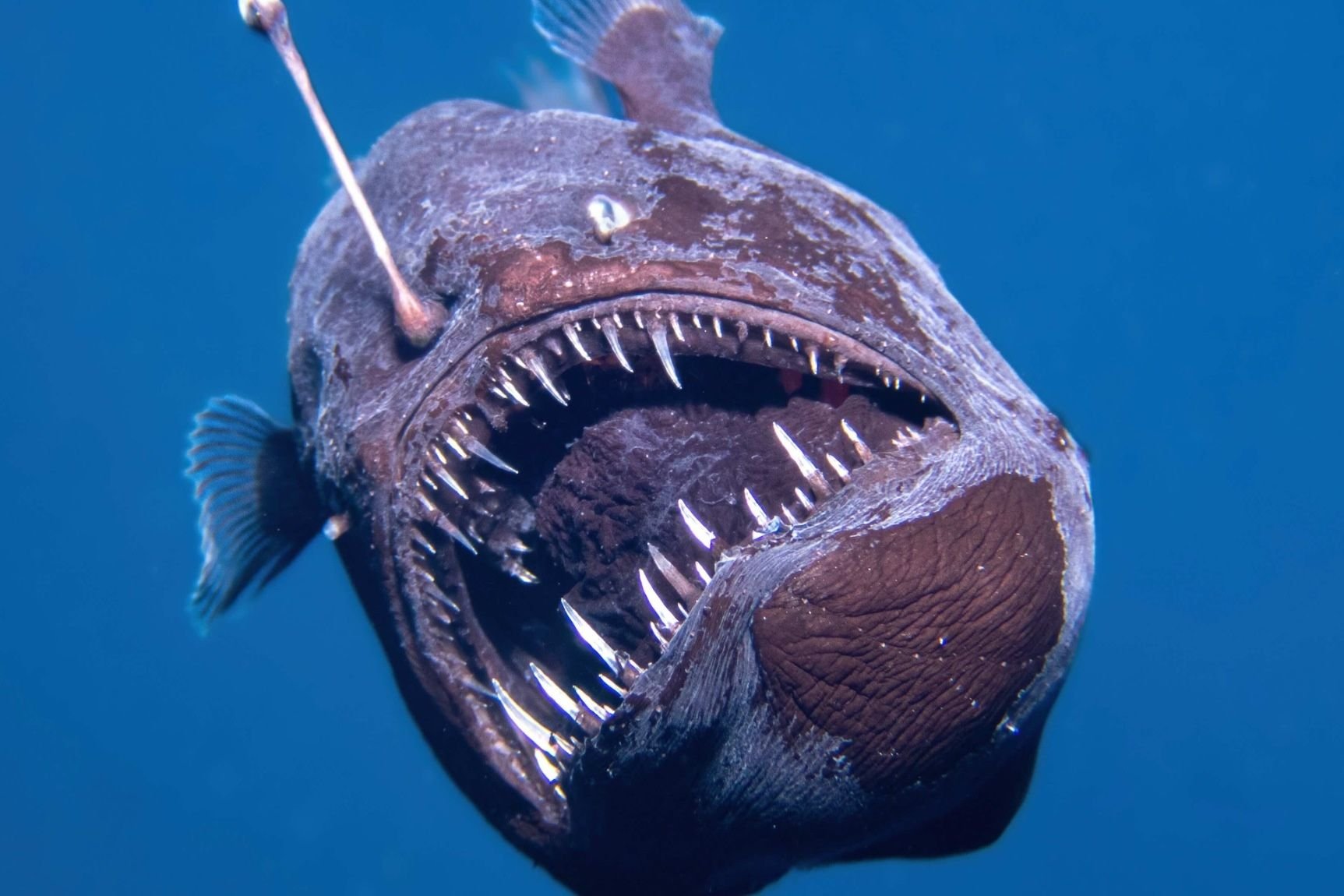 How does bioluminescence help anglerfish and jellyfish survive in the oceans around North America?
Method
First, I chose my topic about how anglerfish and jellyfish use bioluminescence. Then, I used different websites to find information about my topic. I also watched videos about how the bioluminescence chemical reaction happens and what bioluminescence is. After, I made my trifold board, organized them into sections and put all my research and pictures on my board. Later on, I practiced how to speak in front of judges and students!
Research
 "What is Bioluminescence?"
Bioluminescence is a light produced by living organisms. Organisms use it for self defense, finding prey, communicating, and attracting mates. Bioluminescence is most commonly seen in jellyfish, anglerfish, fireflies, and mushrooms. These beautiful sightings can be seen in North America. Bioluminescence is spotted in varieties of colors! You can see bioluminescence in blue, blue-green, green yellow, nearly violet, and less often, red. You might think bioluminescence sounds really rare but it’s actually a really common thing!
"What is Bioluminescence?"
Bioluminescence is a light produced by living organisms. Organisms use it for self defense, finding prey, communicating, and attracting mates. Bioluminescence is most commonly seen in jellyfish, anglerfish, fireflies, and mushrooms. These beautiful sightings can be seen in North America. Bioluminescence is spotted in varieties of colors! You can see bioluminescence in blue, blue-green, green yellow, nearly violet, and less often, red. You might think bioluminescence sounds really rare but it’s actually a really common thing!
"How does Bioluminescence work?" Bioluminescence is produced by a chemical reaction using oxygen, an enzyme called luciferase and luciferin. When luciferin and oxygen get in contact with each other, luciferase catalyzes a reaction that oxidizes luciferin and produces oxyluciferin. This is an exothermic reaction where energy is released in the form of cold light instead of heat, producing what we know as bioluminescence.
"Anglerfish" Anglerfish use bioluminescence in a creative way. The anglerfish has a built-in fishing rod which is usually called a modified dorsal spine on its head! There is this glowing part right on top of the fishing rod that dangles right in front of it's mouth. Smaller fish see the glow and think it's a tasty meal so they swim closer but get chomped by the anglerfish! Also, unlike jellyfish, anglerfish have tiny glowing bacteria living inside the rod! The bacteria inside the anglerfish's rod uses the SAME chemical reaction as jellyfish. They still require luciferase, luciferin, and oxygen to make light.
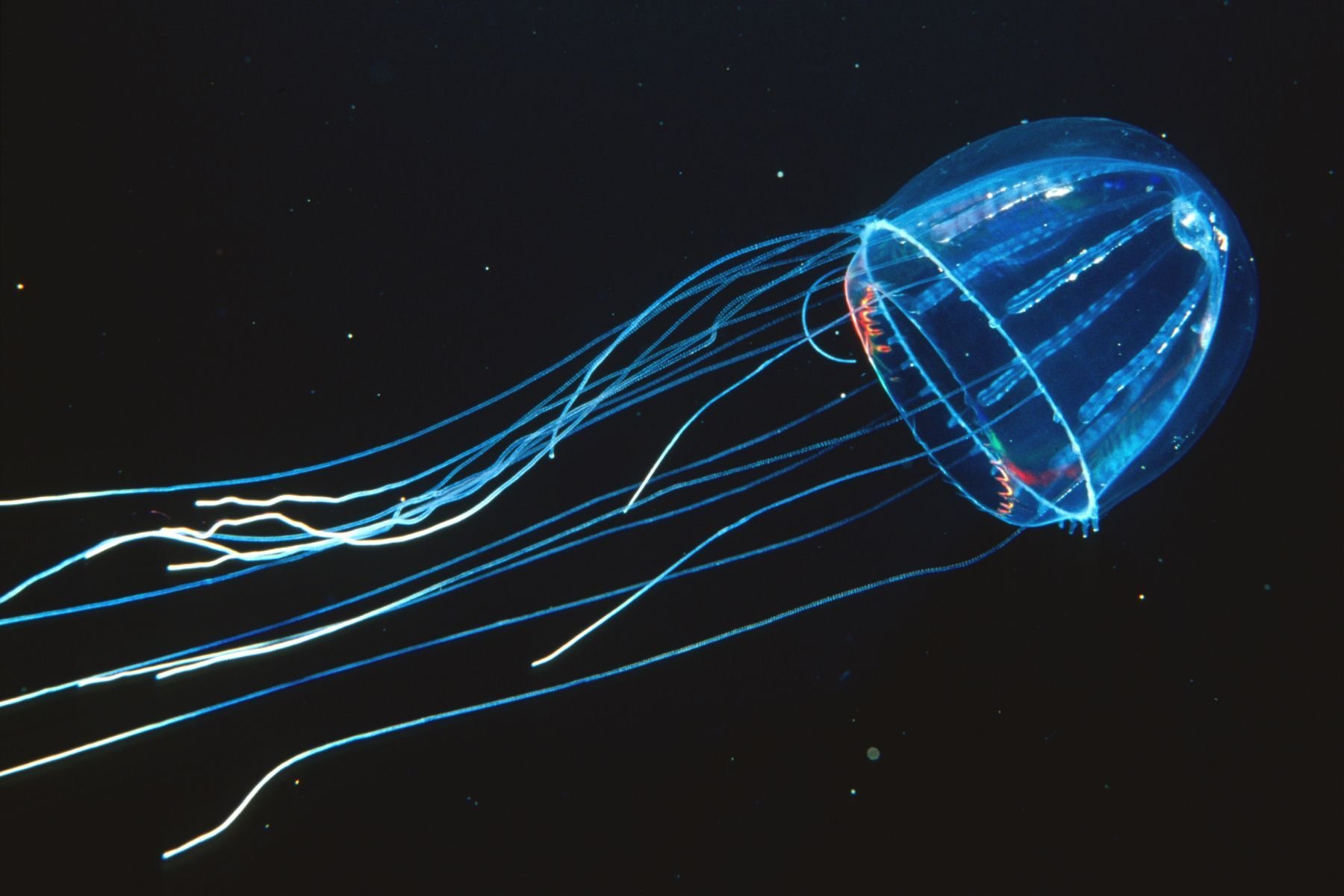
"Jellyfish" Jellyfish use their glow like a surprise attack! When something tries to eat them, they flash their light really fast and it scares the predator. Imagine someone jumping at you in the dark, that's what the jellyfish does! Some jellyfish can even shoot out glowing particles or sparkles! When this happens, the predator gets distracted by the glowing particles and the jellyfish swims to safety! Jellyfish also uses it's glow like a burglar alarm. When they flash a glowing light it might attract a bigger animal that wants to eat the jellyfish's predator. So they are kinda calling for backup!
Data
Here are some facts I found in my research:
- Bioluminescence happens when a chemical called luciferin mixes with oxygen
- Certain mushrooms also glow to attract insects at night
- Anglerfish use their glowing lure to attract prey in the dark ocean
- Jellyfish use their light to startle predators
- Bioluminescence is mostly seen in blue or blue-green
- Bioluminescence is a light produced by living organisms (living things)
- Bioluminescence is
Conclusion
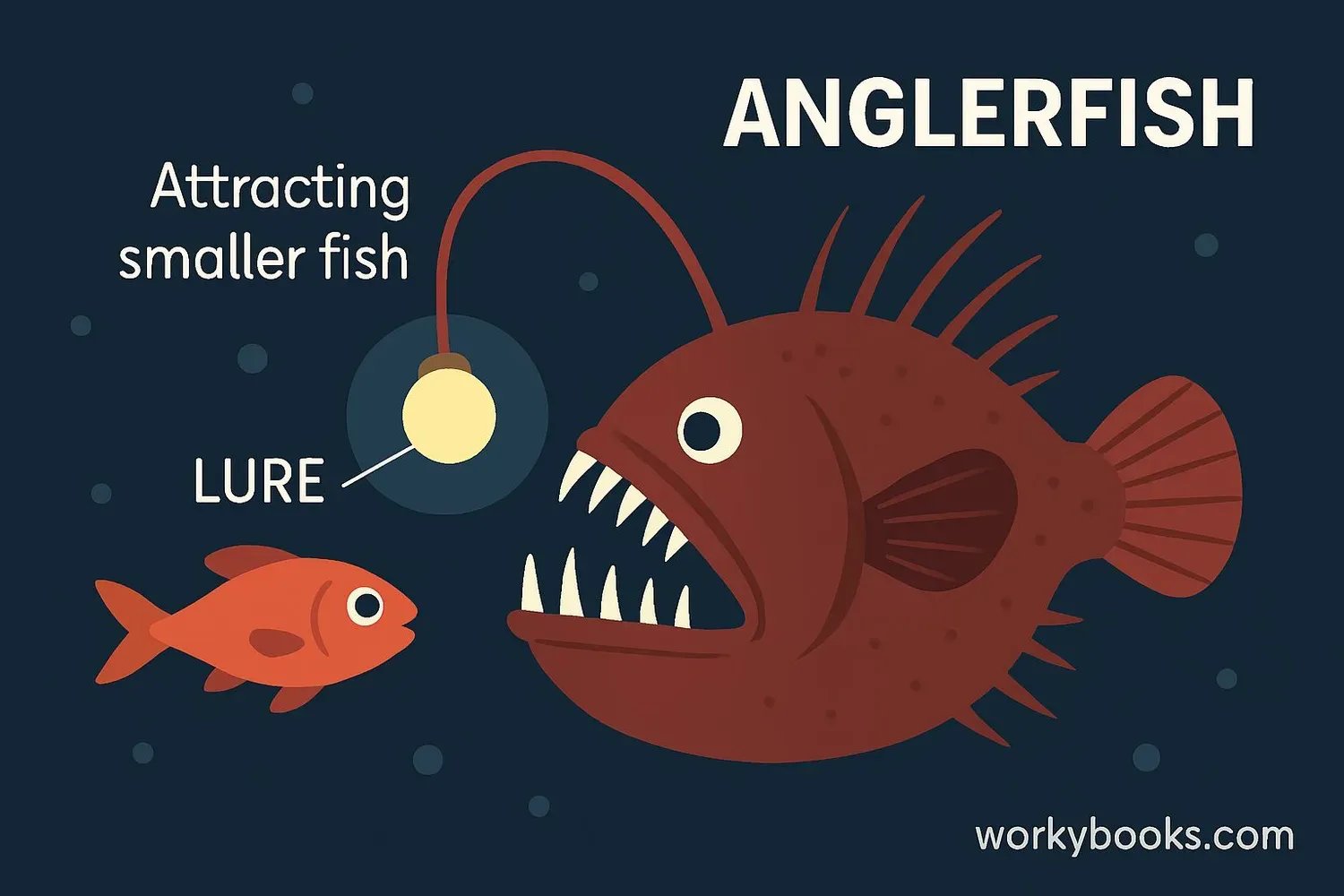 My research shows how bioluminescence helps animals like jellyfish and anglerfish survive in North America. It’s like their own superpower! For the anglerfish, the glowing lure on its head acts like a fishing rod for snacks such as small fish in the deep dark sea. For jellyfish, their glow can startle predators, almost like a burglar alarm going off. Even though these creatures are very different, they both use their own cool, natural light to find food and stay safe in the pitch black ocean. Looking back at my hypothesis, it seems that I was right, because bioluminescence actually helps anglerfish and jellyfish survive, hunt for prey, and way much more! Bioluminescence is a really important tool for their survival.
P.S: Bioluminescence overall, helps many animals and living organisms survive in their environment, but does have bad sides cause some animals and insects cant glow all the time because it wastes energy. Animals and insects also have to control when and how bright they glow, it is really important. ( this is all from background knowledge and are just fun facts to know)
Citations
https://oceanexplorer.noaa.gov/wp-content/uploads/2025/04/bioluminescence-fact-sheet.pdf
https://youtube.com/shorts/kF_7Hp4lw94?si=RBXqUG6VCsRktqbz
https://education.nationalgeographic.org/resource/bioluminescence/
https://oceanservice.noaa.gov/facts/biolum.html
https://ocean.si.edu/ocean-life/fish/bioluminescence
https://youtu.be/evCAQDY9seQ?si=G0k9XcBIm8JfRGOS https://youtu.be/hvd4qPGMj6g?si=9sHjGDwBj9BOnM8o
https://ocean.si.edu/ocean-life/invertebrates/jellyfish-and-comb-jellies
https://www.nationalgeographic.com/animals/fish/facts/anglerfish
https://feed.jeronimomartins.com/sustainability/environment/beneath-the-glow/#:\~:text=For%20bioluminescent%20jellyfish%20and%20other,so%20they%20can%20light%20up.
https://latzlab.ucsd.edu/bioluminescence/bioluminescence-questions-and-answers/
Acknowledgement
Thank you to my older sister and my mom for helping me with my entire project and topic and even motivated me when I was about to give up! Also thank you to my teachers for helping me fix up my project and adding finishing touches. My mom even helped me stay calm while doing presentations in front of students, teachers, and judges. My older sister was the one who gave me the idea for the project about bioluminescence!