
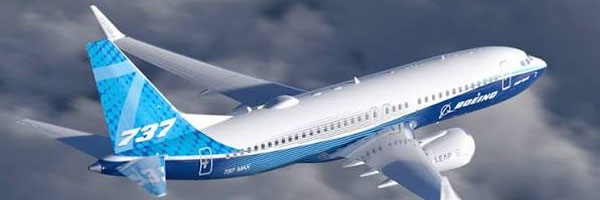
How Different Types of Wingtips on Commercial Aircraft Effect Drag and Fuel Efficiency.
Matthew Irwin
Connect Charter School
Grade 8
Presentation
Hypothesis
Both blended winglets and split winglets will reduce drag compared to a plain wing. The split winglet shoulddo the best because the even lower surface helps reduce wingtip vortices more effectively.
Research
Why we use wingtips. -airplanes create wingtip vortices naturally which is like swirling air that increases induced drag within the plane and wastes fuel. Most airplanes use winglets to prevent this by removing drag and by changing airflow around the wing.
1- No Wing Tip this is a normal wing that has no special wing tip to prevent drag and is just squared off at the end of the wing. These wing tips designs produce strong wingtip vortices which produce more drag and increase fuel consumption which is not good for the environment. Planes today still use them because the design is cheap, light , and simple to build and maintain. Some of these matter more to some airlines than being efficient.
2- Blended Wing Tip Instead of being squared off at the end of the wing it gradually transitions from flat up into a 90 degree upward extension. The smooth upright curve reduces airflow from coming up from under the wing and swirling up on top of the wing. It creates a bigger wingspan and it improves climb performance, fuel efficiency, and range. That is why not airliners use blended winglets rather than the traditional wing tip.
3- Split Wing Tip this winglet has 2 separate extensions one pointing upward like the blended winglet and one that points downward which creates a split shape.
Variables
- Independent Variable: Wingtip design (none, blended, split)
- Dependent Variable: Drag force measured on the scale
- Controlled Variables: Wing size, angle of attack, fan speed, distance from fan, materials, and test setup
Procedure
1-design and print 3d wing models of normal wingtip, blended wingtip, and split wingtip. 2- clamp 1 of the wings on a table so it is partially off of the table so air can move around the wing 3-set up a fan on a table and turn it on to create airflow through the clamped wing tip. 4- use smoke for a visualization for airflow to push through the fan to demonstrate vortices over the wing. 5- set up a slow motion camera and normal camera to capture the vortices. 6- observe which out of the 3 wing types create the smallest and biggest vortices on the tip of the wing.
Observations
Without wing tips you can see spiral vortices coming off the tips of the wings and they produce drag on the wing which in real life would bring down fuel efficiency and also it produced less Streamers of. Air coming off the end of the wing. When I tried the blended wingtip it was highly reduced and the vortices were super small and almost entirely reduced. When I used the split wing tip it was almost invisible and all of the vortices were completely removed with little signs of vortices.
Analysis
What happened was what I thought was going to happen and Without wing tips you can see spiral vortices coming off the tips of the wings and they produce drag on the wing which in real life would bring down fuel efficiency and also it produced less Streamers of. Air coming off the end of the wing. When I tried the blended wingtip it was highly reduced and the vortices were super small and almost entirely reduced. When I used the split wing tip it was almost invisible and all of the vortices were completely removed with little signs of vortices. this was what happened in our study and was what we were expecting.
Conclusion
In conclusion we found out that Without wing tips you can see spiral vortices coming off the tips of the wings and they produce drag on the wing which in real life would bring down fuel efficiency and also it produced less Streamers of. Air coming off the end of the wing. When I tried the blended wingtip it was highly reduced and the vortices were super small and almost entirely reduced. When I used the split wing tip it was almost invisible and all of the vortices were completely removed with little signs of vortices. This is what I expected but when we used the split wingtips it was almost impossible to see any air coming off the end of the wing as a streamer.
Application
These 3 wing tip designs are applied to every single airplane that flies. All commercial airplanes use one of these three and the winglets can reduce drag. They are used worldwide within all sorts of aircraft because they save airlines lots of money they save fuel and billions of dollars within airlines and also they reduce drag within the wing and airplane which improves lift and range of the aircraft. Some military planes and private jets also use these types of wings because they are super effective at what they need to do.
Sources Of Error
- angle of attack within -fan speed -thickness of smoke -wind - smoothness of 3d print -minor imperfections within 3d print - inaccurate readings -inaccurate 3d prints -not to scale 3d prints - 3d prints too small to demonstrate. - human error while setting up the experiment. -human interference during experiment. -how close the smoke is -where the smoke is located -how close the fan is -how far the fan is -how far the smoke is -imperfections within the fan -unbalanced speed within the fan. - non clean surface of fan - non clean surface of 3d print.
Citations
Acknowledgement
Thanks to Mr Neil for letting us have this opportunity. Thanks to ms Malcolm for letting use here classroom during recess and providing support throughout this project Thanks to Mr Toner helping us use your 3d printer to help get this project built.