
Social Media Impact on Teens
Amneek Dhillon
Mohanjit Dhillon
Grade 9
Presentation
No video provided
Problem
Problem
Social media has not always been a part of our lives, but as technology has advanced, society has shifted from personal interaction to having one or two or more social media platforms used on a daily basis. These platforms allow people to connect and interact with one another and allow personal growth. The rapid increase and constant use of social media may have an impact on mental health, physical health, and social relationships. Whether or not we realize the impact, there is one, which might be big or small. Therefore, this research aims to investigate how social media usage impacts our students and how. Not only that whether increased time spent on these platforms is linked to negative emotional or social effects on our society.
Hypothesis
If teenagers start/already use social media on a daily basis, then they might begin acting, thinking, and feeling differently because social media affects the way our brain works. Things such as the constant exposure to notifications, videos, and online interactions change how teenagers process information, react to different situations, and how they view themselves and others. Over a period of time, continuous usage of social media at and extent may impact their attention span, emotions, and behaviour, changing their daily habits, mental health, social relationships, and how they physically act.
Method
This study focused on social media's impact on teenagers in grades 6-12. Focusing mostly on three categories: Physical impact, Mental/Emotional impact, and Social relationship impact. To collect actual data, I created a Google form, where a total of 630 students across Calgary voluntarily filled out a form.
The data was collected using a Google form, which consisted of 66 multiple-choice questions, taking 5-10 minutes to complete the questionnaire. Each question was designed to get a further understanding of how social media impacts them in different categories The questionnaire was spread around for over a month, with over 630 responses were collected, and all were anonymous to ensure confidentiality, and could allow them all to be as honest as possible.
After the data had been collected, I viewed the graphs and started to see patterns, trends, and create connections between the questions to get an understanding of how social media really impacts teenagers.
Research
Background Research on social media impact on teenagers.
Social media is a form of digital communication used globally, starting in the mid-1990s, used rarely in the early stage and quickly progressing into everyday life. Social media has many uses, but some of the main uses are: connecting with friends and family, using it as a way of entertainment by watching videos created by bloggers, sharing thoughts, ideas, and comments as a way of expression, and using it as a way to see what is going on around the world. Social media's presence in our lives has had an increasing effect since the mid-2000s, when Facebook and YouTube started their online presence, and from there it only increased with more platforms and ways to use it. Timeline for some major platforms: 1995: Classmates.com 1996: SixDegree.com 1997: BlackPlanet.com 2002-2003: Friendster.com and Myspace.com 2004-2005: Facebook and YouTube With all this social media at the tip of our fingertips, teenagers have had a whole lot more access to it. From being mostly for young adults in the mid-2000s, it switched and became more used by teenagers, and to this day is still used by teens and young kids. The effects of social media have been crucial, mostly in three ways: social relationships, physical activities, and mental health.
Before social media Before social media life was based on in-person socializing, landline phone calls and was more in person acts rather than behind the screen. Without social media you had to do in person activities such as sports, hanging out with friends, doing extra curriculars and other daily activities.
COVID-19 and social media Many studies investigate the impact of social media before and after the Covid-19 Pandemic. While the usage was drastically higher, teenagers started to heavily rely on social media, either as a source of information, entertainment or just another way to contact others. During Covid-19 young people were drastically affected, with schools being shut down and everyone being isolated and alone. Daily screen time was increased.
Post Covid-19 New research from the University of South Australia found that social media use among children and teens had risen by more than 200 per cent since before the COVID-19 pandemic. According to Statistics.com, the average person spends 151 minutes on social media each and every day! 151 minutes of social media a day is 55,115 minutes per year, which is 918 hours or 38.27 straight days a year. That is over one month out of every year on social without pausing to eat or sleep.
The five major social media platforms YouTube, TikTok, Facebook, Instagram, and Snapchat. Snapchat: In July 2011, an app for disappearing pictures was called pica-boo, but only a few months later was rebranded into Snapchat. Initially created by Stanford University’s students as a project. Instagram: Launched in 2010 as a mobile photo-sharing app, later acquired by the meta platforms Inc. However, on its first release date had over 35000 people sign up. TikTok: Created by the Chinese technology company, initially launched in 2016 in only China, but due to its increasing popularity in 2017, it turned into an international version. Facebook: Launched February 4, 2014, by Mark Zuckerberg (owner of Meta Platforms). Originally called TheFacebook, it was originally just for communicating with Harvard students, and in 2007 was shared with other universities and the public. YouTube: Founded in 2005 by PayPal employees, who thought it was hard to share videos. With the first video being published in April 23, 2005, not Youtube is used by almost everyone.
Healthy Social Media Social media allows teenagers to create an online identity of them, making them connect with others and build a social network/relationships. While building on who they are as finding hobbies, interests and could allow them explore into new things. Not only does social media help people who feel lonely and lack support in person to find people to talk to, creating a safe place for some teenagers, allowing them to find happiness online.
Unhealthy Social Media Social media could be a place where teenagers go to, to feel safe and have a social network, but with too much social media, it is known that there are more side effects added to how your mental health is affected. In a study focusing on 12–15-year-olds in the United States, spending three hours a day using social media was linked to a higher risk of mental health concerns. Mental Health Concerns included problems like getting distracted from studying and homework, disturbing sleep schedules, exposure to cyberbullying, showing unrealistic things about other people's lives, and being vulnerable by giving personal information. Moreover, mental health can be seriously affected by how you interact with other people online. Starting a fight or experiencing cyberbullying can make situations much more intense, especially because online harassment can happen 24/7. This constant stress can even turn places that are supposed to feel safe, like your home, into stressful environments.
The Brain and Social Media: Social media acts as a "dopamine slot machine", which is a metaphor to explain how digital devices, specifically social media apps trigger the brain, creating addiction, short attention spans, and messing with your memory skills. Social media has a way of persuading our brain, pushing us to continue clicking, scrolling, and engaging in social media. Our cognitive biases, which is our unconscious thinking that changes our judgment and decision-making, make us vulnerable to these features. Some of the ways social media exploits our vulnerabilities are, Creating urgency, these social media apps create notifications that constantly trigger our Salience Network, which is the part of our brain that is crucial to alerting us to threats and opportunities. Most notifications are there to pull us to the app rather then giving us information. Engaging with negative content, our brain always tends to focus more on the negative comments rather than the positive ones. Think of it as if you’re scrolling through a video's comments, and there are 5 good and 1 bad, we tend tofocus on the negative comments. Research shows that negative information gets more attention in our brain, and it changes our emotions as it causes fear, and our behavior. Social media content that generates this type of fear and anger often sees more engagement than positive content. Comparing ourself to others, social media creates an area where we constantly compare ourselves to other making our brain focus attentions to ourselves and then seeing the difference with others. Our brains tend to take information form online and start to adapt that way so we can socially fit in. Stress and anxiety; Studies show that some people experience Phantom Vibrations, which is the sensation of their phone vibrating when it isn’t. This happens when the brain is so alert and has such a high anxiety rate that there is a fear of missing a notification. Creating FOMO (fear of missing out), which can lead to even higher cortisol levels, which reduces our response rate and develops anxiety and depression. Neurochemical Imbalances. Research suggests that excessive screen time may impact the balance of neurotransmitters like GABA, which has inhibitory effects, and Glutamate, which has excitatory effects. An imbalance in these neurotransmitters can contribute to mood disorders, anxiety, and cognitive dysfunction. Social media may also affect the level of serotonin (a neurotransmitter) that is associated with blood regulation. Low serotonin levels link us to depression, anxiety, and other mood disorders. The prefrontal cortex, which is located at the front of the frontal lobe, is the brain's command center, so high-level cognitive functions which impacts our decision, planning, and personality. The fact that this part of the brain does not fully mature until we reach our 30s impacts teenagers’ ability to control their scrolling behaviors and monitoring emotional triggers.
Data
Demographics & General Use
Physical Health
Mental & Emotional Health
Social & Relationships
Conclusion
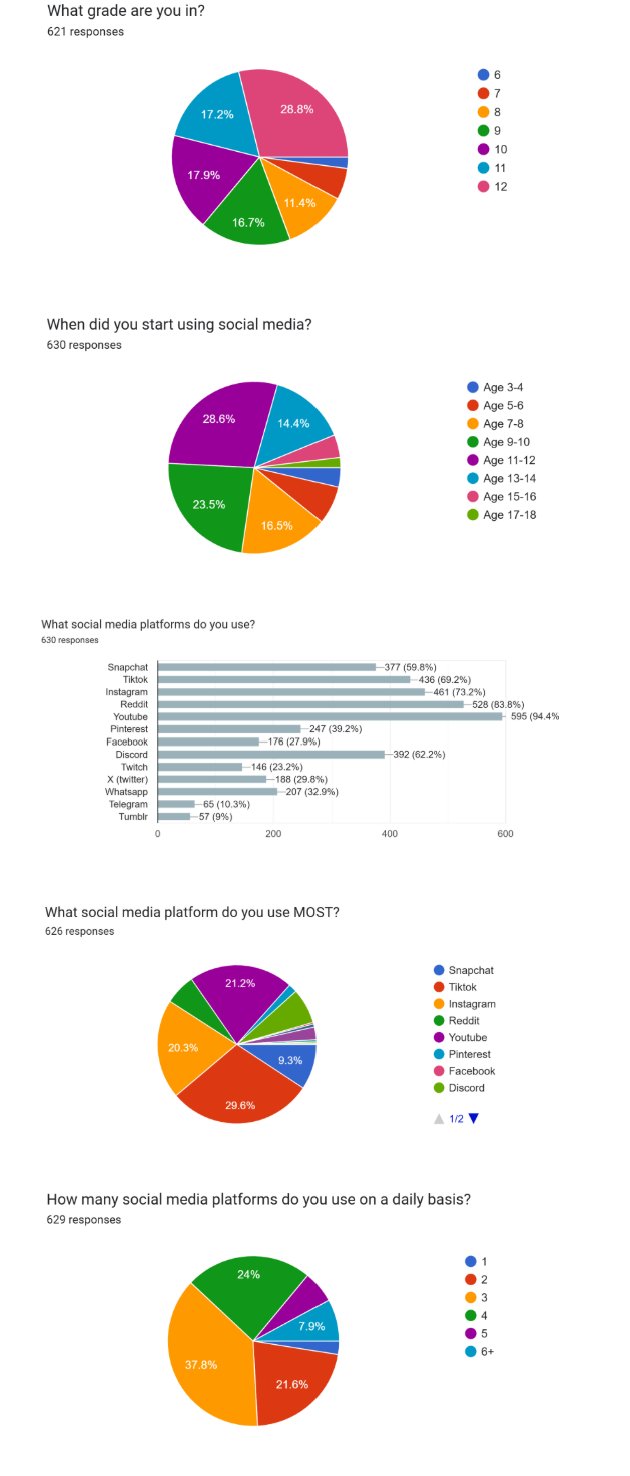
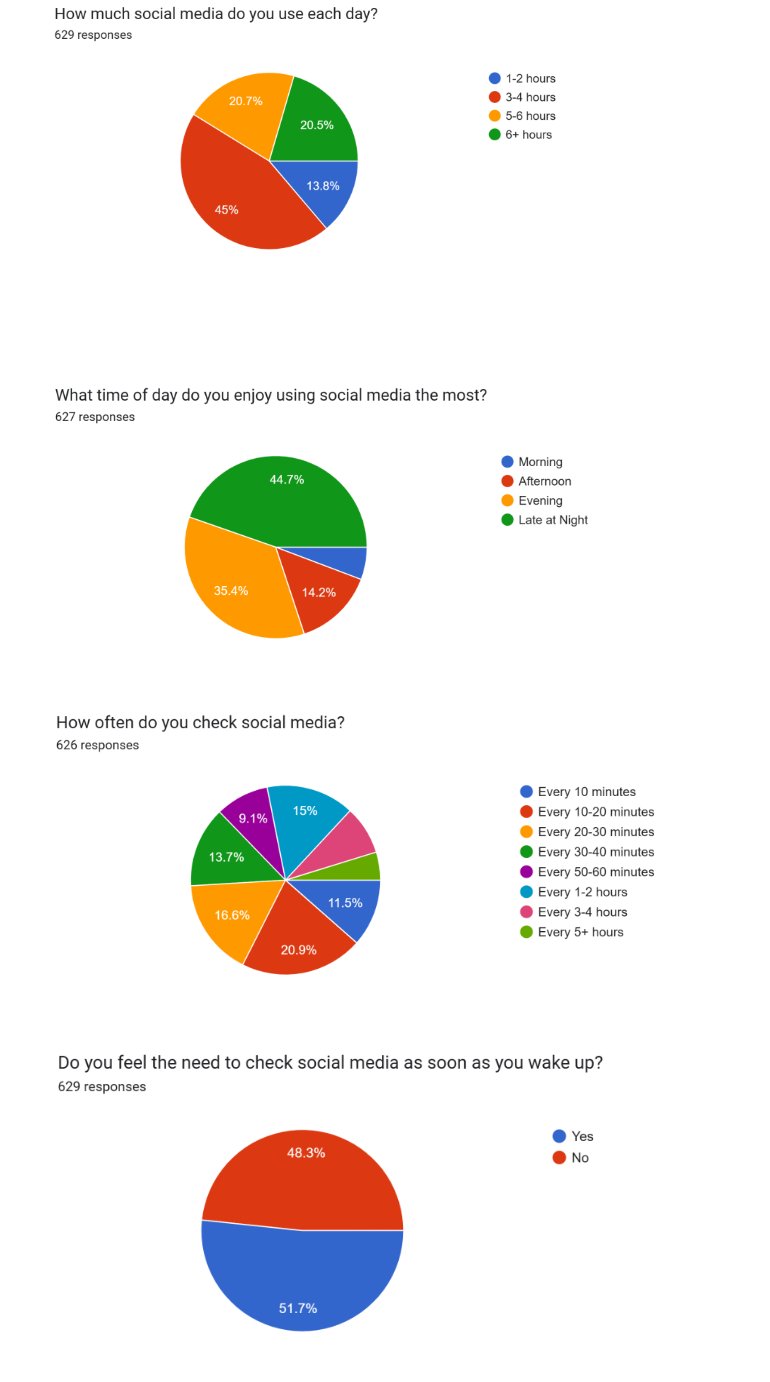
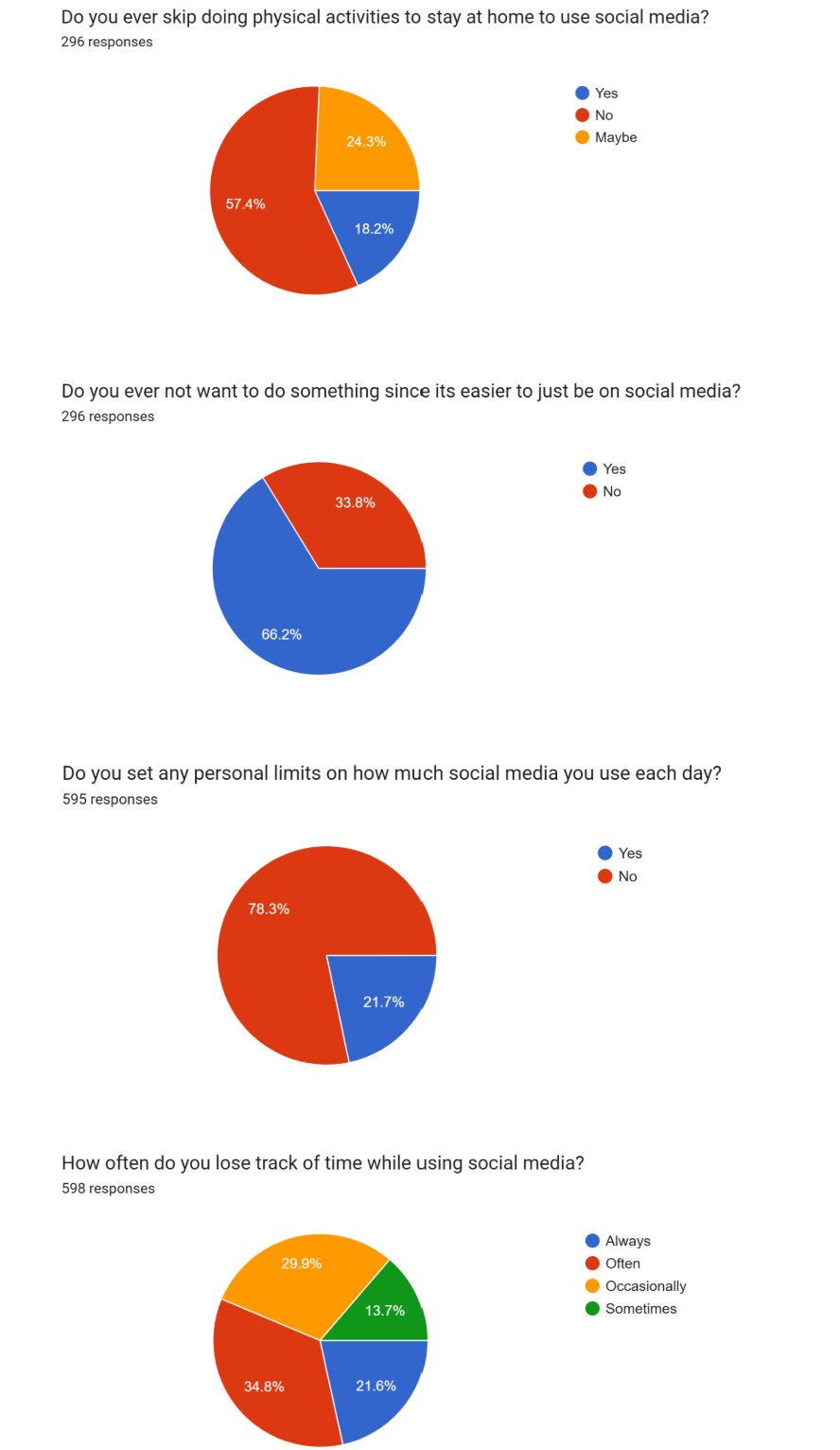
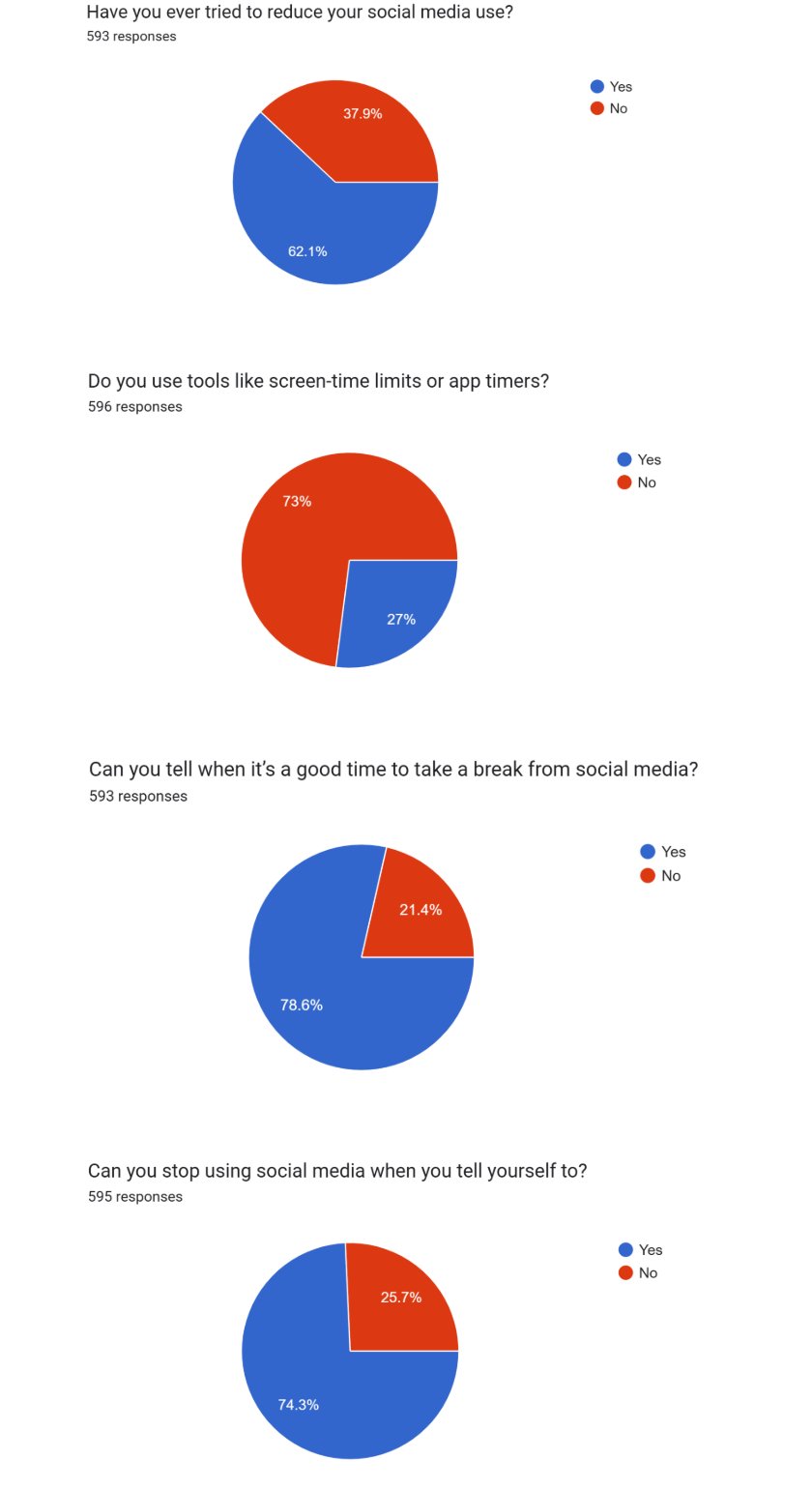
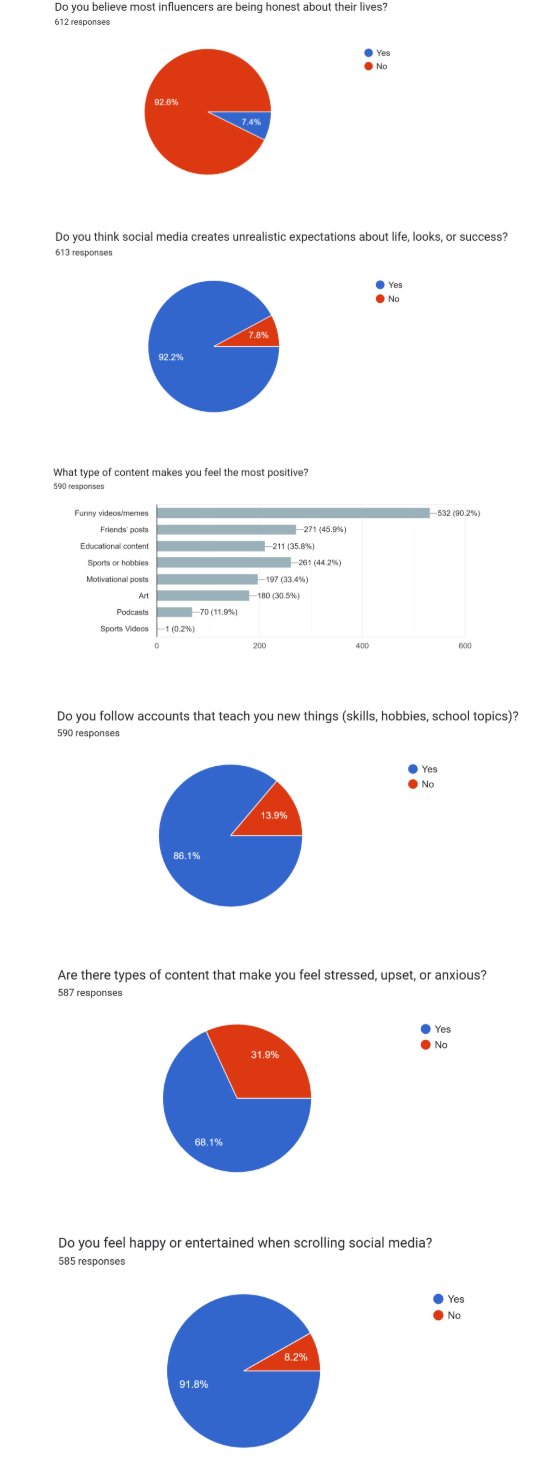
Using the data collected from my survey and additional research, I have reached a very clear conclusion: social media does have an impact on teenagers (in ways we probably not considered) Starting with general usage, 28.6% of people who participated in the survey stated that they started using social media at the age of 11 or 12, using a minimum of three social media apps on a daily basis, with TikTok being the most used app out of 626 people. On average, each day a teenager uses three to four hours of social media, and 44.7% of those people prefer to use social media late at night. These participants use social media every 10 to 20 minutes in a daily life showing how they are always on constant watch and distracted from other daily activities. Only 21.7% of people set personal limits on how much social media they can use. However, 34.8% of people stated that they often lose track of time while using social media, while people do say that they try to reduce social media. It shows how social media can sometimes take over your mind and can just lead to you continuously scrolling and not getting enough time for good healthy and prosperous life.
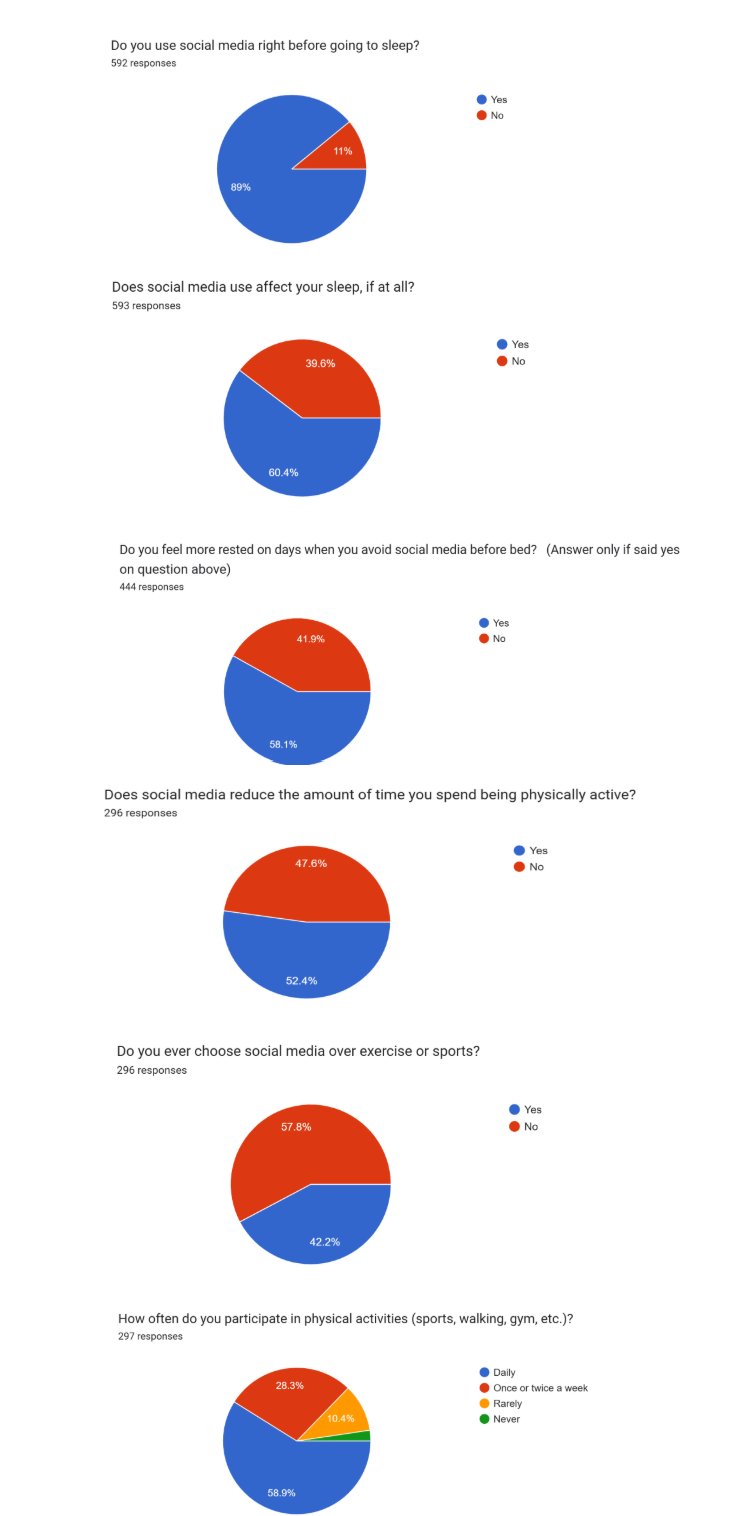
The physical health of students Starting off with sleep, which is essential for a teenager to develop their brain and be able to function, and at a high rate of 89% people who participated said that they use social media right before going to sleep and 61.4% of people agree and say that social media affects their sleep. Over 50% of people agree that they feel more energized when they avoid using social media at night showing the direct connection of social media and sleep. The daily activities of 52% people say that social media reduces the amount of time they spend being physically active in life. However, only 42% of people choose social media over exercising and doing other activities like sports. While people may not want be able to skip activities but 66% of people try avoiding doing stuff as being active on social media is easier.
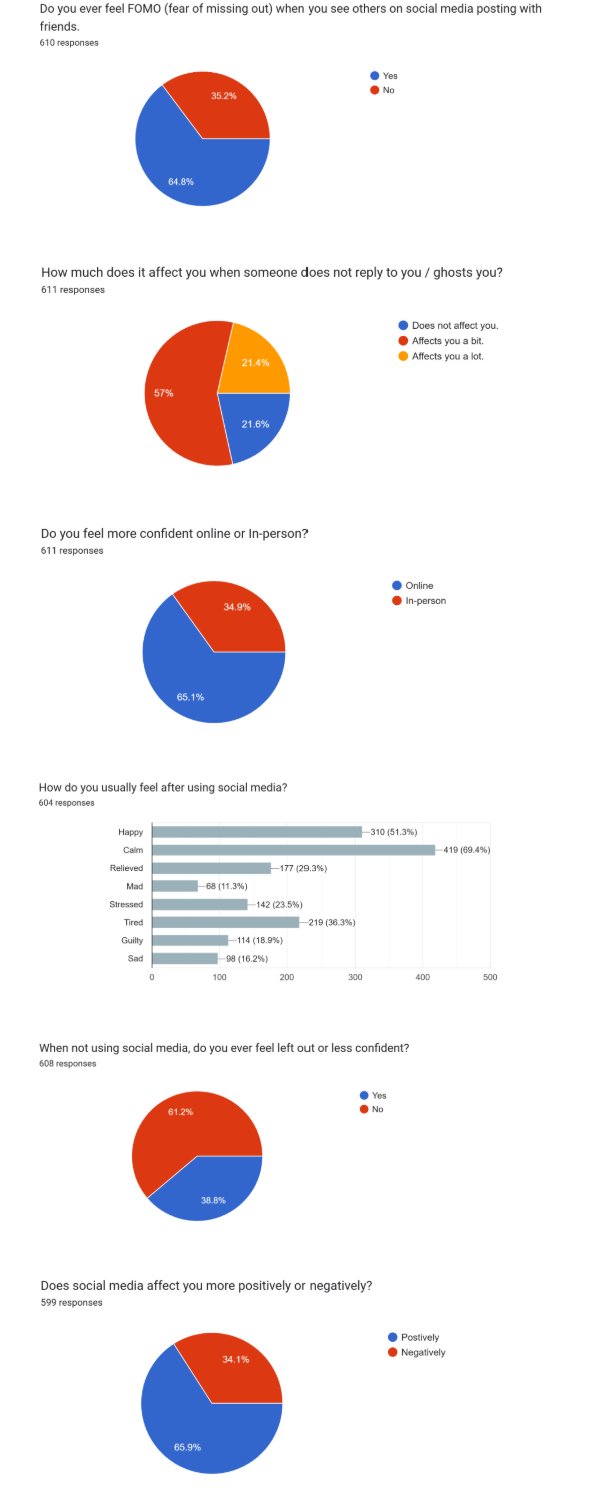
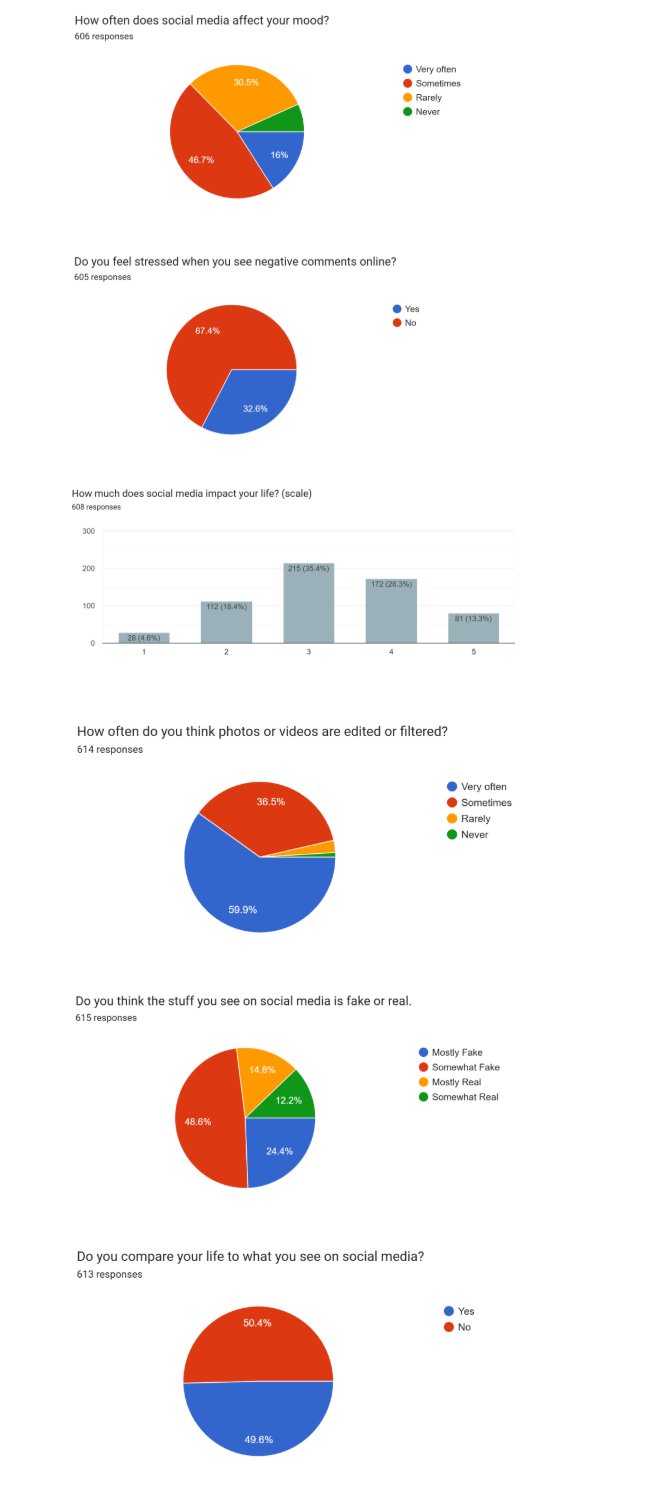
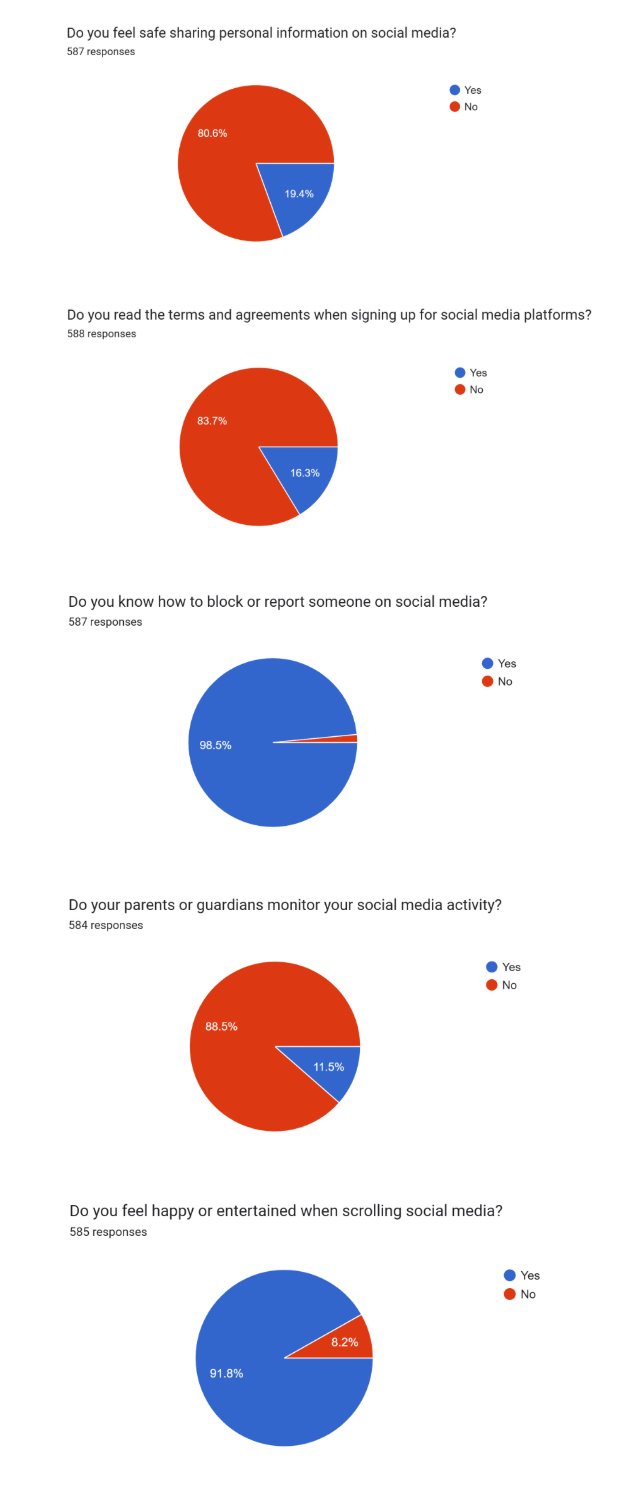
Mental and Emotional Health One of the major reasons why people use social media is to connect and communicate with others online. However, with this, teenagers start to feel other things, just as fear of missing out (FOMO). When friends/family don't reply to you (also known as the ghosting effect), how a teenager feels, over 77% of teenagers who participated felt it affected them, and concluded how small things can impact one's emotional and mental health. Social media doesn't impact you in a negative way, but it often affects your mood. While most people say social media only impacts them on a scale of three out of five. Another way social media impacts mental and emotional health is how they start to compare themselves with things they see online, 60% of people believe that the things they see online are usually edited and filtered. And 50% of what they see online is fake. However, the data given shows that 49.6% people compare themselves with people and things they see on social media. And over 93% of people believe that social media creates an unrealistic expectation about what success and failure look like. A lot of people use social media as a getaway from reality. They feel happy and entertained while scrolling, just showing how life can be hard, and people, and teenagers, especially, are using social media as a getaway from reality.
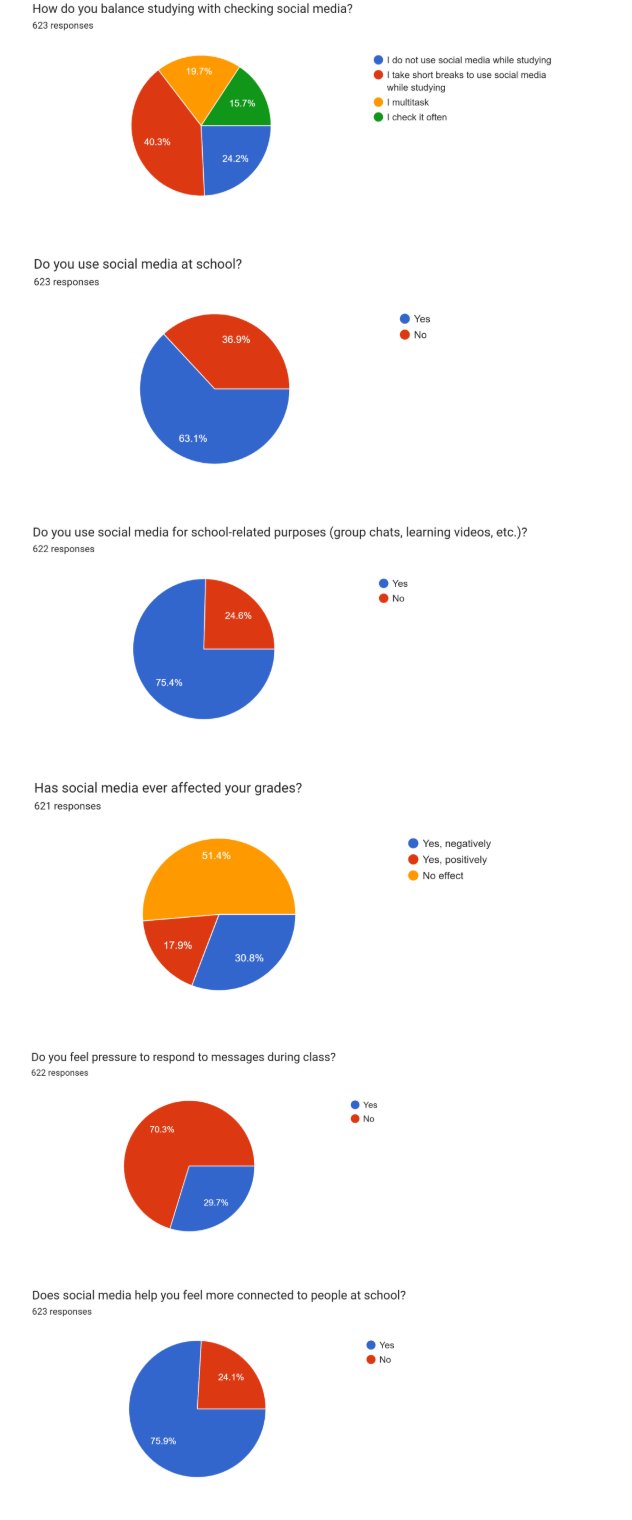
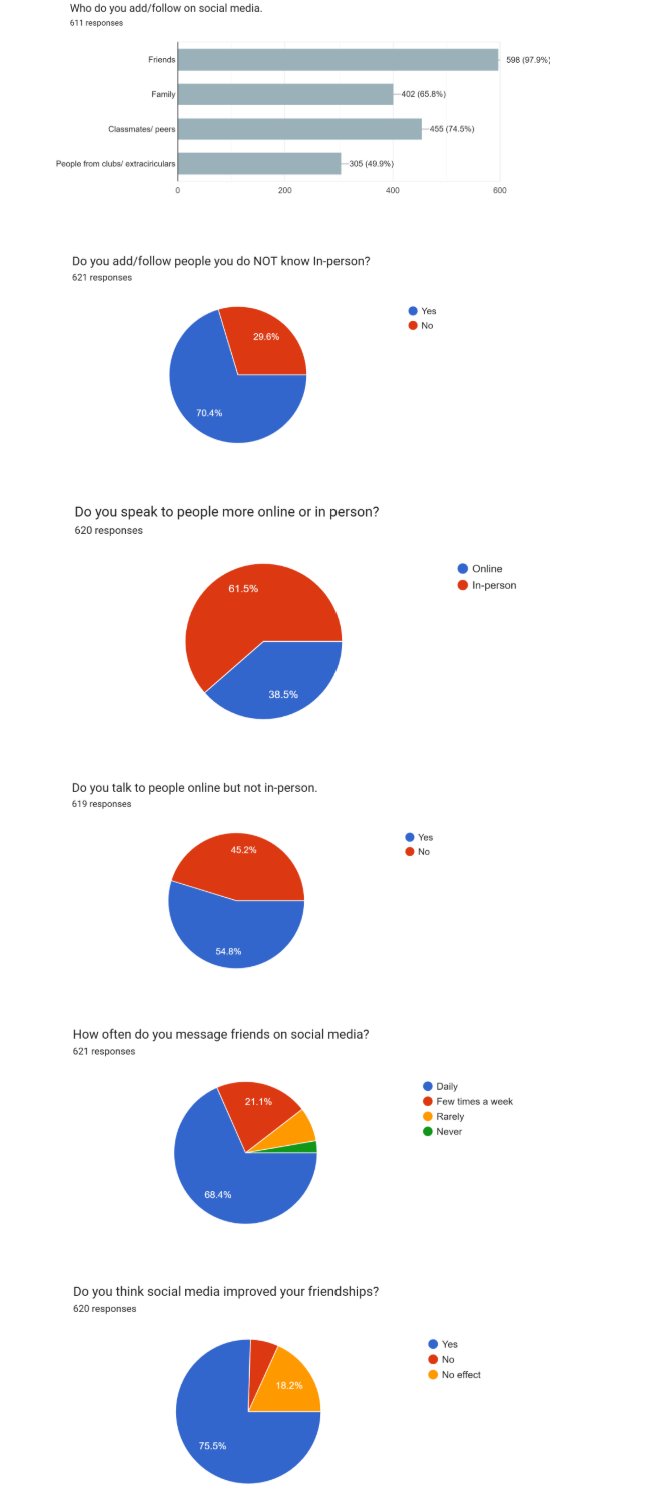
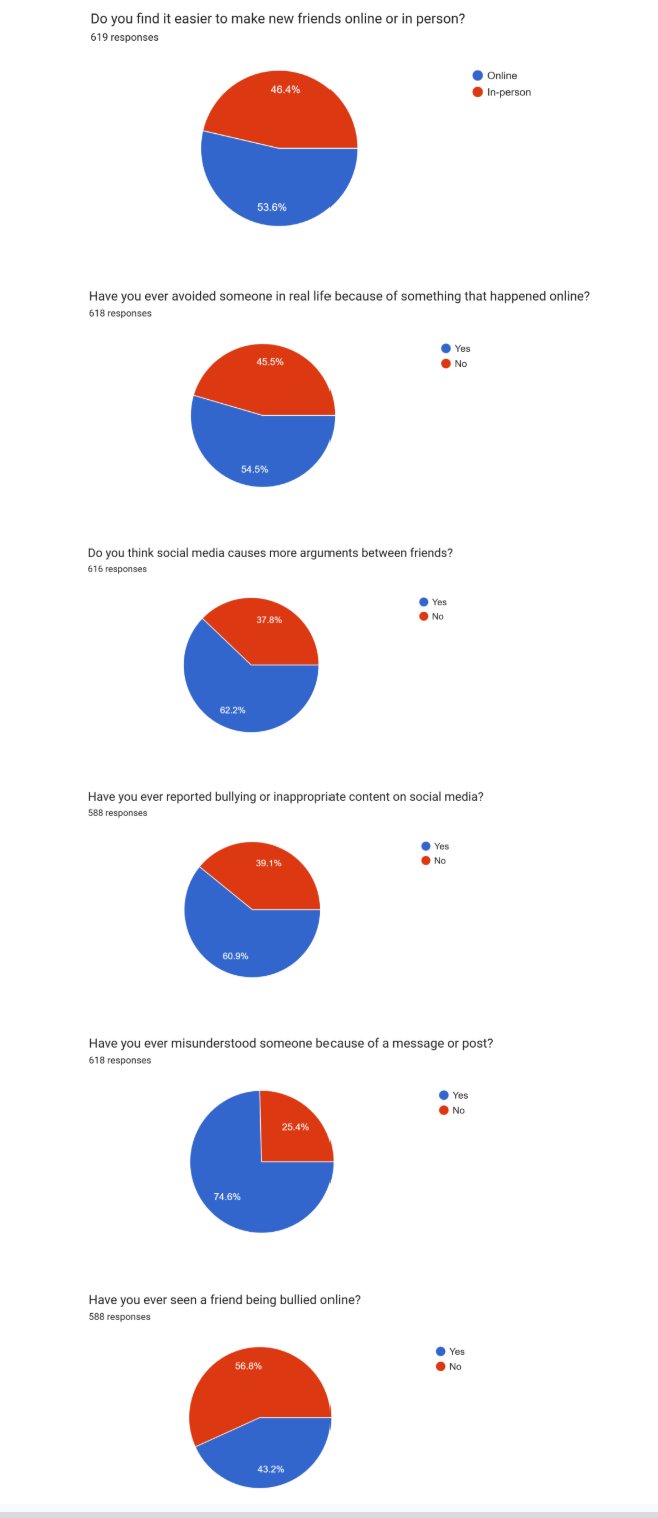
Social media and relationships Social media is a platform where people are able to maintain and continue friendships and relationships. 97.9% of people who use social media add their friends, families, classmates, peers, and any other people they know; however, there is a high rate of 70.4% of people who add people that they do not know in person. However, over 68.4% of people on social media message and communicate with their friends daily online, but there are also people who talk to others online but not in person, or the rate of 55%. Not only that, over 75% of people believe that social media has improved their friendships, and more people believe that it is easier and quicker to make new friends online rather than in person. Our world has evolved from people talking in-person to everyday online conversations through devices. However, there are many cons. Over 62% of people believe that social media causes more arguments. Not only are there many more misunderstandings, such as misunderstandings of people's messages or posts. As well, one of the major things on social media is cyberbullying. Over 60.9% of people have reported bullying or inappropriate content on social media, which is quite a high rate for a place that is said to be safe. But with that comes the terms and agreements: only 16.3% of people read the terms and agreements before signing up for the social media platforms they are about to use, showing that people aren't fully aware of the safety and other concerns that come with using these social media platforms.
What's Next?
Social media is a global phenomenon, and many people research its impact on society every day. In the future, researchers could continue to explore its effects on teenagers by conducting questionnaires specifically targeting them. Additionally, they can carry out in-person studies in schools by encouraging students to decrease their social media usage and then return a few weeks later to observe any differences. Numerous researchers are already examining the impact of social media, which could lead to new discoveries in the future. Social media is not a trend that will fade away in a few years; instead, it will continue to grow and evolve, resulting in the creation of more websites and platforms for enjoyment, communication, and self-expression. As technology advances, social media will become an even larger part of our lives. However, it's crucial to understand its impact on us to avoid becoming overly addicted and to ensure we use it mindfully while still enjoying our time online.
Citations
-Khalaf, Abderrahman M, et al. ‘The Impact of Social Media on the Mental Health of Adolescents and Young Adults: A Systematic Review’. Cureus, vol. 15, no. 8, p. e42990. PubMed Central, https://doi.org/10.7759/cureus.42990. Accessed 4 Mar. 2026. -Pros and Cons of Social Media | Brown University Health. https://www.brownhealth.org/be-well/social-media-good-bad-and-ugly. Accessed 4 Mar. 2026. -Social Media and Mental Health: Social Media Addiction. 16 Jan. 2020, https://www.helpguide.org/mental-health/wellbeing/social-media-and-mental-health. ‘-Social Media Impact: How Social Media Sites Affect Society’. American Public University, https://www.apu.apus.edu/area-of-study/business-and-management/resources/how-social-media-sites-affect-society/. Accessed 4 Mar. 2026. ‘-Teens and Social Media Use: What’s the Impact?’ Mayo Clinic, https://www.mayoclinic.org/healthy-lifestyle/tween-and-teen-health/in-depth/teens-and-social-media-use/art-20474437. Accessed 4 Mar. 2026. -Park, Michelle Faverio, Monica Anderson and Eugenie. ‘Teens, Social Media and Mental Health’. Pew Research Center, 22 Apr. 2025, https://www.pewresearch.org/internet/2025/04/22/teens-social-media-and-mental-health/. -‘Screen Break’. About Rogers, https://about.rogers.com/screenbreak/. Accessed 4 Mar. 2026. -‘Social Media’s Impact on Our Mental Health and Tips to Use It Safely | Cultivating Health’. Cultivating-Health, https://health.ucdavis.edu/blog/cultivating-health/social-medias-impact-our-mental-health-and-tips-to-use-it-safely/2024/05. Accessed 4 Mar. 2026. -Staff, Newport Academy. ‘The Effect of Social Media on Teenagers’. Newport Academy, 17 Apr. 2025, https://www.newportacademy.com/resources/well-being/effect-of-social-media-on-teenagers/. -Teens, Screens and Mental Health. https://www.who.int/europe/news/item/25-09-2024-teens--screens-and-mental-health. Accessed 4 Mar. 2026. ‘-How Social Media Affects Your Teen’s Mental Health: A Parent’s Guide’. Yale Medicine, https://www.yalemedicine.org/news/social-media-teen-mental-health-a-parents-guide. Accessed 4 Mar. 2026. -‘Social Media Harm In Teens I Effects and Causes’. Consumer Notice, LLC, https://www.consumernotice.org/personal-injury/social-media-harm/teenagers/. Accessed 4 Mar. 2026. -Ulery, Gina. ‘Social Media Pressure Can Lead to Anxiety and Depression in Teens’. PDR CE Blog, 14 Sept. 2015, https://blog.pdresources.org/social-media-pressure-can-lead-to-anxiety-and-depression-in-teens/.
Acknowledgement
I would like to thank my sister for showing me this wonderful platform.
As well as my dad, who was my coordinator, and my mom, who has given me support throughout this project.