
DUST IMPACT ON SOLAR PANELS
Ibrahim Tokhi
Annie Gale School
Grade 7
Presentation
No video provided
Problem
the main problem of this project is that when dust accumulates on a photovoltaic solar panel,the efficiency of the solar panel is greatly reduced.In this project we will look into the statistics of the efficiency of with and without dust PV solar panels.Then we will look at solutions and at the end create a vague idea of a solution for this world wide problem.
Method
Scientific method: Question: How does dust buildup affect the power output of a solar panel? Hypothesis: I think that the buildup of dust will decrease the power output of a photovoltaic solar panel because when there is a buildup of around one tenth of a centimetre of dust, the dust will cause the solar panels to absorb the radiated light from the sun in slightly smaller amounts. Experiment :( not actually tested) Materials: · 2 PV solar panels which are functional · Ruler · A room with no high winds · Sunlight · Multimeter · Empty reusable battery that can hold up to 50 volts · One way wire that transfer up to 1 volt at a time
Step 1: put your first solar panel into any room that does not have high winds Step 2: measure the buildup of dust every day until it reaches one tenth of a centimetre in height. Step 3: once the dust reaches the desired height turn on the solar panel Step 4: Then connect the wire to the output doorway Step 5: then attach the ammeter to the wire Step 6: leave the solar panel for 5 minutes without touching it Step 7: measure the amount of electricity in the battery with the Multimeter Step 8: do the same again but do not wait for the dust to pile up on the solar panel Step 9: compare the results Analyzation: If we compare the data, it would most likely mean that the solar panel that did not have dust generated more electricity in the given time. Other research also shows that the same experiment conducted in a different way also had the same results. Conclusion: With the Data that we I gathered I conclude to the fact that the buildup of dust decreases the efficiency of a photovoltaic solar panel. SOURCES: https://www.theladders.com/career-advice/the-7-scientific-method-steps https://www.fluke.com/en-ca/learn/blog/electrical/what-is-a-digital-multimeter https://www.sciencedirect.com/science/article/pii/S2352484724003792
Research
Simple explanation of how solar panels work Solar panels, what are solar panels? In this topic we will be diving into the amazing world of solar panels. So first of all, what are solar panels? A solar panel is one component or part of a photovoltaic system. A solar panel is constructed out of a series of photovoltaic cells arranged on a panel. They come in certain shapes and sizes of usually squares and rectangles. Solar panels are made to produce energy from the sun. Solar panels collect energy from the sun in the form of sunlight to create electricity. These panels can be used to power businesses, homes and countries. In addition to the residential and commercial uses of solar panels. There is large scale industrial of utility used of solar energy. In this case thousands of even millions of solar panels are arranged into a vast solar array. Which means that they are placed side by side front and back in a larger field. The reason that they do this is to supply electricity to large urban populations. SOURCES: https://energyeducation.ca/encyclopedia/Solar_panel https://www.eia.gov/energyexplained/solar/photovoltaics-and-electricity.php https://www.merriam-webster.com/dictionary/residential https://www.collinsdictionary.com/dictionary/english/commercial https://www.investopedia.com/terms/u/utility.asp https://dictionary.cambridge.org/dictionary/english/urban https://www.wired.com/story/tandem-solar-panel-cells-efficiency-energy/ What solar panels are mainly made out of Most people may be wondering what solar panels are made out of. In this paragraph I will explain what solar panels are made out of. Your typical solar panel is composed of materials such as 70-76% glass. 8-13% aluminum, 3-5% silicon, 9-11% polymers, and a small percentage of other materials like copper, silver, tin, etc. Some people may be confused about why these materials are in solar panels. So first of all the glass is used for the front of the solar panel as a protection cover and to make sure nothing else gets inside. The silicon is used for the solar panel itself. The aluminum is used to build the frame for the solar panel because it is lightweight, durable and strong. Polymer is used as a coating for the solar panel and for other parts of it. The other materials are used for various purposes. SOURCES: https://blog.ucs.org/charlie-hoffs/how-are-solar-panels-made/ https://www.aluminum.org/aluminum-key-material-renewable-energy https://pmc.ncbi.nlm.nih.gov/articles/PMC6401826/ https://en.wikipedia.org/wiki/Material https://www.gauthmath.com/knowledge/What-does-Various-mean--7389672332308840450 https://investingnews.com/daily/resource-investing/base-metals-investing/iron-investing/types-of-iron-ore-hematite-vs-magnetite/ Cost and benefit overall analysis Most people wonder are solar panels worth it? In the following I will explain if solar panels are worth it. A typical mid-range quality solar PV panel in 2022 is rated at 380 to 420 watts and will cost between $200 and $315. Then there is the profit. The profit is not a fixed amount because it will depend on many factors. But from an ethical source I found out that from an estimate smaller companies make $50,000 to $150,000 per year for owners. Medium sized solar companies make about $150,000 to $500,000 a year for owners. Then large scale solar panel companies make $500, 00 to millions of dollars a year for owners. To operate a small scale Solar Panel Company costs $135,000 for a year. While large scale companies cost millions of dollars annually to operate for a year. So is it worth it? In my opinion it is because if you have a small scale company and you do not make enough profit so an alternative is you can expand your business. While for large scale businesses they will at least make $500,000 a year. But solar panels are a good alternative to fossil fuels because they emit less CO2. SOURCES: [https://www.merriam-webster.com/dictionary/ethical](https://www.merriam-webster.com/dictionary/ethical/) https://westerncommunityenergy.com/how-much-do-solar-company-owners-make/ https://www.ecoflow.com/ca/blog/solar-panel-cost https://www.merriam-webster.com/dictionary/annually https://www.freepik.com/free-photos-vectors/pile-money-clipart Why solar panels are good We will at some point wonder why there are solar panels. There are multiple reasons that there are solar panels. For starters it reduces the amount of carbon dioxide emitted into the atmosphere. There are also solar panels so that people can generate electricity. Plus they are more efficient and clean. But then there is manufacturing. The manufacturing costs for a typical 400 watt solar panel company can range from $160 to $200 dollars. But the profit will be more than the manufacturing cost.so I conclude to the fact that solar panels are worth to manufacture but there will be other variables in the future due to the change to the market and tariffs. SOURCES: https://www.pvknowhow.com/solar-panel-manufacturing-plant-cost-breakdown/#t-1720089437384 https://www.solar.com/learn/solar-panel-cost/ https://solarpowerstore.ca/collections/pallets-of-large-solar-panels-400w-600w?srsltid=AfmBOoqdhHTpN5qFXo5zMksTRB_696ePQ6YprK1wTvsdS0uZkrSU2GAC https://languages.oup.com/google-dictionary-en/ https://future.portfolio-adviser.com/time-is-running-out-as-co2-emissions-reach-record-high-in-2024/ History of solar panels Most people will or could wonder who first was credited for solar panels? It all began with a person named Edmond Becquerel, A young physicist who at the time worked in France. Edmond Becquerel discovered the photovoltaic effect in France in 1839. The Photovoltaic effect is a process that produces a voltage or electric current when exposed to light or radiant energy. A few decades later the French mathematician Augustin Mouchot was inspired by his work. He began registering patents for solar powered engines in the 1860s. Ranging from France to the U.S., investors were inspired by the patents. Once they were inspired they filed for patents on solar powered devices for times as early as 1888. SOURCES: https://www.smithsonianmag.com/sponsored/brief-history-solar-panels-180972006/ https://languages.oup.com/google-dictionary-en/ https://www.investopedia.com/terms/p/patent.asp https://micro.magnet.fsu.edu/optics/timeline/people/becquerel.html How the temperature affects a solar panels Most people will sometimes wonder does temperature affect the outcome of a solar panel. The answer is yes. So let’s dive deeper into this topic. The solar panel produces energy using the photovoltaic effect. If solar panels get overheated because of the production of energy or the suns heat they will produce less energy. One of the factors that can lead to this is the process of cooling. For big tech companies they will have computer rooms with the big blocks of computer tech that can overheat. The way that they can prevent that is that there is a cooling system designed for stopping that. SOURCES: https://www.britannica.com/dictionary/outcome https://languages.oup.com/google-dictionary-en/ https://apapl.com.au/mitigating-the-risks-of-fires-and-overheating-in-solar-facilities/ Does cold weather affect the outcome of a solar panel Does cold weather affect the productivity of solar panels? Yes it does. Like heat can affect solar panels, cold temperatures can also affect solar panels. They affect solar panels by surprisingly increasing their efficiency .How do they do it? They do it by increasing the amount of energy produced. Then for some models, after a snowstorm they produce more electricity. Due to the fact that after a snowstorm the snow can reflect sunlight and therefore give more energy. Then there are also the downsides. In colder temperatures the days are shorter making there less time to get energy. SOURCES: https://ratedpower.com/blog/cold-weather-solar-panels/#how-does-the-cold-affect-solar-panel https://study.com/academy/lesson/temperature-definition-lesson-for-kids.html https://www.solarreviews.com/blog/snow-on-solar-panels-will-solar-panels-work-in-the-winter Does hot weather affect a solar panel? Some people like me may wonder how heat affects other types of solar panels. Now you might be surprised there are other types of solar panels. The main types are Monocrystalline, Polycrystalline, and thin film. When the temperature rises, the maximum output power and the open-circuit voltage decrease while the short-circuit current increases. What this means is that when high heat comes in contact with these solar panels their productivity decreases. For polycrystalline solar panels it also decreases the efficiency but it decreases less than the monocrystalline solar panels. As for thin film solar panels they are actually not affected in the heat. Then sometimes they also could be more efficient. SOURCES: https://aurorasolar.com/blog/solar-panel-types-guide/ https://energy.sustainability-directory.com/learn/how-does-temperature-affect-the-efficiency-of-thin-film-versus-silicon-based-solar-cells/ https://www.greentechrenewables.com/article/how-does-heat-affect-solar-panel-efficiencies https://languages.oup.com/google-dictionary-en/ https://en.wikipedia.org/wiki/Open-circuit_voltage https://en.wikipedia.org/wiki/Short_circuit https://stories.northernhealth.ca/stories/extreme-heat-why-its-important-know-risks Types of electrical circuits Electrical components are very important in solar panels. A type of an electrical component is a circuit. A circuit is an electrical design that has an energy flow, a device to contain electricity (ex: light bulb). Then is also could have a resistor. A resistor is a device that when the energy flow reaches beyond its desired energy flow it will break and turn off the circuit.so there are 3 types of circuits. A closed circuit, open circuit, and a short circuit. An open circuit is a circuit that has an open switch and a bulb or resistor. A closed circuit is a circuit that has a closed switch opposing to the open circuit. The closed circuit also has a resistor or a bulb. The short circuit is different from the other two. The short circuit is a circuit that is highly dangerous if it’s large .Because it has no switch. Plus the short circuit also has no resistor or bulb. So that gives the circuit the ability to let the electricity run as fast as possible. Which will lead up to heating. Once it overheats it will start to catch on fire and burn the whole place down. But there are ways to stop that. There are 2 ways. The first is adding a resistor. When you add a resistor it will stop overheating. For example if there was a flow of 50 watts. Then the resistor was set to 55 watts. Once the flow reaches that limit. A wire will break in the resistor therefore stopping the short circuit from overheating. It is also mandatory for all circuits to have a power source of some kind. Or it will not work. SOURCES: https://languages.oup.com/google-dictionary-en/ https://www.youtube.com/watch?v=v5RJf_V0LYA https://www.hallmarknameplate.com/basics-printed-circuit-boards/ How the position of a solar panel affects the output of that solar panel People have asked a lot of questions about the position of solar panels. One of the main questions are will the position of a solar panel affect the efficiency of the solar panel. The answer is yes. For countries in the Southern Hemisphere such Australia get sunlight in a different direction. Opposing to the countries in the Northern Hemisphere like Canada. For countries in the Southern Hemisphere they should put their solar panels facing North. Because the sunlight reaches the northern side more. While for Canada, since they are in the Northern Hemisphere they should put their solar panels facing south. Because for that region, the sunlight usually comes in the south for at least a big portion of the day. But also it could be places in a 10 to 89 degrees angle. Then the output of the solar panel would be less, due to the fact that the solar panel would be at an angle where there would be less sunlight. But there are other factors that could affect that. Such as snow, snow can reflect the sunlight onto the solar panel, therefore giving it more light. SOURCES: https://solarcalculator.com.au/solar-panel-orientation/ https://www.britannica.com/place/Western-Hemisphere Different types of solar panels Some people may wonder what the difference between photovoltaic and thermal solar panels is. The difference is how they are used and modeled. Photovoltaic solar panels are used for large amounts of electricity for powering stuff. While thermal solar panels are used for heating things such as water. Thermal solar panels capture heat from the sun and use it to produce heat to items such as water. While solar panels capture the heat from the sun and convert it to electricity for other purposes. For thermal solar panels, solar energy is trapped within the panels and transferred into a glycol based heat transfer liquid with antifreeze. What this means is that is captures heat from the sun, then it transfers the solar energy into a glycol based liquid with antifreeze in it.Plus all of that is contained in a closed circuit. Then it is put into a coil inside your home’s cylinder. Then from there the heat that is produced is transferred into your hot water supply. SOURCES: https://www.renewableenergyhub.co.uk/main/solar-panels/photovoltaic-vs-solar-thermal https://www.merriam-webster.com/dictionary/trapped https://www.merriam-webster.com/thesaurus/transfer https://www.chemicalsafetyfacts.org/chemicals/ethylene-glycol/ https://languages.oup.com/google-dictionary-en/ https://mechanicalnotes.com/heat-definition-sources-characteristics-causes/ What dust is made out of Dust, what is dust? People like me will sometimes wonder what dust is. The dust that is in your typical house is composed of a mix of sloughed off skin cells. Hair, clothing fibers, bacteria, dust mites, small parts of dead bugs, soil particles, pollen, and microscopic specks of plastic. The dust that is outside is typically composed of anything that can be broken into little pieces. Like bits of sand, dirt, pollen from flowers, and spores made by fungi or molds. The way that dust moves is by being pushed by the wind. It can also be moved by natural factors like water and animals. SOURCES: https://cen.acs.org/articles/95/i7/Tracing-chemistry-household-dust.html https://www.merriam-webster.com/dictionary/slough https://en.wikipedia.org/wiki/Fiber https://www.britannica.com/dictionary/mite https://www.merriam-webster.com/dictionary/particle https://www.britannica.com/science/spore-biology https://www.vocabulary.com/dictionary/animal https://www.livescience.com/do-air-purifiers-help-with-dust Main types of dust There are many types of dust. The top 5 main types are metallic, mineral, other chemical, organic, and biohazard. Examples of metallic dusts are dusts that contain metals like nickel, cadmium, lead, and beryllium. Examples of mineral dusts are dusts that contain coal, and cement. Examples of other chemical dusts are dust that contain chemicals like pesticides. Examples of organic (AKA vegetable dusts) are dusts that contain materials like wood, flour, cotton, pollens etc. Examples of biohazard dusts are dusts that contain things like molds and spores. SOURCES: https://www.airbench.com/latest/dust-types-and-how-to-avoid-hazards/ https://www.merriam-webster.com/dictionary/metallic https://www.merriam-webster.com/dictionary/mineral https://www.nrc.gov/reading-rm/basic-ref/students/science-101/what-is-a-chemical https://en.wikipedia.org/wiki/Biological_hazard https://www.niehs.nih.gov/health/topics/agents/pesticides https://kids.britannica.com/kids/article/materials/476293 How certain types of weather affect the outcome of a PV solar panel Can certain weather affect solar panels? Yes they can.so let’s start with wind. Wind is created when warm air collides with cold air in a not to big scale. Because if it was too big, it would create a storm. So when wind gusts by or past or on top of a solar panel, it actually is good. Because when wind comes in contact with a solar panel is cools it down. It cools it down by reducing the amount of heat made by the photovoltaic effect. But if the wind is too strong because big amounts of hot and cold air combine it could damage the solar panel. It can damage the solar panel by stripping the panels off of the solar panel. It could also just obliterate the whole solar panel and break it apart. SOURCES: https://www.solar.com/learn/how-do-wind-and-humidity-affect-solar-panel-efficiency/ https://www.merriam-webster.com/dictionary/damage https://www.merriam-webster.com/dictionary/weather How weather affects PV solar panels There are other factors besides wind that can affect the power output of a photovoltaic solar panel. For example rain, rain is a big factor that can affect solar panels. Rain clouds can block the sun's rays that the solar panel needs to make electricity. But rain can also be good. When rain comes onto a solar panel and cleans the dust off of the solar panel. The rain can also clean the dirt and other substances on the solar panel. Rain can also help cool down solar panels. Because rain is usually cold. Then when a cold substance comes in contact with a hot PV solar panel, it will cool down the solar panel. But if there is too much rain, and there is not proper percautions.The rain can cause the solar panel to short circuit. SOURCES: https://montel.energy/resources/blog/what-are-the-effects-of-rain-on-solar-panel-performance/ Advanced explanation of how a PV solar panel works As I said that PV solar panels produce energy, let’s take a deeper look at it.Solar panels are made out of metals like silicon. Which are constructed into a frame shape. Then it also has a glass casing surrounded by a special film, and also has wires installed into it.Inside each solar cell is a thin wafer of silicone which is classified as a semiconductor. A semiconductor is a mix of an insulator and a conductor. An insulation is something that can be used to insulate something but is not a conductor, for example glass. Glass is an insulation because it cannot let electricity flow through it.A conductor is the opposite if an insulator. A conductor allows electricity to flow through it.For example a steel wire is a conductor. It is a conductor because it lets electricity flow through it, but it is not an insulator. So now you know what a semiconductor is.Also is order for a semiconductor to work you have to heat up the semiconductor. (The next steps will be stated in the paragraph below). SOURCES: https://www.certainteed.ca/inspiration/how-tos/solar-101-how-solar-energy-works-step-step https://www.servicesteel.org/resources/is-steel-a-conductor https://www.okmetic.com/about-okmetic/tale-of-a-silicon-wafer/ VIDEO: https://www.youtube.com/watch?v=gUmDVe6C-BU Advanced explanation of how a PV solar panel works From the paragraph above I explained the first 2 steps that solar panels use to make electricity. In this paragraph I will explain the rest. When the electricity travels through the wafer it creates a negative and positive charge of electricity. Those charges form an electric field. An electric filed a force that surrounds electrically charged particles like protons and ions. Once sunlight comes into contact with a PV solar cell it energizes the cell that causes electrons to come loose from atoms within the semiconductor wafer. Those loose electrons are set into motion by the electric field surrounding the wafer, and this motion creates an electrical current. An electric current is a current of electricity flowing through an electrical circuit. An electric current is usually measured in amps. You now have the solar factors working efficiently to convert it to electricity. But the electricity that it generated is called a direct current or DC.DC is not the type of electricity that powers homes. The electricity that powers homes is called an alternating current or AC.Thankfully DC can be changed to AC by a device called the inverter. (Next steps will be stated in the paragraph below). SOURCES: https://www.certainteed.ca/inspiration/how-tos/solar-101-how-solar-energy-works-step-step https://schoolofpe.com/blogs/news/exploring-the-mysteries-of-electric-fields-html https://www.hioki.com/global/learning/electricity/current.html https://circuitcrush.com/what-is-electric-current/ Advanced explanation of how a PV solar panel works In the two paragraphs above I explained the first four steps of how solar panels convert sunlight into electricity. Now I am going to explain the fifth step. Once the DC current is turned into an AC current it runs through your electrical panels are supplies electricity into your desired appliance. It works the exactly like the way electrical power is generated through the grid by your utility company. On cloudy days solar panels might not be able to collect enough energy to power a certain device for a certain time period. So in the middle of the day they collect more energy they can store that energy and use the energy when you need it or if there is a shortage. The device used for that is called a meter. Then your utility supplier will give you credits if you sent back extra energy in some cases. SOURCES: https://www.certainteed.ca/inspiration/how-tos/solar-101-how-solar-energy-works-step-step https://www.xylem.com/en-ca/products--services/metrology-equipment-for-utilities/meters/stratus-electricity-meter/
Design of robot that can be used to clean dust off solar panels With all the information that we have gathered we know for sure that dust affects how much electricity a solar panel makes. But companies have found various methods to solve this worldwide problem. One way is by having a very big fan to blow the dust off. But then in large scale solar farms cleaning the dust would be a very large process. So I thought of a new way that is ecofriendly, effective, and cheap in large scale solar farms. It is a device that uses the power of suction, composting, and no large scale carbon emissions. So basically there will be tracks on the ground made out of aluminum because it is cheap and durable. But in case of the weather you can put an all season protection coating to keep it safe. (Next steps will be stated in paragraph below). Design of robot that can be used to clean dust off solar panels From the paragraph above I talked about a clean solution to cleaning the dust off solar panels. So if the protective coating is not available you can coat the tracks in a thin layer of stainless steel. After that you would put the tracks between each solar panel in a left to right array in one direction. Also the rail road tracks must be suitable for triangular rubber wheels. Then you do not want a square of tracks around the solar panels. You would want a semi square of 2 parallel lines going through each row of solar panel. Then on those tracks you would put the same coating of a thin layer of stainless steel. Plus the tracks cannot last forever so every month people would need to do a durability test on the tracks to make sure they are not broken. Because if the tracks are broken the robot can steer off course can possibly break a solar panel. Now we can move onto the robot. The wheels that will make the robot move will be triangular. The hypotenuse will be 20 centimeters long.The height of the top of the 90 degree angle which is on the side opposing to the hypotenuse will be 15 centimeters long. The base will be also 15 centimeters wide. The corners will be made out of quarter circles not triangle vertices. The triangle will be made out of a cheap and synthetic and durable rubber. Then inside the triangle there will be wheels for moving the triangle inside like shown in the image. Next parts of ideas will be shown in the paragraph below. Design of robot that can be used to clean dust off solar panels From the paragraph above we learned the idea of the wheels of the robot, now I will explain the rest. The torso of the robot will be a 50 by 30 centimeter rectangle. The 50 centimeter side will be the height and the 30 centimeter side will be the width or the base. The torso will be a shell structure and it will have a tank made out of plastic which will fit the inside of the torso. The thickness of the metal of the torso will be around half a centimeter. Then for the arms they will be the size of the width of the solar panel that it is cleaning because if you make it too big it will not clean the whole solar panel. There will be a pipe that is attached on top of the robot, this pipe will not touch the ground. This pipe will be above ground so it does not get crushed by the robot. Then the head will be a 20 by 20 centimeter square that has the pipe attached on the top. That pipe is attached to the storage box inside the robot which contains dust. Once the storage box is full a flat circle which separates the pipe from the outer pipe will open and the dust will be sucked through the pipe into a big storage chamber. Once it reaches the storage chamber it will stay there until the storage chamber is full. Once it is full the dust will be recycled then put into fertilizer for other purposes. The remaining dust that cannot be recycled will be disposed of in the landfill. But if you do not want to separate the recyclable and non-recyclable dust you can1 SOURCES FOR ALL 3 PARAGRAPHS https://www.china-machining.com/blog/lightweight-metals/ https://familygardentrains.com/special_offers/track/aluminum.htm https://www.washingtonpost.com/sf/brand-connect/wp/enterprise/ribbons-of-rail/ https://www.generationsolar.com/solar-101/everything-you-wanted-to-know-about-solar-panels-but-were-afraid-to-ask/ https://www.calgary.ca/waste/what-goes-where/dust-and-powders.html
Data
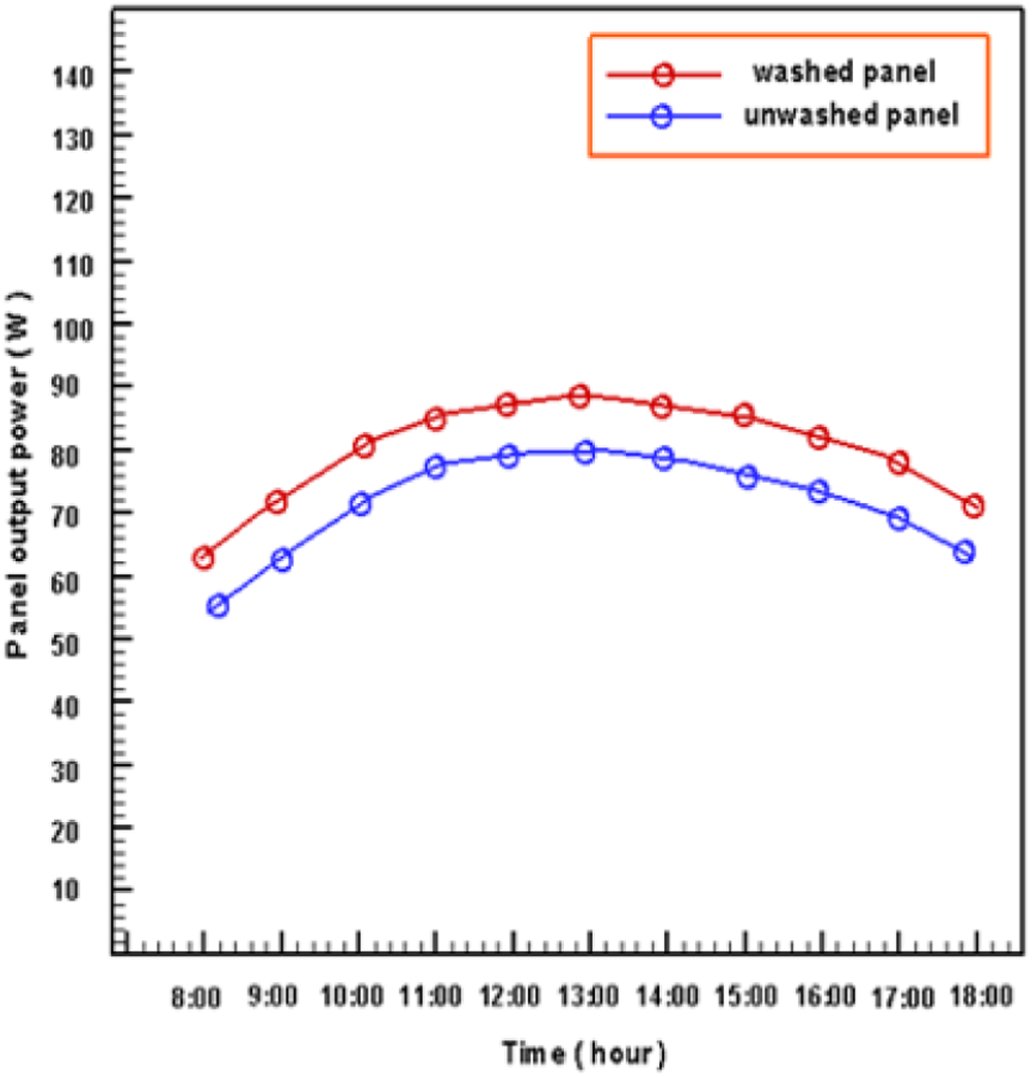
Maximum diffrence between dust and no dust solar panels
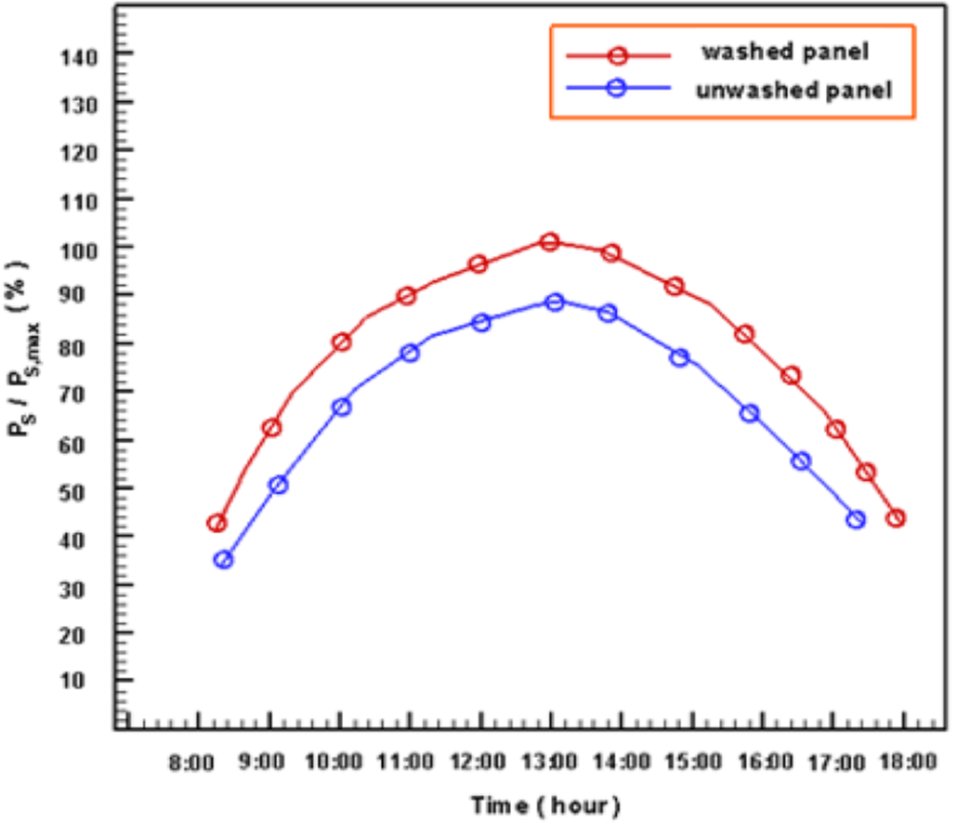
Normalized efficiency difference of dust and no dust solar panels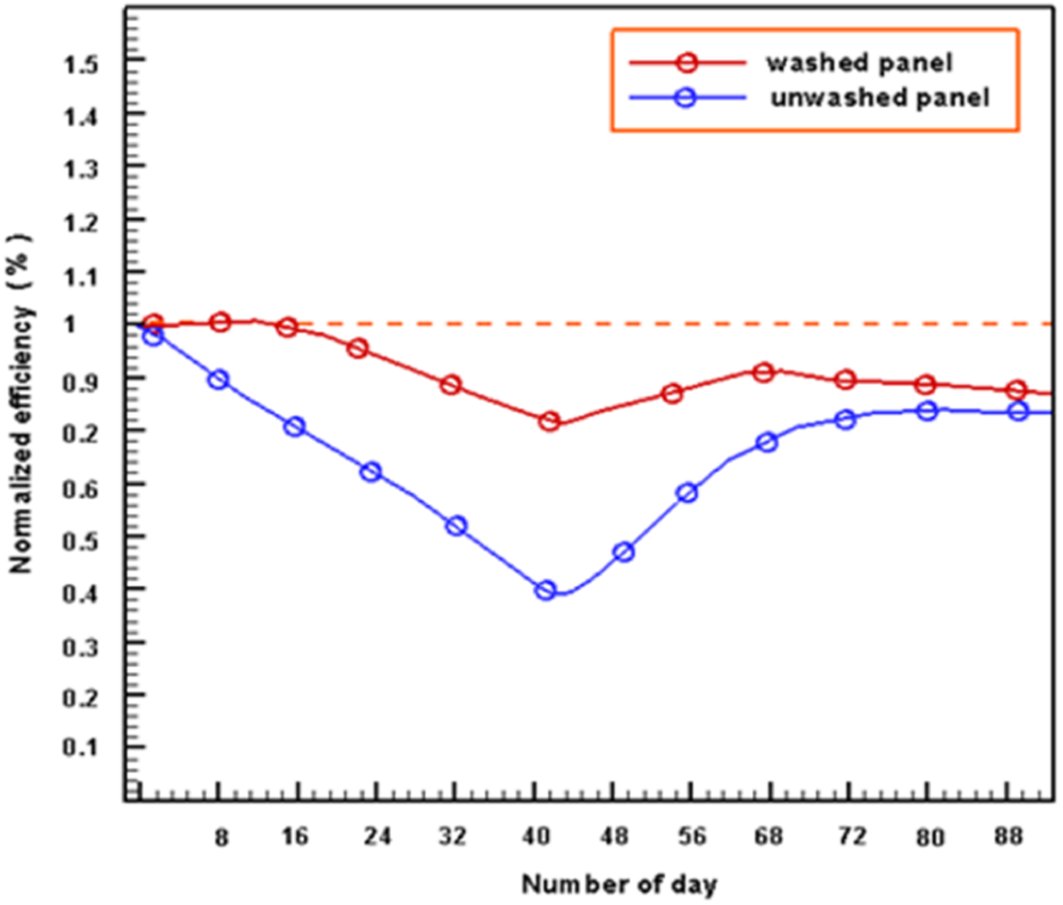
Panel output power difference between dust and no dust solar panels
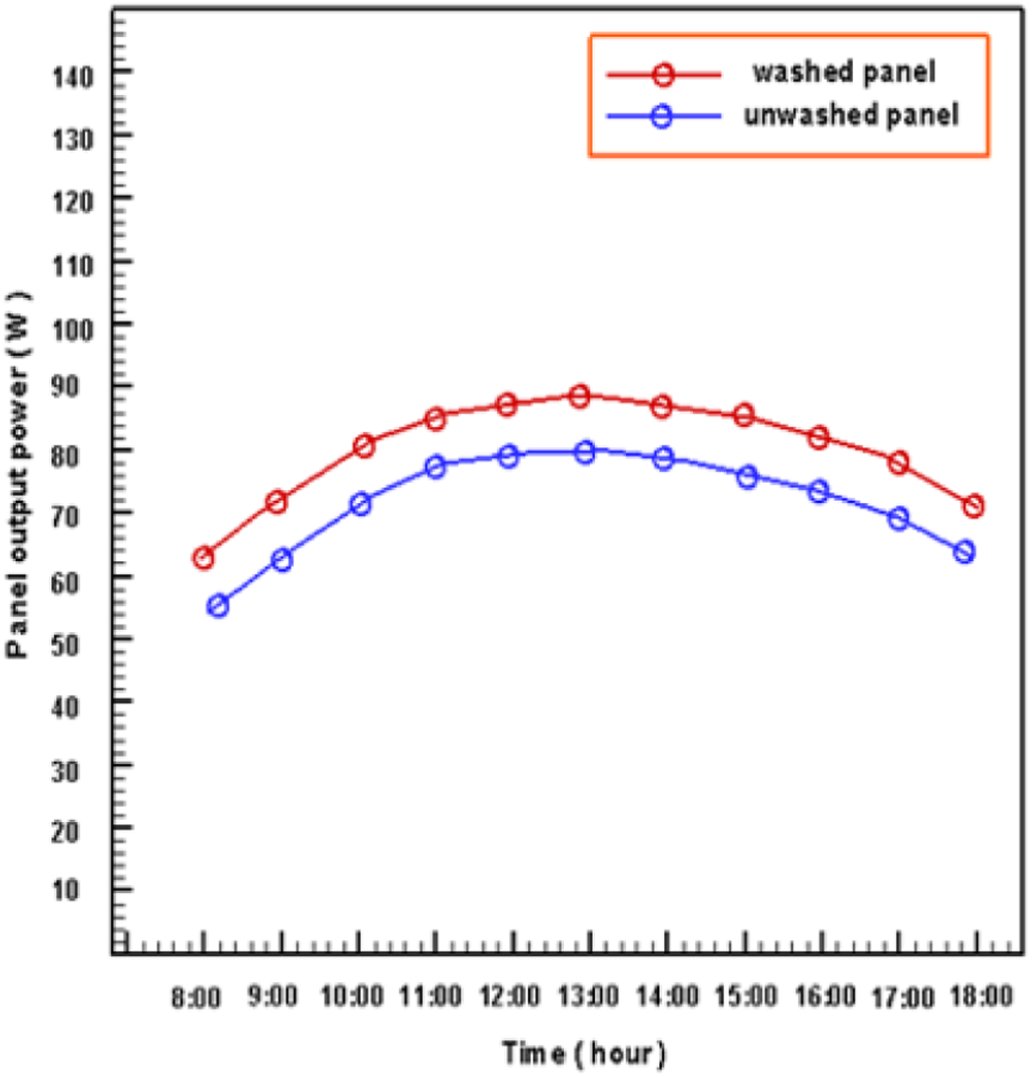
Panel output power difference between dust and no dust solar panels
Normalized efficiency of dust and no dust solar panels daily
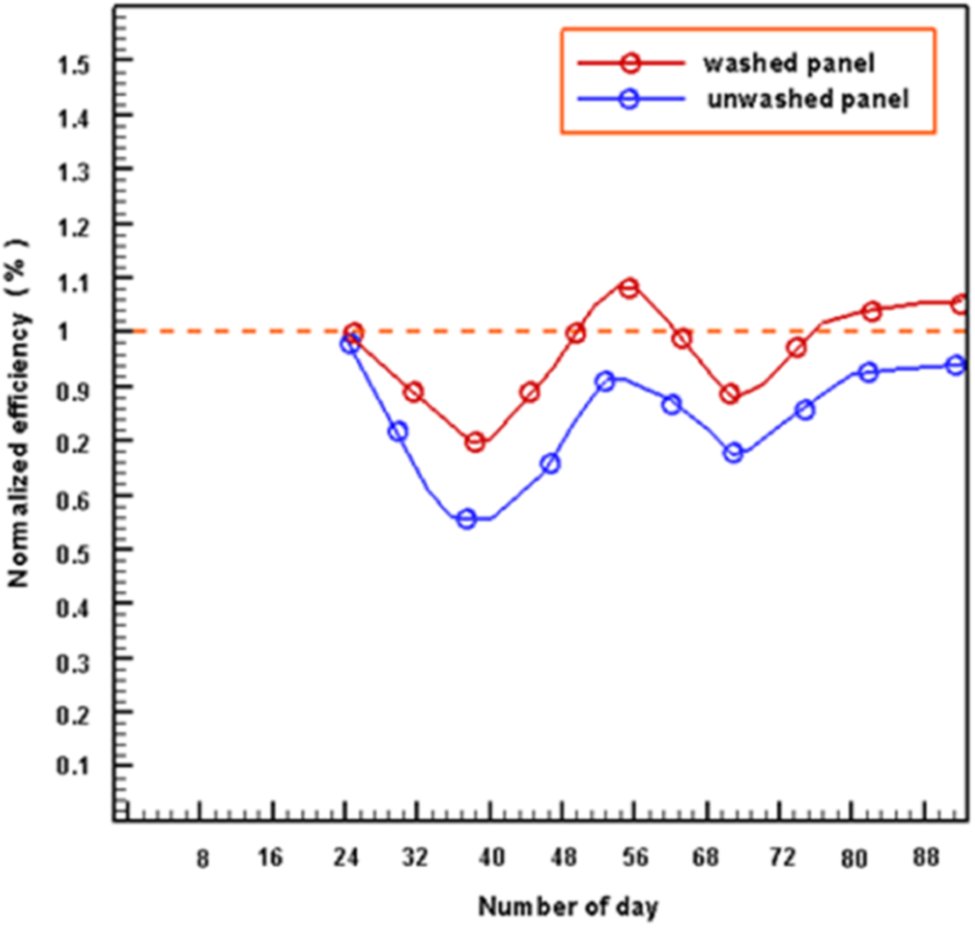 https://www.sciencedirect.com/science/article/pii/S2590123025021139
Conclusion
with all the information gathered and the recorded observations of an experiment.I conclude to the fact that the accumulation of dust greatly affects the efficiency to a PV solar panel.I also conclude to the fact that i have found a solution but structured it diffrently than most people.
Citations
https://energyeducation.ca/encyclopedia/Solar_panel https://www.eia.gov/energyexplained/solar/photovoltaics-and-electricity.php https://www.merriam-webster.com/dictionary/residential https://www.collinsdictionary.com/dictionary/english/commercial https://www.investopedia.com/terms/u/utility.asp https://dictionary.cambridge.org/dictionary/english/urban https://www.wired.com/story/tandem-solar-panel-cells-efficiency-energy/ https://blog.ucs.org/charlie-hoffs/how-are-solar-panels-made/ https://www.aluminum.org/aluminum-key-material-renewable-energy https://pmc.ncbi.nlm.nih.gov/articles/PMC6401826/ https://en.wikipedia.org/wiki/Material https://www.gauthmath.com/knowledge/What-does-Various-mean--7389672332308840450 https://investingnews.com/daily/resource-investing/base-metals-investing/iron-investing/types-of-iron-ore-hematite-vs-magnetite/ [https://www.merriam-webster.com/dictionary/ethical](https://www.merriam-webster.com/dictionary/ethical/) https://westerncommunityenergy.com/how-much-do-solar-company-owners-make/ https://www.ecoflow.com/ca/blog/solar-panel-cost https://www.merriam-webster.com/dictionary/annually https://www.freepik.com/free-photos-vectors/pile-money-clipart https://www.pvknowhow.com/solar-panel-manufacturing-plant-cost-breakdown/#t-1720089437384 https://www.solar.com/learn/solar-panel-cost/ https://solarpowerstore.ca/collections/pallets-of-large-solar-panels-400w-600w?srsltid=AfmBOoqdhHTpN5qFXo5zMksTRB_696ePQ6YprK1wTvsdS0uZkrSU2GAC https://languages.oup.com/google-dictionary-en/ https://future.portfolio-adviser.com/time-is-running-out-as-co2-emissions-reach-record-high-in-2024/ https://www.smithsonianmag.com/sponsored/brief-history-solar-panels-180972006/ https://languages.oup.com/google-dictionary-en/ https://www.investopedia.com/terms/p/patent.asp https://micro.magnet.fsu.edu/optics/timeline/people/becquerel.html https://www.britannica.com/dictionary/outcome https://languages.oup.com/google-dictionary-en/ https://apapl.com.au/mitigating-the-risks-of-fires-and-overheating-in-solar-facilities/https://ratedpower.com/blog/cold-weather-solar-panels/#how-does-the-cold-affect-solar-panel https://study.com/academy/lesson/temperature-definition-lesson-for-kids.html https://www.solarreviews.com/blog/snow-on-solar-panels-will-solar-panels-work-in-the-winter https://aurorasolar.com/blog/solar-panel-types-guide/ https://energy.sustainability-directory.com/learn/how-does-temperature-affect-the-efficiency-of-thin-film-versus-silicon-based-solar-cells/ https://www.greentechrenewables.com/article/how-does-heat-affect-solar-panel-efficiencies https://languages.oup.com/google-dictionary-en/ https://en.wikipedia.org/wiki/Open-circuit_voltage https://en.wikipedia.org/wiki/Short_circuit https://stories.northernhealth.ca/stories/extreme-heat-why-its-important-know-risks https://languages.oup.com/google-dictionary-en/ https://www.youtube.com/watch?v=v5RJf_V0LYA https://www.hallmarknameplate.com/basics-printed-circuit-boards/https://solarcalculator.com.au/solar-panel-orientation/ https://www.britannica.com/place/Western-Hemispherehttps://www.renewableenergyhub.co.uk/main/solar-panels/photovoltaic-vs-solar-thermal https://www.merriam-webster.com/dictionary/trapped https://www.merriam-webster.com/thesaurus/transfer https://www.chemicalsafetyfacts.org/chemicals/ethylene-glycol/ https://languages.oup.com/google-dictionary-en/ https://mechanicalnotes.com/heat-definition-sources-characteristics-causes/ https://cen.acs.org/articles/95/i7/Tracing-chemistry-household-dust.html https://www.merriam-webster.com/dictionary/slough https://en.wikipedia.org/wiki/Fiber https://www.britannica.com/dictionary/mite https://www.merriam-webster.com/dictionary/particle https://www.britannica.com/science/spore-biology https://www.vocabulary.com/dictionary/animal https://www.livescience.com/do-air-purifiers-help-with-dust https://www.airbench.com/latest/dust-types-and-how-to-avoid-hazards/ https://www.merriam-webster.com/dictionary/metallic https://www.merriam-webster.com/dictionary/mineral https://www.nrc.gov/reading-rm/basic-ref/students/science-101/what-is-a-chemical https://en.wikipedia.org/wiki/Biological_hazard https://www.niehs.nih.gov/health/topics/agents/pesticides https://kids.britannica.com/kids/article/materials/476293https://www.solar.com/learn/how-do-wind-and-humidity-affect-solar-panel-efficiency/ https://www.merriam-webster.com/dictionary/damage https://www.merriam-webster.com/dictionary/weather https://montel.energy/resources/blog/what-are-the-effects-of-rain-on-solar-panel-performance/ https://www.certainteed.ca/inspiration/how-tos/solar-101-how-solar-energy-works-step-step https://www.servicesteel.org/resources/is-steel-a-conductor https://www.okmetic.com/about-okmetic/tale-of-a-silicon-wafer/ VIDEO: https://www.youtube.com/watch?v=gUmDVe6C-BUhttps://www.certainteed.ca/inspiration/how-tos/solar-101-how-solar-energy-works-step-step https://schoolofpe.com/blogs/news/exploring-the-mysteries-of-electric-fields-html https://www.hioki.com/global/learning/electricity/current.html https://circuitcrush.com/what-is-electric-current/https://www.certainteed.ca/inspiration/how-tos/solar-101-how-solar-energy-works-step-step https://www.xylem.com/en-ca/products--services/metrology-equipment-for-utilities/meters/stratus-electricity-meter/ https://www.theladders.com/career-advice/the-7-scientific-method-steps https://www.fluke.com/en-ca/learn/blog/electrical/what-is-a-digital-multimeter https://www.sciencedirect.com/science/article/pii/S2352484724003792 https://www.china-machining.com/blog/lightweight-metals/ https://familygardentrains.com/special_offers/track/aluminum.htm https://www.washingtonpost.com/sf/brand-connect/wp/enterprise/ribbons-of-rail/ https://www.generationsolar.com/solar-101/everything-you-wanted-to-know-about-solar-panels-but-were-afraid-to-ask/ https://www.calgary.ca/waste/what-goes-where/dust-and-powders.html https://www.sciencedirect.com/science/article/pii/S2590123025021139
Acknowledgement
I acknowledge the help of my parents with editing and formatting parts of my work.I acknowledge the science fair school organizer for guiding and helping me with my work.I also acknowledge the help of friends for little things like information corrections,the finally the science fair hosts and the sponsors that made this journey possible.