
CRISPR
Delisha Dsouza
Christ the King Catholic School
Grade 8
Presentation
No video provided
Problem
The problem or the main heading of the CRISPR research project is " How does CRISPR affect the environment and is it really safe to use?" This main question is going to be answered in smaller sections, like what effect does CRISPR have on the early human cell(embryo) and effects on the environment and wildlife and what type of effect does it have, positive or negative? There is also going to be additional information about CRISPR (what it is, how it works, what is it used on, how expensive it is, where are the CRISPR laboratories and if it should be taken more seriously).
Looking at the problems and challenges that CRISPR will face, it's important to know that CRISPR will face many ethical and technical problems in our society. One of the problems include, CRISPR having off-task target edits. This means that the CRISPR technology will make changes and edits in things that is not supposed to be edited or taken off, this can make their editing not accurate sometimes. It can only make high off task edits within it's own genome. Although with newer technology, like improved RNA designs have made this way better and given it more accurate modifications, it is still something important to keep in mind.
Mosaicism happens when the technology doesn't make the correct edits or modifications. This often ends up in having both mixed edits in the cell. This can end up being a big issue because it can now create modifications that you don't want to happen or create something totally different from what you wanted it to be.There are still some methods in which mosaicism can be reduced, a few of them being able to optimize delivery methods and work on improving the CRISPR component specifically.
Another major problem is that the body can see CRISPR as a harm, which makes it release chemicals to help them destroy the technology. This triggers the immune system to act and respond quickly to the technology. Many people have pre-existing antibiotics and T-cell responses against common Cas9 proteins, this would lead to different reactions in the body. Many scientists are finding a way to invade the immune system without triggering the immune system or causing a reaction.
All of these problems will be put into consideration throughout the entire span of the research project.

Method
N/A, since I am doing a research project, there will be no method.Even though I am doing a research project, I do have a structure for how the entire project would work. Step 1 : I wrote down all of my guiding questions and the main heading Step 2: I used websites and sources to answer the questions and I wrote the answers in my own words on my Google docs. Step 3: After summarizing and writing the answers in my own words, I transferred all of the information to the CYSF sections Step 4: I filled out all of the CYSF sections and created a logbook to track all of my activities Step 5: I finalized all of my sections Step 6: I worked on my trifold Step 7: I started practicing my sections
Research
- Background Information:
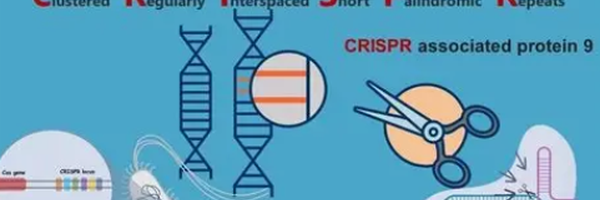
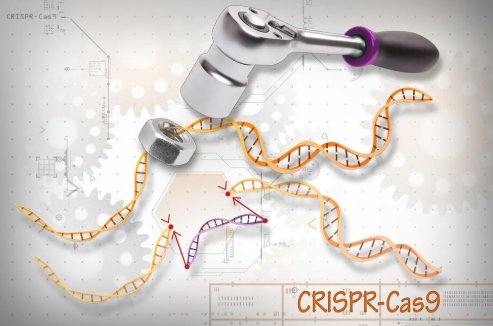
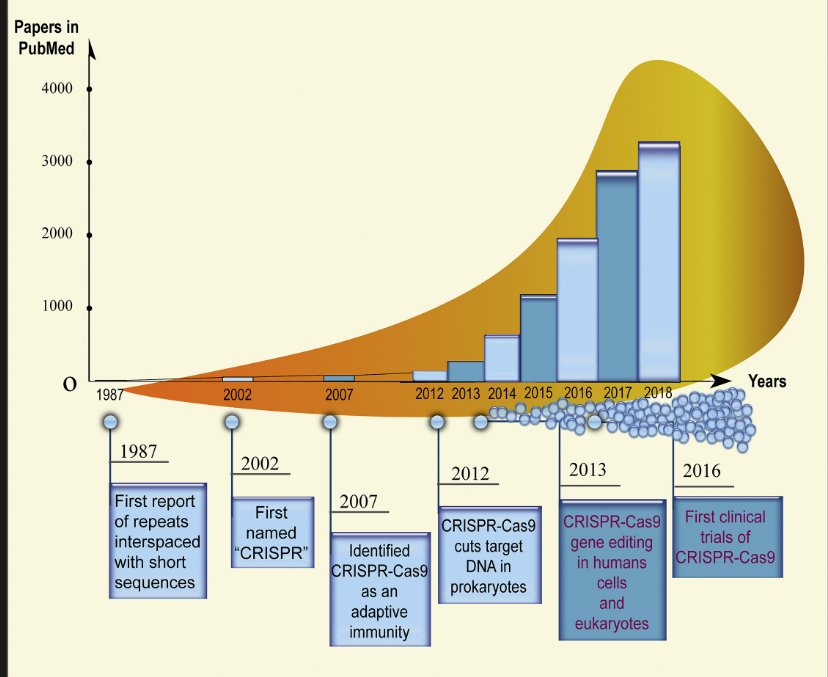
CRISPR is the short form of “Clustered Interspaced Short Palindromic Repeats”. Bio-engineer Stanley Qi , explains that the “CRISPR technology is actually just an immune system”. It is used by microorganisms to defend themselves from harming viruses and bacteria. To stop this from happening, the CRISPR technology detects and eliminates the bad cells and this stops any diseases from happening. When the bacterial cell is being infected by the virus cell, the “guide RNA” (is a pattern or sequence that helps CRISPR find the previous harmful virus).The next time this happens, CRISPR quickly can recognize the virus and completely destroy it before it continues to harm the body. Even though CRISPR is mostly being used on humans to edit genes, it could also be used into any living organism a scientist puts it into. This happens because every single living organism, whether plants , animals or humans uses similar basic DNA codes. CRISPR was first discovered in the 1980s, but it was recently that scientists discovered the true potential of CRISPR and how it affects us and the wildlife.
- What effect does CRISPR have on the early human cell(embryo)? Does it have a positive or negative effect? Is CRISPR a recommended action to do?
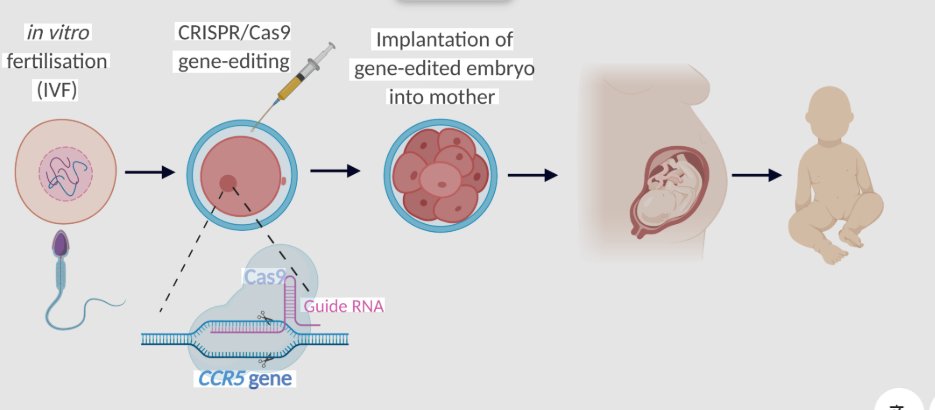
There is evidence for why CRISPR should not be used in babies; In the year 2018, in China, scientists experimented CRISPR on the embryo of newborn chinese babies. Even though this was successful, it raised questions whether it is safe and morally good for society.For some people, they like the idea of being able to take away hereditary diseases and traits meanwhile for some others , they find it uneasy to do so. There is also evidence that cells of preimplantation embryos find it extremely difficult to process and digest the CRISPR technology, leaving behind unresolvable damage and very severe damages for the embryo to process. They are worried that people might do this to physically enhance the physical features of the baby rather than taking out the hereditary diseases. Because of all the reasons listed above, it is safe to say that CRISPR is something that is not recommended for human embryos and is leaning towards the negative side effects of pursuing CRISPR. In conclusion, CRISPR is not a recommended action and should not be using it to edit genes.
- What effect does CRISPR have on the environment and on wildlife? Positive or negative impact?Is it recommended for crops?
CRISPR is not something that is only meant for humans , although it is mainly focused on humans it can also be used on other living organisms like plants and animals.This has raised many concerns between biologists, not just concerns it has about humans but also the concerns it has on the environment and wildlife. CRISPR is currently being used on human embryos and to produce human medicines . It is also being used on insects,animals , plants and other microorganisms and bacterias. CRISPR can be used to create muscle mass (basically muscle fat) in animals, providing farmed animals less harm to diseases and to improve and enhance the nutritional content and food provided, and create hornless cows that would be much easier for cattle farmers to manage. Another very dangerous application of CRISPR is to destroy diseases and this happens by destroying the chemical where you can get most diseases from(in nature).For example, the Aedes aegypti mosquito transfers the dengue fever to female mosquitoes or humans , they carry Plasmodium parasite.Using CRISPR, scientist are trying to make it possible for the female species of the mosquitoes to destroy the lacking of ability to carry the dengue disease. Others want to encourage sterility (can’t produce , doesn’t have the structure to produce) in male musquitos. They do this so they can prevent reproduction from happening or if they can still reproduce, limit the life span of their offspring.Doing this could end up in the whole species dying out since they can’t reproduce and this could affect the environment negatively. It is said in the article “No time to waste—the ethical challenges created by CRISPR”by The National Library of Medicine that “The introduction of a few edited mosquitos or animals is therefore unlikely to have much of an effect.”This is only for a short duration of time because over a couple or years or decades, it will make a large effect. For example; it will increasingly lower the dengue or malaria rates. This would create a major problem in the environment as it would potentially wipe out the entire species, eliminate food sources for many species like birds, frogs, tadpoles etc, and would have a rapid increase of invasive pests(increase in the insects that the mosquitoes eat).
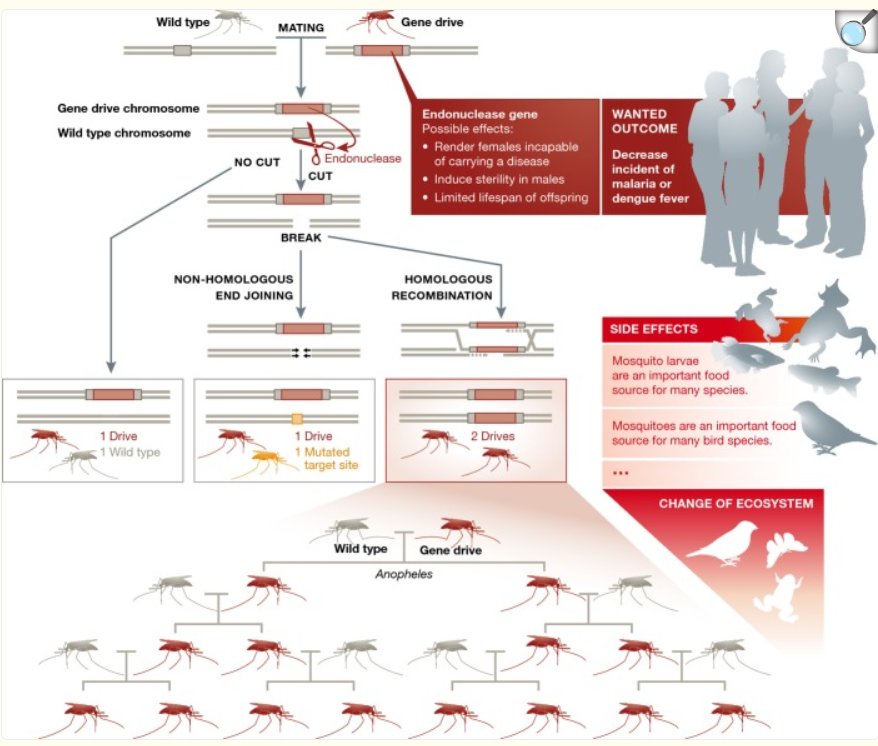 This is a diagram of the mosquitoes and how the CRISPR technology could affect the environment and wildlife.
As for plants, CRISPR can help create disease resistant plants,improve the quality of plants. It can help the plants be resistant during extreme weather conditions, like extreme cold or heat. It could significantly increase in traits like faster growth,higher reproductive success, etc. These healthy and more efficient plants can help in the overall sustainability in the food system. As you can see, this shows that CRISPR has both effects on the environment and it is important to see both sides of the problem before making a decision. Maybe in the future if CRISPR becomes more eco-friendly and less harsh on the environment and wildlife, it is something worth experimenting on. But as of now, CRISPR could have a large impact on the environment and it is better if we wait until it becomes more eco-friendly before we put it to use.
This is a diagram of the mosquitoes and how the CRISPR technology could affect the environment and wildlife.
As for plants, CRISPR can help create disease resistant plants,improve the quality of plants. It can help the plants be resistant during extreme weather conditions, like extreme cold or heat. It could significantly increase in traits like faster growth,higher reproductive success, etc. These healthy and more efficient plants can help in the overall sustainability in the food system. As you can see, this shows that CRISPR has both effects on the environment and it is important to see both sides of the problem before making a decision. Maybe in the future if CRISPR becomes more eco-friendly and less harsh on the environment and wildlife, it is something worth experimenting on. But as of now, CRISPR could have a large impact on the environment and it is better if we wait until it becomes more eco-friendly before we put it to use.
Additional Information about CRISPR:
-
How expensive is CRISPR? How much would you have to pay to get the job done? Is it affordable for ordinary people?
Before CRISPR was invented, we still had other ways to edit genes. But it was very expensive to go through the process. It used to be around 10,000 dollars just to edit genes. But with CRISPR, it only takes about 100 dollars at most to research genes. Knowing this information, it is safe to say that CRISPR is very affordable to ordinary people and literally anyone can go through the process to research about CRISPR. This is very different from undergoing the process of CRISPR.This is very expensive and it is priced 2.2 million dollars in a certified clinic to undergo the process. Seeking medical treatment using CRISPR is very expensive and is not something an ordinary person would do. This is something that millionaires and billionaires would rather do. So in conclusion, researching CRISPR is really cheap and affordable while actually undergoing CRISPR or seeking medical treatment is not affordable and very expensive.

-
Where are the CRISPR laboratories and when can you visit them?
There are many centres of CRISPR research around the world. Many of them are located in the United States. Each centre is for different purposes. For example, Cambridge, Massachusetts, purpose or specializes in CRISPR/Cas9. They focus on diseases and sickness with many unmet medical needs. Even though the CRISPR laboratories are generally not available for the public to view, there are many virtual tours you can watch to see how everything happens and how everything works. You can watch the following videos to see how CRISPR works and the laboratories. * https://www.jove.com/v/57350/enhanced-genome-editing-with-cas9-ribonucleoprotein-diverse-cells * https://youtu.be/F2pUjDT-fJQ?si=8PGpyWf-mR1ny7Ce * Why should CRISPR be researched more and taken more seriously?
Many scientists see CRISPR as a game changer , because it has the potential to help cure cancer. It can create a complex mouse model within months and it is really easy to scale up. It is also way cheaper than previous methods of gene editing. Since CRISPR has a lot of hope and potential to help cure cancer and find a treatment, it is very necessary for the research to go on so we can find a cure that is good to cure cancer.
Data
An example of how CRIPSR has helped people is that it increases the rate of survival in breast and ovarian cancer. CRISPR helped this by 80% and 30%. How CRISPR can help cure cancer?
- In an experiment for CRISPR in the UK, scientists have found out 300 cancer cells in the human body and using the advance technology of CRISPR, was able to remove all of the cancer cells in that human's body.
- Another example or experiment of this is; 3 patients, aged around 62-67 , all being who went under the treatment of chemo and had no other treatments left was given CRISPR- Cas9 , this at the end helped the person beat cancer and have a longer lifespan.
- 92% of people with TDT no longer relied on the treatment, some going to the extent of 3 years or more.
- With the help of CRISPR the other two patients had really big deductions in transfuction frequency ( about 80%- 96%)
- Around 94% of people are relieved from a sickness or disease called vaso-occlusive crises. The other patient was free from this disease becuase of CRISPR.
How CRISPR can further damage DNA:
- In 20 minutes, CRISPR research organizations and companies have lost more than 300 million dollars, this made the business to go downhill extremely fast.
- In PBS news , it states that " CRISPR Therapeutics ended down 8.6 %, Editas Medicine fell 7 %, and Intellia Therapeutics lost nearly 10 %" , this happened over the course of 20 minutes, isn't that just crazy!
- CRISPR gene editing fails about 15% of the time , this is quite bad considering that it messes up the DNA of the embryo.
- This happens mostly because of the stubborn binding of the Cas9 protein (in CRISPR) at the area being cut, this interferes with the DNA that needs to access the cut.
Conclusion
In conclusion and with all of the information gathered above, it is safe to say that CRISPR is generally not safe for both humans and the environment and wildlife. There are various reasons why CRISPR shouldn’t be used on humans and wildlife and some of the reasons include:
- CRISPR has off task targets, this can have a great impact on the embryo since it is doing stuff it is not supposed to be doing.
- Mosaicism is another problem, it can create something you don’t want to happen.This can create something very far from your imagination and can create something that you don't like.
- The body can see CRISPR as a harmful chemical and this can trigger the immune system.
- CRISPR can wipe out entire species if the technology didn't work on the species and they wouldn't be able to reproduce, resulting in wiping out the entire species.
- The wipe out of the entire species can eliminate food sources for many other different animals.
- This will increase the pest population of the species that just got wiped out making it harmful for other species.
Citations
Prillaman McKenzie , June 10th, 2024, Standford Report https://news.stanford.edu/stories/2024/06/stanford-explainer-crispr-gene-editing-and-beyond#what-CRISPR
Dance,Amber , 1.22.2024 , CRISPR gene editing:moving closer to home, knowablemagazine https://knowablemagazine.org/content/article/living-world/2024/crispr-gene-editing-therapy-systems-eukaryotic-cells
Nada Kubikova, D.Phil., David L. Keefe, M.D., Dagan Wells, Ph.D., Kutluk H. Oktay, M.D., Ph.D., Eve C. Feinberg, M.D., August 31,2023 , Fertility and Sterility Should we use CRISPR gene editing in human embryos? - Fertility and Sterility
Biology Insights, August 3, 2025 (no author provided) Ethical and Technical Problems With CRISPR Technology - Biology Insights
Terminix, January 10, 2025 (no author provided) https://www.terminix.com/mosquitoes/what-eats- mosquitoes/#:~:text=Birds%2C%20frogs%2C%20tadpoles%2C%20fish,mosquitoes%20in%20just%20one%20hour.
Caplan AL, Parent B, Shen M, Plunkett C. No time to waste--the ethical challenges created by CRISPR: CRISPR/Cas, being an efficient, simple, and cheap technology to edit the genome of any organism, raises many ethical and regulatory issues beyond the use to manipulate human germ line cells. EMBO Rep. 2015 Nov;16(11):1421-6. doi: 10.15252/embr.201541337. Epub 2015 Oct 8. PMID: 26450575; PMCID: PMC4641494. https://pmc.ncbi.nlm.nih.gov/articles/PMC4641494/#:~:text=Others%20aim%20to%20induce%20sterility,the%20proliferation%20of%20invasive%20pests.
By UC Davis Clear Center , June 27,2025 https://clear.ucdavis.edu/explainers/what-crispr-can-do-agriculture-and-livestock-production#:~:text=On%20the%20crop%20side%2C%20gene,Improved%20Yield%20and%20Quality
FounderCoHo, October 15th,2025 https://youtu.be/LPJc61wY2TQ?si=vlUzxFIxMdol6PXQ
Rueda J, de Miguel Beriain Í, Montoliu L. Affordable Pricing of CRISPR Treatments is a Pressing Ethical Imperative. CRISPR J. 2024 Oct;7(5):220-226. doi: 10.1089/crispr.2024.0042. Epub 2024 Oct 10. PMID: 39392045. https://crisprmedicinenews.com/press-release-service/card/crispr-cas9-market-opportunity-amp-clinical-trials-market-outlook-to-2029-focus-on-approved-crisp/#:~:text=Currently%2C%20the%20US%20dominates%20the%20CRISPR/Cas9%20sphere,correspondingly%20far%2Dsighted%20momentous%20evolution%20in%20this%20field.
Guru Singh, November 21,2025 , Scispot https://www.scispot.com/blog/top-15-crispr-companies-in-the-us#:~:text=CRISPR%20TherapeuticsCRISPR%20Therapeutics%2C%20headquartered%20in,among%20CRISPR%2DCas%20companies%E2%80%8B.
Innovative Genomics Institute- IGI , September 17, 2020 https://innovativegenomics.org/education/learn-with-us/crispr-field-trip/#:~:text=More%20Information-,Overview,the%20basics%20of%20editing%20DNA.
Made by NCI Staff , July 27,2020 , National Cancer Intitute https://www.cancer.gov/news-events/cancer-currents-blog/2020/crispr-cancer-research-treatment#:~:text=And%20gene%20editing%20with%20CRISPR,study%20of%20a%20gene%20therapy.
Creative Biogene (no author and date provided , just references for their article) CRISPR/Cas-mediated Genome Editing Service - Creative Biogene
Parse Biosciences ( no author or date provided, was used for an image) Technology - Evercode™ Combinatorial Barcoding - Parse Biosciences
Matej Mikulic , December 17,2025 , statista CRISPR genome editing - Statistics & Facts | Statista
Ernesto del Aguila III, National Human Genome Research Institute, July 27,2020 , article made by NCI staff https://www.cancer.gov/news-events/cancer-currents-blog/2020/crispr-cancer-research-treatment#:\~:text=And%20gene%20editing%20with%20CRISPR,study%20of%20a%20gene%20therapy
Kirsty Ferguson, March 4th, 2020 , EuroStem Cell https://www.eurostemcell.org/spotlight-first-gene-edited-babies
Wesley J.Smith, January 5, 2026 , Science and Culture https://scienceandculture.com/2026/01/how-far-will-experiments-on-the-unborn-go/
Ronald, P.C. & Kliegman M. (2022) CRISPR in Agriculture. In M.L. Hochstrasser et al. (Eds.) CRISPRpedia. Berkeley: Innovative Genomics Institute, University of California, Berkeley. Retrieved from: https://innovativegenomics.org/crisprpedia/crispr-in-agriculture/ (Last updated: September 12, 2022.)
Melody M. Bomgardner, June 12, 2017 , C&en https://cen.acs.org/articles/95/i24/CRISPR-new-toolbox-better-crops.html
By Sandy Sufian & Rosemarie Garland-Thomson, February 16, 2021 , Scientific American https://www.scientificamerican.com/article/the-dark-side-of-crispr/
April 22,2025 , Xe Consumer , (no author provided) https://www.xe.com/blog/personal-finance/dollar-sign/
Institutional Communication Service, 22 October 2025 (no author provided) https://www.usi.ch/en/feeds/33311
Laura Costantin, June 1, 2023 , Cancer World https://cancerworld.net/the-crispr-revolution-transforming-cancer-research-treatment/#:\~:text=Using%20CRISPR%20to%20treat%20cancer%20Will%20CRISPR,are%20currently%20at%20a%20very%20early%20stage.
By Hope Henderson, March 13, 2024 , Innovative Genomics https://innovativegenomics.org/news/crispr-clinical-trials-2024/#:\~:text=25%20of%2027%20individuals%20with,related%20to%20vaso%2Docclusive%20crises.
By Sharon Begley, STAT , July 18, 2018 3:36 PM EST, PBS News https://www.pbs.org/newshour/health/crispr-causes-significantly-greater-dna-damage-than-previously-thought-study-finds#:\~:text=Leading%20CRISPR%20companies%20scrambled%20to,Therapeutics%20lost%20nearly%2010%20percent.
Jacqueline Carey, July 10, 2018 , UIC Today https://today.uic.edu/biochemists-discover-cause-of-genome-editing-failures-with-hyped-crispr-system/#:\~:text=In%20a%20study%20published%20in,enzymes%20from%20accessing%20the%20cut.
Acknowledgement
I would like to acknowledge our science fair coordinators, Ms.Sucha and Ms.Gabrielson for guiding me throughout the project and giving us the supplies needed for the fair. I would like to acknowledge my parents and family for their support throughout the project and for their encouragement.