
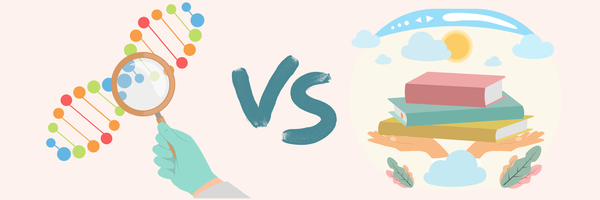
Nature vs. Nurture
Alex Ham-Franiel
St. Vincent De Paul Elementary Junior High School
Grade 8
Presentation
No video provided
Problem
How does Nature vs Nurture affect views on psychology in today’s society?
Introduction:
Nature vs nurture is a debate centered around children’s development. Some believe that our nature (being what is already inside us, like our genes, DNA, and other hereditary influences) is what makes us, us. Meanwhile, others think that our nurture (what we learn about as we grow, AKA our environmental influences) is more important to us. Scientists have studied this debate for hundreds of years, but which is really more important? Through studies, experiments, and more, scientists of today and past have chosen their opinions and found lots of information, and not just with humans. Animals, too, have nature and nurture, so is it different for them? My science fair project shows information about this debate, plus a scenario that occurred to me when I was younger, that relates to Nature vs. Nurture. Nature and nurture dates back to ancient times, with philosophers such as Plato and Aristotle. However, while they had unique foundational points to support the argument, scientists have found out a lot since then. Many pieces of ourselves come from nature or nurture, and possibly both. Learning about nature and nurture helps us understand ourselves, and where we come from. Animals, too, have their own side to this debate. While animals themselves do not wish to learn where their behaviours stem from, we do. So it’s not just us that we try to learn about. Birds, cows, dogs, and many other species have unique traits that scientists have studied. Nature comes from genetics. Often from our parents, who give us certain traits like our eye and hair colour. These traits that we inherit from our parents are called ‘hereditary genes’. A scientist decades ago named John Locke theorized the ‘Blank Slate’ theory, which relates to this. When it comes to animals, their nature can also be instinct. Of course, this counts with humans too, but it is seen often in animals. But our nature doesn’t work alone. Nurture is our environment, or the factors around us that help shape who we are. These influences come from what we learn, both from our parents and from school, as well as pieces of our culture. These nurture aspects come from the outside, instead of our genes inside us. But, in today’s society, a third aspect of this debate has made it to the surface. This is called Numerics and the Algorithm. In short, ‘numerics and the algorithm’ is the online society around us today, and it has risen in importance to development. This is because of the large amount of influence content creators have over our generation. There are many effects that this piece has on children, teens and adults, such as Grouplinks and Echo Chambers, two terms for issues caused by Numerics.
Method
Sources were mainly found online, with one exception being the book Atomic Habits. ChatGPT was used once on an above-level article, so I could understand the information.
Research
Personal Connections:
Cupcakes: My second personal connection relates to nurture. It shows how things that we are taught at a younger age stick with us, but not always in the way we would expect it to. When I was younger I would often have nightmares. After waking up from them I would run to my mom, and she would comfort me. But after she left my room again, I often began to go back to the topic of the nightmare. Thinking about this even after the nightmare was over kept me up for longer than it should have. My mom’s solution to this issue was telling me to think about cupcakes, since I’ve always loved to bake. She’d tell me to imagine creating my own flavours, and this helped me to sleep again. But how does that relate to now? Well, cupcakes have become a subject-changer for me. Whenever I’m beginning to think about something that either stresses me out, or just generally is something that I don’t want to be thinking about, I automatically move to cupcakes. In fact, originally the only personal connection that was supposed to be a part of his project was the previous one mentioned. But recently I’ve begun to notice that shift whenever I’m thinking about something I don’t want to. I say to myself ‘think about something else’ and the first thing that comes to mind is cupcakes. And only recently did I draw the conclusion that the cupcakes that I think of come from that. This means that the nurture I got from my mom when I had nightmares transferred to my way of changing the subject.
Numerics and the algorithm:
- Generally just manipulation by online factors
- Based on what we see/consume digitally and how it affects us
- Starts at a young age, even with just TV or educational videos
- Changes our perception of what is good based on trends set by influential persons
- Made to hold attention for as long as possible
- Echo chambers: the way the algorithm chooses content that agrees with our beliefs and pushes us to be more close-minded about opinion
- FOMO and GroupLinks: the fear of being excluded, making us want to fit into trends and pushing us all to be the same
- How GroupLinks and Echo Chambers work together through online trends:
- When a trend develops on some social media platform, Echo chambers push the content to us
- As it continues to shove us towards this new idea that was created, we are more inclined to not only remember the trend, but become more likely to participate in it or reference it to our friends
- Then, GroupLinks come into play as they show us that it is seen as ‘wrong’ to not want to follow these trends that everyone else does
- Exploiting those online is common with algorithms, especially to keep the users online on their platforms
- This affects us now in many different ways, such as with ‘gigs’
- These gigs are known as short jobs, or ones at a more casual level, and are hiring people from online sights
- They find people using the algorithm
- Some gigs include Instacart, Uber, and Lyft
- They are an issue because the listings are almost always vague and give away almost nothing about the issues with the job, such as the varying pay
- Also because this goes against many labour laws, for one, the ability to negotiate with some parts of their job
- Since these jobs do not have the labor laws able to protect them, there are multiple risks to having these jobs, like having pay stolen or decreased with no reason or being injured during work
- Many struggle to afford basic costs like rent and groceries
- Why does the pay change so easily? It’s because not everyone will need an Uber, for example, constantly. Maybe one hour a worker will make 30$, but won’t even make half that the next hour
- Exploitation - also used in these kinds of jobs
- Invisiblization - a term used as a description for how these workers are manipulated
- An example used for this is the Roman Empire, and how you miss the things going on behind the scenes, or the people who were forced to work
- How this connects to Nature vs nurture:
- As technology in the world gets more important to our lives, it shapes us differently. This is a new side of nurture that wasn’t a variable in the past, if left unknown, could change how future generations develop. This is seen already in children now.
Why this topic:
But why is nature vs nurture such an important debate? It’s been talked about for centuries, but is there a specific reason why? We know that our nature comes from our genetics and hereditary factors, and shapes things like our physical traits. Also that our nurture is our experiences, like schooling and what our parents teach us. And now there’s the third factor of numerics, which is important to us as well. Nature vs nurture provides a way for us to learn about ourselves in an organized fashion, making it easy for us to know what parts of us come from where. Learning about nature and nurture helps us in many ways, such as with our health, psychology, and children. One reason why nature vs nurture is important for us to research about is our health. When we learn about nature, for example, we can figure out how our genes help our immune system and can affect whether or not we develop diseases. Our nurture teaches us how our diet and environment can affect our health as well. Some of these things like eating healthy may seem like an easy thing to know, but we wouldn’t know it without the studies on how it affects us. Nature and nurture are important to learning about the causes and effects within our health and immune system. Another reason why nature vs nurture helps scientists is with psychology. Our genes and environment are behind everything that we do. The two work together to influence us, and it’s important to know that. Also knowing the psychology behind nature and nurture is helpful to doctors, when learning about different mental conditions. If people in these professions can learn why certain things happen within mental areas, they can diagnose conditions. Psychology research depends often on nature and nurture. Possibly the most important factor of why scientists research nature and nurture is because of children. With research on nature and nurture, we can find out how children develop. This is important to us because it shows who we are and why we are that specific way. Things like what our parents teach us is important to development and what we believe when we become teens, then adults. Childhood development is a very important piece of nature vs nurture. Nature vs nurture is a topic that has been researched on for many many years, and for good reason. This is because of its prominent benefits to health and wellness studies. But also because of its assistance in helping us figure out why we are the way we are. Nature vs nurture gives us a way to learn about our background and history, and where they come from. Everything in our lives comes from nature, nurture, or (usually) both.
History:
- Galen: a Greek philosopher that first made the theory that a person’s personality was linked to the balance of four different fluids in their body.
- Plato and Aristotle: While Plato indicated the idea of nature, being the genes that we have when we are born, is effective in development, Aristotle thought otherwise. He argued for nurture’s side, how it has a role in development also
- English Men of Science: Their Nature and Nurture: A book written by Francis Galton that stated that traits of personality and intelligence are because of our genes.
- John Locke: famous for ‘blank slate’ theory
- The idea that children’s minds are a ‘blank slate’ when they are born, and they will learn and develop these personality traits over time goes on
- Moving from the 1970-1990’s, opinion began to sway towards nature, as studies began to show its link to behaviour and personality traits
- 1990: known as decade of the brain as research and interest grew during the decade. Also in the 1990s, twin studies became popular as research related to nature vs. nurture. While most traits like appearance, anxiety symptoms, and intelligence were found to be mainly because of genetics, there was just short of a 50/50 even ratio explaining much of the mental ability.
- Now, it is difficult to argue specifically for one of the sides, as most studies and research show that nature and nurture often affect each other, and lots of times one argument can be overruled by an exception
- Ex. while height is mostly genetic, if a child is under a certain circumstance like not being fed an appropriate amount, then that can negatively affect height
- This is interactionist perspective
- The name for the debate ‘Nature vs Nurture’ comes from the 19th century, but many give credit to Greek philosophers such as Plato for the idea of the whole debate
- Behaviourism: the study of learning, usually to learn about our psychology
- Began in the 20th century
- Some who created this were John B. Watson and B.F. Skinner who thought that learning behavior came from practice and how we’ve been taught
- Behaviourism can be used to help mental
- Plato:
- Stood for both nature and nurture, but leaned towards nature
- Wrote many books with themes that went with nature vs nurture and hinted to how Plato believed that we have knowledge before we are born
- His ideals didn’t go with John Locke’s, or the ‘Blank Slate’ theory as instinct was included in his belief, how many things like love and other forms of emotions come from our instinct rather than being taught these things
- He didn’t often use ‘genetics’ to describe his view, but instead spoke about how our qualities are predetermined and not because of genes specifically
- Plato also thought that our environment is important to development, and he mostly thought of our education and parenting styles for this side of the argument
- Plato thought that personalities are created by three parts: rational soul (being intelligence), spiritual soul (emotion), and the appetival soul (desire). He says that reaching a point where all three are equal is called ‘eudaimonia’, which is true happiness
Data
Nature supports:
- The ‘nature’ side of the debate is the piece that determines parts of our personalities and how we develop through our genes
- Some things already determined by nature are eye and hair colours, features and some parts of our personality
- Nature is determined by genes, many of which are inherited by one or both or our parents
- Caspi’s research:
- Genes effect on depression
- Mixture of genetics and life events
- Diasis-stress theory - the idea that some kinds of genes can make one more likely for their stress to lead to depression.
- 5-HTT = the control gene for serotonin in the brain
- Short and long versions of 5-HTT exist
- Test on 847 26 year olds split into groups with the gene in these combos (short, short) (short, long) and (long, long)
- They checked on past stressful events, prior/current depression, and compared the gene to each factor
- Results: people with short alleles (genes) and those with difficult childhoods had higher risk of depression
- Long alleles had less symptoms
- One allele from each parent
- Mental disorders can be caused by chemical imbalance in the brain, or be affected by genetics
- Height is mainly based on genetics, with the exception of the chance of being malnourished or in a less healthier environment
- Other physical traits based on genetics are the colour of skin, eyes, and hair
- One reason twins are used in studies in nature vs nurture is because they share either 50 or 100% of their genetics, meaning that estimates on gene ‘heritability’ can be created based on what is found
- Allergies and asthma:
- Asthma is shown to be hereditary, with around 70% of those with asthma having received it from their parents.
- Hygiene hypothesis: In more advanced countries, humans have become more likely to develop allergies as their cells can become more reactive to less harmful things (ex pollen). The cells that don’t get access to common germs can make mistakes on what to fight against as the common germs are not necessarily part of our environment.
- Genetics is not the only factor that could make you susceptible to allergies
- Specific genes and how they are made up with different variations can increase your risk of having allergies
- However, it does not guarantee it. Many times, exposure to the allergen can make it more likely to develop the allergy as the immune system may mistake the allergen to be harmful and remember it the next time contact may be made with it.
- Gender of babies:
- Mukherjee’s hierarchy states that nature acts alone in the determining of which gender a baby shall be
- It is determined by how chromosomes are made up
- Another thing Mukherjee argues in the debate is that questioning if nature or nurture is more prominent than the other, it will depend on the question/study/etc
- Eyesight: There are many eyesight conditions that come from birth/genetics, such as nearsightedness and farsightedness, which both develop because of genes
- Skin health: Those who develop less wrinkles and creases in skin can be called super agers, and have some genes that don’t slow as much as others as they get older. Some of these genes include the ones that produce collagen for us. However, it can be influenced by environmental changes. This includes lacking to wear sunscreen, lots of stress, and more.
- Left-Handed vs. Right-Handed:
- Originally, handedness was thought to be because of only one single gene
- Now we know that many come into play
- Dominant hands typically reveal in young children and usually stay that same hand
- It is thought that the determining of your dominant hand comes from your brain
- Left-right asymmetry: the left and right sides of the body (left and right hemispheres are for your brain
- Tastebuds:
- Different nutrients in food (ex. Proteins and sugars)
- Aromas - compounds found by mouth and nose which determine food’s flavour (not taste)
- Taste is how the food is on your tongue, while flavour is because of mouth and nose
- The sensory piece is important because it is different for every person
- Children usually prefer sweet and salty tastes to others, but they grow to enjoy more as they get older
- Bacteria in saliva have enzymes that can draw aromas, particularly in cauliflower. If more sulfur aromas are created then the child will likely not like cauliflower
- 32-54% of food taste is based on genetics
- Culture and environment also play a role in our taste as it can change what we are exposed to
- Often whether we like a food comes from modelling, or when a parent or role model is eating the food in front of us, which can create a negative or positive association
- A current study:
- Being done by Park
- Surveying 1,669 Australian twins that have been split into two groups, either fraternal or identical
- Called the TWIN-E study
- Finding biological factors that may affect brain health
- A study by Bouchard in 1994 shows that identical twins that were raised separately tend to have much in common with each other, that speaks to the nature side of the debate
- A study done in Norway showed that ADHD is mainly passed down through many generations, yet is possibly influenced by lack of addressing symptoms in early childhood/in the home. However, those that address the sign and symptoms can also possibly reduce the likeliness of the ADHD going to future generations
- Knowing ourselves:
- Many say that knowing who we are is an important part of nature
- This means our qualities that we are just good at, meaning naturally able to do these things
- These skills are big pieces of us
- Some describe finding these things by what or how we are truly
- For example, lots of people will act differently around friends or people they want to impress, but these natural skills and qualities come easily and without us having to do them purposefully
- This means that these qualities can also be personality
- A NYT author Gretchen Rubin: “Self-awareness is a key to self-mastery”
- Nature often works with nurture
- An example can be seen with animals, or specifically dogs
- They have many instincts (as all animals do, including humans), but the instincts can only go so far
- Then the nurture comes in with training
- Mendel’s Peas:
- Gregor Mendel was a Biologist who many people call the ‘Father of genetics’
- He conducted a study to find out how genes and certain traits got passed down, while others did not
- Using pea plants, Mendel could grow many at a time and at a faster rate than with using humans
- He studied the plants by looking at many different traits, like height and colour of the flower
- He found that there were two kinds of gene, dominant and recessive
- The dominant gene often overshadowed the recessive gene, meaning that if two plants bred together with one being tall and one being short, the tall gene was dominant and therefore made the ‘children’ pea plants tall as well, even though they had a short parent
- The ratio was roughly 3:1, meaning that they would have 1 short pea plant for every 3 tall plants
- Colour Blindness:
- Light comes to our eyes from wavelengths, entering to the wavelength sensitive part of the eye called cones
- They come in short, medium, and long wavelengths in the colours blue, green and red
- Colour Blindness is caused when our eye cones don’t work properly
- Some things that increase the chance of colour blindness are if some family members have it, some diseases, and even gender (males more commonly have colour blindness)
- Colour blindness is a bit of a blanket term for the disease, as genuine colour blindness is not being able to distinguish any colour. Colour Vision Deficiency is a better term for the common type of colour blindness
- The most common colour blindness is the issue of seeing red and green, as well as trouble with blues and yellows.
- Interests:
- Twin studies are typically used to determine whether interests come from nature or nurture
- If a set of identical twins raised in the same environment have the same interests, then that speaks to nature being the cause. So, if they have no difference in their environment (but of course share the same genetics) then the deciding factor for their potential shared interests comes from their genes
- Scientists have found about 50% of interests come from our genes
- While we do not have specific genes that determine interests, we do have ones that count for traits like problem solving skill
- Identical twins share 100% genetic variation, while fraternal twins only share 50%
- Something in a lot of studies, theories and examples of nature vs. nurture is the amount of exceptions that they possess. Typically, one of these categories would be for or against one side of the debate, but something would make their findings somewhat inaccurate. Scientists seem to be a bit unsure of just which side is more correct
- Epigenetics: Changes in our genes that are not caused by DNA (instead by our environment)
- Nature: Our genetics. The way we are prior to anything we are taught.
- Flexibility:
- While things like training/practice and stretching are important to flexibility, there are a lot of genetic influences as well
- Genes, for one, play a large role in flexibility. The flexibility gene called COL5A1 has two variants: T alleles and C alleles (similar to the 5-HTT gene)
- Those with the T alleles tend to face more muscle tension than those with the C alleles.
- Collagen: some researchers credit how collagen is composed in our tissue with a part in determining flexibility
- How your body is made up with your joints and muscles also adds to flexibility
- Also other natural factors such as age and gender
- A condition called EDS or Ehlers-Danlos Syndrome gives looser joints that makes people more flexible than others are
- IQ:
- Has some hereditary influences (usually from our parents)
- Also has genetic factors, although scientists have trouble figuring out which genes do a lot of the work, so many genes have been determined to influence our IQ in smaller ways
- Nancy Segal: a scientist from California who works on twin studies
- When working with both identical and fraternal twins, Nancy Segal says the ratio of affect from nature and nurture is specific to the topic
- From many of the twin studies done where they are raised apart from each other, an average ratio of 75% nature influence and 25% nurture influence was decided
- Immune system:
- Even if two people face the same sickness (COVID was the example in an article that I read) they will have different symptoms
- This is because of the genes in our immune system
- Some are hereditary genes, but others are affected by our experiences (this means that some are genes we have from our birth, while other parts actually come from our experiences. AKA our genes have a type of ‘record’ for our experiences)
- We have specialized cells that work for more than just our immune system, but those that do work for it come from genetics and from our environment
Nurture supports:
- Social learning theory - people learn habits and personality based on watching others
- Mental disorders can also be because of the environment around someone - if they were a part of some sort of stressful or traumatic event it can lead to PTSD
- Being pitch perfect is likely because of a certain gene, but studies show that having the gene is not enough compared to also having musical knowledge
- It is likely that mental health is more influenced by factors in a child’s environment
- Often things like physical traits or genetics are taken into account for things like athletics and musical giftedness, but many times the time taken by the person - ex. Practicing - isn’t as often. If a musician has talent that runs through their family, but they never practice, they won't necessarily be gifted. On the other hand, maybe they have a genetic issue in their family - with dexterity for example - but if they practice near constant, then they will probably be more likely to be more talented than the other
- Sleep and dreaming:
- while dreams do depend on the person - ex. Severity and type of dreams - there can be some traces of meaning. For example, while many tell family members that things like nightmares or insomnia are things that have been inherited, they can be more attributed to things like anxiety rather than genes.
- However, there were some genetics found that linked to the type of dreams had, meaning that nurture only contributes to the quality of sleep
- One the other hand, our previous experiences and memories can affect our dreams
- In a study done, a link was found between genes and night mares - in both children and parents - however it did not include past experiences of the children and adults, meaning they weren’t able to take that into account
- Nightmares are also a common effect of disorders like PTSD and anxiety
- Sleepwalking can be caused by a certain chromosome, one that either you have or you do not
- Epigenetics: how certain genetic factors can be changed by emotional/environmental pieces
- Music taste:
- Many think that music taste is developed by a person through their upbringing, mainly with cultural influences
- However, some scientists believe that a person’s response to music and sound is based on genetics
- Through studies, the idea of genetics playing a role in music taste has been almost completely proven wrong
- A study was done by a scientist named Josh McDermott and his team where they tested different chords and sounds on three different groups of people to see whether they thought the sounds were nice or not. The first group was of an indigenous group called the Tsimane’, which had different exposure to music (little of western music and much of their own unique music) then the other two groups of people. The other two were Bolivian, with plenty of exposure to western music. Results of the test were that the Bolivian groups with more exposure to western music showed more preference to sounds than the Tsimane, who had little preference between. Josh McDermott: “This pretty convincingly rules out that the preferences are things we’re born with,”
- Another study was done by neuroscientist Robert Zatorre, who thinks that cultural exposure is less important. He showed this by referencing macaque monkeys, which of course are without musical culture, but still have neurons in their brain that will respond differently to different sounds. But, he still says that culture can still be influential to a person’s preference of sound
- Eyesight: Some eye conditions come from our environment and develop because of changes, like nearsightedness, which can be caused by straining your eyes, particularly by looking at a tablet or computer screen, or even reading. This was common most specifically during COVID-19, because children were doing more work with these items than usual. Astigmatism can also be caused by the environment, usually because of an injury to the eye.
- Bone health: A study was done by Rachel Taylor on tennis players’ bone health, specifically in their arms and humerus. X-rays were taken to show the density of their bones in the arm they hold their racket with as well as the other one. In their humerus, the density was higher with their playing hand. This shows that while bone health can be attributed to our genetics, it is also greatly impacted by our health and how we use our bodies and our bones
- Cows:
- A study was done called the Beef Science Cluster study
- Tested cattle by changing how much food they were intaking during female’s pregnancy to see how it would affect their calves
- In the beginning of the study, females were either given as much food as they wished or limited for 100 days
- Around a month before giving birth, 11 of the cows were killed
- The scientists collected the fetus and placenta, then measured the genetic makeup within
- The cows that had been limited on their food weighed around 140 lbs less than the other cows did
- The fetuses of the cows who were fed more had less activity of a gene called IGF2 (Insulin-like Growth Factor), which helps with cellular growth before being born. This means that some tissues in the calves were slightly different in their development than other calves would be. The decrease in activity within the calves tissue means that some of the tissue may develop differently
- A thing to note is that the calves looked and weighed the same as others, so the change was small
- Birds:
- A main question that comes up when studying birds and their flight is whether or not teaching is necessary. This is because some scientists question if birds truly need to learn to fly or if their nature can be enough on its own
- A scientist named T. C. Schneirla had the idea that flight in birds could be grouped into 2 categories, one being maturation and the other being experience
- Maturation: he describes this as muscle and tissue growth (nature)
- Experience: is described as ‘developmental stimulation’
- Schneirla also divides experience into learning and practice
- Learning: Schneirla describes learning as an ‘irreversible processing change’ caused by stimuli
- Practicing: described as repeated motions used for developing behaviour
- Some more modern theories that come from Schneirla’s think that genetic behaviour/makeup also plays a key role in bird flight
- Meaning that when looking at a specific bird, it is important to decide if maturation or experience is more important
- While fight or flight is a genetic response that we have to stress, scientists have discovered a method for us to adapt to these stressors in modern society. It can be done by ‘retraining’ ourselves so that our responses to stress meet the demands we face more effectively. This is something done by athletes so they can perform better
- What this training does is keeps the general response of the fight or flight (which is the focus and awareness), but allows our bodies to keep fairly calm
- How this relates to nature vs. nurture: Even though the fight or flight response is a genetic piece of us, we can train it to meet the needs of our environment
- Favourite colours:
- Colours are processed in the limbic system, which is where all our emotions and memories are
- Favourite colours are often associated with something in a fond emotion or a memory, even if we don’t realize that is why we like that colour
- The Flynn effect states that the reason IQ scores have increased over the years is because of environmental changes
- Nature in our nurture:
- With things like fashion styles, physical nature plays a role
- When saying ‘physical nature’ it means nature around us (ex trees, mountains, animals, other living organisms) rather than our genetic nature
- Many cultures rely on these natural things for clothing
- An important part of nurture:
- A lot of studies use experiences and education for the main parts of nurture, but culture is also very important to the argument
- A lot of things related to the culture part of nurture have something to do with our preferences or interests
- Dogs:
- A study called the Dog Aging Project looked at dogs in the US
- The dogs were separated based on where they lived (Southern, Northeastern, and Western)
- The study was conducted to see how the dogs’ health may be different based on their environment
- Southern dogs had the most average skin conditions, and scientists believe that is probably because of the longer summery season, meaning more pests like ticks
- On average, Northeastern dogs were found to have more diseases and infections
- And Western dogs were found to have the highest amount of oral problems
- Interests:
- The nurture of our interests again comes from environment
- For example, if family members have a lot of interest in music and it is often heard by a child, they are more likely to have an inclination towards music also
- Curiosity is a big piece of forming our interests, so schools often try to open up a child’s creativity so that they can have their own interests
- Atomic Habits:
- In chapter 3 of Atomic Habits, James Clear states that there are three steps to our habits, being cue, craving, response, and reward
- Cue: when our brains think of a possible reward or outcome
- Craving: the motivation that runs behind habits
- Response: what we choose to do
- Reward: the goal or outcome of the new habit
- How does this connect to nurture? When we receive the reward of something, it becomes associated with the craving. This is a form of nurture in how we learn to associate one item with an outcome
- For example: (coming from Atomic Habits) a cue may be hearing a notification on your phone, then the craving may be to open the message to see what it is, then a response could be to actually open your phone, rewarding you with satisfying the craving. This associates your phone getting a notification with you grabbing your phone.
- Nurture: Developmental changes based on our environment, the way we’ve been taught.
- Psychoanalysis: A theory considering that childhood/other experiences and your subconscious thoughts both can influence your personality.
- Anger issues:
- While a lot of potential for angry outbursts comes from our genes, like a lot of our personality, it also comes from our environment
- How our DNA attributes to us growing angry: When we get mad, our heart rate speeds up and our blood pressure rises, and receptors in our brains are turned on. This comes from our genes.
- However, our parents and teachers (mainly anyone who was around us in childhood that helps with our development) also contribute. For example, if a parent is prone to anger, it will not only show us that anger as a response to situations is the norm, but also it can add to their reaction ability and excitability.
- ‘Thin-skinned’ and ‘thick-skinned’ are terms used in a Psychology Today article to refer to how reactive a person may be.
- This means that ‘thick-skinned’ works for those who are less reactive, and the opposite for ‘thin-skinned’ people.
- IQ:
- While a lot of our intelligence is genetic or hereditary, there are some influences from our environment
- A common example of the nurture behind our IQ is our education. Our schooling is, of course, very important to our IQ
- Other examples include the child’s diet and upbringing
- Family also can have an affect on our intelligence
- This is how even those going to the same school have different IQ, they learn the same things at school, but other factors like the ones above (being family and diet mainly) also affect their IQ
Key terms/vocabulary:
- Nature - our DNA and what we inherit
- Nurture - how we are affected by our environment
- Genes - Information within us the determines certain factors (relates to nature)
- Hereditary - an inheritable trait
- Allele - a gene
- Epigenetics - the studying of organisms development with their genes
- Blank Slate - a theory by John Locke stating that children’s minds are filled with only their experiences as they go through life (a strictly nurture-supporting theory)
- Fraternal twins - a pair of twins that share only 50% DNA
- Identical twins - twins who look alike and share 100% DNA
- Psychology - the study of the brain/mind
- Psychoanalysis - the study of the conscious and unconscious mind to determine the cause and effect of mental disorders
Conclusion
Conclusion: Nature vs nurture is important to scientists for many reasons. It shows us who we are and why. Nature tells us how we are similar to our parents and each other. Our genes and instincts are important to who we are. Animals have a lot of nature that is similar to us. They have instincts just like us (although now ours are different from theirs), and of course they have genes and DNA like any living thing. Nurture shows who we become based on our environment, meaning that even siblings end up different. This happens because we all have different experiences than one another. Nurture also comes from school. It is based mainly on what we learn as we grow. And, of course, we now have numerics and Algorithms. This shapes us in a way connected to nurture, but in a completely different point of view. With the rise of technology, we see things begin to change with how children are raised. This results in numerics and the Algorithm. There is plenty of research and information about nature and nurture. Even still, people tend to believe that only one is truly the most important for development. But as many studies show, nature and nurture affect each other. You almost never will have one without the other. Scientists from way back in the 15th century attempted to argue for one over the other as many still do nowadays, but there is too much support to say anything other than they work side by side. Scientists and philosophers over the years have had many different views on nature vs nurture. John Locke was famous for his Blank Slate theory, while Plato believed that all the traits we had came from genetics. Many theories have come from this debate, and more still come. Now, scientists complete studies to find out the nature and nurture or certain traits, in humans and animals. Both humans and animals have nature and nurture, and they are similar in many ways. They have instincts, just like humans do, but theirs are needed for survival, while ours aren’t used for that as much anymore. Animals are also not affected by numerics and the algorithm, which sets them apart from our nurture. An important part of nature and nurture is twins. The studies on twins are important because twins share either 50% (fraternal twins) or 100% (identical twins) of their genes. This makes them great for studies on nature and nurture because they show how our environment can shape us differently even if our genes are the same as a sibling. Nature and nurture work together to help us develop from childhood to adulthood. Nature gives us the foundations, our genes. Nurture gives us experience. They work side by side to bring us to who we are, from our personal style to our hobbies. This debate has brought research from many centuries, and still continues today as scientists keep learning about it. Especially considering the new piece of our nurture, there is much to learn about ourselves. And scientists continue to do that. Nature and nurture aren’t much different. They work as one to make us ourselves. Nurture supports what is already there (nature) by teaching us many things about our culture and multiple other things that are important to us.
Citations
https://www.verywellmind.com/what-is-nature-versus-nurture-2795392#toc-the-debate-of-nature-vs-nurture https://www.simplypsychology.org/naturevsnurture.html https://www.tutor2u.net/psychology/reference/caspi-2003?srsltid=AfmBOorV_xbG1zkpkctSRR0jd4RX3y5sJx2Ue7HIe2OIttqXOtH3wMTA https://academic.oup.com/exposome/article/2/1/osac005/6653302 Assistance from chatgpt (to understand information) https://embryo.asu.edu/pages/sources-human-psychological-differences-minnesota-study-twins-reared-apart-1990-thomas-j https://resources.corwin.com/sites/default/files/handout_18.1.pdf https://www.psychologytoday.com/ca/blog/abcs-of-child-psychiatry/201710/nature-versus-nurture-where-we-are-now https://psychcentral.com/health/nature-versus-nurture https://medium.com/zenneatech/the-ways-we-dream-nature-vs-nurture-ba64065a40a2 https://www.voxmentalhealth.com/blogs/beyond-nature-and-nurture-how-algorithms-reshape-socialization-and-mental-health https://mswjake.substack.com/p/nature-vs-nurture-vs-numerics https://www.clrn.org/what-does-nature-vs-nurture-mean-in-psychology/ https://www.sciencedirect.com/science/article/abs/pii/S0952791503001547 https://scienceofbiogenetics.com/articles/is-there-a-genetic-connection-with-allergies-understanding-the-role-of-genetics-in-allergic-reactions https://med.stanford.edu/stanmed/2017spring/sex-gender-nature-and-nurture-stanford-school-of-medicine-dean-lloyd-minor https://www.lasikmd.com/blog/is-eyesight-influenced-by-nature-or-nurture https://sites.nd.edu/biomechanics-in-the-wild/2023/10/30/nature-vs-nurture-who-is-responsible-for-bone-shape/ https://www.elanskinandlaser.com/nature-vs-nurture-how-genetics-impact-your-skin/ https://www.canadiancattlemen.ca/research/nature-vs-nurture-in-animal-performance/ https://royalsocietypublishing.org/rspb/article/287/1929/20200668/85629/The-development-of-flight-behaviours-in-birdsBird https://www.psychologytoday.com/us/blog/path-optimal-living/201508/evolutionary-mismatch https://medlineplus.gov/genetics/understanding/traits/handedness/ https://www.sciencenewstoday.org/what-your-favorite-color-says-about-your-subconscious https://theconversation.com/taste-depends-on-nature-and-nurture-here-are-7-ways-you-can-learn-to-enjoy-foods-you-dont-like-215999 https://www.zimbardo.com/nature-nurture-controversy-psychology-definition-history-examples/ https://www.zimbardo.com/behaviorism-psychology-definition-history-examples/ https://wisdomshort.com/philosophers/plato/on-nature-vs-nurture https://www.hrw.org/report/2025/05/12/the-gig-trap/algorithmic-wage-and-labor-exploitation-in-platform-work-in-the-us https://znetwork.org/znetarticle/algorithmic-exploitation/ https://www.psychologytoday.com/us/blog/best-practices-in-health/202403/decoding-nature-and-nurture-insights-from-twin-studies https://16styletypes.com/where-style-really-comes-from/ https://sartorialmagazine.com/fashion-1/2025/7/21/the-lasting-influence-of-natural-forms-in-fashion https://www.amcny.org/blog/2025/07/23/nature-vs-nurture-how-genetics-and-environment-shape-our-pets/ http://www.actforlibraries.org/animal-behavior-differences-in-nature-and-nurture/ https://bio.libretexts.org/Bookshelves/Genetics/Classical_Genetics_(Khan_Academy)/01%3A_Introduction_to_heredity/1.04%3A_Mendel_and_his_peas https://www.mayoclinic.org/diseases-conditions/color-blindness/symptoms-causes/syc-20354988 https://biologyinsights.com/are-interests-genetic-the-science-of-nature-vs-nurture/ Atomic Habits by James Clear https://www.psychologytoday.com/us/blog/overcoming-destructive-anger/201810/anger-issues-nature-vs-nurture-why-does-it-matter https://cyvigor.com/article/is-muscle-flexibility-genetic https://www.sciencetimes.com/articles/46856/20231102/nature-vs-nurture-genes-environment-shape-iq.htm https://www.salk.edu/news-release/how-do-nature-and-nurture-shape-our-immune-cells/
Acknowledgement
Those who helped my during my project:
- my mom\, for giving me support and my second personal connection story - Ms. Ruzycki for giving me the opportunity to be in the science fair