

the wonders of phobias
Azariya Meghani, Brooklyn Pastuszak
Branton School
Grade 6
Presentation
No video provided
Problem
Anxiety *and phobias are closely linked, as phobias are actually a specific type of anxiety disorder.They differ primarily in on focus and intensity. Anxiety is generally defined as a diffuse and future-oriented state of intense worry or stress that can be triggered by vague situations or a general sense of dread. In contrast phobia is an irrational, excessive, and persistent fear directed toward a specific object, animal, or situation (like spiders, flying, heights) that usually poses little to no actual danger. While anxiety can be chronic and generalized, phobias are highly focused, often leading to extreme avoidance behaviours that can cause significant dysfunction in daily life. Where as anxiety may manifest as a general, lingering, and non-specific feeling of unease. Ultimately, while phobias do not exist without the emotion of anxiety, anxiety can exist without a specific **phobias. *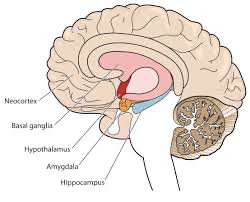
Method
Me and my partner will be conducting a research project on phobias so we'll do research on our topic. As you know in the basic project info we will break the project into different parts then research them. We will probably use both books, videos and research on a computer then write our citations down and hypothesis then make a conclusion. Our method is to go step by step first using books then videos w'll probably use a ven diagram in what's the difference between phobias and anxiety.
Research
introduction of phobias .phobias typically begins in early childhood , often with normal childhood fears ,of creatures like spiders,snakes,dogs/cats, or heights developing into persistent, irrational anxieties by adulthood, though they can emerge at any age. A significant portion start by the age of 7 or 8 years. With many originating from traumatic events like drowning. Phobias can also be caused by learned behaviours (like seeing a fearful action or thoughts of imagination). Althought phobias can fade its sometimes hard to get rid of them completely without treatment such as therapy. With that said its not impossible but most phobias, including animal phobias typically stay till you are an adult or even last decades after that!
what are phobias A phobia is being super scared of something, so an extreme fear. Having a phobia can mean going out of the way just to avoid an objets, animal, person or situation, they may also constantly think of the worst case scenario if they ever encountering their phobia. But there is a difference between a common fear and a phobias. Phobias can affect your day to day life, and you might not want to go out of a space you feel safe in just because you fear of encountering your phobias vs common fears you might go out of your safe space even though there still could be a chance of you still seeing or encountering your fear. So phobias are constantly having anxiety or stress over something that can make us have strong discomfort and for our body to react in a way that can makes us feel scared or unsafe.
what's the difference between anxiety and phobias. hyphosis
Brooklyn:Well I think that phobias is when you can't stand something at all due to the fact that you are extremely scared or disturbed by something vs anxiety is where you imagine an event that you don't like. I also think that anxiety is also apart of phobias because anxiety is where you imagine events that you fear of and phobias can also be where you imagine events of you you encountering your phobia for example a dog.
Azariya: I think that anxiety and phobias are closely linked, often overlapping, mental health concepts, with phobias functioning as a specific, extreme sub-type of anxiety disorder. The primary difference lies in the specificity and intensity of the trigger: anxiety is generally a broad, anticipatory, or chronic state of worry about future, often unknown, threats, while a phobia is an intense, irrational, and immediate fear reaction to a specific object or situation.
what's the difference between anxiety and phobias ( ven diagram )
Differences:
Anxiety*:Anxiety is where your brain makes up un wanted situations that hove not yet occur, so not yet present. It dose not protect us from present situations but, in-stead it prepares us for future situations, and that can sometimes be good. If it gets to a certain degree where it is too much it can have down sides like making us feel scared if it dose happens or making us feel constantly un-safe or in danger. The thing that gives you anxiety can be avoided due to the fact that you know what event that you do not want to occur and the objets to avoid.*
vs
Phobias*:Phobias is when you see something that you are extremely scared of, so it makes us scared of the things we can see in the current moment. Phobias is much like fear but a extreme case of it and will do anything to avoid it.If the situation is in the current moment there no way to avoid it because its happening in the moment.*
What's the same?
They have quit a bit in common, like anxiety can eventually turn into a phobia if the person encounters the objets they fear of. Anxiety is a common part of phobias because when someone has a phobia they may make up unrealistic situations or constantly think of the worst case scenario. These feelings are caused by the limbic system in the brain who process fear and other emotions! They are practically both a fear of an event or object just ether in the present or future.
What part of the brain is in charge of anxiety and phobias/how phobias and anxiety happen.
The parts of the brain that are in charge of phobias and anxiety is the same parts of the brain which is in charge of processing emotions and danger. The parts of the brain in charge of processing emotions and protecting us from danger is called the amygdala a very small part of the temporal lobe in the brain. There is also another part which is called the lambic system who is in charge of behavioural , emotional responses , express and how to control them. The amygdala is located in the limbic system as well as the hypothalamus who makes automatic responses like increasing heart rate and breathing, that helps us to react to dangerous situations. There are also two other parts called hippocampus and thalamus and when those all combined with the amygdala and the hypothalamus it causes emotional responses which can lead to phobias/anxiety.
What part of the brain shuts down when our anxiety spikes?
The main part of the brain that shuts down when our anxiety spikes is the prefrontal cortex which is in charge of logical thinking. In cases when your brain thinks that you are in danger the lambic system tacks control and you start to lose your logical thinking, which can mean you might not rethink the situation before you act (the fight or flight response).When the anxiety hits it causes you to over react the situation and then your survival instincts start to come in which can mean fighting, running away or freezing in place.
Why do we have phobias /why are they important?
We have phobias for a reason! The main reason why we have phobias is because the body thinks you're in danger. Automatically the brain try's to protect you from the danger and by doing so it causes fear which can lead to a phobia especially if it was a traumatic event. Whether the event was imagined or real, its an important and necessary response from your brain to tell you that something is off and to be carful.
Symptoms for anxiety and phobias:
The symptoms varies for each and every individual (some might be intense or some will be mild) but here are the most common symptoms...
- Felling uncomfortable and scared.
- Feel the need to escape because you are in danger.
- increasing heart rate and breathing.
- Feeling hot or cold.
- Sweating
- Upset stomach
- tightness or pain
- Feeling dizzy or fainting
- blurry vision
- shaking of the hands.
- Having trouble sleeping.
How to cope/ treatment for Anxiety and phobias?
Anxiety: There are many ways to cope or treat anxiety but the type of treatment depends on its severity. If it is fairly low you can do talk therapy or just talking to someone and for some people that can help them over come their anxiety. There are also cases where its pretty severe which could mean stronger treatment like specific therapy such as CBT (cognitive behavioural therapy). CBT is a form of more intense therapy for your mental health and can help with more then anxiety, it can help with depression, eating disorders and stress . CBT therapy has proven its self to be highly affective for most individual and can help improve your quality of life!
Phobias: There are lots of therapy options for phobias such as exposure therapy which is where the therapist introduces your phobia to you step by step in a safe and caring environment ensuring you feel safe and comfortable. There is also common talk therapy too! Although sometimes they might just want to talk someone they trust and that can work great too.
(BUT REMEMBER: ONLY DO WHAT YOU FEEL COMFORTABLE WITH)
Are phobias and anxiety common?
Anxiety disorders and phobias are incredibly common, representing the most prevalent type of mental health condition worldwide. Globally, an estimated 4.4% to over 30% of the population experiences an anxiety disorder at some point in their lives, with approximately 359 million people affected in 2021. Specific phobias, which are intense, irrational fears of particular objects or situations (such as heights, spiders, or flying), affect up to 12.5% of adults, making them one of the most common mental health issues. While these conditions often develop during childhood or adolescence—with the average age of onset for specific phobias being around 7 years old—they can affect individuals of all ages and backgrounds, with a higher prevalence generally reported in women. These conditions are characterized by excessive, uncontrollable fear or worry that often leads to significant, limiting avoidance behaviors, such as avoiding social situations, public transport, or specific objects. Despite their high prevalence and potential to severely interfere with daily life, work, and relationships, only about 1 in 4 people with anxiety disorders receive treatment.
Fun facts:
-Did you know there are more then 400 phobias!
-Did you know that there is a phobia of being scared pretty woman (Caligynephobia) and a phobia of developing a phobia (phobophobia)!
- Woman are more likely to develop anxiety and phobias then men!
(But remember phobia and anxiety are all common! And if your are looking for help to deal with anxiety and phobias its always a good idea to talk to someone you trust and feel safe with!)
Data
Phobias are intense, irrational, and disproportionate fears of specific objects or situations (e.g., spiders, heights, flying). They affect approximately 19 million American adults, with a very lifetime common rate worldwide. These disorders, often starting in childhood or adolescence, affect women more than men.
- How common it is: Specific phobias affect roughly 7.7% to 12.5% of the population in their lifetime.
- who is more likely to get it: Women are more likely than men to experience specific phobias.
- When it begins: Phobias often begin in childhood or early adolescence ( 7–20 years old).
- Common Phobias: The most common specific phobias include animal fears (zoo phobia), heights (acrophobia), and flying.
- Impact: They are often chronic(lasting a long time), lasting for years or decades, and can frequently occur with other mental health disorders.
- Physical Symptoms: Reactions include rapid heartbeat or breathing, sweating, nausea, and, in severe cases, panic attacks!
Anxiety disorders are one of the world's most common mental disorders, affecting approximately 359 million people (roughly 4.5% of the global population) in 2021.It with began to become more common increasing to 18% since the 1990's. Women are twice as likely as men to experience anxiety, with it peaking among young adults an kids.
- How common it is: In 2021, almost over 359 million people globally lived with anxiety disorders. In the U.S.A, about 19.0% of adults have an anxiety disorder annually, and around 31.0% experience one in their lifetime.
- who is more likely to get it: Women are more affected, with a roughly 2/1 ratio compared to men. it is highest among young adults (20–24 years) but is also common with children.
- How it increases: Rates have increased over the last 30-40 years, with significant spikes observed during the COVID-19 pandemic. In Canada, generalized anxiety disorder doubled from 2.6% to 5.2% between 2012 and 2022.
- Impact: Anxiety has impacts but it depends on what you are anxious about if its something you encounter every day that might affect your emotional status, and thats when it a good idea to get treatment.
- Treatment: Despite how common it is, only about a few people with anxiety disorders receive treatment like therapy.
- Types: Specific phobia like social anxiety is one of the most common, but there are many more that are also very common.
- **Assessment :**You don't necessarily have to get a test just to see if you have a phobia or if you have anxiety disorder. Many people often see signs and emotional responses that get triggered by something. That could just mean you have phobias or if you have anxiety disorders. There are many places where you can get tested (if you want, that's only if you are comfortable).

Conclusion
What's the difference between anxiety and phobias
In conclusion: They are very similar due to the fact that anxiety is a part of phobias them self by making unpleasant situations. Anxiety is in the future vs phobias is in the present moment, both anxiety and phobias are very common in children and adults. They are mainly caused by the limbic system who takes control of you emotions which can causes anxiety and eventually they could develop into phobias if the person meets their fear.
So the final conclusion is that Anxiety is just a part of phobias!
Citations
-Cleveland clinic:Anxiety disorders, cause, symptoms, treatment and types -Cleveland clinic:phobias what are they, causes, symptoms and treatment - Canadian Mental Health Association: Phobias and Panic Disorders - American psychiatric association\, what are anxiety disorders - Cleveland Clinic\, Amygdala: What it Controls - Cleveland Clinic\, The Limbic System - Discover your Path LLC: The Neuroscience Behind Anxiety: Why Logical Thinking Takes a Back Seat - UAB The science of fear: What happens in the brain when frightened - Queensland Brain Institute: The limbic system - Jonh Hopkins Medicine: What is a phobia?- World Health Organization\photo - Aruma: Surprising facts about phobias - Clinical Practice Guideline for the Treatment of Posttraumatic Stress Disorder: What is Cognitive Behavioral Therapy? - Deconstructing Stigma: From Worry to Panic: Making Sense of Anxiety\, Fears\, and Phobias - ABC News: What Is The Difference Between Anxiety And Phobia? -Verywell mind:the psychology of fear -Paul Ekman group:Fear -World health organization:Anxiety disorders - national library of medicine:Phobia-specific patterns of cognitive emotion regulation strategies -Posttraumatic stress disorder: What is Cognitive Behavioral Therapy? -Osmosis from Elsevier, phobias - specific phobias, agoraphobia, and social phobia -Medical centric podcast:Phobia, causes, signs and symptoms, Diagnosis and treatment -Dr.Courtney tracy:What are phobias?(And how to overcome our fears) |The truth doctor -Kati Morton:What are phobias and why do we have them? -Neuro sign: The centre of fear, in our brain explained - animated neuroscience -The science of the BRAIN by:Richard and Louise Spilsbury -Live science, what is the Amygdala\photo -Freepik,Data science\photo
Acknowledgement
ME AND MY PARTNER ACKNOWLEDGE THE FOLLOWING:
Ms.Naomi Cohen for giving us extra time at lunch meeting to work on our projects and willing to do the science fair for our school! OUR PARENTS/GUARDIANS who let us do the science fair and support us for doing it!Also for encouraging us to restart our citations because at the last minute we lost all our citation!(we did get them all back) AZARIYA my lovely partner who helped me so much throughout the project! BROOKLYN my amazing partner who helped me a lot with this project! CYSF for giving children the opportunity to explore science and to give them the chance to participate in this wonderful science fair!