
Impacts of Cannabis Consumption on Humans Mental and Physical Health
Aleena Shariff
Balmoral School
Grade 9
Presentation
Problem
In 2018, cannabis was legalized in Canada, but a 2024 survey found that only 71% of Canadians know that daily/almost daily cannabis use increases the risk of mental health problems (Canada, 2024). In 2024, Canada's population was 41.29 million. This means that 11,974,100 people were not aware of the effects that cannabis has on a person's mental health. Consuming cannabis can have major negative effects on the brain and body (e.g. memory, learning, attention), especially if you are under the age of 18 (Cannabis and Public Health, 2024).
In 2021, Canadians aged 15 and older made up 22% of the people consuming cannabis (Government of Canada, 2023). In a 2017 survey, approximately 19% of students in grades 7-12 reported that they consumed cannabis in the last 12 months. A later survey after legalization in Canada (2019) showed that approximately 22% of students in grades 7-12 consumed cannabis in the last year (Phea, 2020). A study made in 2025 displayed a 26% increase in the overall prevalence of cannabis in adolescents. The number of adolescents consuming edibles increased by 43%. Along with this, youth under 18 had a 34% increase in cannabis smoking and a 28% rise in the co-use of alcohol and cannabis (Staff, 2025). This shows an increase in cannabis consumption in youth under 18, which can be detrimental to their health. The Ontario Student Drug Use and Health Survey showed that the percentage of students in grades 9-12 who use cannabis daily has doubled since legalization (from 1% to 2%) (Phea, 2020).
This project aims to investigate the health effects associated with cannabis consumption. This is because many people in Canada are not aware of the negative effects cannabis use can pose on a person's health. Many often believe that youth under 18 do not consume cannabis, which is inaccurate. Consumption of cannabis in youth under 18 can cause more health effects than in adults. All ages need to understand how cannabis consumption affects their health, especially because it is currently easily accessible and common in Canada.
Question: How does cannabis consumption affect a person's mental and physical health?
Method
To find the information for my project, I constructed questions for each section. I entered these questions on the search engine Google. Google provided their AI Overview, which I used to find resources/links to articles for information. This helped me increase my efficiency while still finding reliable sources. Using several links, I found sources and implemented them in to my project. To find data in my project, I used Google images, which helped find reliable sources containing graphs relevant to my project.
The method I used to find studies on the effects of cannabis on animals differs from the rest of my project. The section "Effects on Animals" is split into two parts: before legalization and after legalization. These parts helped me construct 1 question/statement for each of them to search on Google. I would choose the first two studies and use them as part of my research project because of the varied number of articles online. The selection process involved ensuring that the article was about rats and/or mice and was within the required time period. The question/statement for the part before legalization was: studies on rats or mice for the effects of cannabis before the legalization of cannabis in Canada. The search results only provided one relevant study about the effects of cannabis on rats and/or mice before legalization in Canada. The question/statement for the part after legalization was: the effects of cannabis on rats or mice after the legalization of cannabis in Canada. There were many studies regarding this issue compared to the section regarding studies before legalization.
Research
Thesis:
The consumption of cannabis in humans will cause a decline in a person's mental and physical health because of the negative effects cannabis has on the human body.
Types of Cannabis Consumption:
There are multiple ways to consume cannabis, some more harmful than others. Inhaling cannabis is where humans consume cannabis by smoking or vaping. This is one of the most common forms of utilizing cannabis, but one of the most harmful. Smoking cannabis is extremely harmful to the body, especially when smoking burnt cannabis, which can lead to respiratory problems, potentially leading to lung cancer. It is recommended that cannabis be consumed in another way. Ingestion is another common form of consuming cannabis. This involves eating or drinking cannabis products and is said not to harm a human's lung health. However, it takes longer for the psychoactive ingredients to commence. This may result in a person consuming more cannabis because of the delayed onset (Canada, 2020), which leads to the increased frequency and intensity of cannabis use. Consuming cannabis daily or almost-daily increases the risk of long-term health problems, which may be more severe (Cleveland Clinic, 2025).
There are two main classifications regarding the frequency of cannabis consumption. High-risk cannabis consumption is defined as frequently or intensively consuming cannabis (e.g. consuming cannabis daily or near-daily). High-risk cannabis consumption can also involve consuming high THC-content (Lower risk cannabis use, 2017). Low-risk cannabis consumption is when a person utilizes cannabis occasionally, which may mean using cannabis one day per week or only on weekends (Fischer et al., 2017).
Cannabis Use Disorder:
Cannabis use disorder (CUD) is a serious mental health condition where a person is addicted to using cannabis. This disorder most frequently arises if a person is consuming cannabis at a high risk. Cannabis use disorder can cause health and social problems, and it is a type of substance use disorder. Cannabis use disorder is relatively common, with an estimated 5.8% of people 12 years and older experiencing this disorder in the past 12 months.
This substance use disorder is not the most severe form of a cannabis disorder. Marijuana addiction is a more severe disorder where the reward system, the mesolimbic system (Lewis et al., 2021), in a human's brain takes over and intensifies compulsive marijuana seeking.
There are multiple symptoms of cannabis use disorder, ranging from having a strong desire to use cannabis to developing tolerance to cannabis and wanting more. Other symptoms are confusion, memory issues, difficulty learning, delusions, withdrawal from family and friends, sudden changes in mood and behaviour, etc.
The progression to cannabis use disorder often follows this order:
1. Experimental use
2. Occasional use
3. Heavy use
4. Substance use disorder (Cannabis use disorder)
This progression is complex and can have many contributing factors. THC (Tetrahydrocannabinol) and its effects on the human brain are one of them. Humans produce a chemical called dopamine when they do something pleasurable. Cannabis sends massive surges of dopamine through the brain, which does not lead to feelings of motivation; instead, it damages people's thoughts, feelings and behaviours. These massive surges of dopamine can cause humans to crave the pleasure of cannabis and less healthy experiences. Another contributing factor is genetics. Studies have shown that a person is 40%-60% more vulnerable to a substance use disorder, in this case, cannabis use disorder, if an individual has a first-degree relative with a substance use disorder. Mental health conditions are an additional factor. Approximately half of the people with mental health conditions experience a substance use disorder, and vice versa. Additionally, access and exposure are contributing factors (e.g. the use of cannabis in a household, by peers, and having a medical marijuana certificate). A factor, specifically in Canada, is the legalization of cannabis, creating availability and convenience.
Specific factors that can contribute to increasing the risk of a cannabis use disorder are: age, the potency of marijuana, the frequency of use, and depression. Along with this, sex (gender) and other substance use disorders are risk factors.
There are many complications which can occur when consuming cannabis. Some physical complications are: cannabis-induced psychosis, cannabis-induced anxiety disorder, and cannabis-induced sleep disorder. Cannabis hyperemesis syndrome, chronic bronchitis, and fertility issues are also some complications.
There are many ways to combat cannabis use disorder. Two of the main ways are: detoxification and/or cognitive and behavioural therapies. Detoxification is when a person stops using cannabis so that it can leave their body. Currently, scientists are studying medication for this form of cannabis use disorder treatment. Cognitive and behavioural therapies, also known as psychotherapy, are talking therapies which can help people learn coping mechanisms and treat cannabis use disorder, as well as other mental health disorders. There are many examples of these therapies, and some effective ones for adults are: cognitive behavioural therapy (CBT), dialectical behaviour therapy (DBT), assertive community treatment (ACT), therapeutic communities (TCs), and contingency management (CM). Self-help programs can also play a major role in the treatment of cannabis use disorder (Cannabis use disorder, 2025).
Cannabis In Adolescents:
Cannabis can have many harmful effects on adolescents. The human brain develops until around the age of 25. Using cannabis as an adolescent or young adult may be detrimental to the developing brain. The negative effects that come alongside cannabis consumption in teens include: difficulty thinking and problem-solving, problems with memory and learning, reduced coordination, difficulty maintaining attention, and problems with school and social life. Other negative effects are increased aggression, risky sexual behaviours, impaired driving, mental health problems, and an increased risk of psychosis (Aacap, 2023). Some harmful effects of cannabis consumption in adolescents are the same as in adults.
Cannabis consumption in teens can negatively affect their mental health. Cannabis is connected to mental health issues like depression and anxiety. People who utilize cannabis are more likely to experience temporary psychosis as well as long-lasting mental disorders (e.g. schizophrenia). The relation between cannabis and schizophrenia is stronger in people who start consuming cannabis at a young age and/or use cannabis more frequently.
Adolescents (youth under 18) who use cannabis are 4-7 times more prone to developing cannabis use disorder than adults. Certain factors that may increase the risk of adolescents developing cannabis use disorder are: parental substance use, poor school performance, antisocial and oppositional behaviours, alcohol and/or nicotine use, and childhood sexual abuse. Adolescents who experience cannabis use disorder are more likely to undergo complications like severe cannabis use disorder (marijuana addiction), altered brain development, cognitive impairment, poor educational outcomes, increased likelihood of dropping out of school, and a lower IQ (Cannabis use disorder, 2025).
Mental Health Effects:
If a person consumes cannabis with a high THC content (products with 10 mg or 10% THC), they are at a higher risk of experiencing mental health problems. The frequency, age, ways of consuming cannabis, combining cannabis with other substances (e.g., alcohol), and/or having a history of mental health disorders in the family are all factors that can affect a person's mental health (Health Canada, 2025).
High-risk cannabis consumption (daily or near daily use) can increase symptoms of anxiety and depression. Consuming cannabis daily or near-daily for a long period of time can negatively impact the brain's dopamine system. Ultimately, it can make you feel fatigued, low in mood, and unmotivated instead of feeling pleasure and joy. Becoming dependent on cannabis and having trouble regulating emotions can also occur if a human consumes cannabis frequently.
Cannabis consumption can lead to cannabis dependence. Some symptoms of cannabis dependence are: craving cannabis, ruminating about cannabis, finding it hard to quit or reduce use, and feeling the need to use cannabis. An increased tolerance of cannabis and feeling increasingly restless, moody, or anxious when not using cannabis are also symptoms.
Psychosis and schizophrenia may occur, in severe cases, when consuming cannabis daily or near-daily. Acquiring these diseases occurs most often when someone has a personal or family history of mental health disorders, specifically in male teenagers and adults. Psychosis is a temporary mental state which can involve extreme paranoia and hearing or seeing things which are not real. Schizophrenia is a long-term mental health disorder that includes symptoms like paranoia, hallucinations, disordered thinking, speech, and behaviour.
Frequent cannabis usage can harm short and long-term memory, as well as thought patterns, focus and speech. Having trouble remembering what you just said, thinking unusual or abnormal thoughts, becoming distracted or having trouble concentrating, and having trouble forming sentences or experiencing delayed speech are all changes of brain function. These effects of cannabis consumption can be frustrating or distressing. This is especially true if they affect a person's self-image, performance at work or school, or relationships with family and friends (Canada, 2025).
Driving while being impaired by a substance (impaired driving) is extremely dangerous and illegal. Cannabis impairs multiple skills required for safe driving (e.g. reaction time, coordination, and concentration) (CDC, 2024).
Physical Health Effects:
Short-term cannabis use can have many effects on the human body. It can increase heart rate and blood pressure, make eyes bloodshot (as the vessels expand), cause dizziness, headaches, and vomiting, and affect a person's ability to drive or operate equipment.
Frequent and long-term cannabis use can cause harm to the lungs if inhaled (e.g. smoking or vaping), similar to tobacco inhalation. It can also cause chronic bronchitis, wheezing, and phlegm, and trigger severe nausea and repeated vomiting (Cannabis Hyperemesis Syndrome). Frequent and long-term cannabis consumption can also increase the risk of heart attack and stroke, and the risk of testicular cancer. Testicular cancer can lead to a low sperm count and infertility (Alberta Health Services).
Overall, cannabis consumption can cause cardiovascular problems like heart attacks or strokes. Inhaling cannabis smoke is harmful and aggravates previous respiratory diseases. It can also promote disease onset, like coughing, wheezing, or excessive mucus production. Frequent, long-term cannabis consumption can also lead to a specific testicular cancer. Other health problems which occur due to cannabis consumption are gastrointestinal or oral health issues (Gouvernement du Québec).
Cannabis vaping can also increase the risk of developing acute lung disease. This can occur because the cannabidiol (CBD) found in cannabis damages lung tissue, promotes inflammation, increases oxidative stress in the lungs, and damages lung cells. Exposure to CBD also kills neutrophils, which help protect the lungs from bacteria, viruses, and fungi. CBD is toxic to small airway epithelial cells and decreases the integrity of the lung epithelial barrier. Cannabidiol inhalation leads to a significantly lower number of pulmonary interstitial macrophages, which help reduce inflammation and protect against infection (Bhat et al., 2023).
Effects In Animals:
Laboratory rats and mice share similar anatomy and physiology to humans, making them ideal test subjects for studies which can help advance science (Bryda, 2013).
Before Legalization:
Before the legalization of cannabis in Canada, there were not many studies about the impacts of cannabis on animals, specifically on rats and/or mice.
A study conducted in 2016 showed that tetrahydrocannabinol (THC) made rats lazy. THC is the main psychoactive ingredient in marijuana, which made rats less willing to try a "cognitively demanding task." In this study, scientists trained 29 rats for a behaviour experiment where they would have to choose between an easy or difficult challenge to earn sugary treats. Normally, the rats would prefer the harder challenge for a bigger reward. However, when they were given THC, the rats wanted to perform the easy challenge even though they would receive a smaller reward. This study helped prompt more research to fully understand what THC does to the human brain to alter decision-making (DMCBH, 2021).
After Legalization:
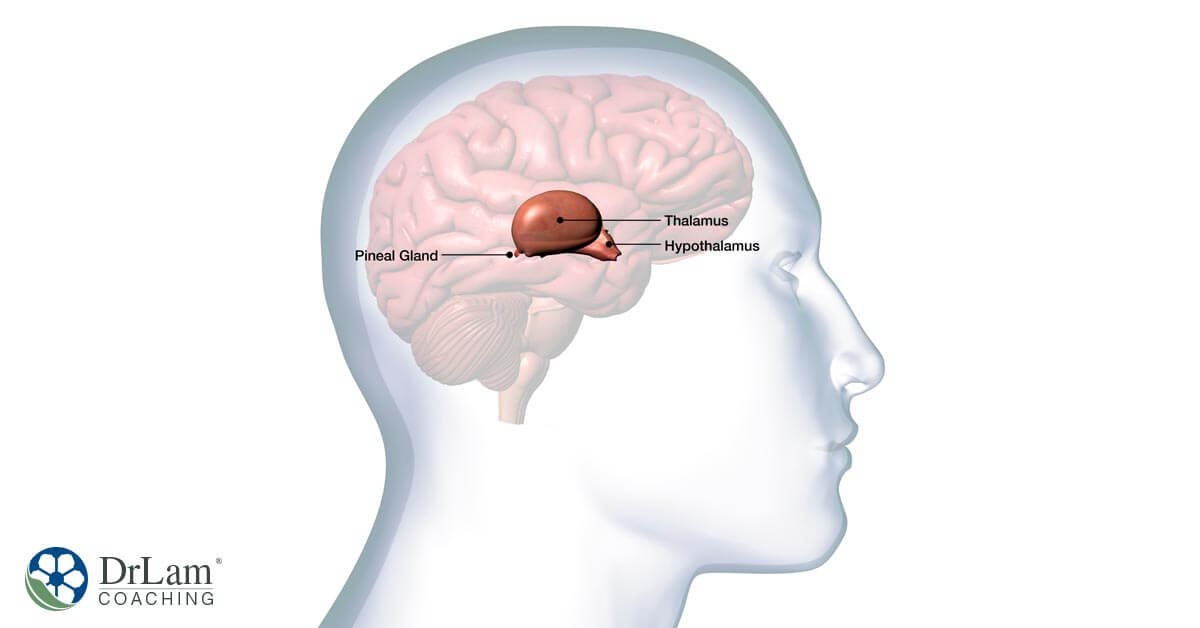
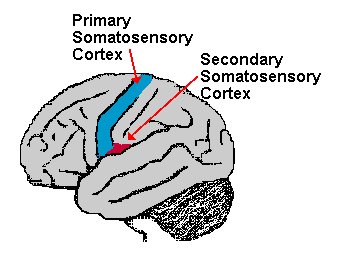
A study conducted in 2023 showed that vapourized cannabis negatively affected laboratory rats. The results of the experiment showed that vaporized cannabis altered neural activity. Specifically in the paraventricular nucleus of the hypothalamus, the paraventricular thalamic nucleus, and the primary somatosensory cortex. Along with this, cannabis impaired the memory of the laboratory rats. The results from the experiment displayed that acute cannabis vapour impairs memory based on the dose (Chladny, 2023).
 Another study conducted in 2023 showed that THC exposure in rats induced long-lasting alterations in cognitive and motivational processes that regulate the pursuit of rewards, depending on their age. Repeated exposure to a moderate dose of THC can create long-term motivational and cognitive effects in male rats. This is especially true when the exposure occurs during adulthood (Halbout et al., 2023).
Data
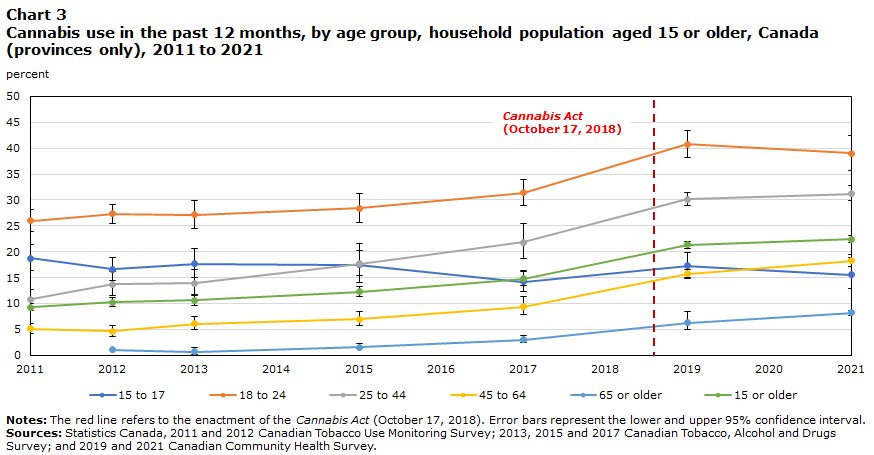 The age group with the largest increase in cannabis consumption in this graph are 18-24 year olds. This may be because of the Cannabis Act, which legalized Cannabis in Canada. Consuming cannabis at that age can be extremely detrimental because a person's brain doesn't develop till 25. The brain is fully developed at around a person's 30's.
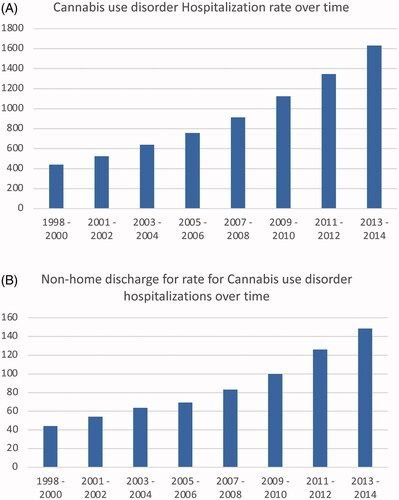 This shows the rates of cannabis use disorder increasing based on hospitalizations. The graph shows how cannabis consumption has become a rising issue since before legalization and is influencing society.
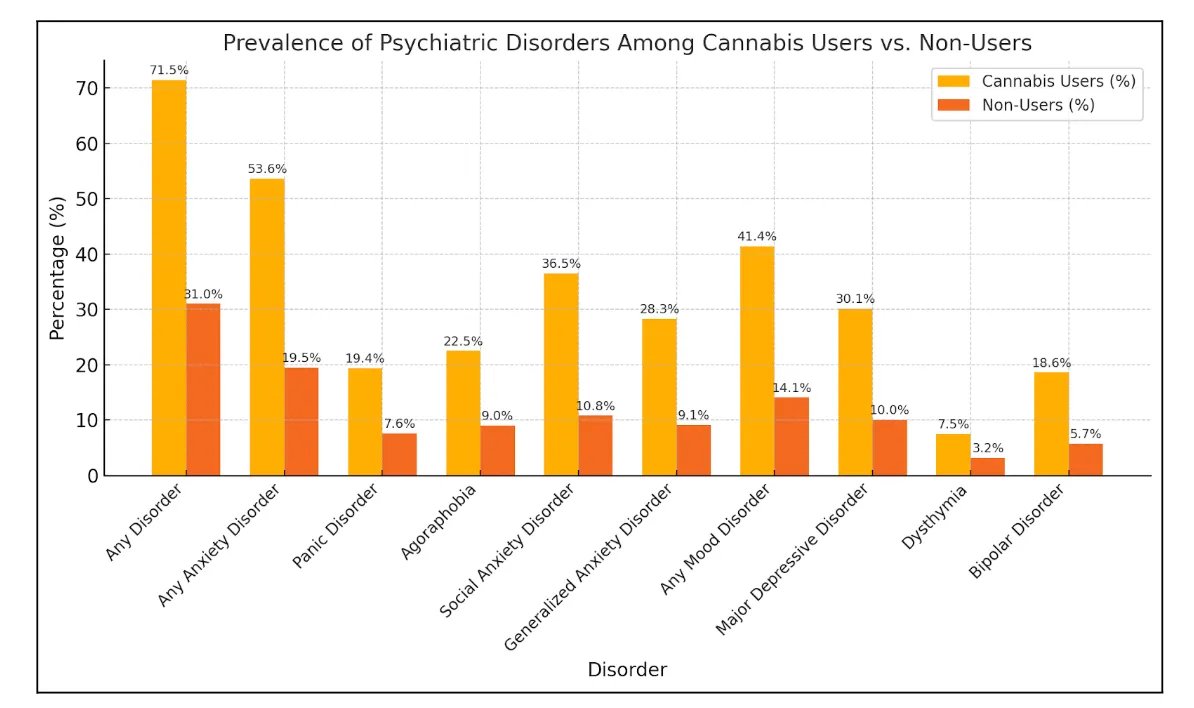 This graph displays that people who consume cannabis experience more disorders than people who do not consume cannabis. This data further aids the research on mental health issues correlating to cannabis consumption.
Conclusion
Conclusion
Cannabis consumption in humans causes harm to their mental and physical health, supporting my thesis. The frequency and potency of cannabis affect the impact it can have on a person (e.g. high-risk vs. low-risk). High-risk cannabis consumption can cause more severe issues. Psychosis, schizophrenia, anxiety, and depression are only a few. While consuming cannabis at a high risk can be detrimental, low-risk cannabis consumption also has negative effects. Ultimately, high and low-risk cannabis consumption can cause mental and physical health effects. This project accurately displayed the correlation between cannabis consumption and the deterioration of human health.
Excessive cannabis use can lead to addiction, called cannabis use disorder. This substance use disorder is relatively common but not the worst form. Marijuana addiction is more harmful than cannabis use disorder and affects the mesolimbic system. The progression to cannabis use disorder is complex, as are the complications. However, there are treatments currently being developed and used to combat this disorder.
Before the legalization of cannabis in Canada, few studies were conducted regarding this issue. One study revealed that cannabis made rats less willing to try a "cognitively demanding task." After legalization, more studies were conducted. The results illustrated that cannabis altered neural activity, impaired memory, and could create long-term motivational and cognitive effects on rats. This poses the question of why cannabis was legalized in Canada.
What's Next
The connection between cannabis consumption and degenerating human health prompts new questions regarding this issue. One major question which arises is why cannabis was legalized in Canada, especially if it has major negative impacts on humankind. To take this project further, I could investigate the process the Government of Canada used to legalize cannabis. This can provide information on the reason for certain restrictions regarding cannabis (e.g. age) and if more or fewer restrictions need to be implemented or changed.
Proving my conclusion to be accurate with an experiment may be considered unethical, especially if tested on humans or animals. Instead, another research project could be constructed and then taken further if the results are accurate and logical. In this project, I could explore how cannabis is used to treat various medical conditions. Understanding the chemical composition of cannabis can aid in comprehending how cannabis can treat these disorders. Conducting this research could also display other diseases which can be treated with cannabis.
If more diseases can be treated with cannabis, this can lead to breakthroughs in medicine. Experiments can be conducted with the hypothetical cannabis treatment. If proven successful, cannabis treatment could potentially improve and/or save people's lives. This could help individuals and society at large. It could also create more studies which can further society's knowledge and understanding of this topic.
Citations
Aacap. (2023, September). Marijuana and Teens. Marijuana and teens. https://www.aacap.org/AACAP/Families_and_Youth/Facts_for_Families/FFF-Guide/Marijuana-and-Teens-106.aspx
Alberta Health Services. (n.d.). Cannabis health effects. https://www.albertahealthservices.ca/dsa/Page17996.aspx
Bhat, T., Kalathil, S., Goniewicz, M., & Hutson, A. (2023, February 27). Vaping CBD causes more severe lung damage than vaping nicotine, Roswell Park Study Shows. Roswell Park Comprehensive Cancer Center. https://www.roswellpark.org/newsroom/202302-vaping-cbd-causes-more-severe-lung-damage-vaping-nicotine-roswell-park-study-shows
Bryda, E. C. (2013). The mighty mouse: The impact of rodents on advances in biomedical research. Missouri medicine. https://pmc.ncbi.nlm.nih.gov/articles/PMC3987984/
Canada, H. (2020, January 22). Government of Canada. Canada.ca. https://www.canada.ca/en/health-canada/services/drugs-medication/cannabis/resources/lower-risk-cannabis-use-guidelines.html
Canada, H. (2021, March 11). Government of Canada. Canada.ca. https://www.canada.ca/en/services/health/campaigns/cannabis/health-effects.html
Canada, H. (2024, December 24). Government of Canada. Canada.ca. https://www.canada.ca/en/health-canada/services/drugs-medication/cannabis/research-data/canadian-cannabis-survey-2024-summary.html
Canada, H. (2025, October 27). Government of Canada. Canada.ca. https://www.canada.ca/en/health-canada/services/drugs-medication/cannabis/health-effects/mental-health.html
Cannabis and Public Health. (2024, February 15). Cannabis and brain health. Centers for Disease Control and Prevention. https://www.cdc.gov/cannabis/health-effects/brain-health.html
CDC. (2024, February 15). Cannabis and teens. Centers for Disease Control and Prevention. https://www.cdc.gov/cannabis/health-effects/cannabis-and-teens.html
Chladny, M. (2023). Vapourized Cannabis Extract Administration Impairs Memory and Alters Neural Activity in Laboratory Rats. Wilfrid Laurier University Scholars Commons @ Laurier. https://scholars.wlu.ca/cgi/viewcontent.cgi?article=3682&context=etd
Cleveland Clinic. (2025, December 22). Marijuana. Cleveland Clinic. https://my.clevelandclinic.org/health/articles/4392-marijuana-cannabis
Cleveland Clinic. (2025, November 11). Cannabis use disorder. Cleveland Clinic. https://my.clevelandclinic.org/health/diseases/cannabis-use-disorder
CRISM. (2017, August). Lower risk cannabis use. https://crism.ca/lower-risk-cannabis-use/
DMCBH. (2021, October 20). THC makes rats lazy, less willing to try cognitively demanding tasks - djavad mowafaghian centre for brain health: DMCBH. Djavad Mowafaghian Centre for Brain Health | DMCBH. https://www.centreforbrainhealth.ca/news/thc-makes-rats-lazy-less-willing-try-cognitively-demanding-tasks/
Fischer, B., Russell, C., Sabioni, P., van den Brink, W., Le Foll, B., Hall, W., Rehm, J., & Room, R. (2017). Canada’s lower-risk cannabis use guidelines (LRCUG). Ircug proffesional-pdf. https://www.camh.ca/-/media/files/lrcug_professional-pdf
Gouvernement du Québec. (n.d.). Health risks of cannabis use. https://www.quebec.ca/en/health/advice-and-prevention/alcohol-drugs-gambling/recognizing-drugs-and-their-effects/cannabis/description-effects-risks-cannabis/health-risks-cannabis-use#c224958
Government of Canada, S. C. (2023, October 16). Five years since legalization, what have we learned about cannabis in Canada?. The Daily - . https://www150.statcan.gc.ca/n1/daily-quotidien/231016/dq231016c-eng.htm\
Guy-Evans, O., on, U., & 22, M. (2025, May 22). Somatosensory cortex function and location. Simply Psychology. https://www.simplypsychology.org/somatosensory-cortex.html
Halbout, B., Hutson, C., Hua, L., Inshishian, V., Mahler, S. V., & Ostlund, S. B. (2023, May). Long-term effects of THC exposure on reward learning and motivated behavior in adolescent and adult male rats. Psychopharmacology.
Health Canada. (2025, September 26). Cannabis and mental health. Health Canada Experiences. https://healthcanadaexperiences.ca/programs/reduce-your-risk/cannabis-and-mental-health/
Lam, M., Lam, C., & Lam, J. (2025, August 12). The paraventricular nucleus: Little-known key to adrenal fatigue?. Lam Clinic. https://lamclinic.com/blog/the-paraventricular-nucleus-hidden-culprit-in-adrenal-fatigue/
Lewis, R. G., Florio, E., Punzo, D., & Borrelli, E. (2021). The Brain’s reward system in health and disease. Advances in experimental medicine and biology. https://pmc.ncbi.nlm.nih.gov/articles/PMC8992377/
McGill. (2025, August 29). Is 25 really the magic number?. Office for Science and Society. https://www.mcgill.ca/oss/article/critical-thinking-student-contributors/25-really-magic-number
Phea. (2020, September 4). Clearing the air about cannabis: Trends in student cannabis use since legalization | ophea.net. Clearing the Air About Cannabis: Trends in Student Cannabis Use Since Legalization. https://ophea.net/node/3930
Puder, D. (2025, August 29). Cannabis update 2025: Research on depression, anxiety, PTSD, Sleep & Cognition. Psychiatry & Psychotherapy Podcast. https://www.psychiatrypodcast.com/psychiatry-psychotherapy-podcast/episode-246-cannabis-and-depression-anxiety-ptsd-sleep-and-cognitive-function-update-and-review
Rotermann, M. (2023, October 16). By October 17, 2023, it will have been five years since cannabis was legalized for non-medical production and use in Canada. this short presentation highlights some of what has been learned about the cannabis industry and cannabis use in Canada using published Statistics Canada Data and studies. Government of Canada, Statistics Canada. https://www150.statcan.gc.ca/n1/pub/11-631-x/11-631-x2023006-eng.htm
Santos-Longhurst, A. (2025, January 27). A healthier way to smoke weed? comparing methods. Healthline. https://www.healthline.com/health/healthiest-way-to-smoke-weed
Singh, J. (2021, July 2). CrossRef citations to date 5 Altmetric Original Research Time-trends in hospitalizations with cannabis use disorder: A 17-year U.S. national study. Taylor and Francis Online. https://www.tandfonline.com/doi/figure/10.1080/08897077.2021.1944956?scroll=top&needAccess=true
Staff, C. (2025, April 23). Teen edible cannabis use increases by 43% after legalization in Canada, study finds. CTVNews. https://www.ctvnews.ca/health/article/teen-edible-cannabis-use-increases-by-43-after-legalization-in-canada-study-finds/
Tobacco, Vaping and Cannabis Program, & Alberta Health Services. (2023, July 25). Cannabis. MyHealth.Alberta.ca Government of Alberta Personal Health Portal. https://myhealth.alberta.ca/Alberta/Pages/Effects-of-cannabis.aspx
Acknowledgement
I would like to thank my science fair coordinator, Ms. Emillie Ontko, for supporting me through this project. I would also like to thank my family, specifically my parents, for their second opinion and for helping with editing. Thank you to everyone who contributed to my project!
Credits to: the Government of Canada, Taylor and Francis Online, David Puber, M.D. Psychiatry and Psychotherapy, Lam Clinic, and Simply Psychology
Credits and thanks to all the authors used in my project who conducted research and studies. Without them, I would be unable to construct this project!