
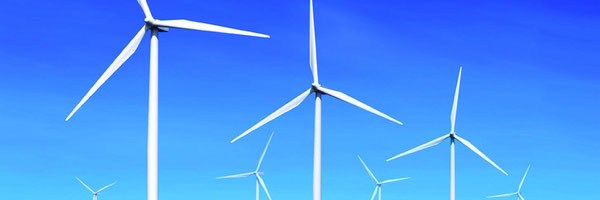
The Future of Wind Energy: Enhancing the Airflow of Wind Turbines
Farwa Fahmy
FFCA High School Campus
Grade 11
Presentation
No video provided
Problem
PROBLEM
Wind energy is the fastest growing energy source in the world, posing socio-economic challenges for a future that requires robust energy usage.
- Factors that contribute to increasing demand of wind turbines/energy:
- Enables economic growth\, as it generates more than 10% net total of the United State’s energy.
- As a renewable energy source\, wind is an abundant and inexhaustible resource and also provides energy without burning any fuel and polluting the air.
- Wind turbines work in different settings\, especially where high-quality wind resources are often found. These settings include\, but may not be limited to\, farms\, ranches\, or coastal areas.
- Wind power benefits coastal communities\, as the cost-effective resources allow for extra revenues that put up to school budgets\, reduced tax burdens\, and improved local infrastructure projects.
- Challenges of wind power:
- Competitions with other low-cost energy resources- wind and solar energy are more competitive than gas\, geothermal\, coal\, or nuclear facilities.
- While wind energy may cost-effective and beneficial economically\, it only functions well in remote locations (locations that have abundant wind supply)
- The excessive noise production and altered visual aesthetics of the wind turbine pose a concern to locals living near wind turbines.
- Wind turbines can have a lasting environmental impact\, especially on local wildlife. Research is being done to minimize the impacts of wind turbines on wildlife.
- Average wind capacity capacity (2022-2023 by month):

 The length of a turbine’s blades is the biggest factor in determining the electricity efficiency a wind turbine can generate.
Current model of wind turbines:
Horizontal-axis wind turbines:
- Blades related to airplane propellers (three distinct blades) - Taller turbines have longer blades\, which generates more electricity
- Vertical- axis wind turbines:
- Blades that are attached to the top and bottom of a vertical rotor.
Wind turbines are primarily powered by the wind from the atmosphere, which links to other energy sources produced from the environment (examples: solar energy powered by solar panels).
The mathematical formula used to create the innovative modifications will be based on the wind power equation:
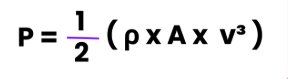 P- Power
p- air density
A- area that is swept by the wind turbine blades
v- wind speed
P- Power
p- air density
A- area that is swept by the wind turbine blades
v- wind speed
This equation will determine whether factors such as the increasing of blade/motor size will pose a beneficial outcome to the future of windmill power.
According to the formula, p, A, and v are all directly proportional to P (power), meaning that the greater the air density, area swept by the wind turbine, and the wind speed, the more efficient the turbine will be.
Modern windmills are primarily made of steel, while other materials can also include fiberglass, resin, and plastic. Most materials (60-75%) are domestically sourced. This includes blade components, and is a leading reason to why wind energy is one of the most energy efficient power generators in the world.
| Material used in wind turbines | Effect on the environment |
|---|---|
| Steel | Recyclable, sustainable, strong structure that allows for higher energy efficiency once it is built. |
| Fiberglass | Contains plastic polymers as a major component and is long-lasting (positive effect on environment) |
| Resin | NATURAL resign is biodegradable and eco-friendly. SYNTHESIZED resin can potentially harm the environment with its petroleum based products. |
| Plastic | Not eco-friendly, not biodegradable |
Out of the four major components and materials that make up the structure of a windmill, 75% (3/4) of the materials provide a positive impact on the environment. Therefore, in order to create a better structure, the limited usage of plastic materials would be highly encouraged.
Possible modification to the design of the standard windmill:
Blade shape- a difference of blade thickness between an increase and/or decrease of 5 cm. Blade size- a difference of blade size between an increase and/or decrease of 5 cm. Altering the usage of certain materials.
Using the direct proportionality given by the formula above, it can be concluded that it is possible to increase A through the implementation of larger and more sturdy blade shapes and sizes. Possible modifications to design of the blade can allow for enhanced air flow. As a result, the enhanced structure can allow for wind turbines to be placed in conditions of high air density, which will result in the increase in power from the wind turbine.
Method
METHOD
The design of the energy-efficient windmill was enhanced based on a simplistic design of the modern windmill. The 3D image presented from the 3D building software "TinkerCad" contributes and enhances the perspective of changes that were necessary to improvise the efficiency of the wind turbine.
Using the formula 
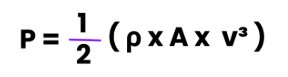 to measure the power output of a specific windmill design, adjustments to the design were done accordingly.
Using TinkerCad, the following adjustments were made: 1.) The modification of the blades of the turbine (thicker, wider blades that covered greater surface area) 2.) Possible size and location-friendly materials that could possibly be used to generate an energy-efficient wind-turbine in certain locations.
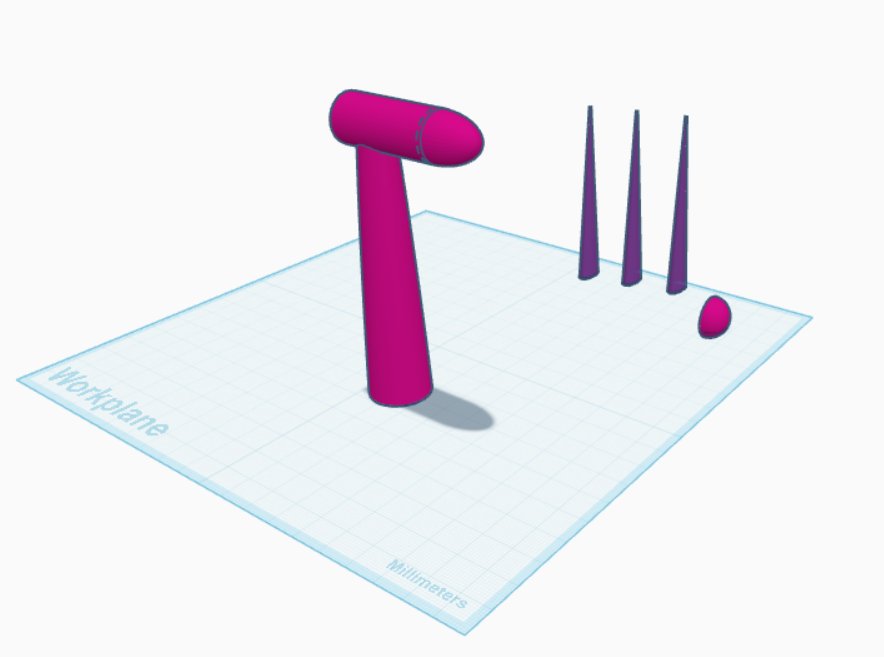 The initial building of the modern windmill consists of three elements: the blade, the rotor, and the tower (key component for structure).
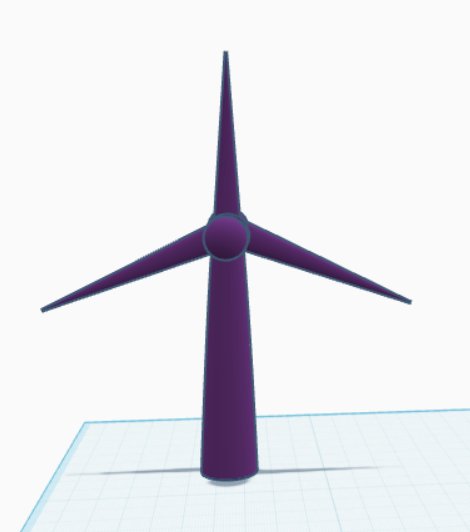
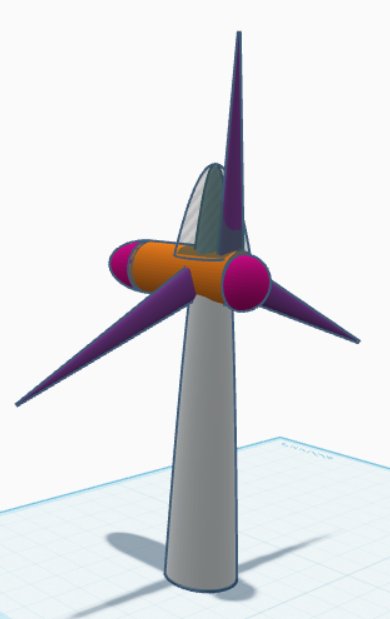
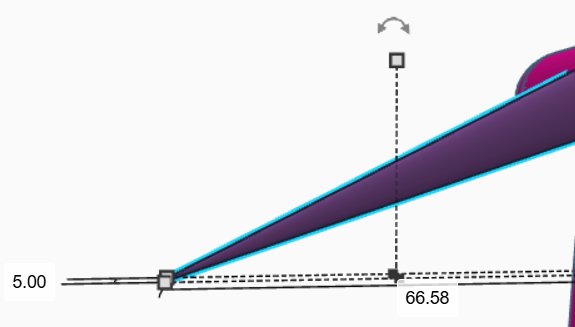
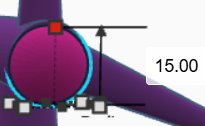
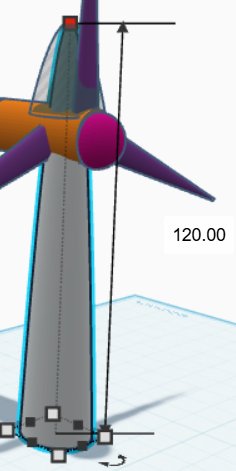
The final duplication of the standard windmill consists of three identical blades with a blade radius of 10.00 cm from the model. The tower consists of a model height of 120.00 cm and a radius of 20.00 cm. The windmill, standardized with these measurements, allow for a modification to the new model.
Analysis
ANALYSIS
The following factors were considered when modifications to the modern windmill were made: - Efficiency and cost-effective materials - Size of the windmill (or specific parts in general) - Noise impacts to the modern windmill.
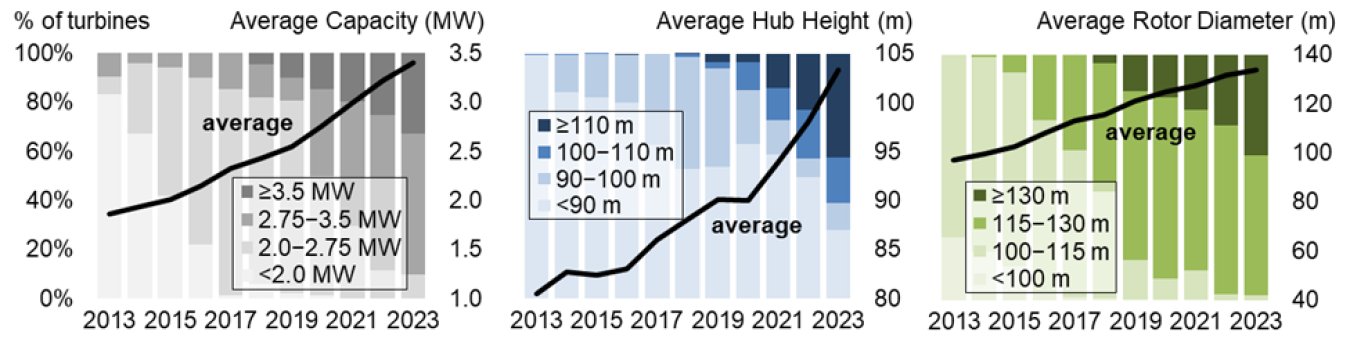
According to the US Department of Energy, larger blade sizes directly contribute to an enhanced efficiency of electricity, and throughout the years, a significant improvement in windmill size has increased gradually:
Examples of modifications used in the innovation process:
Investigation #1- Increase in turbine blade size:
Original wind turbine:
Top blade (radius): 10.00 cm Remaining 2 blades (radius): 10.00 cm each
Modified wind turbine:
Top blade (radius): 13.00 cm Remaining 2 blades (radius): 13.00 cm
Investigation #2- Decrease in turbine blade size:
Original wind turbine:
Top blade (radius): 10.00 cm Remaining 2 blades (radius): 10.00 cm each
Modified wind turbine:
Top blade (radius): 7.00 cm Remaining 2 blades (radius): 7.00 cm each
- The result depicted that that wind turbine with the larger blade accounted for majority of the air energy entering the energy source\, clarifying that a larger model can help strengthen the efficiency of the model.
INVESTIGATION #1
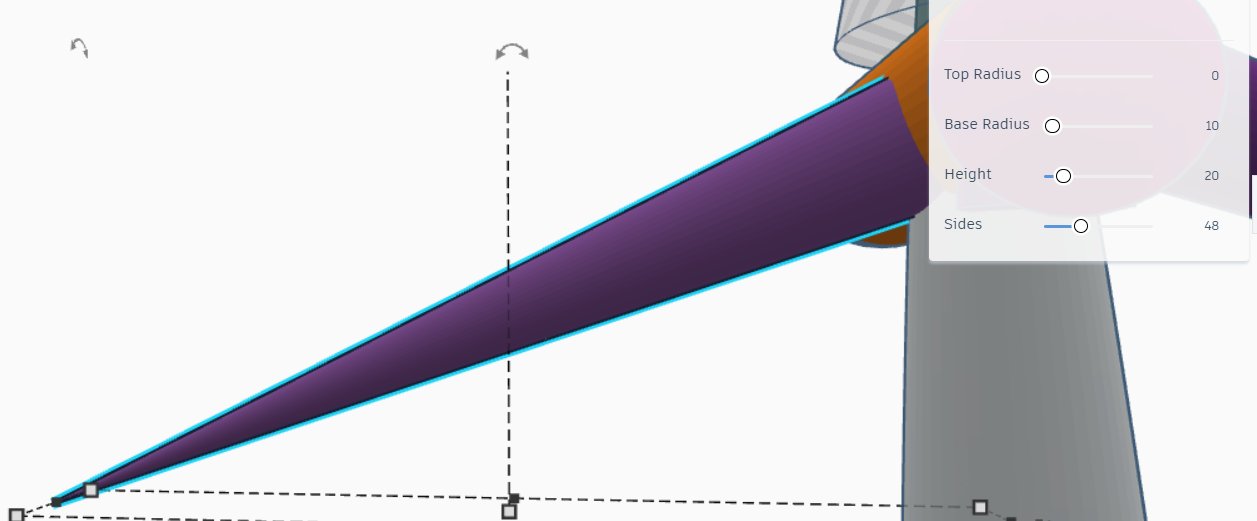 Base radius: 10.00 cm (original model)
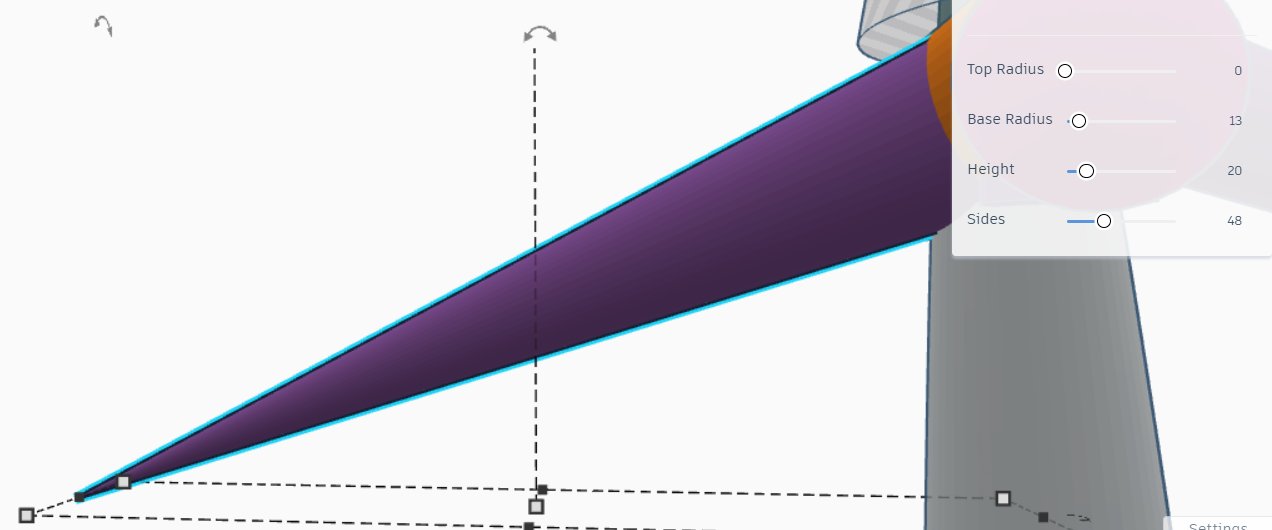 Base radius: 13.00 cm (modified model)- Thicker, wider blades create a more sturdy structure overall, resulting in an enhanced and firm energy source.
INVESTIGATION #2
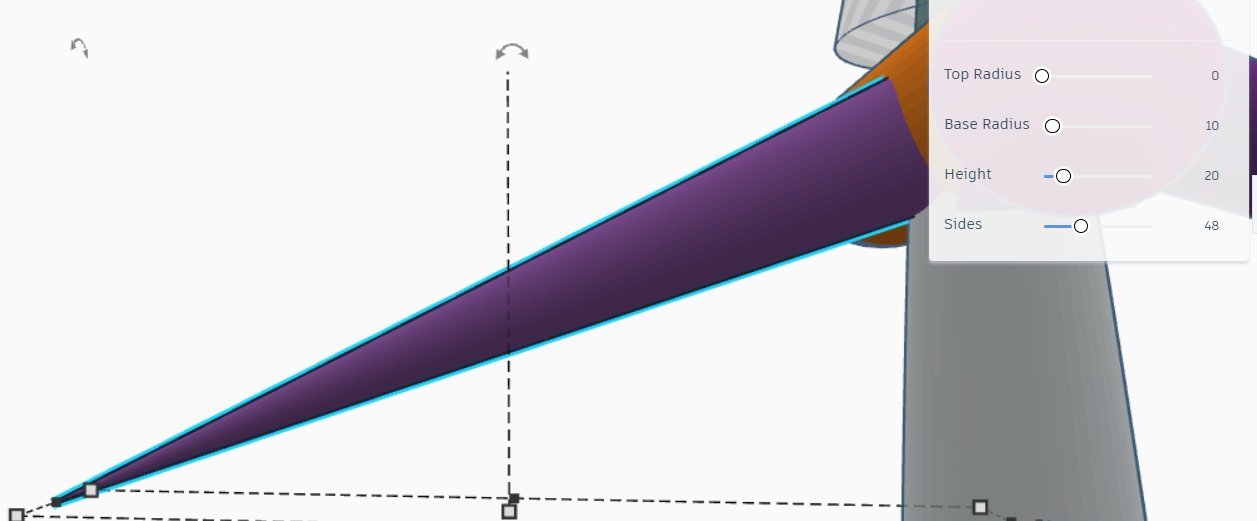 Base radius: 10.00 cm (original model)
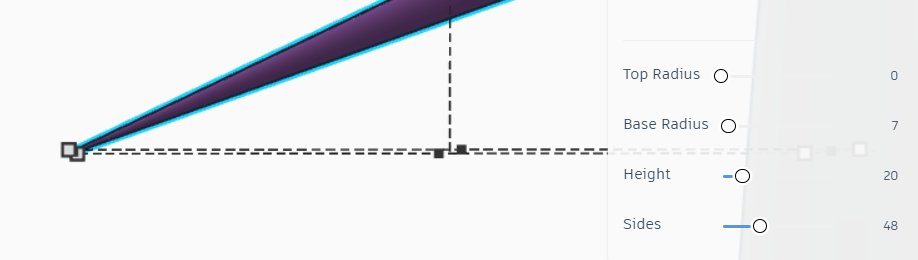 Base radius: 7.00 cm (modified model)- Thinner, narrow blades create a less sturdy structure overall, resulting in a higher risk for low efficiency in the windmill.
Conclusion
CONCLUSION
Many modifications of the modern windmill are in place to better enhance the usage and production of wind turbines. The technological advancements that contribute to the functioning of the wind turbine not only enhances the durability of the power resource, but to also limit environmental impacts.
Many scientists aim to build turbines which can continue to generate electricity even in high wind pressures and velocities, and create more suitable, noise reduction wind turbine technology.
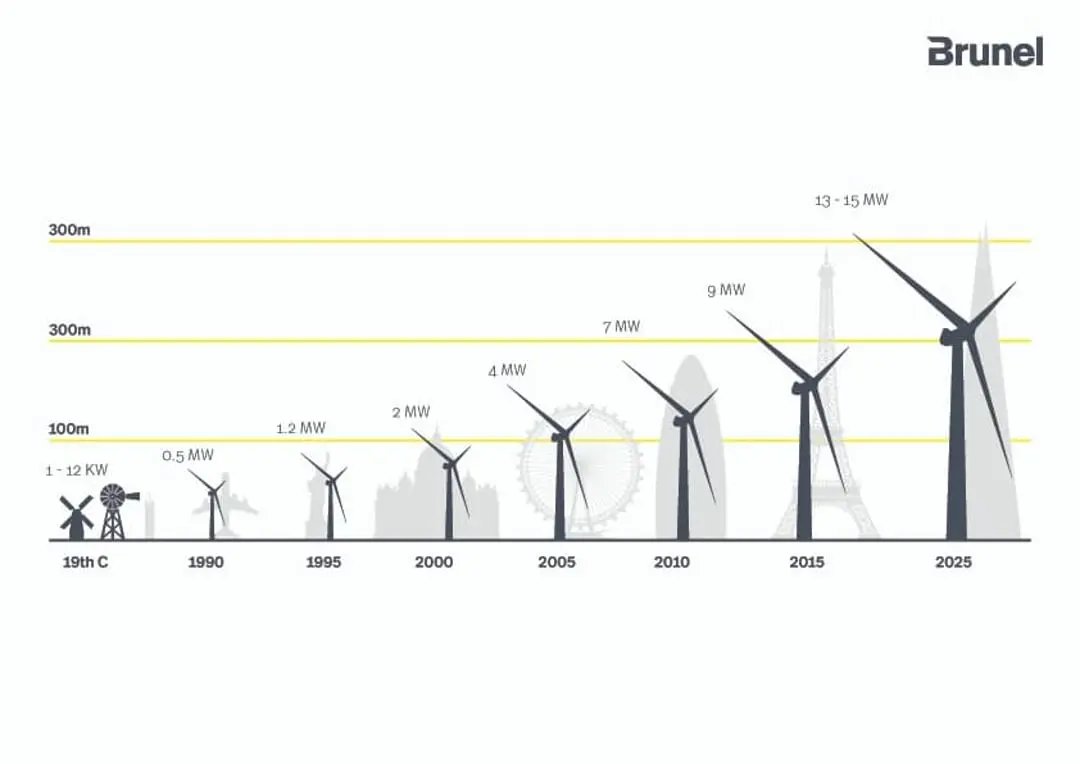 As demand increases for a sustainable environmental impact overall, the manufacturing of windmills have become increasingly beneficial. It is estimated that the manufacturing of windmill technology will gradually increase over the years, with an advancements in technologies and functionalities in the system.
The innovative process involved in modifying the current structure of the wind turbine was conveyed to understand the mechanics of wind turbines and how future adjustments can pose a long-term benefit.
APPLICATION
- Not only does the advancement of wind technology greatly benefit the future investments in wind power\, but it also allows for a more sustainable approach of energy usage. Through creating useful inventions of an already-existing design\, the environmental impacts may be less demeaning\, resulting in better uses of energy in our day to day lives. Additionally\, the implementation of more wind-powered technology can account for an increased usage of efficient energy in many locations\, rather than in locations that suit specific wind conditions.
Citations
SOURCES
1.) “Advantages and Challenges of Wind Energy.” Department of Energy, https://www.energy.gov/eere/wind/advantages-and-challenges-wind-energy.
2.) “What materials are used to make wind turbines?” USGS.gov, https://www.usgs.gov/faqs/what-materials-are-used-make-wind-turbines.
3.) “Future of Wind Turbine Technology.” The Renewable Energy Hub, 7 January 2026, https://www.renewableenergyhub.co.uk/main/wind-turbines/future-wind-turbine-technologies.
4.) https://www.alternative-energy-tutorials.com/wind-energy/wind-turbine-blade-design.html
5.) Hartman\, Liz. “Wind Turbines: the Bigger\, the Better | Department of Energy.” Energy.gov\, https://www.energy.gov/cmei/articles/wind-turbines-bigger-better.
6.) Federal Steel Supply. “Why Steel Structures are Environmentally-Friendly.” Federal Steel Supply, https://www.fedsteel.com/insights/why-steel-structures-are-environmentally-friendly/.
7.) Royal Coranthian. “How Environmentally Friendly is Fiberglass?” Royal Coranthian, https://royalcorinthian.com/how-environmentally-friendly-is-fiberglass/.
8.) “Resin Environmental Impact and Sustainable Alternatives | Vertec.” Vertec BioSolvents\, 29 October 2024\, https://www.vertecbiosolvents.com/resin-environmental-impact-and-sustainable-alternatives.
9.) National Environmental Treasure. “Even Small Acts Can Have a Ripple Effect Tackling Plastic Pollution.” National Environmental Treasure, 2021, https://www.oursafetynet.org/2020/01/06/even-small-acts-can-have-a-ripple-effect/?gad_source=1&gad_campaignid=10887312622&gbraid=0AAAAACTe7XYdI1QNr-86zFirqwdALt5JG&gclid=CjwKCAiAzZ_NBhAEEiwAMtqKy0gLxOcFkoZj_pnT5ufYNwZ88PjPsVjw6tUPDhKnECH9uqdlZa
10.) “Wind Energy.” Canadian Renewable Energy Association, https://renewablesassociation.ca/wind-energy/.
Acknowledgement
ACKNOWLEDGEMENTS
I would like to acknowledge my science fair coordinator Ms. Fan for encouraging me to continue on with my project. Special thanks to my family and friends for supporting my learning journey. Without the extra help and contributions I would not be able to complete my project successfully. I would also like to appreciate the CYSF committee for making this year's science fair a success once again. Thank you!