
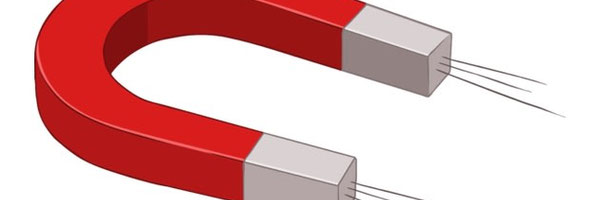
how and why do magnets repel and attach?
Naoli Debebe
Our Lady of the Assumption School
Grade 5
Presentation
No video provided
Hypothesis
For my hypothesis, I have 10 types to show about why magnets repel and attach.
Same poles repel hypothesis
- If two north poles or two south poles are placed near each other, then they will repel because like poles push away.
- Magnetic field interaction hypothesis If the magnetic fields of two magnets align in opposite directions, then they will attach.
- Magnetic field resistance hypothesis If the magnetic fields of two magnets push against each other in the same direction, then they will repel.
- Distance hypothesis If two magnets are moved closer together, then the force of attraction or repulsion will become stronger.
- Strength hypothesis If one magnet is stronger than another, then it will pull the weaker magnet more easily.
- Material hypothesis If a magnet is placed near metal like iron, then it will attach because the metal responds to the magnetic field.
- Polarity change hypothesis If you flip one magnet around, then the magnets that were repelling may start attracting.
- Temperature hypothesis If a magnet becomes very hot, then it may lose strength and attach less strongly.
- Size hypothesis If a magnet is larger, then it may produce a stronger force and attach more strongly than a smaller magnet.
Research
- If two north poles or two south poles are placed near each other, then they will repel because like poles push away.
- Magnetic field interaction hypothesis If the magnetic fields of two magnets align in opposite directions, then they will attach.
- Magnetic field resistance hypothesis If the magnetic fields of two magnets push against each other in the same direction, then they will repel.
- Distance hypothesis If two magnets are moved closer together, then the force of attraction or repulsion will become stronger.
- Strength hypothesis If one magnet is stronger than another, then it will pull the weaker magnet more easily.
- Material hypothesis If a magnet is placed near metal like iron, then it will attach because the metal responds to the magnetic field.
- Polarity change hypothesis If you flip one magnet around, then the magnets that were repelling may start attracting.
- Temperature hypothesis If a magnet becomes very hot, then it may lose strength and attach less strongly.
- Size hypothesis If a magnet is larger, then it may produce a stronger force and attach more strongly than a smaller magnet.
Variables
When Magnets ATTACH (Opposites: North & South)
- Pole Type – One side is North, the other is South.
- Distance – The closer they are, the stronger they pull.
- Magnet Strength – Strong magnets pull harder.
- Size of Magnet – Bigger magnets can be stronger.
- Direction They Face – North facing South makes them stick.
- Material Around Them – Iron helps magnets work better.
- Temperature – Very hot magnets get weaker.
Opposites attract because North and South “like” to connect.
When Magnets REPEL (Same Poles: North–North or South–South)
- Pole Type – North facing North, or South facing South.
- Distance – The closer they are, the stronger they push.
- Magnet Strength – Strong magnets push harder.
- Direction They Face – Same sides facing each other push away.
- Angle – If you turn the magnet, it might stop pushing and stick instead.
- Magnetic Force – The invisible force that pushes them apart.
Procedure
Procedure (Steps)
Part 1: Testing Opposite Poles (Attraction)
- Place one magnet flat on the table.
- Find the North (N) and South (S) ends.
- Slowly bring the North end of the second magnet close to the South end of the first magnet.
- Observe what happens.
- Write down your observation.
You should see the magnets move together and stick.
Part 2: Testing Same Poles (Repulsion)
- Keep one magnet on the table.
- Slowly bring the North end of the second magnet close to the North end of the first magnet.
- Observe what happens.
- Write down your observation.
You should see the magnets push away from each other.
Part 3: Try Again
- Test South to South and record what happens.
- Turn one magnet around and test again.
- Try moving them closer and farther away to see how the force changes.
Conclusion (What You Learned)
- Opposite poles (N and S) attract because they pull toward each other.
- Same poles (N and N or S and S) repel because they push away from each other.
- The force is stronger when magnets are closer.
Observations
When Opposite Poles Face (North & South)
- The magnets move toward each other.
- They stick together without glue.
- When they are closer, the pull feels stronger.
- If you try to pull them apart, you can feel the force pulling them back.
- Even if they are not touching, they can still move toward each other.
Observation: Opposite poles attract and stick together.
When Same Poles Face (North–North or South–South)
- The magnets push away from each other.
- It is hard to make them touch.
- If you try to push them together, you can feel resistance.
- When you let go, the magnets move apart.
- The closer they get, the stronger the push feels.
Analysis
Analysis: Why Magnets Attract and Repel
-
Opposite Poles Attract (N & S)
-
When a North pole of one magnet comes near a South pole of another, the magnets pull toward each other.
- This happens because the magnetic field lines connect smoothly from North to South.
- The closer the magnets are, the stronger the pull.
Kid version: Opposite ends “like each other,” so they stick together.
-
Same Poles Repel (N–N or S–S)
-
When two North poles or two South poles face each other, the magnets push away.
- This happens because the magnetic field lines clash and cannot connect.
- The closer the magnets get, the stronger the push.
Kid version: Same ends “don’t like each other,” so they push apart.
-
Distance and Strength Matter
-
Magnets pull or push more when they are closer.
- Bigger or stronger magnets have stronger forces.
Conclusion
Analysis: Why Magnets Attract and Repel
-
Opposite Poles Attract (N & S)
-
When a North pole of one magnet comes near a South pole of another, the magnets pull toward each other.
- This happens because the magnetic field lines connect smoothly from North to South.
- The closer the magnets are, the stronger the pull.
Kid version: Opposite ends “like each other,” so they stick together.
-
Same Poles Repel (N–N or S–S)
-
When two North poles or two South poles face each other, the magnets push away.
- This happens because the magnetic field lines clash and cannot connect.
- The closer the magnets get, the stronger the push.
Kid version: Same ends “don’t like each other,” so they push apart.
-
Distance and Strength Matter
-
Magnets pull or push more when they are closer.
- Bigger or stronger magnets have stronger forces.
Application
Applications: Magnets Attract and Repel
1. Refrigerator Magnets
- How it works: Opposite poles attract to hold notes on the fridge.
- Kid version: The fridge and the magnet “stick together” because their opposite sides pull each other.
2. Magnetic Toys
- How it works: Some toys use magnets that attract to connect or repel to push pieces apart.
- Kid version: Opposites stick, same sides push — you can build or separate parts.
3. Magnetic Trains (Maglev)
- How it works: Magnets on the train repel magnets on the track to make it float, and opposite poles attract to help guide it.
- Kid version: Magnets push the train up so it floats and sticks to the track when needed.
4. Compass
- How it works: The needle of a compass is a magnet that always points toward the Earth’s magnetic South pole (opposites attract).
- Kid version: Magnets help you know which way is North because opposite poles attract.
5. Door Latches
- How it works: Magnetic doors or cabinets use magnets to pull the door closed (opposite poles attract).
Sources Of Error
Sources of Error: Magnets Attract and Repel
- Magnets Are Not Labeled Clearly
- If you don’t know which end is North or South, the test might be wrong.
- Kid version: “If you mix up the ends, the magnets might not behave like you expect.”
- Magnets Are Too Far Apart
- Magnetic force is weaker when magnets are far, so you might not see them move.
- Kid version: “If the magnets are too far, they might not pull or push enough.”
- Other Magnets Nearby
- Nearby magnets or metal objects can change the results.
- Kid version: “Other magnets can confuse your magnets.”
- Magnets Are Weak or Old
- Older or weaker magnets may not attract or repel strongly.
- Kid version: “Weak magnets don’t stick or push as much.”
- Angle of the Magnets
- If magnets aren’t facing each other straight, the force might be weaker.
- Kid version: “If the magnets aren’t lined up, they might not stick or push properly.”
- Human Observation Error
- Sometimes kids might miss small movements or think the magnets are moving differently.
Citations
The Rule of the Poles Every magnet has two ends called the North Pole and the South Pole. You can think of them like a pair of shoes: you have a left one and a right one.
- Opposites Attract: When you put a North pole near a South pole, they "click" together. They are different, and they want to be partners!
- Likes Repel: When you try to push two North poles together (or two Souths), they will push away. It feels like an invisible wall is between them.
Why does this happen Inside every magnet, there are tiny invisible lines of energy moving called a Magnetic Field.
Acknowledgement
I would like to acknowledge the amazing power of magnetic fields. I learned that magnets have a North and a South pole. I now understand that opposite poles pull together like a hug, while the same poles push apart because their invisible energy lines 'bump' into each other. This project helped me see how forces work even when we can't see them.