
Homemade water filters
Noah Meyerson, Sahar Manor
Calgary Jewish Academy
Grade 6
Presentation
No video provided
Hypothesis
We believe the material that will clean the water the best is the sand because it’s both large and fine in size and will capture most things in dirty water. We believe the material that will clean the water the second best is activated charcoal because activated charcoal will act like a sponge because it will absorb chemicals and other toxins that can make you sick. We believe the material that will be the least effective is small rocks because small rocks will only clean the big stuff like twigs out of the water but not the smaller stuff like dirt, chemicals, and bacteria.
Research
Different types of contaminants in water:
- Physical: Ex twigs and dirt
- Chemical: Ex chemicals like bleach and toxins produced by bacteria
- Biological: Ex bacteria and viruses
- Radiological: Ex: cesium and plutonium
Common items that can be used as water filters:
- Sand, gravel, activated charcoal, small rocks, and gauze
We watched YouTube videos and read on websites to see which materials we should use for our water filter materials.
Variables
Controlled variables: the type of water, the same bottle, the quantity of water, and same volume of materials we used in our filters.
Manipulated variables: The type of materials in the filter,
Responding variable: the dirtiness of the water because the water that came out of the filters was in different level of dirtiness.
Procedure
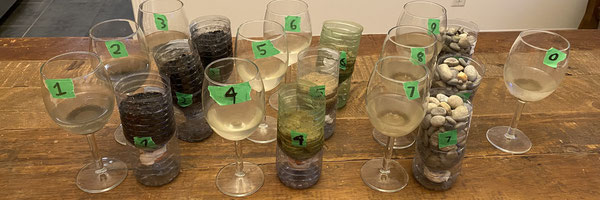
The way we did the experiment started by we got black snow from the road and then added half boiling water to the snow to melt it.
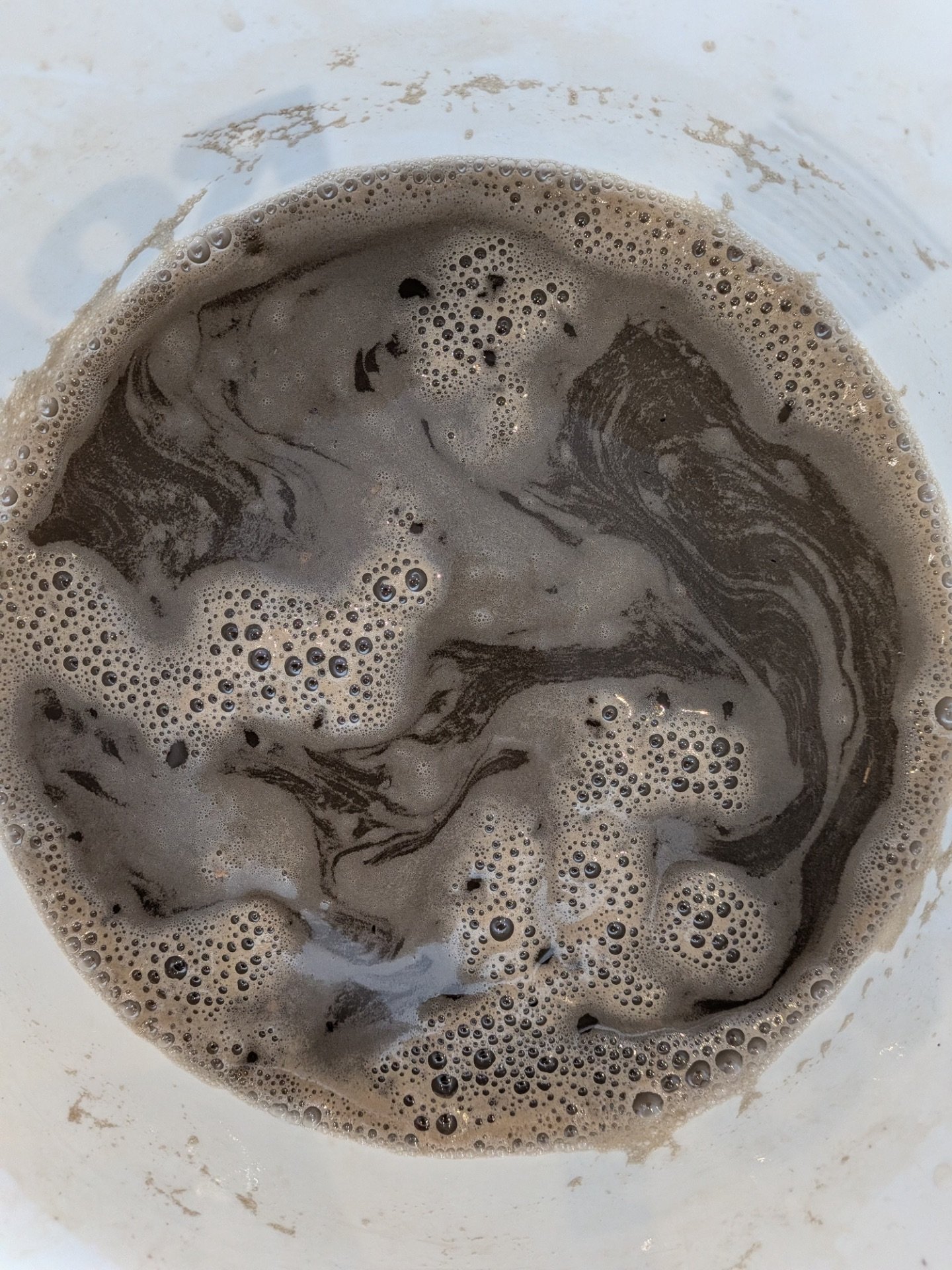
We then poured the dirty water into 9 filters, 3 consisting of sand, 3 consisting of activated charcoal, and 3 consisting of small rocks. We then used a stopwatch to see how long it took for the water to go through the filter. We then used our eyes to see which material cleaned the water better. And the other procedure we used is we took pictures of the water to compare which material cleaned the water the best.
Observations
We measured the time it took for the water to go through the filter. We observed the color of the water that went in and the water that came out of the filter.
Analysis
The time it took to go through the filter
| number | filter type | start time | end time | duration |
|---|---|---|---|---|
| 1 | activated charcoal | 01:25 | 01:50 | 25 seconds |
| 2 | activated charcoal | 02:10 | 02:34 | 24 seconds |
| 3 | activated charcoal | 02:55 | 03:10 | 25 seconds |
| 4 | sand | 00:00 | 04:20 | 4 minutes 20 seconds |
| 5 | sand | 00:26 | 04:40 | 4 minutes and 14 seconds |
| 6 | sand | 00:55 | 04:56 | 4 minutes and 1 second |
| 7 | small rocks | 03:45 | 04:04 | 19 seconds |
| 8 | small rocks | 05:40 | 05:54 | 14 seconds |
| 9 | small rocks | 06:25 | 06:38 | 13 seconds |
The color of the water before and after it went through the filter
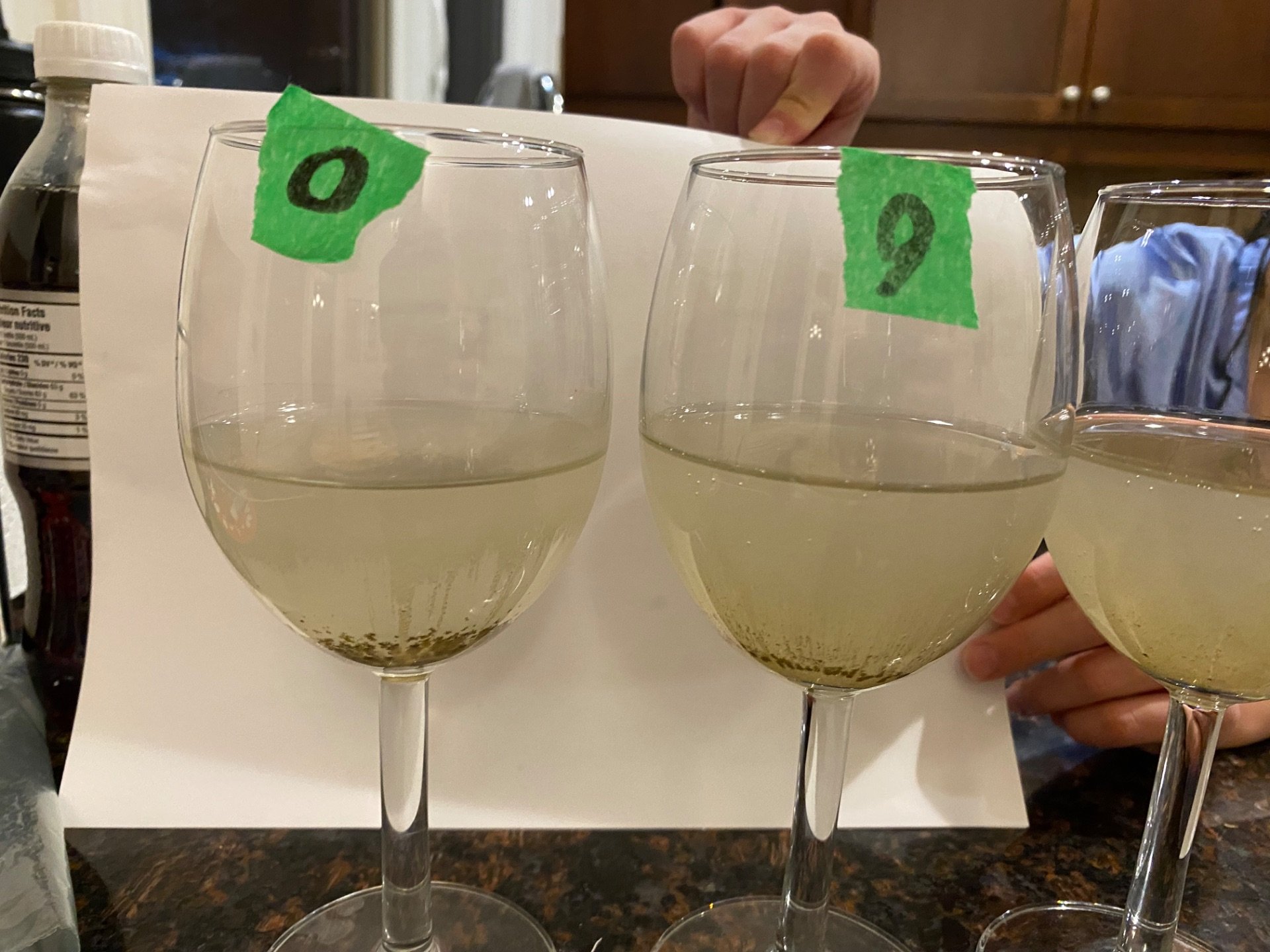
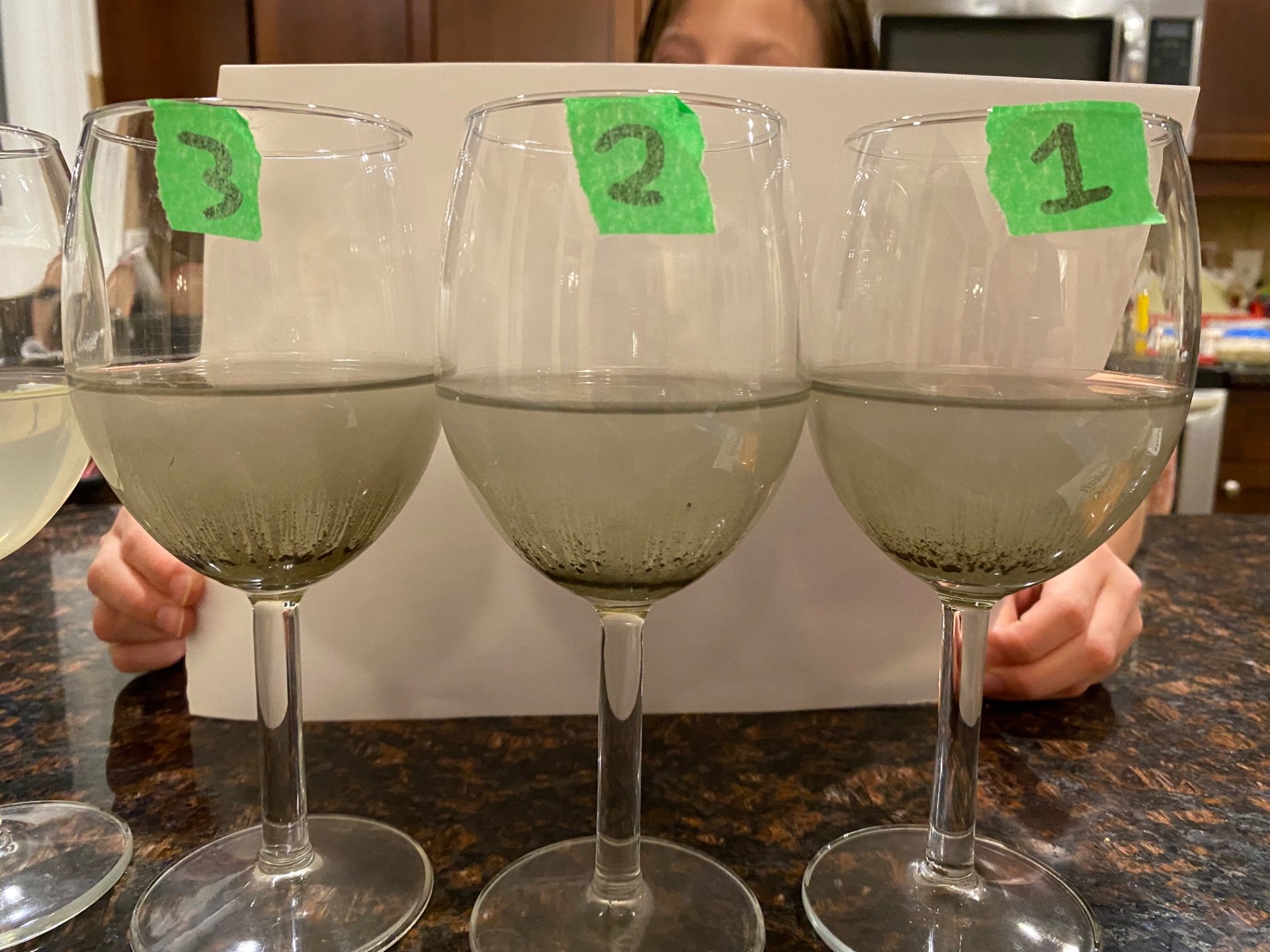
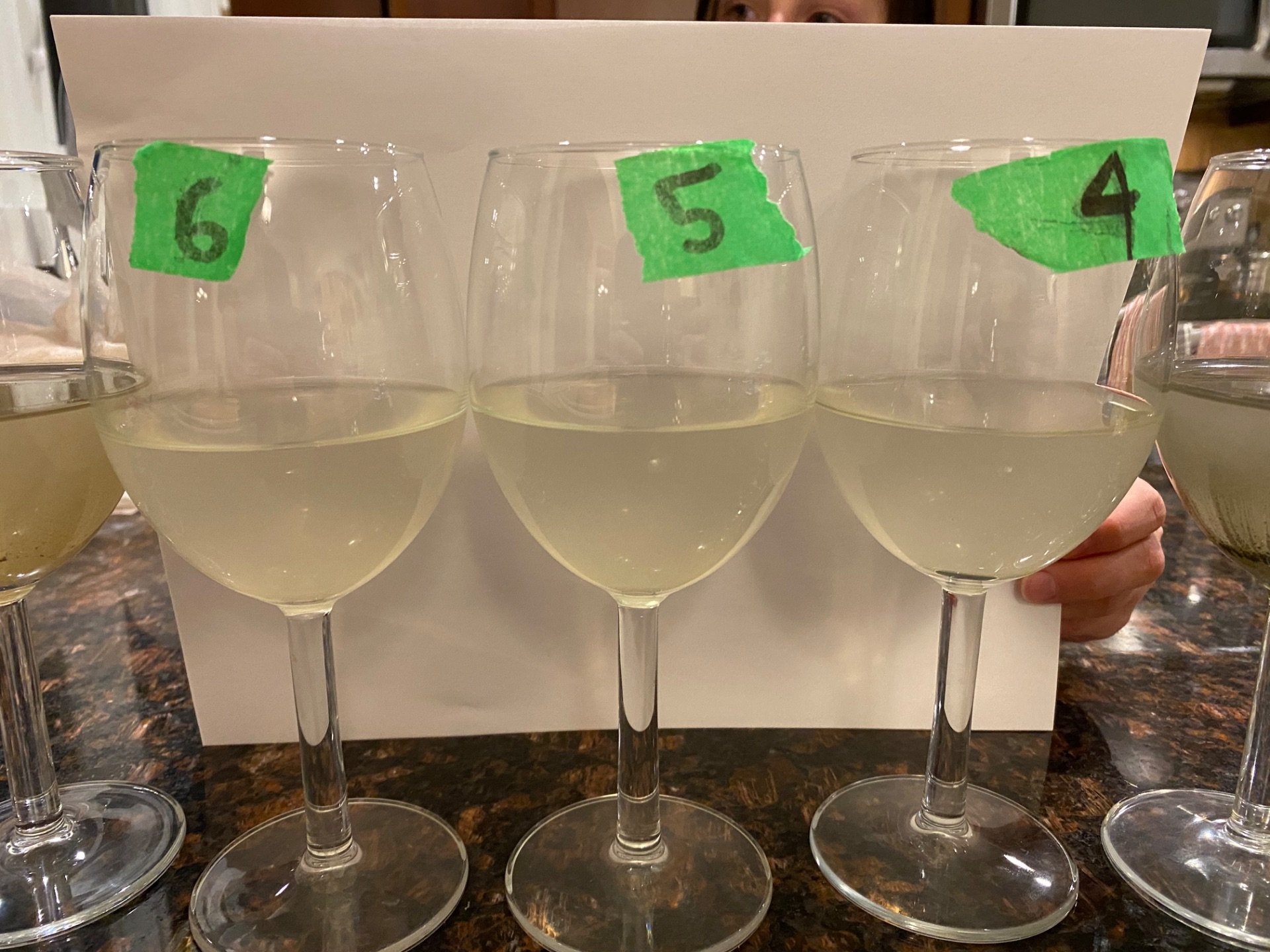
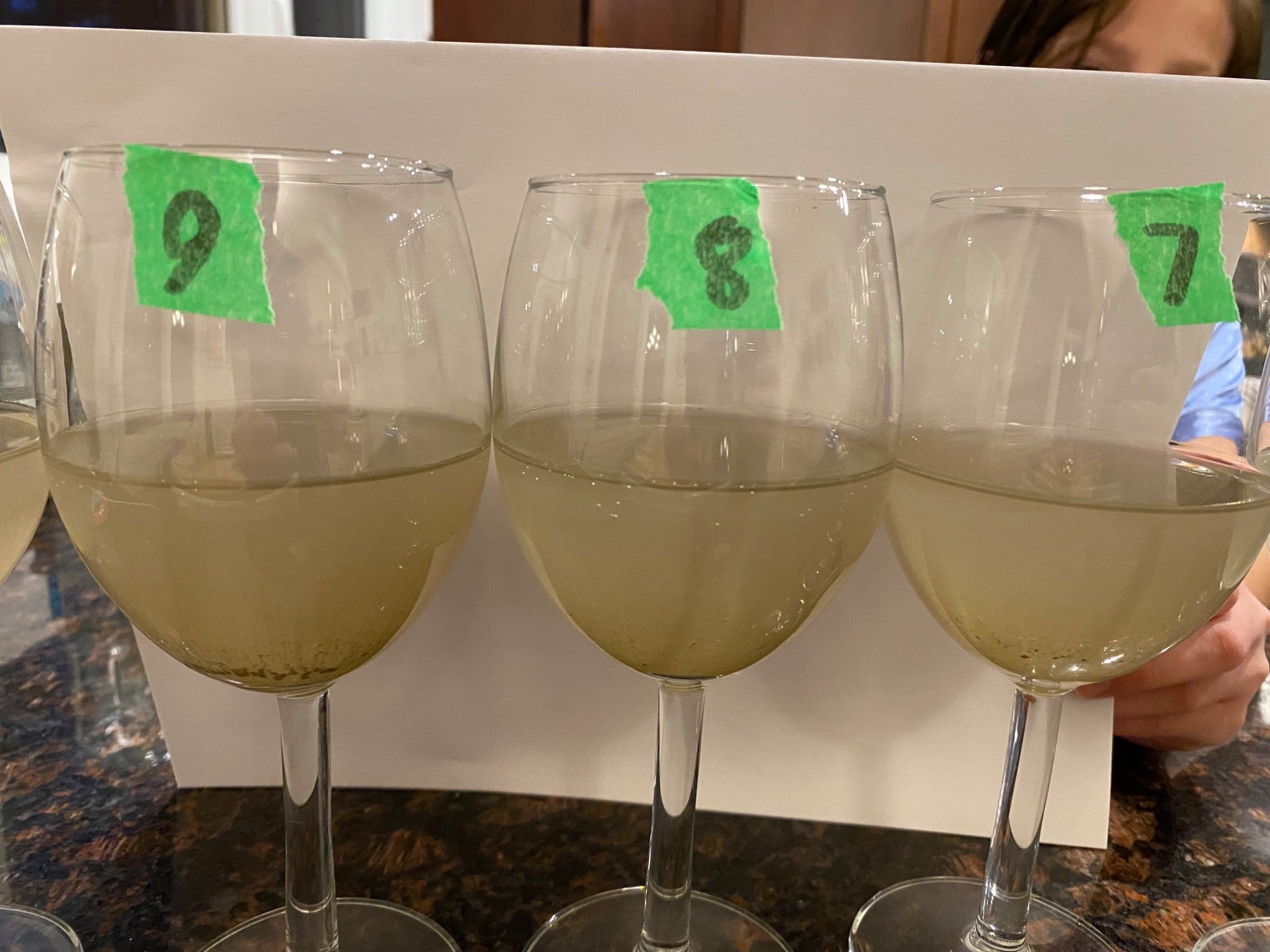
0 dirty water sample not filtered 1, 2, 3, activated charcoal 4, 5, 6, sand 7, 8, 9, small rocks
0 looked like 7 8 and 9 except with a little more dirt
1 2 and 3 looked dark grey with lots of dirt in the water and looked dirtier than the dirty water we added
4 5 and 6 looked light white with a faint tint of yellow with no visible dirt
7 8 and 9 looked basicly the same as 0 exept with a little bit less dirt
Conclusion
Our conclusion:
Our hypothesis was half right and half wrong. We were right about the sand cleaning the water the best. We were wrong about the activated charcoal cleaning the water the second best and the small rocks cleaning the water the worst. The activated charcoal appears to have added more sediment to the water as there is more sediment than the control sample. The small rocks have less sediment than the control sample.
The sand cleaned the water the best because sand is made up of thousands of small grains which make it hard for dirt and other things in water to get through it. The rocks cleaned the water the second best as the rocks were much bigger than the grains of sand so the larger particles were filtered out, while the smaller particles passed between the rocks and were not filtered out. The activated charcoal cleaned the water the worst because even some of the activated charcoal dissolved into the water making it dirtier than at the start.
Application
If you find yourself in a situation where the water source is generally safe but dirty with sediment, a sand filter is the most efficient step. Once the sand reduces the dirt, the water is much better prepared for drinking. This makes sand an essential component of any filtration system in the wilderness.
Sources Of Error
1. Potential Contamination of Filter Media The thoroughness of the pre-cleaning process for the filter materials such rocks and sand may have impacted the results. If these materials were not completely washed prior to the experiment, dirt or organic matter could have leached into the water, inadvertently increasing its turbidity rather than cleaning it. 2. Consistency of Filter Packing The structural arrangement of the filter layers can significantly influence filtration efficiency. If the sand or charcoal was packed loose or unevenly, channeling could occur—a process where water bypasses the filtration media through gaps or loose areas, resulting in poorly filtered water. 3. Subjectivity of Qualitative Assessment The results were primarily evaluated through visual inspection of water turbidity, which is subjective and prone to human error or bias. To achieve more objective and reproducible data, future trials should utilize quantitative measurements, such as pH test strips or a turbidity tube, to precisely calculate water clarity.
Citations
Author (if shown) Year (or date) Title (title of specific page) Website (name of overall website) URL (website address)
Water Filter Guru Apr 21, 2024 This 0$ water filter can save your life YouTube https://www.youtube.com/watch?v=3uzXeCnzf0c
Kim Orr (site editor) 2024 Student Project: Make a Water Filter Jet Propulsion Laboratory, California Institute of Technology https://www.jpl.nasa.gov/edu/resources/project/make-a-water-filter/
Apocalypse Solutions Feb 2, 2026 Your Water Filter Will Clog — The Medieval Sand Filtration System That Purifies Forever YouTube https://www.youtube.com/watch?v=lU81mZRd8dc
Water Filter Guru Jan 5, 2024 How to Test Water Quality at Home ( 5 Methods Ranked Best to Worst!) YouTube https://www.youtube.com/watch?v=QO9i3dlXaOw
July 29, 2025 Types of Drinking Water Contaminants United States Environmental Protection Agency https://www.epa.gov/ccl/types-drinking-water-contaminants
Clay Hayes Jun 8, 2024 How Effective are Charcoal & Sand Water Filters? Let’s find out! YouTube https://www.youtube.com/watch?v=bOKlW3M7vFY
Feb 28, 2022 The Multi Barrier Approach to Safe Drinking Water Cawst WASH Resorces https://washresources.cawst.org/en/resources/19b06669/the-multibarrier-approach-to-safe-drinking-water?queryId=4087c289f0031fa4d0d1ce45cdb67ce0
Acknowledgement
We thank our parents Jason and Shauna, and Mor and Einav for guiding and supporting us with our project. We also thank Ms Gelfand, our principal for helping us with the beginning of our project.