
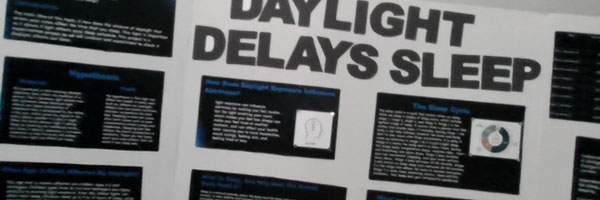
Daylight Delays Sleep
Manpreet Parmar, Taqdir K Sidhu
Gobind Sarvar School Guru Nanak Gate Campus
Grade 9
Presentation
No video provided
Hypothesis
My hypothesis is that evening daylight exposure does affect the bedtime of a person. This is because light affects how late someone sleeps because light affects our brains production of melatonin that is processed by the retina in the eye, which gives the signal to the brain about weather it is day or night. When the brain detects light it delays sleep by lowering the melatonin levels, but when it detects darkness it increases melatonin to help the body fall asleep. This is how light can affect our sleep.
Taqdir-> My hypothesis is that light can affect our health in many ways such as, affects our eyesight, affects how our brains functions and how we perform the next day. Sleeping to late can cause short term issues such as poor concentration, mood swings and headaches. Sleeping late also affects the brain's production of melatonin. These are the many short term side-effects that can occur if you sleep late.
Research
What Is Sleep, And Why Does The Human Body Need It? Sleep is a natural process where the body and the brain rest and recover to stay healthy and focused. During sleep, the brain processes memories, repairs cells, and prepares the body for the next day. Sleep also relates to other parts of our body such as our eyes. Light entering our eyes plays an important role in when we sleep. Special cells in the retina detect daylight and send signals to the brain, which controls the the body’s sleeping system, also called the circadian rhythm (This rhythm tells your body when to sleep and when to wake up). Your body’s circadian clock responds to light, as a signal to be awake, and dark, as a signal to fall asleep, and increasing the amount of light during the day will make you feel more alert, or darkening your bedroom room at night to sleep better. When daylight enters the room, the brain reduces the release of melatonin, the hormone that makes you feel sleepy,causing you to fall asleep later. When the room is dark, the brain releases more melatonin, helping the body relax and fall asleep earlier.
How Does Light Affect your Sleep? Light can affect our sleep in many different ways, one of the most important factors of light exposure is its effect on our circadian rhythm, which keeps the sleep cycle in sync. The amount of light exposure can affect when your body gets naturally sleepy. When giving your body exposure to light at the end of the day is like resetting your body, causing your body to feel awake at the wrong time of the day, which is disrupting your sleep.
Do people fall asleep later when their room is still bright from daylight? Yes, people tend to sleep later because of the bright light. Light exposure at night can reduce your quality of sleep. A lot of light exposure can cause repeated awakenings during the night. Such interference can interrupt the sleep cycle and reduce time spent in deep sleep.
What part of the brain helps control sleep based on light and darkness? The part of the brain that helps control the sleep based on light and darkness is the Hypothalamus. The hypothalamus is a small part of the brain that helps control the body's biological clock. It uses signals form the light entering the eyes to decide when the body should stay awake or release melatonin to help you fall asleep. Inside the hypothalamus is a small group of cells called the suprachiasmatic nucleus (SCN), which acts as the bodies main sleep and waking system. Light enters the eyes and is sent to the Scn, which tells the brain weather it is day or night.
How does light entering the eye trigger signals in the brain that affect sleep? Light entering the eye is detected by the special cells in the retina that respond to brightness. These cells send messages to the brain, telling you the time of day. When the brain detects light it delays sleep by lowering the melatonin levels, but when it detects darkness it increases melatonin to help the body fall asleep.
The Sleep Cycle The sleep cycle is a cycle that occurs when we sleep. While we sleep 4 stages of sleep occur, which include stage 1, stage 2, stage 3, and stage 4. Stage 1 is the lightest stage of sleep. It occurs when a person first falls asleep and usually lasts 1-7 minutes. During stage 1 the body is not fully relaxed, however the brain and body start to slow down with littles movements. It is easy to wake up someone in stage 1 as it is just a light sleep. Stage 2 is where the body starts to relax more, during this stage body temperature drops, muscles relax , heart and breathing rate slows down. Stage 2 also includes your eye movement stopping, and your brain activity slows down. Stage 2 lasts between 10-25 minutes. Stage 3 also known as deep sleep lasts between 20-40 minutes, it is the stage that allows the body to recover and grow. Stage 4 is when most dreaming occurs , brain activity increases . Your body also gets temporarily paralyzed.
How Does Daylight Affect The Hormones That Control Sleep (like melatonin and dopamine)? Dopamine is a compound present in the human body that acts as a neurotransmitters and a precursor (a person or thing that comes before another) of other substances. Dopamine plays an role in helping keeping you awake and alert. Bright light (especially morning or evening light) can increase dopamine activity. More dopamine means feeling more awake which might make you fall asleep later. This takes place in the brain particularly in the areas such as the hypothalamus and the retina. Melatonin, on the other hand, is produced by the pineal gland in the brain. Light exposure especially from the eyes, can suppress melatonin production, signaling your body that it is daytime making it harder for you to fall asleep.
How Does Daylight Exposure Influence Alertness? light exposure can influence alertness by making you feel awake, but the light entering your room which makes you feel less sleepy can make you feel tired at another moment, and can affect your health later causing you to have headaches, mood swings, feeling sick, and feeling tired or lazy.
What Age Is Most Affected By Daylight? The age that is mostly affected are children ages 3-5 and teenagers. Children ages three to five and teenagers are highly sensitive to evening light exposure. Even dim indoor lights can affect their sleep. Children need up to 9 to 12 hours of sleep, while teenagers need 8-10 hours of sleep. On the other hand adults are not affect as much as people who are younger, as adults only need 7-8 hours of sleep, this is because of their age. As People age their sleep patterns change often leading to less sleep, also because my adults have jobs and they need to adjust their sleep according to there job’s timing.
What is the negative effect of daylight entering your eyes at night on your body? The negative effects of daylight includes:
- Eye Strain: High levels of light during sleep have been associated with eye strain resulting in tiredness, soreness and discomfort in eyes. As well as difficulty focusing on objects.
- Weight Gain: Keeping lights on during sleep appears to affects your circadian regulations of metabolism, increasing the risk of weight gain even if your sleep is not disturbed.
How does this experiment apply to daily life? This experiment applies to daily life in many ways because we spend most of our day sleeping. By conducting this experiment it shows how light can affect how late we sleep, and it will help us learn ways to keep light from entering our room at night or how to sleep at night. Another way that this experiment relates to real life is that many people struggle with their sleeping habits and learning why they have trouble sleeping can be caused because of the amount of daylight that enters their room, which affects the eyes that signal the brain, how to deal with the amount of light entering your room. A solution to this problem is to close the blinds, curtains, or use a sleeping mask, as these will help block out light from entering your eyes.
Variables
Independent (what you change) : The amount of daylight entering your room, can be changed by the amount you open or close your curtains.
Dependent (what you measure) : How late you fall asleep, and how rested you feel after sleeping.
Controlled (what stays the same) : Bedtime (4:30 pm), same bed and room, no electronics before bed.
Procedure
- Light enters the eye and is detected by the retina.
- The retina sends signals to the brain through the optic nerve.
- The brian interprets the light as “Daylight”.
- The pineal gland reduces the production of melatonin
- Lower melatonin levels cause the person to feel awake longer and sleep later.
Observations
The data shows that bedtime was the same every day at 4:30 PM. On high light days, falling asleep happened later, around 5:17–5:22 PM, and sleep quality was poor. On medium light days, falling asleep happened around 5:03–5:07 PM and sleep quality was fair. On low or no light days, falling asleep happened earlier, around 4:39–4:52 PM, and sleep quality was better.
Analysis
The results show a clear pattern between light exposure and sleep. As the amount of light increased, it took longer to fall asleep and sleep quality became worse. When there was less or no light, falling asleep happened faster and sleep quality improved. This means that higher light levels negatively affect sleep, while darkness helps improve it.
Conclusion
In conclusion this experiment shows that light does affect how late someone sleeps. From the experiment it showed that light has a negative effect on the person's health because it makes the person feel more tired. It also shows that when light enters the room the melatonin level decrease making you feel more awake at the wrong time, such as when you are going to bed. The experiment demonstrates how light exposure can affect our daily lives, performance levels and the way we think. Lastly sleeping late is harmful for our health as it disturbs our sleep cycle and doesn't let us focus the next day .
Application
This experiment teaches us the side effects of sleeping late and how hour daily lives can be greatly affected. This experiment also teaches us the best way to sleep at night, and how much light can make us feel awake and sleep later. Lastly it teaches us about how the sleep cycle is also affected by sleeping late.
Sources Of Error
- The source of error is that since we did this experiment in winter it was hard for us to sleep as we are not used to sleeping at 4:30 PM. It would have been easier to do in the summer because the sun sets around 9:30 pm or even later.
Citations
https://www.thensf.org/good-light-bad-light-and-better-sleep/
https://www.sleepfoundation.org/bedroom-environment/light-and-sleep
https://www.sleepfoundation.org/bedroom-environment/light-and-sleep
https://www.timeanddate.com/sun/canada/calgary?month
https://www.sleepfoundation.org/bedroom-environment/light-and-sleep
https://www.sleepfoundation.org/stages-of-sleep#what-is-the-sleep-cycle--1
https://pmc.ncbi.nlm.nih.gov/articles/PMC4284776/
https://www.sleepfoundation.org/aging-and-sleep
https://www.sleepadvisor.org/light-and-sleep/
Acknowledgement
We would like to acknowledge our teachers and our peers for helping us and looking at our project and helping us improve our project and make our slides better and easier to understand. Thank you to Mrs. Preetpal and Mrs. Isha for giving us feedback and ways to improve our project. We would also like to thank you for this opportunity to being able to share our project with you in. Lastly, we would like to acknowledge Gobind Sarvar School for giving us this opportunity to share our project with others.