
Solving the Plastic Problem: Improving PETase for Real World Environments
Kian Khwaja
STEM Innovation Academy Jr. High N.W. Campus
Grade 7
Presentation
Problem
| Problem |
|---|
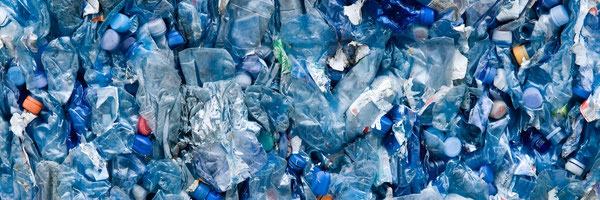
| The Problem is that plastic takes a long time to degrade and we humans are creating more and more plastic. Eventually there will be too much plastic and the whole world will be filled with plastic and because of making all that plastic there will also be a lot of pollution. This will make it so that eventually the planet will be unlivable. To save this from happening we will have to create no more plastic and degrade the plastic and then make new items out of it |
Introduction
1.1: The Problem with Recycling
Recycling is not a very good solution to the plastic problem. This is because we are not fully re-cycling all plastics that we are using. Instead, we are creating more new plastic than we are recycling. In fact, 90.2% of the plastic used around the world comes from newly made plastics, and only 9.8% is actually coming from recycled plastics. Secondly, the quality and durability of the plastic decreases when recycled. Eventually that plastic will be recycled multiple times and become unusable, causing it to be thrown in the land fill.
1.2: The problem with PETase
One problem is that the PH of the plastic or the water it is in changes to abnormal alkaline levels, which causes PETase to malfunction and die. Secondly, PETase is really hard to make and costs a lot of money. Another reason we do not use PETase is that it is too slow. Results have shown that the fast version of PETase, Fast- PETase, which is 5 times faster can only break down 40% of 0.25mm thick PET in 4 days at 50 degrees celsius heat. Lastly, it cannot withstand enough heat to be used outside or in decomposing centers, because the maximum limit of wild PETase is only 40°C. Yet, the plastic needs to be heated to 70-80°C so it can soften and then be degarded.
1.3: What is PETase
Petase is an enzyme that was found in 2016 near a Japanese PET bottle recycling site. It can degrade plastic and convert it into its basic form. It takes 24 hours to 4 weeks to degrade plastic. It depends on how close together the molecules of the plastic are, how thick the plastic is, how much plastic there is, and the molecular structure of the PET (Plastic).
1.3: How PETase Works
It works by breaking down the PET into MHET at the molecular level. This is done by breaking the ester bonds between the PET. Then the MHETase breaks down the MHET into the original materials that PET was actually made of, including terephthalic acid, and ethylene glycol by cleaving all of the MHET.
2.1: New versions of PETase
- LCC-ICCG-C09 is 600 times faster wild PETase.
- LCC-ICCG-C09 can resist up to 97.1 degrees celsius of heat
- LCC-ICCG-C09 works best at a ph from 7.5 - 9.5
- FAST-PETase’s speed is 5 times faster than the wild type
- FAST-PETase can survive up to 67 degrees celsius
- FAST-PETase can resist 6.5 to 9.5
- Dura-PETase is 300 times faster than the wild type PETase
- Dura-PETase can resit up to 77°C
- Dura-PETase can resit a ph of 8.0 - 9.0
Method
Materials List of all softwares used:
- Protein data bank: I used this to find the sequence for different PETase enzymes.
- Alphafold: I used this to visualizations of different PETase enzymes using their sequences. Finally, I utilized my knowledge to incorporate different mutations into a single enzyme and create protein structure for Trident PETase.
Procedure
- I researched different kinds PETases and focused on Fast-PETase, Dura-PETase, LCC-ICCG, and LCC-ICCG-C09
- Found Mutations for different kinds of PETases
- Calculated speed of Trident PETase by
- I checked the wild-type PETase model to make sure the 15 mutations didn't try to change the same spot , and I swapped F243I for W159H so the plastic can go deeper inside to attack the bonds.
- I used math to calculate the final results by multiplying the speed boosts and adding the heat and pH points from the three PETases to the wild-type model .
- I used the Alphafold model to see the final 3D shape and make sure all 15 mutations worked together to fix the heat, pH, and speed without the enzyme unfolding.
- I compared the math results of my Trident-PETase model against the wild-type to prove it can theoretically solve the plastic problem much faster in the real world .
Research
Different types of PETase LCC-ICCG
finished an article and found a new type of PETase called LCC-ICCG and LCC-ICCG-C09. In that article it states that LCC-ICCG and LCC-ICCG-C09 are the best PETases yet to be developed. It also says that it can stand up to 68 °C because they have added silico protein design methods to make a PET-hydrolyzing enzyme. Their mutant, the LCC-ICCG-C09 is 2 times more efficient than the LCC-ICCG. The LCC-ICCG used Y127G, D238C, F243I, S283C to make it better. Y127G is when they change Tyrosine to Glycine at position 127. This helps increase the speed of LCC-ICCG because it helps make the PET enter the enzyme into the degrading area because Tyrosine is a large bulky amino acid that can block the way so it takes time for the PET to get inside and Glycine is a small amino acid making it easy for the PET enter into the degradation area. D238C is when aspartic acid residue at position 238 is changed to cysteine. This helps create disulfide bonds which stabilizes PETase and makes it stronger giving it further heat resistance. F243I is when phenylalanine at position 243 is changed to isoleucine. This helps with making it faster and making it stronger. S283C is when Serine is changed into Cysteine at position 283.
Compared to LCC-ICCG, the LCC-ICCG-C09 has three more amino acid changes and they are V212H, A131G, and Q189R.
- At position 212, they convert valine to histidine as the change V212H. This is very good for the enzyme because histidine acts as a hand or tiny hook that makes it much easier for the enzyme to pick up and stick to the PET plastic surface than valine can. It is twice as good because the enzyme can continue to degrade and consume the bottle for a much longer time without stopping because it allows the enzyme to stick to the plastic rather than simply floating in the water.
- A131G is when we change the amino acids alanine to glycine at position 131. This is similar to the Y127G mutation we showed above, as it replaces a larger amino acid with the smallest amino acid possible. By using the amino acid glycine, it allows the entrance more room so that the enzyme can let come inside the enzyme and the plastic chains can break more easily and also faster.
- Q189R is when we change the amino acid glutamine to arginine at position 189. This is a very cool mutation because the amino acid arginine has a positive charge, so it acts like a magnet to the PET, drawing the plastic chains towards the area to be degraded more effectively, so the enzyme can be degraded.
LCC-ICCG
 LCC-ICCG-C09

Extra information for LCC-ICCG and LCC-ICCG-C09 and what mutations can be used. I was researching more on LCC-ICCG and LCC-ICCG-C09 and found that the mutation combination D238C, and S283C works only for that specific PETase type and should not be used for any other PETase, because I am focusing on improving the wild type PET and you cannot do D238C. Instead I found that you have to use N233C.
I also found that the change F243I cannot be done either because there is no Phenylalanine in position 243 to change. I have to use W159H instead to increase the speed.
Fast-PETase Fast-PETase is a special fast version of PETase that scientists made to help get rid of plastic faster than the wild PETase. Plastic usually takes a long time to degrade such as 500 years but with PETase it takes 20 days to degrade a 0.25mm thick plastic piece. To make this process faster scientists genetically edited the wild to make it faster at the University of Texas. The main change scientists made was making the enzyme much tougher. The wild type PETase would not work if the water got too hot or if the conditions weren't exactly in the optimal range. The Fast-Petase is very stable and can keep working even when temperatures slightly change, and in the process they made it faster. This makes the Fast-Petase able to degrade plastic way faster like a 0.25mm thick plastic in just 4 days. That's 5 times faster than Wild type PEtase.

Genetic Mutation of Fast-PETase
- N233K is a swap from Asparagine to Lysine. N233K helps in Speed by adding positive electrical charge to the enzyme. The PET has a slightly negative changer so the PET is attracted to the degrading zone inside of PETase. This makes the process faster because PETase doesn't have to get the PETase inside of itself in another way that takes more time.
- R224Q is a swap from Arginine to Glutamine. R224Q helps in speed by changing the shape of the degradation zone. It removes a bulky part or amino acid that was in the way and replaces it with a smaller, smoother and less bulky one, this makes the enzyme able to move more freely, letting it move through plastic chains without getting stuck. This allows it to reduce the time because it removes an obstacle that takes significant time for the enzyme to navigate by.
- S121E is a swap from Serine to Glutamic Acid. S121E helps in binding by creating a chemical bond with the surface of the plastic. PET is very slippery but this change creates a sticky surface. This makes it so that the PET stays in place and makes it for the enzyme to be able to degrade it and not have to keep looking for it because it doesn't stay in place.
- D186H is a swap from Aspartic Acid to Histidine. D186H helps in Heat endurance by creating a hydrogen bond inside the enzyme. This extra connection prevents the enzyme from unfolding or breaking when the water gets too hot, keeping it stable and strong.
- R280A is a swap from Arginine to Alanine. R280A helps in Heat endurance by removing a part that was causing internal tension in the enzyme's structure. By swapping it for a better suited piece like Alanine the enzyme becomes stronger without so much tension. This allows it to keep its shape and still work in hot temperatures.
Dura-PETase

Dura-PETase’s Genetic Mutations
- W159H is a mutation in which Tryptophan is changed to Histidine and it helps with making the degradation faster. In the wild type PETase, Tryptophan acts like a big amino acid that blocks the entrance to get inside PETase. Tryptophan has a very big side chain so it blocks the PET from entering the degradation site making the process much slower. By changing this to Histidine, which is a smaller amino acid this helps the PET get inside without facing the obstacle. This makes it so that the plastic can go inside the enzyme faster making the process faster and can go deeper inside which makes the degradation much faster because it can attack the bonds better.
- I168R is a mutation in which Isoleucine is changed to Arginine and it helps with Heat Resistance. Isoleucine is a neutral amino acid that doesn't make many bonds with the amino acids near it. By changing it to Arginine which has a positive charge, so the amino acid is able to form a bond with nearby negatively charged amino acids. This makes it so that the weak spot becomes stronger, and makes it so that the PETase melts when it is put into the hot water which is 60°C and it is required to soften plastic for degradation.
- S188Q is a mutation in which Serine is changed to Glutamine and it helps make the PETase stronger giving it heat resistance and a bit of ph resistance too. This mutation is a similar change to I168R change. While Arginine provides the positive charge for a new bond in I168R, Glutamine makes a hydrogen bond. These two changes create a good combined support. These bonds are important because if the enzyme's shape changes even a little bit because of heat, the enzyme will lose its ability to take the plastic. S188Q’s bond makes it so that the functions of the PETase don't malfunction due to the heat and make it so that they all work properly making the enzyme able to work and degrade the plastic.
- S214H is a mutation in which Serine is changed to Histidine and it helps with thermal stability or heat resistance. This change replaces a simple and small amino acid with one that has a large aromatic ring. These rings are excellent at connecting against other rings to create a solid foundation. By placing a Histidine at position 214, the core of the enzyme is strengthened. This prevents the core of the protein from vibrating too much at high temperatures, so that the enzyme can stay active for days in an industrial use rather than the enzyme getting destroyed in a matter of minutes.
- L117F is a mutation in which Leucine is changed to Phenylalanine and it helps with Plastic Binding. This mutation is made to make the enzyme stickier toward plastic. PET plastic is made of aromatic carbon rings, and Phenylalanine also contains a large aromatic ring. By changing this the enzyme develops a close liking for the plastic surface through a process called pi stacking where the rings of the enzyme and the rings of the plastic create a bond like magnets. This helps the enzyme stay attached to the plastic while the degradation is happening
- Q119Y is a mutation in which Glutamine is changed to Tyrosine and helps with Hydrophobic Interaction. Similar to the L117F mutation, this change replaces a water amino acid with Tyrosine, which is stickier and contains a ring structure. Since plastic hates water based amino acids, and like to interact with hydrophobic molecules. By placing Tyrosine on the surface of the enzyme's binding pocket which is a place where the PET attaches, making an environment that is more inviting, so that the PET can stay locked in place. This prevents the PET from sliding out of the PETase before the ester bonds can be fully broken.
- A121E is a mutation in which Alanine is changed to Glutamic Acid and helps with Surface Charge. Alanine is a very small, neutral amino acid that doesn't do much on the surface of the protein. By changing it to Glutamic Acid, which is negatively charged, we have altered the surface of the enzyme. This change helps the enzyme manage the tricky boundary between the water it lives in and the plastic it is trying to degrade. It stabilizes the enzyme’s orientation, ensuring that the cutting part of the enzyme stays pointed toward the plastic rather than flipping away into the water.
All mutations research that will work and do not occupy same spots
- Y127G
- V212H
- A131G
- Q189R
- N233C (Kept this for stability over N233K)
- W159H
- R224Q
- S121E (Kept this over A121E)
- D186H
- R280A
- I168R
- S188Q
- S214H
- L117F
- Q119Y
Why I chose the name Trident-PETase:
I have named Trident-PETase like that because I have focused on 3 points of weakness: heat, ph levels, and speed to focus on for this PETase and a trident has prongs suggesting this.

Data
My Research Analysis After I looked at all the research on FAST-PETase, DuraPETase, and LCC-ICCG-C09, I had to figure out how they would work if I put them all together . Most of the time, scientists only fix one thing like how hot it can get or just the speed but for PETase to actually work in the real world it has to fix everything at the same time. The way the math works for finding out the 600x speed is that the speeds don’t just add up, they actually multiply because each part helps the other parts do a better job. FAST-PETase gives the first 5x speed boost so it can degrade plastic in 4 days instead of 20 from the wild type . Then DuraPETase gives a 60x boost because it is 300x better than wild type and the FAST-PETase is 5x better so if you divide 300 by 5 it gives you 60. Finally, LCC-ICCG-C09 is the newest one I found that is 2 times faster and better than the LCC-ICCG because it makes the entrance wider for the plastic to get in. So LCC-ICCG is 300x the wild type and 2x that is LCC-ICCG-C09 and Dura-PETase is also 300x so 600x divided by 300x is 2. So the total calculation comes out to, 5 times 60 times 2 equals 600, which means my Trident-PETase can theoretically degrade plastic 600 times faster than nature. The way the math works for finding out the 149.1°C limit is that Wild-PETase is way too weak and starts to melt at only 46°C, but I found that combining the heat resistance from all three PETases makes it way tougher . I calculated that LCC-ICCG-C09 adds 51.1°C of extra strength because its limit is 97.1°C and the wild type is only 46°C (97.1°C - 46°C = 51.1°C). When I add the other boosts, where FAST-PETase adds 21°C and Dura-PETase adds 31°C, the final math becomes 46°C + 51.1°C + 21°C + 31°C = 149.1°C This proves the enzyme can easily handle the 80°C to 90°C range without melting, which is the perfect spot where the plastic is softest and easiest to degrade .
The way the math works for finding out the pH resistance of 6.0 to 10.5 is that Wild-PETase is very pH picky and only works between pH 7.0 and 8.0, but I added up the stability points of the 3 PETases to widen that pH level. FAST-PETase adds 2.0, DuraPETase adds 0, and LCC-ICCG-C09 adds 1.5, which expands the original range by 3.5 points total. This creates a new working window of pH 6.0 to 10.5, which is the math that lets the enzyme survive in messy places like landfills where the chemistry is always changing.
For the compatibility benchmark, I also had to make sure the 15 mutations I picked wouldn't fight each other or try to change the same spot . I found that D238C and S283C only work for the LCC type and you can't use them for the wild-type PETase’s blueprint, so I analyzed this and found that N233C is a better choice to keep the enzyme stable . I also realized F243I wouldn't work because there is no Phenylalanine in that spot for wild-PETase, so I used W159H instead to clear the bulky entrance so the plastic can go deeper inside and attack the bonds better . By fixing the three big weaknesses, Heat, pH, and Speed all at once and in the same PETase. This Trident-PETase can finally work where the wild type PETase would just malfunction and die. My analysis proves that we can theoretically take the plastic degradation problem and solve it in a few weeks or days instead.
Conclusion
Conclusion My research and math show that my hypothesis was right because my version of PETase, the Trident-PETase, fixes the three main things that stop us from using enzymes outside of a lab. By putting together the best mutations from FAST-PETase, DuraPETase, and LCC-ICCG-C09, my model can theoretically survive heat up to 149.1°C degrees Celsius and a pH range from 6.0 to 10.5. Because these mutations help each other, the speed multiplies and becomes 600 times faster than the wild type. This means we could break down plastic in just a few days instead of waiting hundreds of years. My math and analysis in my research section proves that this new enzyme is strong enough and fast enough to work in hard places like landfills or recycling centers without melting or stopping. This makes it so that we can solve the plastic problem by making one powerful enzyme that works in the real world.
Citations
References
Bhattacharya, S., Castagna, R., Estiri, H., Upmanis, T., Ricci, A., Gautieri, A., & Parisini, E. (2025). Development of a highly active engineered PETase enzyme for polyester degradation. The FEBS Journal. https://doi.org/10.1111/febs.70228 Burgin, T., Pollard, B. C., Knott, B. C., Mayes, H. B., Crowley, M. F., McGeehan, J. E., Beckham, G. T., & Woodcock, H. L. (2024). The reaction mechanism of the Ideonella sakaiensis PETase enzyme. Communications Chemistry, 7(1), 1–14. https://doi.org/10.1038/s42004-024-01154-x Cui, Y., Chen, Y., Liu, X., Dong, S., Tian, Y., Qiao, Y., Mitra, R., Han, J., Li, C., Han, X., Liu, W., Chen, Q., Wei, W., Wang, X., Du, W., Tang, S., Xiang, H., Liu, H., Liang, Y., & Houk, K. N. (2021). Computational Redesign of a PETase for Plastic Biodegradation under Ambient Condition by the GRAPE Strategy. ACS Catalysis, 11(3), 1340–1350. https://doi.org/10.1021/acscatal.0c05126 Diao, H., Chen, N., Wang, K., Zhang, F., Wang, Y.-H., & Wu, R. (2020). Biosynthetic Mechanism of Lanosterol: A Completed Story. ACS Catalysis, 10(3), 2157–2168. https://doi.org/10.1021/acscatal.9b05221 Lee, S. H., Seo, H., Hong, H., Park, J., Ki, D., Kim, M., Kim, H.-J., & Kim, K.-J. (2023). Three-directional engineering of IsPETase with enhanced protein yield, activity, and durability. Journal of Hazardous Materials, 459, 132297. https://doi.org/10.1016/j.jhazmat.2023.132297 Lu, H., Diaz, D. J., Czarnecki, N. J., Zhu, C., Kim, W., Shroff, R., Acosta, D. J., Alexander, B. R., Cole, H. O., Zhang, Y., Lynd, N. A., Ellington, A. D., & Alper, H. S. (2022). Machine learning-aided Engineering of Hydrolases for PET Depolymerization. Nature, 604(7907), 662–667. https://doi.org/10.1038/s41586-022-04599-z Tournier, V., Topham, C. M., Gilles, A., David, B., Folgoas, C., Moya-Leclair, E., Kamionka, E., Desrousseaux, M.-L. ., Texier, H., Gavalda, S., Cot, M., Guémard, E., Dalibey, M., Nomme, J., Cioci, G., Barbe, S., Chateau, M., André, I., Duquesne, S., & Marty, A. (2020). An engineered PET depolymerase to break down and recycle plastic bottles. Nature, 580(7802), 216–219. https://doi.org/10.1038/s41586-020-2149-4 UniProt. (2026). UniProt. https://www.uniprot.org/uniprotkb/A0A0K8P6T7/entry. Yip, A., McArthur, O. D., Ho, K. C., Aucoin, M. G., & Ingalls, B. P. (2024). Degradation of polyethylene terephthalate (PET) plastics by wastewater bacteria engineered via conjugation. Microbial Biotechnology, 17(9). https://doi.org/10.1111/1751-7915.70015
Acknowledgement
Thank You Ms. Bretner for her guidance. This would not have been possible without the help of my family. BIg thanks to my sister becuase she helped me in making my presentation and designing my trifold.