
Cognitive Holograms: Predicting Decisions Before Awareness
Meghna Shukla, Olivia Li
Strathcona-Tweedsmuir School
Grade 9
Presentation
No video provided
Hypothesis
We hypothesize that exposure to familiar stimuli within an individual’s surroundings increases feelings of reassurance and leads to more positive responses and decision‑making. Familiar stimuli, such as repeated images, commonly associated words, or well‑known visual elements, are expected to create a sense of ease by reducing uncertainty and effort. It leads us to believe that humans are prone to searching for answers in their environment to decrease the cognitive load. As a result, individuals exposed to common stimuli are predicted to respond more quickly and favorably than those exposed to unfamiliar stimuli. This effect is anticipated because familiarity strengthens associative and repetition priming, which can influence perception, emotional response, and judgment. Therefore, marketing strategies that incorporate primes and relatable elements are expected to be more effective in shaping consumer attitudes and decisions.
Research
Definitions
- Stimuli - The changes in the internal or external environment detected by the senses, leading to behavioural and physiological responses.
- Priming - The process where exposure to one stimulus affects one’s response to another stimulus, usually subconsciously.
- Subtle Priming - The influence of subtle cues, such as words, colours or sounds
- Divergent - A brain that learns, processes and interacts in a way that differs from the neurotypical model.
Brain Hemispheres The brain consists of two distinct halves known as hemispheres. The left side of the brain is generally responsible for logic and language. Some other factors that the left brain controls includes:
- Facts & mathematics
- Training & ideas
The right side of the brain is responsible for creativity and intuition. Some other factors that the right brain controls includes:
- Arts & creation
- Feeling & imagination
The brain hemispheres are connected by a structure called the corpus callosum. This connection facilitates communication between the hemispheres, allowing them to work together in most activities. Experts believe that the quality of this connection directly impacts our intelligence, with a stronger connection leading to higher intellectual abilities.
Each hemisphere controls the opposite side of the body, meaning that an injury to the left side of the brain can affect the right side of the body.
 Figure 1: The image above shows that the left hemisphere demonstrates better mathematical and logical capabilities, whereas the right hemisphere is more artistic and emotional
The Lobes of the Brain
- Frontal lobe:
- Located at the front of the brain, behind the forehead
- Responsible for thought, movement, decision making and behavior
- Temporal lobe:
- Located underneath the frontal and parietal lobes of the brain
- Controls smell, hearing memory, language and visual perception
- Plays a role in memory
- Parietal lobe:
- Located in between the frontal and occipital lobes of the brain
- Manages and controls the use of the five senses and spatial awareness
- Processes sensory information such as temperature, touch, vibration, etc.
- Occipital lobe:
- Located in the back of the brain, behind the parietal and temporal lobes of the brain
- Controls sight, which includes the perception of depth and colour
- Responsible for motor detection and object recognition
- Cerebellum:
- Located under the temporal and occipital lobes of the brain
- Controls proper coordination of balance and movement
- Brainstem:
- Located underneath the cerebellum and connected to the spinal cord
- Controls many crucial functions of the body, including breathing , heart rate, consciousness and the control of blood pressure
- Spinal cord:
- Connected to the brainstem, located in the back of the neck
- Responsible for sending motor commands from the brain to the body, and sensory information from the body to the brain
- Send information through the central nervous system
 Figure 2: The image above shows the four lobes of the brain (frontal, temporal, parietal, occipital), clearly colour - coded.
The Structure of the Neuron
- Nucleus:
- Brain of the cell
- Contains nucleolus
- Dendrites:
- Responsible for receiving electric neural signals and performing simple operations with these signals
- Axon:
- Main carrier of electrical neural signals that help the brain communicate with the body
- Soma:
- Provides energy
- Contains genetic information
- Maintains the neuronal structure
- Myelin sheath:
- Allows the electrical signal to travel quickly along the nerve cells in the axon
- Node of Ranvier:
- The gaps between the myelin sheath in which neurotransmitters land
- Schwann cell(s):
- Plays the important role of maintaining the peripheral nervous system (PNS)
- Derived from neural crest cells
- Nerve ending:
- Responsible for releasing neurotransmitters when it is prompted by an electrical signal from the axon of the neuron
 Figure 3: The image above shows the main parts of a neuron, in accordance the component descriptions above
The Different Types of Priming
- Positive and Negative Priming:
- Positive and negative priming describes how priming influences processing speed. Positive priming makes processing faster and speeds up memory retrieval, while negative priming slows it down.
- Semantic Priming:
- Semantic priming involves words that are associated in a logical or linguistic way. The earlier example of responding to the word "banana" more rapidly after being primed with the word "yellow" is an example of semantic priming.
- Associative Priming:
- Associative priming involves using two stimuli that are normally associated with one another. For example, "cat" and "mouse" are two words that are often linked with one another in memory, so the appearance of one of the words can prime the subject to respond more rapidly when the second word appears.
- Repetition Priming:
- Associative priming involves using two stimuli that are normally associated with one another. For example, "cat" and "mouse" are two words that are often linked with one another in memory, so the appearance of one of the words can prime the subject to respond more rapidly when the second word appears.
- Perceptual Priming:
- Perceptual priming involves stimuli that have similar forms. For example, the word "goat" will evoke a faster response when it is preceded by the word "boat" because the two words are perceptually similar.
- Conceptual Priming:
- Conceptual priming involves a stimulus and response that are conceptually related. Words such as "seat" and "chair" are likely to show priming effects because they are in the same conceptual category.
- Masked Priming:
- Masked priming involves part of the initial stimulus being obscured in some way, such as with hash marks. Even though the entire stimulus is not visible, it still evokes a response.
Priming in Marketing and Everyday Decisions
- Priming is incredibly relevant to marketing, because companies use subtle cues (words, images, colours, slogans) that can influence consumer choices, without any conscious realization.
- Some examples of this include repeated exposure to a brand name that increases familiarity (a form of repetition priming)
- Words or images in advertisements people might naturally associate with the product (eg - freshness, quality)
- Priming through visual cues, such as images and colours, has been proven to improve brand recall by 80%
- Sound also plays a part in priming; stores playing upbeat music as more likely to keep shopper browsing
- According to the Journal of consumer psychology, scarcity or exclusivity in ads primes urgency, leading to increased sales. Ads using emotional priming saw a 23% increase in consumer engagement rates
- Brands use methods, such as consistency, personalization, innovation and subconscious decision guiding to increase purchases, and influence and connect with customers.
Colour Psychology in Marketing
- Several academic studies have found that certain colours palettes in food related brands, for instance, were linked to specific emotional reactions:
- Yellow was associated with happiness
- Blue was associated with sadness
- Brighter colours were associated with surprise
- Marketers use these instant associations when they design packages, websites, or advertisements so that consumers have an instant emotional response to their products
The Anchoring Effect - Decision Bias in Routine Choices
- The anchoring effect can be defined as a psychological bias in which one’s decision is influenced by the first number or piece of information they see, whether or not it is relevant
- For instance, in marketing:
- An initially listed high price might make a discount seem much better, even though the discounted price is still high - this comes from a comparison of the two prices
- The anchoring effect also influences bargaining, negotiations and how the human mind estimates value (peoples tend to stick to the information they saw first)
- This indicates that first impressions can "anchor"consumers' behaviour, expectations, and reactions
Variables
Manipulated variable: Test subjects (age, gender, sleep)
Responding variable: Responses/preferences to advertisements
Controlled variable: Advertisements, form of presentation
Procedure
- /First, we used Canva and our research on priming to create carefully engineered advertisements, with different factors designed to appeal to the subconscious mind.
- We then tested the effectiveness of our advertisements with people we saw at Shawnessy public library.
- After confirming that our ads were capable of successfully priming our test subjects, we created a google form, in which we placed all of our advertisements. Questions on our google forms included the person’s age, gender, and how many hours of sleep they had gotten the night before, along with which ads they preferred
*We did not include the names of our test subjects to enforce confidentiality
- We sent our google form out to students in grade 7 - 11, along with some teachers at our school
- After waiting about a week, we had collected 50 responses, which we then used to complete our observations, data analysis, conclusion, and discussion.
Observations
Velocity Run:
The majority of participants selected the Velocity Run advertisement over the Plainstride advertisement, suggesting a stronger overall visual and perceptual design.

Sober Mammoth:
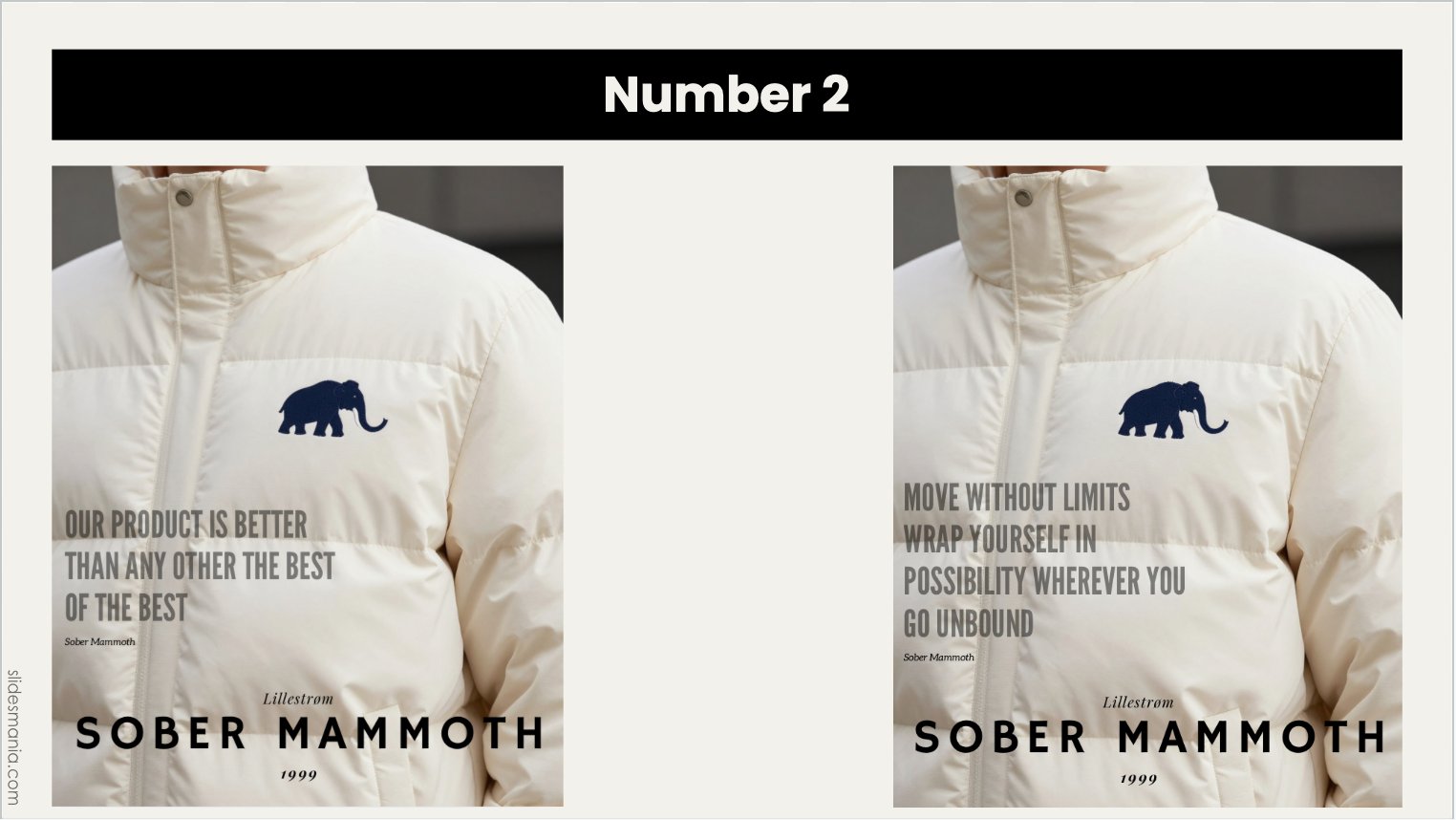
Most participants preferred the second Sober Mammoth advertisement; however, specific preference patterns were not strongly differentiated, indicating relatively comparable effectiveness between design variations.
Sunberry:
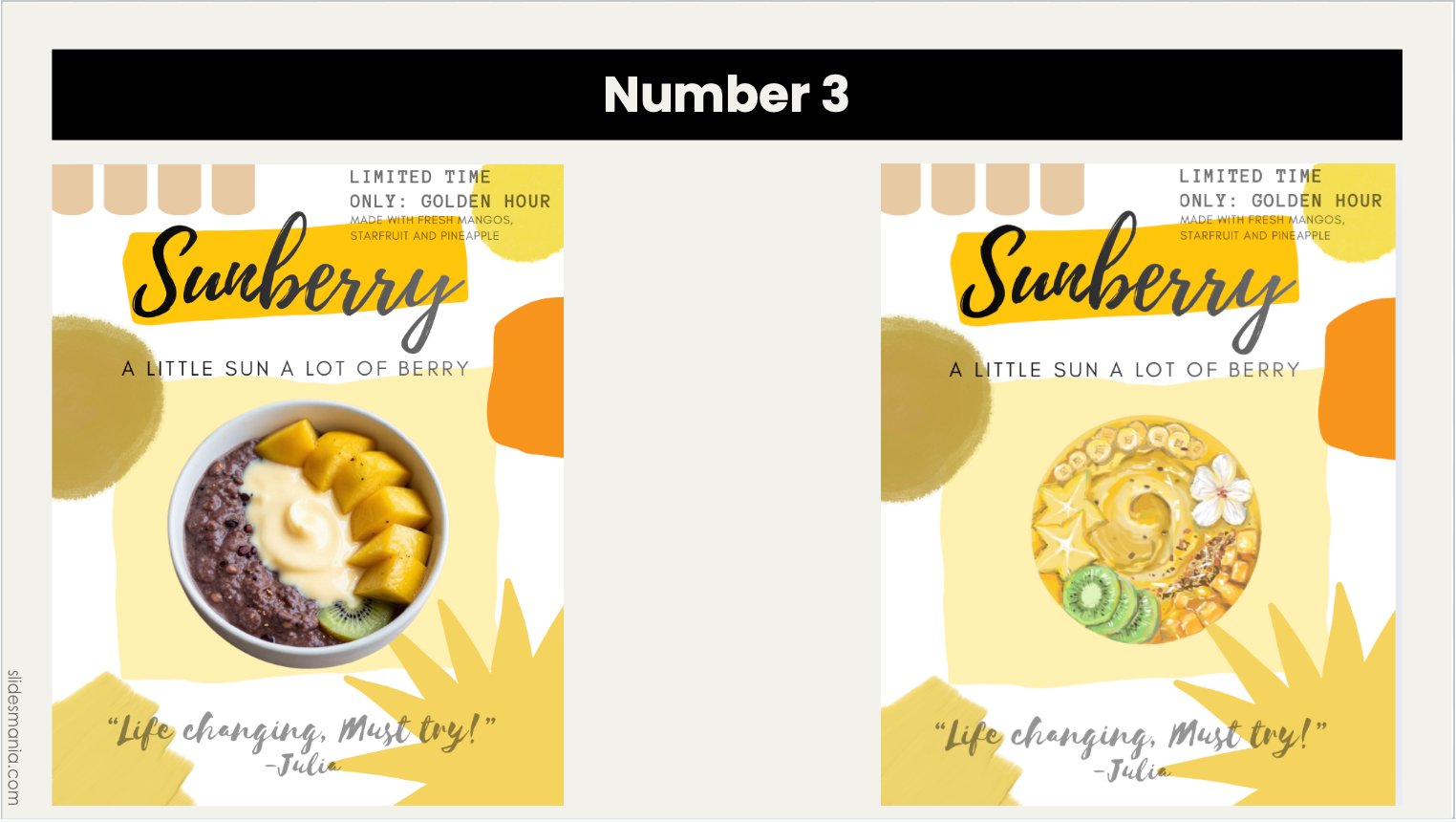
Perceptual priming did not appear to influence food preference. Participants generally preferred the actual food product over the artistic representation, despite the shared colour scheme. Frequently identified persuasive keywords included “must try,” “life-changing,” “limited time,” and “golden".
Big Back Burger:
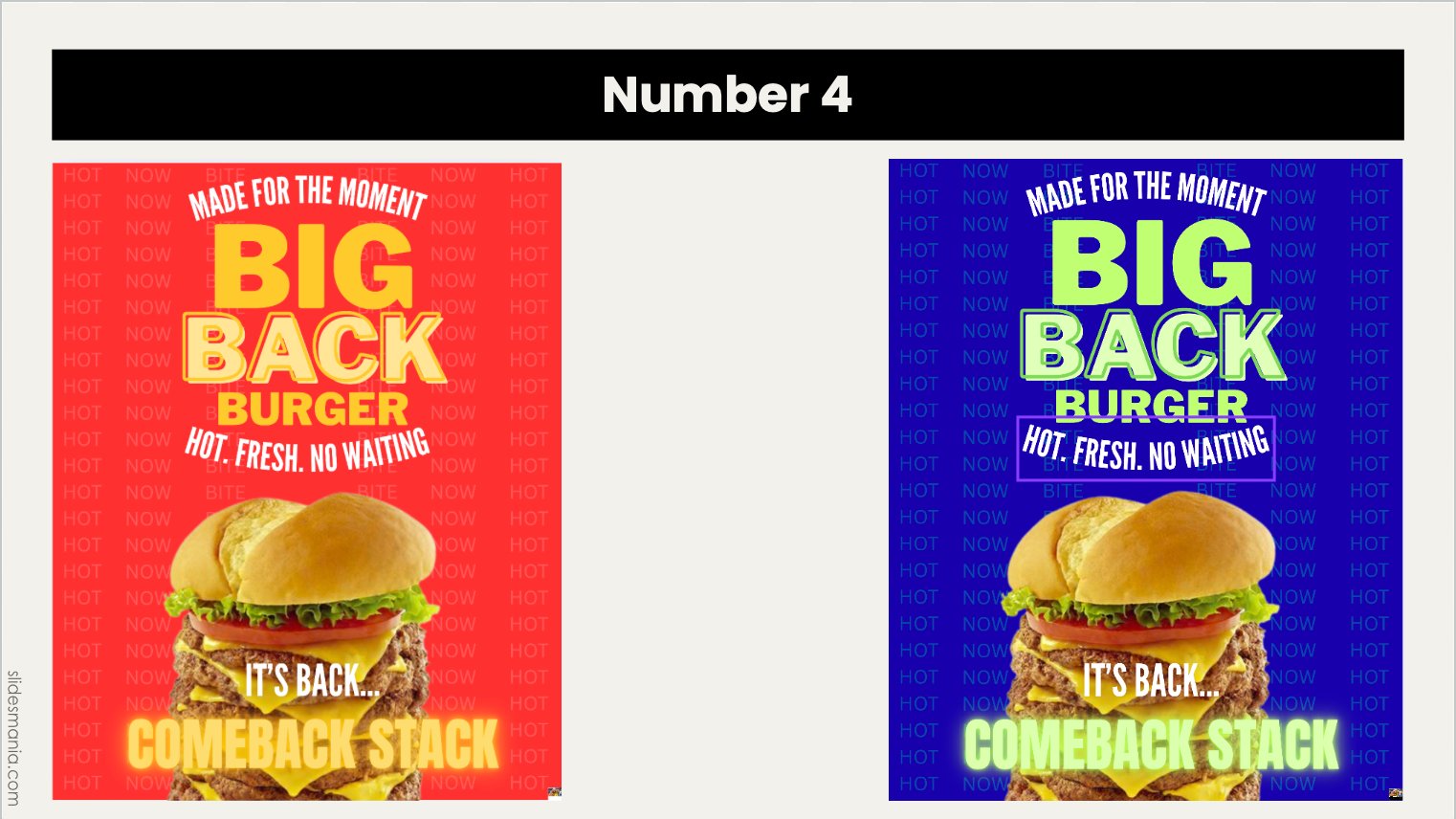
The majority of participants selected the advertisement using red and yellow colour schemes, and were susceptible to masked priming, however those who selected blue were not.
Lake Louise:
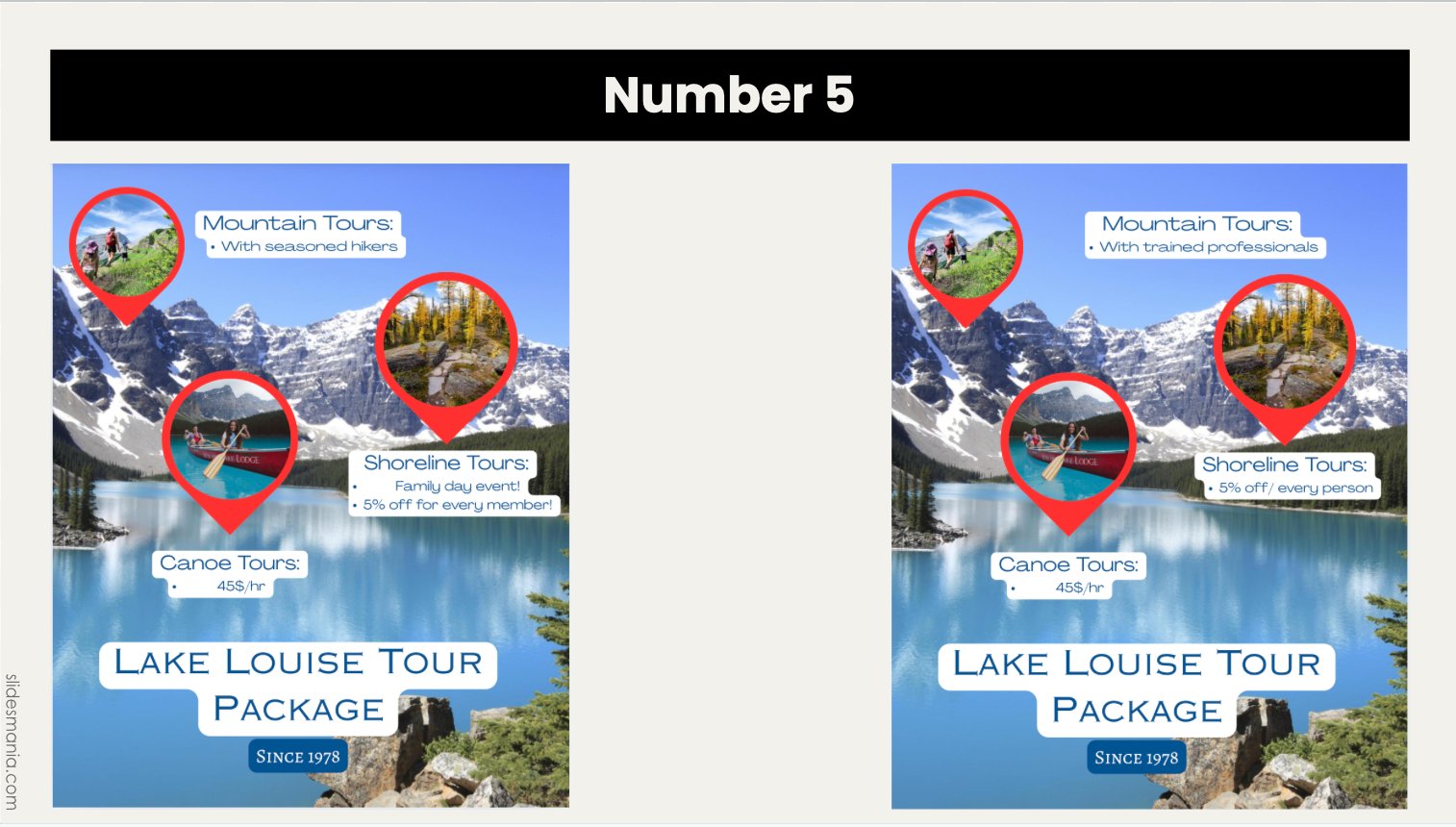
Participants frequently noticed the off-centre placement of the main logo in both advertisements. Preferences were relatively evenly distributed, though a slight majority favoured the left-aligned design. Commonly noted persuasive phrases included “Family Day event,” “5% off,” and “seasoned hikers,” indicating the potential influence of promotional incentives and target audience framing.
VitaLife:
Participants generally preferred advertisements using more formal and professional language. However, those under the age of 14 generally preferred the one with simpler language

Analysis

- Figure 1: Majority of our test takers were from 11 to 16 years of age
 **
** - Figure 2
- Most responders were female
- It has scientifically proven that females experience puberty about two years earlier than males, which means they have an earlier maturation of the brain, leading to more psychologically sophisticated responses
- Male brains contain more grey matter while females have more white matter.

- Figure 3:
Test subjects who recieved less than 6 hours of sleep were more susceptible to priming than those who got less sleep compromises the brain's executive control functions, forcing it to rely on
automatic, effortless cognitive strategies rather than controlled, rational processing. When sleep-deprived, the brain's ability to filter information and resist immediate, subconscious cues (priming) decreases, making individuals more influenced by recent, often irrelevant, stimuli.

- Figure 4:
- Participants reported significantly greater preference for the VelocityRun advertisement relative to the Plainstride advertisement. The VelocityRun advertisement utilized positive priming by incorporating action-oriented and temporally immediate lexical cues (e.g., “now,” “go”), which may have enhanced perceived urgency and induced more positive affect, thereby influencing evaluative judgments.

- Figure 5:
- This image indicates that our test subjects preferred inspirational messages over blunt superiority claims.
- Perceptually, this relates to the use of words such as "Possibility" and "Unbound", which sounds more sophisticated and mature than brands that claim to be the best
 Figure 6:
The majority of the participants selected the advertisement with the artistic depiction instead of the realistic one, though the results were close. Participants widely agreed that the colour scheme of the art was more appealing than the photograph
Figure 6:
The majority of the participants selected the advertisement with the artistic depiction instead of the realistic one, though the results were close. Participants widely agreed that the colour scheme of the art was more appealing than the photograph - This proves that the use of aesthetically pleasing colours that pair well acts as a perceptual and conceptual prime.
 Figure 7:
- Words that stood out to most participants include the title, the motto and phrases such as "Limited edition" or "Must try".
- These phrases signal confidence, imply social approval and reduce decision making effort, acting as a positive prime.
- The phrase "Limited Edition" triggers the scarcity principle, in which people value things more when they seem rare or temporary.
 Figure 8:
- A majority of participants preferred the red advertisement over the blue advertisement. This pattern may reflect established marketing practices, as red is frequently used in fast-food branding.
- The effectiveness of red could be attributed to learned associations with energy-dense foods and its ability to heighten attentional focus and perceived urgency.
 Figure 9:
- Participants who selected the red advertisement demonstrated a greater tendency to prefer the masked primed image compared to the non-primed image.
 Figure 10:
 - Participants who selected the blue advertisement more frequently preferred the image that did not contain masked priming stimuli. This pattern may suggest that individuals who demonstrate reduced responsiveness to perceptual priming effects are likewise less susceptible to masked priming influences.

- Figure 11:
- Participants demonstrated a preference for the advertisement containing a greater level of visual detail. Increased informational content may have enhanced perceived credibility or engagement. Additionally, the phrase “Family Day event” may activate the scarcity principle by implying time sensitivity or limited availability, thereby increasing its persuasive appeal.
 Figure 13
- The majority of participants preferred the advertisement with less formal language.
- This is most likely due to how the majority of responders were under the age of 18, changing the result
Conclusion
The results of this study suggest that subtle psychological cues significantly influence consumer preferences. Participants demonstrated systematic differences in advertisement selection based on color, priming techniques, visual detail, and perceptual salience. Specifically, red advertisements were preferred over blue advertisements, which may reflect learned associations between red, physiological arousal, urgency, and food-related stimuli. Additionally, advertisements incorporating action-oriented language and masked priming elements appeared to influence evaluative judgments, suggesting that both overt and subliminal cues can affect decision-making processes. Findings also indicate potential individual differences in susceptibility to priming effects, as some participants consistently preferred non-primed stimuli. Furthermore, visual factors such as image size, background color congruency, and informational detail likely enhanced perceptual fluency and attention, thereby increasing attractiveness. The inclusion of time-sensitive wording (e.g., “Family Day event”) may have further activated the scarcity principle, strengthening persuasive impact. Overall, this study supports the notion that consumer choices are not solely based on conscious reasoning, but are shaped by cognitive biases, perceptual mechanisms, and subtle environmental cues. These findings highlight the effectiveness of strategic design elements in advertising and contribute to a broader understanding of how psychological principles influence decision-making.
Application
- Marketing: Explains how subtle cues influence consumer behavior.
- Ethics & Society: Raises awareness of unconscious influence, teaching critical thinking and media literacy.1. Understanding Unconscious Decision-Making
1. INFLUENCES OF PRIMING IN DAILY LIFE
- Advertising, social media, classroom cues, and even peer behavior subtly shape our choices without us realizing it.
- This experiment demonstrates this scientifically and safely, giving students a tangible understanding of how environmental cues can unconsciously affect decisions.
2. EDUCATION AND LEARNING
- Teachers can use subtle cues (highlighting, prompts, repetition) to nudge learning and memory retention.
- Our findings could show that even minor subconscious prompts can influence attention or choice, offering insights into effective teaching strategies.
3. AI AND HUMAN - COMPUTER INTERACTION
- Companies designing AI assistants, apps, or games want to predict human decisions for better user experience.
- Understanding how decisions form before awareness is foundational for predicting behavior in technology and designing ethical AI.
4. SELF - AWARENESS AND CRITICAL THINKING
- People often think they make “fully rational” choices, but this experiment shows how unconscious processes play a role.
- Encourages students (and society) to think critically about their decisions, marketing influence, and even political messaging.
Sources Of Error
- We were unable to provide a perfectly stable and consistent environment for our test subjects, due to a lack of time and resources, so we had to use a google form instead. This might have influenced them because of their current surroundings, whether they were in a rush or not, etc.
- Some test subjects might not understand the difference between the advertisements, which was the case between the red and blue big back burger ads. This might lead to random guessing
- Our blue version of the “big back burger” advertisement, which contained masked priming, had a purple textbox that we missed before putting it on our google form
- Written responses were used instead of multiple choice or drop boxes making data difficult to properly distribute
- The use of artificial intelligence led to certain images looking less realistic than objects in real life (i.e. The lotion bottle in the VitaLife advertisement, Question No. 9)
- The title on the Lake Louise Tours advertisements were off - center, which we didn’t realize, until our test subjects pointed it out
Citations
CITATIONS
“AI Image Generator (Free, No Sign-up, Unlimited).” Perchance, https://perchance.org/ai-text-to-image-generator. Accessed 17 Dec. 2025.
“Anchoring Effect and People’s Behaviour in Decision Making.” HBEM, https://drpress.org/ojs/index.php/HBEM/article/view/8099. Accessed 19 Jan. 2026.
“Banff & Lake Louise Tourism | Official Destination Website.” Banff & Lake Louise Tourism\, https://www.banfflakelouise.com. Accessed 18 Jan. 2026.
“Canva.” Canva, https://www.canva.com. Accessed 4 Dec. 2025.
“Color and Sentiment: A Study of Emotion-Based Color Palettes in Marketing.” arXiv, https://arxiv.org/abs/2407.16064. Accessed 7 Dec. 2025.
“Free AI Image Generator - No Signup, No Restrictions.” FreeGen, https://freegen.app. Accessed 17 Nov. 2025.
“Google Forms.” Google, https://docs.google.com/forms. Accessed 10 Jan. 2026.
“New Findings on Unconscious versus Conscious Thought in Decision Making: Additional Empirical Data and Meta-Analysis.” Judgment and Decision Making, Cambridge University Press, https://www.cambridge.org/core/journals/judgment-and-decision-making/article/new-findings-on-unconscious-versus-conscious-thought-in-decision-making-additional-empirical-data-and-metaanalysis/A88F9DD16485B421928BCD33BFAC8A0A. Accessed 2 Nov. 2025.
“Nodes of Ranvier: Overview & Function.” Study.com, https://study.com/learn/lesson/nodes-ranvier-overview-function.html. Accessed 2 Nov. 2025.
“Priming.” Research Starters: Psychology, EBSCO, https://www.ebsco.com/research-starters/psychology/priming-psychology. Accessed 16 Nov. 2025.
“Priming and the Psychology of Memory.” Verywell Mind, https://www.verywellmind.com/priming-and-the-psychology-of-memory-4173092. Accessed 3 Nov. 2025.
“Subtle Science: Priming in Marketing.” LinkedIn, https://www.linkedin.com/pulse/subtle-science-priming-marketing-teqnite-n3wqf. Accessed 8 Dec. 2025.
“What Is Priming Psychology and What Is It Used For?” BetterHelp, https://www.betterhelp.com/advice/psychologists/what-is-priming-psychology-and-what-is-it-used-for/. Accessed 15 Nov. 2025.
“Pleased to Meat You: The Biggest, Baddest Burgers in America – in Pictures.” The Guardian, 24 May 2015, https://www.theguardian.com/lifeandstyle/gallery/2015/may/24/burgers-carls-jr-wayback-in-n-out-pictures. Accessed 6 Jan. 2026.
“Remove.bg.” Remove.bg, https://www.remove.bg/. Accessed 4 Jan. 2026.
[Article from Neuron]. Neuron, Cell Press, https://www.cell.com/neuron/fulltext/S0896-6273(00)80448-1. Accessed 24 Nov. 2025.
[arXiv Article]. arXiv, https://arxiv.org/abs/1911.12275. Accessed 5 Jan. 2026.
Acknowledgement
- Mr. Patrick O’Sullivan (science teacher, science fair coordinator) - for providing us with this opportunity, regularly checking in with us about our project, and informing us about deadlines
- Mia Li (STS student) - drawing the acai bowl for a second ‘Sunberry’ advertisement
- Our test subjects - for their taking the time to respond to our questions and fill out our science fair form
- Individuals at the library - for helping us test our fake advertisements and determine their effectiveness
- Malay Shukla, Shaily Singh, Jia Wang, Derek Li (our parents)- for providing us with guidance and support with our project over the past few months