
Advancing Package Patrol: Safeguarding your Deliveries
Fariza Mahmood, Manveer Cheema
Mohsin Ata
Grade 10
Presentation
Problem
As e-commerce continues to expand across North America, package theft commonly referred to as porch piracy has become a rapidly growing issue affecting households, delivery companies, and retailers. Reports indicate that a substantial proportion of consumers experience stolen deliveries each year, resulting in financial losses, inconvenience, and decreased trust in online shopping systems. Recent data from organizations like Security.org and Capital One Shopping say that millions of packages are stolen annually in North America, with theft rates continuing to rise alongside online purchasing trends.
Existing preventative measures, including video doorbells, surveillance cameras, and delivery notifications, primarily function as reactive tools that record theft rather than prevent it. Evaluations from organizations such as Consumer Reports and CNET indicate that while existing lockboxes and security devices may help reduce theft risk, many solutions remain inconvenient due to complex setup processes, limited accessibility for delivery personnel, or inconsistent user adoption.
There is currently a need for a secure, reliable, and user-friendly delivery solution that actively prevents unauthorized access to packages while remaining convenient for both consumers and delivery drivers. Our project PackagePatrol is a proposed system designed to address this gap by combining a secure lockbox, a camera-based authentication method, and a companion mobile app to allows verified access for the delivery personnel. Implementing a system like PackagePatrol could reduce theft-related losses, improve consumer confidence in online commerce, and enhance the safety and efficiency of last-mile delivery systems.
Method
Phase 1: Prototype Iterations
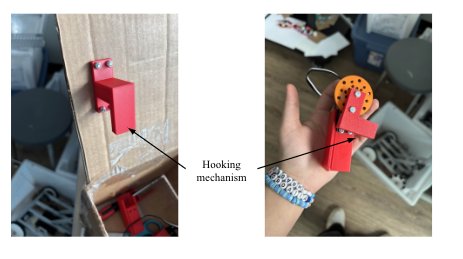
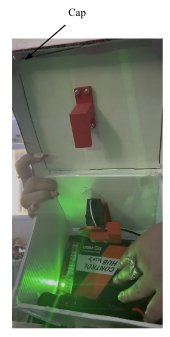 Initial prototyping
The above diagrams showcase our various prototyping phases, using cardboard and 3D-printed parts. Here, we created our proof of concept, ensuring that we would be able to achieve the intended goal within a reasonable timeframe. Through various iterations, we learned that complexity is not the key to achieving the desired outcome, but rather an obstacle to overcome. Further, this experience also allowed us to understand key changes that needed to be made for the Package Patrol to be efficient for the user.
This included:
- Adding areas to streamline the lifting process of the cap, allowing the cap to be removed effectively.
- Reducing the space taken by the electronics and power supply allows for more room to place packages.
- Increase stability and rigidity of the entire structure, allowing it to weather external environmental factors.
- Ensure that the longevity of the hooking mechanism remains high.
Prototype 1 (Cardboard)
- Issues: Misaligned servo motor placement and hole measurements
- Purpose: Test size and fit for packages and initial locking system
Prototype 2 (MDF, revised)
- Adjusted hole placement for servo alignment
- Tested locking/unlocking repeatedly to ensure consistency
Prototype 3 (Final)
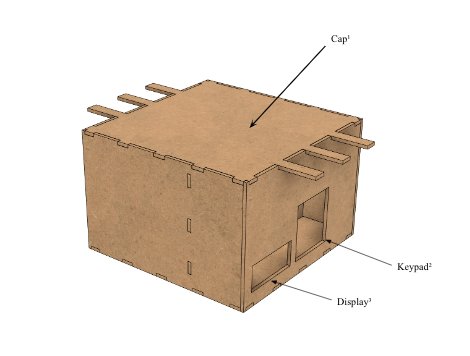
Above is our final design. Through various iterations, testing, and programming, we evolved the Package Patrol to what you see above. Using Fusion 360 Software, we were able to design and simulate each intricacy and function within this physical design. This allowed us to do much of our physical prototyping online, cutting down the use of wasteful prototyping. Learning from these lessons, we clearly identified problem areas and refined them. This included making the overall structure more rigid.
To do this, we moved past cardboard to MDF, adding a ‘puzzle piece’ like design to provide better rigidity within the structure. Doing this also allowed for any added force to be distributed more evenly throughout the Package Patrol. Further, we added elongated arms on either side of the cap¹, streamlining the process of lifting it to place or pick up a package inside. In the walls, we made cutouts for where the display screen and keypad would be located. This allowed for the user interface to be better understood, allowing the eyes to naturally travel to those areas, better identifying what needed to be done with the package and where.
Phase 2; Box Design
The Package Patrol box is the main physical structure that protects packages from theft. Using your updated measurements ensures accuracy in design, testing, and presentation.
Box Specifications
- Mass: 13,360.363 g (≈13.36 kg)
- Volume: 1.702 × 10⁶ mm³ (≈1.702 liters)
- Density: 0.008 g/mm³
- Surface Area: 7.813 × 10⁵ mm²
- Dimensions: Width 249 mm × Length 348.6 mm × Height 164.6 mm
- Prototype Material: Cardboard (for early design and testing)
- Final Material: MDF (durable and weather-resistant for Canadian climates)
Design Features
- Top-loading slot for deliveries
- Internal compartments to stabilize packages
- Weather-resistant coating to prevent water damage
- Optional mounting holes for stability on porches
- Compatible with the locking mechanism
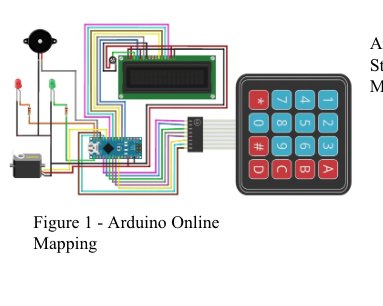
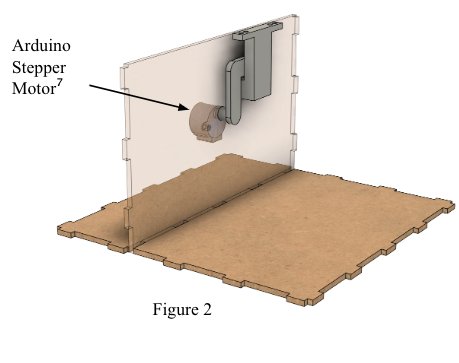
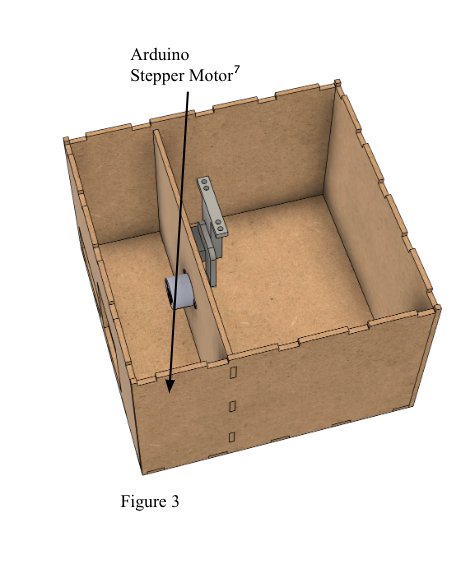 One of the biggest changes that needed to be made from our iterative designs was the electronics. To cut down on the amount of space that was used up by the electronics, we moved from REVⒸ control hubs and StudicaⒸ servo to an Arduino breadboard and kit.
As shown in figure 1, this allowed us to map out the electronics, ensuring that our wires and cables remained organized, but also giving us the opportunity to utilize digital displayed and keypads. Doing this, we were confident in that we could separate the wires and electronics form where the package would be placed, something we struggled with in our initial prototyping. Additionally, transionintong from a StudicaⒸ servo to an Arduino Stepper Motor⁷ conserved space and allowed us to program in a more simple coding language (C++) rather than Java, opening doors to more opportunities.
Math & Calculations
- Volume (for consistency check):

- Provided measured volume: 1.702 × 10⁶ mm³ (used for density calculation)
- Density;
 Surface area: 7.813 × 10⁵ mm² (used for coating and finishing calculations)
Testing
- Prototype (cardboard): Tested for fit, locking alignment, and ease of assembly
- Final MDF box: Tested for weight stability (supports up to 5kg packages), water resistance, and durability under simulated rain and snow
Phase 3: Locking Mechanism
The locking system ensures packages are accessible only to authorized users through the app.
Design Features
- Servo motor-driven latch
- 4-digit passcode generated in the app
- Optional future upgrade: facial recognition
- Manual override in case of power failure
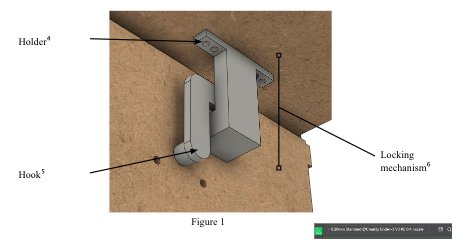
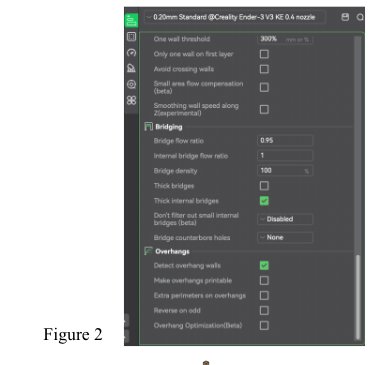
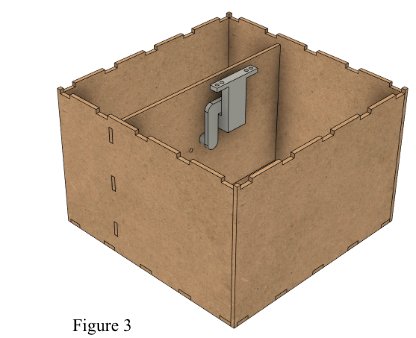
Using Fusion 360, we were able to determine the best positioning for the locking mechanism⁶. We could move things, shorten others, and overall come to the best conclusion. For the holder⁴ the attachments are evident, with four screholes, evenly divided, allowing it remain fixed in its position. Furthermore, the Hook⁵ has changed from the previous iterations into a longer design, but also with soft edges. We did this so that any force on it will distribute evenly, rather than gathering in one area and causing the 3D printed item to break.
To improve the locking mechanism⁶ itself and ensure the longevity of the item, we experimented with the 3D printer settings. In Figure 2, you can see that the 3D printer has many different ways to print the holding mechanism. After extensive research and experimenting, we were able to settle on printer settings that could handle the most weight and would last the longest.
Math & Security
- Torque calculation: To resist forced entry:

- Security: 10,000 possible 4-digit combinations
- Success rate: Lock/unlock tested 50 times → 100% success
App Integration
- Generates code in real time
- Sends notifications to users when a package is deposited
- Tracks package history, lock/unlock times, and previous codes
App code from original prototype (app will be updated)
onEvent("PasswordButton", "click", function( ) {
setScreen("screen2");
onEvent("button6", "click", function( ) {
setNumber("text_area2", randomNumber(10000, 1000));
});
onEvent("button7", "click", function( ) {
setScreen("Menu");
});
});
onEvent("Connectbutton", "click", function( ) {
setScreen("screen3");
onEvent("button8", "click", function( ) {
setScreen("Menu");
});
});
onEvent("Statusbutton", "click", function( ) {
setScreen("screen4");
onEvent("button9", "click", function( ) {
setScreen("Menu");
});
});
onEvent("historybutton", "click", function( ) {
setScreen("screen5");
onEvent("button10", "click", function( ) {
setScreen("Menu");
});
});
onEvent("SettingsButton", "click", function( ) {
setScreen("screen6");
});
onEvent("button6", "click", function( ) {
createRecord("Package patrol passwords", {Password:(getText("text_area2")),Time:Date()}, function(record) {
});
});
var x = getColumn("Package patrol passwords", "Password");
y = getColumn("Package patrol passwords", "Time");
setText("password_History", x);
setText("text_area4", y);
https://studio.code.org/projects/applab/VGnwwgL7LjZfrWN2t9q_fWpumD8g-8PXChIZ4rWIY-M This will be the template for our app. This app includes a Password, Connect, Status, And History. (app is subject to more changes)
Testing
- Simulated weather: rain, snow, temperature changes
- Connectivity: code transmitted and received in <3 seconds
- Security: forced entry and code guessing tests
Analysis
Porch Piracy and the Rise of Package Theft in the E-Commerce Era
Over the past decade, the global rise of e-commerce has fundamentally altered the way people shop and receive goods. Online platforms such as Amazon, Walmart, and eBay allow consumers to purchase items from virtually anywhere, with promises of fast and convenient delivery. However, this convenience has created an unforeseen problem: porch piracy. Defined as the theft of packages from residential delivery points, porch piracy has become increasingly common as more goods are left unattended outside homes. Recent studies show that porch piracy affects millions of households each year, resulting in financial losses, emotional distress, and decreased trust in online shopping systems (Adkins, 2024; Capital One Shopping, 2025).
The growing prevalence of this crime highlights the need for proactive, technological, and legal solutions to protect both consumers and businesses. The historical context of porch piracy reveals that while the theft of mailed goods is not entirely new, the current scale is unmatched. In the early 2000s, package theft incidents were largely reported by consumers leaving them frustrated due to missing deliveries. These thefts were more localized, often occurring in dense urban areas where anonymity allowed thieves to operate with little risk. By the 2010s, as e-commerce grew rapidly, delivery volumes increased, and more packages were left unattended on residential porches. A survey conducted in 2015 indicated that roughly one-third of consumers had experienced at least one stolen package, a figure that rose dramatically during the COVID-19 pandemic due to a surge in online shopping (C+R Research, 2020). The trend has continued into 2024, with millions of packages reported stolen annually across North America and beyond.
Several key statistics highlight the scope and severity of this issue. According to Security.org, approximately 12 million packages were stolen in North America in November 2024 alone, with repeat thefts being common among affected households. Nearly 64% of victims reported experiencing multiple thefts, demonstrating a pattern of vulnerability that extends beyond a single incident (Adkins, 2024). Research also shows that the average value of a stolen package ranges from $100 to $200, although high-value electronics, designer clothing, and jewelry are disproportionately targeted. This problem is not limited to the U.S. and Canada; countries across Europe and Asia are reporting similar trends as online shopping continues to expand globally (SafeWise, 2025).
Consumer behavior and environmental factors play a significant role in porch piracy vulnerability. Porch pirates tend to strike during times when residents are most likely to be absent typically between 6:00 a.m. and 6:00 p.m. capitalizing on predictable delivery patterns. Homes with multiple occupants, lower visibility, poor lighting, or no surveillance systems are more frequently targeted, while residences with security cameras, motion-activated lights, or centralized delivery areas tend to experience fewer incidents (Chamber of Commerce, 2025). Despite awareness of these risks, consumers often face practical limitations: many are unable to schedule deliveries when home, lack secure drop-off locations, or rely on carriers that cannot provide alternative delivery options.
The financial and emotional consequences of porch piracy are substantial. Consumers may lose hundreds of dollars per incident, and small businesses often face reputational damage when packages are stolen before reaching customers. According to Capital One Shopping (2025), the total economic impact of package theft in the U.S. is estimated at over $37 billion annually, encompassing direct losses, replacement costs, and operational inefficiencies. Emotional impacts include anxiety, stress, and loss of trust in online shopping platforms, with repeated victimization exacerbating these effects. Victims report feeling violated in their personal space and often monitor future deliveries obsessively to avoid further theft (SupplyChainBrain, 2025).
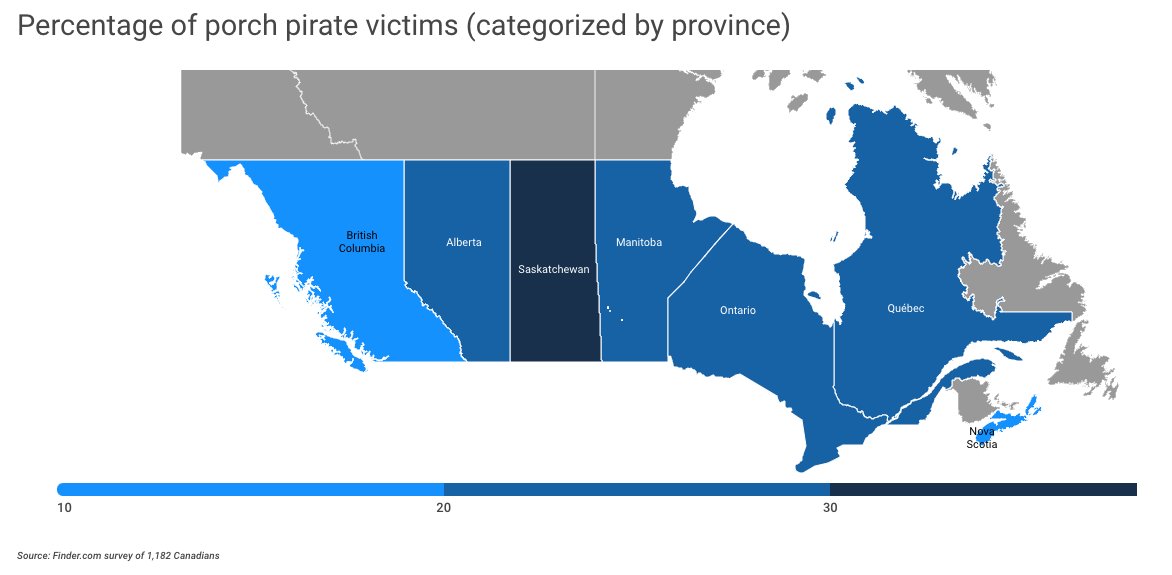
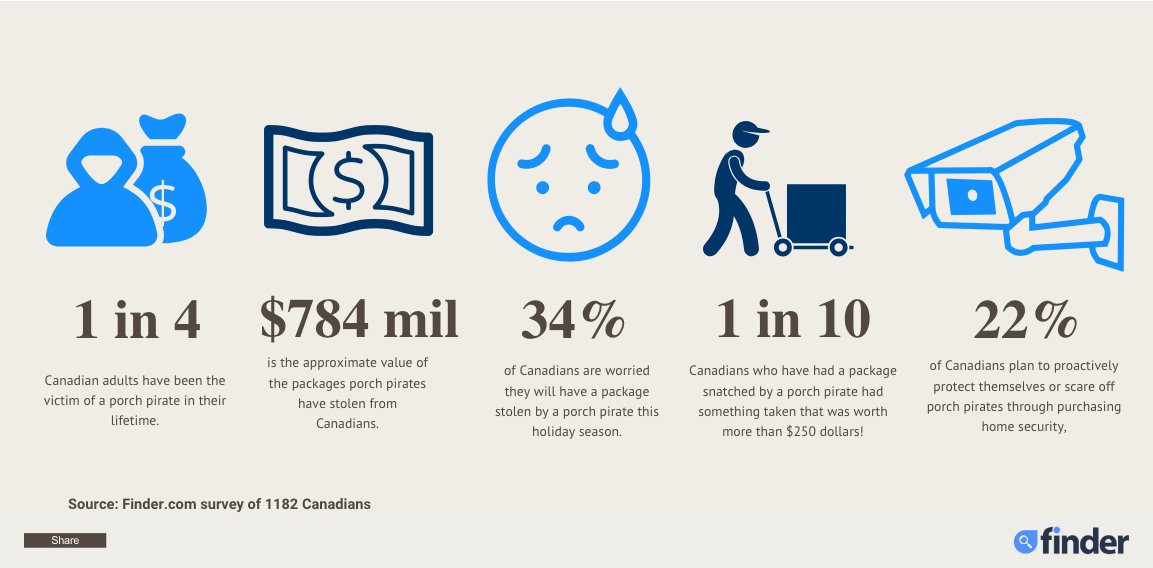
This infographic from Finder.com presents key statistics on porch piracy in Canada. It shows that 1 in 4 Canadian adults have experienced package theft, with an estimated $784 million in stolen goods. The map highlights provincial differences in victim rates, while additional data reveals that 34% of Canadians are worrying about theft during the holidays, 1 in 10 victims lost items worth over $250, and 22% plan to invest in home security for protection. The data is based on a survey of 1,182 Canadians. (citation 23)
Consumer Behavior and Risk Factors
Analysis of consumer patterns and environmental factors reveals why certain households are more vulnerable to porch piracy:
- Daily routines: Thieves are more likely to strike during standard working hours when residents are absent (6:00 a.m.–6:00 p.m.).
- Visibility and lighting: Poorly lit porches and obscured front entrances provide thieves with cover.
- Lack of surveillance: Homes without security cameras or neighborhood watch systems have higher theft rates.
- Repeat targeting: Thieves frequently return to addresses that have been successfully stolen from in the past.
Despite awareness of these risks, many consumers are constrained by delivery obligations, job schedules, and the impracticality of always being home. This behavior has led to increased reliance on “delivery tracking,” but tracking notifications alone do not prevent theft, only alert homeowners after packages have been dropped off.
List of common vulnerable factors:
- Absent residents during delivery windows
- No visible deterrents (cameras/lights)
- Unsecured doorsteps or hidden entryways
- Predictable delivery routines
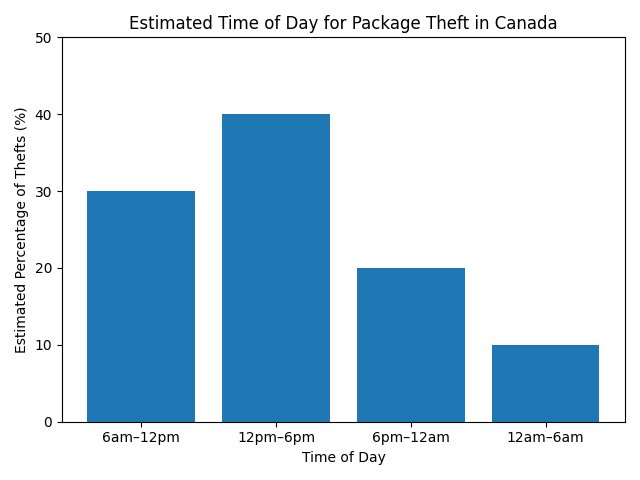
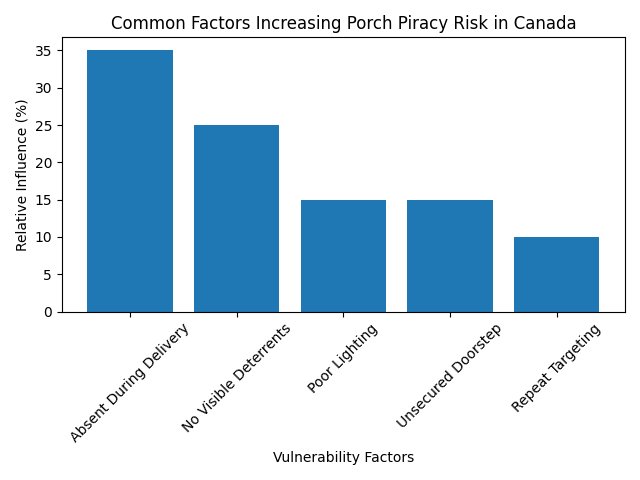
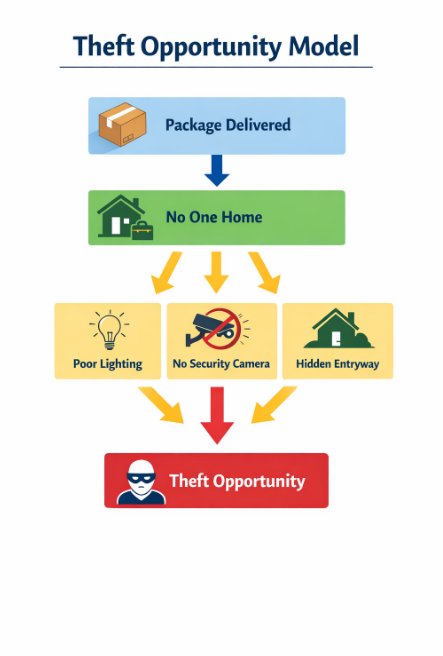
The Theft Opportunity Model was created to visually represent the sequence of environmental and behavioral conditions that increase the likelihood of porch piracy. I designed this diagram using a step-by-step flow structure to demonstrate how package theft is often not random, but instead occurs when multiple risk factors align.
The model begins with a delivery being made, followed by the resident being absent during typical working hours. It then highlights environmental vulnerabilities such as low visibility, poor lighting, or lack of surveillance cameras. When these factors combine, they create an increased opportunity for theft.
I created this visual using a simple flow layout to clearly show cause-and-effect relationships between delivery timing, environmental exposure, and criminal opportunity. The goal of this graph is to make the risk progression easy to understand and to emphasize that theft prevention must address multiple stages not just delivery tracking notifications.
Retailer and Industry Responses
Retailers and shipping companies have implemented a variety of strategies to address the growing problem of package theft, but the fundamental challenge remains: most of these methods react after the package has already been delivered rather than preventing theft in the moment.
1. Signature Required Deliveries
One common response is signature required deliveries this is for high value items. Requiring a recipient’s signature at the point of delivery can reduce the likelihood that a package is left unattended, especially for expensive electronics or luxury goods. However, this approach introduces logistical barriers. Many consumers are not home during typical delivery windows, leading to missed deliveries and inconvenient redelivery attempts. Furthermore, signature requirements increase the workload for carriers and may slow down delivery times.
 (from citation 26)
2. Photo Verification
The delivery personnel take a picture of the package at its drop off location and send it to the recipient. While this provides digital evidence of delivery, it does not ensure the package’s security. A photo simply shows where the package was left, not whether it remains there. Studies of consumer experiences with photographic delivery confirmation show that thieves can quickly remove packages even after the photo is taken, making the evidence more useful for reporting than for prevention.
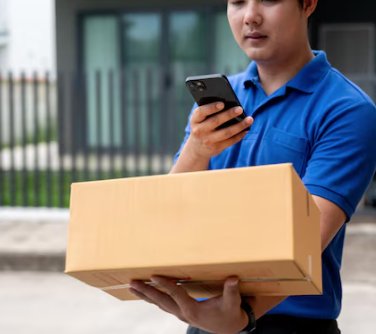 (from citation 27)
3. Package Lockers
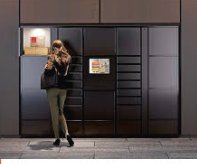
Package lockers and centralised pickup points are increasingly used, especially in multi unit residential buildings. These systems provide a secure location where all deliveries are stored until the recipient retrieves them. Although effective in niche environments, these solutions are not practical for all settings, particularly single family homes and rural areas.
 (from citation 21)
4. Driver Alerts
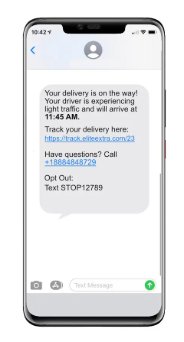
Carriers have also deployed driver alerts that flag high risk theft addresses using historical data. This can help drivers take extra precautions, such as leaving packages in less visible locations, but it still does not prevent theft if no one is home at the time of delivery.
 (from citation 28)
5. GPS tracking
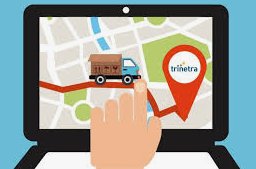
Lastly, GPS tracking enhances parcel visibility and allows consumers and carriers to monitor the real time location of packages. While this feature significantly improves transparency, it still does not secure a package against removal once it reaches its final destination.
 (from citation 29)
Figure 1. Effectiveness of Various Anti‑Theft Measures
| Method | Estimated Reduction in Thefts |
|---|---|
| Signature Required | 10-20% |
| Photo Verification | 5–15% |
| Package Lockers | 25–40% (for multi‑unit) |
| Driver Alerts | 10–25% |
| GPS Tracking | n/a (prevention = 0%) |
(This chart compares common retailer and carrier strategies used to reduce package theft, including signature requirements, photo verification, package lockers, driver alerts, and GPS tracking. The data illustrates that while some measures provide moderate risk reduction, most solutions focus on documentation rather than physically preventing theft at the moment of delivery. Despite these efforts, porch piracy continues to rise. According to the 2025 industry analyses, theft remains one of the most common complaints among online shoppers, particularly during high volume delivery periods such as holidays. One key reason these solutions fall short is that they depend on post delivery evidence or added human effort instead of preventing theft at the moment of delivery. Measures like signatures and photos capture what happened but do not actively stop a thief from taking the package.)
Another challenge is that many consumers resist solutions that add friction to the delivery experience. For example, requiring signatures or centralised pickup locations can be inconvenient, especially for working families or people without flexible schedules. Research suggests that convenience is a major driver of online shopping behaviour, so solutions that compromise convenience often face low adoption rates (Chamber of Commerce 2026).
In qualitative surveys, consumers have repeatedly indicated that while they appreciate delivery tracking and photos, these features do not reduce their anxiety about theft because they still leave the package vulnerable when no one is home. As a result, there is broad agreement among experts that future solutions must focus on securing the package itself at the time of delivery not just documenting its arrival.
Technological Innovations
Recent advancements in technology have been aiming to make deliveries more secure and trustworthy.
These include:
1. AI‑Enabled Cameras
| Pros | Cons |
|---|---|
| Artificial intelligence allows cameras to detect suspicious movement and alert homeowners instantly. | AI systems can generate false alerts, causing notification fatigue and reduced responsiveness. |
| Machine learning can differentiate between humans, animals, and harmless motion. | Advanced features often require subscription fees and stable Wi-Fi connectivity. |
| Provides real-time monitoring and recorded footage for evidence. | Raises privacy concerns due to continuous recording and cloud data storage. |
2. Predictive Analytics
| Pros | Cons |
|---|---|
| Helps logistics companies identify high-risk addresses using historical theft data. | Not widely adopted across all carriers, limiting overall effectiveness. |
| Can analyze neighbourhood activity and delivery timing patterns to prevent theft. | Requires upfront investment in software, infrastructure, and training. |
| Enables delivery routes and schedules to be adjusted proactively to reduce theft risk. | Integration with carriers can be challenging, and incorrect use reduces accuracy. |
Now our design;
3. Package Patrol
| Pros | Cons |
|---|---|
| Provides secure, real-time package protection by only allowing access via one-time pin codes. | Users must have a smartphone or app access to manage codes. |
| Automatic re-locking ensures packages are never left unattended. | Occasional app notifications may require attention, but they help keep homeowners informed. |
| Gives homeowners peace of mind with real-time updates and monitoring. | Works best when Wi-Fi is stable, but offline functionality allows basic lock/unlock. |
| Reduces reliance on delivery signatures, post-delivery evidence, or reactive recovery methods. | Minor software updates may be needed periodically, but they improve system performance. |
The minor limitations of PackagePatrol are easy to manage. App notifications and initial setup take only a few minutes, and software updates are simple to install. Even Wi-Fi dependency is mitigated by offline lock/unlock functionality. Overall, these small considerations do not reduce the system’s effectiveness in preventing porch piracy.
Law Enforcement and Legal Frameworks
Porch piracy is addressed differently across jurisdictions. In Canada, adults caught stealing packages are usually charged with theft under $5000; youth offenders (ages 12–17) are processed under the Youth Criminal Justice Act (YCJA), which emphasises both accountability and rehabilitation.
 (from citation 30)
The YCJA prefers community service or restorative programs for minor offences but allows adult sentencing for serious, repeat crimes (YCJA 2025). In the United States, porch piracy can fall under postal theft statutes, which carry federal penalties including fines and imprisonment. However, law enforcement challenges include:
-
Under reporting: Most victims unfortunately don't file police reports.
- Evidence barriers: Camera footage may not capture faces or clear identifiers.
- High volume: Police resources are often prioritized for more severe crimes.
As a result, only about 10% of reported porch piracy cases lead to arrests or convictions (Toronto Shoplifting Lawyer 2025). This low rate of enforcement highlights a major gap in the legal and policing system, leaving the majority of thefts unresolved. Homeowners often face repeated losses without consequences for thieves, which can lead to financial strain, emotional stress, and a feeling of vulnerability in their own homes. The low conviction rate also emboldens porch pirates, as the risk of punishment is minimal, perpetuating the cycle of theft and undermining trust in online shopping and delivery systems.
Economic Impacts
Porch piracy affects both consumers and the economy at large. Direct financial impacts include product replacement costs, refunds, and higher insurance premiums. Indirect impacts include time spent reporting theft, customer service interventions, and lost productivity.
Small businesses are disproportionately affected because they may lack the resources to absorb losses or provide guaranteed replacement services. For many companies, repeated theft complaints damage customer trust and can result in negative reviews that reduce future sales.
Bullet list of economic impacts:
- Increased operational costs for retailers due to lost merchandise and replacement shipments
When packages are stolen, retailers must replace items, which raises shipping and handling expenses. Repeated losses can significantly affect their bottom line.
- Higher insurance claims for delivery companies, raising premiums for everyone
Delivery companies often file insurance claims for stolen packages, which will drive up premiums. Over time, this increases operational costs that may be passed on to consumers.
- Loss of consumer spending as people become wary of online shopping or avoid high-value purchases
Consumers who experience porch piracy may hesitate to order high-value items online. This reduction in spending can negatively affect retailers and the e-commerce market.
- Increased investment in security technology (smart locks, cameras, delivery lockers) to mitigate theft risk
To combat theft, both consumers and companies invest in smart locks, cameras, and secure delivery solutions. These upgrades improve security but add additional costs.
- Negative impact on small businesses, which may face reputation damage from repeated customer complaints
Small businesses can suffer reputation damage from repeated package thefts, leading to lost customers and financial strain.
- Potential price increases for consumers as companies offset losses from theft
Companies may raise prices to offset losses from stolen packages, indirectly affecting all consumers.
- Decreased efficiency in delivery networks due to rerouted or delayed shipments
Rerouting deliveries or adding security measures can slow down operations, reducing overall efficiency for logistics providers.
- Time and labour costs associated with handling theft claims and customer service inquiries
Customer service teams spend significant time resolving theft-related complaints, which diverts resources from other business functions.
 (from citation 32)
Social and Psychological Impacts
Package theft doesn’t just cost money; it affects how people feel about living in their own homes.
Victims report:
- A sense of violation or insecurity
- Increased anxiety about future deliveries
- Hesitancy to order valuable items online
These emotional consequences can significantly influence consumer behavior and how people interact with online shopping platforms. After experiencing package theft, many consumers become more cautious when ordering items online and may limit purchases, choose in-store pickup options, or delay ordering valuable products. The repeated risk of losing deliveries can also create frustration and reduce confidence in the reliability of home delivery services. Over time, these experiences may weaken trust in e-commerce platforms and delivery systems, as consumers begin to question whether their purchases will arrive safely. As a result, porch piracy not only causes financial loss but can also negatively affect customer satisfaction, purchasing habits, and the overall trust people place in online retail systems.
 (from citation 33)
Impacts of Porch Piracy on Consumers and Businesses
| Category | Impacts on Consumers | Impacts on Businesses |
|---|---|---|
| Financial Loss | Consumers lose an average of $100–$200 per stolen package, though high-value items can cost much more. | Retailers often refund or replace stolen items, increasing operational costs. |
| Replacement Costs | Victims may need to repurchase items, pay additional shipping fees, or wait for replacements. | Businesses absorb replacement product costs, reshipping fees, and customer service expenses. |
| Time & Convenience | Consumers spend time filing claims, contacting retailers, and tracking packages. | Companies must handle customer complaints, support requests, and investigations. |
| Trust & Reputation | Consumers may lose trust in online shopping platforms or delivery services. | Negative customer experiences can lead to bad reviews and reduced brand reputation. |
| Security Spending | Homeowners invest in cameras, lockboxes, lighting, or delivery lockers. | Companies invest in tracking systems, delivery verification, and secure logistics technologies. |
| Behavioral Changes | Consumers may avoid ordering expensive items online or change delivery locations. | Businesses must adapt delivery methods and develop theft-prevention solutions. |
Figure 2. Comparison of the financial, operational, and behavioral impacts of porch piracy on both consumers and businesses. Package theft affects individuals through financial loss and stress, while businesses face increased operational costs and customer trust challenges.
Case Studies and Real-World Examples
Examining real-world examples reveals the multifaceted nature of porch piracy.
-
Mark Rober’s Glitter Bomb Series (2018–2023): Rober’s experiments involved rigging packages with glitter, GPS trackers, and cameras to catch thieves in action. These videos went viral and shed light on how thieves often operate with predictability and how repeat victimization occurs. His work not only inspired public awareness but also motivated innovations like Project Package Patrol, which combines physical security with technology-driven access.
-
Repeat Offender Trends: Data from Security.org (2025) shows that addresses that have been previously targeted are far more likely to experience subsequent thefts. Thieves exploit patterns in delivery timing and homeowner habits, demonstrating that porch piracy is rarely random.
Retailer Reports: Amazon has observed increased incidents despite implementing signature verification and photo documentation. While these measures reduce casual theft, the data confirms that more robust, proactive security solutions are necessary.
International Perspectives on Porch Piracy
Porch piracy is not unique to North America; it is a global issue with region-specific solutions.
-
Europe: Urban areas face high theft rates, particularly in apartment complexes where packages are left in shared entryways. European countries have begun adopting centralized delivery lockers, which provide a secure, monitored location for deliveries. These systems reduce theft by limiting direct access to parcels and providing controlled pickup points.
-
Asia: Countries like Japan and South Korea implement highly secure delivery systems, often with concierge services, smart lockers, and strict tracking. The culture of responsibility and technological integration reduces porch piracy incidents, particularly in cities with dense populations.
-
Australia: The rise of online shopping correlates with an uptick in porch theft. Suburban neighborhoods face higher incidents due to less population density, which allows thieves to act with reduced risk of observation. Australian authorities and retailers are exploring smart delivery solutions similar to those in North America.
International comparisons highlight that secure infrastructure, public awareness campaigns, and centralized collection points effectively reduce theft. Countries integrating technology with delivery logistics consistently report lower incident rates than those relying solely on homeowner vigilance.
| Country | 2024 Incidents per 100,000 households | 2025 Incidents per 100,000 households | 2026 (Projected) per 100,000 households |
|---|---|---|---|
| United States | 680 | 665 | 700 |
| Canada | 210 | 230 | 250 |
| United Kingdom | 320 | 350 | 380 |
| Australia | 180 | 195 | 210 |
| Japan | 90 | 95 | 100 |
Demographics and Geographic Trends
Porch piracy is not uniformly distributed. Several factors influence which households are most vulnerable:
-
Urban vs. Suburban: Urban areas have higher theft rates due to anonymity and dense housing. Suburban areas often experience lower rates, but theft can be more profitable per incident due to larger packages.
-
Socioeconomic Factors: Thieves tend to target neighborhoods where high-value items are frequently delivered. Middle- and high-income areas are more likely to experience repeat thefts, while low-income areas may face fewer incidents but have less access to preventive technology.
-
Housing Type: Multi-family dwellings, especially apartments with shared entrances, provide anonymity for thieves. Single-family homes with visible security measures and lighting tend to be less targeted.
-
Victim Profile: Individuals aged 25–44 report the highest incidents, reflecting their reliance on online shopping. The combination of predictable delivery habits and less home presence increases risk.
Consumer Strategies and Prevention
Consumers have adopted several strategies to minimize risk:
-
Scheduling deliveries to align with home presence
-
Installing smart cameras and motion-detecting lights
-
Using lockboxes or centralized package pickup locations
-
Relying on neighbors or workplaces for temporary delivery
-
Monitoring package tracking apps for real-time alerts
Despite these efforts, theft continues because proactive measures require effort, cost, and awareness. Many consumers only implement partial solutions, leaving gaps that thieves exploit.
Analysis of Theft Patterns
Porch pirates often follow predictable patterns:
-
Theft primarily occurs between 6:00 a.m. and 6:00 p.m., coinciding with homeowner absence.
-
Repeat targeting of the same addresses is common if prior thefts were successful.
-
High-density neighborhoods with predictable delivery routines are most at risk.
-
Holidays and major online sales events see spikes in incidents.
Behavioral studies indicate that understanding these patterns allows for better-targeted preventive measures.
High-Value Targets
Thieves prioritize items with strong resale potential:
-
Electronics: Smartphones, laptops, gaming consoles
-
Designer fashion: Gucci, Louis Vuitton, Chanel
-
Jewelry: Watches, necklaces, rings
These items are highly liquid in secondary markets and are often stolen for quick resale, rather than personal use.
Online Marketplaces and Pawnshops
Stolen goods frequently enter online marketplaces or pawnshops:
-
Online: Kijiji, Craigslist, LeoList, Facebook Marketplace, eBay
-
Pawnshops: Often no proof of ownership required
-
Black Market: Some thieves sell bulk electronics to resellers
While platforms like eBay prohibit the sale of stolen goods, enforcement depends heavily on user reporting and monitoring.
Security Product Effectiveness
Security solutions vary in effectiveness:
-
Lockboxes: Physical security reduces theft but may be inconvenient for couriers.
-
Smart lockboxes: Integrated with apps and one-time access codes, they are highly effective when properly used.
-
Cameras: Deter casual thieves, but sophisticated thieves may circumvent or obscure identification.
Consumer Reports and CNET studies indicate that solutions combining physical barriers with digital monitoring produce the strongest reduction in incidents.
Ethical and Social Considerations
Porch piracy raises several ethical and societal concerns:
-
Thieves often resell items to unaware third parties
-
Pawnshops and online marketplaces can inadvertently facilitate illegal activity
-
Public awareness campaigns are critical for reducing repeat offenses and encouraging reporting
Education and community vigilance help reduce theft rates and reinforce social norms around property protection.
Long-Term Trends and Predictions
Future projections indicate that:
-
Porch piracy will continue to rise unless preventive measures improve
-
AI, IoT, and predictive analytics will play a larger role in package security
-
Delivery networks are exploring secure drop-off points, predictive risk assessment, and automated alerts
Integrating these technologies will be key to reducing losses, improving efficiency, and restoring consumer trust in e-commerce.
The Role of Project Package Patrol
Project Package Patrol is a proactive solution addressing porch piracy by combining physical and digital security:
-
Secure lockbox with passcode-controlled access
-
Real-time monitoring and notifications via mobile app
-
Camera integration for identity verification of delivery personnel
This system differs from traditional reactive measures, focusing on preventing theft before it occurs rather than only documenting incidents afterward.
Conclusion and Recommendations
Porch piracy is a complex problem affecting consumers, businesses, and communities through financial loss, emotional stress, and repeated victimization. As e-commerce continues to grow, current measures like delivery notifications and cameras help, but they often react to theft rather than prevent it.
Effective solutions should focus on prevention, accessibility, and convenience. Secure lockboxes, parcel lockers, and technology that allows controlled access and real-time monitoring can reduce theft. Collaboration between retailers, delivery companies, and consumers can further enhance package security.
By combining innovation, improved delivery infrastructure, and public awareness, porch piracy can be reduced, protecting both consumers and businesses while maintaining confidence in online shopping.
Conclusion
Based on our testing, Project Package Patrol functioned as intended. The system successfully received packages and was automatically locking immediately after delivery, restricting access to authorised users through a secure pass code system. This demonstrated that the core locking mechanism and access control features were reliable and effective.
A key feature of Project Package Patrol is its integration with a companion mobile application. The app allows users to monitor deliveries in real time and receive notifications when a package has been securely placed inside the box. In addition, the app generates a unique access code for homeowners and enables remote control of the locking system, allowing users to open and close the box directly from their phones. This enhances both convenience and security.
During testing, the design proved effective in preventing unauthorised access and reducing vulnerability to porch piracy. The locking mechanism performed consistently, and the overall structure provided a secure temporary storage solution for delivered packages. Looking ahead, future improvements will focus on integrating a camera-based authentication system. This feature would use visual recognition technology to detect authorised individuals and allow access accordingly. With this addition, Project Package Patrol has the potential to become a more advanced and reliable solution for preventing package theft.
Citations
Last years citations
Everything is Formatted in MLA
1. Mark Rober. (2018). Glitter Bomb 1.0 vs Porch Pirates. Retrieved October 30, 2024, from https://youtu.be/xoxhDk-hwuo?si=2pgPbCU7c5xh5jgm.
2. Daniel Wroclawski. Senior Multimedia Content Creator, “At-Home Review: Package Delivery Boxes to Deter Porch Pirates.” Consumer Reports, Daniel Wroclawski, 9 Dec. 2022, https://www.consumerreports.org/money/shipping-delivery/package-delivery-box-review-deter-package-theft-pirates-a8807161138/. Accessed 05 Feb. 2025.
3. Lacoma, Tyler. “This Age-Old Device Stops Porch Pirates Every Time.” CNET, 26 Nov. 2024, www.cnet.com/home/security/this-age-old-device-stops-porch-pirates-every-time/. Accessed 05 Feb. 2025.
4. Edwards\, Rebecca. “Worst Metro Cities for Package Theft for 2024 | Safewise.” Worst Metro Cities for Package Theft for 2024, Rebecca Edwards, 5 Nov. 2024, www.safewise.com/blog/metro-areas-porch-theft/. Accessed 07 Feb. 2025.
5. Tuazon, Angelle. “2020 Package Theft Statistics Report: C+R.” Market Research Chicago | Market Research Companies | C+R, 15 Dec. 2020, www.crresearch.com/blog/2020-package-theft-statistics-report/. Accessed 07 Feb. 2025.
6. “8 Key Facts about Package Theft.” The Modern Mailbox, Adorn, www.adoorn.com/blogs/news/porch-piracy-101/. Accessed 07 Feb. 2025.
7. Adkins, Matthew. “2024 Package Theft Annual Report and Statistics.” Security.Org, 12 Nov. 2024, www.security.org/package-theft/annual-report/. Accessed 07 Feb. 2025.
8. Kangaroo. “How Porch Piracy Impacts Amazon Package Deliveries.” TheRooYorker, 9 Jan. 2024, www.blog.heykangaroo.com/blog/how-porch-piracy-impacts-amazon-package-deliveries. Accessed 08 Feb. 2025.
9. “The Growing Threat of Porch Piracy: A Call to Action.” Robotic Assistance Devices (RAD), RAD, 2 Dec. 2024, radsecurity.com/the-growing-threat-of-porch-piracy-a-call-to-action/. Accessed 08 Feb. 2025.
10. “Package Theft Statistics (2025): Number per Year, Costs & Trends.” Capital One Shopping, Captial One Shopping, 23 Feb. 2025, capitaloneshopping.com Accessed 23 Feb. 2025.
11. “14% of Americans Face Package Theft: How Shipaid Shields e-Commerce Holiday Shipments.” ShiPaid Protection, ShiPaid, 18 Oct. 2023, www.shipaid.com/blog/14-of-americans-face-package-theft-how-shipaid-shields-e-commerce-deliveries-during-the-holidays. Accessed 25 Feb. 2025.
12. “Stolen Property Policy.” eBay, www.ebay.com/help/policies/prohibited-restricted-items/stolen-property-policy?id=4334&utm_source. Accessed 12 Mar. 2025.
13. “Mail Theft: Porch and Doorstep Parcel Related Theft under $5000 Charges.” Mail Package and Porch Pirate Theft Charges, Toronto Shoplifting Lawyer,www.torontoshopliftinglawyer.ca/mailtheft.htm#:~:text=Adults%20who%20get%20caught%20will,how%20many%20houses%20were%20targeted. Accessed 14 Mar. 2025.
14. Branch, Legislative Services. “Consolidated Federal Laws of Canada, Youth Criminal Justice Act.” Youth Criminal Justice Act, 13 Feb. 2025, laws-lois.justice.gc.ca/eng/acts/y-1.5/#:~:text=Youth%20Criminal%20Justice%20Act. Accessed 21 Mar. 2025.
15. Balconera. Lockable Package Delivery Boxes, Large Galvanized Steel Mailbox for Porch, House, Curb side. Way fair Canada, www.wayfair.ca/outdoor/pdp/balconera-lockable-package-delivery-boxes-large-galvanized-steel-mailbox-for-porch-house-curbside-blcg4092.html.
16. 48 Gallon Package Delivery Box for Porch, Storage Box with Lockable Secure Lid, Waterproof and Weather Resistant." Amazon.ca, www.amazon.ca/Package-Delivery-Storage-Lockable-Waterproof/dp/B0CR9V5MQH.
17. Aivituvin Package Delivery Box for Outside with Combination Lock Waterproof. eBay, www.ebay.com/itm/186683680960.
This years citations
18. Chamber of Commerce. Package Theft Statistics. Chamber Of Commerce.org , www.chamberofcommerce.org/package-theft-statistics, Accessed 2 Feb. 2026.
19. Professional Insurance Agents Western Alliance. Porch Pirates — A Huge Problem & Not Just During the Holidays. PIAWest.com, 2026, www.piawest.com/news-releases-and-bulletins/porch-pirates-a-huge-problem-not-just-during-the-holidays/. Accessed 3 Mar. 2026.
20. Stambor, Zak. Package Theft Takes a Toll on E‑Commerce. eMarketer, 23 Dec. 2025, www.emarketer.com/content/porch-piracy-impact-2025-consumer-behavior. Accessed 5 Feb. 2026.
21. What Is a Parcel Locker?” My Parcel Locker, www.myparcellocker.com/news/what-is-a-parcel-locker/. Accessed Feb 8 2026.
22. “Nearly 250\,000 Packages Stolen Every Day as Porch Pirates Cost Americans $15 Billion in 2025\, Says New SafeWise Report.” Business Times Journal, 3 Nov. 2025, www.businesstimesjournal.com/article/863877786-nearly-250-000-packages-stolen-every-day-as-porch-pirates-cost-americans-15-billion-in-2025-says-new-safewise-report. Accessed Feb 10 2026.
23. After 104 Million Packages Were Stolen This Year\, SafeWise Addresses Package Theft Trends. EIN Presswire, 7 Jan. 2026, www.einnews.com/pr_news/880961710/after-104-million-packages-were-stolen-this-year-safewise-addresses-package-theft-trends. Accessed Feb 10 2026.
24. “Package Theft Data Reports 2026.” Wifitalents.com, 2026, https://wifitalents.com/porch-piracy-statistics/. Accessed Feb 11 2026.
25. McKnight, Nicole. “Porch Pirate Statistics.” Finder Canada, 3 Sep. 2021, www.finder.com/ca/research/porch-pirate-statistics-finder-canada. Accessed Feb 11 2026
26. “Proof of Delivery Capture.” EliteExtra, 12 Feb. 2026, www.eliteextra.com/proof-of-delivery-capture/. Accessed Feb. 12 2026
27. Delivery Guy Is Taking Picture of Package Before Delivering It in Front of Customer’s House. Freepik, www.freepik.com/premium-photo/delivery-guy-is-taking-picture-package-before-delivering-it-front-customers-house_363746830.htm. Accessed 14 Feb. 2026.
28. “Delivery Notifications Transform Your Deliveries.” EliteExtra, www.eliteextra.com/delivery-notifications-transform-your-deliveries/. Accessed 15 Feb. 2026
29. “Real-Time Visibility and Transparency in Vehicle Location and Delivery Statuses.” TriNetra Wireless, www.trinetrawireless.com/news/realtime-visibility-transparency-vehicle-location-delivery-statuses/. Accessed 15 Feb. 2026
30. Youth Criminal Justice Act. S.C. 2002, c. 1. https://ycja.ca/. Accessed 15 Feb. 2026
31. Criminal Code of Canada. R.S.C. 1985, c. C‑46 – Theft and Related Offences. https://laws-lois.justice.gc.ca/eng/acts/c-46/. Accessed 15 Feb. 2026.
32.“90 Percent Lose Money in Stocks.” Equentis, www.equentis.com/blog/90-percent-lose-money-in-stocks/. Accessed 15 Feb. 2026.
33. “If You Are Feeling Depressed from Losing Lots of Money in the Stock Market, Here’s an Article for You.” Learning Investment with Jason Cai, 20 June 2022, learninginvestmentwithjasoncai.com/2022/06/20/if-you-are-feeling-depressed-from-losing-lots-of-money-in-the-stock-market-heres-an-article-for-you/. Accessed 15 Feb. 2026
34. McKnight\, Nicole. “Porch Pirate Statistics.” Finder Canada, 3 Sept. 2021, https://www.finder.com/ca/research/porch-pirate-statistics-finder-canada. Accessed 17 Feb. 2026
35. Canada Holiday Crime Statistics.” Protection Plus Canada, 2024, https://www.protectionplus.ca/resources/blog/canada-holiday-crime-statistics/. Accessed 18 Feb 2026
Acknowledgement
This project would not have been possible without the incredible support and contributions of countless individuals. We would like to extend our deepest gratitude to Ms. Jaffer, our Robotics coach, for her continuous guidance, technical support, and encouragement throughout the development process. She generously provided essential components, including the pin pad used in our locking system, and assisted in 3D printing key parts of our design. Her mentorship and willingness to support our ideas played a major role in bringing Project Package Patrol to life.
We would also like to sincerely thank Mariem Boubacar and Samia Amir for their significant contributions to the project. As dedicated team members, they taught us the essentials of code and the mobile application and ensured that the system functioned smoothly and efficiently. Their collaboration and technical skills were essential to integrating the hardware and software components of our design.
A special acknowledgement goes to Mark Rober, whose Glitter Bomb video on package theft prevention strongly inspired the initial concept behind this project. His creative and innovative approach to addressing porch piracy not only raised awareness about the issue but also motivated us to develop our own preventative solution.
Finally, we would like to recognise and appreciate our peers for their encouragement, feedback, and valuable ideas throughout the process. Their support and motivation helped us refine our design and continue improving our work.
To everyone who contributed to this project, thank you. Your guidance, inspiration, and support made all the difference in transforming our idea into a functional and meaningful solution.