
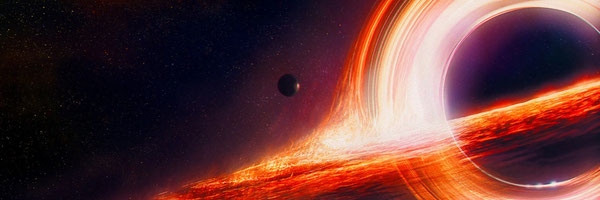
The Information Paradox surrounding Hawking Radiation
Felix Zhang, Joseph Hung
FFCA High School Campus
Grade 9
Presentation
Problem
Black holes are celestial bodies in which its gravity is strong enough that almost nothing can escape. In 1974, Stephen Hawking theorized that black holes emit a glow, called Hawking Radiation, due to quantum effects at the event horizon. However, this radiation seems to be entirely thermal, meaning it carries no information about the matter that originally fell into the black hole. This conflicts with basic quantum mechanics, as it states that information cannot be destroyed. This project aims to compare various theories about the Information Paradox and find the most reasonable solution.
Method
As finding new data on the Information Paradox is not feasible without substantial funding and resources, these steps will focus on existing data and on comparing theories based on scientific principles.
- Researching the basic properties of black holes, Hawking Radiation, and scientific theory. This step includes learning the process of Hawking Radiation and understanding antiparticle-particle pairs, thermal radiation’s relationship to information and the event horizon.
- Recognize how the information paradox works.
- Identify the various theories surrounding the Information Paradox.
- Evaluate each identified theory based on scientific principles such as basic quantum mechanic laws.
- Conclude as to which theory best suits the idea of Hawking Radiation and support it using theoretical and existing evidence.
Research
Science Fair Information Paradox on Hawking Radiation
Idea Of Hawking Radiation
A black hole is a region of space-time with an event horizon from which nothing can escape. Hawking radiation makes black holes behave like hot objects that very slowly lose mass, eventually evaporating. If a black hole fully evaporates via Hawking radiation and the outgoing radiation carries no imprint of what fell in, then all that information is permanently erased.
- Hawking radiation is a quantum effect near black holes, where anti-particle pairs at the event horizon lead to black holes very slowly losing mass and energy over time.
- What appears to be empty space is actually filled with fluctuating quantum fields that produce anti-particle pairs.
- Near a black hole's event horizon, one of these particles can fall in, which is negatively charged, while the other escapes, which is a photon, making the black hole lose a tiny amount of energy and mass. This is called Hawking's radiation.
Role Of Einstein and Hawking
- Einstein's work on space-time curvature predicts black holes, while Hawking's work applies quantum field theory to these curved backgrounds, leading to the prediction that black holes can radiate.
Consequences For Black Holes
- Because Hawking's radiation carries away energy, the black hole mass diminishes over an extremely long time, leading to the idea that black holes can actually evaporate.
- The effect is described as incredibly small for astrophysical black holes. This means that any complete evaporation would take far longer than the current age of the universe.
Why This Matters in Physics Hawking radiation is a bridge between quantum mechanics, thermodynamics, and general relativity. Understanding this process is very important for resolving deeper puzzles, such as what happens to information that falls into a black hole.
- Hawking radiation only exists when both quantum mechanics and general relativity are considered together.
- The negative energy particle falls in; the positive energy one escapes as radiation; and the black hole loses energy/mass.
- Very small black holes from the early universe could be evaporating now, but no Hawking radiation signal has been detected yet.
Hawking radiation, therefore, is still a theoretical prediction. However, experiments in lab systems show promising, similar effects.
Paradoxes
- Evaporation appears to destroy information about the matter that formed in a black hole.
- This leads to the Information Paradox: After complete evaporation, nothing seems to encode the initial state.
Universe Today Podcast - Does Hawking radiation even exist?
Hawking Radiation is not universally accepted, as it’s a hypothesis made by Steven Hawking and has not been detected yet.
- Every aspect of Hawking Radiation aligns with the theory of how black holes function
- Detecting Hawking Radiation is quite difficult because of time scales and the distances between us and black holes. For time scales, most black holes will take millions or billions of years to evaporate enough radiation to be visible in space. In space, everything is so vast and distant that it’s extremely difficult to collect data from places outside our solar system and the universe
- One of the theories created to detect Hawking Radiation was through primordial black holes (black holes which were created close to the time of the theorized Big Bang). Smaller primordial black holes will generate more Hawking Radiation and are closer to being fully evaporated
- Another theory is through colliders and how smashing atoms together can create a black hole for a short amount of time. These theorized black holes could evaporate in a detectable Hawking Radiation. Theoretically, the Large Hadron Collider could produce microscopic black holes, if extra dimensions exist, but these would immediately evaporate due to Hawking Radiation.
Although Hawking Radiation follows all of our known scientific laws, it has not been confirmed by scientific theory. The steps of testing the hypothesis and verifying our theory still remain.
How it works
- Quantum fluctuations: “empty space” has tiny particle-antiparticle pairs that constantly pop in and out of existence
- At the event horizon, one particle falls in, and another can escape
- The particle that falls in reduces the black hole's energy
- Smaller black holes are hotter and therefore emit more radiation
Black Hole Radiation Information Paradox
In Stephen Hawking’s original theory, Hawking Radiation is predicted to be completely thermal, so the information that goes in, never comes out of the black hole and is lost. This causes a conflict of Quantum Mechanics. Quantum Mechanics says that information can never be destroyed. As long as you know the state of every particle in the system, you should be able to see how it started. This is called unitarity
- General Relativity says that anything that crosses a black hole event horizon is gone forever
- The Problem: Hawking’s original math suggested that the radiation coming out was "thermal"—meaning it was completely random and carried no information about the stuff that fell in (like a book, a star, or an astronaut).
The Paradox: If the black hole disappears and the radiation it left behind is random, the information that fell in has been erased from the universe. This violates the fundamental laws of physics. Theories surrounding the paradox
Basic String Theory
String theory is a concept that merges quantum mechanics and Albert Einstein’s general theory of relativity. It turns subatomic particles like electrons into string-like structures that can be wrapped around to turn into a circle.
- These strings can vibrate, creating a particular shape
- Each mode of vibration is theorized to correspond to a particle with properties such as mass or a charge
- String theory is heavily connected to the holographic principle. String theory can count the microscopic state of some black holes, as the idea turns the event horizon into specific configuration of strings.
- This leads to the conclusion that the number of states depends on the area of the black hole’s surface rather than volume, which is exactly what the holographic principle states, “The information in a region of space is stored on its boundary.”
Unfortunately, there is little to no evidence that suggests that string theory is real. It remains a relevant theory used to explain the nature of the world around us but is completely theoretical.
The holographic principle
The concept is that once an object falls into a black hole, its “data” doesn’t just vanish into the center; instead, it’s encoded onto the surface of the event horizon. Holography is the idea that the 3-dimensional world is a “hologram”, hence the name, in which information is encoded on a 2-dimensional surface.
- Though this theory sounds strange, it’s backed by the fact that black hole entropy scales with surface area (the event horizon). It makes this theory follow black hole thermodynamics.
- The holographic principle is backed by string theory, in which a higher-dimensional gravitational system can be described by a lower-dimensional, non-gravitational theory.
- This conclusion is found from the theory that the number of states depends on the area of the black hole’s surface rather than volume.
The black hole firewall
To keep the math of quantum mechanics consistent, some physicists argue that the event horizon isn’t a smooth point of no return, rather it is a seething wall of high-energy particles. The firewall proposal, which was introduced by Ahmed Almheiri, Donald Marolf, Joseph Polchinski, and James Sully, works, as it includes the concept of unitarity, which ensures that information is not lost when the black hole vanishes. This is achieved by an outgoing Hawking photon that is entangled with all the radiation emitted earlier. It sacrifices the equivalence principle of general relativity to save quantum unitarity.
Black Hole Complementarity
A theory proposed by Leonard Susskind, Lárus Thorlacius, and John Uglum, theoretical physicists in the 1990s. It focuses on the idea of different perspectives not being able to contradict each other and how information is never destroyed, but no perspective can access both copies.
- From the outside, the information looks stretched on the event horizon, and matter never seems to go inside the black hole. The information seems to be encoded on the horizon and later in Hawking Radiation. Tiny correlations encode the information in quantum-gravity corrections but aren’t visible to an observer.
- On the inside, the quantum state of the matter continues inward, and the information goes inside the black hole.
- The two different descriptions don't match, so there is no one answer about the information that doesn’t violate quantum mechanics. However, no observer can access both descriptions.
The Complementarity theory basically states that the information is both on the horizon and inside the black hole but no one sees a violation of physics.
Soft Hair
A theory made by Stephen Hawking, Malcolm Perry, Andrew Strominger, and Sasha Haco in 2016. It proposes the idea that low-energy quantum excitations (photons and gravitons) on the event horizon can store information.
- Even though Stephen Hawking initially proposed the idea that information is destroyed, he helped generate a new solution in which the event horizon’s photons and gravitons can store information. Then they can release the information back out as the black hole evaporates.
- It also indirectly challenges Einstein’s general theory of relativity, which states that black holes are only described by their mass, charge, and angular momentum.
- Despite this, there is one major contradiction. As the black hole evaporates and shrinks, it must lose hair because the entropy of the hair cannot be greater than the entropy of the black hole. Once a black hole becomes very small, its limited amount of hair may be insufficient to maintain the necessary information decoupling.
Black Hole Remnants
This idea takes a different approach on the information paradox as it proposes that the black hole never fully evaporates and stops shrinking at an extremely small size. The black hole will leave behind a dense object that contains the information.
- It centralizes on the idea that evaporation will stop because quantum-gravity effects become stronger at a small-scale.
- However, scientists criticize that remnants would require an infinite number of internal states to store random information, raising concerns with stability.
- There are various theories on how a black hole can become a remnant. One of them being that evaporation stops when the black hole reaches Planck mass (the small mass point in which gravity becomes strong at the quantum level).
It is an interesting take on the paradox as it changes the end state but does not drastically affect the way the event horizon works.
ER=EPR, Einstein-Rosen bridges
Proposed by Maldacena and Susskind, the ER = EPR theory might just be the most fascinating. The idea is that EPR (entanglement) and ER (wormholes) aren’t separate but each entangled particle-pair is connected by a small non-movable wormhole. In the context of Hawking Radiation, the radiation is “entangled” with the interior of the black hole, meaning that there are wormhole connections between the radiation and the black hole. These wormholes allow information to still be stored in the entanglement between the black hole and its radiation.
- Entangled pairs are basically the connected particles which have no visible link
- If the emitted Hawking Radiation is entangled with the particle that fell into the black hole, it has a wormhole connection between the two.
- The theory is that the information is encoded inside the wormhole’s structure and as evaporation occurs, the information is never lost.
Although fascinating, this idea lacks evidence from quantum gravity and questions how spacetime emerges from entanglement networks.
Information Loss
This is the original theory created by Stephen Hawking when he first proposed Hawking Radiation. It created ideas as to how Hawking Radiation could exist without conflicting with quantum mechanics. In this idea, the thermal radiation that is released from black holes will no longer contain the information encoded in the matter that originally fell in. Therefore, if the black hole completely evaporates through Hawking Radiation, information is lost.
  |
|---|
Data
N/A
| Our research done is almost completely based on theories and therefore has no factual numeric data used. |
|---|
Conclusion
If the world were a hologram based on code, how much would it really change? The holographic principle has been one of the leading solutions to the information paradox in recent years and is by far the most in-depth theory. Every solution has been completely theoretical, but the holographic principle currently brings the most promise. Other proposed solutions to the information paradox encounter issues with unitarity and leave major gaps in explanations. Beginning with the firewall idea, it does not violate any principles, but turns the event horizon into a very violent wall of high-energy particles, violating Einstein’s equivalence principle. Another theory, black hole complementarity, lacks mathematical evidence and is definitely more of a philosophical approach than a physical one. Soft hair and remnant theories both preserve information by storing it in either event horizon particles or leftover objects, yet they both have an extreme risk of instability. The Einstein-Rosen bridge uses entanglement and wormholes, but the bridges are unstable and pinch off too quickly, and there is still no testable model that shows how these wormholes would carry all the information. Finally, Hawking’s original information-loss idea, which consequently led to the information paradox, directly violates quantum mechanics, as the infalling information is destroyed. On the other hand, the holographic principle is only contradicted by uncertainty, with it not violating any principles and avoiding any new violent effects. The idea is that information is encoded on the event horizon, or the boundary, of the black hole. The holographic principle was first proposed by Gerald ‘t Hooft and was later developed by Leonard Susskind. First of all, the principle claims that the entropy increases with the surface area of the boundary, unlike previous ideas, which had it grow based on volume. This matches the entropy formula of a black hole, which states that the information a region contains is proportional to a black hole’s surface area. Moving on to the more difficult connection, AdS/CFT or Anti-de Sitter Space and Conformal Field Theory. Anti-de Sitter Space can be simplified as a universe with unique properties and negative curvature. Mathematically, it can be represented as the shape of a saddle, opposite to the ordinary, flat, expanding universe. Physicists often use the idea of AdS as a tool for theories, as its properties, such as gravity, are much clearer. Conformal Field Theory, on the other hand, can be described as a set of rules on a lower-dimensional surface. Anti-de Sitter Space and Conformal Field Theory can be compared to a computer game, where AdS is the game itself, and CFT is the code that describes it. This relates to the holographic principle in the fact that it states that a lower-dimensional world with no gravity can be used to describe a higher-dimensional world with gravity. Although the holographic principle has many more concepts to it, its evidence can be mainly based on its relation to surface area entropy and AdS/CFT. Wrapping back to Hawking radiation, it says that black holes emit thermal particles that do not hold any information about the matter that fell into the black hole, which violates quantum mechanics. The holographic theory counters this by encoding all 3D volume information on a 2D boundary surface, such as the event horizon, matching the Bekenstein-Hawking entropy formula: where SBH is the entropy, A is the area of the event horizon, kb is the Boltzmann constant, c is the speed of light, G is the gravitational constant, and h is the reduced Planck constant. Along with that, string theory counting shows black hole entropy scales with horizon area, not volume, aligning holography and suggesting Hawking radiation carries scrambled information. Based on our extensive research, we have concluded that the holographic principle is the most likely answer to the information paradox. Alternative solutions either conflict with existing fundamental principles or are shallow explanations as to how the theory would function. The holographic principle is the most in-depth explanation and stretches into several areas of physics while remaining functional.
Citations
The Information Paradox: Hawking, S. W. (1976). "Breakdown of predictability in gravitational collapse." Physical Review D. (Where Hawking admitted the paradox exists).
The Firewall Challenge: Almheiri, A., et al. (2013). "Black Holes: Complementarity or Firewalls?" JHEP. (The paper that "disproved" the smooth event horizon). 0 Microscopic Entropy (2025): "Microscopic explanation of black hole entropy based on the probabilistic nature of the radiation process." (2025). arXiv:2502.09924. (A study revisiting tunneling as a way to prove the process is unitary/information-preserving).
The Original Paper: Hawking, S. W. (1974). "Black hole explosions?" Nature. (The first proposal of the radiation).
The Follow-up: Hawking, S. W. (1975). "Particle creation by black holes." Communications in Mathematical Physics. (The full mathematical proof).
Modern Lab Support (2025): Cohen, A. (2025). "Lab-Built Atomic Chain Mimics Event Horizon." RudeBaguette/Science News. (Reports on the successful simulation of Hawking radiation using a 1D chain of atoms).
Quantum Corrections (2026): "Quantum-corrected Hawking radiation from near-extremal Kerr-Newman black holes." (2026). Journal of High Energy Physics. (New research showing how quantum fluctuations change radiation in rotating black holes).
The Original Bridge: Einstein, A., & Rosen, N. (1935). "The Particle Problem in the General Theory of Relativity." Physical Review. (The birth of the wormhole).
Stability Disproof: Fuller, R. W., & Wheeler, J. A. (1962). "Causality and Electron-Positron Field Quantization." (Proved that ER bridges collapse too fast to be used).
Traversable Wormholes: Morris, M. S., & Thorne, K. S. (1988). "Wormholes in spacetime and their use for interstellar travel." American Journal of Physics. (The "Gold Standard" for stable wormhole theory). Fraser Cain. "[Q&A] Space Force's Secret Shuttle, Hawking Radiation Falsifiability, How to Disprove Big Bang." Universe Today Podcast. Video, 2024. https://www.universetoday.com/category/podcasts/. Britannica. 2024. “Hawking Radiation | Astronomy.” Encyclopedia Britannica. November 4\, 2024. https://www.britannica.com/science/Hawking-radiation. ScienceClic English (YouTube) ScienceClic English. "Hawking Radiation." YouTube video, 16:30. April 20, 2021. https://www.youtube.com/watch?v=isezfMo8kWQ.
Khan Academy (2015) Khan Academy. "Hawking Radiation." Breakthrough Junior Challenge 2015. Video. https://www.khanacademy.org/college-careers-more/bjc/2015-challenge/2015-physics/v/bjc-hawking-radiation. Khan Academy (2018) Khan Academy. "Black Holes Ain't As Black: Hawking Radiation Ft. Einstein, Hawking and Others." Breakthrough Junior Challenge 2018. Video. https://www.khanacademy.org/college-careers-more/bjc/2018-challenge/2018-challenge-physics/v/black-holes-aint-as-black-hawking-radiation-ft-einstein-hawking-and-others-bjc-2018.
Susskind (1994) Susskind, Leonard. "The World as a Hologram." arXiv, hep-th/9409089v2 (September 1994). https://arxiv.org/abs/hep-th/9409089.
Almheiri et al. (2012) Almheiri, Ahmed, Donald Marolf, Joseph Polchinski, and James Sully. "Black Holes: Complementarity or Firewalls?" arXiv, 1207.3123v4 (July 2012). https://arxiv.org/abs/1207.3123.
S. Muthukrishnan. 2023. “Unpacking Black Hole Complementarity.” The British Journal for the Philosophy of Science, November. https://doi.org/10.1086/728047.
Horowitz, Gary T. 2016. “Black Holes Have Soft Quantum Hair.” Physics 9 (June). https://physics.aps.org/articles/v9/62. Black Hole Remnants Review Chen, Pisin, Fabio Scardigli, and Ronald J. Adler. "The Case for Black Hole Remnants: A Review." arXiv, 2412.00322 (December 2024). https://arxiv.org/abs/2412.00322.
McGill Science Undergraduate Research Journal (MSURJ) "Article Title." McGill Science Undergraduate Research Journal. Accessed March 1, 2026. https://msurjonline.mcgill.ca/article/view/64.
Physics Magazine Schirber, Michael. "Black Holes Have Soft Quantum Hair." Physics 9, no. 62 (June 2016). https://physics.aps.org/articles/v9/62.
Author. 2023. “Black Hole Complementarity Definition & Example | Nuclear-Power.com.” Nuclear Power. May 9\, 2023. https://www.nuclear-power.com/black-hole-complementarity/?utm_source=copilot.com.
Greene, Brian. 2019. “String Theory.” In Encyclopædia Britannica. https://www.britannica.com/science/string-theory.
“The Holographic Principle: Is Reality Just a Projection?” 2026. Quantum Zeitgeist. January 20, 2026. https://quantumzeitgeist.com/the-holographic-principle-is-reality-just-a-projection/.
Arvin Ash. 2025. “One Theory Connects Everything! AdS/CFT Correspondence Demystified.” YouTube. June 14, 2025. https://www.youtube.com/watch?v=vzv3HLKASVA. Greene, Brian. 2019. “String Theory.” In Encyclopædia Britannica. https://www.britannica.com/science/string-theory.
Acknowledgement
We would like to thank:
Our teacher and advisor for this project, Ms. Fan for all her hard work and support.
Of course, our parents and siblings for dealing with the late night work sessions and helping us review some of the work.