

The Consequences of Widespread Opioid Use
Hewanna Petros
Annie Gale School
Grade 8
Presentation
No video provided
Problem
Opioids are prescription drugs that block pain signals to the brain. They have been used by doctors to stop pains from wounds, injuries and surgeries. However, Opioid's been given out freely without a proper authorization from a doctor for decades across America (U.S.A.) and Canada. This is a rising concern because opioids are prescription drugs meaning they need to be given with caution of consequences. Knowledge must be present about the consumer to know exactly how the person will react after consumption. Opioids must be given out cautiously and not freely for anyone.
This matters because if you don’t know how someone will react after consuming a medicine then it’s not safe to consume it. This could put the consumer in a worse state than before ingesting the drug. Depending on metabolism rate, it is significant to know if this person digests the drug too fast or too slow so we know what right amount to give them. In this project, you can learn what may be making your body react the way it is so you can help your body heal faster. Your mental health is also a significant factor on how your body responds to viruses and how your mental state/sleep causes a weaker or stronger immune system. It is important to recognize these parts of your body in order to know how your nervous system will react to this drug.
This project aims to show the dangers of opioids and so people take more caution using them. Another aim and objective I have is to explain why your sleep/your mental state and also as a huge impact on your immune system responds. This is also to spread awareness of bad habits or addictions you may have and how it will affect you and the people around you. Last, this topic will show how opioids can have different effects on different people and why to always talk to your doctor before taking one.
Method
1. Before I start my project\, I will conduct a small amount of background research. Once I have done my background research\, I’ll start my project.
2. To start my project I will begin to come up with guiding questions listed below:
a. Where did Opioids come from? (background research)
b. What are the Different Types of Drugs? How are they Made?
c. Why Do Prescription Drugs Affect People Differently?
d. Why Are Some People’s Immune Systems Stronger/Weaker Than Others → (What makes a strong immune system & how can we have a stronger immune system?)
e. What Is Drug Addiction & What Causes it?
f. How Does Stigma Towards Opioid Use Affect People’s Recovery?
3. Next\, my hypothesis is “If widespread opioid use continues\, more people will be harmed than treated because they don’t have a prescription from a doctor.”
4. Then\, I will proceed to research these guiding questions talking about the origin of opioids\, how opioids interact with nerves\, when opioids were widespread across the US\, why opioids affect certain people more than others and how stigma towards opioid users affects recovery.
5. Once my research is complete\, I will then continue on with my data/analysis explaining about opioid use per millions of people in different countries and over different time frames.
6. When my study is complete\, I will write a conclusion to conclude this project and summarize the direction and point.
7. Last but certainly not least\, throughout my study project\, I will reference all sources and tools I’ve used to gather data.
Research
1. Where Did Opioids Come From? (Background Research)
Opioids came from a flower called the opium poppy. It specifically came from the milky colored sap which comes out of its seed pods. There are over 100 types of opioids and they are grouped into 3 classifications:
Natural: Substances that are made from the seedpods of the opium poppy plant. These are often referred to as opiates. (e.g. morphine, codeine)
Semi-synthetic: Substances that are made in a laboratory by using natural opioid ingredients. (e.g. heroin, hydrocodone)
Synthetic: Substances that are made in a laboratory by not including natural opioid ingredients. (e.g. fentanyl)
2. What are the Different Types of Drugs? How are they Made?
A drug is a substance that changes the physical and mental behavior of the body. Drugs are split into four categories which are:
- Stimulants: These are drugs that increase the energy of your nervous system increasing hormones like cortisol and dopamine. Side effects of stimulants include an increase of heart rate, blood pressure, anxiety, breathing rate, etc. [eg. of stimulants include caffeine, nicotine, crystal meth, cocaine, etc.]
- Depressants: On the other hand, depressants decrease the energy of your nervous system making you feel more relaxed. Side effects of depressants include a decreased heart rate, blood pressure, increased headache, light-headedness/dizziness, etc. [e.g. depressants include alcohol, heroin, opioids, inhalants, etc.] Never mix a stimulant with a depressant because they cause opposite effects. This can cause unpredictable responses from your body and can damage your organs.
- Hallucinogens: These types of drugs alter your senses making you see, hear and feel things different or things that are not real. Side effects include change in emotions, thoughts, faster heart rate, lightheadedness/dizziness, etc. [eg. include ecstasy, LSD (acid), mushrooms, etc.]
- Cannabis: this is an interesting drug that has a mixture of stimulants and depressants effects on the body. Side effects include an increase of heart rate and a decrease of blood pressure [eg. marijuana, edible cannabis products (food/drink), cannabis extracts (oils, waxes)]
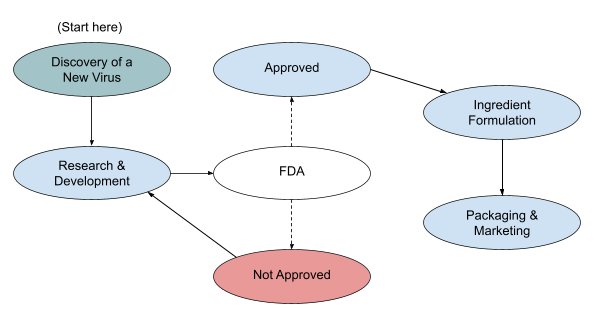
A Prescription Drug is a medication that has permission written by a doctor for a patient to get a specific drug. Without this permission you cannot have access to this drug. The process of making prescription drugs is:
- Research & Development:
- In the beginning of this process, when a scientist discovers a new virus, the Pharmaceutical scientist (the drug maker) researches in depth about it and makes a drug to target the virus and treat the illness.
- There are two types of drugs, Biologic and Chemical drugs
- Biologic drugs are made from living things such as organisims & plants making them harder to make due to complex genetic engineering
- Chemicals drugs are made of chemicals (compounds) and are easier to make than biologic drugs
- Approved or not?:
- After many tests with gathering of data, if the drug is proven to be safe and effective the application is then sent to the FDA (Food & Drug Administration)
- If the application meets all the criteria and standards it will be approved to move on to the next step
- Ingredient Formulation:
- The next step is to mix the ingredients together into a form easy to consume (tablets, pills, capsules, etc.)
- There are two types of ingredients Active pharmaceutical ingredients (API) and Inactive pharmaceutical ingredients (excipients)
- API are ingredients that treat the illness and take affect
- Excipients are ingredients that help the API with absorption, taste, certain appearance, (color, form, etc.) and more
- Packaging & Marketing:
- The FDA monitors and inspects the facilities where the drug is being made to ensure everything is going well meaning every drug is uniform, clean, and are in the correct categories
- After they are sold to the public the FDA still continues to monitor and check on the medication’s effectiveness and safety for years
2.1. Diagram Of Steps Of How Prescription Drugs Are Made:
3. Do Prescription Drugs Have Different Effects On Different People?
To begin, the process of consuming a drug is called Pharmacokinetics (ADME) which has 4 stages called absorption, distribution, metabolism, and excretion
- Absorption is the first stage and this is when the drug first enters your body and your blood flow (depending on how the drug entered your body will affect how long it will take for it to enter your blood flow)
There are multiple ways for a drug to enter your body such as:
- Oral (swallowing a tablet through your mouth)
- Intraocular (through the eye)
- Enteral (a tube that goes through your mouth into your intestines/stomach)
- Intraotic (into the ear)
- Intravenous (directly into your vein)
- Sublingual (under the tongue)
- Nasal (into the nose)
- Buccal (absorbed between the gums and cheek)
- Inhalation (breathing in the drug)
- Transdermal (absorbed by the skin)
- Intramuscular (injection into a muscle)
- Subcutaneous (below the skin)
- Distribution is the second stage and this is when the drug starts to spread across your body evenly through blood streams (deficiencies can slow down this process)
- Metabolism is the next stage which is when your body starts to break down the drug (Having a fast metabolism will cause you to digest the drug too quickly not giving the drug time to give effect, (causing low benefits so you need more of the drug to get your goal.) On the other hand, having a slow metabolism causes the drug to stay active for longer causing side effects (you need less of the drug in this case)
- Excretion is the last stage where you body gets rid of extra waste (your kidneys do most of the work)
Opioids do indeed affect people in different ways. This reaction occurs due to many different causes such as:
Body size: To start with, your body size affects how you react to opioids. If a smaller sized body were to consume the same sized amount as a bigger body would cause a higher blood concentration, meaning there’s more of a drug in the person’s blood than normal in the smaller body. Therefore, a specific drug dose is given to different individuals depending on the volume of their body fluids to prevent this from happening. In the end, this is why smaller amounts of medication are given to kids than adults because their bodies don’t need the same amount.
Tolerance: Next, depending on how much opioids your body has taken it will start to build a tolerance over time, causing you to feel less of the drugs affect the more you consume. This will cause the body to recognize the drug in its system and get used to it being there, requiring more of the drug to feel the same effects (less pain) as the first time you consumed it. A person who has consumed a medication before vs. a person consuming a medication for the first time is another reason why different people will react differently to opioids. A high tolerance can lead to addictions.
Diet: Further on, what you eat also impacts how your body responds to opioids. Your diet especially affects the first stage of Pharmacokinetics, absorption having positive or negative effects depending on the food. For example, some drugs require you to eat a meal with it because the drug alone can cause side effects and irritate the stomach. The food in this case helps the drug absorb into the blood stream easier. However, some universal foods are advised to not be taken with medicine like alcohol and dairy for example as they can slow down the process of absorption as well as grapefruit too. However, deficiencies will impact how their body will absorb and break down the opioids because your body is lacking basic qualities. This is an important factor to keep in mind because it affects the first process of Pharmacokinetics and will affect the rest of the stages after the first one. At the end, depending on what you eat can either increase the absorption process or slow it down.
Age & Gender: Continuing on, how old you are and your gender also impacts how your body responds to opioids. When you are older your immune system starts to weaken compared to when they were younger. This will cause uncertainty on how the drug will affect the weaker immune system because your body starts to degrade over time. Gender also impacts how our body responds because of different body fat mass and size of other organs. Women on average have more body fat than men and their liver and they are also smaller making their kidneys and liver smaller than men’s.
The Amount Of It Consumed: Additionally, depending on how much of a drug you consume will have different effects on the body. Too much opioids will cause the body to have a higher blood concentration. (there’s a higher amount of the drug in the body) The body will then have side effects like feeling nauseous and vomit which is the body’s way of trying to get the extra overdose out of your system. The body will then start to slowly shut down. Without medical treatment as soon as possible, this could lead to death. On the other hand, too little opioids will not meet the needs of the body, you will continue to feel pain and the condition will get worse. Even after the physical pain has healed the brain will still send signals of pain mentally even though you're fully physically healed. This doesn’t mean the brain is sending fake signals through the nervous system. It’s not just, “In your head,” this mental pain is very much real and can still have the same consequences as physical pain. Pain signals that something is wrong but sometimes there can be false alarms which is why doctors use opioids to stop the pain for the patient while taking medical action. These opioids are used to avoid after effects (mental pain) from happening because the nerves remember pain. (neuroplasticity) The reason the nerves remember pain is to learn from it to become stronger. In the end the goal is to have the right amount of the drug to give the body its exact needs.
Multiple Drugs Taken At The Same Time: When you take multiple medications at or around the same time this will have a very high chance of having side affects, good or bad. An ingredient in one medication could either cancel out the other one, overpower another, or just cancel each other out with no effects leading to a higher chance of side effects and lack of absorption. Opioids shouldn't be taken with other medications because since opioids act as depressants another depressant drug will intensify the effects causing your body to slow down. Stimulants with opioids shouldn’t be taken together because since stimulants and depressants are opposites your body will have an unpredictable reaction causing damaged organs. In the end you should make sure you follow the directions of what the prescription says.
Mental State (Stress, Anxiety, Mental Disorder, etc.) Last, your mental state is also a key factor why people react to prescription drugs differently. Hormonal balance is majorly affected especially in teen years. This can cause unexpected weight gain and weight lost, irregular heart rhythms, (slow heartbeat or fast heartbeat) interrupted sleep circadian rhythm cycles, (your mental state can impact your quality of sleep) Stress can increase addiction to substance use because since opioids act as a depressant they can reduce feelings of stress.
In conclusion, the main question is whether the person is healthy or not. As long as they're healthy that will help with the process of pharmacokinetics. (A.D.M.E.)
4. Why Are Some People’s Immune Systems Stronger/Weaker Than Others?
There are multiple things that will cause people’s immune systems to either be stronger or weaker than others.
Body size: Your body size affects your immune system. This affects under weight people negatively because their body size has a low amount of basic vitamins and minerals. When you are underweight your body struggles to break down the drug because the minerals and vitamins in their bodies need to be enough to help break it down. Under weight people also tend to have weaker and smaller muscle mass. On the other hand, an obese body also has negative effects to your immune system because having an obese body will slow down the second stage of pharmacokinetics, (distribution) causing the drug not to spread out evenly. In conclusion, having either an underweight or obese body can cause slowing healing wounds, catching illnesses more frequently and not recovering quickly, tiredness of your body over working itself or even digestive problems. We should try to have a healthy body no matter what to not have extra problems.
Tolerance (Immunity): Some individuals have a stronger immune system than others due to two things. The first reason is that they were sick before with common viruses and their body over time has learnt to recover from them and stays alert for the same virus to come again. This is why after someone recovers from an illness they are very unlikely to catch the same illness again. During the second reason, I faced a challenge. A few of the sources I found stated your genetics significantly affect your immune system function while a recent study stated that your genetics don’t significantly affect your immune system function. The websites that read your genetics significantly affect your immune system function were talking more about immune system disorders instead of just their immune system state naturally. Meanwhile, the recent study was an experiment between a variety of twins, (they were all healthy with no extra health conditions.) Each twin had a blood sample taken and had a flu shot (a type of vaccine) to see how their immune system cells would defend against it. The article reads, “Genetics had almost no effect on how well individuals responded to the flu vaccine,” and another realization was genetics didn’t affect twins that were older (even if they are identical.) It didn’t affect how their bodies responded to the flu shot. If I had to choose between which website I agree on I would say they are both correct because first of all your genetics will affect you no matter what in the beginning but throughout your lifetime as your start to age, change your lifestyle and environment, your immune system will have to adapt to its surroundings so it can function properly. If to function properly means your body has to change it will change.Over time your body will change because of it’s environment, age and lifestyle and your immune system will change and shift. However, the part of your genetics that changes are your epigenetics, your core genetics won't change throughout your lifetime.
Gender: Next, gender is another reason why some people's immune systems are stronger/weaker than others. To start there are 2 different types of immune system responses. (Innate immune system & the adaptive immune system)
Innate Immune System Response: This is your first line of defense against the pathogen (bacteria that causes disease) that first enters your body. It makes sure that any bacteria that has entered the body is found and eliminated as soon as possible. The main point of the innate immune system is to get rid of general bacteria fast and general but it may fail at times. Adaptive Immune System Response: The next step If the innate immune system fails to eliminate the bacteria that has entered the body is the second line of defence. Your second line of defense is your adaptive immune system response. What this does is target the specific pathogen that is causing the infection. On the other hand this second line of defense will take longer than the innate immune system’s response to find out about the bacteria’s presence and eliminate it. Even if it takes longer, there will be an even more accurate response than the first time and your body will remember this pathogen if you encounter it in the future.
The difference between men immune systems and women immune systems is that women have xx chromosomes while men only have xy chromosomes. Women have an extra x chromosome causing their innate and adaptive immune systems to be stronger than men.
Environment & Age: People who have experienced different environments have either a stronger or weaker immune system. Your environment isn’t the primary reason your illness occured. The pathogen is the source itself. However, the environment either decreases or increases the chances of getting infected by strengthening or weakening the immune system.
Environments That Weaken The Immune System:
Air Pollution/Toxins:
- Breathing in toxins weakens your immune system function causing inflammation throughout your respiratory system.
Dry Environments:
- Pathogens/ toxins can be inhaled in your immune system much easier in dry environments because there's no water molecules in the air to slow them down
- Dry environments can also cause irritation in your respiratory system (airways)
Extreme Temperature Environments:
- Moderate temperatures are beneficial for immune system function but extreme temperature environments can weaken the immune system
- Hot environments make your body to have stress because your heart needs to pump blood faster to reduce inflammation in nasal and oral parts and rehydrate your skin with sweat and oils. This increases chronic stress from over working the body ultimately weakening the immune system
- Cold environments have dry air making it easier for pathogens to pass through the air because there is less particles in the air to interfere with the pathogen. Without sunlight, the amount of vitamin D in your body will decrease (vitamin D is crucial strength for your body to fight back viruses) This can also cause chronic stress as your body tries to heat up (what you can do is wear layers of clothing to warm up)
Poor Hygiene:
- Not washing your hands, taking showers often, or keeping the environment around you unclean can weaken your immune system
- Poor hygiene makes it easier for pathogens to enter your body through absorption
Inactive Lifestyle (staying indoors):
- An inactive life style weakens your immune system through lack of exercise
- When your exercise, micro rips in your muscles occur and your body heals them making the muscles physically stronger than before
- Excercising will make your immune system stronger to fight pathogens entering the body
Chronic Stress:
- Chronic stress weakens your immune system because it over works your immune system causing it to be overwhelmed and shut down
- However stress surprisingly isn’t always a bad thing because it increases the cortisol hormone (also known as the stress hormone) making your body more alert to fight illnesses
- Yet, Chronic stress is too much stress which isn’t good for your immune system
Environments That Strengthen The Immune System:
Humid Environments:
- Humind environments strength your immune system because:
- It makes it harder for bacteria and viruses to enter your body due to the water molecules in the air slowing them down
- Water also increases the strength of your body since it is required to survive
- However if an environment is too humid that is the perfect breeding ground for bacteria and mold to form
Sunlight (Vitamin D):
- Getting sunlight outside boosts your immune system by receiving vitamin D
- Vitamin D strengthens your body (bones, muscles, immune system, etc.) and also makes your T-cells move more efficient and faster making them respond to drugs better
- However, too much sunlight isn’t good for you, it can harm your skin (e.g. sunburns from UV light) and increase the chances for skin cancer
Moderate Balanced Temperatures:
- The best thing you can do to strengthen your immune system is to be in an environment with balanced temperatures
- Too much of anything isn’t good for you, the best thing to do is have the right amount your body needs
Good Hygiene:
- Washing your hands frequently, taking showers often and living in a clean space will strengthen your immune system by washing off bacterias often
Active Lifestyle:
- Exercising your body everyday, even just a small amount will significantly strengthen your body and immune system
- Exercising can significantly improve your mental state by reducing chronic stress, anxiety because it:
- improves your mood releasing dopamine hormones (happiness)
- Rushes blood to brain making you more alert to fight of illnesses
Outdoors With Nature:
- Being outdoors, even once in a while, strengthens your immune system by making it relax reducing chronic stress
- Going on walks or just sitting outside significantly strengthens your immune system
5. What is Drug Addiction & What Causes it?
Drug addiction is a disorder changing how your brain behaves and causes you to have urges to have more of that drug, not being able to think or do anything else without it. Over time the addiction will get worse because your tolerance of the drug will increase, needing more of it to feel the same effects as before. O.U.D is the acronym for opioid use disorder and is a chronic mental health condition. Opioid is a drug with a high risk of addiction. This is because since opioids stop pain signals from reaching the brain, it gives you a sense of relief and relaxation with an increase of dopamine and endorphins. Endorphin hormones are your own body’s way of reducing pain and stress but as you take more opioids over time these natural hormones start to decrease in production and quality. With repeated opioid use, the body develops tolerance as it adapts to the drug’s presence needing more of the drug to feel the same effects.
Opioid addiction can affect your daily life in physical and mental ways:
Physical Appearances: (physical changes:)
Your physical shape will change enough to be noticeable to others.
- Constricted pupils: Small, contracted pupils are a sign of high opioid use. This is a sign of overdose when the eyes are not responding to light changes normally needing immediate attention. If they are experiencing withdrawal after they have stopped using opioids, due to the imbalance their pupils may dilate trying to become balanced again.
- Slow breathing/Drowsiness: People who take opioids often have slow breathing or struggle to breathe at all. This also activates drowsiness and fatigue. These side effects of opioids can impact your ability to participate in athletic activities because they require energy however opioids do the opposite. (depresses energy)
- Clumsiness: When someone is high on opioids, their movements may seem shaky and unsteady. They may bump into things unconsciously because they aren’t aware and alert as they would be normally. Another effect of depressants is that they make your body less alert and lower cortisol.
- Left over marks: Needle holes left over from Intravenous injections can be left over because opioids also slow down the healing process of the body. These needle holes can look like red dots at first then they get darker over time until they eventually scab over. Vein bruises can be left over from injections looking like a dark purple or black color. (depending how severe)
Behavioural Changes: (Mental Change:)
Behavior shifts will be changed enough to be noticed by others.
- Avoidance People who take opioids may start to distance themselves from loved ones by being absent and staying at home without getting out as much. They can start to lose interest in old things they once cared about and not be as excited to do them anymore. People may start to avoid people and old things they cared about because opioids drain people’s energy. They are depressants meaning one of the side effects of opioids is people feel physically and mentally tired (drained) from them and just lack enough energy to socialize with family and friends. Opioids and other drugs have a bad reputation which is another reason why people may distance themselves from people in fear they will be judged. Many people who take opioids start to spend time with other people who also take opioids so they understand one another more and feel a sense of connection and belonging.
- Mood Swings: Intense mood swings is a significant sign of opioid use. Opioids send high feelings of relaxation but once they wear off the person will feel worse and will want more to feel positive emotions again.
- Anxiousness: During the beginning of opioid use, people on opioids can become irritable as the effects begin to leave their body’s immune system. (This will cause them to go into withdrawal.) As the brain starts to adjust to opioids and get used to its presence, they will begin to seem anxious or on edge when they haven’t taken enough to meet their wants.
- Underperforming in work/academics: Since opioids are depressants and cause drowsiness and clumsiness, people on opioid use may struggle to do work and fall behind. They may try to minimize the workload to avoid irritation. They are just simply too tired and drawn to get more opioids to focus on their studies/work.
- Withdraw ➡ Stealing: People experiencing withdrawal can go through great measures just to get opioids by stealing from stores or even loved ones. Once you keep taking opioids your body will build a tolerance meaning the person will seek for more effective opioids to work on them. Opioids that are more intense require a prescription from a doctor which the person won't receive because the doctor will have noticed by tests that this person takes a lot of opioids. The person experiencing withdrawal will do anything to get that drug, even stealing. This doesn’t mean they’re a bad person. It happens because they have just lost control over their drug use.
If you ever notice these symptoms in yourself or others it is best to not ignore this issue and seek professional help before addiction becomes too overpowering. The faster you notice these signs, the faster you can change and save someone else.
4.5. How Does Stigma Towards Opioid Use Affect People’s Recovery?
Drugs have existed for many years, even going all the way back thousands of years ago. However, society’s stigma towards opioids have arisen during the late nineties to the early two thousands. Over the past few decades, society’s stigma towards opioid use and all drugs for that matter has affected people’s recovery.
First, society’s slang and usage of words towards people who use opioids can be hurtful and bring shame to them, making them feel like, ‘I’m not good enough’ or, ‘I’m too far in to change.” In reality, people struggling with opioid addiction (O.U.D.) often do want to change. Unfortunately, words used carelessly can make people who are struggling with opioid use struggle even more to change their lifestyle and as a result, increase social anxiety and lower self-worth.
Second, in the future, they may avoid opening up to people trying to help them due to fear they will be judged. Judgement can decrease a person’s self-esteem, not giving them the confidence to change their ways and start out fresh. Judging someone based on something they can change is one thing, but judging someone based on something they can’t change is not okay. Negative judgement from others can lead to avoiding judgemental people and instead start spending more time with other people who have the same problems as them. This can give the person someone to relate to and give them a sense of belonging.
Last, but not least, people who have opioid addiction (O.U.D) may start to isolate themselves from loved ones or those trying to help. People may not even notice or understand why a person is moving away from them. Due to slang and judgement, they will start to isolate themselves from others and their trust in society will be diminished. These people can be scared to open up and become defensive. Environments that are meant to help the person struggling with O.U.D to reach recovery have to build an safe and welcoming environment for the person to feel safe to open up.
Ultimately, different types of society stigma is slowing people’s way to recovery from O.U.D. drastically coming from specific language usage and attitude increasing social anxiety, biased judgement from others diminishing self-esteem, and isolating in total from people trying to help. These small things can have a huge impact on the person’s way to recovery from O.U.D. Instead, we should use kind words; accept any one no matter their gender, race, looks, or their backstory; and create an environment where people feel motivated to overcome their opioid addiction!
Data
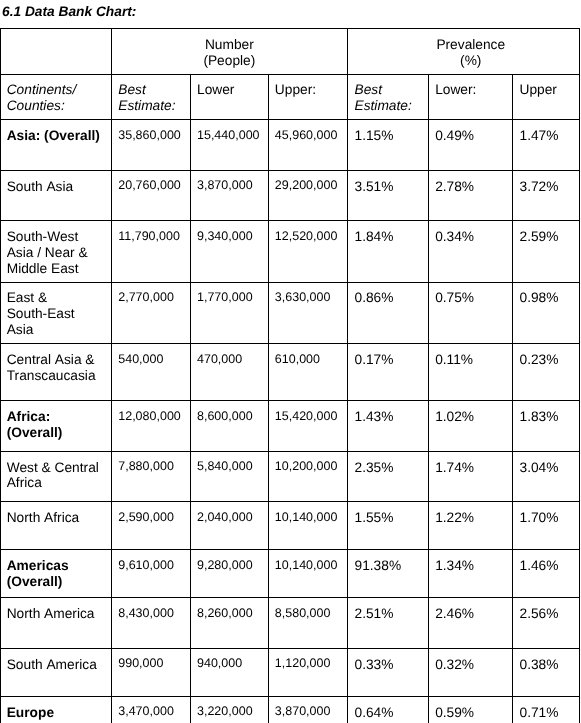
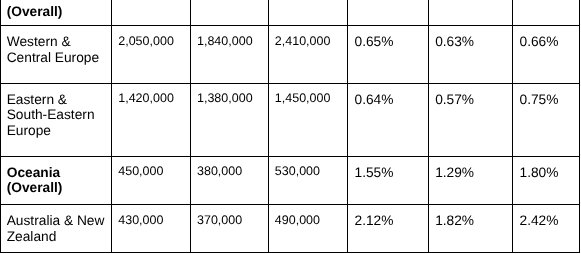
Opioid Usage Rates In Different Countries Bar Graph:

This graph I created is showing the opioid use rates in different countries. It shows how many opioid users between the ages of 15-64 use opioids including opiates and prescription opioids in the past year. While observing this data I realized that the regions with higher populations have more opioid users because they have higher populations. To make them more comparable.
I will use per million in each region in order to have comparable results. I will use this formula in order to convert this data into per million:


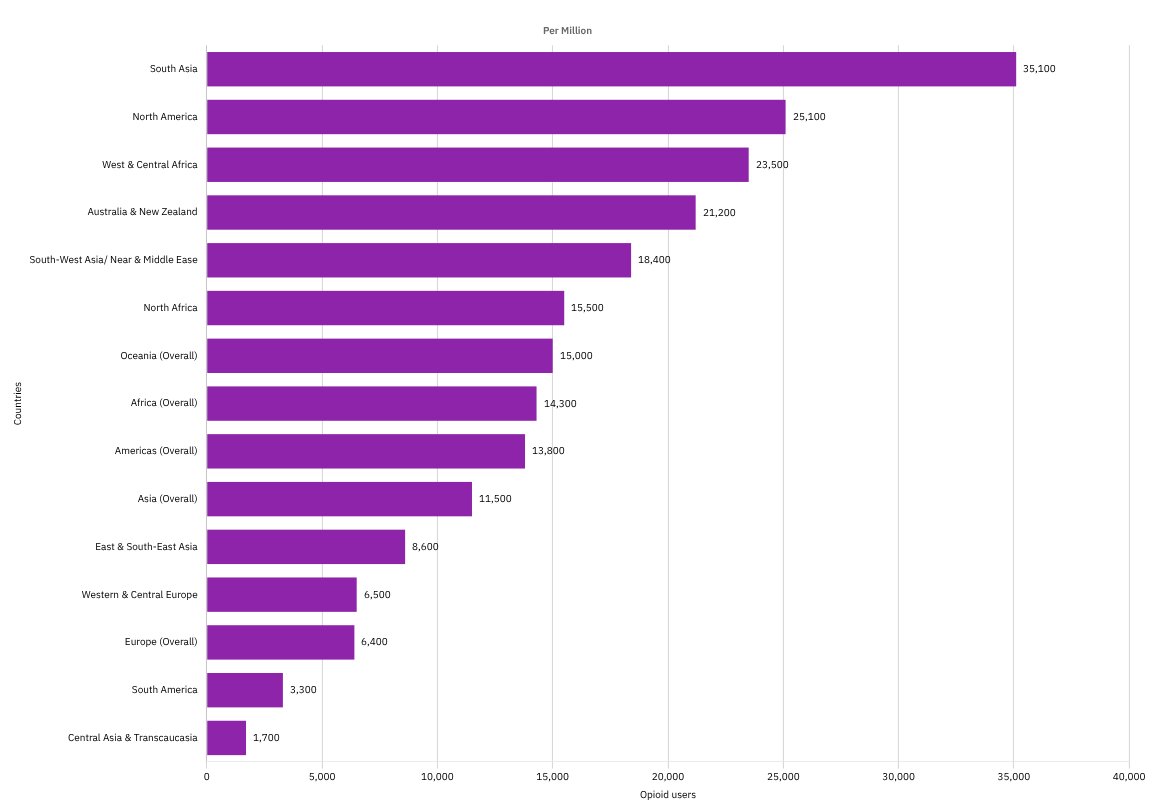
After observing this data, I noticed that South Asia has the highest prevalence of opioid use, measured as users per million population. South Asia has 35,100 opioid users/a million people followed by North America with 25,100 opioid users/a million people. This is largely because many opium poppies are grown in South Asia, especially Afghanistan, which produces about 83% of the world’s opium. Opium has been used for its painkilling properties for centuries, which contributes to its widespread use in the region.
Question # 1 : Why is North America lower than South Asia? Wasn’t there the ‘Opioid Epidemic' in the United States?
North America has lower prevalence per million than South Asia because it primarily uses stronger synthetic opioids, like fentanyl, instead of natural opiates. However, the United States experiences the highest number of opioid overdose deaths in the world, while Afghanistan leads in production rates. This shows that prevalence does not always equal severity or harm.
Question # 2: Why does Central Asia & Transcaucasia have the lowest prevalence?
Central Asia and Transcaucasia have the lowest prevalence with 1,700 opioid users/a million people. This is because the region is mainly a transportation route for opioids traveling between South and North Asia. Since opioids are transported quickly and not sold locally, there is little opportunity for widespread local use.
This comparison shows how regional production, the type of opioids used, and local factors shape prevalence, showing that high prevalence does not always connect to the greatest harm.
Conclusion
In conclusion, widespread opioid use has serious negative impacts on physical and mental health around the world. The high number of opioid overdose deaths in the United States, especially due to fentanyl, shows how deadly and severe the crisis has become. At the same time, regions like the Golden Crescent and Golden Triangle produce large amounts of opioids, making these drugs more accessible and increasing addiction rates in places like South Asia. Since drugs such as heroin are highly addictive and fentanyl is extremely strong, people are more likely to experience addiction, withdrawal, anxiety, and accidental overdose. This not only harms individuals, but also creates strain on families, healthcare systems, and financial stability. Overall, the widespread availability and use of opioids continues to damage society physically. Therefore, If these points are not addressed, the consequences for future generations and global health will become more severe.
Citations
Background Research Question #1: Where did Opioids Come From?
Cleveland Clinic. (2025, July 22). Opioids. https://my.clevelandclinic.org/health/drugs/21127-opioids
Research Question #2: What Are The Different Types Of Drugs? How Are They Made?
Vocabulary.com. (n.d.). Prescription. https://www.vocabulary.com/dictionary/prescription Billingsley, A. (2023, April 20). What’s in my medicine? Guide of ingredients. GoodRx. https://www.goodrx.com/drugs/medication-basics/ingredients Billingsley, A. (2022, January 12). How are biologic and small molecule drugs different? GoodRx. https://www.goodrx.com/drugs/biologics/vs-small-molecule-drugs Helmenstine, M. A. (2024, July 16). List of medicines made from plants. ThoughtCo. https://www.thoughtco.com/drugs-and-medicine-made-from-plants-608413#:~:text=Many%20medicines%20today%20come%20from,based%20drugs%20to%20ensure%20accuracy ChemTalk. (n.d.). The drug discovery process. https://chemistrytalk.org/drug-discovery/#:~:text=An%20Introduction%20to%20Drug%20Development%20Once%20a,candidate%20compounds%20from%20the%20drug%20discovery%20process U.S. Food and Drug Administration. (2023, September 6). How does the FDA approve new drugs? [Video]. YouTube. https://www.youtube.com/watch?v=fZ-Msidi7EE Ashley Addiction Treatment. (2025, October 21). What are the 4 different types of drugs? https://www.ashleytreatment.org/rehab-blog/4-types-of-drugs/ Phoenix Rising. (n.d.). The dangers of mixing stimulants and depressants. https://www.phoenixrisingrecovery.com/rehab-blog/mixing-stimulants-and-depressants/#:~:text=There%20are%20many%20different%20types,%2C%20marijuana%2C%20and%20other%20substances Neuroscientifically Challenged. (2018, November 16). 2-minute neuroscience: Opioids. [Video]. YouTube. https://www.youtube.com/watch?v=NPlNCqBHPnE Akpan, N., & Griffin, J. (2017, October 9). How a brain gets hooked on opioids. PBS. https://www.pbs.org/newshour/science/brain-gets-hooked-opioid
Research Question #3: Do Opioids Have Different Effects On Different People?
Forsey, L. (2023, November 2). What are the drug routes of administration? Medical News Today. https://www.medicalnewstoday.com/articles/routes-of-administration#routes White, M. C. (2021, October 13). Why prescription drugs can work differently for different people. UConn Today. https://today.uconn.edu/2021/10/why-prescription-drugs-can-work-differently-for-different-people-2/#:~:text=Drug%20concentration%20in%20the%20body,doses%20to%20children%20than%20adults Magobet, V. (n.d.). Why do people respond differently to drugs? Diamond House. https://diamondhousedetox.com/why-do-people-respond-differently-to-drugs/#:~:text=Genes%20determine%20the%20activity%20of,rate%2C%20creating%20an%20unpleasant%20response Better Health Channel. (2025, October 7). How drugs affect your body. https://www.betterhealth.vic.gov.au/health/healthyliving/How-drugs-affect-your-body#bhc-content Genomind. (2021, February 12). What everyone needs to know about drug metabolism. https://genomind.com/patients/what-everyone-needs-to-know-about-drug-metabolism/#:~:text=If%20your%20body%20metabolizes%20a,be%20associated%20with%20side%20effects Core Prescribing Solutions. (2024, October 5). The impact of diet on medication efficacy. https://coreprescribingsolutions.co.uk/impact-diet-medication-efficacy/ Whiteley, P. H., & Lindsey, W. (2009, December 1). Sex-based differences in drug activity. American Family Physician. https://www.aafp.org/pubs/afp/issues/2009/1201/p1254.html#:~:text=ADVERSE%20DRUG%20REACTIONS-,Women%20are%2050%20to%2075%20percent Canadian Institutes of Health Research. (n.d.). Are medications and medical devices more dangerous for women? Government of Canada. https://cihr-irsc.gc.ca/e/51569.html Zhang, H., & Zhang, Z. (2024, June 21). Effect of hormonal changes on drug metabolism in women. J Pharm Sci Emerg Drugs. https://www.scitechnol.com/peer-review/effect-of-hormonal-changes-on-drug-metabolism-in-women-6D98.php?article_id=26740#:~:text=Description,when%20estrogen%20levels%20are%20lower Bhupathiraju, N. S., & Hu, F. (n.d.). Nutrient-drug interactions. Merck Manual. https://www.merckmanuals.com/professional/nutritional-disorders/nutrition-general-considerations/nutrient-drug-interactions National Library of Medicine. (n.d.). Chapter 1: Pharmacokinetics & pharmacodynamics. https://www.ncbi.nlm.nih.gov/books/NBK595006/#:~:textN=Pharmacokinetics%20is%20the%20term%20that,when%20introduced%20to%20the%20body
Research Question #4: Why Are Some People’s Immune Systems Stronger/Weaker Than Others?
Wilson, C. (2023, February 3). Do some people have naturally stronger immune systems? PMC PubMed Central. https://pmc.ncbi.nlm.nih.gov/articles/PMC9897806/ Crawford, S. (2024, September 30). Why are some people more susceptible to infection? Yale School of Medicine. https://medicine.yale.edu/news-article/why-are-some-people-more-susceptible-to-infection/ Schwalbe, F. (2023, April 3). 6 ways to boost your immune system (and what doesn’t work). GoodRx. https://www.goodrx.com/well-being/diet-nutrition/boosting-immune-system-naturally-myths British Heart Foundation. (2021, December 21). Healthy weight gain: How to gain weight after illness. https://www.bhf.org.uk/informationsupport/heart-matters-magazine/nutrition/ask-the-expert/how-to-gain-healthy-weight-after-illness Fletcher, J. (2025, August 18). How to stay healthy with a weak immune system. Medical News Today. https://www.medicalnewstoday.com/articles/324930#:~:text=A%20person%20with%20a%20weakened,immune%20system%20would%20not%20get Landhuis, E. (2015, January 29). Your immune system is made, not born. Scientific American. https://www.scientificamerican.com/article/your-immune-system-is-made-not-born/ Brodin, P. (2015, January 15). Variation in the human immune system is largely driven by non-heritable influences. Cell. https://www.cell.com/cell/fulltext/S0092-8674(14)01590-6 Goldman, B. (2015, January 15). Environment, not genes, plays starring role in human immune variation, study finds. Stanford Medicine. https://med.stanford.edu/news/all-news/2015/01/environment-not-genes-plays-starring-role-in-immune-variation.html Cymbiotika. (2025, February 12). Is weak immune system genetic? Understanding the role of genetics in immune health. https://cymbiotika.com/blogs/health-hub/is-weak-immune-system-genetic-understanding-the-role-of-genetics University of Rochester Medical Centre. (n.d.). Genetics and immune disorders. https://www.urmc.rochester.edu/encyclopedia/content?ContentTypeID=134&ContentID=122 Kubala, J., MS, RD. (2025, August 6). 10 foods that may weaken your immune system. Healthline. https://www.healthline.com/nutrition/foods-that-weaken-immune-system#:\~:text=4.,18%20%2C%2019%2C%2020 Klein, S., & Flanagan, K. (2016, August 22). Sex differences in immune responses. Nature. https://www.nature.com/articles/nri.2016.90 National Library of Medicine. (2023, August 14). In brief: The innate and adaptive immune systems. https://www.ncbi.nlm.nih.gov/books/NBK279396/#:~:text=The%20adaptive%20immune%20system:%20Fighting,or%20is%20at%20least%20milder CBC News. (2011, September 28). Source of stronger immunity in women probed. https://www.cbc.ca/news/health/source-of-stronger-immunity-in-women-probed-1.1020313 Northwestern Medicine. (2022, September). Cold temperatures linked to virus transmission. https://www.nm.org/healthbeat/healthy-tips/can-winter-make-you-sick#:~:text=Low%20temperatures%20can%20increase%20the,more%20easily%20in%20the%20winter Gonzalez, F. (2023, October 23). Hot weather and your immune system: Understanding the impact. Extreme Mist. https://www.extrememist.com/blogs/extreme-mist-blogs/hot-weather-and-your-immune-system-understanding-the-impact#:~:text=Hot%20weather%20can%20impact%20your%20immune%20system,sun%20exposure%20can%20suppress%20your%20immune%20system Prime Medical. (n.d.). Factors that can decrease your immune system. https://prime-medical.com/blog/fitness/factors-that-can-decrease-your-immune-system/ Guarnieri, G., Olivieri, B., Senna, G., & Vianello, A. (2023, May 29). Relative humidity and its impact on the immune system and infections. PMC. https://pmc.ncbi.nlm.nih.gov/articles/PMC10253274/#:~:text=Choosing%20the%20appropriate%20range%20of,is%20relevant%20above%2060%25%20RH Kim, S. (2024, May 15). Do hot summer temperatures weaken the immune system? Scientific American. https://www.scientificamerican.com/article/the-immune-system-may-struggle-to-handle-hotter-summer-temperatures/#:~:text=A%20lower%20B%20cell%20count,body%20rather%20than%20defending%20it Cleveland Clinic. (2023, December 1). Yes, there is such a thing as stress sickness. https://health.clevelandclinic.org/what-happens-when-your-immune-system-gets-stressed-out Chang, J. (2025, February 27). The importance of sun exposure for your immune system: A guide for patients. https://holisticarephysicaltherapy.com/sun-exposure-immune-system-benefits-risks/#:~:text=Sunlight%20affects%20your%20immune%20system,what%20supplementation%20alone%20can%20achieve
Research Question #5: What is Drug Addiction & What Causes Opioid Addiction (O.U.D.)
EHN Canada. (2021, November 25). What makes opioids so addictive? Edgewood Health Network. https://www.edgewoodhealthnetwork.com/resources/blog/why-are-opioids-so-addictive/#:~:text=How%20Opioids%20Work,blocking%20pain%20than%20endorphins%20can Health Partners. (n.d.). 5 ways opioids and their negative side effects make your pain worse. https://www.healthpartners.com/blog/why-opioids-make-pain-worse/#:~:text=In%20addition%2C%20our%20bodies%20have,or%20other%20mental%20health%20issues Cleveland Clinic. (2025, July 22). Opioid use disorder. https://my.clevelandclinic.org/health/diseases/24257-opioid-use-disorder-oud Rosen, P. (n.d.). Is someone you know using opioids? What to look for. Jed Foundation. https://jedfoundation.org/resource/signs-someone-is-using-opioids/ Healthline. (n.d.). The link between opioids and small pupils. https://www.healthline.com/health/opioid-pupils#:~:text=How%20opioids%20cause%20constricted%20pupils,Other%20potential%20signs%20include Mayo Clinic. (n.d.). Drug addiction (substance use disorder). https://www.mayoclinic.org/diseases-conditions/drug-addiction/symptoms-causes/syc-20365112 National Institute on Drug Abuse. (n.d.). What are the other health consequences of drug addiction? https://nida.nih.gov/publications/drugs-brains-behavior-science-addiction/addiction-health#:~:text=What%20are%20the%20other%20health,the%20brain%20and%20spinal%20cord
Research Question #6: What is Drug Addiction (Social & Stigma Factors)
Global Administrator. (2022, June 27). Opioid harm reduction: See the person, stop the stigma. Red Cross Canada. https://www.redcross.ca/blog/2022/6/opioid-harm-reduction-see-the-person-stop-the-stigma#:~:text=%E2%80%9CDiscrimination%20and%20stigma%20often%20result,speak%20about%20substance%20use%20disorder Kelly, C. (2024, December 4). How does social stigma impact addiction recovery? Freedom Recovery. https://www.freedomrecovery.us/blog/social-stigma-addiction-recovery/#:~:text=Being%20stigmatized%20also%20takes%20a,can%20even%20lead%20to%20relapse
Data/Analysis References:
United Nations. (n.d.). Office on Drugs and Crime - Data Portal. https://data.unodc.org/datareport/drug-seizure Szyk, B. (2024, July 23). PPM calculator. Omni Calculator. https://www.omnicalculator.com/conversion/ppm Atlas Scientific. (2024, January 3). What is parts per million (ppm)? How is it calculated? https://atlas-scientific.com/blog/what-is-parts-per-million-ppm/#:~:text=To%20illustrate%20the%20significance%20of,1000)%20%C3%97%201%2C000%2C000%20=%2025%2C000%20PPM%20%C3%97%201%2C000%2C000%20=%2025%2C000%20PPM) OECD. (2018, June 15). Opioid addiction costs many lives and harms livelihoods. Oecdecoscope. https://oecdecoscope.blog/2018/06/15/opioid-addiction-costs-many-lives-and-harms-livelihoods/ Government of Canada. (n.d.). Operational alert: Laundering the proceeds of illicit synthetic opioids. FINTRAC. https://fintrac-canafe.canada.ca/intel/operation/iso-osi-eng#:~:text=Background,opioid-related%20overdoses%20increased%20significantly.&text=While%20the%20prevalence%20of%20illicit,overdose%20crisis%20in%20North%20America Overdose Prevention. (2025, June 9). Understanding the opioid overdose epidemic. CDC.https://www.cdc.gov/overdose-prevention/about/understanding-the-opioid-overdose-epidemic.html#:~:text=What%20to%20know,are%20declining%20at%20different%20rates
Acknowledgement
I would like to Acknowledge Mr. Chiu for giving me a work space to work on my project during lunch. I was able to use a chromebook and was able to ask him questions about my project helping me on the way.