
Unmasking the Blueberry: The Science Behind the Color
Rena Feng, Scarlett Zhong
Louis Riel School
Grade 7
Presentation
Problem
There are barely any stable, non-toxic blue pigments in the world--over 90% of blue dyes we use modernly in clothing are rarely natural. This made natural blue dyes—like ultramarine(from lapis)— really expensive. Synthetic blue came later, but it is still not eco-friendly enough. The synthetic blue dye is designed to be long lasting and brilliant, but can be very toxic. However, when we look at blue organisms in nature, there are plenty, right? For example, we have Blue Jays and Blueberries! They must be blue, right? But the color of the Blueberry flesh isn't exactly the same color as our jeans; so are Blueberries actually blue? This lead us to our question: if blueberries don't contain blue pigments, then what gives their skin the vibrant blue appearance?
Method
The following procedures to replicate our scientific research method are listed in order. This project is circled around two main sections; traditional research and observations phase. To understand how the blueberry appears blue, we first went online and researched how we see color, using some of the following keywords:
- human eye anatomy
- color wavelengths
- how eyes interact with color
We learned that humans have 3 types of cone cells that each respond to short, medium, and long wavelengths which each are roughly the wavelengths that appear blue, green, and red. Mixing these wavelengths result to the several million colors humans are able tp perceive. Moreover, lots of birds, insects, and fish can see the Ultraviolet light we can't see.
Next, we will research the color blue in nature involving keywords
- natural blue vs artificial
- blue organisms examples
- how does something look blue.
Most blue things in nature aren't actually blue-- for example, the sky, blue jays, and blue morpho butterflies don't actually contain blue pigment! Here, the blue morpho butterfly's wings actually reflect blue light and absorb others, giving us the perception of it's brilliant blue color. True blue things in nature is extremely rare, and there are only a few examples of organisms with real blue pigment.
Here, we had a question: Does the blueberry act the same way as the above? We conducted a small test and observed.
Materials:
- 6 blueberries
- small fruit knife
- blender
- plate to compare
Procedure:
- take a few blueberries from the same container
- cut two blueberries in half and observe and compare the inside color
- crush or juice two blueberries and observe the juice color
- use the peel to scrub on a clean surface
- observe whether blue color appears or if staining occurs
We observed that the flesh nor the juice contains any blue color.
This drove us to learn about the anatomy of the blueberry:
- blueberry anatomy
- blueberry pigments
- fresh vs store-bought fruits
Anthocyanins are plant pigments giving plants colors like purple and red. It’s kind of like the chemicals inside. Anthocyanins change color with pH, acidic results to red, neutral to purple, and basic to blue-ish. They are also antioxidants, which protect cells from damage. They are known to help with heart health, anit-aging, and fighting inflammation**.** Moreover, there is a waxy layer on the blueberry named the bloom, which acts as a protective layer, preventing loss of moisture and harmful bacteria from damaging the blueberry. The bloom gives the blueberry the blue color, and can be dissolved in oil, not water.
Now then, does the bloom itself give the blueberry it's color?
We collected the following materials:
- 6 blueberries
- polished leather
- polished smooth wood surface
- skin (has oil)
- sandpaper
Procedure:
- select blueberries with visible bloom
- observe and record their matte blue appearance
- gently scrub the blueberry surface using sandpaper
- observe changes in color and texture
- rub blueberries on oily surfaces (skin, wood, leather, etc.)
- observe if the bloom is removed and if the berry turns darker
We noticed how the bloom is removed easily on oily surfaces, and a little bit more difficult on sandpaper. However, when the bloom was removed, the blueberry appeared dark in color and doesn't have the same light blue color as it used to have. Finally, we noticed that the wax didn't leave behind any visible residues on any of the surfaces, meaning that they are colorless.
If they are colorless, then why does it appear light blue despite the dark skin underneath? We had to conduct more research in order to understand this.
Next, we researched the bloom and how it's structured, attempting to find why the bloom is clear yet gives the blueberry its bright blue color.
- structure of blueberry wax
- natural color vs reflection
This gave us an exact answer to why the wax appears to be blue. The bloom is composed of physical nanostructures which interacts with light in a certain way such that the bloom only reflects blue and ultraviolet wavelengths. Moreover, the anthocyanins underneath absorb the other colors. This is the Rayleigh scattering, giving the sky it's blue color and soap bubbles' magnificent colorful appearance.
So then if the structural color reflects ultraviolet light strongly, then shining different lights on a blueberry with and without wax should have completely different results.
For this small test we needed:
- 2 blueberries
- UV light lamp
- White light (eg. phone flashlight)
Procedure:
- separate the two blueberries into two groups: with bloom and without bloom
- shine white light on both groups
- observe and compare how each group looks (color + shininess)
- shine UV light on both groups
- observe how strongly the bloom reflects UV light
- record observations and differences
When the blueberries were shined on with white light, the blueberry without bloom seemed to reflect more light than the one with bloom. In contrary, the blueberry with bloom under the UV light reflected it strongly while the blueberry without bloom just appeared to be tinted purple.
We had to find out more about the bloom on the blueberry.
- blueberry wax features
- natural fruit wax vs artificial wax
Natural wax is, obviously, natural, meaning that the wax doesn't need to be removed before consumption. On the other hand, artificial wax some grocery stores apply on the fruits they sell to make them look glossier and more appetizing are actually not healthy for us.
Finally, to further enhance our proof, we decided to examine older blueberries and compare them with fresh blueberries. For this, we just needed:
- 3 days old blueberries x2
- 5 days old blueberries x2
- fresh blueberries x2
We examined that the fresher the blueberries, the fresher the blueberries, the more bloom is present. Does this also support our idea that the structural color of the bloom affects the blueberry color? We had to do more research! Keywords:
- age of blueberries vs color
- wax age on blueberries?
Unsurprisingly, fruit wax ages and eventually fades with the blueberry. The older and more overripe the blueberry, the less bloom there are on the skin. This means that most darker blueberries are older, while lighter ones are younger. No wonder why we used to pick the darkest blueberries because they tasted sweeter!
Finally, we compared this to the real world and some applications we can potentially study for innovation:
- Humans have cone cells that respond to red, green, and blue light. Birds are extremely sensitive to blue, purple, and ultraviolet—and blueberries don't just emit a blue light, there are also purple and ultraviolet light present—which is the prime color blueberries want to emit to attract birds. This is a blueberry's adaptation to its surroundings in order to spread. This can help us further understand adaptation in nature.
- To achieve the blue appearance, blueberries could either adapt a complex supramolecular structure like cornflowers, or use light scattering to create structural color.
- Currently, scientists are studying structural color for eco-friendly dyes, better screens, reflective coatings, and more biomimicry designs. We know the blueberry bloom gives blueberries the blue color, but it also acts like a natural protectant. Understanding this can help scientists and farmers know when blueberries are ripe, develop better ways to store fruit, and figure out which fruits need less chemical coatings. Additionally, there are barely any stable, non-toxic blue pigments in the world--which means that this can also inspire people to create and design eco-friendly blue dyes that don't fade. Additionally, we could potentially develop reflective coatings for solar panels, safety gear, and more-- all inspired by this natural wonder.
Research
How do we see color?
The brain and the eye work together to translate light into color. The color we see isn't directly in the object, rather, the item reflects some colored lights and absorbs others. In a human’s eye, there are three types of cone cells that respond to blue, red, and green light. Our eyes then respond to the light wavelengths, and 'messages' our brain. The primary wavelength colors are red, green, and blue—or RGB as some of us might recognise—and by varying the amount of red, green, and blue light, all of the colors on the visible spectrum can be achieved.
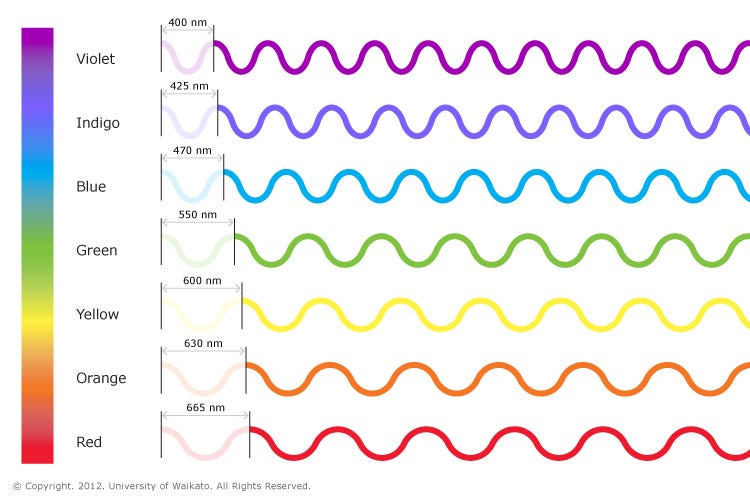 Figure 1.0 (color wavelengths) [image from medium]
First, light travels into the eye to the retina located at the back of the eye. The many light receptive cells—the cones and retina—senses the light and sends signals to the brain, which gives it enough information to tell the colors apart. The rods detect light only, while the cone cells detect colors. The three types of cone cells, and their combined response produces a unique signal for each color— and there are estimated to be around a million different colors.
Now, what about animals? Do they see the same colors? Do they see even more, or less? Many animals like birds, fish, and uncountable insects can detect a specific light wavelength named Ultraviolet light, or UV light—a wavelength not visible to humans. Even more, they can be extremely sensitive to a certain type of wavelength; birds are very sensitive to blue, purple, and ultraviolet light. However, research has shown that dogs can only detect red and blue wavelengths.
The Color Blue
Despite the many 'blue-looking' things in nature, little are actually truly blue. For example, Blue Jays, Blue Morpho Butterflies, the sky, and the ocean are common examples of blue in nature. However, none of these examples are actually physically blue—we see blue only because they are playing a little trick on our eyes.
Then how do they achieve the blue color? The first is the most common amongst 'blue' organisms. We use the Blue Morpho Butterfly as an example—it's wings are proven to have no blue pigments; instead, the only pigment they do have is brown melanin. The real reason we see blue is tied to the wavelengths and how the surface of the butterfly's wings reflect and absorb light. The wings are made to reflect blue wavelengths and absorb all others, giving our eyes the perception of the blue appearance. This is even manipulated such that the sky we see appears blue most of the time! Moreover, the ocean seems blue because of how the water absorbs red light and reflects only blue light when it's deep enough.
 Figure 1.1 (a Blue Morpho Butterfly's structural color) [image from researchgate.net]
The second way—which is extremely rare and hard to achieve—is to actually chemically produce a true natural blue pigment. The organism must master chemistry, and there are very little examples in nature. The only known animal in nature to have a true blue pigment is the Obrina Olivewing butterfly! This makes none-toxic and natural blue a pretty expensive and rare dye, too.
Test 1 Observations: Cutting, Juicing, and Peeling/Scrubbing
- When blueberries were cut open, the inside was not blue and looked more dark purple/clear
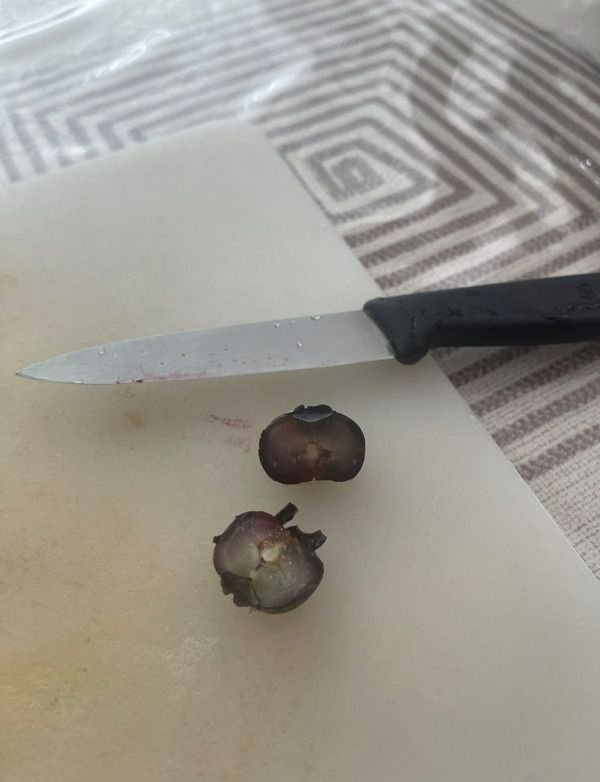
- Juicing the blueberries gave a dark purple/black juice, not blue
- Scrubbing the peel did not release blue pigment—the juice stained surfaces are red-ish purple
- Everything in a plate:
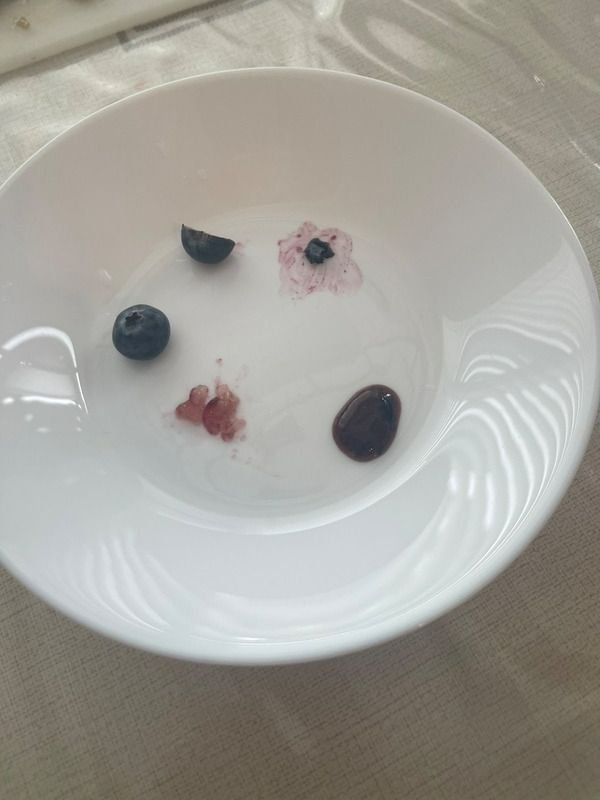
The Blueberry's Pigment and Wax
Scientists have proven that blueberries only contain red/purple Anthocyanins. Anthocyanins are plant pigments giving plants colors like purple and red. It’s kind of like the chemicals inside. Anthocyanins change color with pH, acidic results to red, neutral to purple, and basic to blue-ish. However, the blue is extremely unstable, therefore not being known for a "natural and stable" pigment. They are also antioxidants, which protect cells from damage. They are known to help with heart health, anti-aging, and fighting inflammation.
Therefore, where does the blue come from? The blueberry wax on it, also known as bloom, acts like a protective layer for the blueberry. It prevents bacteria and other harmful germs from going into the blueberry, as well as keeping the moisture within the blueberry. The blueberry is blue because the wax reflects all wavelengths other than blue light—and it gives the blueberry the dusky blue look; and when wiped off, the blueberry appears almost black. The bloom reflects UV light strongly—birds are extremely sensitive to UV light—which is the evolutionary reason for the bloom. Moreover, notice that some blueberries appear more blue, while others are less. This is because ripe blueberries have more bloom than older blueberries. Not only do the blueberries have wax, other fruits and vegetables do, too, and this wax can be easily dissolved in oil.
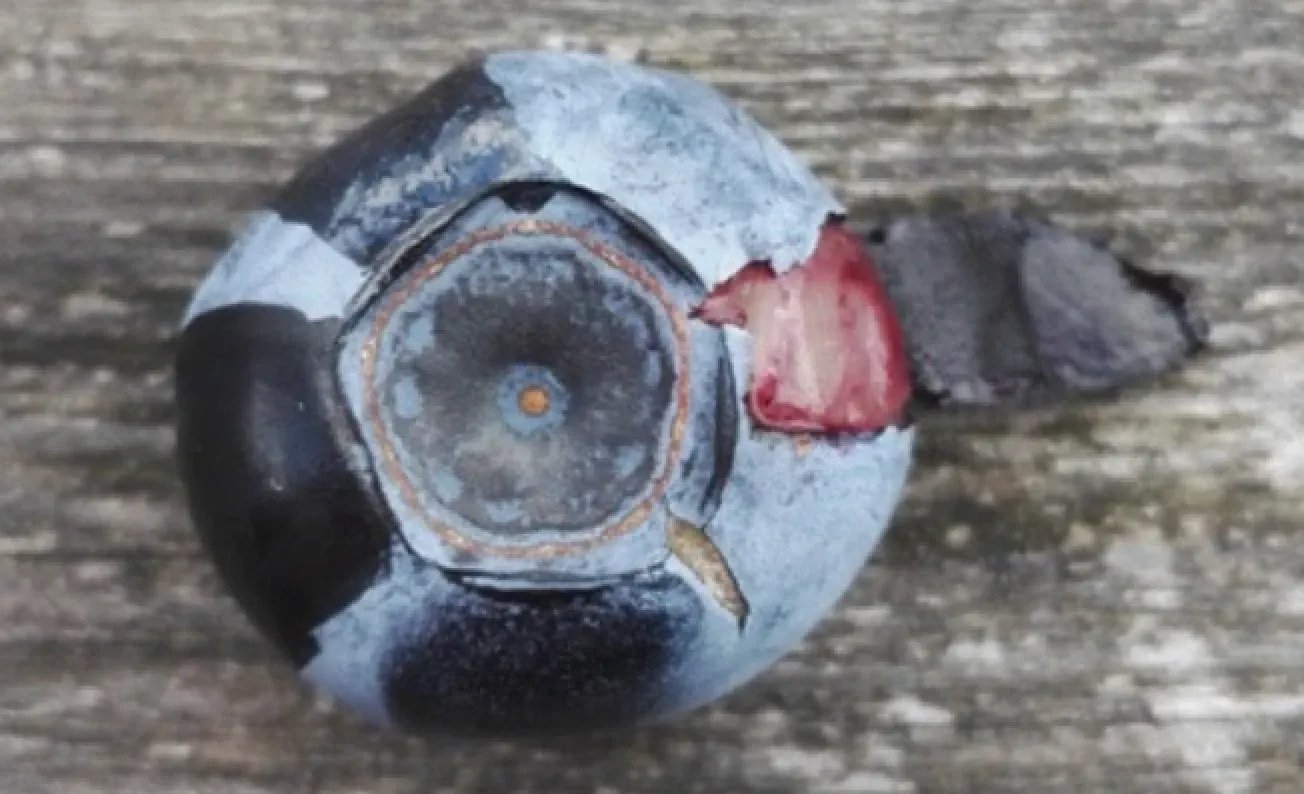 Figure 1.2 (Blueberry with and without bloom) [image from Science.org]
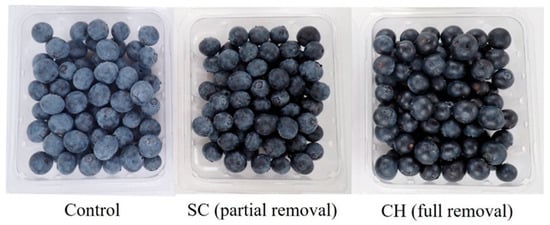 Figure 1.3 (Blueberries with, partial, and full removal of bloom) [image from mdpi.com]
Test 2 Observations: Wax (Bloom) Removal Test
- Blueberries with bloom had a matte, dusty blue appearance
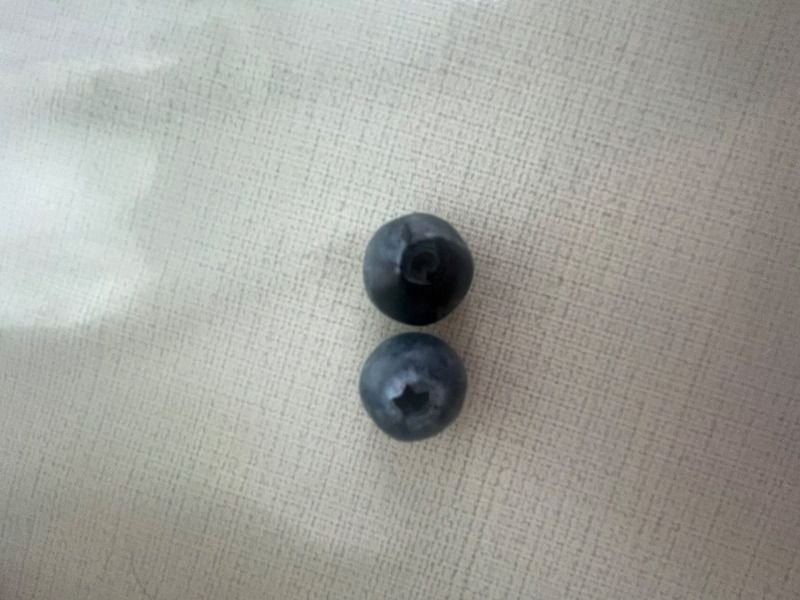
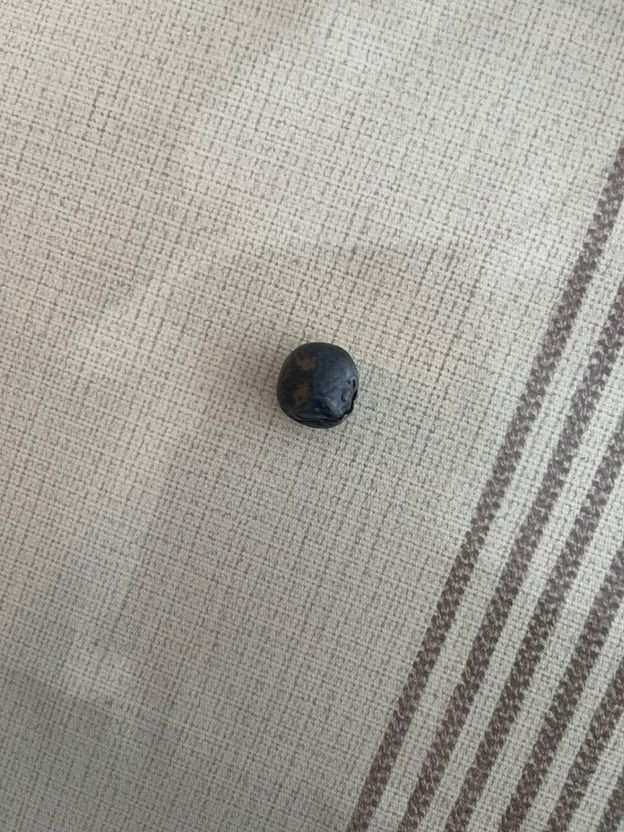
- Scrubbing with sandpaper and rubbing on oily surfaces removed the wax and made the berry look black and glossy
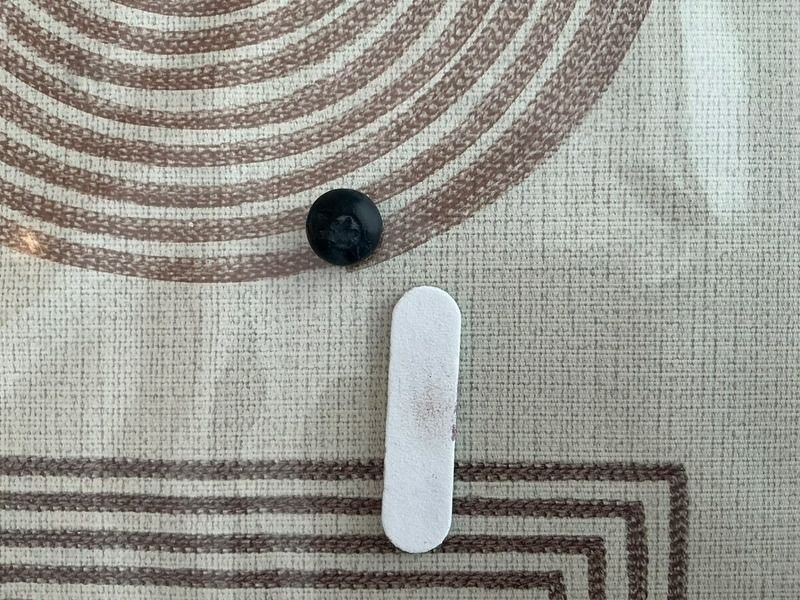
- However, the wax did not leave any traces of blue
Structural Color
Structural color is when color comes from the physical nanostructures on a surface, causing light waves to bounce, bend, and interfere. Since these are physical, the color doesn't fade. The blueberry wax is composed of nanostructures such that it only reflects blue wavelengths, while the Anthocyanins absorbs other wavelengths, giving the blueberry its blue look. This is the Rayleigh scattering, which is similar to the sky looking blue, blue jay feathers, and soap bubbles.
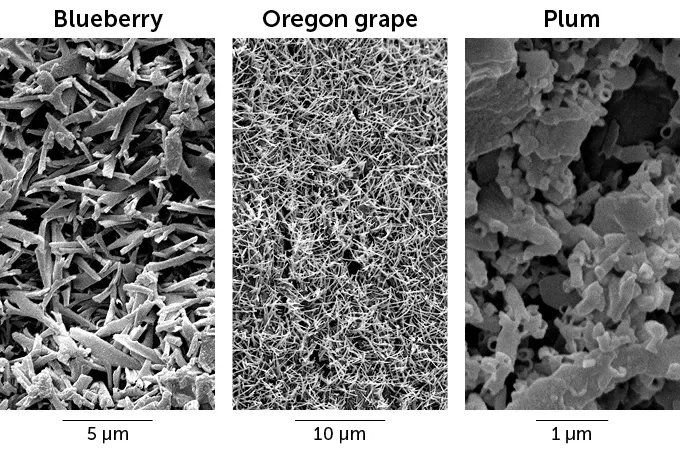 Figure 1.4 (Blueberry structural color) [image from unionleaders.com]
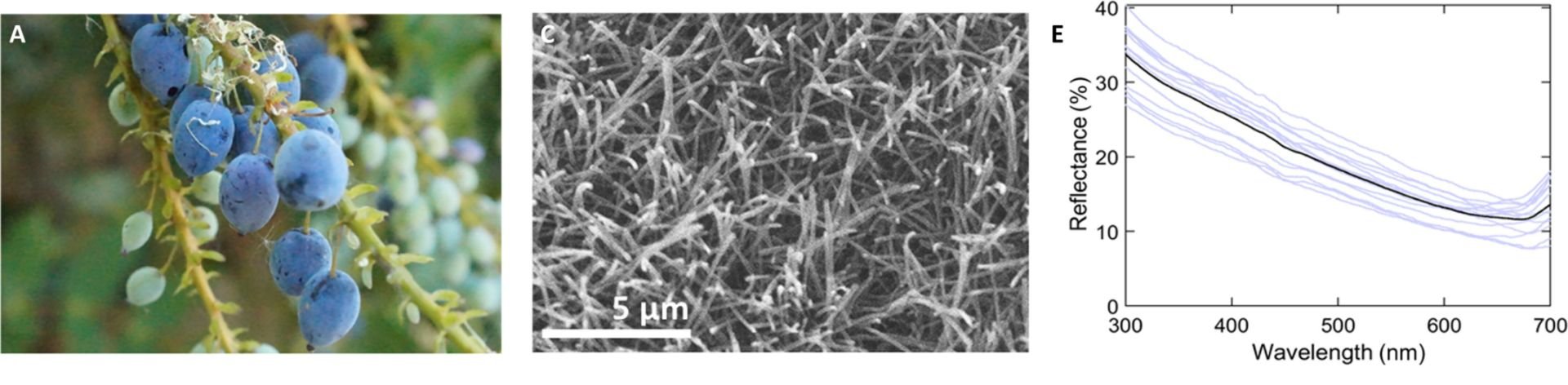 Figure 1.5 (Blueberry's close relative, Aquifolium Fruit bloom crystal and wavelength reflected) [image from Science.org]
Test 3 Observations: Structural Color & Light Test
- Under white light, blueberries without bloom appeared blue and matte shinier, as it reflected more light. However, the blueberries with bloom just seemed a little lighter in color.
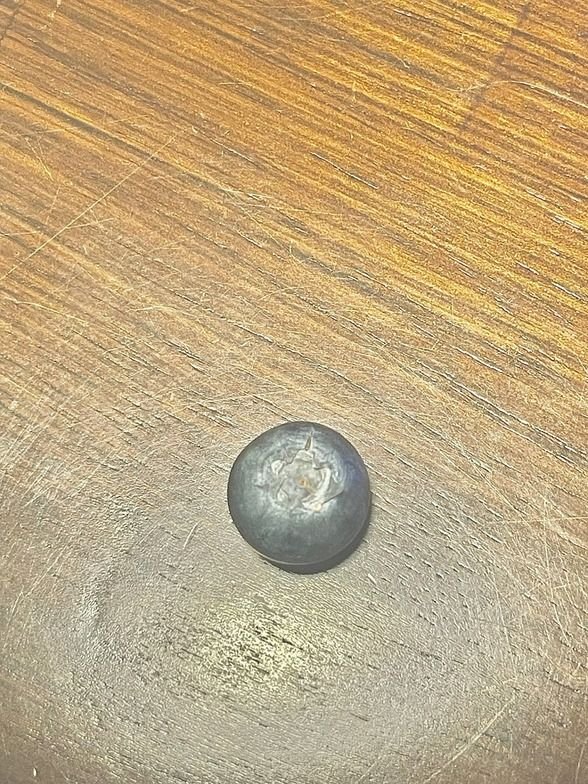
- Blueberries without bloom appeared black and shiny
- Under UV light, the bloom reflected UV light strongly, giving the blueberry a more blue and even purple color. The blueberry with bloom also looked very shiny, while the blueberry without bloom actually looked even darker and didn’t reflect the UV at all.
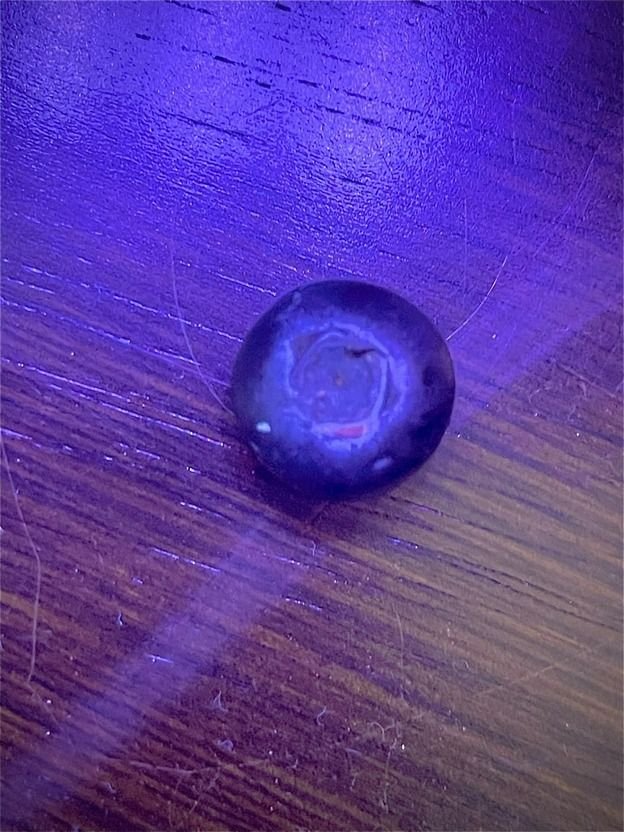
Test 4 Observations: Ripeness Comparison
- Less ripe/fresher blueberries had more visible bloom and looked more blue

- Older or overripe blueberries often lost their bloom
After learning this, we knew there were some applications to real life we could potentially apply to improve technology and knowledge.
Application
- Humans have cone cells that respond to red, green, and blue light. Birds are extremely sensitive to blue, purple, and ultraviolet—and blueberries don't just emit a blue light, there are also purple and ultraviolet light present—which is the prime color blueberries want to emit to attract birds. This is a blueberry's adaptation to its surroundings in order to spread. This can help us understand adaptations in nature much better.
- To achieve the color blue, blueberries could either adapt a complex supramolecular structure like cornflowers, or use light scattering to create structural color. For the blueberry to be really blue, it would be extremely difficult! Hence, the blueberry chose to adapt in such a way that it still appears blue, but just doesn't have to deal with the complexity to develop real blue pigments.
- Currently, scientists are studying structural color for eco-friendly dyes, better screens, reflective coatings, and more biomimicry designs. We know the blueberry bloom gives blueberries the blue color, but it also acts like a natural protectant. Understanding this can help scientists and farmers know when blueberries are ripe, develop better ways to store fruit, and figure out which fruits need less chemical coatings. Additionally, there are barely any stable, non-toxic blue pigments in the world--which means that this can also inspire people to create and design eco-friendly blue dyes that don't fade. Additionally, we could potentially develop reflective coatings for solar panels, safety gear, and more-- all inspired by this natural wonder.
Data
Test 1: Cutting, Juicing, and Peeling/Scrubbing
- The inside of blueberries and the juice are not blue, so the blue color we see on the outside isn’t from pigment inside.
- The fact that scrubbing the peel doesn’t release blue pigment shows the color is not a dye, it’s something on the surface.
- Thus, the blue comes from the surface, not juice pigment.
| Cutting Blueberries | Juicing Blueberries | Scrubbing Peel of the Blueberries |
|---|---|---|
| Blue or not? | No. Appears white, a little red-ish purple. | No. Juice is completely purple with a little red. |
Test 2: Wax (Bloom) Removal Test
- Removing the wax (bloom) made the berries look black and glossy, showing the blue appearance depends on the wax coating. Is the wax blue?
- Rubbing on oily surfaces removes bloom, but we cannot see the wax, meaning it's transparent.
- This means that the bloom is key to the blueberry looking blue; it filters the light wavelengths.
Test 3: Structural Color & Light Test
- Berries with bloom look blue and matte under white light; without bloom, they look black and shiny.
- Bloom reflects UV light strongly, which is probably the evolutionary reason we have bloom such that birds can spot them easily.
- The blue color comes from structural color, not pigment. The wax creates a microscopic surface that absorbs and reflects light.
| Blueberry With Bloom | Blueberry Bloom Removed With Oil | Blueberry Bloom Removed With Sandpaper |
|---|---|---|
| White Light | Didn't appear much different, still with a waxy matte blue skin. | Reflected the light, mainly because of the shiny surface. |
| Blue Light | It reflected the light a lot, and we couldn't even barely see the original color, reflected the purple light. | Didn't reflect as strongly, just appeared black with a tint of purple light. |
Test 4: Ripeness Comparison Test
- Older blueberries often lose their bloom and appear darker, meaning they get less blue.
- Fresher blueberries with more bloom appear more blue.
- This further supports our theory that bloom affects the blue color.
Conclusion
OVERVIEW
"We will investigate whether blueberries are truly blue or it their color comes from something other than blue pigment. This will mainly focus on the blueberry's outer waxy coating, or bloom, and how it affects the appearance of a blueberry. Observations will include cutting, juicing, and scrubbing blueberries, testing how light interacts with the bloom, and exploring how structural color works. Moreover, by comparing blueberries with and without bloom, we will also examine differences in color, reflection, and texture under controlled lighting conditions. If possible, we will look at the components of the bloom up close with a microscope, compare it to other fruits' skins, and analyse how this affects the structural colors."
After everything, we are firm that blueberries aren't truly blue—the color comes from the wax on their surface, or bloom, and not from the pigments. We learned that the bloom reflects and absorbs light wavelengths such that the berry looks blue to humans and reflects UV light that birds can see. This color produced is called structural color, and many organisms in nature use this method to attract mates, spread seeds, ect. Moreover, this proves that our hypothesis was indeed correct. Moreover, the blueberry pigments can only appear to be between either red, purple, or blue. This is called Anthocyanins. The reason the Anthocyanins aren't named a truly blue pigment is because it is extremely unstable and can change color under different pH levels.
- After conducting multiple tests like slicing, juicing, and rubbing the blueberry, we realized that the blueberry doesn't contain blue pigments;
- After scrubbing the blueberry on sandpaper and oily surfaces such that no bloom exists, we examined that the bloom doesn't leave behind pigments either;
- After examining the reflection of the bloom under UV light compared to the plain skin, it proves that blueberries seem blue because of the bloom;
- After comparing the blueberry blooms of fresh and old blueberries, we see that the blueberries seem more blue when there are more wax present. This further stabilizes our theory.
Understanding this can inspire eco-friendly blue dyes, reflective coatings, and biomimicry designs, because natural blue pigments are super rare and hard to make.
Citations
Research Credits:
*in no particular order
YouTube (2018): Why Are Blueberries Blue? —https://www.youtube.com/watch?v=3g246c6Bv58 Seeds (Jun 17 2022): Why is Blue So Rare in Nature? —https://seeds.ca/schoolfoodgardens/why-is-blue-so-rare-in-nature/ The Kitchn (Jun 8 2016): What’s That Waxy Coating on Blueberries? —https://www.thekitchn.com/whats-that-waxy-coating-on-blueberries-232177 Chelan Ranch (N/A): Why Do Blueberries Look Dusty? —https://chelanranch.com/blogs/news/why-do-blueberries-look-dusty?srsltid=AfmBOoqCxKrgQLFKBxABHrsw5BbGZ20hPFN8PAoqwl3WnT6EGPia5nKy Jean Lamantia (Aug 6 2014): What Is That Wax on My Produce? —https://jeanlamantia.com/what-is-that-wax-on-my-produce/#:~:text=What%20is%20Natural%20Wax?,evenly%20within%20a%20water%20mix. PubMed Central (Apr 2021): Anthocyanins and Their Effects —https://pmc.ncbi.nlm.nih.gov/articles/PMC8012384/ ScienceDirect (Apr 2020): Structural Color in Fruits —https://www.sciencedirect.com/science/article/abs/pii/S0925521419306027 Manoharan Lab, Harvard (N/A): Structural Color —https://www.manoharan.seas.harvard.edu/structural-color Royal Society of Chemistry (2013): Structural Color in Nature —https://pubs.rsc.org/en/content/articlelanding/2013/ra/c3ra41096j ScienceDirect (Dec 2024): Bioinspired Structural Colors —https://www.sciencedirect.com/science/article/pii/S2772753X24002302 Wiley Online Library (Feb 13 2023): Nanostructure-Based Textiles Inspired by Nature —https://chemistry-europe.onlinelibrary.wiley.com/doi/10.1002/cmtd.202200081#:~:text=Abstract,based%20textiles%20can%20be%20inspired. Science.org (Feb 7 2024): Structural Colors in Nature —https://www.science.org/doi/10.1126/sciadv.adk4219 National Wildlife Federation (Jul 19 2012): Bird Vision —https://www.nwf.org/Magazines/National-Wildlife/2012/AugSept/Animals/Bird-Vision Nature (Aug 10 2005): Structural Colors in Animals —https://www.nature.com/articles/436791a Pantone (N/A): How Do We See Color? —https://www.pantone.com/articles/color-fundamentals/how-do-we-see-color?srsltid=AfmBOopgOcty-yrDkASp5aHF3mRakEIIhDq0v55pKtooHPSTuBN-UpkO Discover Magazine (May 27 2024): The Color Blue is Relatively Recent for Humans —https://www.discovermagazine.com/the-color-blue-is-actually-a-relatively-recent-hue-to-humans-46261 Science News (Feb 7 2024): Why Blueberries Are Blue —https://www.sciencenews.org/article/blueberry-blue-color-nanostructure-wax-pigment OpenAI (N/A): ChatGPT —https://chatgpt.com/
Acknowledgement
We would like to give a special thanks to our parents for inspiring us into doing this project, supporting us throughout, and reviewing our work. We would also like to express gratitude to our teachers for their guidance and support in completing this project. Lastly, thank you to our science fair coordinator that has helped with this and made all this possible!