

Osmotic Pressure in Fragaria
Sophia Shamim
Balmoral School
Grade 6
Presentation
Hypothesis
My hypothesis for this investigation is that the amount of water movement in the strawberry tissue will be entirely dependent on the surrounding liquid's sugar concentration, specifically how the osmotic concentration differs between the inside and outside of the cells. I believe that the results will vary significantly based on whether the solution is hypotonic, isotonic, or hypertonic.
For my hypotonic solution, I believe the strawberry slices will gain a noticeable amount of mass, likely between +10% and +20%, as water molecules rush into the cells to balance the sugar concentration. These should feel turgid or plump.
I predict that the isotonic solution would result in 0% change in mass. This is because the sugar concentration inside and outside the cells are equal, water would move in and out at the same rate, leaving the strawberry's texture unchanged.
My prediction for the sugary solutions is that the strawberries will lose a significant amount of mass, likely between -15% and -30%. I believe this because the surrounding syrup has a higher solute concentration, water will be extracted from the cells, leaving them soft or flaccid.
| Solution Group | Tonicity | Predicted Result | Physical Change Prediction |
|---|---|---|---|
| Group A | Hypotonic | Mass Gain (+) | Firm/turgid |
| Ideal Balance | Isotonic | No Change (0%) | Stays the same |
| Group B & C | Hypertonic | Mass Loss (-) | Soft/Mushy |
This is my prediction and hypothesis on my experiment.
Research
Question:
How does the concentration of sugar in water impact the mass of strawberry pieces due to osmosis?
Osmosis is the movement of water though a cell membrane from where there is more water to where there is less water. Plant cells rely on osmosis to stay firm and full of water, which helps the plant maintain its shape. When cells gain water, they swell and become firm, but when they lose water, they shrink and may become soft or wilted. If the amount of water inside the cell and outside the cell is equal, the cell stays about the same size.
Different solutions can cause water to move in or out of plant cells in different ways. A hypotonic solution, like plain water, has less dissolved material than the cells, so water moves into the cells and makes them swell. A hypertonic solution, like a thick syrup mixture, has more dissolved material than the cells, so water moves out and the cells shrink. An isotonic solution, which has a similar amount of dissolved material as the cells, causes no change in the water movement, so the cells stay the same.
Strawberries are good for observing these changes because their tissues clearly show the effects of water movement. By cutting strawberries into pieces and placing them in different solutions, we can measure how much water is gained or lost over time. We can also observe whether the fruit becomes firmer or softer, which gives visible evidence of osmosis in plant cells.
This experiment will test three sets of strawberry pieces in plain water, slightly sugary water, and very sugary water for exactly two hours. By weighing the strawberries before and after soaking, we can see how water moves into or out of the fruit cells. Observing these changes helps us understand how osmosis works in plants and why water balance is important for plant health and fruit quality.
Variables
To ensure my experiment was a controlled and fair test. I identified three types of variables:
What I Changed (Independent Variable)
• The amount of sugar in the water: I used plain water (hypotonic), medium sugared water (isotonic), and thick syrup (hypertonic). This single change is what I believe will cause the different results.
What I Measured (Dependent Variable)
• The change in weight of the strawberry pieces: I recorded the mass gained or lost to quantify the effect of osmosis. I also noted how firm or soft they became.
What I Kept the Same (Controlled Variables)
• Same amount of time soaking: Every group soaked for exactly two hours. This ensures time is not a factor in how much water moves.
• Same temperature: I kept all cups at the same room temperature. Temperature can affect how fast water moves, so keeping it constant is critical.
• Same initial mass and size of the strawberry pieces: All batches started with the same amount of mass and size. This makes sure I am comparing results fairly using the percentage change calculation.
• Same type of strawberry: All samples came from the same kind of strawberry. Using a consistent source ensures the cells all begin with the same biological state.
Procedure
1. Prepare the Solutions:
Group A: Fill one cup with ordinary water
Group B: Fill a second cup with water and stir in a small amount of sugar (2 tbsp)
Group C: Fill a third cup with water and stir in an abundance of sugar until it is a thick syrup (6 tbsp)
2. Prepare the Strawberries:
• Slice a strawberry into several pieces
• From the slices, select three sets of strawberry pieces that are near the same size and shape
• Record the initial weight of each set of pieces using a digital or balance scale
3. Conduct the Experiment:
• Place the first set of strawberries into the plain water (Group A)
• Place the second set of strawberries into the slightly sugary water (Group B)
• Place the third batch into the cup of very sugary water (Group C)
• Set a timer for exactly 2 hours
4. Make your Observations:
• After the time is up, carefully remove the pieces from each cup
• Gently pat them dry with a paper towel to remove any extra solution
• Weigh each batch again and record their final weight
• Note any physical changes observed, if they are softer or firmer
Observations
Throughout the three trials of my experiment, I was able to observe a clear relationship between the sweetness of the solution and the final firmness of the fruit. Here are the images and explanations of what I observed:
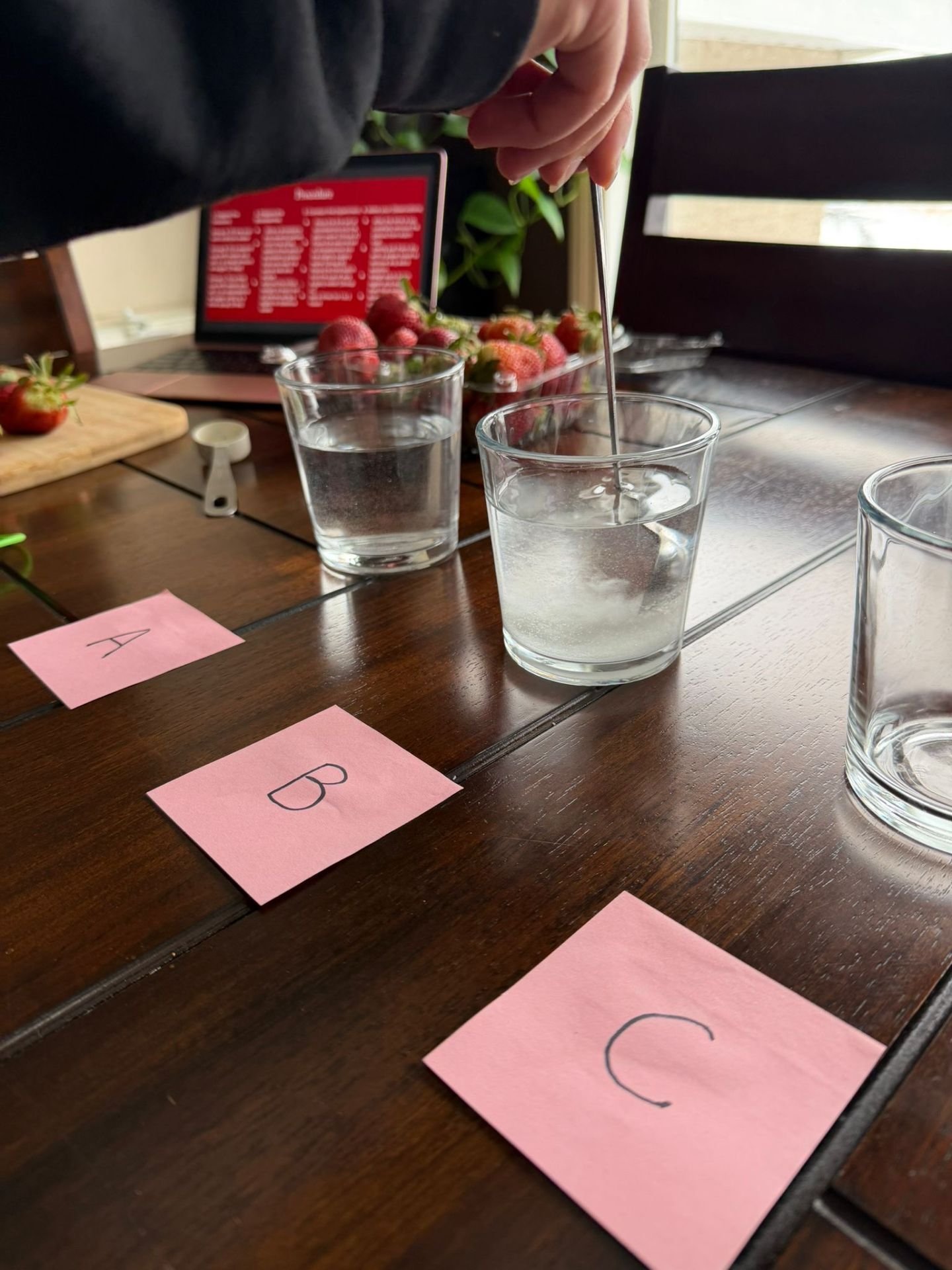
As I stirred the sugar into the cup for Groups B and C, I observed that the water level rose slightly with each tablespoon of sugar added. This happened because the sugar acts as a solute that takes up space, causing the liquid to increase. Carefully observing and managing these levels was important to ensure each strawberry slice was surronded by the same amount of solution.
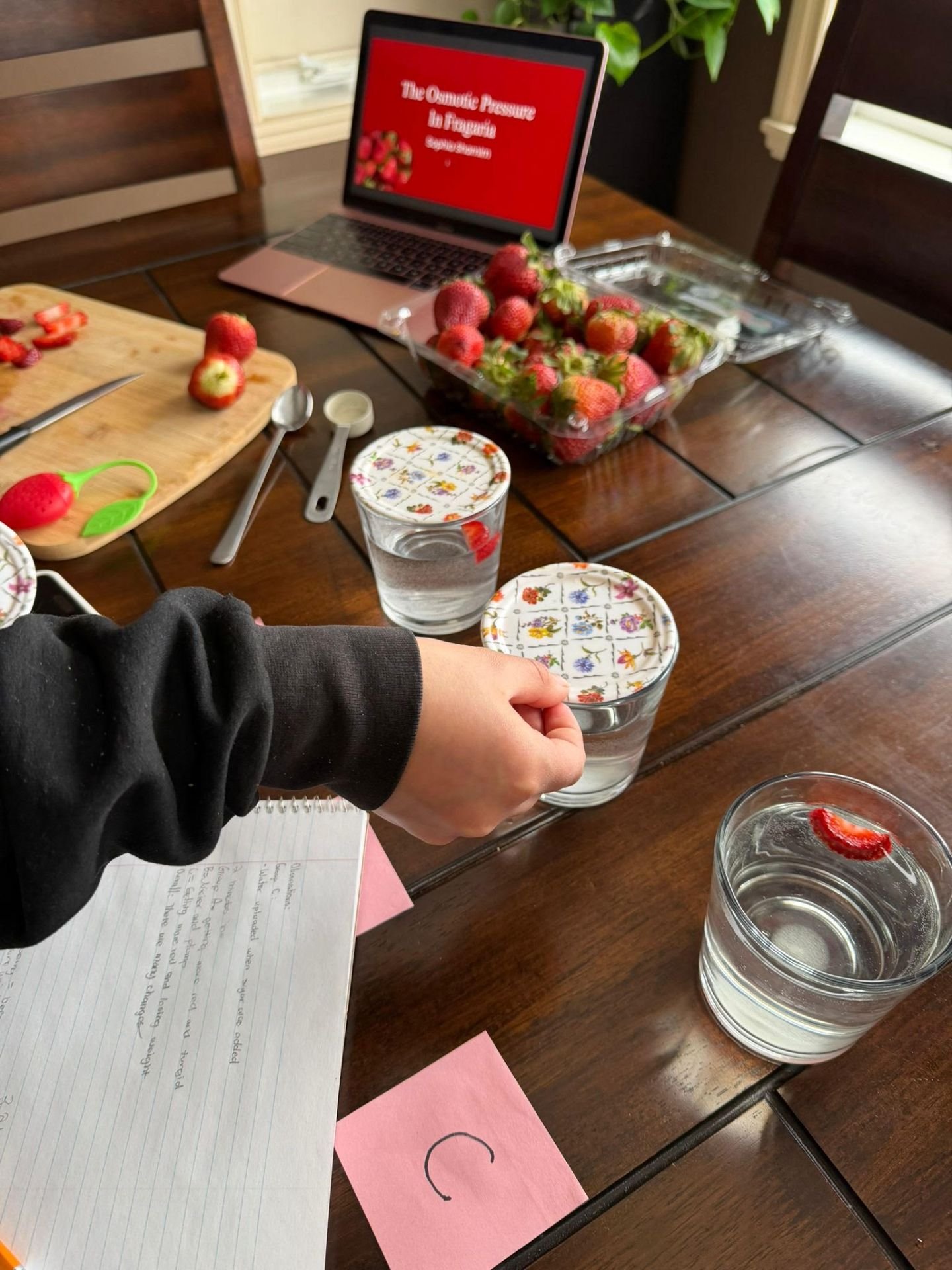
In this image, I observed that covering the cups was a critical step to maintain a controlled environment and prevent external factors from interfering with my results. Keeping the slices sealed for the full two hours ensured that the sugar concentrations remained consistent throughout the osmotic process.
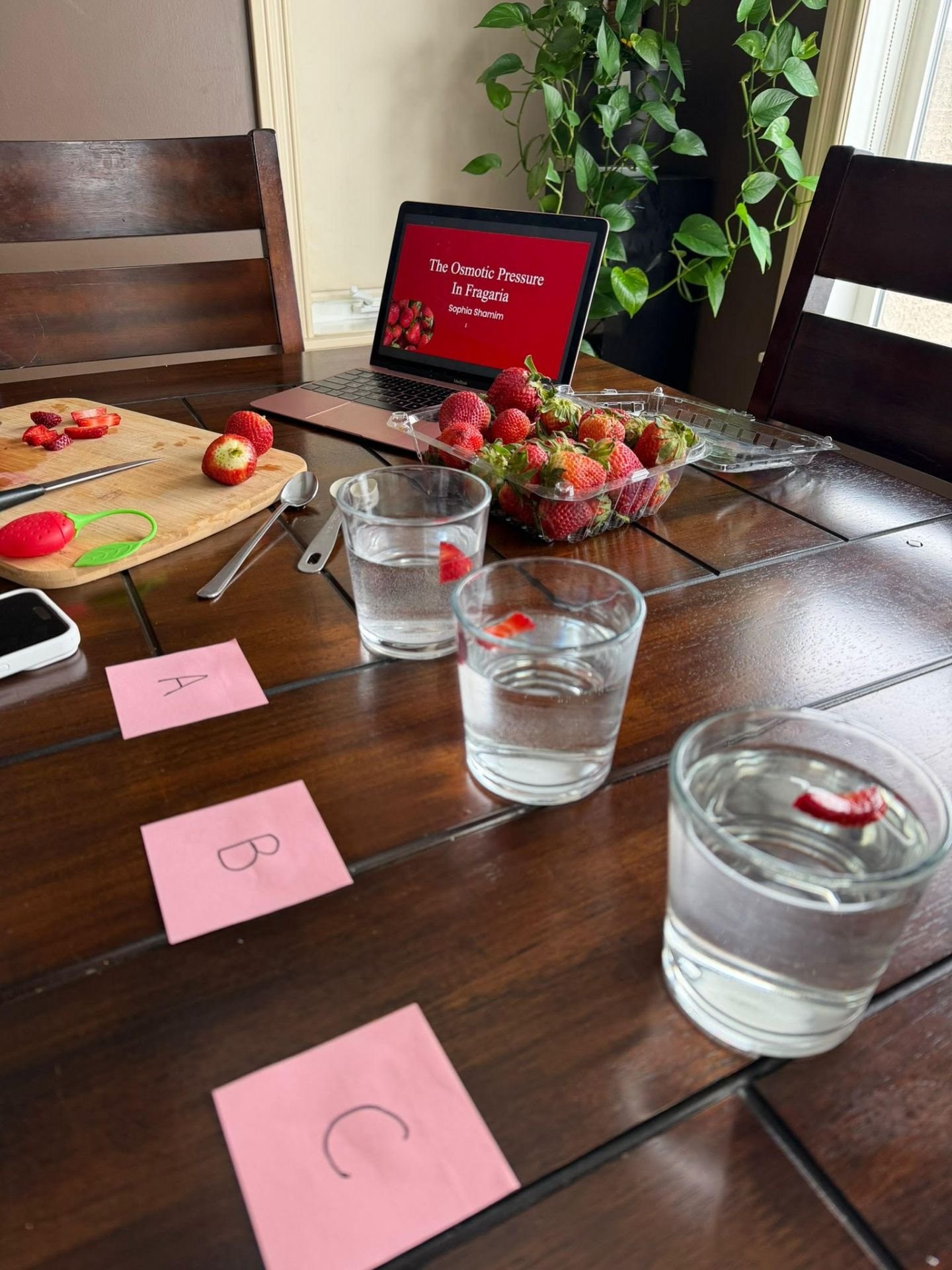
After one hour, I observed Group A becoming turgid and plump while Group C already felt noticeably mushier due to water loss. I kept the glasses covered for a full two hour duration to ensure a complete osmotic reaction before taking this photo.
Analysis
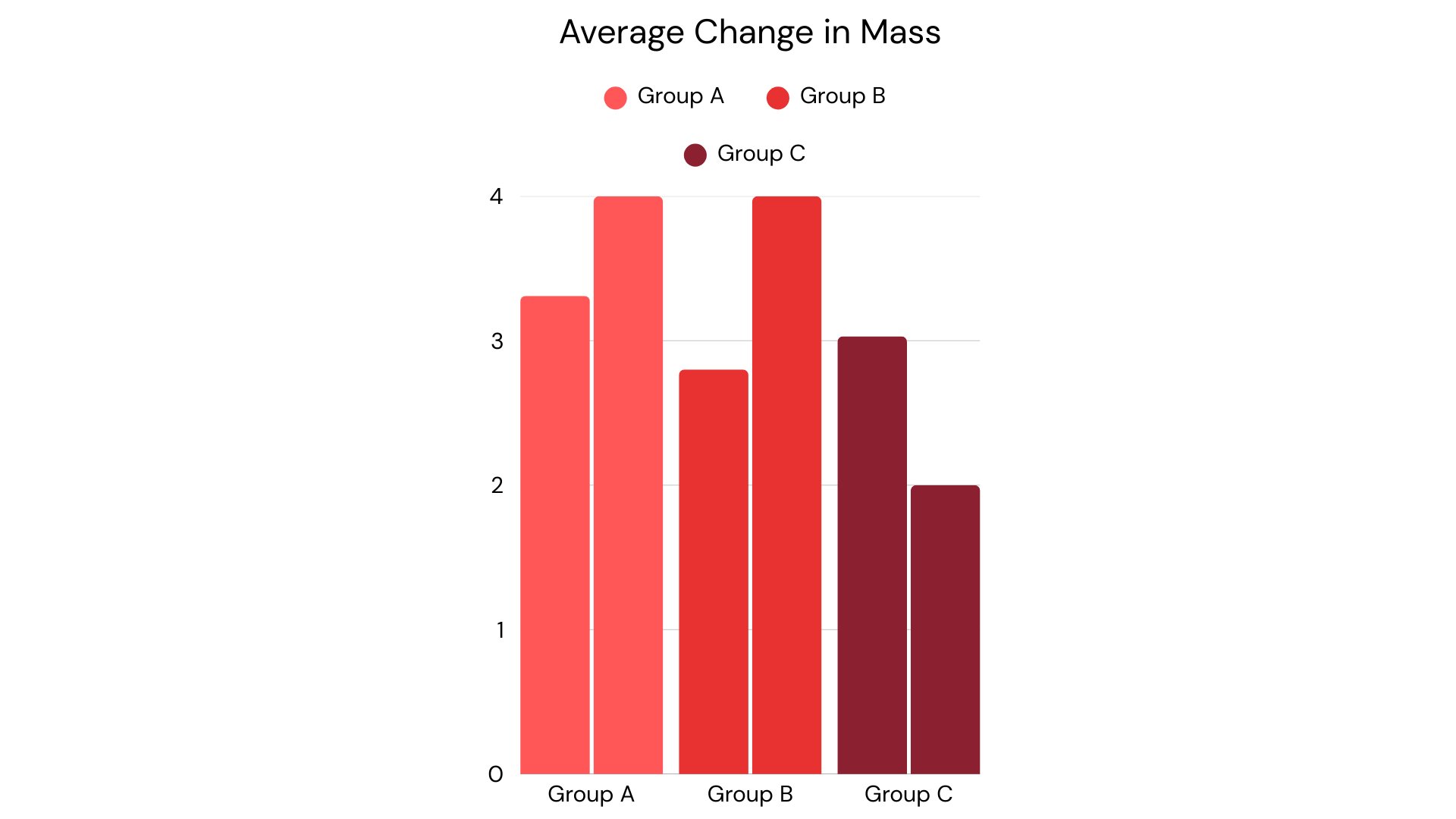
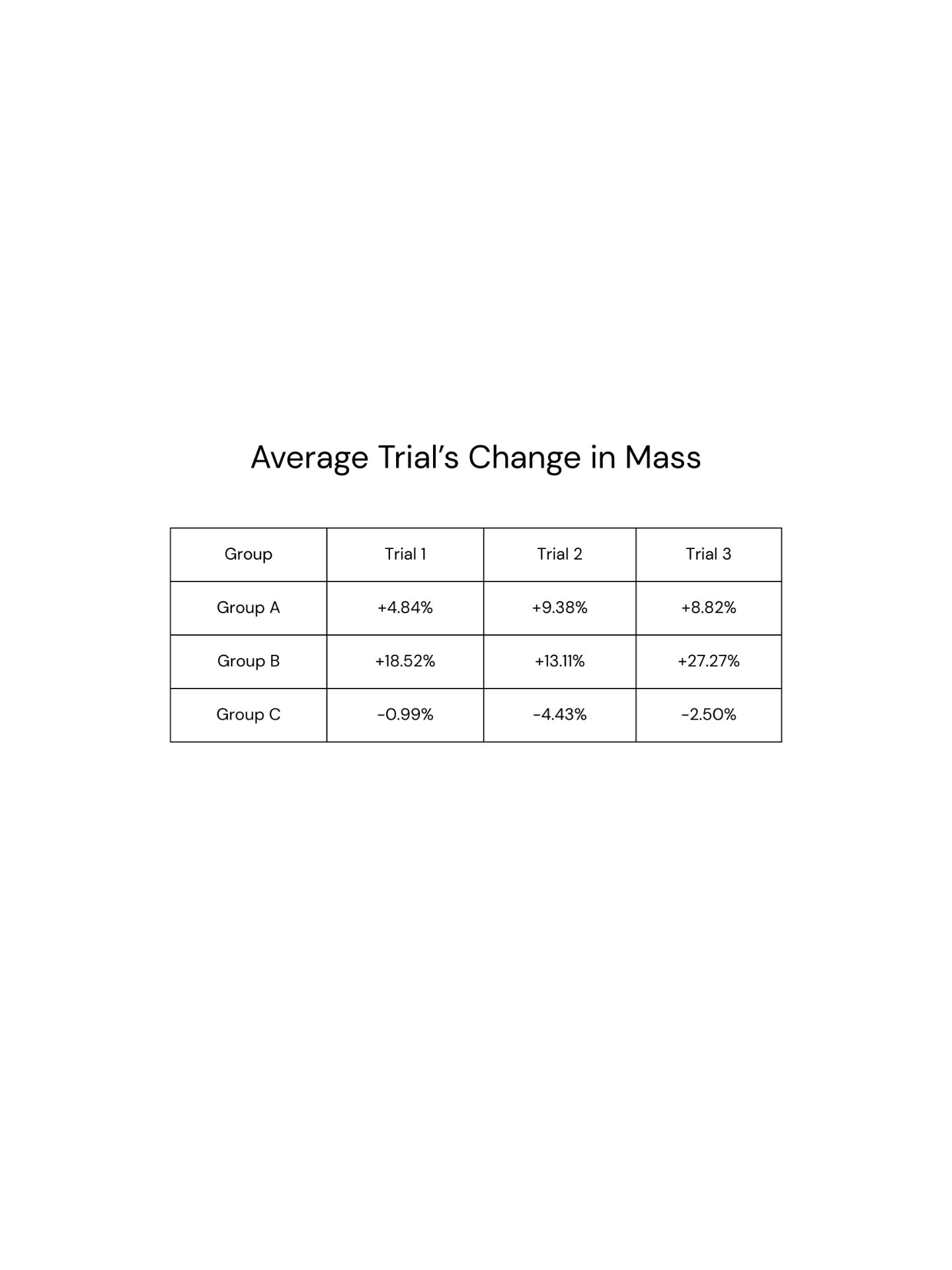
When looking at my bar graphs, a very clear pattern emerges. As the amount of sugar in the water increased, the final mass of the slices decreased. In Group A, the After bar is noticeably taller than the Before bar, showing a significant average mass gain of +3.02% because the plain water was hypotonic and soaked into the cells to create pressure.
Interestingly, Group B also gained +1.43% in mass, which tells me the sugar concentration in the water was still lower than the natural sugars inside the strawberry.
However, Group C shows the most dramatic change in the opposite direction. The After bar is shorter than the Before bar, resulting in a negative percentage change of -2.64%. This proves that the 6 tablespoons of sugar created a strong hypertonic environment that acted like a magnet, extracting the water from the cells and leaving the fruit feeling much softer and lighter.
Conclusion
In conclusion, my experiment proves that the amount of sugar in a solution definitely changes how water moves in and out of a strawberry through osmosis. My results showed that Group A gained the most mass at +3.02%, which confirms that in a hypotonic environment, water rushes into the cells and makes the fruit feel firm and plump. This happens because the extra water creates turgor pressure which acts like a balloon inflating inside the strawberry's cells walls, making the slices feel crisp and sturdy when touched.
Group B also gained a small amount of mass (1.43%) and felt slightly firmer than before. This tells me that the natural sugar concentration inside the strawberry was still higher than the two tablespoons of sugar in the water, so the water continued to move into the fruit.
However, Group C was the only group that showed a clear loss in mass, with an average drop of -2.64%. This suggests that a hypertonic solution acts like a magnet that draws water from the cells. As the cells lost their internal liquid, the strawberries became noticeably softer and lighter. While my data mostly supported my hypothesis, I discovered that the isotonic became near the same balance where the strawberry doesn't gain or lose any weight.
Overall, this project successfully shows how solute concentrations are an important part of food science, explaining why our fruit stays fresh and how industries use sugar to preserve the desserts we eat everyday!
Application
Food & Grocery
The results of my experiment demonstrate food science and grocery industries. In the culinary industry, chefs use the process of osmotic dehydration to create jams and candied fruits, by adding a high concentration of sugar, they pull water out of the fruit to change its texture and prevent it from spoiling. This is also why grocery stores spray their produce with water, it keeps the cells full of liquid so the vegetables stay crisp and fresh. Understanding these results help us understand how to keep our food safe, delicious, and stable for longer periods.
Medicine
A same pulling force is caused through medical treatments like hemodialysis. When a patient's kidneys aren't functioning, doctors use a specific membrane and a concentrated solution to remove waste and extra water out of the blood.
Agriculture
In agriculture, farmers have to be very careful about salt levels in the soil. If the soil becomes too salty (hypertonic), the water will actually move out of the plant roots and back into the soil, causing the plants to wilt and decrease its strength.
Chefs use maceration to create strawberry syrup without it having to cook the fruit. My experiment proved that sugar extracts liquid, it shows why macerated strawberries are so popular and enjoyed for desserts like shortcake or pancakes.
Beyond the kitchen, the principles of osmosis I observed are vital in medicine, where they are used in dialysis to filter blood.
If I were to conduct this experiment again, I would implement several strategies to enhance the precision and reliability of my data.
First, I would increase the sample size by testing ten strawberry slices per group instead of three. This would help ensure my average results are statistically significant and not just a one time occurrence.
Second, I would investigate the rate of osmosis by testing how temperature affects the speed of water movement, comparing ice cold water to warm water.
Finally, I would expand my research to include different solutes, such as salt or honey, to see which substance creates the strongest osmotic pressure. These modifications would provide a more complete picture of how different environmental factors influence cellular dehydration.
Sources Of Error
In scientific research, it is important to reflect on sources of error that might have influenced the final numbers. One major factor was the surface moisture management. When I took the strawberries out of the solution, they were soaking wet. If I didn't pat them dry with a paper towel in the exact same way every time, the leftover droplets on the surface would be weighed by the scale, making it look like the strawberry gained more mass than it actually did.
Another variable was the biological difference between the strawberries, even when cut to similar sizes, each slice has a unique number of cells and varying levels of natural sugars, which can affect how quickly osmosis occurs. Furthermore, a significant challenge was achieving initial mass consistency. Though I aimed for each set of strawberry pieces to weigh exactly the same, it was nearly impossible to get them to the identical gram measurement using only a knife and a scale. Even though I was near the same weight meant that each group had a slightly different starting point, which could lead to small factors in my final data. From the cause of this, I focused on the percentage change in mass rather than just the final weight, which helps make the comparison fairer even if the starting amounts weren't perfectly equal.
Adding on, the slight precision of the digital scale also was a source of error during this experiment. If the scale was not perfectly still or if there was slight breeze in the room, the small gram measurements could drop by 0.1g or more.
Finally, a very important source of error was the mixing solutions. If the sugar in Group B and C was not dissolved properly or stirred the exact same amount of time, the concentration of the syrup might have been stronger at the bottom of the cup than at the top. This could mean that some strawberry pieces were sitting at a more powerful solution that others.
These were the main sources of error I observed during the make of this project
Citations
The following sources were used to conduct and research about my experiment on strawberries and osmosis:
Libretexts. (2023, August 11). 2.3: Osmosis. K12 LibreTexts. https://k12.libretexts.org/Bookshelves/Science_and_Technology/Biology/02%3A_Cell_Biology/2.03%3A_Osmosis
Hurtado, G., Grimm, E., Brüggenwirth, M., & Knoche, M. (2021a, May 13). Strawberry fruit skins are far more permeable to osmotic water uptake than to transpirational water loss. PLOS ONE. https://journals.plos.org/plosone/article?id=10.1371%2Fjournal.pone.0251351
Calli, L. (2024, December 4). Why do strawberries go mushy when washed with baking soda?. Crop DeTox. https://cropdetox.com/why-do-strawberries-go-mushy-when-washed-with-baking-soda/
Filippone, P. T. (2025, June 17). Strawberry measures and equivalents. How Many Strawberries in a Quart: Convert Pints, Pounds, and Cups. https://www.thespruceeats.com/strawberry-equivalents-and-measures-1807480
ABC11. (2018, May 2). Testing osmotic pressure using cherries. ABC11 Raleigh-Durham. https://abc11.com/post/testing-osmotic-pressure-using-cherries/3419178/
Iseman, C. (2025a, December 23). How to measure strawberries the right way for cooking and Baking. Tasting Table. https://www.tastingtable.com/2053747/strawberry-measurements-cooking-baking/ Cambridge. (1999).
Sugary - 18 synonyms and Antonyms - Cambridge English. Cambridge Dictionary. https://dictionary.cambridge.org/thesaurus/sugary University\, O. (1976).
Hypertonic\\, adj. meanings\\, etymology and more | oxford english dictionary. Hypertonic meaning. https://www.oed.com/dictionary/hypertonic_adj University\\, O. (1900).
Isotonic\\, adj. meanings\\, etymology and more | oxford english dictionary. Isotonic meaning. https://www.oed.com/dictionary/isotonic_adj
Team, F. (2025, August). Osmotic pressure definition - principles of food science... Definition - Principles of Food Science... https://fiveable.me/key-terms/principles-food-science/osmotic-pressure
Clinic, C. (2023, January 13). Which fruits have the most sugar?. Cleveland Clinic. https://health.clevelandclinic.org/fruits-high-in-sugar [15] N\, Z. T. (2024).
Osmotic pressure - an overview | sciencedirect topics. Osmotic pressure. https://www.sciencedirect.com/topics/chemistry/osmotic-pressure Direct\\, S. (2020).
Strawberry - an overview | sciencedirect topics. Strawberry. https://www.sciencedirect.com/topics/agricultural-and-biological-sciences/strawberryLibretexts. (2023\, August 11). 2.3:
Family:
- Maryem K
- Fatima K
- Ayan S
- Farhat K
Acknowledgement
I would like to sincerely acknowledge the individuals who supported and guided me throughout the completion of my project:
• I would like to acknowledge my mother for supporting, helping, and purchasing all the items I needed for this experiment. I also would like to thank her for bringing me to all the occasions at the Olympic Oval. She helped with every detail of my trifold and the supportment!
• I would also like to acknowledge all the sites and sources I used to help me with my project as well as the places I bought my items for this project.
• Another person I would like to acknowledge is my CYSF coordinator for guiding me, Ms. Ontko.
• My aunt is another person I would like to thank and acknowledge for looking over my work, for supporting, and encouraging me as well.
• My older brother helped me with problems that I wouldn't have overcome without him. Thank you!
• Someone who helped and supported me with my trifold, experiment, and the overall project, was my grandmother!