
Ironclad aegis structure
Diana Christian, Emma Benalcazar Valladares
St. Rose of Lima Junior High School
Grade 8
Presentation
Problem
Did you know that there are around 40,000 to 60,000 people globally that die from natural disasters yearly? Though this number fluctuates, with single massive events causing tens or hundreds of thousands of deaths. From this number many people die from not having a structurally safe building, many deaths are caused by collapsed buildings during earthquakes. Most buildings currently in existence were not built with modern climate-resilient standards in mind, ergo causing disasters. Creating a building with a secure structure would decrease these mass deaths. It would provide a better future for our world,as well as save money since when there are any extreme weather conditions .
Method
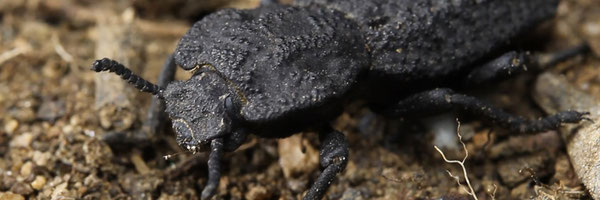
We have used methods such as testing through different designs seeing which is more stable as well as different components that would protect the building from getting destroyed. We also did research on the key factors that would be able to withstand harsh weather and conditions. With multiple designs we made, we chose what building structure design would be the most successful. We ended up with a curvilinear building design. We check the newtons in multiple natural disasters and transfer it onto our project to mathematically make sure it is strong enough.We have done a complete background reading, we have reviewed articles making sure that our hypothesis isn't biased. First we conducted a search on the structure of the ironclad beetle's exoskeleton,focusing on how it can resist such extreme mechanical force without cracking. From reading articles, we figured out there are key features such as its interlocking plates, layered shell, curved shape, and as well as its ability to absorb energy. Next we took this new information into a building. We took the multilayered shell and learnt that turning the walls to be layered and windows would ensure a stronger product.The beetle has a curved shape, taking this design into a building would provide strength for the building, we took a research and learnt that a curvilinear building has a lot more pros to it than a square-shaped building. As for the interlocking plates we took them and turned them into panels for the structure that would fit together perfectly, improving the building's stability. We then created a model of our own to mimic the model designs and we were able to have a similar appearance and since it was a small sized experiment it can not have all the real life materials as written for the real life building to have-it is not built to be the strongest. We conducted a few tests and were able to jump on it and stand on it for several seconds. Lastly, we believe in the future this building would sway away from mass casualties when it comes to extreme weather conditions.This building would also reduce spending for the government since when there are natural disasters, then the city would have to pay for repairs of essential things small to big for the city. This building would go untouched and if this hypothesis works, it can inspire other buildings to follow its lead to strengthen its base.
Analysis
We analyzed the results of how many people were affected by extreme weather events and came up with this plan of making a building that could result in saving many if not thousands of people in areas prone to floods , hurricanes, tornadoes, etc. We analyzed some repeating issues in buildings that all had flat surfaces so when it was put against great pressure it would fall so we made ours with curves so water during a tsunami or fast wind can’t knock it down. As well as these curves help distribute the pressure from the force to make sure the force doesn't destroy the structure. As for the normal rectangle shaped building the force could make the building unstable because it doesn't distribute the force as a curvilinear structure would. We take the time to analyse the newtons and convert them into various equations trying to make sure our structure could endure the type of forces. This ironclad beetle inspired building design shows that strength comes from a properly made structure, not just hard materials.Each part of the building strengthens the building to avoid cracks and distribute weight and force-from the curves to the layers.Every part of the structure has its own role, ensuring that the building will stand up tall and strong-if each part isn't made to give 110% and there is a flaw, then the building can collapse. The curves help distribute weight eveningly making sure it is resistant to impacts and the heavy loads such as the people and natural weather loads like snow or rain.Their form also provides a resistance against accumulation of water or snow on top of the roof-it would just slide off. Snow and water can become extremely heavy in big loads so this would prevent the roof from collapsing from such weight.This curved shaped structure could also reflect any incoming high force waters(tsunami)and spread out the force throughout the building instead of putting a great force on one single area impacting the whole structure and could cause a collapse. As for the layers discovered in the insect, we added it to the buildings by adding multiple layers in the walls and windows to ensure safety.These layers help absorb force and reduce cracking within the structure which can lead to negative effects to the building. Overall, this design shows that structures from nature can be used to enforce stronger and more reliable buildings for our future.
Conclusion
To conclude with this summary about our project we just want you guys to know that this project was really hard worked upon and we put a lot of thought and took a lot of time to do research on this subject. We took our time and effort to ensure this building was up to our standards. While this took us time to research and construct it we are very happy with our project.This project demonstrates the fascinating exoskeleton of the Diabolical Ironclad beetle.Features such as layers, curves, etc help strengthen the building's structure. This prevents collapsing and structural damage, which would prove our hypothesis wrong. With many hours of studying about this beetle, what makes a building stronger, the pros of a curvilinear structure, etc helped us create a stronger building to accomplish its mission. We created a miniscule model and tested it out by standing on it, jumping onto it,sitting on it,etc and noted it was strong and how durable it was. We made multiple drawn models and chose which one would be more effective. Overall, studying the Ironclad beetle lead to the hypothesis of the creation of a reliably durable building, which could be the future of construction.
Citations
For this project the sources we used were , we got most of our information from google and we used google gemini for getting a clearer understanding and for finding out the key factors of a building . Also we got our information from numerous articles such as: “Why the diabolical ironclad beetle is nearly impossible to squish”— Science News Author: Maria Temming “Diabolical ironclad beetles inspire extra-strong joints” — Creation.com / Creation Magazine Author: Dr. Jonathan Sarfati “Engineers Study the ‘Diabolical Ironclad Beetle’ for Lessons in Strength” Author: Despatch.comOrganization etc.
Acknowledgement
We acknowledge how hard it might be to make a prototype of this building exactly how we want it become. We also acknowledge how hard the scientists worked to discover and learn about this fascinating insect.Every article about this insect and about architecture, as well as building strong structures, all helped us find information to build this structure and how we can back up each reasoning. We would like to thank the engineers that have inspired when we read and learnt about how to make a structurally sound building and what is more effective.All the information we were able to obtain helped us greatly to create and build a strong hypothesis. Every one of those educational articles that we read helped us build a better understanding around structures and how nature can influence strong and innovative designs. We also like to appreciate our parents and teachers who motivated us towards this project and helped us continue to achieve this hypothesis. Lastly, this project would have not made it to the finish line without the guidance and resources provided.